Week -2
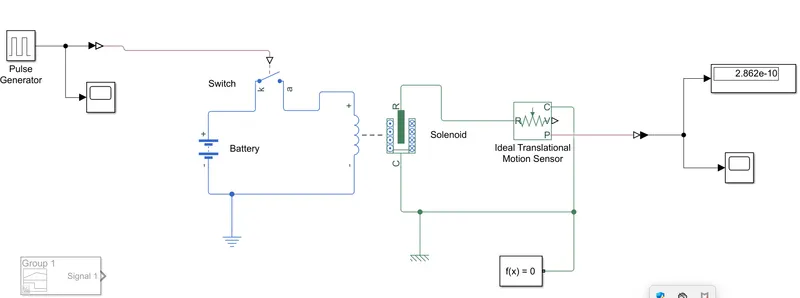
1) A Simulink model of Doorbell using solenoid block:
In the simuling model of doorbell , I used the following blocks:
- Solenoid: The solenoid block represents the electrical characteristics and generated force for the solenoid.
- Battery: It gives suply for the solenoid.
- Switch: It is a device to complete the electric circuit for current flow and can be controlled manually or automatically depends on the type of switch required.
- Pulse Generator: This block generates square wave pulse at regular intervals.
- Ideal translational motion sensor: Physical movement done by the solenoid is sensed by the Ideal translational motion sensor
- Electrical and mechanical reference
- Solver configuration
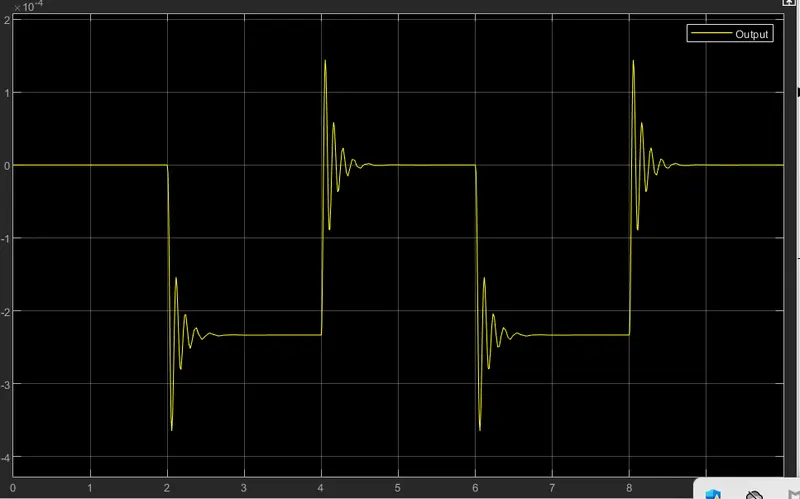
Here the situation where the switch is closed for 2 seconds and then released and then Observe the physical movement of the plunger.
The block diagram:
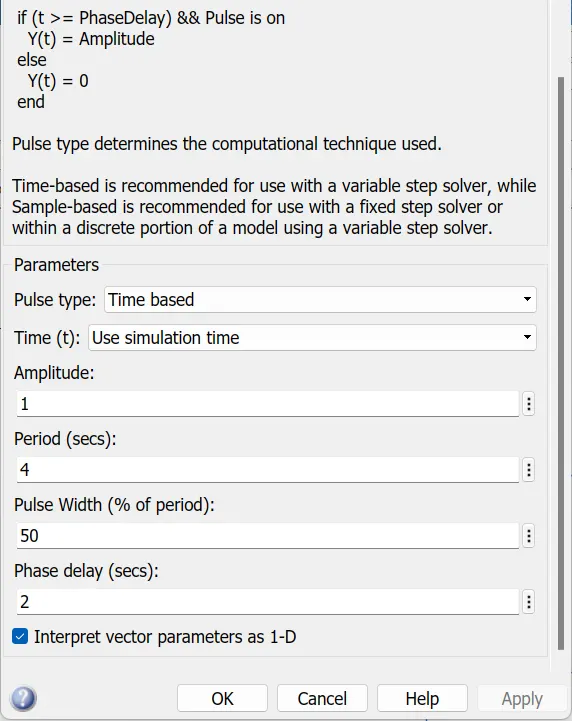
Before we begin the simulation we need to setup an input parameter here in pulse generator where we delay seconds should be 2 sec with amplitude 1 and pulse time should be 4 sec to make it in half with 50% pulse width.
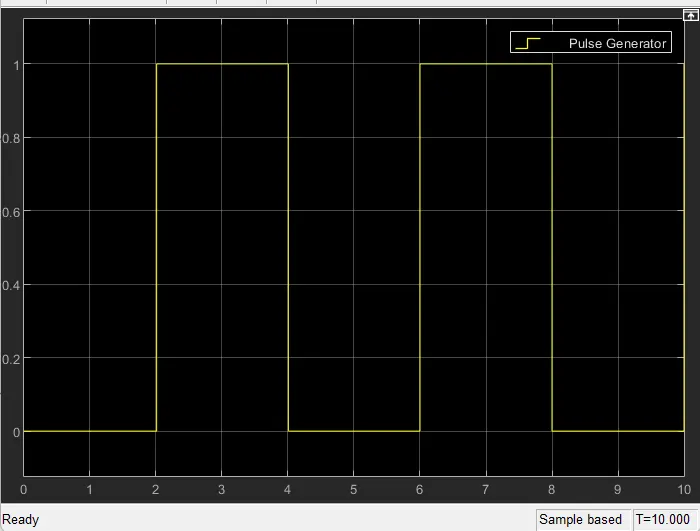
Output:
Here the position or motion graph shown below :
2)
Aim- Creating a simulink model in which Use a thermistor to sense the temperature of a heater & turn on or turn off the fan as per the below conditions:
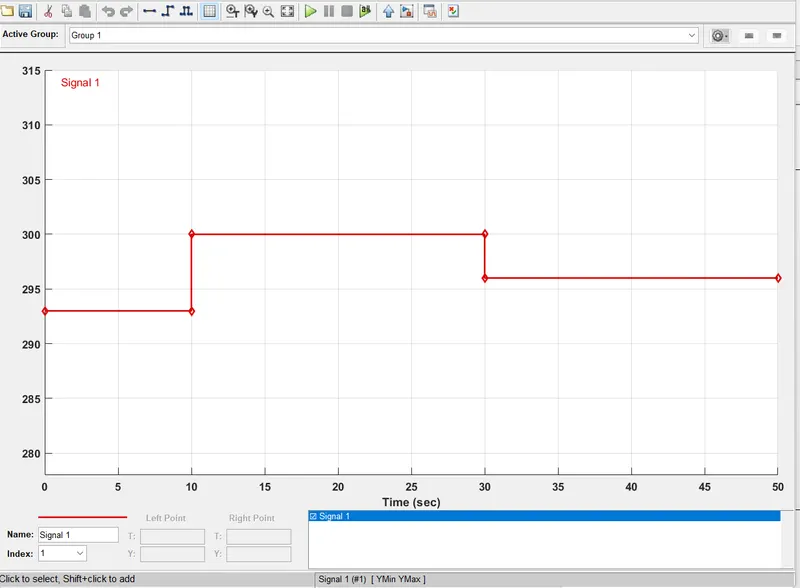
Temperature source: 20 °C from 0 to 10 seconds, 27 °C from 10 to 30 seconds, 23 °C from 30 to 50 seconds.
Fan conditions: ON if the temperature above 25 °C, OFF otherwise.
Blocks used in the model:
- Signal Builder: In signal builder, giving input values as per the given conditions like 20 °C from 0 to 10 seconds, 27 °C from 10 to 30 seconds, 23 °C from 30 to 50 seconds as shown in figure below:
- Controlled Temperature Source: The controlled temperature source block represents an ideal source of thermal energy that is powerful enough to maintain specified temperature difference across the source the source regardless of the heat flow consumed by the system
- Thermistor: A thermistor is a type of resistor whose resistance is dependent on temperature, more than in standard resistors. The word is a combination of thermal and resistor.
- Resistor: The resistor block models a linear resistor, described with the equation, V=IR
- Battery : This block gives some energy in the form of voltage.
- Voltage Sensor: This block represents an ideal voltage sensor, that is a device that converts voltage measured between two points of an electrical circuit into a physical signal proportional to the voltage.
- Electrical Reference: This block represents an electrical ground.
- Thermal Reference: The Thermal Reference block represents a thermal reference point, that is, a point with an absolute zero temperature, with respect to which all the temperatures in the system are determined.
- Solver Configuration: The Solver Configuration block specifies the solver parameters that your model needs before you can begin simulation.
- Scope Block
- Switch Block
- Display Block
- Constant Block
Simulink Model:
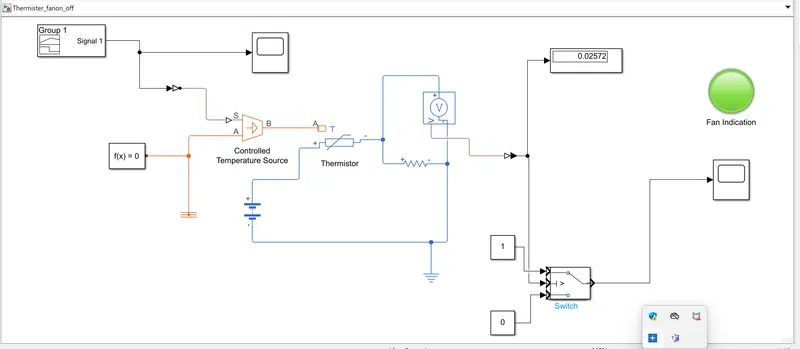
Explanation:
Inputs are given to the signal builder and connected with temperature controlled source for maintaining the specified temperature difference across the source. then input temperature flows through thermistor.
Output terminal of the voltage sensor is connected with switch. Using the switch parameter for giving the condition as fan must be on if temperature above 25degree C, OFF otherwise. Output is successfully executed by connecting with scope as per the given condition.
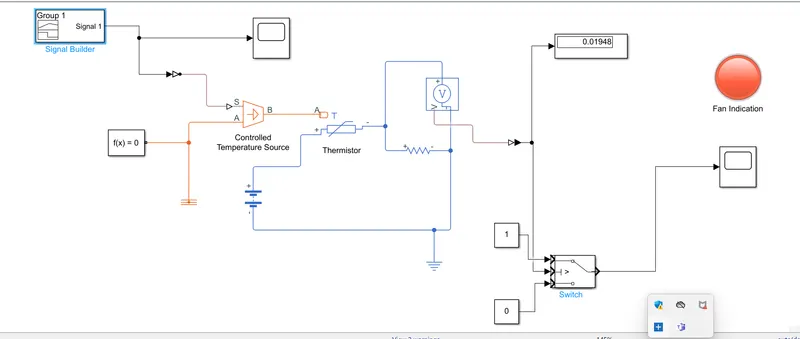
In output side we connected a lamp which shows the fan is ON or OFF. Red color is shows the fan is in OFF condition and Green color shows the fan is in ON condition.
Output:
When the Temperature is below 300K and above 293K then the output in scope shown in the graph and also the fan indication, it is OFF condition means red color indicate.
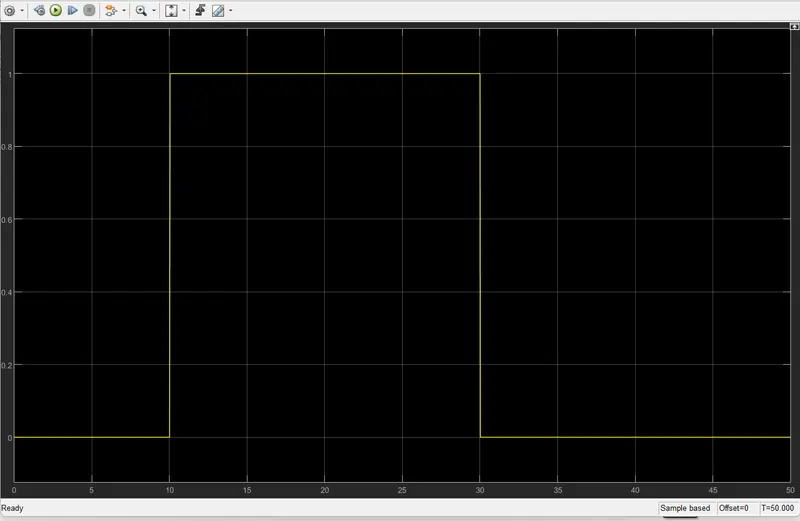
Here shown in the graph above, For 0-10 sec the fan is in OFF condition, because the temperature is 293K which is below 298K. After 10 sec temperature goes to 300K, so fan will turn ON, because temperature exceeds 298K. After 30 sec fan will turn OFF because temperature goes to 296K which is below 298K.
Conclusion: The simulation is successfully completed and given all the condition has been acheived and successfully executed.