Week -2
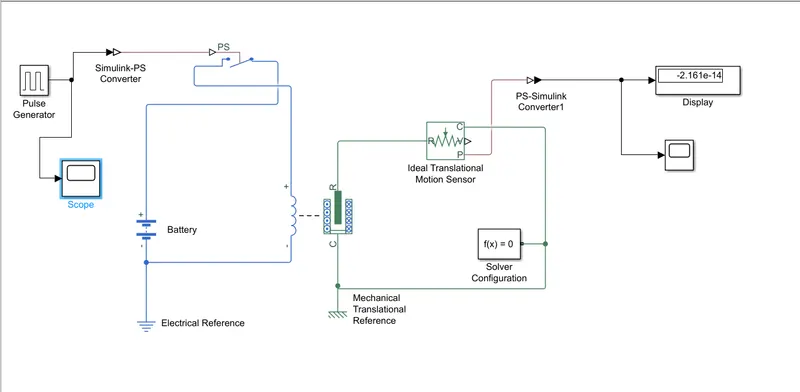
1.Simulink model of doorbell using solenoid block
Solution:
Working Principle:
The door bell works on the principle of electromagnetism.Running electrical current through wire creates a very small magnetic field around the wire. Coiling the wire amplifies this magnetic field, so it has a substantial effect on any magnetic objects around it.
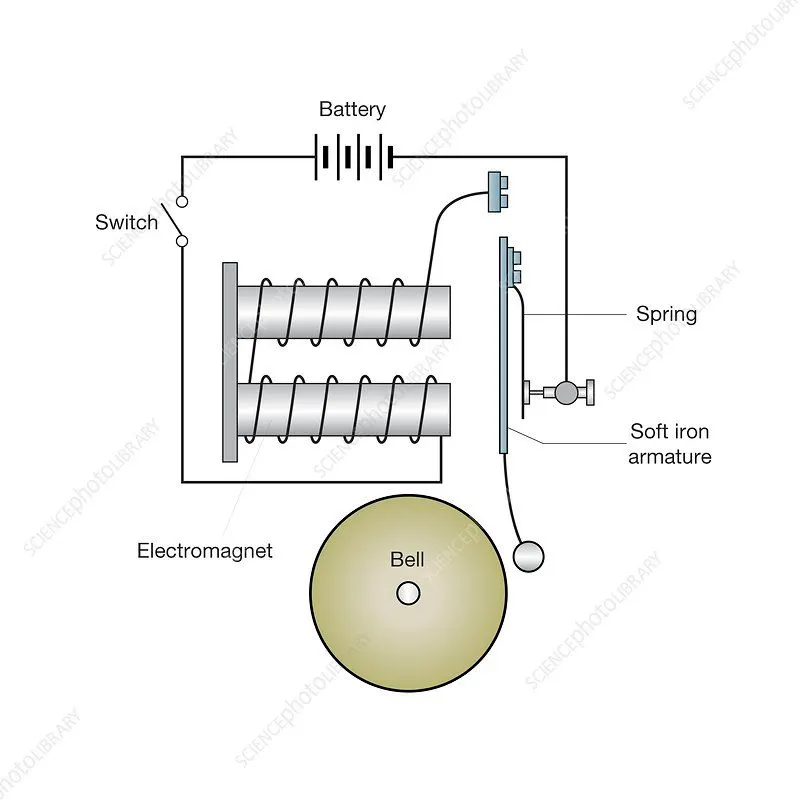
When the circuit is closed, the electromagnet is magnetized so it pulls up on the contact arm. This breaks the doorbell circuit, which shuts off the electromagnet. The arm falls down, closing the circuit again and the process repeats.
One end of the electromagnet wire is connected directly to one end of the electrical circuit. The other end of the wire connects to a metal contact, which is adjacent to a moving contact arm.
The contact arm is a thin piece of light, conductive metal, with a thin iron bar soldered onto it. The anchored end of the contact arm is wired to the electrical circuit. When the electromagnet is turned off, the free end of the arm rests against the contact point. This forms a connection between that end of the wire and the electrical circuit. In other words, electricity can flow through the electromagnet when the circuit is closed.
Closing the doorbell circuit puts this mechanism in motion. Initially, the electromagnetic field attracts the iron bar, which pulls the contact arm off the stationary metal contact. This breaks the connection between the circuit and electromagnet, so the electromagnet shuts off.
Without a magnetic field pulling it back, the contact arm snaps back into position against the stationary contact. This re establishes the connection between the electromagnet and the circuit, and the current can flow through it again. The magnetic field draws the contact arm up, and the process repeats itself as long as you hold down the buzzer button. In this way, the electromagnet keeps shutting itself on and off.
The buzzing noise you hear is the sound of the rapidly moving arm hitting the magnet and the stationary contact dozens of times a second.
A bell system works on exactly the same idea, except the moving arm is attached to a long clapper, which rests alongside a circular bell. As the arm moves back and forth, the clapper hits the bell repeatedly. This is the same system used in old-fashioned fire alarms and school bells.
These days, most people don't have buzzers or bells in their homes. The standard doorbell design today makes a softer chiming sound.
A chime doorbell uses a specialized sort of electromagnet called a solenoid. A solenoid is just an electromagnet where the coiled wire surrounds a metal piston. The piston contains magnetically conductive metal, so it can be moved backward or forward by the electromagnetic field.
Simulink model of Doorbell using solenoid block
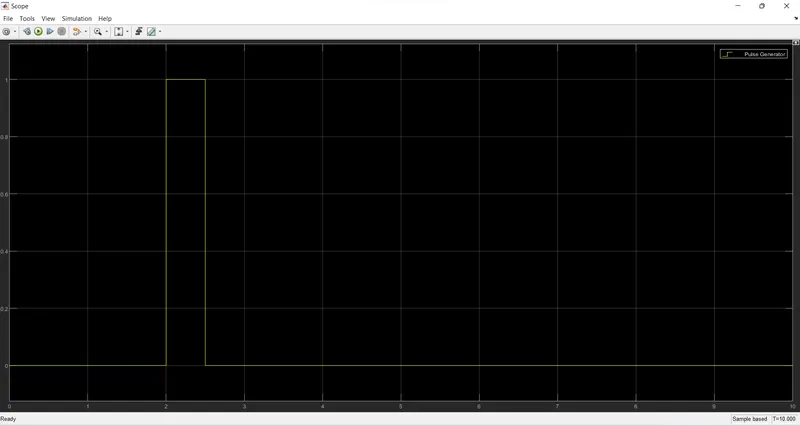
Input signal of Pulse Generator:
Output Result:
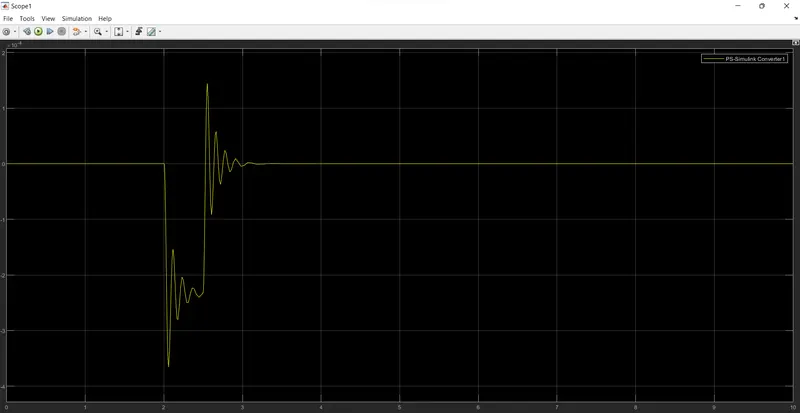
CONCLUSION: When the switch is closed the electromagnet receives electrical power from the the battery and pulls the metal arm to hit the bell producing sound.Thus the switch is closed for 2 seconds and then released and we observed the physical movement of plunger.
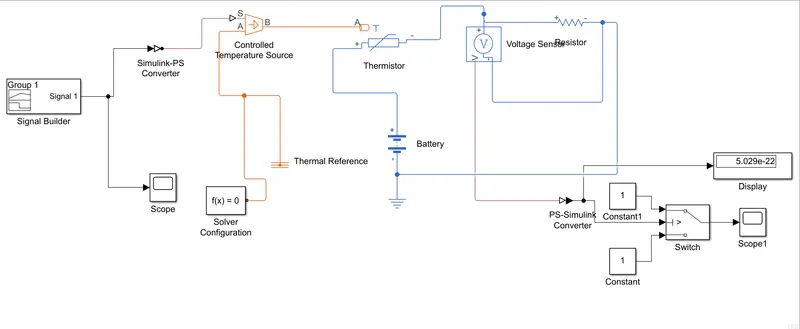
2. Use a thermistor to sense the temperature of a heater & turn on or turn off the fan as per the below conditions.
Thermistor and its Principle: A thermistor (or thermal resistor) is defined as a type of resistor whose electrical resistance varies with changes in temperature. Although all resistors' resistance will fluctuate slightly with temperature, a thermistor is particularly sensitive to temperature changes.
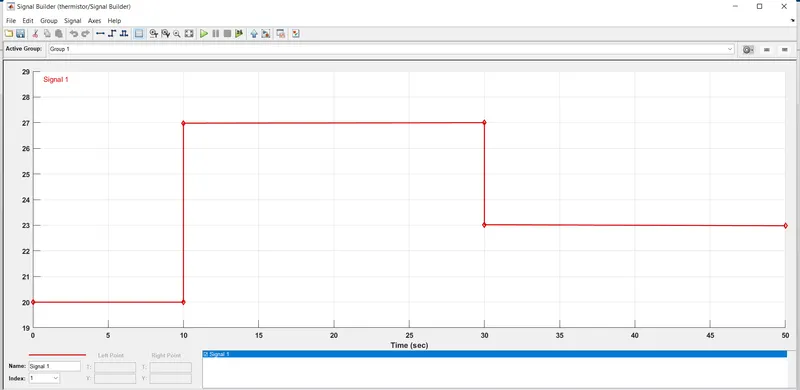
Temperature:
20 degree from 0 to 10 secs
27 degree from 10 to 30 secs
23 degree from 30 to 50 secs.
signal builder:
Block diagram
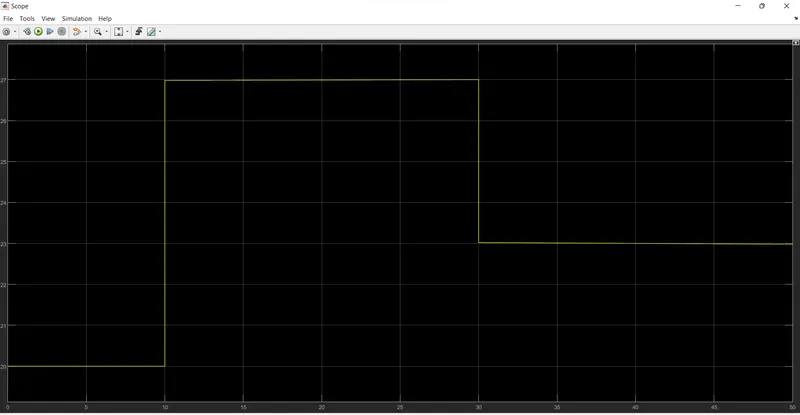
GRAPH:
CONCLUSION:
Thus the thermistor is used to sense the temperature for the given conditions and the output is obtained.