Project
Carry out a system-level simulation of an all-terrain vehicle
AIM: To study and simulate the BAJA all- terrain vehicle and prepare the technical report of four different types.
ALL TERRAIN VEHICLE:
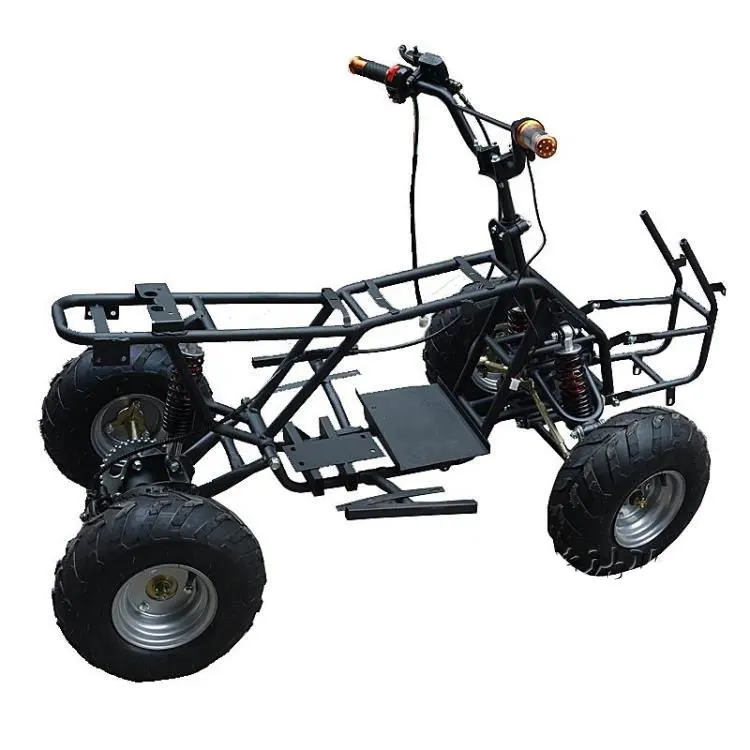
The term ATV stands for All Terrain Vehicle. It is also known as a quad or quadricycle type vehicle. An All-Terrain motor vehicle could have three, four or even six wheels. Unlike a motorcycle, generally, the ATVs have more than two wheels. This vehicle runs on low-pressure tires. However, it has handlebars instead of wheel for controlling the steering.
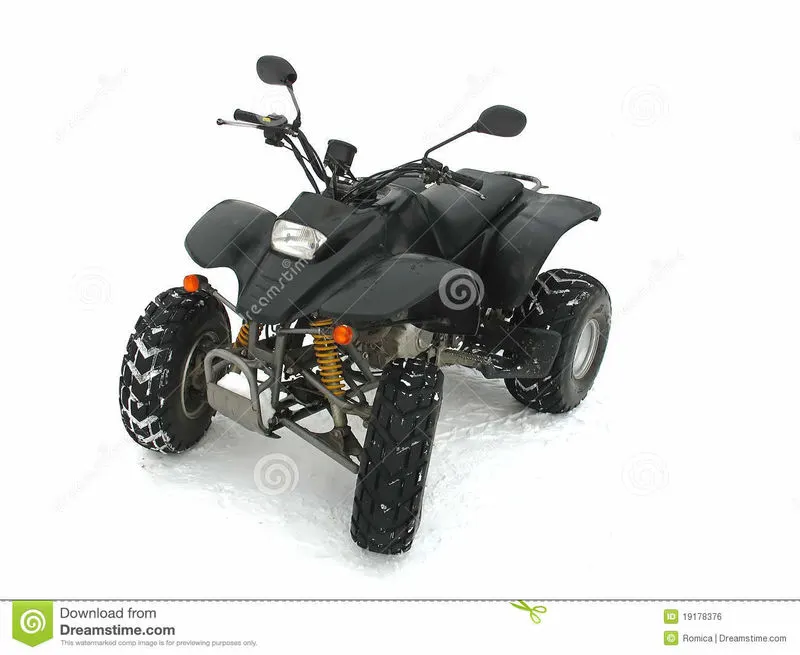
Why ATV are good vehicle? They are about as manoeuvrable as they come. Several four-wheeler designs merge a tight turning radius with a small size. They do this to offer handling that is nothing short of impressive. In addition, the considerable power to weight ratio means you can enjoy good speeds.
BAJA ATV MODEL:
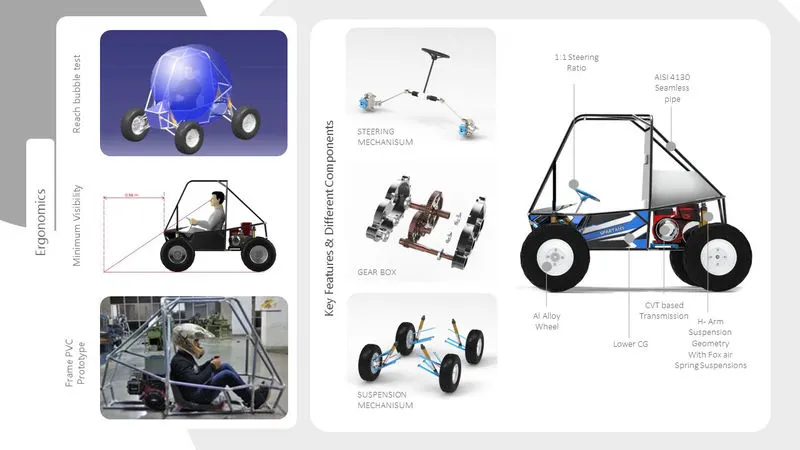
TYPES OF BAJA ATV:
- BAJA ATV MODEL WITHOUT DASHBOARD
- BAJA ATV MODEL WITH DASHBOARD
- BAJA ATV MODEL- MAPPED LOOKUP TABLE WITHOUT DASHBOARD
- BAJA ATV MODEL- MAPPED LOOKUP TABLE WITH DASHBOARD.
MAJOR COMPONENTS OF ATV IN SIMULATION:
1) CONTINUOUS VARIABLE TRANSMISSION:
A continuously variable transmission (CVT) is an automatic transmission that can change seamlessly through a continuous range of gear ratios. This contrasts with other transmissions that provide a limited number of gear ratios in fixed steps.
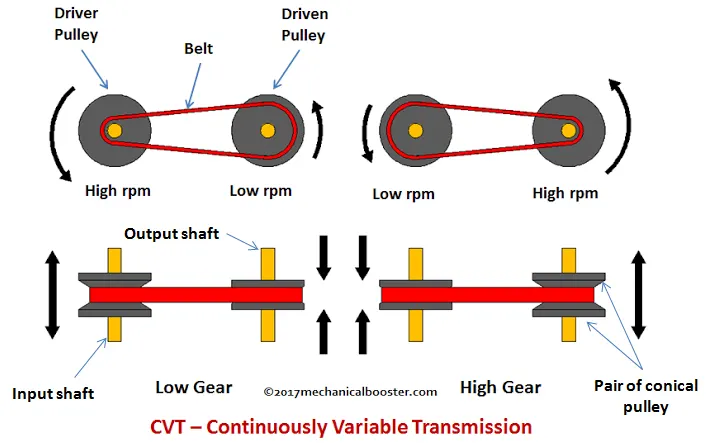
Technically, a CVT is an automatic transmission because the driver isn't required to shift between the forward gears or operate a clutch pedal manually. But there are fundamental differences in both form and function between the two.
Unlike a traditional automatic (or manual transmission, for that matter), a CVT does not have a fixed number of preset gears. Instead, it uses an unlimited number of gear ratios to accommodate the driving style and conditions at any given moment. Because it allows seamless changes without any hard shift points, a CVT transmission is often referred to as "single-speed" or "shiftless."
A CVT achieves this infinite gear ratio flexibility by using two opposing cone-shaped pulleys with a chain or belt that runs between them. This setup is very similar to the way a chain operates across the gears of a bicycle.
One cone is connected to the engine output shaft, while the other cone directs power to the driveshaft and drive wheels. Gear ratios change as the pulleys move closer and further apart, causing the chain or belt to move up and down the two cones' sides. This movement increases or decreases the diameter of the chain or belt, which alters the gear ratio based on the power needed. These real-time changes happen continually as the car is moving.
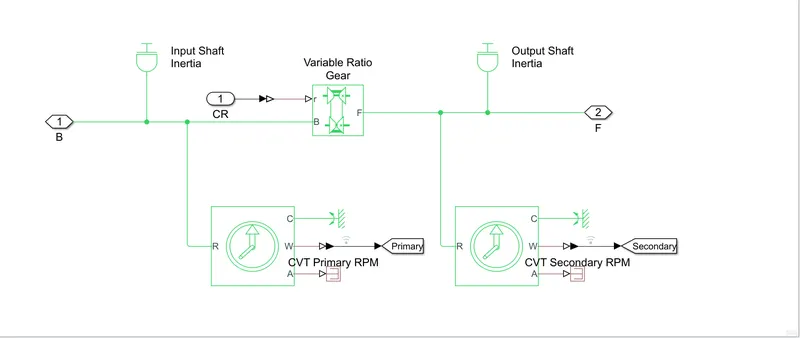
CVT BLOCK:
2) VEHICLE BODY:
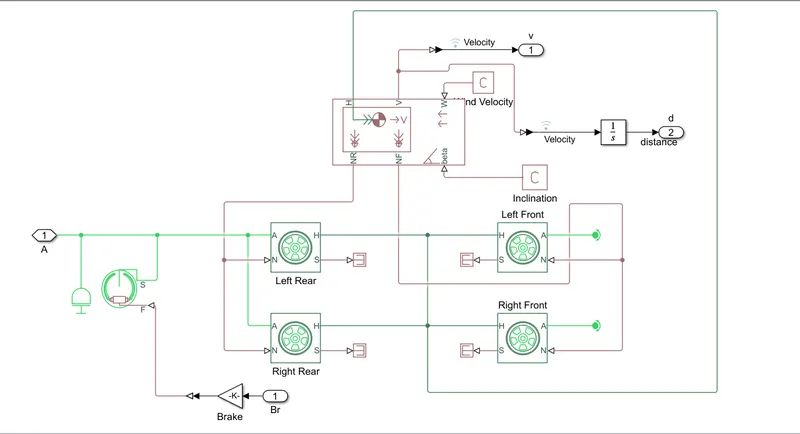
The vehicle body could be the main supporting structure or its particular element. The Vehicle Body of a modern car consists of an engine section, saloon, trunk. The vehicle body is the main supporting structure of a vehicle, to which all other components are attached.
VEHICLE BLOCK:
3) GENERIC ENGINE:
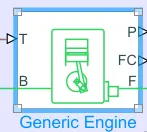
The Generic Engine block represents a general internal combustion engine. This block is a suitable generic engine for spark-ignition and diesel. Speed-power and speed-torque parameterizations are provided. A throttle physical signal input specifies the normalized engine torque. Optional dynamic parameters include crankshaft inertia and response time lag. A physical signal port outputs the engine fuel consumption rate based on the fuel consumption model that you choose. Optional speed and redline controllers prevent engine stall and enable cruise control.
GENERIC ENGINE BLOCK:
4) SIMPLE GEAR:
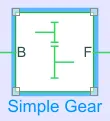
When there is only one gear on each shaft,it is known as simple gear train. The gears are represented by their pitch circles. When the distance between the two shafts is small, the two gears 1 and 2 are made to mesh with each other to transmit motion from one shaft to the other.
5) ENGINE SENSOR:
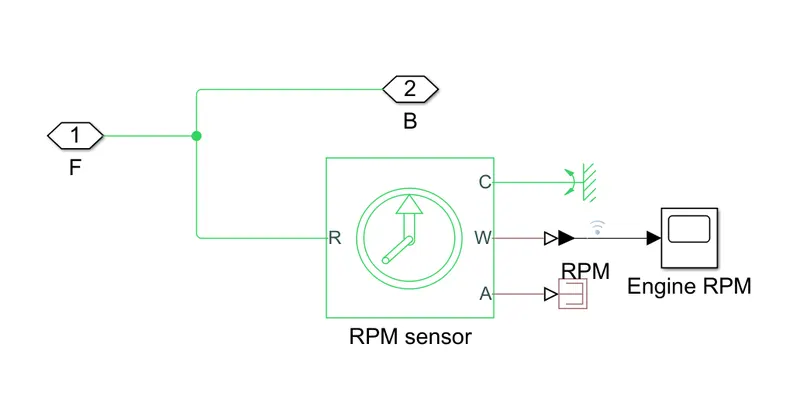
Engine sensors are electro-mechanical devices that monitor various engine parameters. An engine uses different types of sensors such as speed detecting sensors, Thermocouples, Resistance Temperature Detectors (RTDs), and Hall Effect sensors. In this ATV model it is used to detect the speed.
MODEL 1:
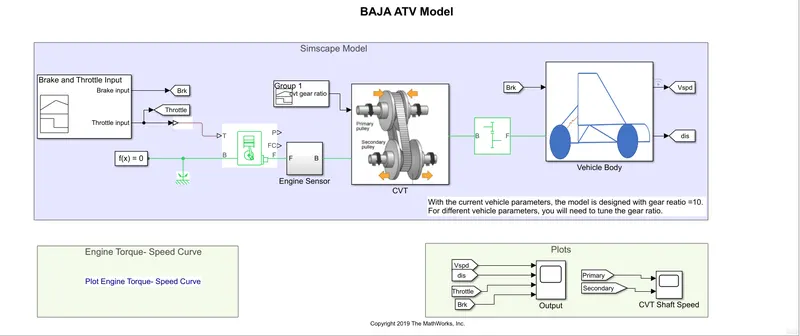
BAJA ATV MODEL WITHOUT DASHBOARD
INPUT SIGNALS OF BRAKE AND THROTTLE:
The throttle signal is generated by signal builder block and given to generic engine.
The brake signal remains constant at zero.
INPUT SIGNALS OF CVT GEAR RATIO:
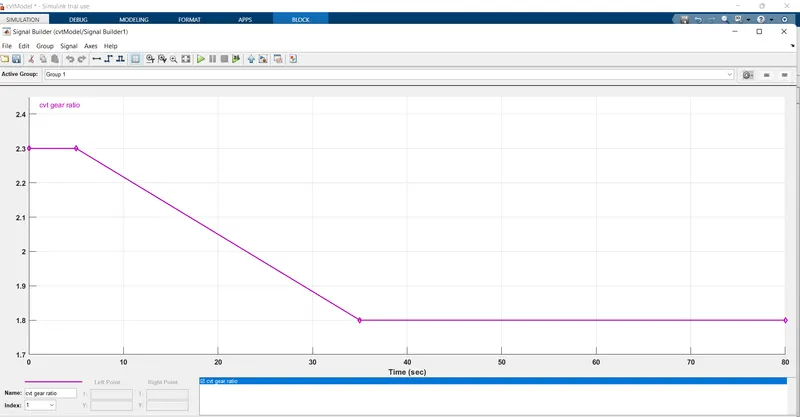
The CVT ratio is provided continuous variable transmission block through signal builder.
OUTPUT:
TORQUE VS SPEED:
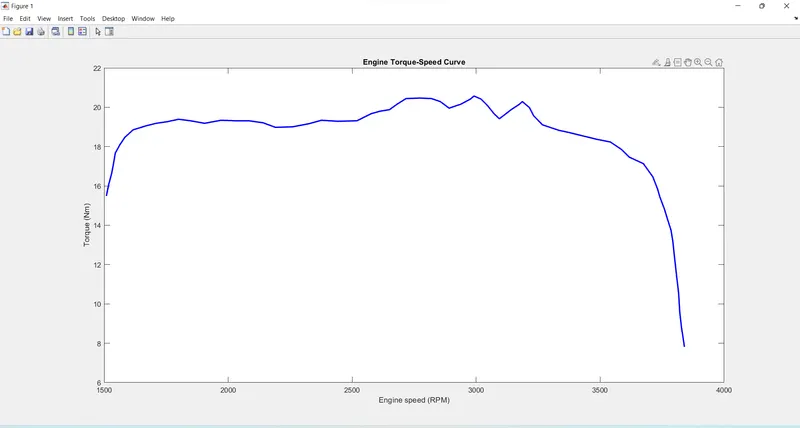
The torque and speed are taken from the MATLAB workspace window to the generic engine block to generate the output speed.This plot is common for all the cases because it is default engine.
VELOCITY SPEED:
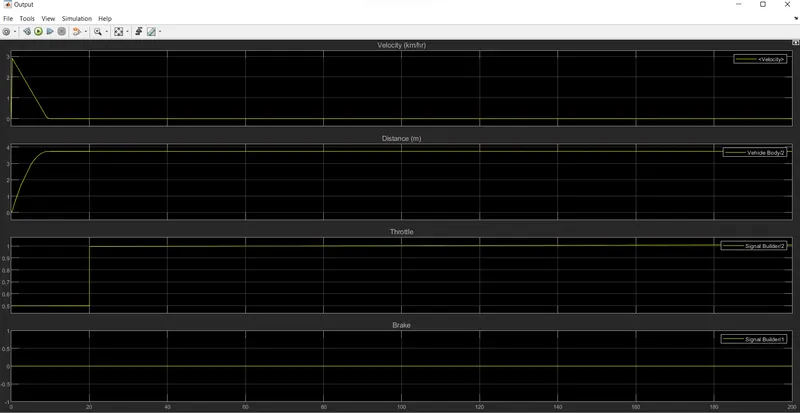
In the above graph it is clearly shown that the velocity increases rapidly and reaches the peak point at 30 km/hr and decreases to zero and remains constant.
The brake input value is zero, it has no effect on velocity.
CVT SHAFT SPEED:
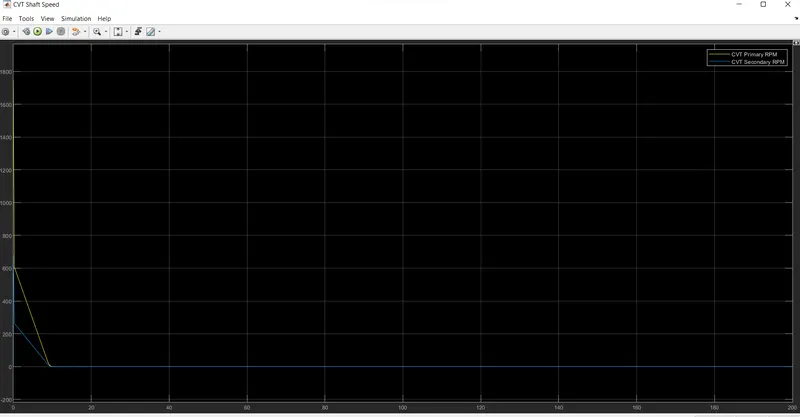
The above graph describes variation in angular velocity of input and output shafts of the variable gear transmission system. these values differ according to the gear ratio.
MODEL 2:
BAJA ATV MODEL WITH DASHBOARD
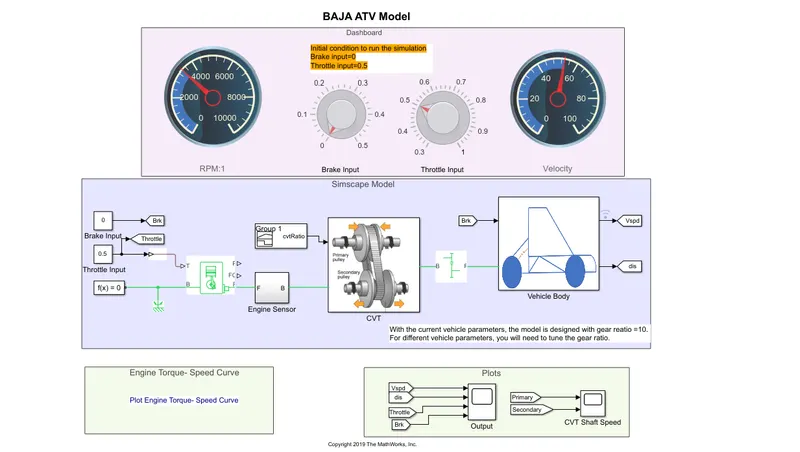
In this model throttle and brake are controlled by user knob. we have replaced the signal builder with two seperate constant blocks.
OUTPUT PLOT FOR VELOCITY SPEED:
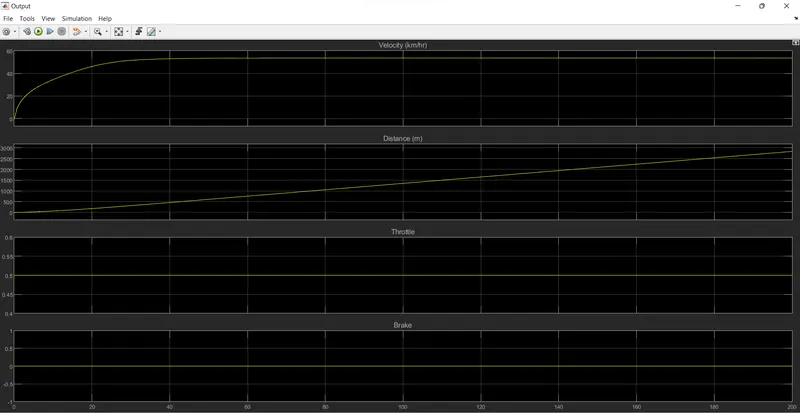
From the above graph it is observed that velocity increases drastically from 0 to 50 kmph when throttle value is 0.5 and brake value is 0.
OUTPUT PLOT FOR CVT SHAFT SPEED:
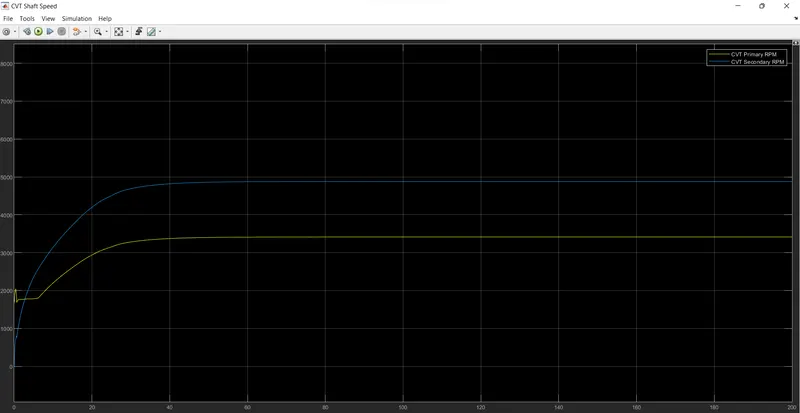
From the above graph its is clearly shown that the CVT secondary RPM increases compare to CVT primary RPM (input).
MODEL 3:
BAJA ATV MODEL- MAPPED LOOKUP TABLE WITHOUT DASHBOARD
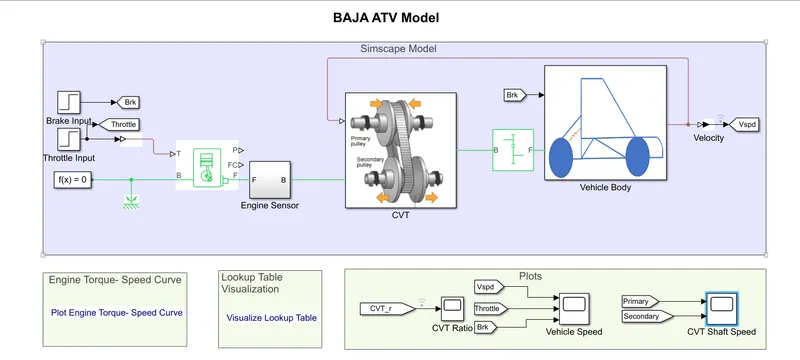
The only difference between this model and the first model is that, in this modelthe gear ratio input to CVT is provided using a lookup table.
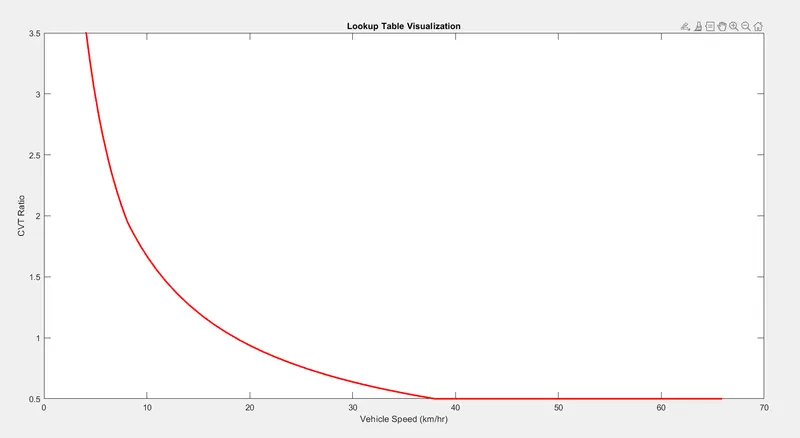
LOOKUP TABLE VISUALIZATION:
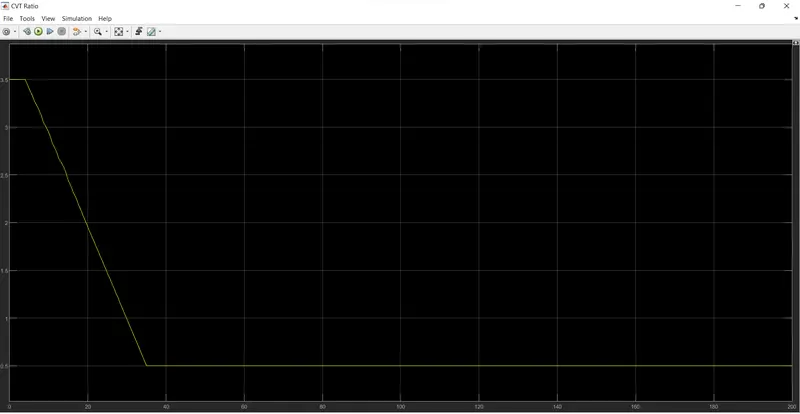
CVT RATIO:
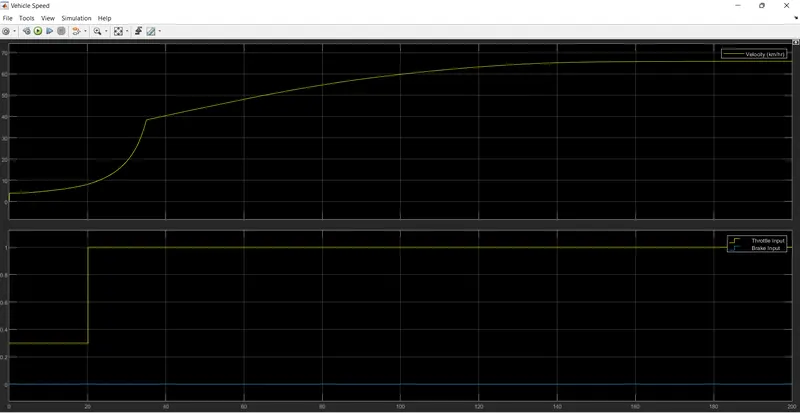
OUTPUT PLOT FOR VELOCITY SPEED:
OUTPUT PLOT FOR CVT SHAFT SPEED:
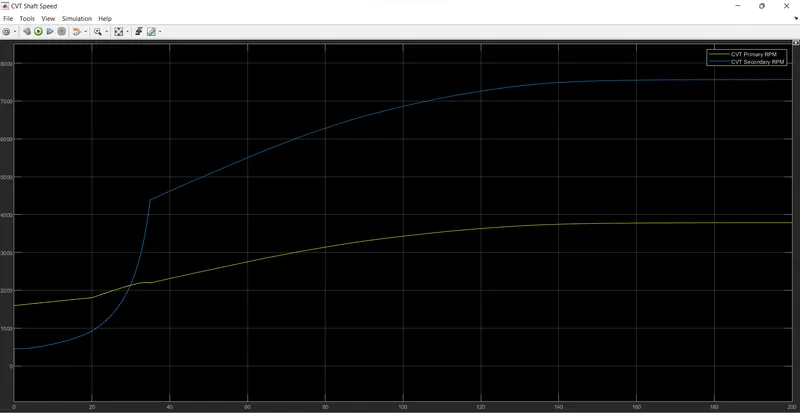
Both results are similar as that of the first case because the simulink parameters are same.
MODEL 4:
BAJA ATV MODEL- MAPPED LOOKUP TABLE WITH DASHBOARD
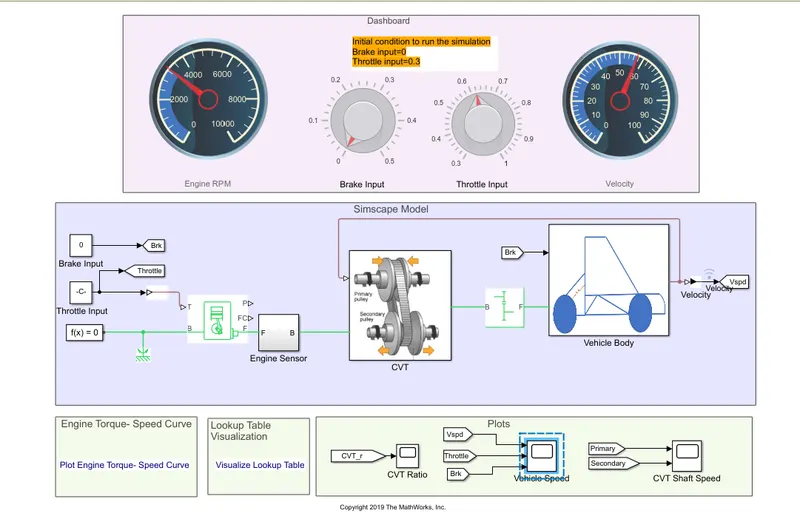
In this model a dashboard is used to control the throttle and brake knobs.
OUTPUT PLOT FOR VELOCITY SPEED:
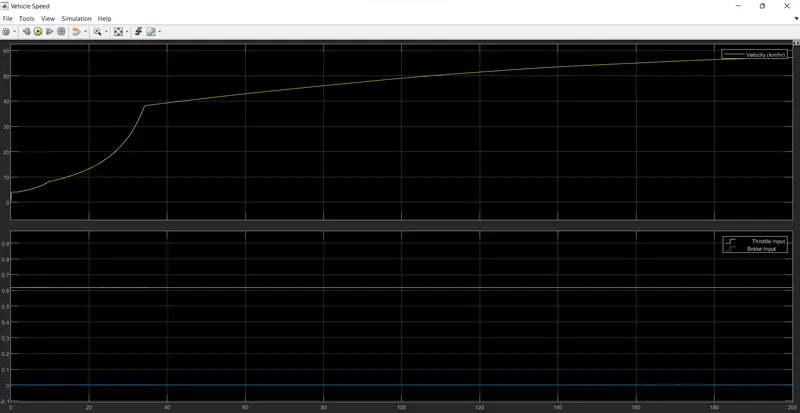
This graph is similar to ATV model with dashboard case. when you increase the braking value the speed of the velocity decreases.On increasing the throttle value the speed of the velocity increases.
OUTPUT PLOT FOR CVT SHAFT SPEED:
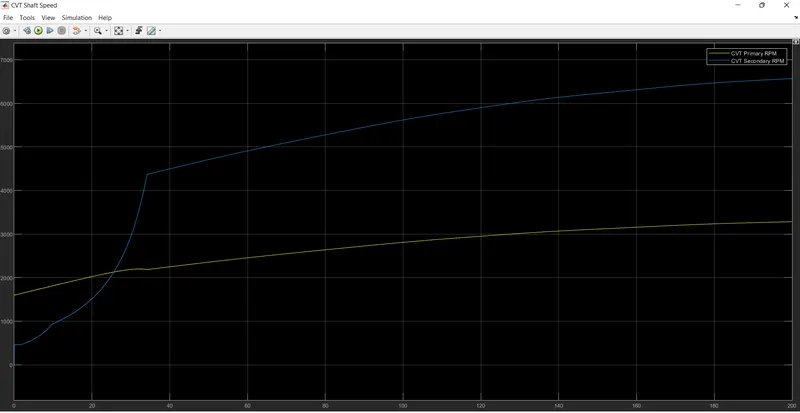
This graph indicates the variation in rpm of cvt primary and secondary shaft according to the input parameters.
CONCLUSION:
This models helps us to understand the performance of the vehicle under the constructed braking and throttle system. It also helps us to calculate the maximum speed of the vehicle.
Thus we studied and analyzed the four types of BAJA ATV MODELS and stored the outputs.