Week -2
SIMULINK MODEL FOR DOORBELL & THERMISTOR
AIM :
1. To make simulink model of doorbell using solenoid block.
2. To sense the temperature of a heater & turn on or turn off the fan using thermistor.
OBJECTIVE :
- Make a simulink model of doorbell using solenoid block.
THEORY :
Doorbell -
- The doorbell is a device having mechanical and electrical component produce sound on pressing the button.
- When the switch is pressed, the circuit loop is completed which causes the current to flow through the circuit, while passing the Solenoid it genrates the electromagnet at desired space, which allows the plunger to move,due to which it hots the bell and produce sound.
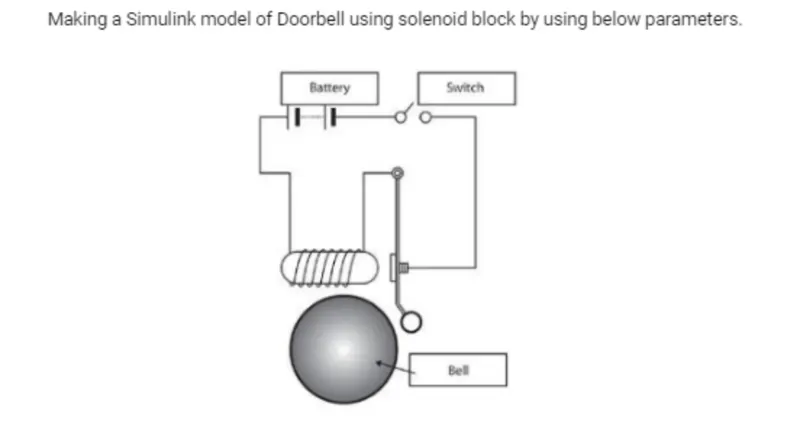
Solenoid - A solenoid is a device comprised of a coil of wire, the housing and a moveable plunger (armature). When an electrical current is introduced, a magnetic field forms around the coil which draws the plunger in. More simply, a solenoid converts electrical energy into mechanical work.
Simulink model for Doorbell:
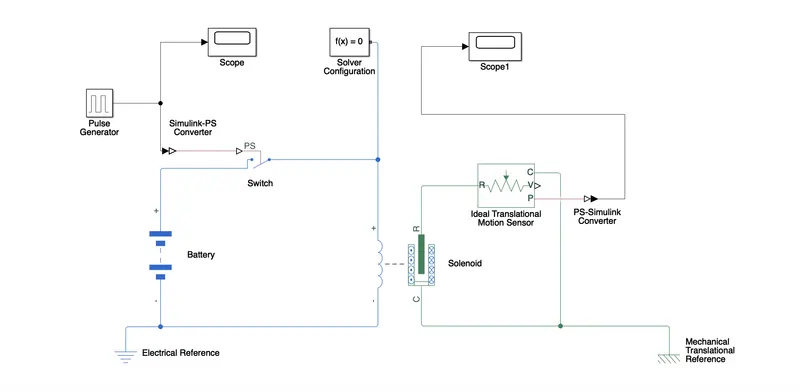
Explanation :
In simulink, we use blocks to represent any system to get the desired output.In this projects, we use some blocks to get our desired output.
1)Pulse generator : Pulse generator is either an electronic circuit or a piece of electronic test equipment used to generate rectangular pulses. Pulse generators are used primarily for working with digital circuits, related function generators are used primarily for analog circuits.
2)Simulink -PS converter :It converts the simulink input signal into a physical signal.
3) Switch : Switch controlled by an external physical signals.
4) Battery : It gives the power to the close loop.
5) Electrical reference : It shows connection to electrical ground.
6) Solenoid : Electrical characteristics and genrated force of solwnoid.
7) Ideal translational motion sensor : It is a motion sensor in mechanical translation systems.
8) PS-Simulink converter : it converts physical signals into simulink outpt signal.
9) Mechanical Translational Reference : Reference connection for mechanical translational parts.
10) Scope : It displays signals genrated during simulations.
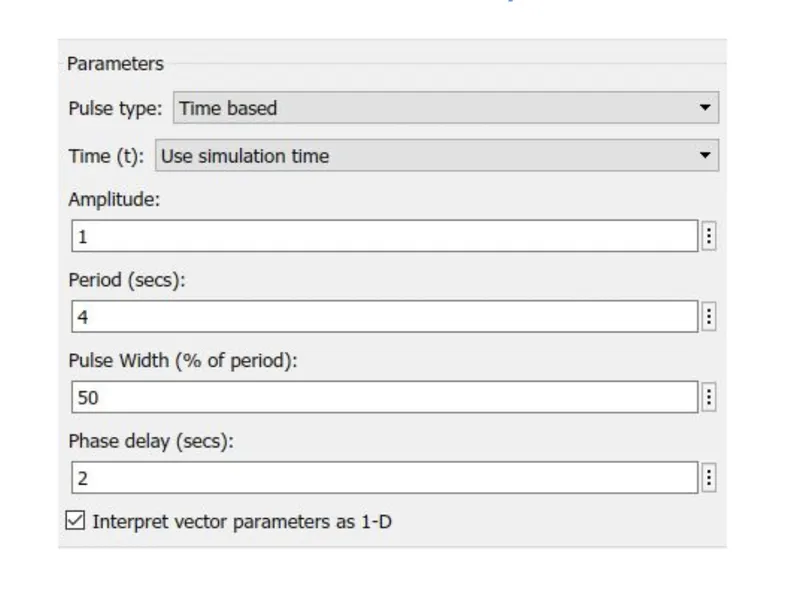
Parameters -
OUTPUT :
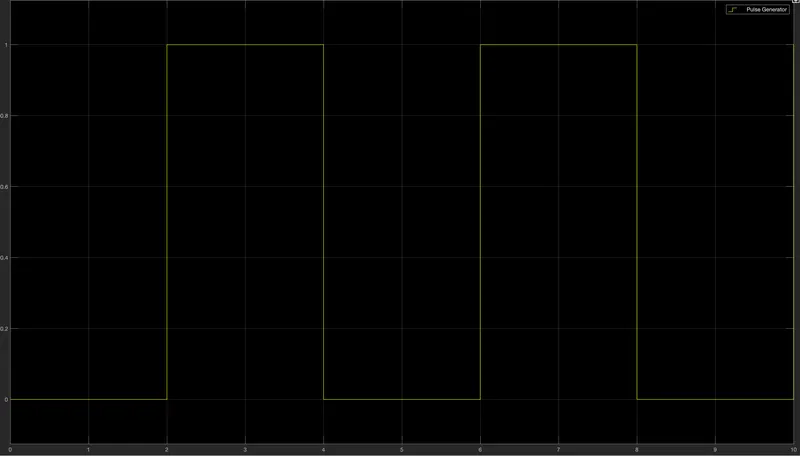
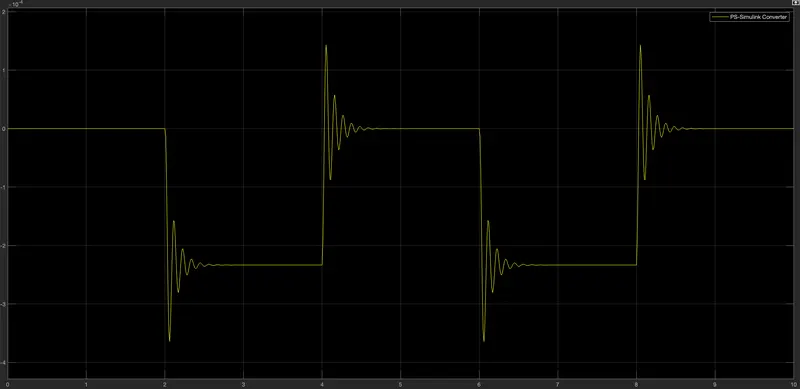
- From the above 2 graphs, we can observe that pluger is moved from its original position to some amplitude with a time delay of 2sec.
- Then it hit the bell and pause there for 2 sec and come to its initial position.
Conclusion for Doorbell -
When the switch is closed the solenoid block receives electrical power from the battery and plunger moves from port R to port C to hit the bell & produce sound.
Physical movements of the plunger is oberved by using translational motion sensor & physical output is converted into simulink output model is displyed in the scope .By reducing the spring constant value and increasing the damping value vibrations will be reduced.
PART 2 :
Thermistor :
A thermistor is a resistance thermometer or a resistor whose resistance is dependent on temperature.
Condition :
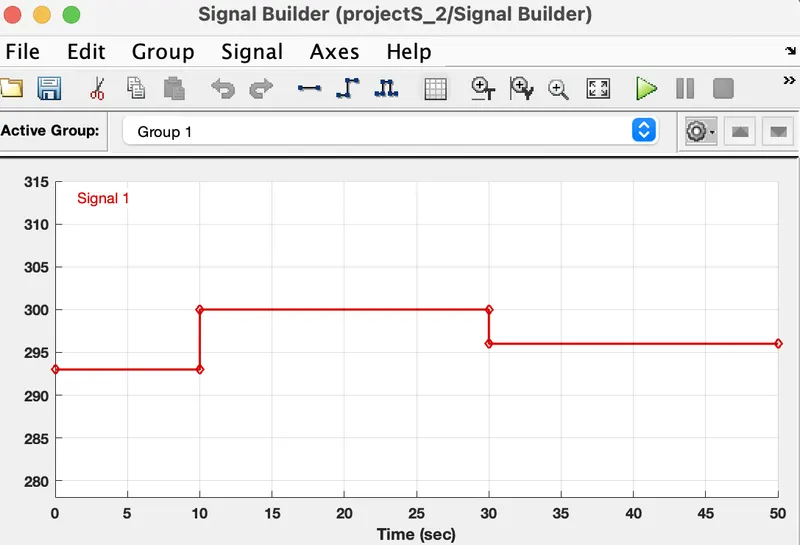
- Temperature source : 20°C from 0 to 8 seconds, 27°C from 10 to 30 seconds, 23°C , OFF otherwise.
- Fan conditions: ON if the temperature above 25°C, OFF otherwise.
Simulink model:
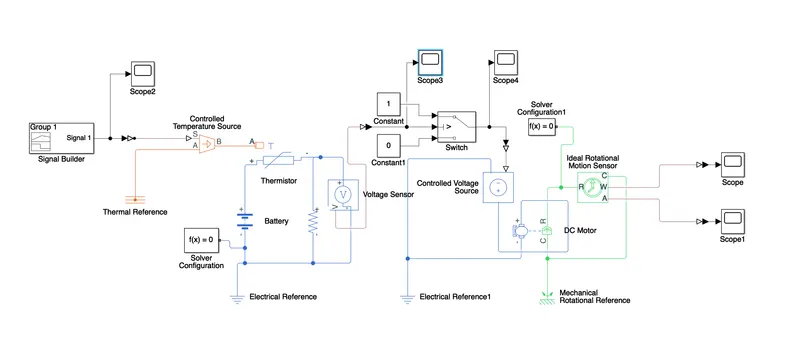
Blocks used in this model with their functions :
1. Thermistor : Temperature sensing element, negative temperature coefficient thermistor using B-parameter equate.
2. Controlled temperature : This blocks represents an ideal energy source in a thermal network that can maintain a controlled temperature difference regardless of the heat flow rate.
3. Signal builder : function to create and across signal.
4. DC voltage source : The DC voltage source block maintains a time invarient (constant) voltage across its output terminal, independent of the current through the source.
5. Voltage sensor :A voltage sensor is a sensor used to calculate and monitor the amount of voltage in an object. Voltage sensors can determine the AC voltage or DC voltage level. The input of this sensor is the voltage, whereas the output is the switches, analog voltage signal, a current signal, or an audible signal.
6. Switch : The switch blocks passes through the first input or the third input signal based on the value of the second input.The first and third inputs are DATA inputs. the second input is a control input. specify the condition under which the block passes the first input by using the criteria for passing first input and Threshold parameter.
7. Fundamental blocks: For output and eletrical and mechanical reference.
Explanation :
- As per the given condition for time and temperature given the values to the signal builder and configure as per our condition.
- There is a Simulink - PS converter that converts simulink signal to Physical signal.
- Given this signal to the Controlled temperature source block which represents an ideal source of thermal energy that is powerful energy that is powerful enough to maintain specified temperature difference across the source regardless of the heat flow consumed by the system.
- The signal then passes to Thermistor which connected to the Battery.
- The voltage sensor is connected to a resistor which is used to measure the voltage as a threshold value for the condition of our circuit.
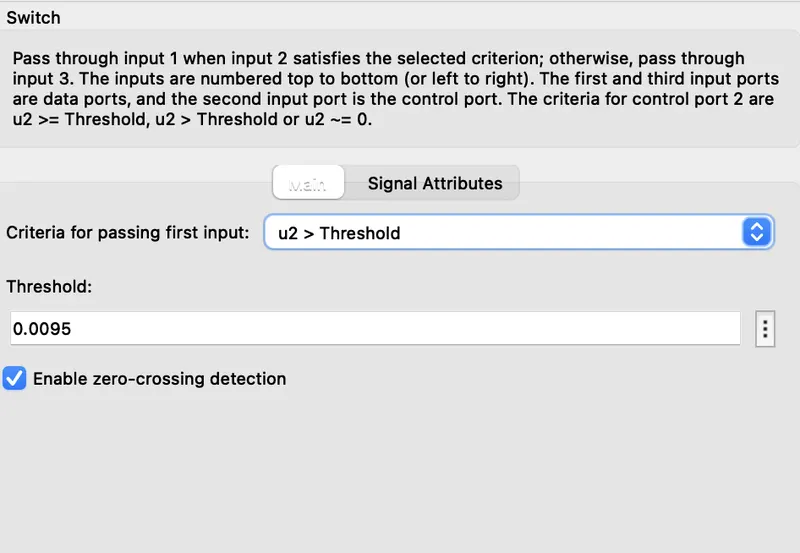
- As per Fan condition that ON if the temperature above 25°C, OFF otherwise.We use the switch and provides a thershold value.
- if the signal values is greater than the threshold value then turn it ON otherwise it will be turned OFF.
Threshold value :
OUTPUT:
Angular velocity :
Angular displacement :
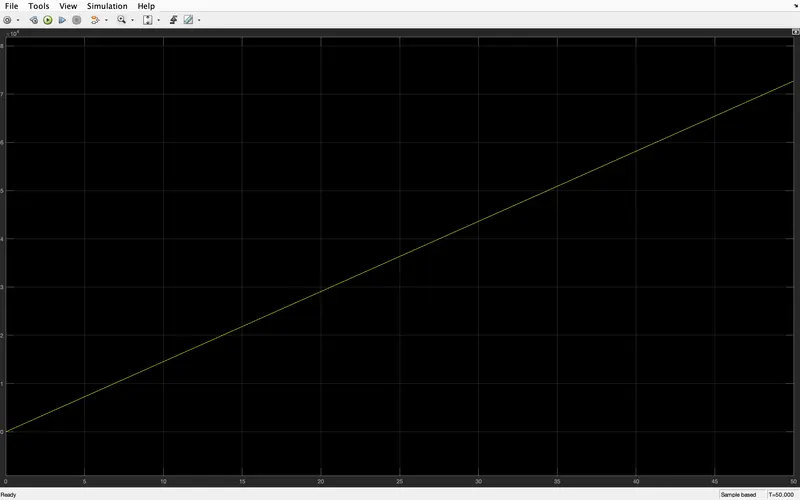
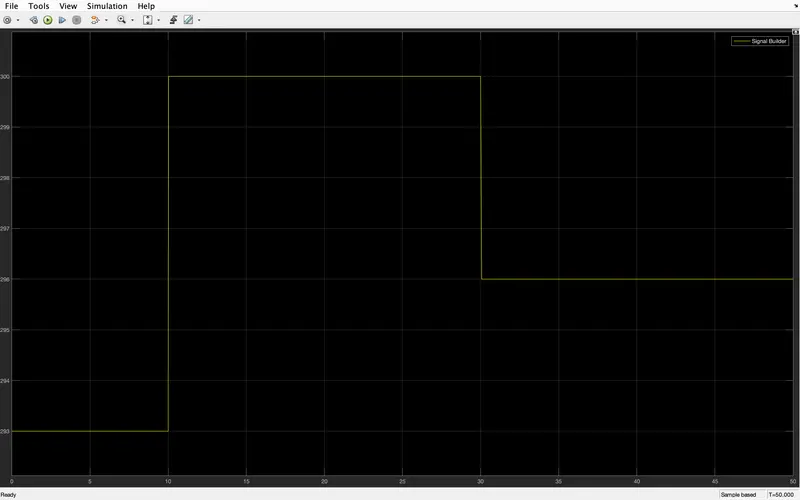
- The Angular Velocity graph shows that if the temperature is 20°c (293K) the fan is off for the first 10 sec when the temperature reaches 25°c .(300K) then the fan is for the next 20 sec and when the temperature comes to 23°c (296K) fan gets off.
- Output shows that switch is ON when the temperature is above 25°c which is in an interval of 10 to 30 secs.
Conclusion:
- In this way, in the first part, we use solenoid to convert electrical energy into mechancial energy and made a simulink model into a doorbell.
- In the second part, we use the thermistor to sense the temperature,and according to the given condition, we put the threshold value to the switch for turn ON and OFF the fan.