Week -2
PART 1:
AIM: To make a simulink model of doorbell using solenoid block.
THEORY:
DOORBELL USING SOLENOID:
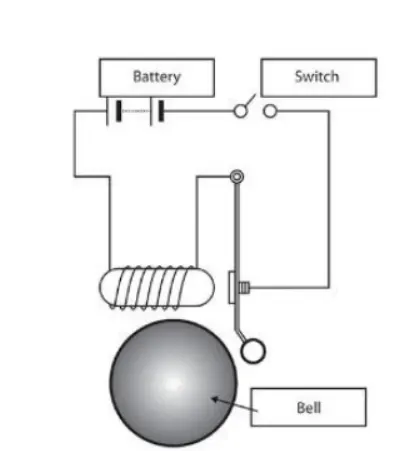
The solenoid is an electromagnet. On passing current through the conducting wires a magnetic field is generated
around it which attracts magnetic materials. This phenomenon is used in the bell. When the switch of the bell is pressed
the current passes through the circuit, exciting the electromagnet and pulling the plunger towards the metal portion.
This produces a ringing sound.
SIMULINK MODEL:
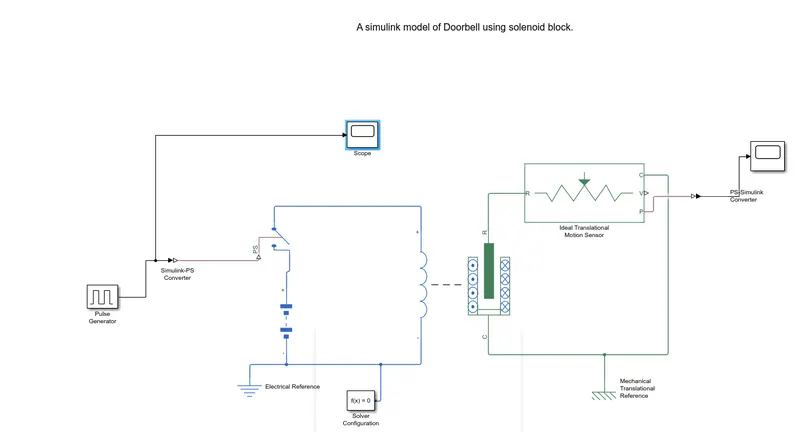
In this simulink model i have used pulse genarator block as an input. The pulse is such that every 2 seconds its ON.
BLOCKS USED:
- Pulse generator
- Simulink-PS converter
- PS-Simulimk converter
- Solenoid
- Battery
- Switch
- Scope
- Solver configuration
- Ideal motion translational sensor
- Electrical reference
- Mechanical translational reference
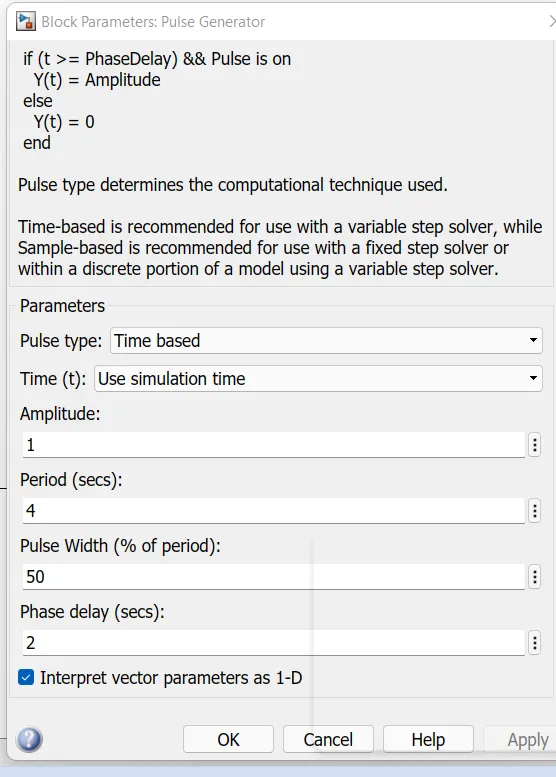
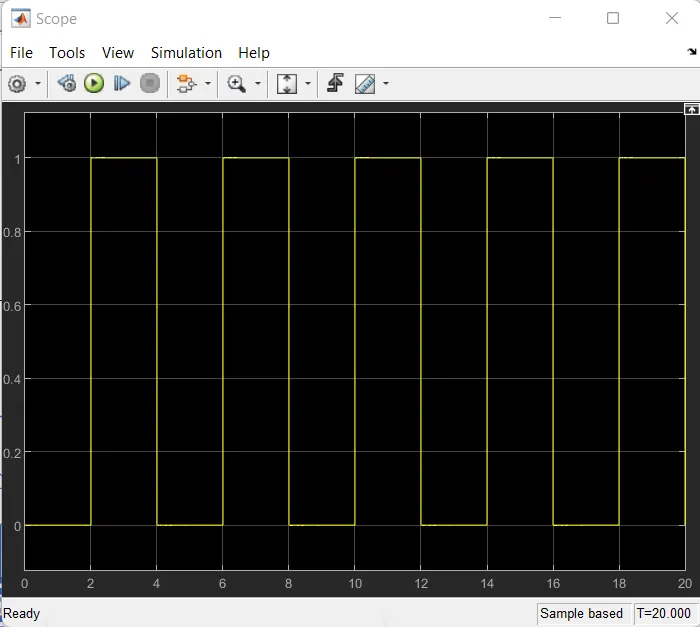
The above image shows the pulse pattern given as input. This cycle repeats for 20 seconds.
As we want the circuit to be close only in the interval of 2 seconds a switch block is used. The switch block has a
threshold value of 0.8. The threshold of pulse genarator is 1. The switch will only close if the value of threshold
is more than 0.8. This then connected to solenoid block which contains the plunger arrangement. Initially when
the plunger is away from C the value of X is 5mm and when the plunger of X is 0mm. This can be seen from output
graph of plunger distance vs time. The position of the plunger is obtained by using the Ideal Translational Motian
Sensor.
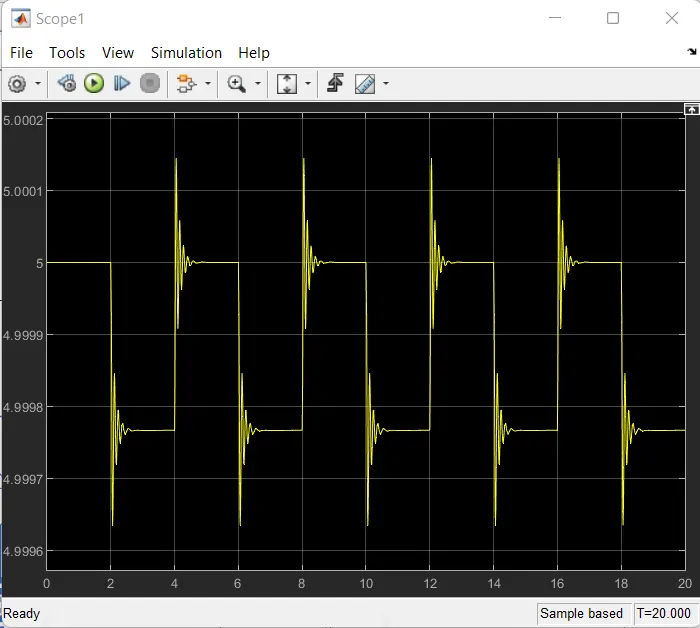
There are some spikes in the graph when switch is closed due to electromagnetic interferences.
PART 2:
AIM: Use a thermistor to sense the temperature of a heater and turn on or off the fan as per the conditions.
OBJECTIVES:
Temperature source: 20 °C from 0 to 10 seconds,
27 °C from 10 to 30 seconds,
23 °C from 30 to 50 seconds .
Fan conditions: ON if the temperature above 25 °C off otherwise.
INTRODUCTION:
Thermistor: A thermistor is a type of resistor whose resistance is dependent on temperature, more so
than in standard resistors. The word is a combination of thermal and resistor.
FINAL BLOCK DIAGRAM:
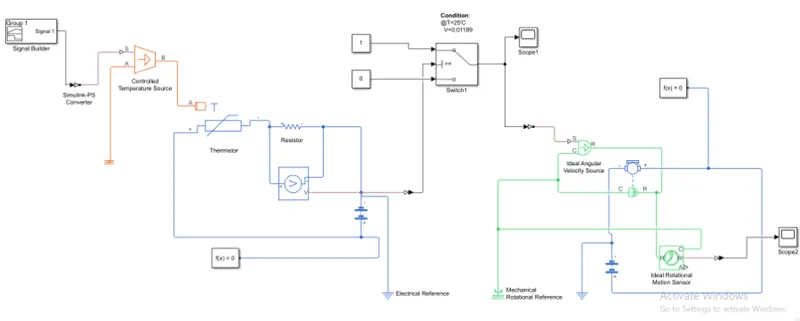
In the above block diagram, first half represents the voltage produced to the output for the given condition.
1. The input temperature are given by Signal Builder in the input.
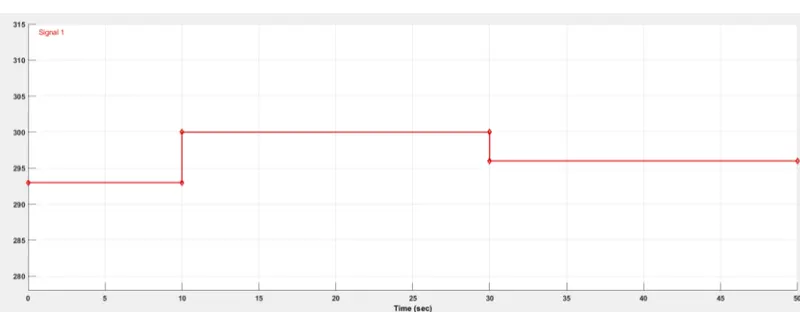
Temperature are given in kelvin to be taken as values. 3 inputs are given in periode of 50 secs( 20°C,27°C, 23°C)
2. It is then connected to Controlled temperature source block through Simulink-PS converter.
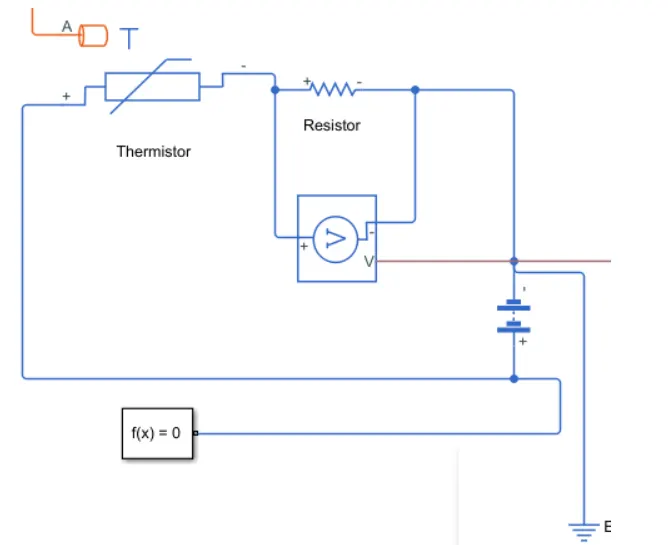
- It is connected to thermistor to give resistance in accordance with the input temperature.
- A Voltmeter is connected in parallel to a resistor which is series with the thermistor to determine the volatage
ouput signal given by thermistor since same resistance will be exhibited by the resistor.
- A solver configuration and an electrical references provided to the circuit.
3. After that,
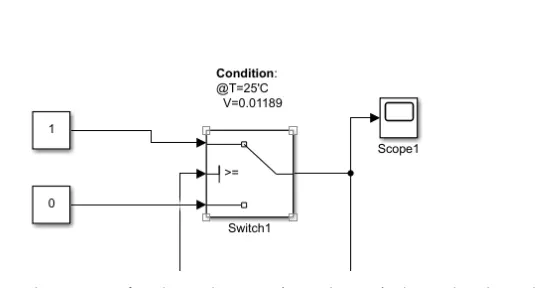
- The output for the voltmeter is to the switch to check and satisfy the conditions.
- Voltage threshold value of 25 °C is found before and given as input to the switch as condition.
- If the temperature exceeds the threshold, gives out zero.
If it is below the threshold, it gives the output value signal.
OUTPUT SCOPE 1:
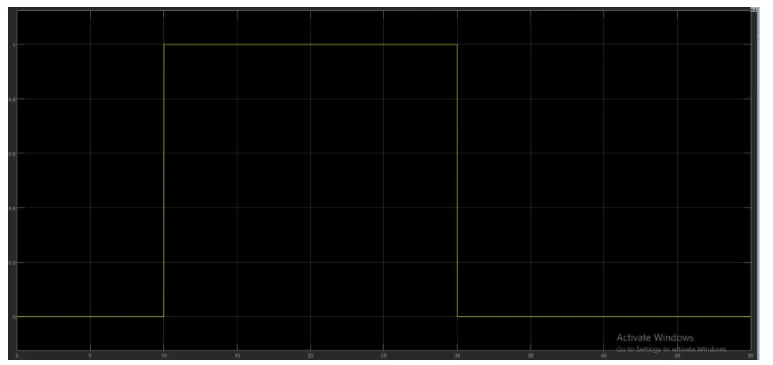
The pulse generated is given input to a DC motor/fan.
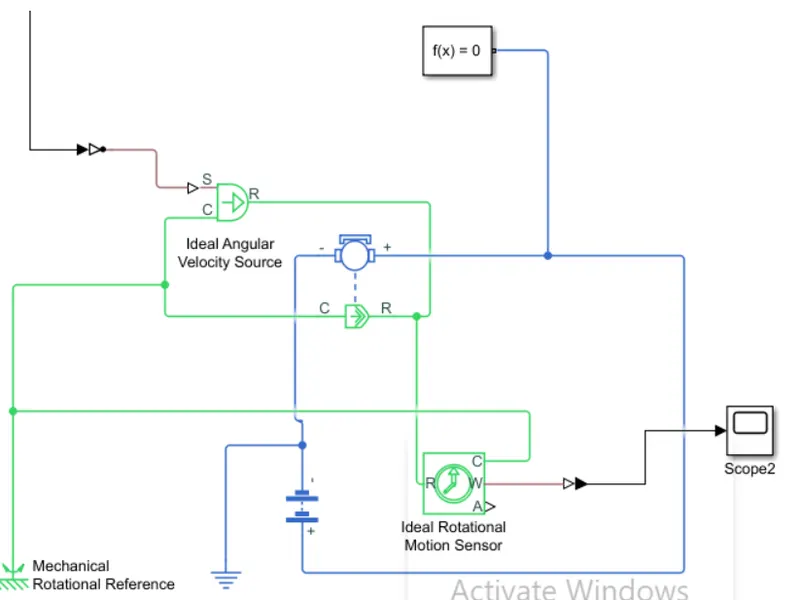
- Output from the switch is given to the velocity source which is connected to a DC motor with a battery.
- To plot the motion fan, a 'rotational motion sensor is 'connected'.
- Mechanical and Electrical references with solver configuration are also provided.
- Motion of the fan is plotted by 'scope' block through PS-Simulink converter.
OUTPUT SCOPE 2:
CONCLUSION:
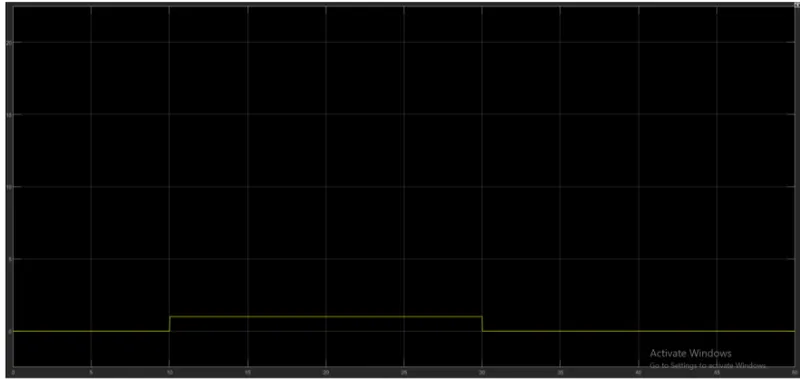
1.It is inferred that only when temperature exceeds over 25 °C i.e. at 27°C from 10 to 30 seconds
of time, the fan shows displacement which is shown in 'output scope 2'.
2.Hence, the given all conditions are satisfied.