Week 14 challenge
Objective
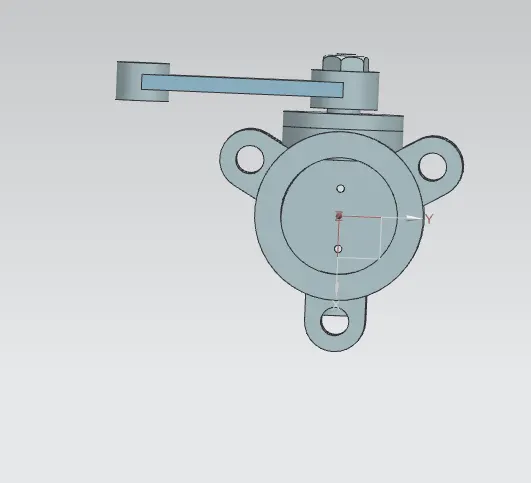
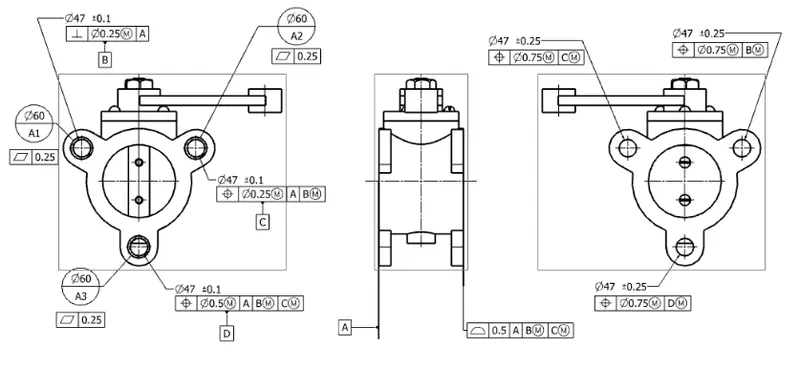
The objective of this project is to model a butterfly valve and apply GD&T to the different parts and assembly of the butterfly valve.
Introduction
A Butterfly valve is a quarter-turn rotational motion valve, that is used to stop, regulate, and start a flow. Butterfly valves are easy and fast to open. A 90° rotation of the handle provides a complete closure or opening of the valve. Large Butterfly valves are usually equipped with a so-called gearbox, where the handwheel by gears is connected to the stem. This simplifies the operation of the valve, but at the expense of speed.
Applications of Butterfly Valves
A Butterfly valve can be used in many different fluid services and they perform well in slurry applications. The following are some typical applications of Butterfly valves:
- Cooling water, air, gases, fire protection, etc.
- Slurry and similar services
- Vacuum service
- High-pressure and high-temperature water and steam services
Advantages of Butterfly Valves
- Compact design requires considerably less space, compared to other valves
- Light in weight
- Quick operation requires less time to open or close
- Available in very large sizes
- Low-pressure drop and high-pressure recovery
Disadvantages of Butterfly Valves
- Throttling service is limited to low differential pressure
- Cavitation and choked flow are two potential concerns
- Disc movement is unguided and affected by flow turbulence
Conclusion
The Butterfly valve is successfully created and GD&T is applied to all the different parts and the assembly of the Butterfly valve.