Underbody Coating
UNDERBODY COATING
The underboady used to prevent car bodies against rust and corrosion.In indian road conditions, an car prone to corrosion.This under boady helps in protection from dust and monisture also some other factors such as poor road condions, The metal and salt water during monsoon which plays an important role in damaging the underbelly of a car.
AUTOMOTIVE COATING PROCESS
The automotive coating process of 5 steps
- pre-treatment
- Electrodeposition (ED) both
- Poly vinyl chloride (PVC)
- A primer is then applied to promote adhesion between the surface and the basecoat.
- Finally, the topcoats that include a basecoat and clear are applied.
PURPOSE OF UNDRBODY COADING
1. Fights of rust
It play an imortant role in keeping corrosion at boy. Underboady coating can come in handy especially if you live near the sea, where too much humidity, and rusting is just one of those everyday things. The seriously consider undercoating if you reside in a place where it snows in winter.
2.Absorbs noise
the going the car underboady can soften the noises that reach the cabin. Since the underboady coating is often made up of rubber it absorbs some of the rackets. The occupant of the car cold spare themselves of the road noises.
3.Reinforcemend
If your car comes with stock underbody coating, using another coating on top of it, is not going to hurt. It will offer additional reinforcement, protecting the underbody from water, road debris, gravel and small pebbles
4.Prolong Cars Life
Good undercoating not only defends the underbody from corrosion but also protects the engine and transmission as well, Less rusting coupled with slower wear and tear can surely add years to the lifespan of your vehicle. There would be fewer dents, dings and scratches on the undercarriage for you to fret about.
TYPES OF UNDERCOATING
1.Rubberized Underbody Coading
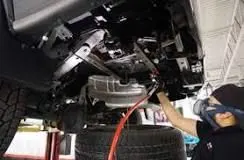
Underbody coating is usually a dense cladding based on rubber, applied uniformly to the
under carriage of the automobile. the normally sprayed on the car just out of the dealership and is clen. But even if you are getting the undercoating applied after a one are two years it is good.
2. Wax underboady coating
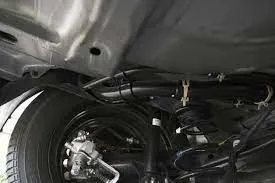
Underboady coating is a sprayed application based on wax or rubber under side of the vehicle. It is mainly designed the create a rust proof layer between the underneath of the vehicle and the water,ice and salts of the road.
3. Asphalt based automotive undercoating
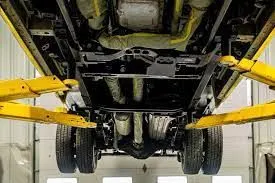
Best suited for lorries, trucks and large vehicles this provides a greater degree of protection compared to rubber based coatings. Asphalt-based coatings contain little amounts of rubber for sound insulation purposes. The process of applying this coating is a bit time consuming though.
4. Polyurethane Underboady Coating
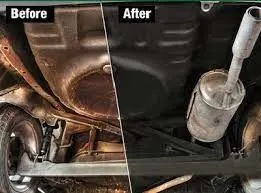
This coating closes up splits and fractures on the underbody of the vehicle. It offers up good protection against corrosion and also bonds with the metal. Unlike in the case of asphalt based coating, you can paint over the polyurethane coating.
Advantages
- Once coating on the protects on rust and corrosion
- The car was gose on the road NVH(Noice Vibration Harshness) levels.
- Prevents paint chipping
- Protects vital components
Disadvantages
- Undercoating will work best on new vehicles that have not been to road conditions.
- A used vehicles may already have residue on the bottom of the car or even have spots of rust and corrosion.
- Undercoating will not help you if corrosion needs to be removed first before it can be applied, whish can be expensive for you.