Week 12- Final project
Final Project: Door Panel Design in CATIA V5
Objective
To design a door inner panel in CATIA V5, incorporating:
- Draft Analysis (for manufacturability)
- Tooling Direction (Mold pull direction)
- Class A, B, and C Surfaces (aesthetic and structural surfaces)
- Closed Surfaces & Parting Lines (for Mold design)
What is a Door Inner Panel?
The door inner panel is a structural and aesthetic component of a car’s interior. It serves multiple functions:
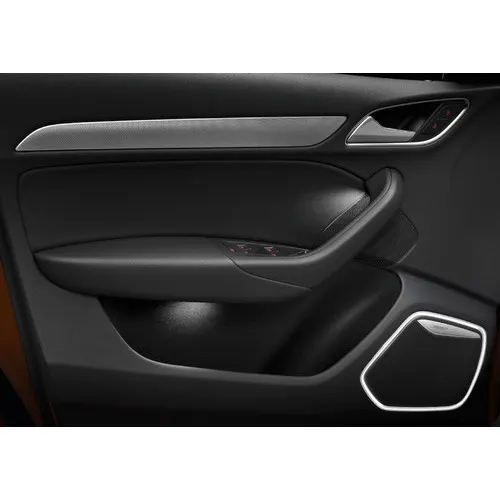
- Enhances visual appeal.
- Conceals wiring and internal components (e.g., speakers, window mechanisms).
- Comprises sub-parts like the upper/lower substrate, armrest, bottle holder, and garnish, ensuring ergonomic comfort and functionality.
Design Methodology
Using provided Class A surfaces and master sections; we developed solid models for:
- Armrest
- Upper Substrate
- Lower Substrate
- Bottle Holder
Each part was designed with manufacturability in mind, ensuring proper draft angles and moldability.
Step-by-Step Design Process
1. Armrest Design
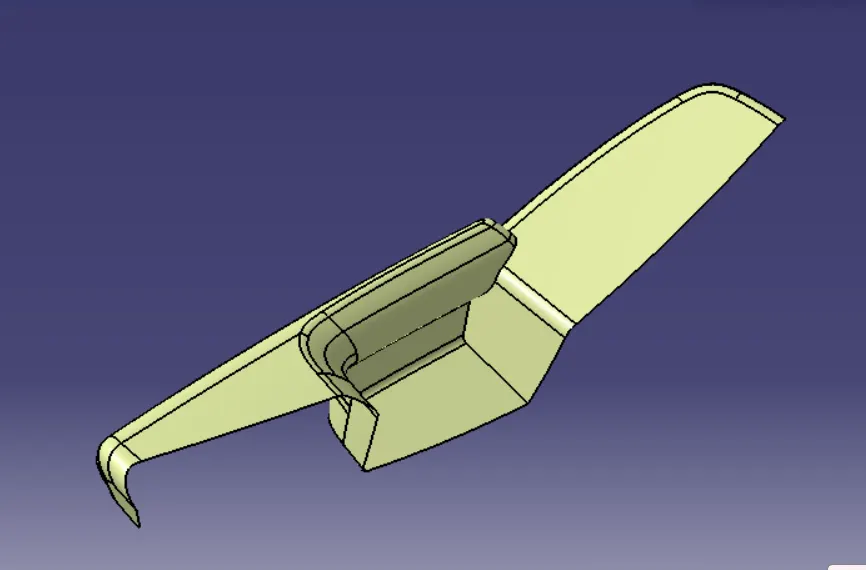
- Step 1: Copied the Class A surface and linked it to a new geometric set.
- Step 2: Conducted draft analysis—identified undercuts requiring side cores in the Mold.
- Step 3: Generated Class B surfaces (2.5mm offset from Class A) and Class C surfaces (structural supports).
- Step 4: Used Multi-Section Solid and Fill commands to refine complex geometries.
- Step 5: Combined surfaces into a closed solid body and validated with draft analysis.
Result: A manufacturable armrest with proper Mold considerations.
2. Upper & Lower Substrate
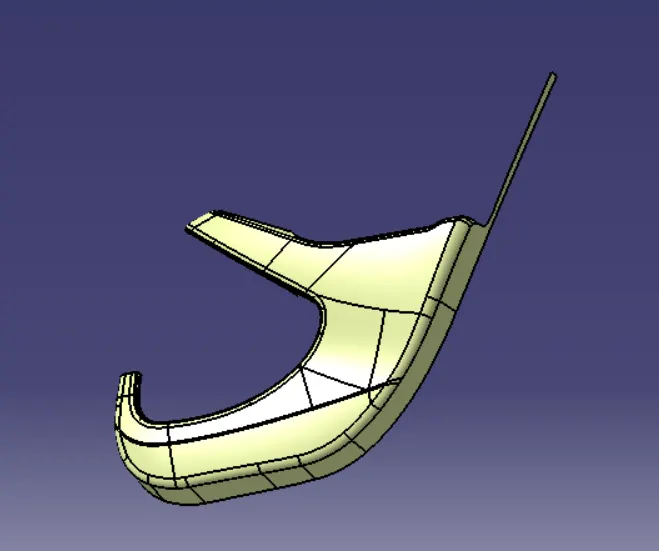
- Class A Surfaces: Reviewed for aesthetic continuity.
- Class B & C Surfaces: Created with offsets and joined for structural integrity.
- Draft Analysis: Confirmed moldability (some areas required side actions).
- Closed Solid Bodies: Ensured watertight geometry for tooling.
3. Bottle Holder
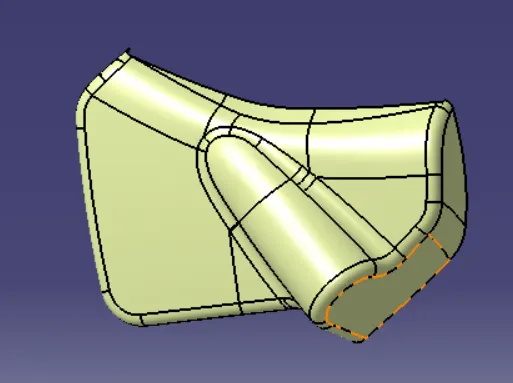
- Followed the same workflow:
- Draft analysis → Class B/C surfaces → Solid modelling.
- Added ribs for reinforcement.
Class B Features for Assembly
1. Doghouse (Snap-fit Feature)
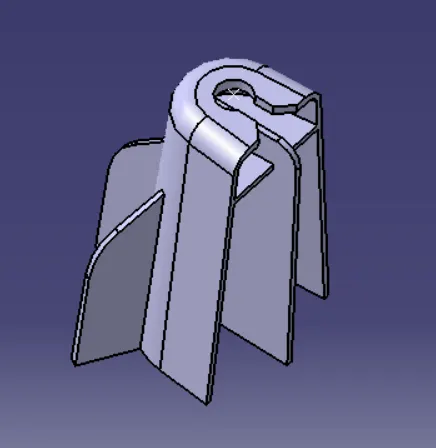
- Purpose: Secures panels using push pins.
- Design Parameters:
- Thickness: 3mm (for stress resistance).
- Ribs: Reinforce push-pin mounting points.
- Draft: 0.5° (for easy ejection).
2. Heat Stakes (Permanent Joints)
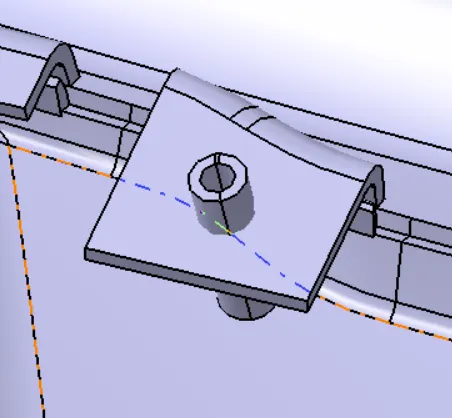
- Purpose: Bonds parts via heat welding.
- Design Considerations:
- 0.5° draft (max recommended).
- Used to attach armrest, bottle holder, and substrates.
Final Assembly
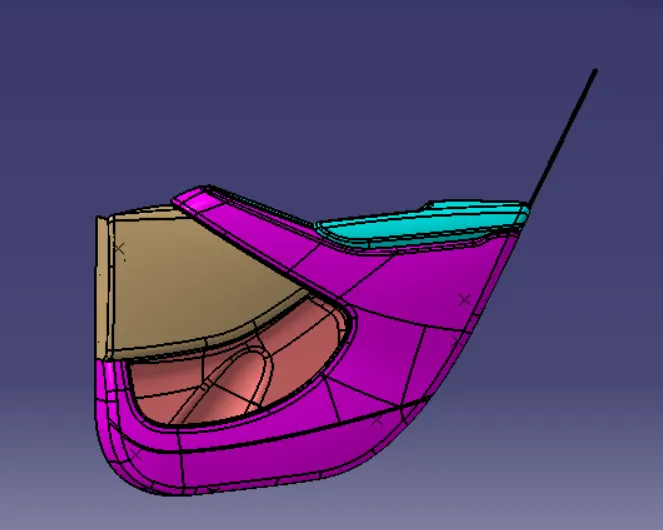
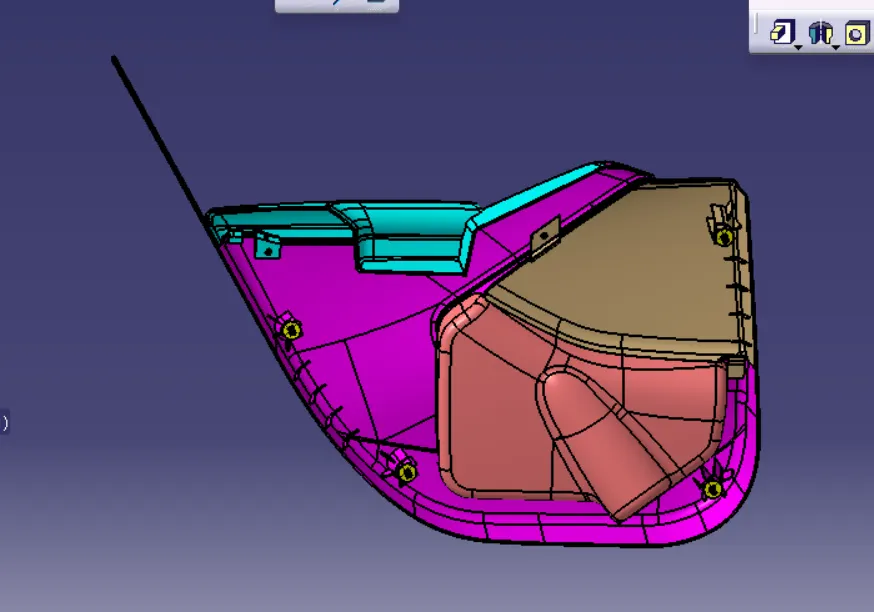
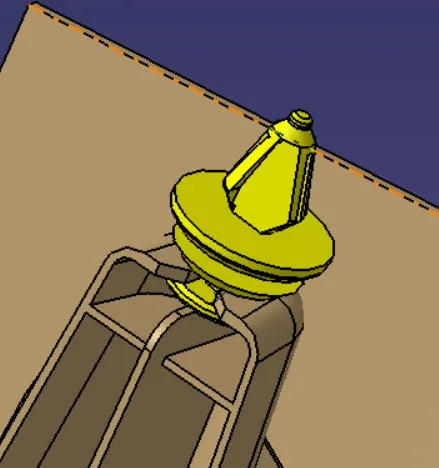
- Components were assembled using:
- Axis Constraints (aligning circular features).
- Offset Constraints (positioning relative to reference planes).
- Push pins were added to Doghouse features for secure fastening.
Conclusion
The door inner panel was
successfully designed, meeting:
✔ Aesthetic
(Class A) requirements
✔ Structural
(Class B/C) integrity
✔ Manufacturability
(draft, tooling direction, parting lines)