Week 12- Final project
- To create individual tooling axis for the parts and perform draft analysis on the class A surface
- To create the class B and class C surfaces from the given class A surface
- To form a solid geometry by combining all the surfaces
- To decide an attachment strategy for the part and create engineering features in reference from the master section provided
- To perform draft analysis on the solid part model with all engineering features
- To assemble all the components togehter to obtain the final trim
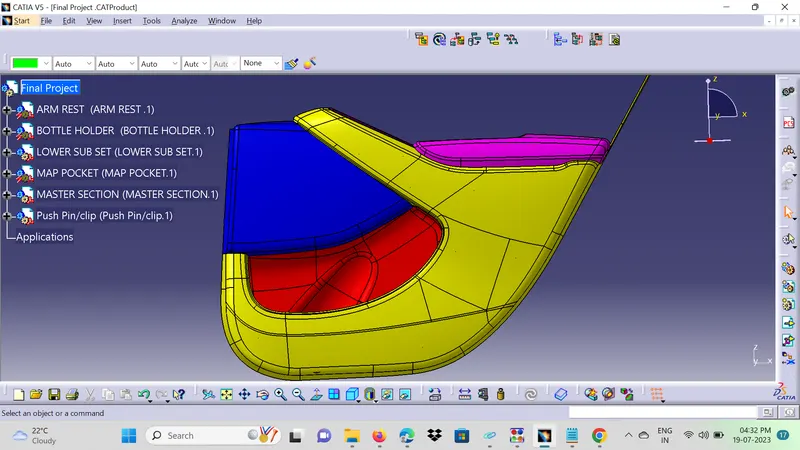
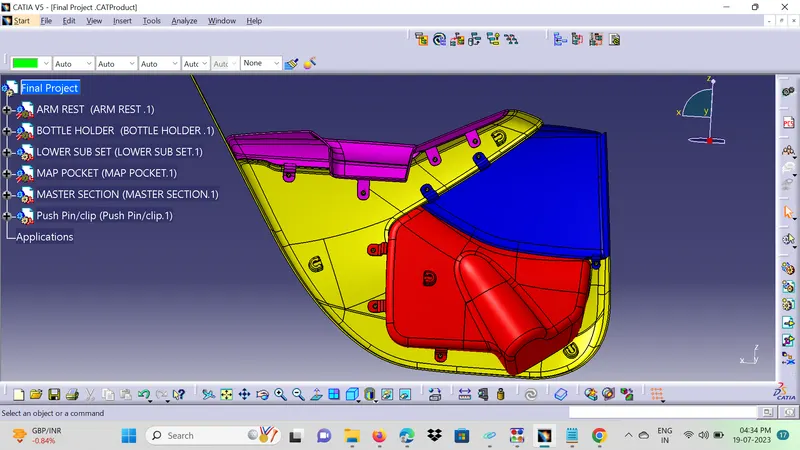
Steps Follwed for Completion of Project :-
The door trim panel is created by follwing steps -
- To check given Class A surafces for any modification.
- To segregate given surafces into separate part body namely Lower Substrate , Arm Rest , Map Pocket , Bottle Holder.
- To work individually on each part.
- To create tooling axis for part.
- Draft analysis on class A surafce.
- Creation of class B and Class C surafce.
- Craete closed body from Class A , B and Class C surface.
- Follwed same procedure to craete all parts .
- Then create attachement features for all parts.
- Then do Draft analysis on final parts and then constrain them for assembly.
Design Methodology:
Components of Door Trim panel:
- Arm Rest
- Lower Substrate
- Upper Map Pocket
- Lower Map Holder
1.ARM REST.
CLASS-A SURFACE.
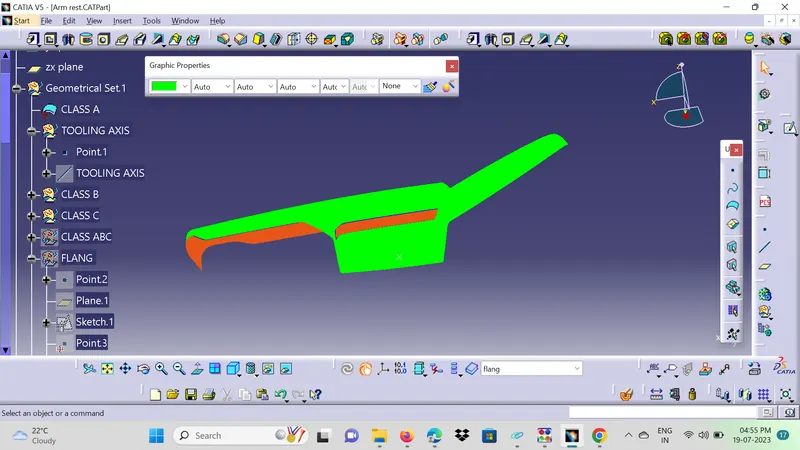
Tooling Axis Creation.
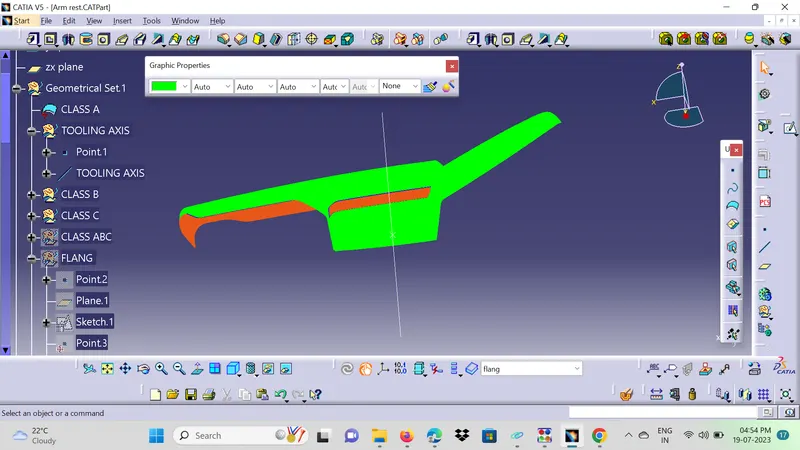 Class-B Surface Creation.
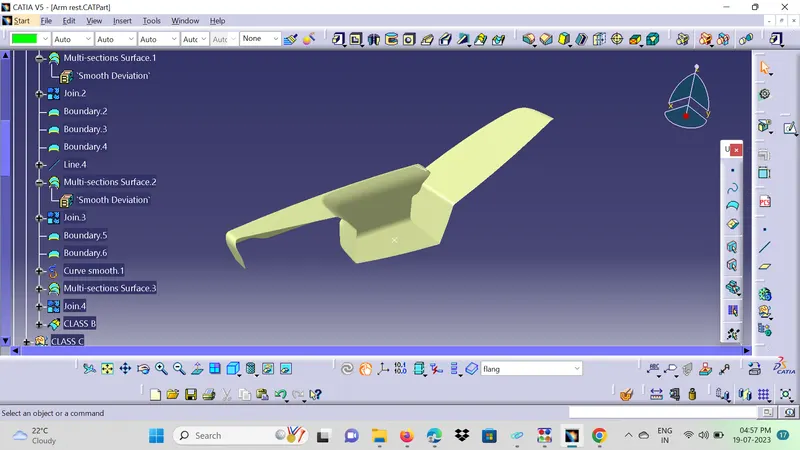 Class-C Surface Creation.
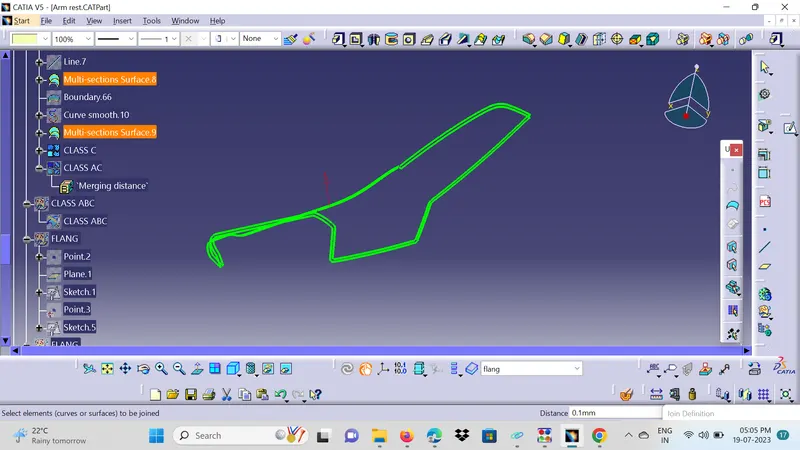
Final Surface.
The Class-A, Class-B and Class-C surfaces are joined together to form a closed surface.
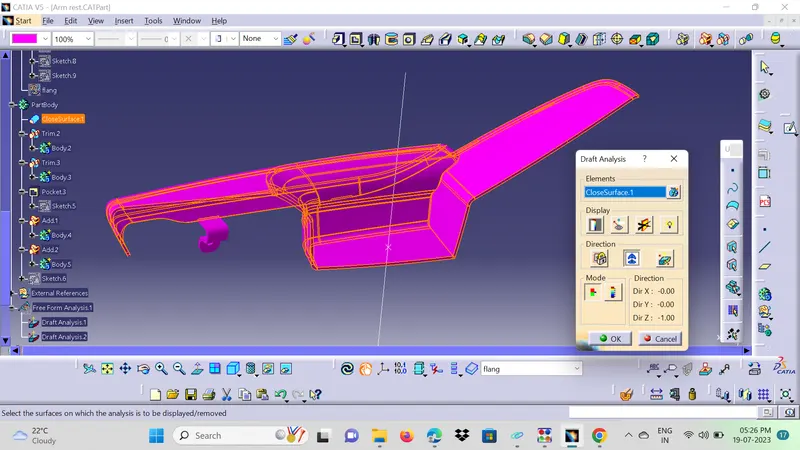
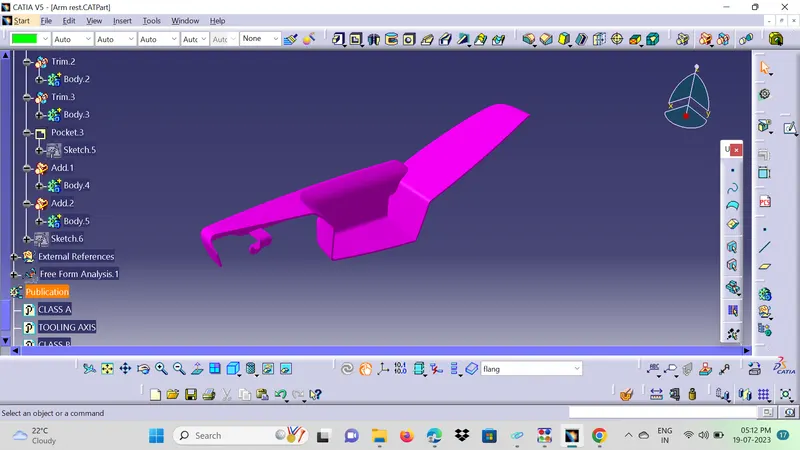 Draft Analysis.
Class-A Surface.
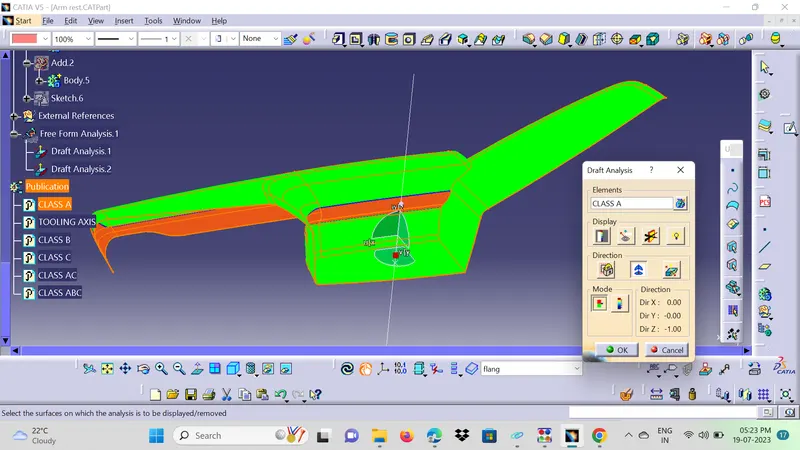
Closed Body.
2.LOWER SUBSTRATE.
Given Class-A Surface.
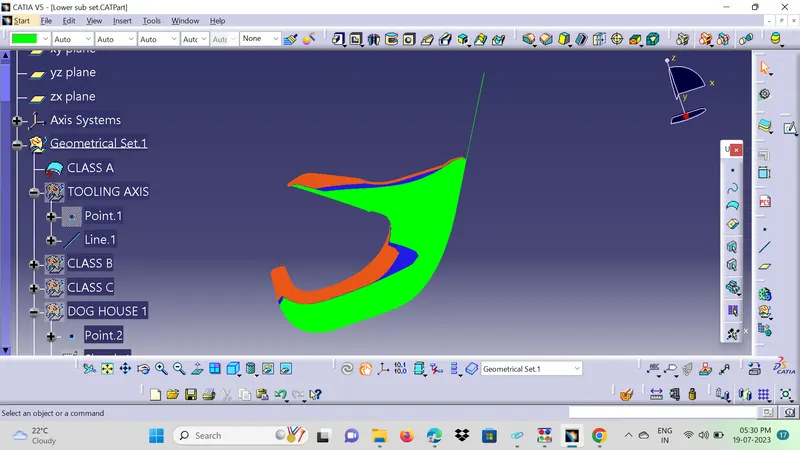
Tooling Axis Creation.
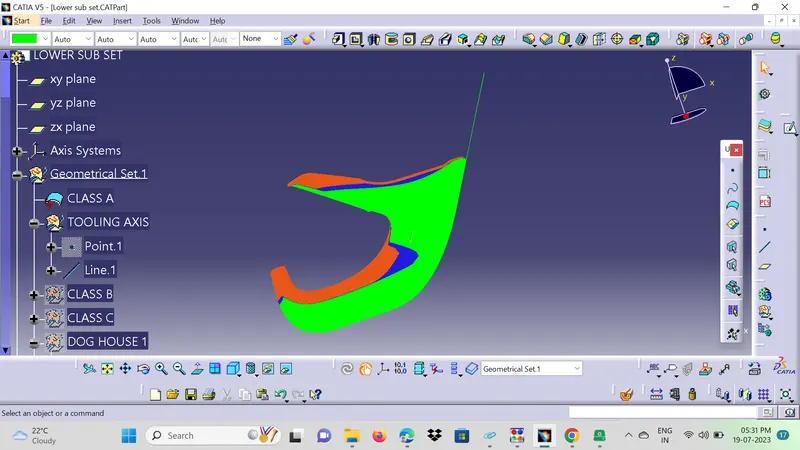
Class-B Surface Creation.
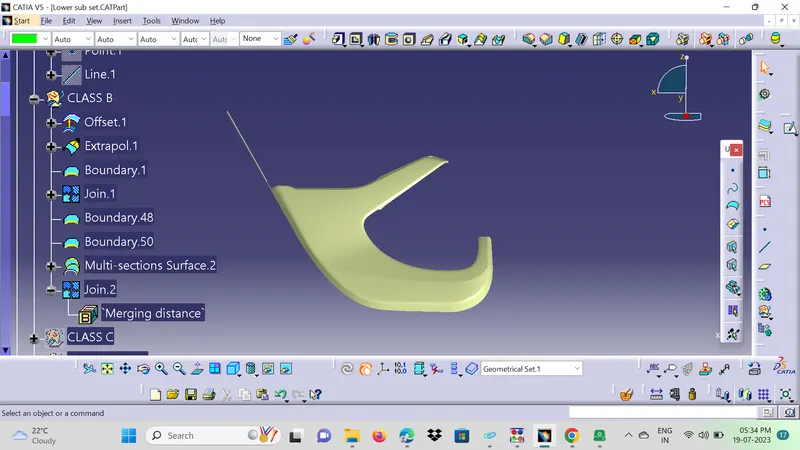
Class-C Surface Creation.
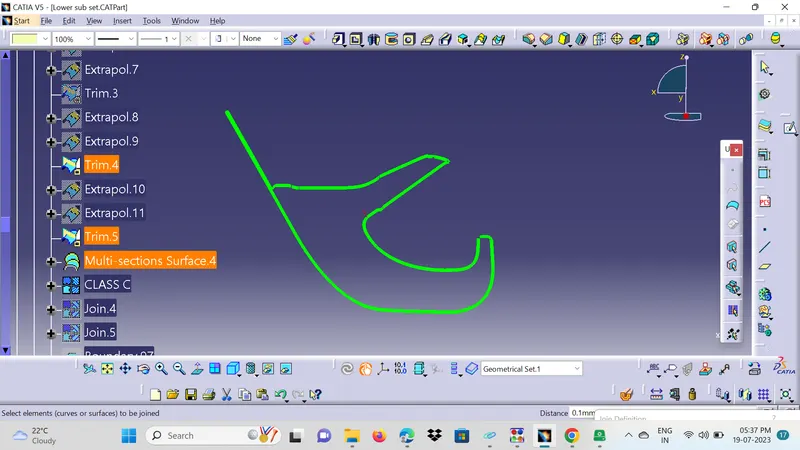
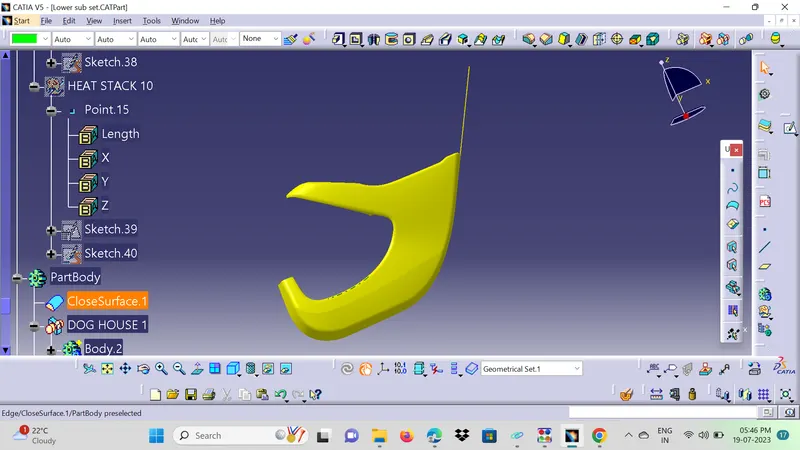
Final surface.
The Class-A, Class-B and Class-C surfaces are joined together to form a closed surface.
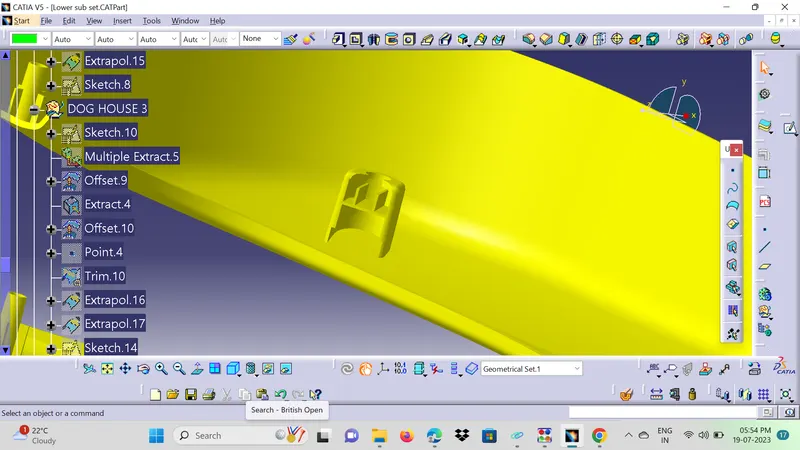
- Creation of Dog House.
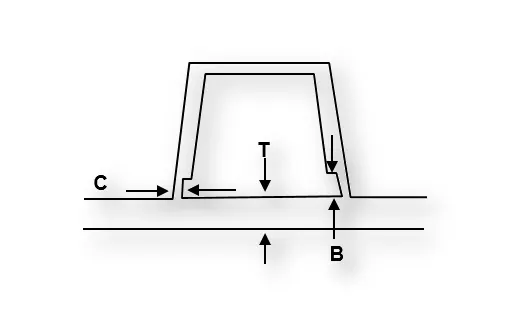
General Guidlines for Dog House:
- "C" is where the doghouse contacts the backside of the surface.
-
Doghouse wall thickness at the intersection of the part wall ( C ) should be 40% or less than the main wall stock ( T ).
-
The height of ( B ) should be between 3.0 – 6.0 mm.
- Minimum Doghouse Width (X) for doghouses is 12 mm.
- Minimum Draft (D) for doghouse is 1.5 degree* to die draw.
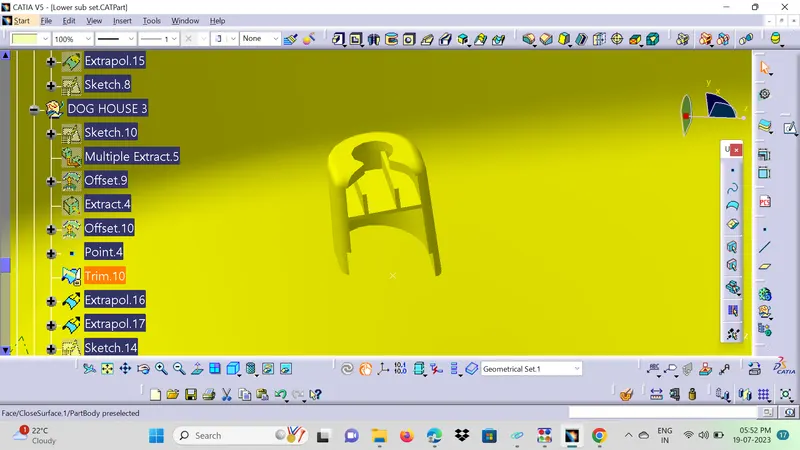
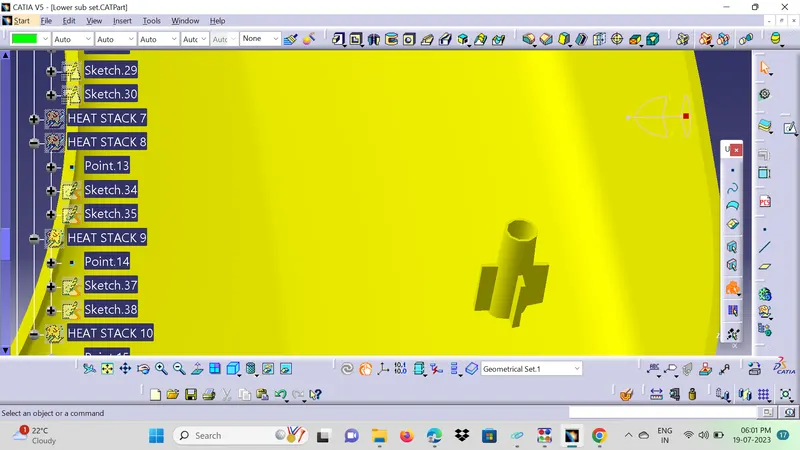
- Creation of Heat Stakes.
Thermal staking is an assembly method that uses the controlled melting and reforming of a plastic stud or boss to capture or lock another plastic or metal component of an assembly in place.
Guidelines for creating Heat stakes:
- Minimum 15 mmm gap between heat stakes.
- Maximun clearence with The counter clearence should be 0.5 mm.
- Maximum fillet radius be 0.25 mm..
- Draft : 0.5* per sides.
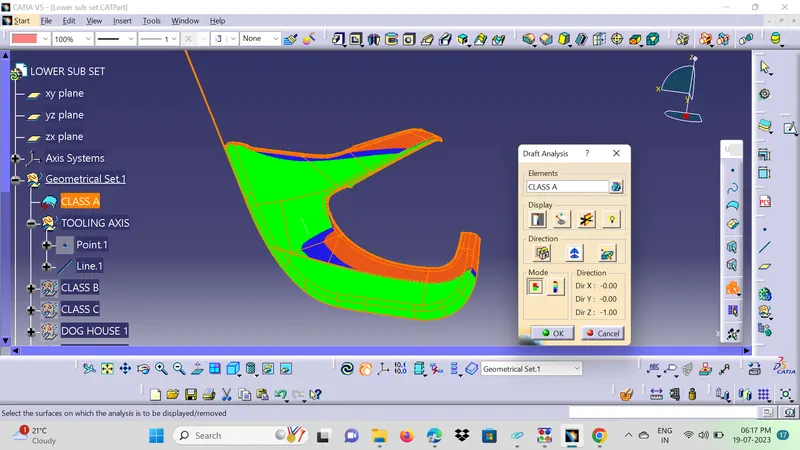
- Draft Analysis.
Class-A Surface
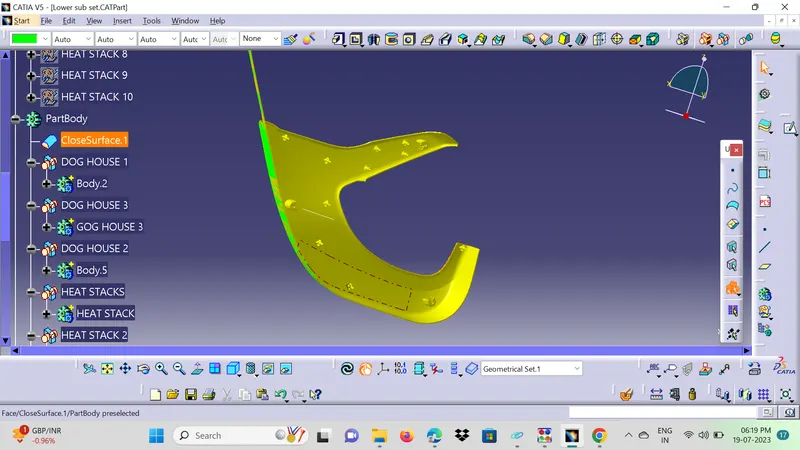
Closed Body.
3.UPPER MAP POCKET
- Class-A Surface.
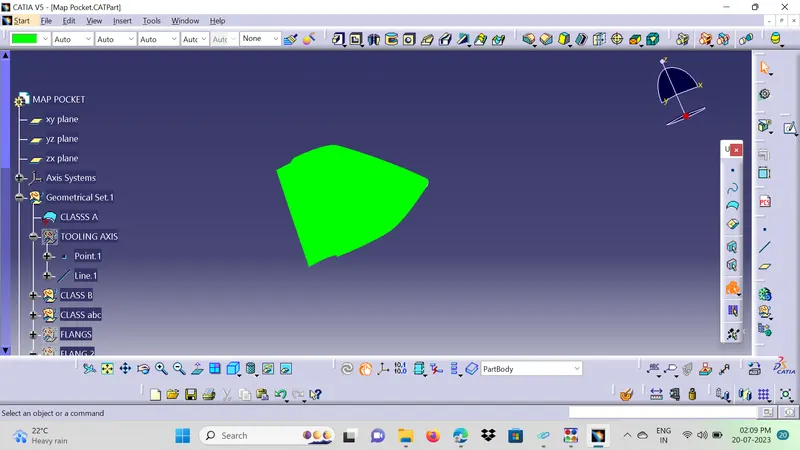
- Tooling Axis Creation.
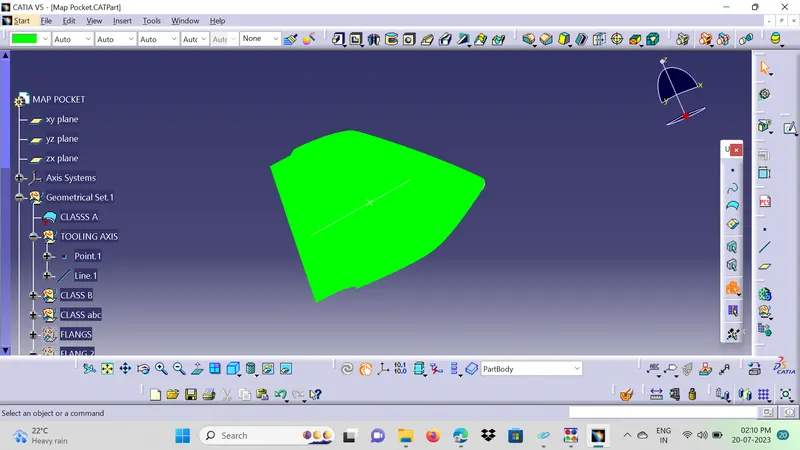
Class-B Surface Creation.
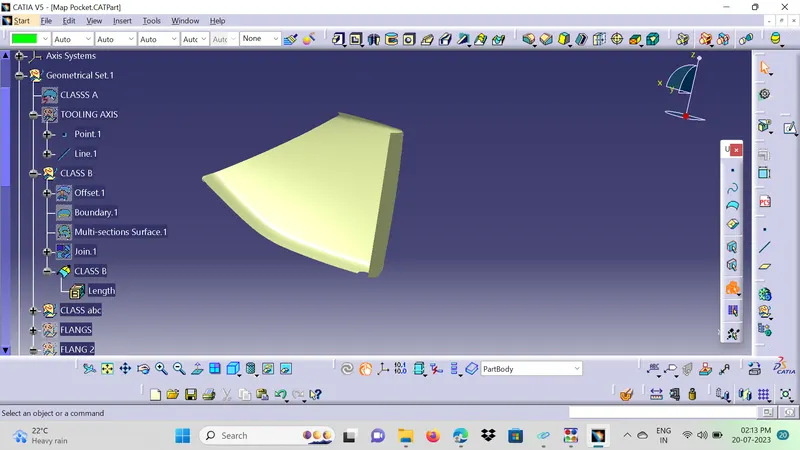
Class-C Surface Creation.
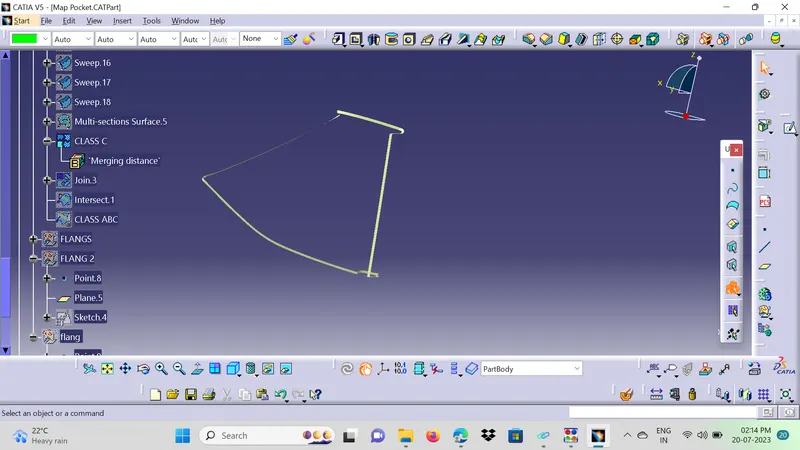
- Final surface.
The Class-A, Class-B and Class-C surfaces are joined together to form a closed surface.
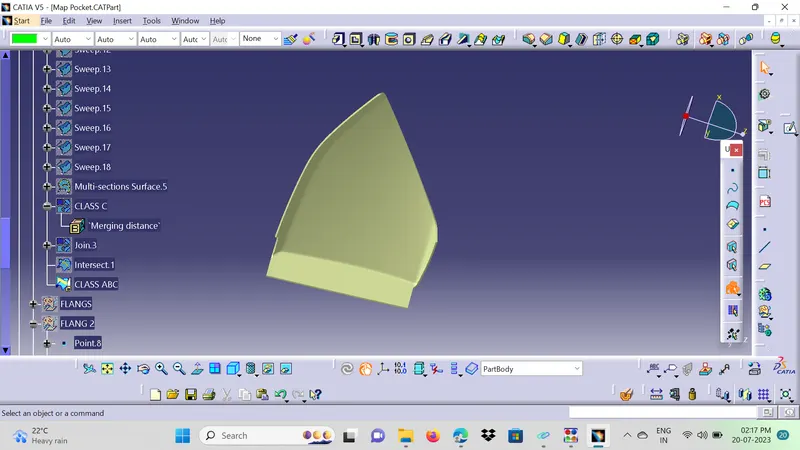
- Creation of Flanges.
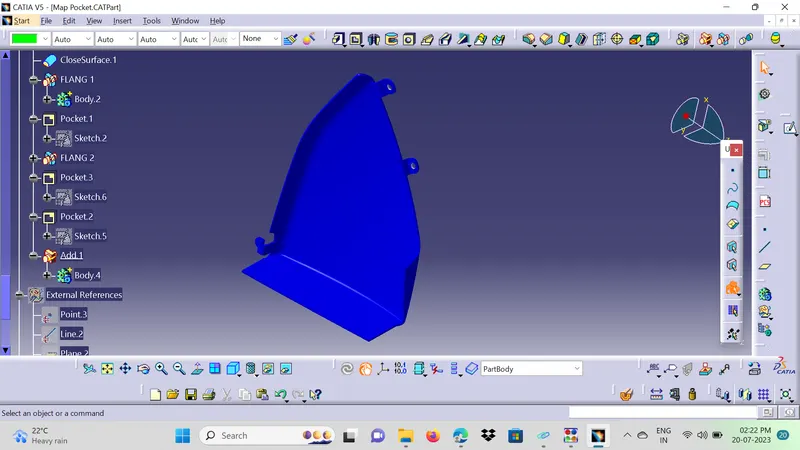
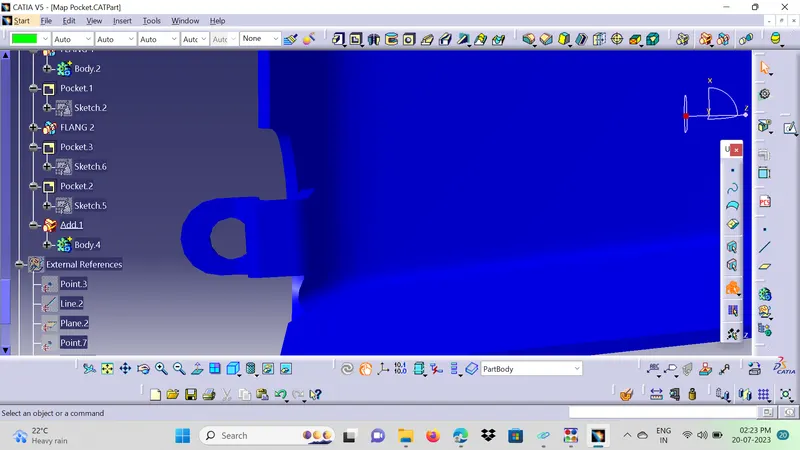
- Draft Analysis.
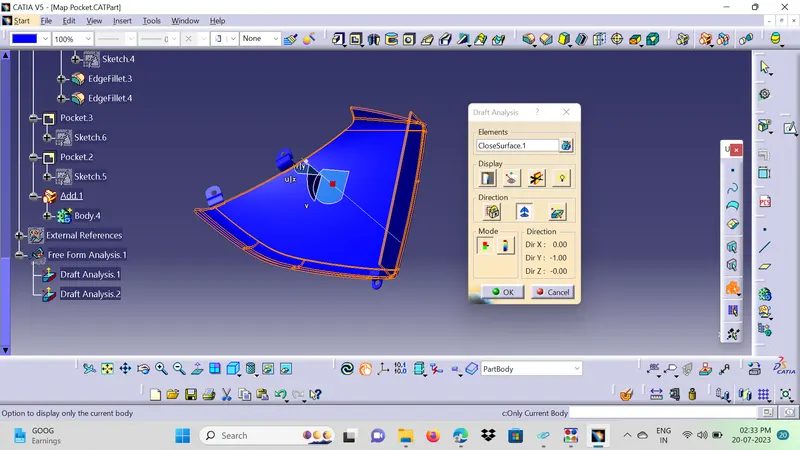
Class-A Surface.
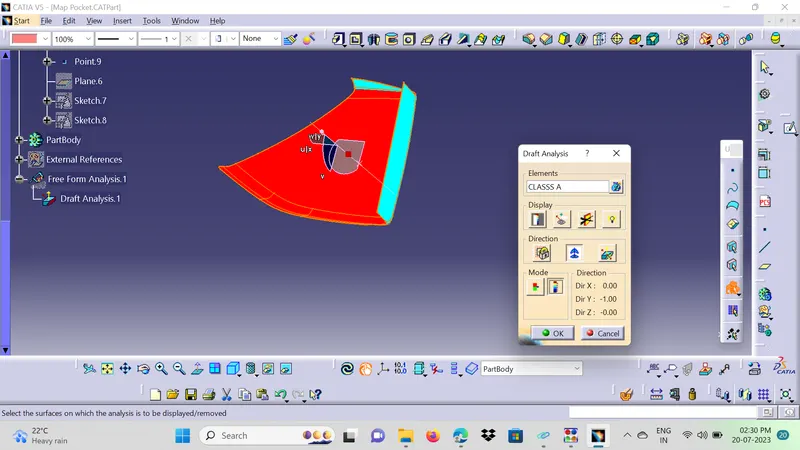
4.LOWER MAP HOLDER.
Class-A Surface.
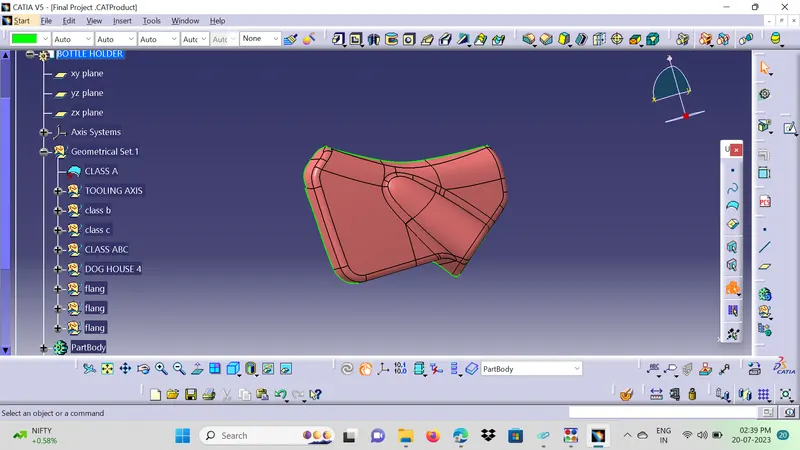
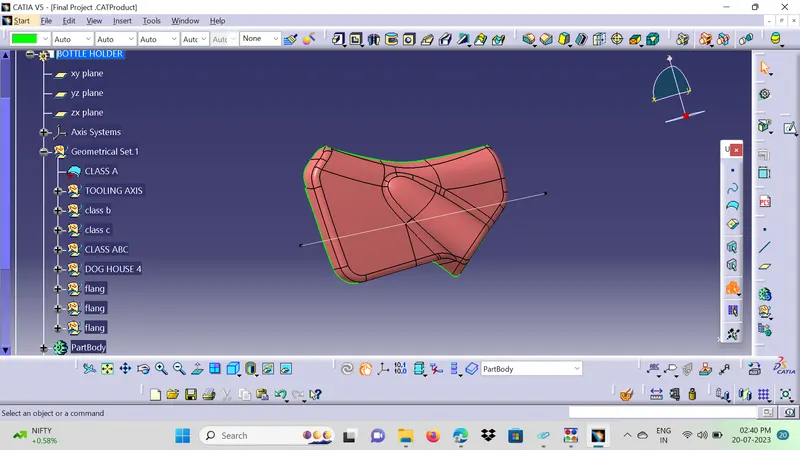
- Tooling Axis Creation.
Class-B Surface Creation.
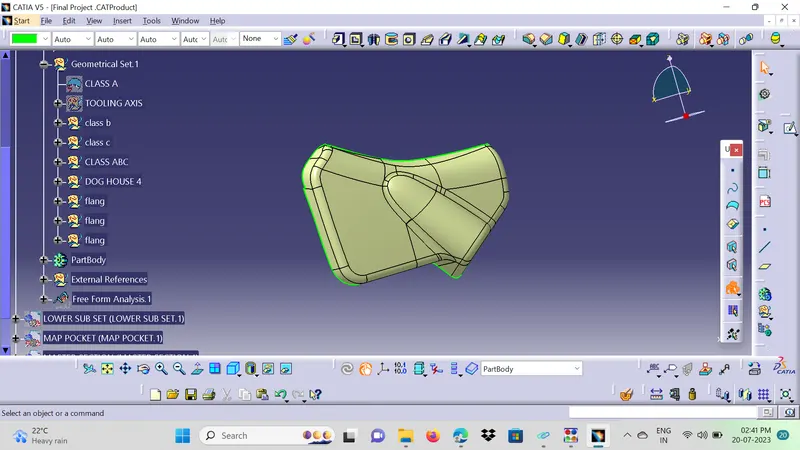
- Class-C Surface Creation.
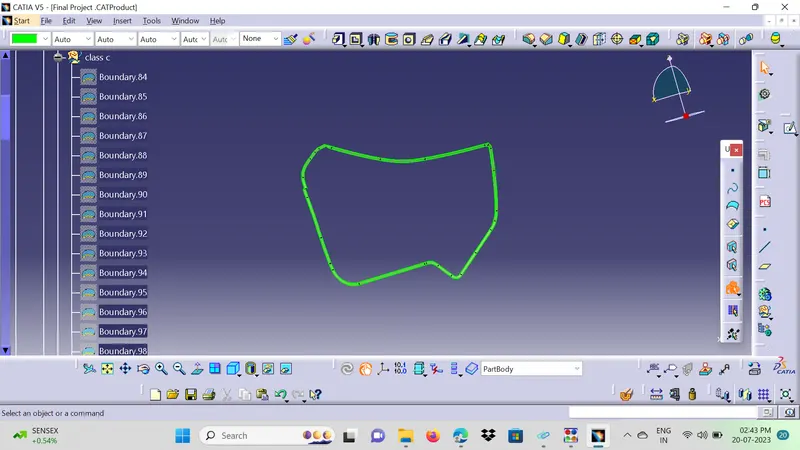
- Final surface.
The Class-A, Class-B and Class-C surfaces are joined together to form a closed surface.
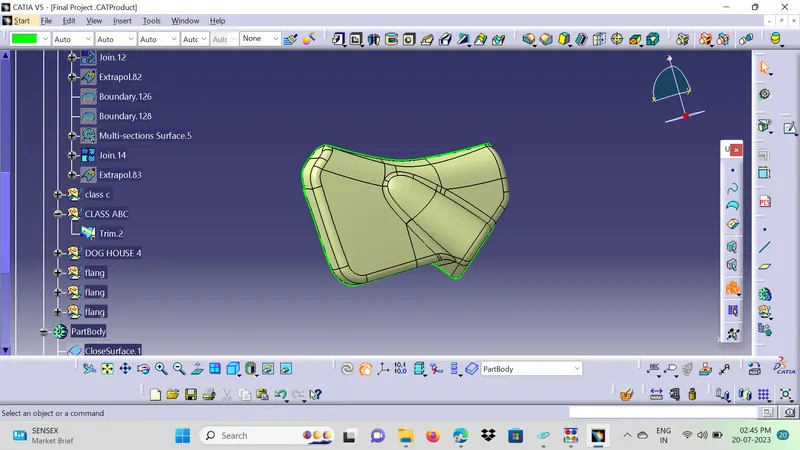
- Flange Creation.
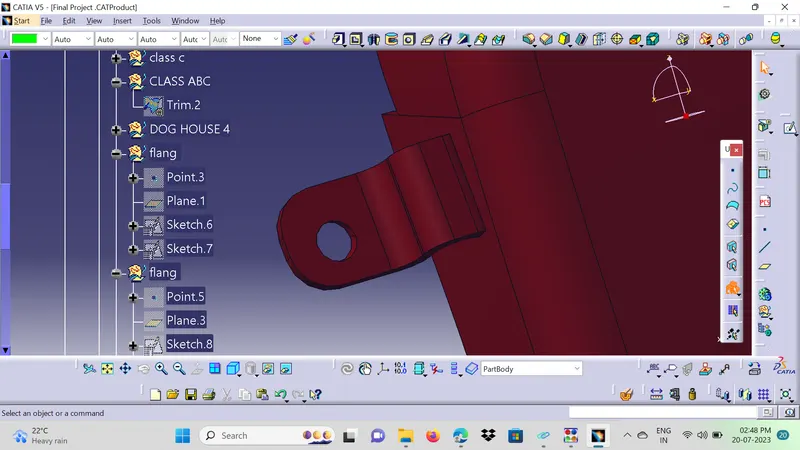
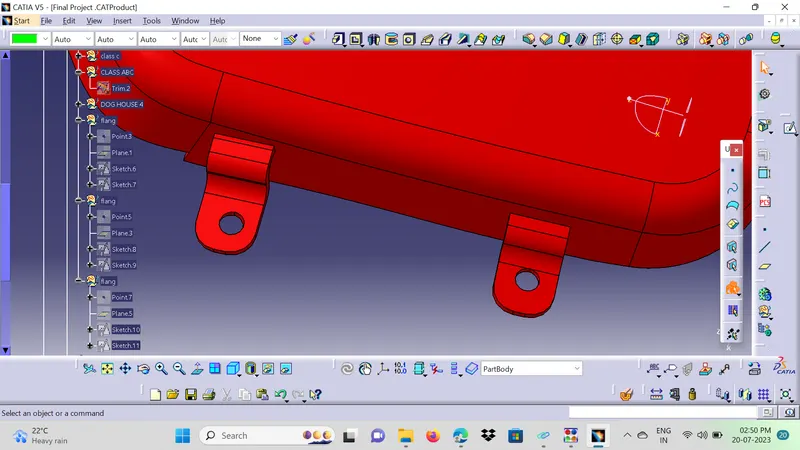
- Final Plastic Component.
Thickness : 2.5 mm.
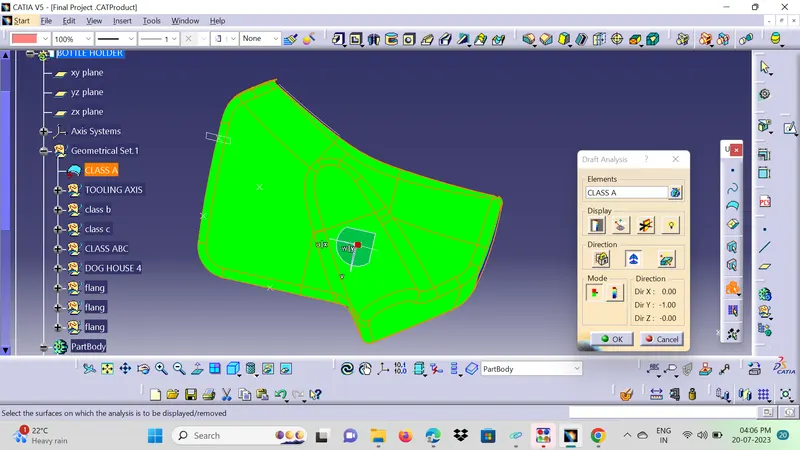
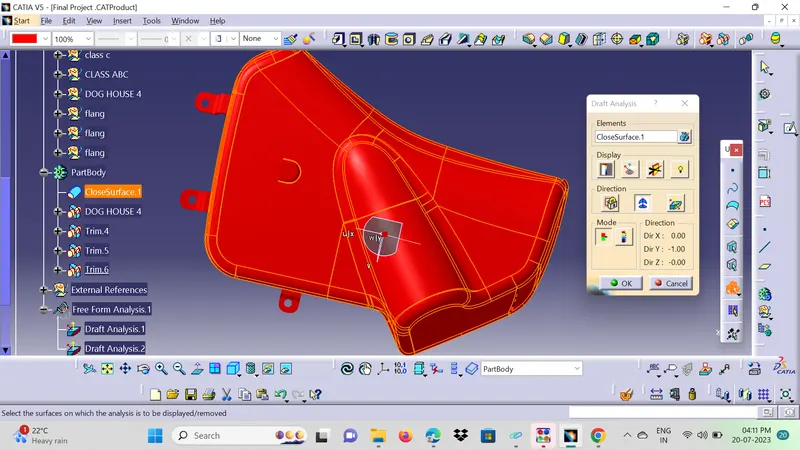
- Draft Analysis.
Class-A Surface.
Closed Body.
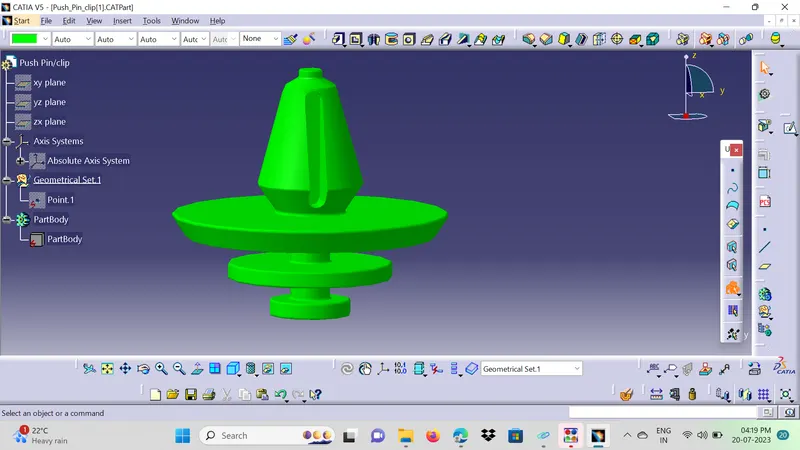
5.PUSH PIN.
Push pin which heilp us locating and arresting component of an assembly and it provide alignment in mating parts and also act as various guide of mechanism. They are bascially attached to the dog house.
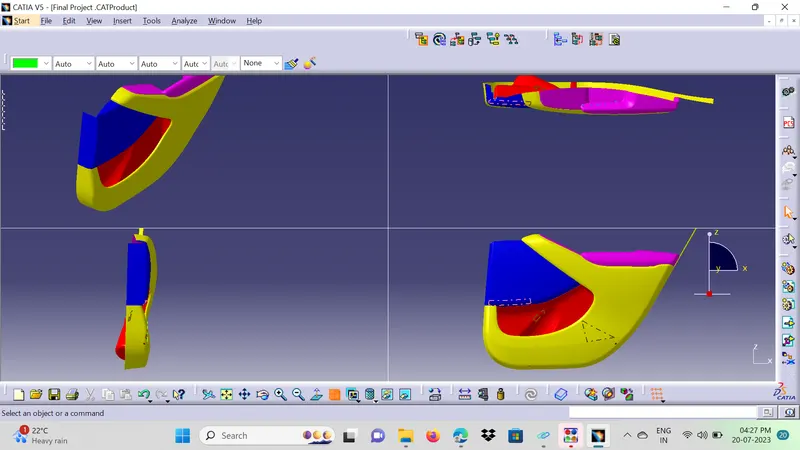
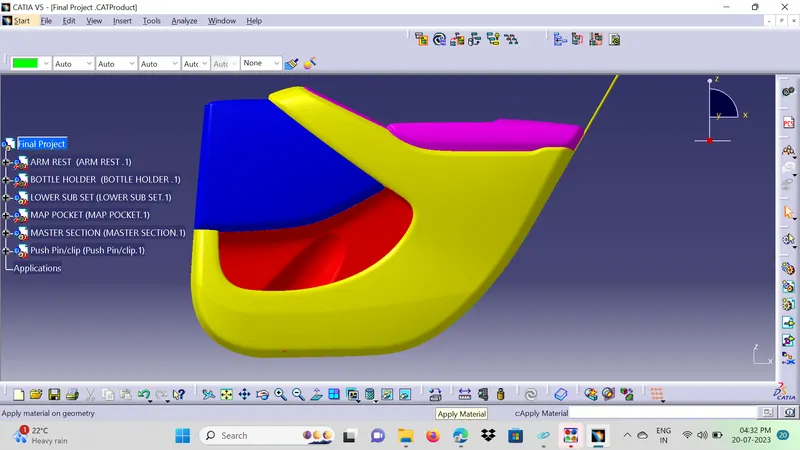
Final Door Trim Product Different View.
Conclusion
Door Trim was made with OEM guidelines using Part Workbench and Generative Shape Design Workbench using CATIA V5.