Week 12:- Documentation Challenge
AIM:
To create a BOM and Hardwarer list (BOP) for the complete fixture aasembly from challenge 8.
PROCEDURE:
Bill of materials is basically a file, which includes all the information required for the assembly of printed circuit boards. It is one of the most important things required while manufacturing PCBs. Failure in providing a bill of materials can lead to a lot of confusion. This can further result in problems at the time of assembly, and unnecessary revisions, which can cause delays. To avoid all this, it is always the best idea to provide a proper BOM. You may ask what all things are included in the bill of materials. This brings us to our next section.
In a nutshell, it is the complete list of all the items that are required to build a product. A BOM is sometimes also referred to as a product structure, assembly component list or production recipe (in process manufacturing industries).
Take, for example, a bicycle manufacturer that wants to build 1,000 bicycles. A bill of materials for a bicycle will include all the parts that make up the bicycle such as seats, frames, brakes, handlebars, wheels, tires, chains, pedals and cranksets, including the quantities required of each component and their cost.
what are the things need to include in BOM?
It’s important to include quantities, part numbers (to an intelligent or non-intelligent numbering scheme), descriptions, part names, the BOM level, how it will be procured, additional relevant notes, and more.
What All Things Does a Bill of Materials Include?
Now that you understand what the bill of materials is, the following information will help you understand what needs to be included in it:
Name of the Manufacturer: It is good to mention the name of the manufacturer, whose parts and components you prefer to use in the assembly. You should also mention the names of alternative manufacturers. This helps save a lot of time if components from the primary manufacturer are unattainable.
Manufacturer’s Part Number: A component distributor provides a unique identification number for every part. Providing these exact part numbers to the manufacturer helps in attaining the exact parts as required.
Parts Description: Once, you round out on the manufacturer name and part number, you need to provide the specifications. This will help the manufacturer understand your exact application requirement, and identify the right component for your PCB design and manufacturing.
Values of the Components: When you provide the values of components to be used in the assembly, such as resistance, and capacitance, it will help the person providing you the assembly service in getting the components with the right, required values.
Product Quantity: You don’t want to end up buying products that are extra, or fall short of components. This will either increase your cost or cause delay. Thus, it is very important to give the list of products with exact quantity.
Reference Designator: The reference designator is the information required to understand the exact placement of components on the printed circuit board.
Placement Method: The placement method is the technique used to assemble the parts and components on a PCB. It can be a through-hole method, or surface mount technology (SMT). This information will help the manufacturer to go ahead with the selected method.
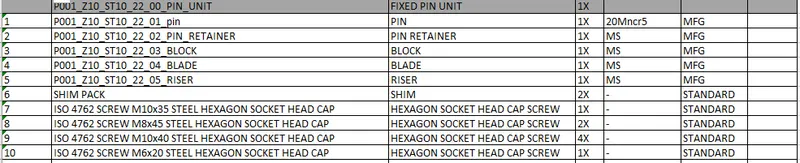
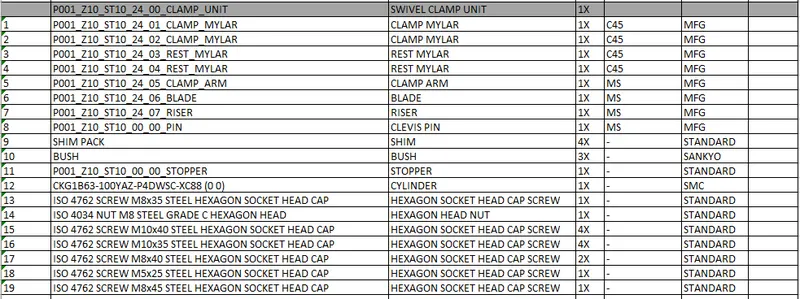
BILL OF MATERIALS FOR FIXTURE ASSEMBLY (P001_Z10_ST10_00_00):
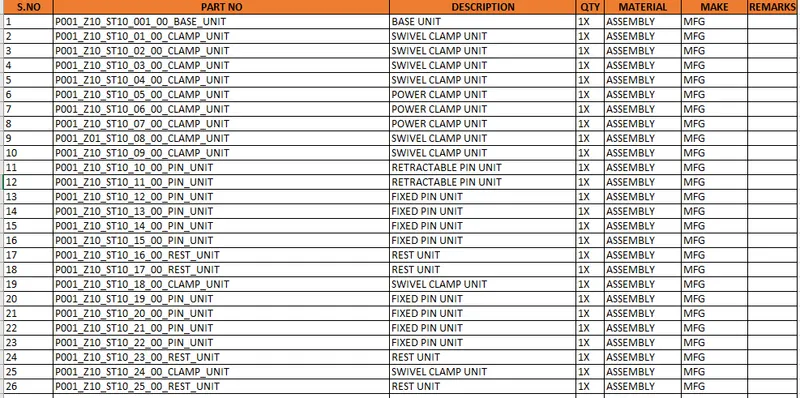

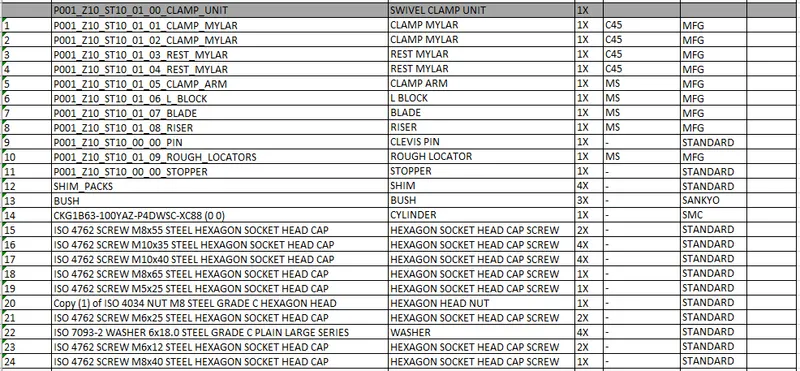
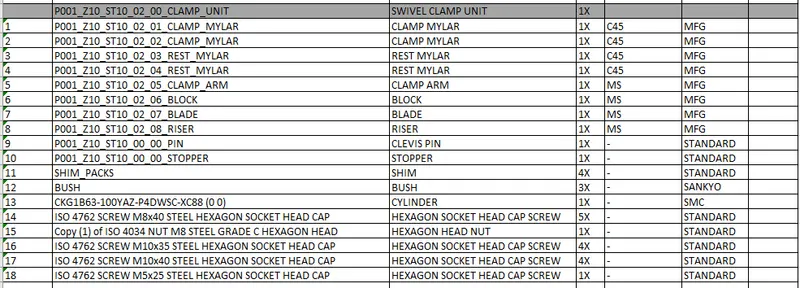
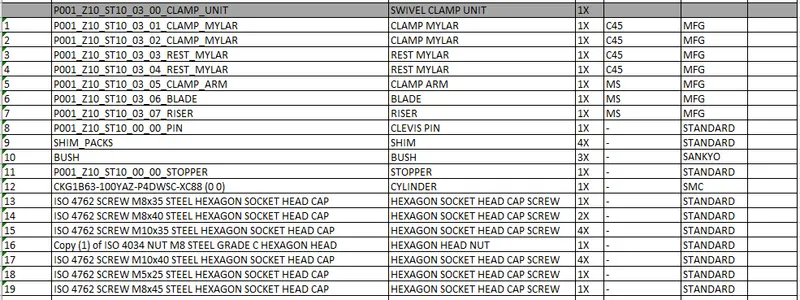
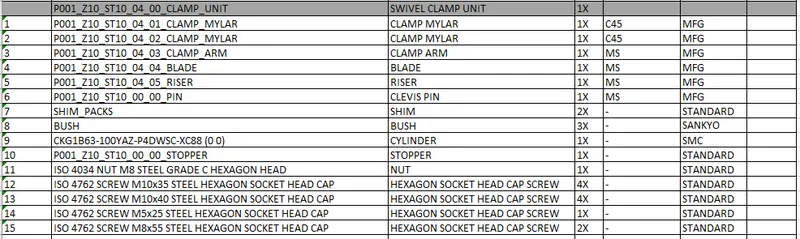
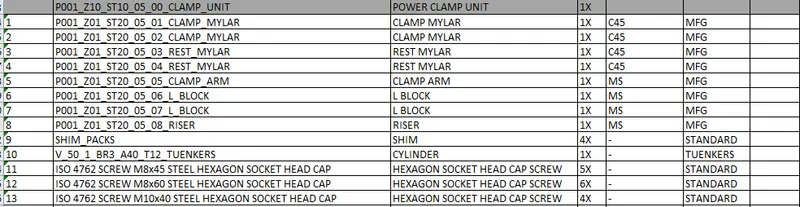
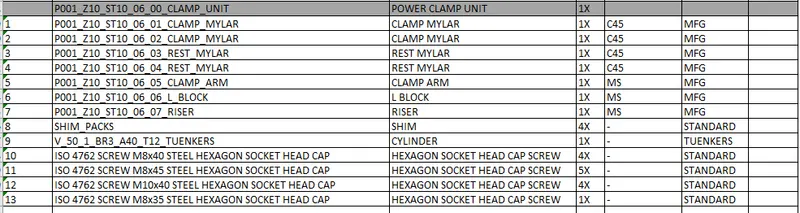
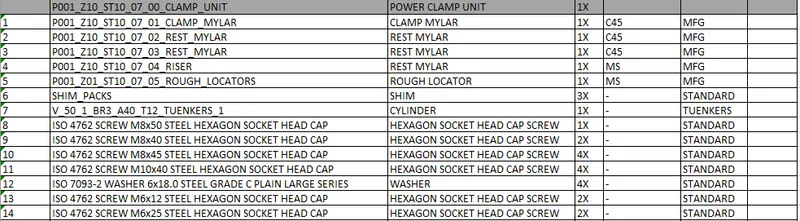
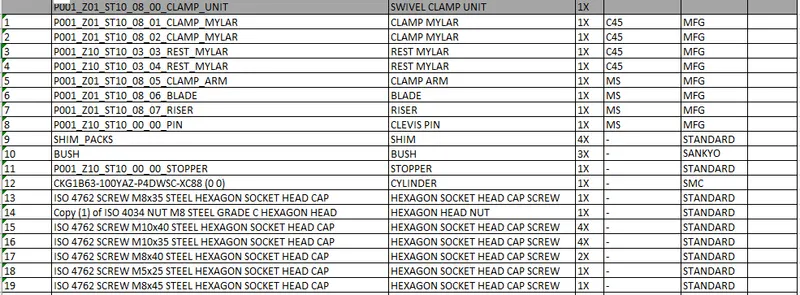
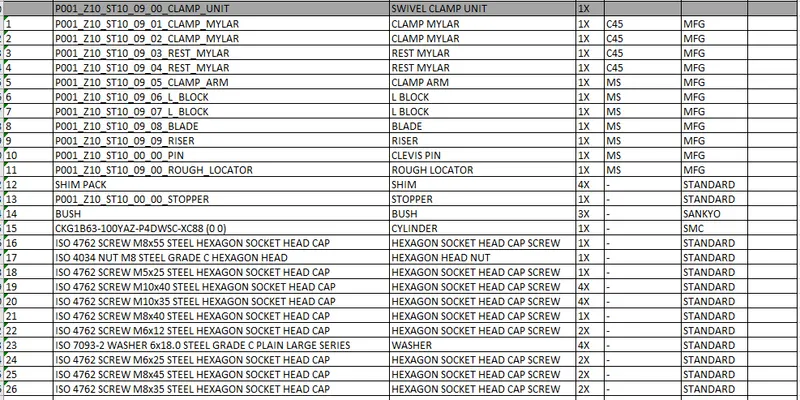
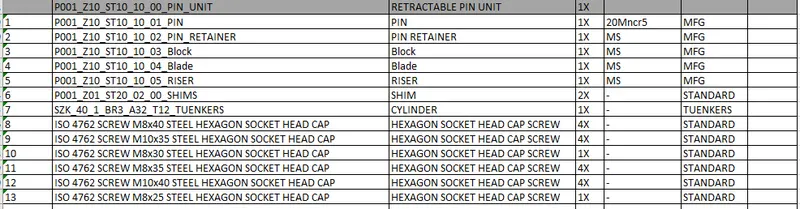
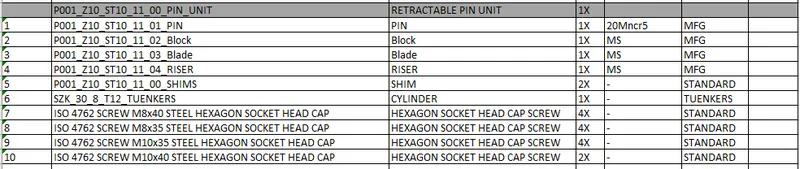
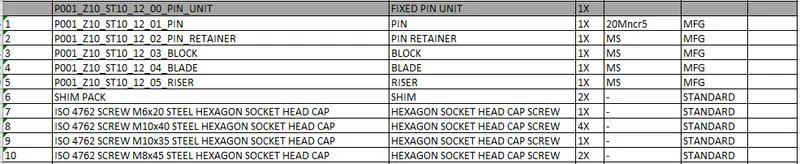
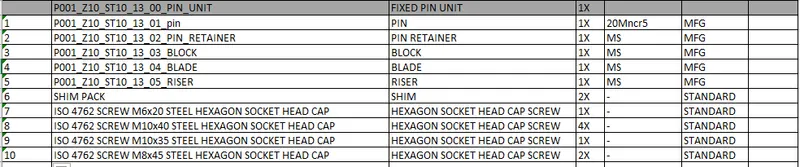
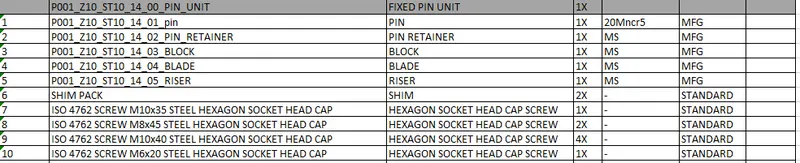
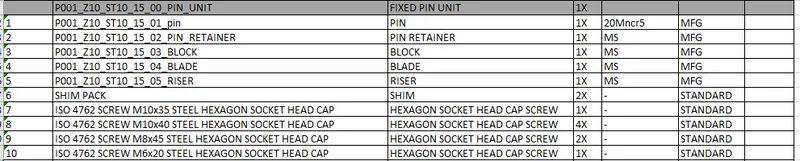


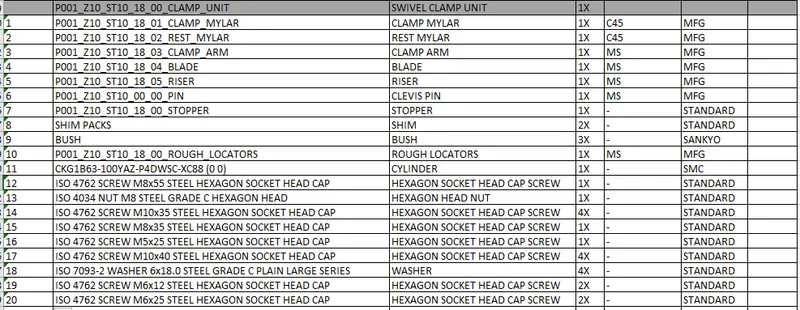
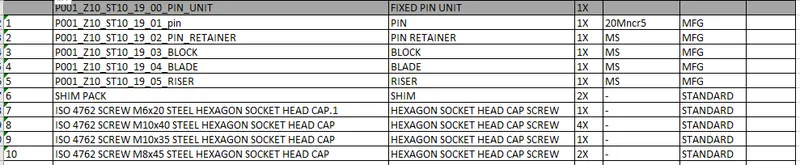
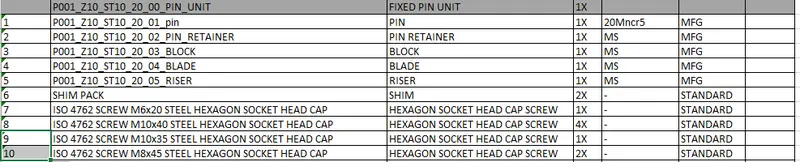
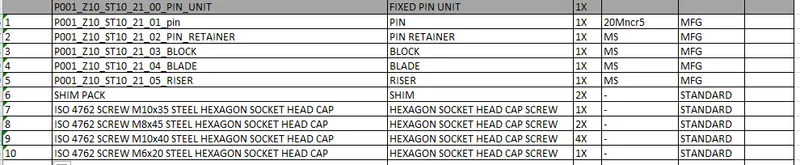


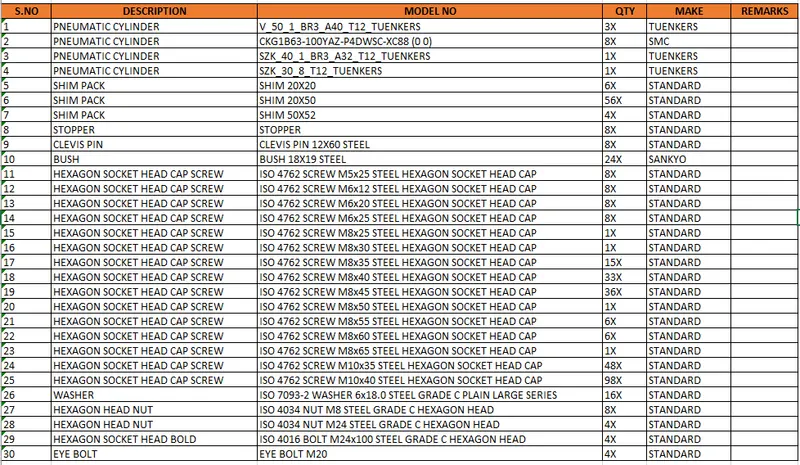
BOUGHT OUT PARTS(BOP) FOR THE FIXTURE ASSEMBLY (P001_Z10_ST10_00_00):
CONCLUSION:
BOM and Hardware list (BOP) for the complete fixture assembly from challenge 8 has been done.