Week 11 - Project - A pillar Design with Master Section
A Pillar Master section
1. Introduction
The A-pillar is a critical structural component in an automobile, providing support to the windshield and contributing to the vehicle’s overall rigidity and safety. In addition to its structural role, the A-pillar must accommodate engineering features such as doghouse structures, which are reinforcements or attachment points for other components like wiring harnesses, sensors, or interior trim panels.
This report outlines the systematic approach taken to design an A-pillar with doghouse features using Class A surfaces and master sections while ensuring manufacturability through draft analysis and tooling axis optimization.
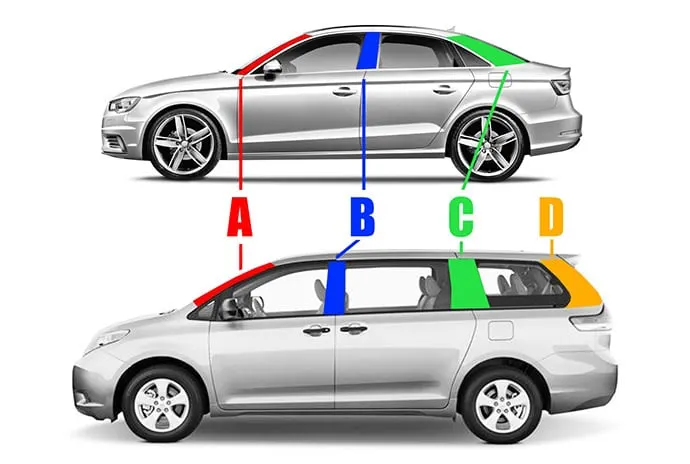
2. Key Components of the A-Pillar Design
2.1 Class A Surface
- Definition: A Class A surface is a high-quality, aerodynamically optimized exterior surface that defines the aesthetic and functional form of the vehicle.
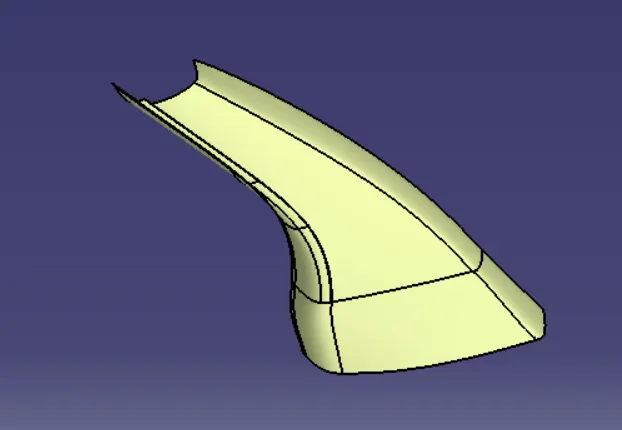
- Role in Design:
- Provided by the styling team.
- Serves as the reference for engineering surfaces (Class B & C).
- Must be analysed for continuity, curvature, and draft angles to ensure manufacturability.
2.2 Master Section
- Definition: A cross-sectional cut that defines critical dimensions, thickness, and engineering features (e.g., doghouse).
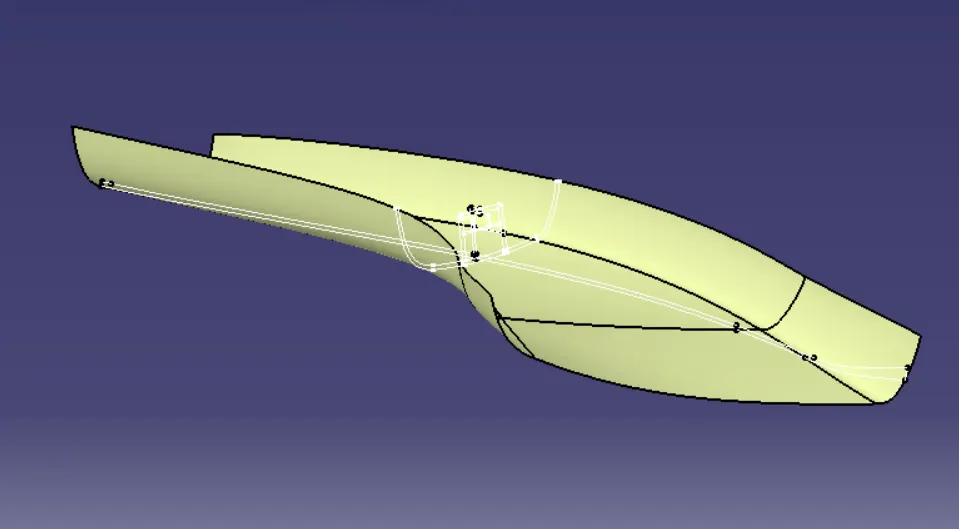
- Role in Design:
- Guides the tooling axis creation.
- Defines draft angles for doghouse walls.
- Ensures proper fitment with adjacent components.
2.3 Tooling Axis
- Definition: The direction in which the Mold opens and closes during injection moulding.
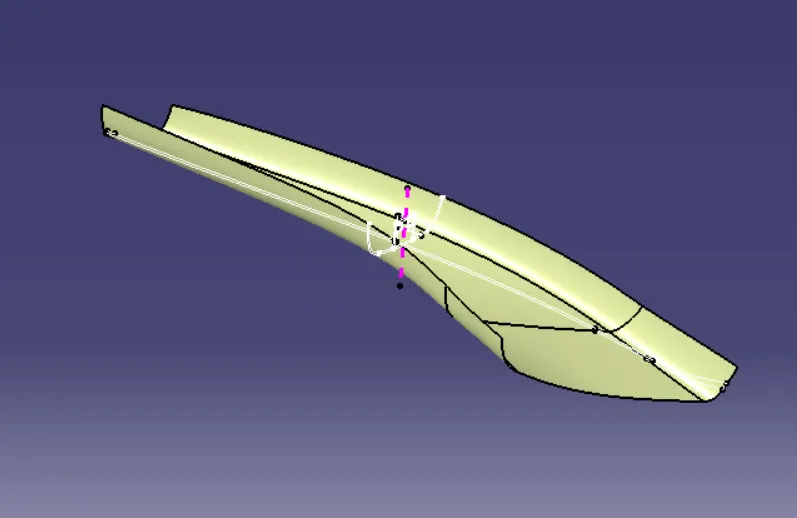
- Importance:
- Ensures proper draft angles for part ejection.
- Avoids undercuts that complicate Mold design.
- Derived from the master section for consistency.
2.4 Doghouse Feature
- Definition: A reinforced protrusion or cavity in the A-pillar used for mounting or structural support.
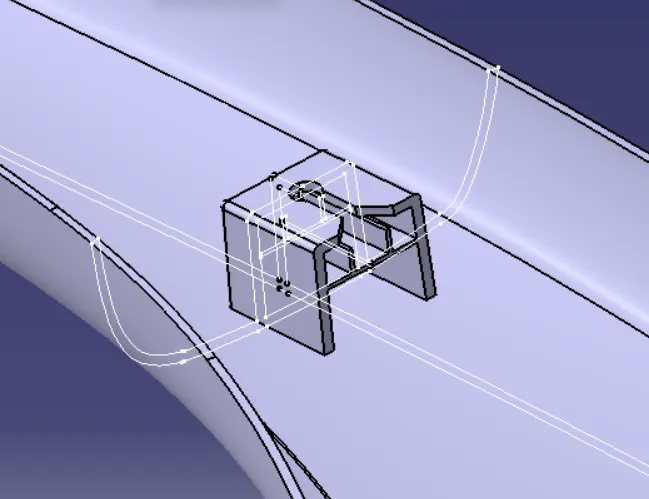
- Design Considerations:
- Must align with the tooling axis to avoid moulding issues.
- Requires draft analysis to ensure smooth ejection.
- Must maintain structural integrity without affecting aesthetics.
3. Design Methodology
3.1 Tooling Axis Creation

- Extracted reference lines from the master section (both width and length directions).
- Used bisecting method to determine the optimal tooling axis.
- Ensured alignment with doghouse draft requirements.
3.2 Draft Analysis of Class A Surface
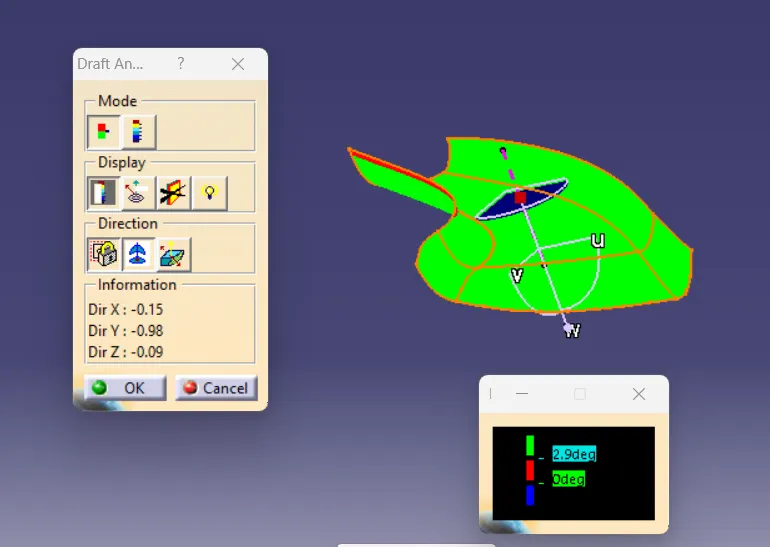
- Performed draft analysis using a 2.95° threshold (industry standard for plastic parts).
- Identified regions requiring minor adjustments for manufacturability.
- Used running point analysis to verify critical angles.
3.3 Class B Surface Development
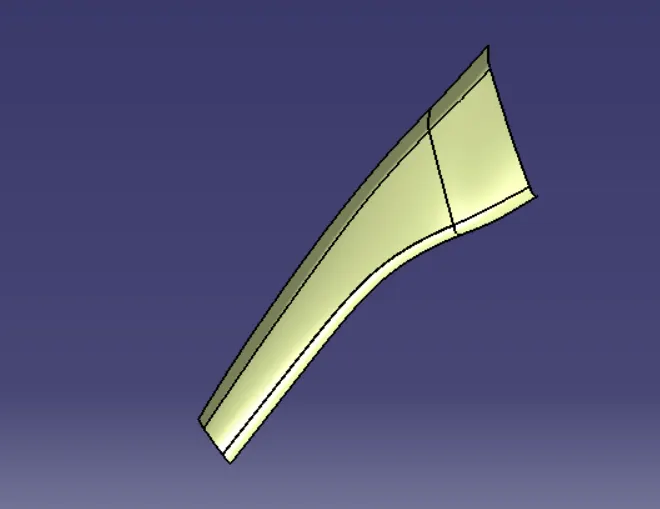
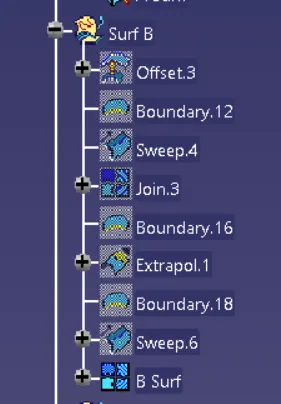
- Offset Class A surface by 2.5mm (material thickness).
- Patched gaps using sweep operations with guide curves.
- Ensured uniform thickness for structural integrity.
3.4 Class C Surface Development
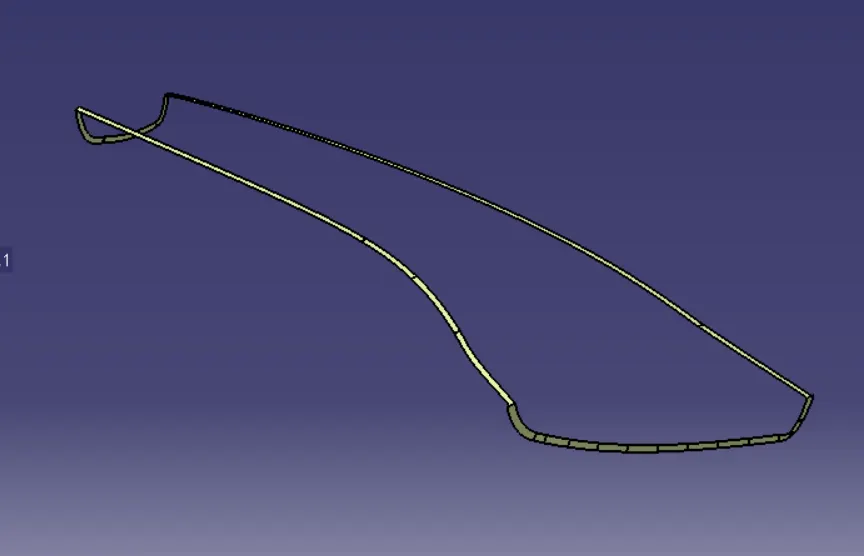
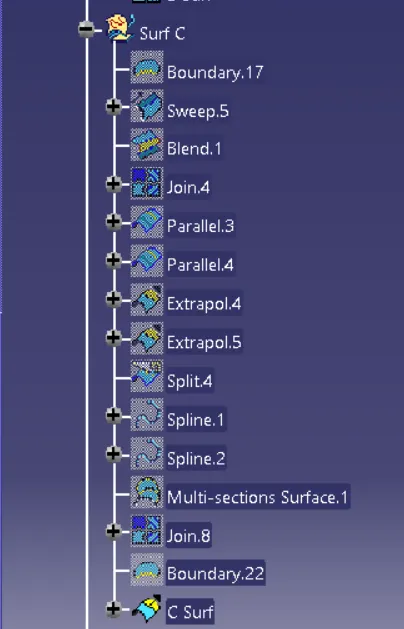
- Extracted boundaries from Class A surface.
- Used sweep with draft direction (3° to 87° angles) to create transitional surfaces.
- Ensured smooth blending between Class A and B surfaces.
3.5 Closed Surface & Solid Body Creation
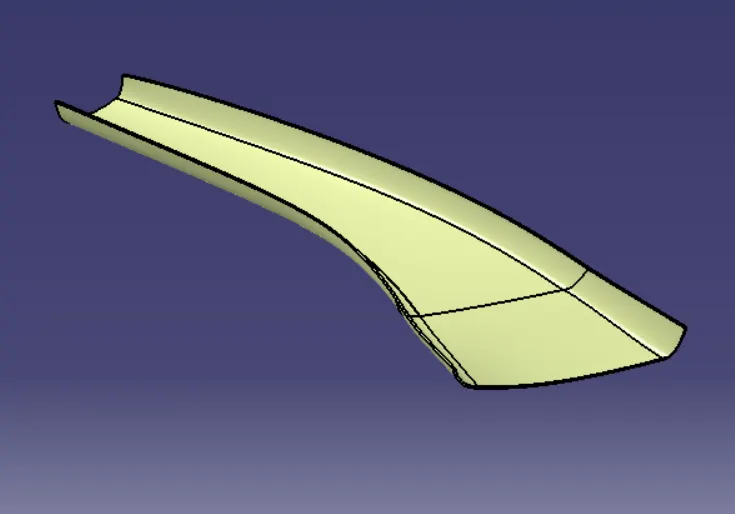

- Combined Class A, B, and C surfaces into a single closed body.
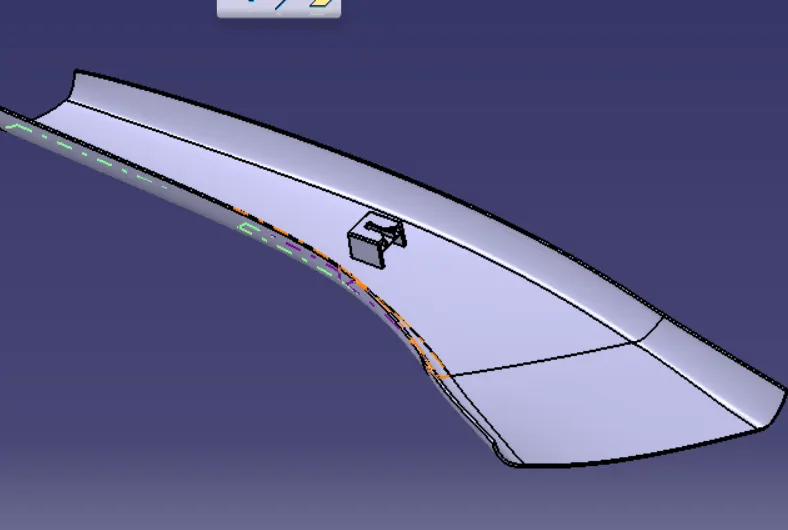

- Performed draft analysis on the final solid to confirm manufacturability.
- Verified no undercuts or negative draft zones.
3.6 Doghouse Integration
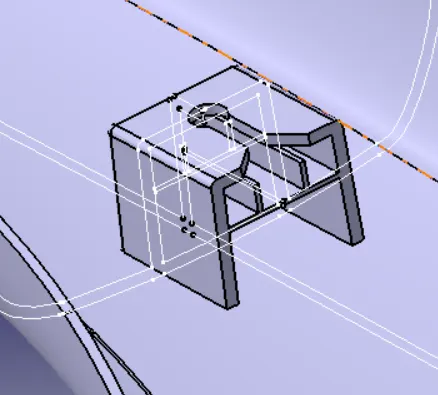
- Extracted doghouse geometry from the master section.
- Aligned doghouse walls with the tooling axis to ensure proper draft.
- Performed secondary draft analysis (1.45° for main tooling, 0.45° for side cores).
- Ensured no interference with adjacent components.
4. Validation & Results
- Final Draft Analysis:
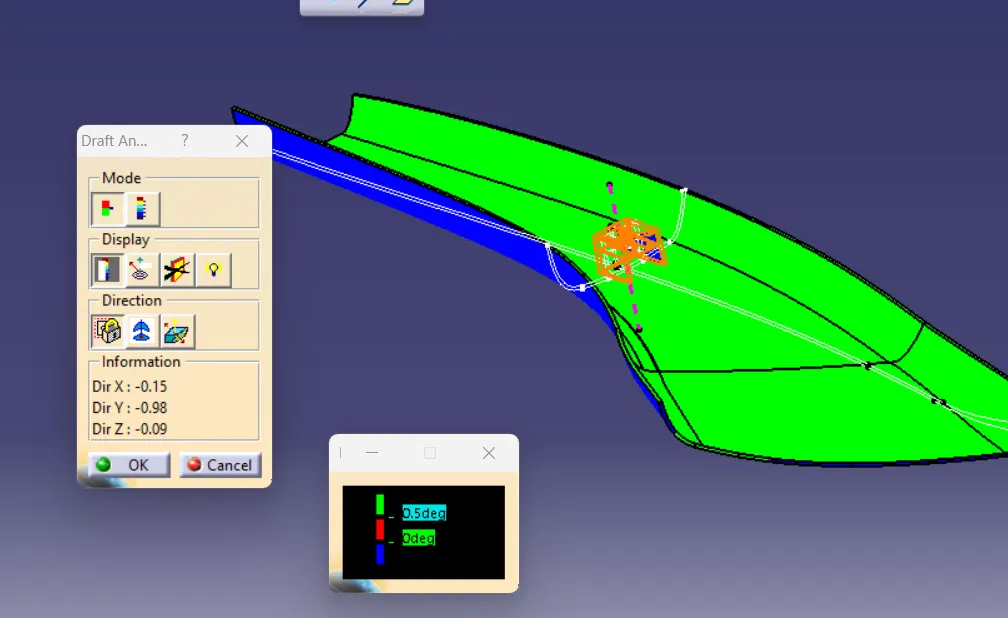
- Main Tooling Axis: Passed at 1.45°.
- Side Core Tooling: Passed at 0.45°.
- Structural Integrity: Doghouse feature maintains strength without warping.
- Manufacturability: No undercuts detected; Mold separation feasible.
5. Conclusion
The A-pillar design successfully integrates Class A surfaces,
master section inputs, and doghouse engineering features while
ensuring manufacturability through draft analysis and tooling
optimization. The methodology ensures:
✔ Aesthetic
compliance (Class A surface integrity).
✔ Structural
robustness (proper doghouse integration).
✔ Efficient Mold
design (optimal draft angles & tooling axis).
This approach can be replicated for other automotive pillar designs (B, C, D-pillars) with similar engineering requirements.
Attachments:
- CATIA Part File (A-Pillar with Doghouse).
- PPT Report (Detailed step-by-step analysis).