Week 11: Project 2 - Emission characterization on a CAT3410 engine
Aim:
To perform a 3-D simulation in Converge CFD to compare the emission and performance characteristics for a CAT 3410 diesel engine with different piston bowl geometry( namely Open-W and Omega pistons).
Methodology:
A sector simulation was carried out using two different piston bowl profiles. The bowl profiles are extracted from a three dimensional geometry and a sector is created using make engine sector surface tool in Converge CFD.
Objective :
- To run simulation for both Open W-piston and Omega piston and post process the results using PARAVIEW.
- Charecterize the emissions
- Create cut-plan animations showing Soot, Nox and UHC and compare them between the omega and the open-w pistons.
Introduction:
In this project we have introduced two pistons such as W-piston and the omega piston to simulate using converge CFD and to find the power, torque, Engine efficiency, combustion efficiency, Emissions(SOOT, Nox, UHC) for the same engine specifications and the results weere analysed.
Engine geometric parameters:
- Bore =0.13716 m
- Stroke = 0.1651 m
- Connecting rod length = 0.263 m
- RPM = 1600
Geometry
Make Engine Sector Surface:
Using the make surface utility in converge studio both the open W sector and omega sector of piston was extracted.
Open W Piston Profile: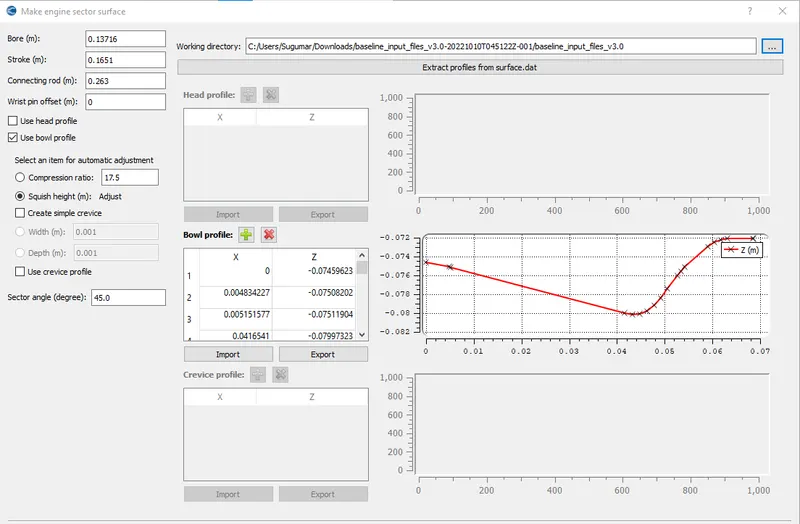
Omega Piston Profile: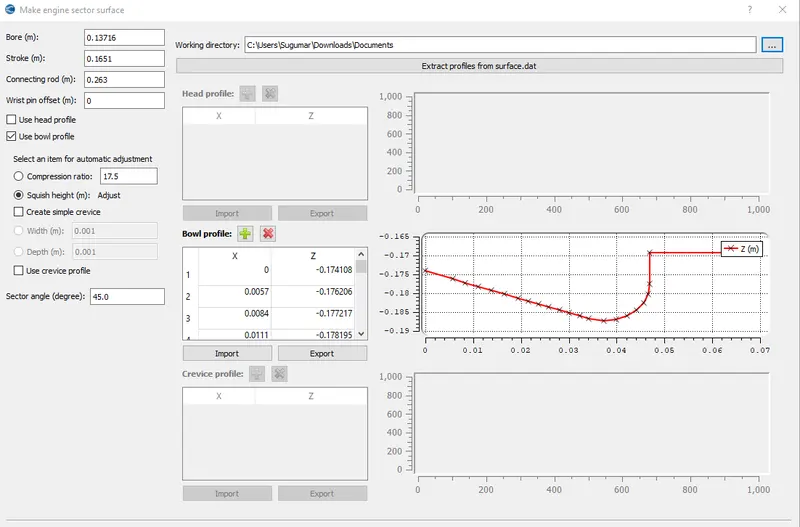
Geometry for Open W Piston: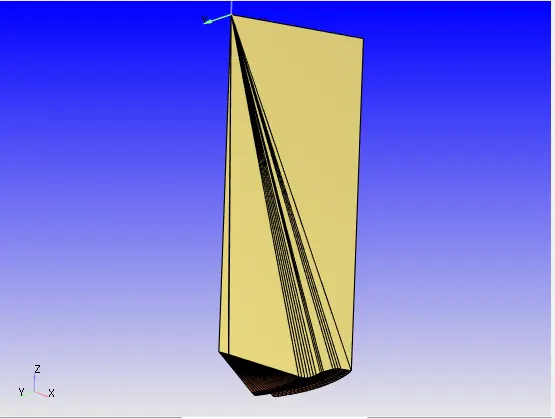
Geometry for Omega Piston: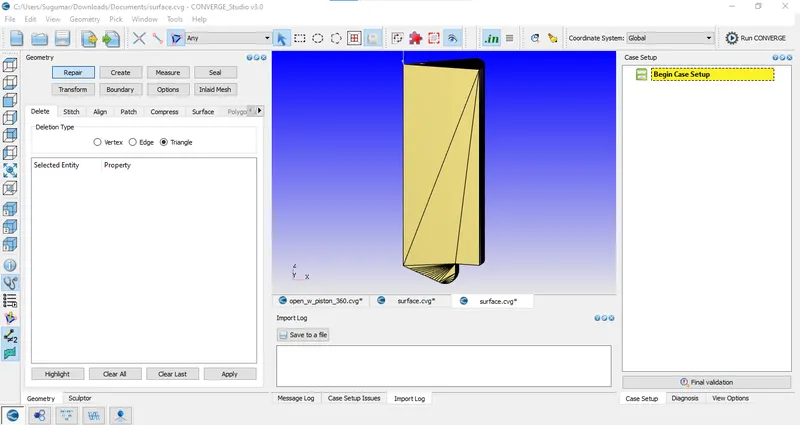
Setup
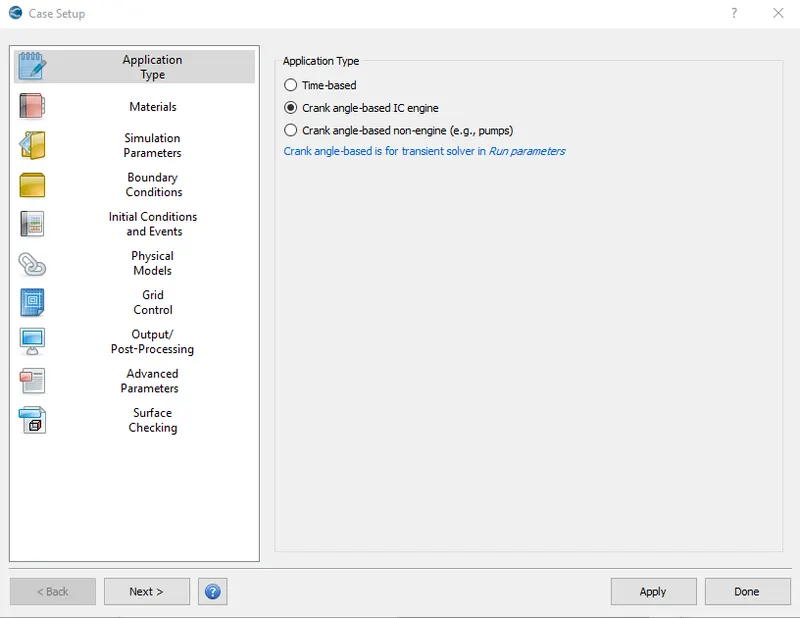
Application Type
Crank angle-based IC engine
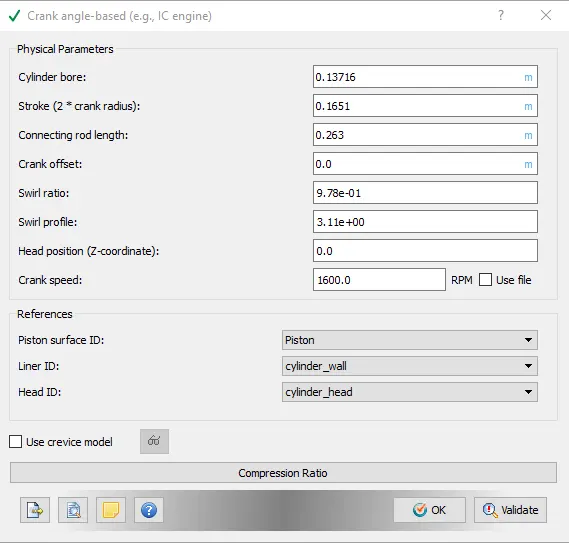
Physical Parameters:
Bore =0.13716 m
Stroke = 0.1651 m
Connecting rod length = 0.263 m
RPM = 1600
Materials
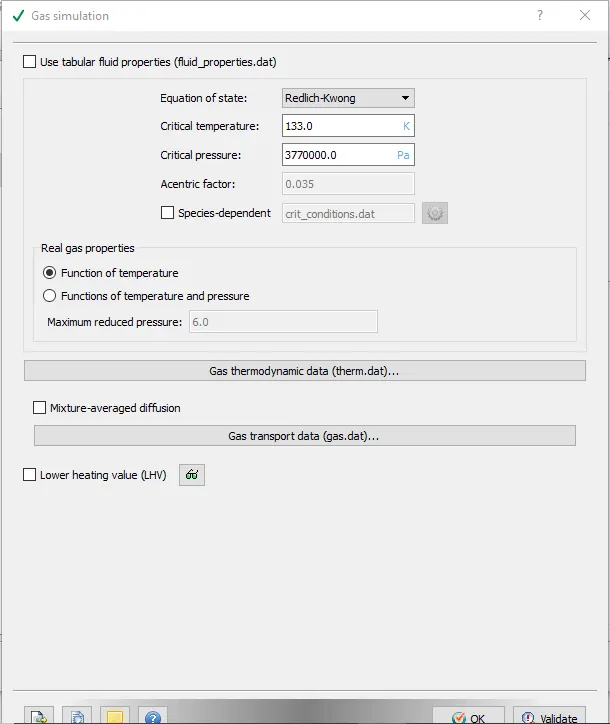
Gas Simulation
The therm.dat file was uploaded to get the thermodynamic properties of the fuel.
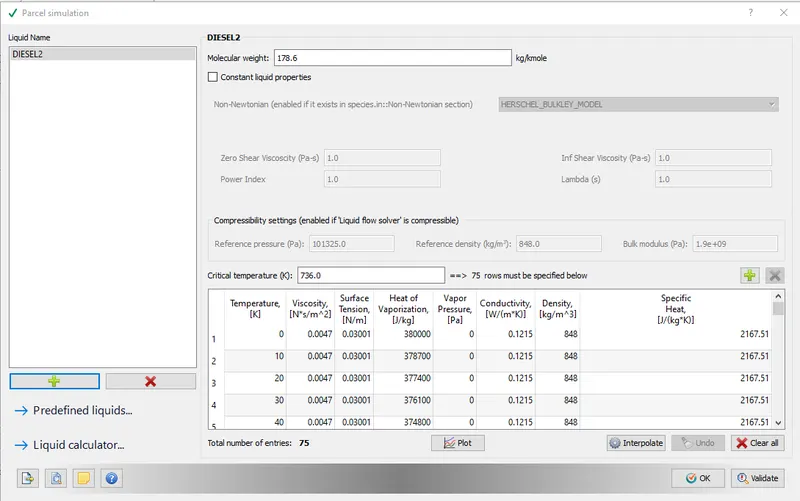
Parcel Simulation- C7H16 was selected from predefined liquids.
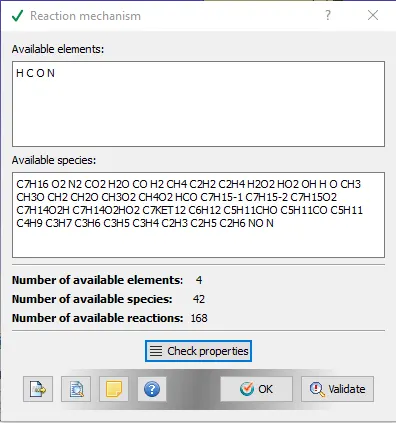
Reaction Mechanism
Species-Parcel C7H16(n Heptane)
Mesh
Simulation Time Parameters:
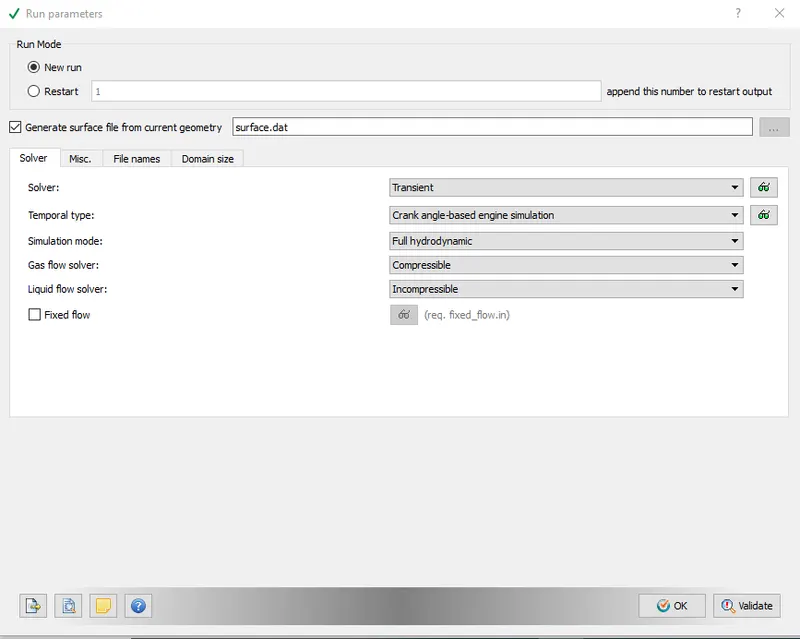
Run Parameters:
Transient, Full hydrodynamic.
Simulation Time Parameters:
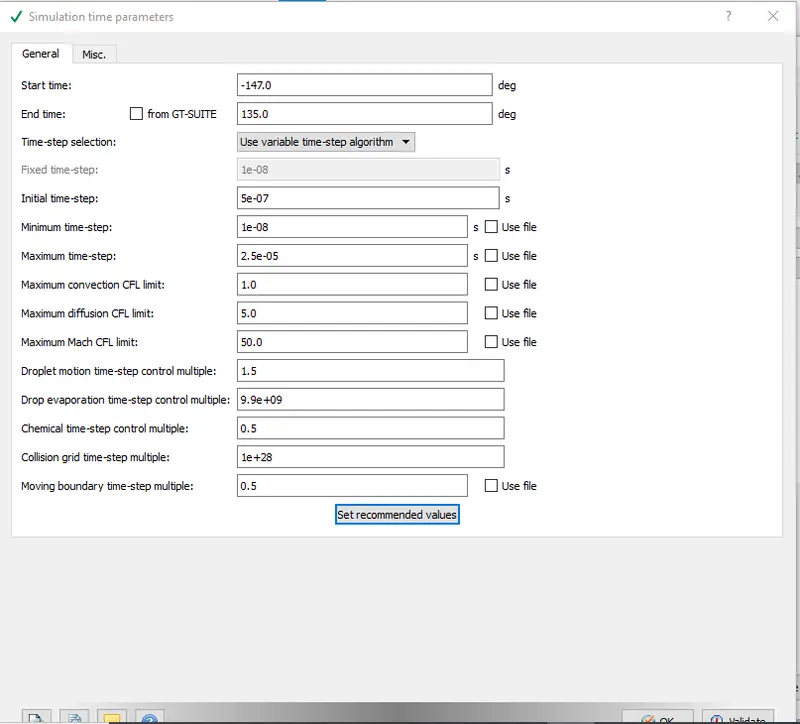
Start time : -147 deg
end time : 135 deg
Initial time step:5e-7 ,Minimum time step:1e-08 ,Maximum time step:2.5e-5
Boundary Conditions:
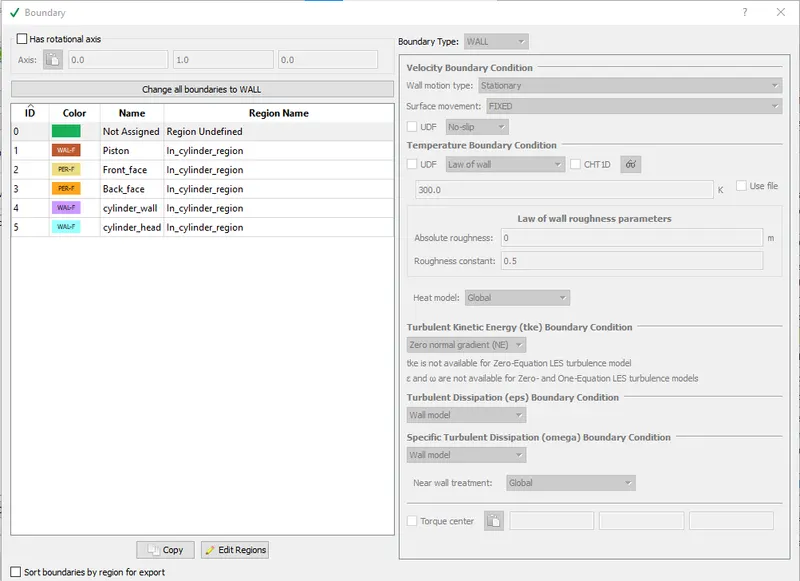
Boundary Type-WALL , Wall motion-Translating and Surface-Moving
Law of wall for velocity & temperature boundary conditions
Piston-Velocity-piston motion, temperature - 553K
Boundary Type-WALL , Wall motion-Stationary and Surface-Fixed
Law of wall for velocity & temperature boundary conditions
Cylinder wall - 433 K
Cylinder Head-523 K
Boundary Type-Periodic , Periodic Type-Stationary and Periodic Shape-Rotational-45 deg
Front Face & Back Face
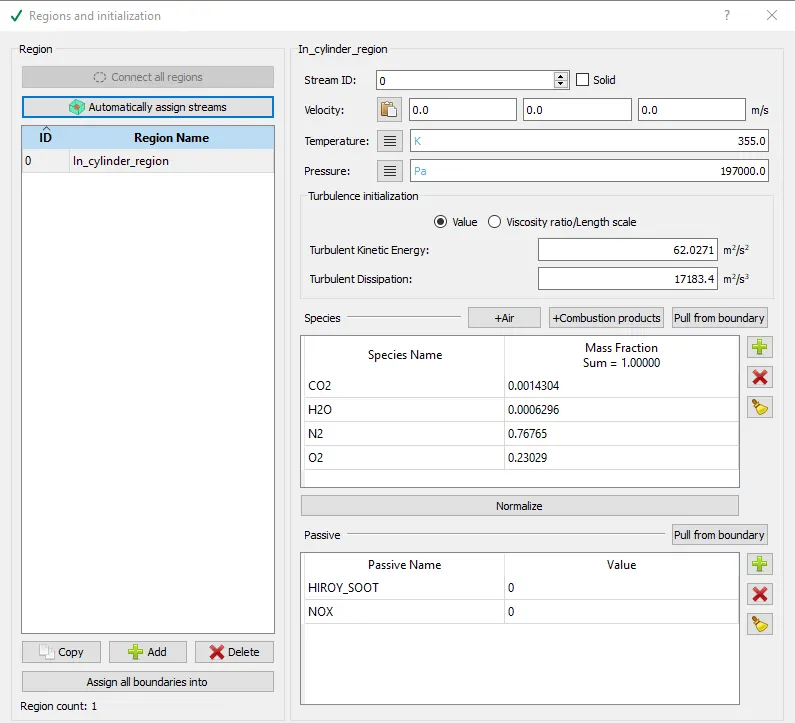
Regions and Initial conditions:
Physical models:
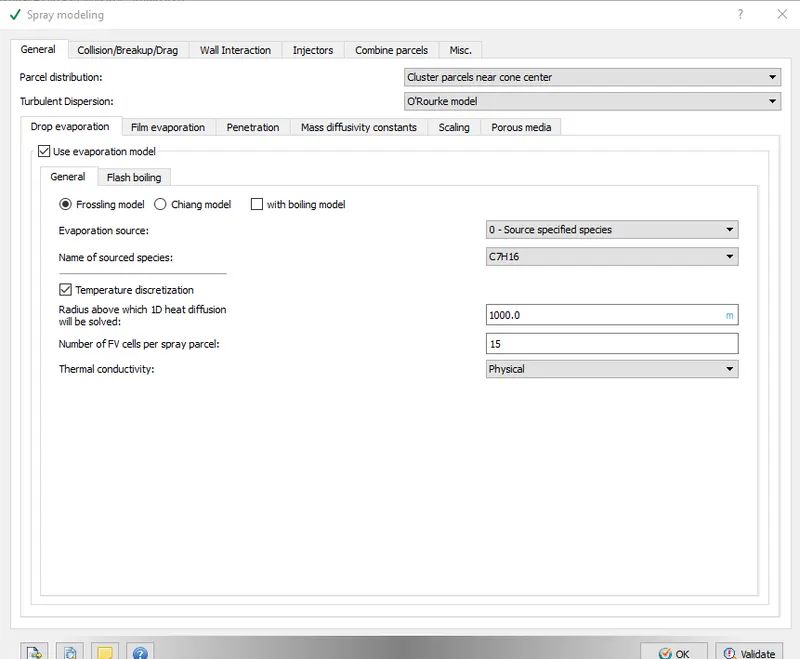
Spray Modelling:
Frossling model
collison model-NTC collision,collision outcomes-Post collison outcomes
Injection Parameters:
Total injected mass = 2.70167e-5 Kg
Injection start time = -9.0
Injection duration = 21
Fuel temperature = 341K
Total number of injected parcels per nozzle=50000
Combustion Modelling: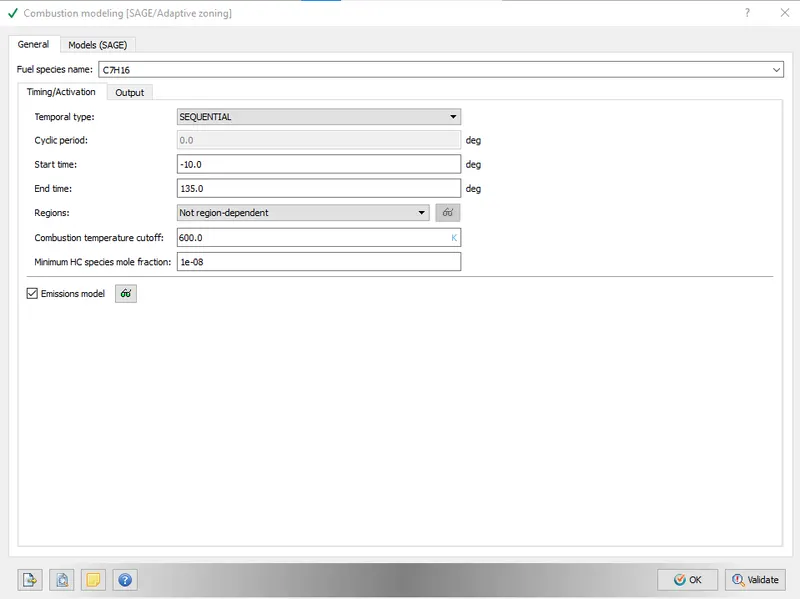
Sage Model: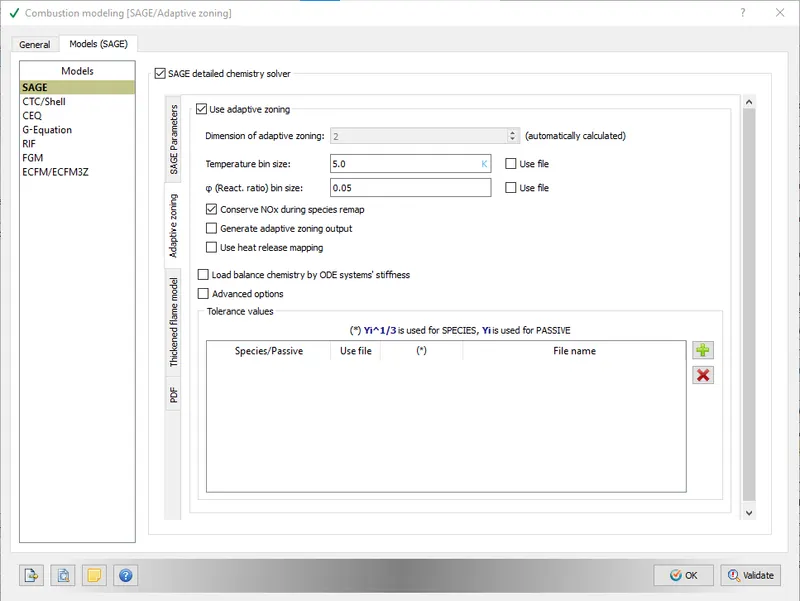
Turbulence Modelling:
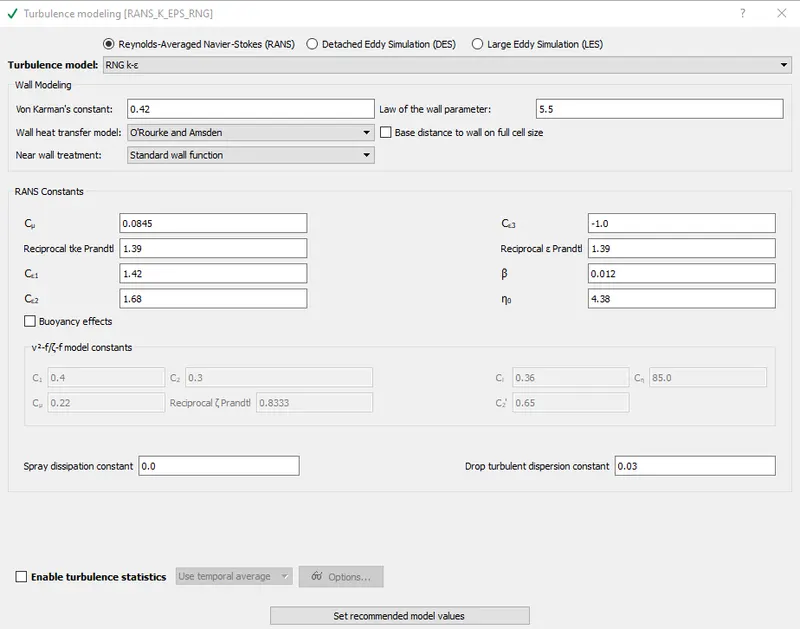
RANS k-epsilon RNG model
Grid Control:
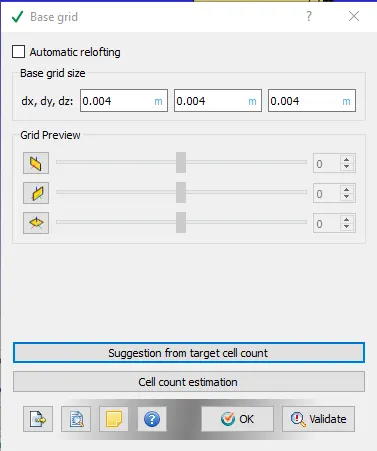
Base Mesh- dx=dy=dz=0.004m
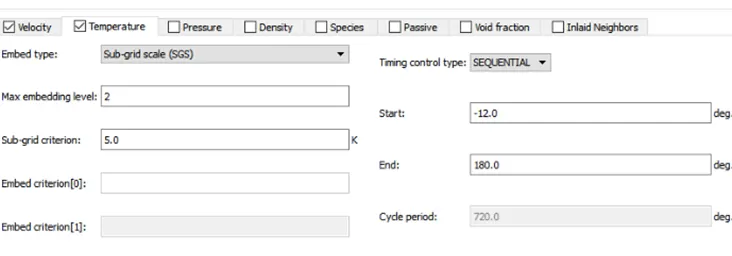
Adaptive Mesh Refinement:
Velocity Adaptive Mesh Refinement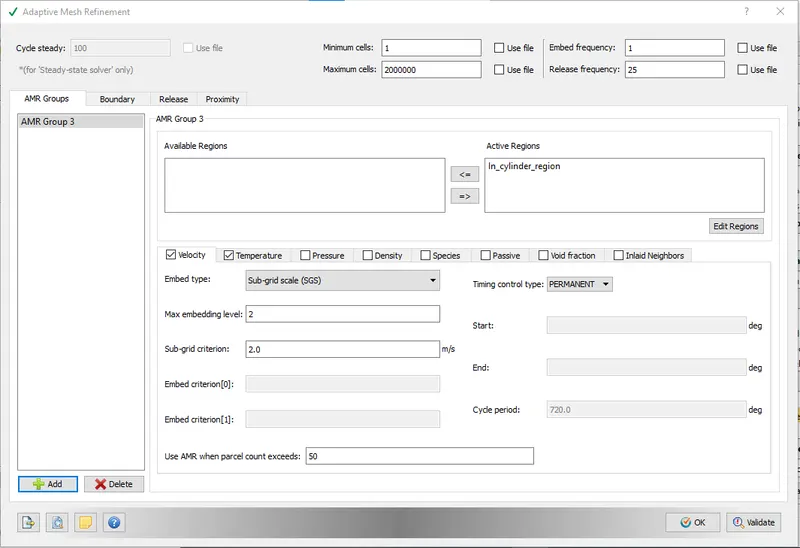
Temperature Adaptive Mesh Refinement
Fixed Embedding:
Nozzle
Sequential,Scale-2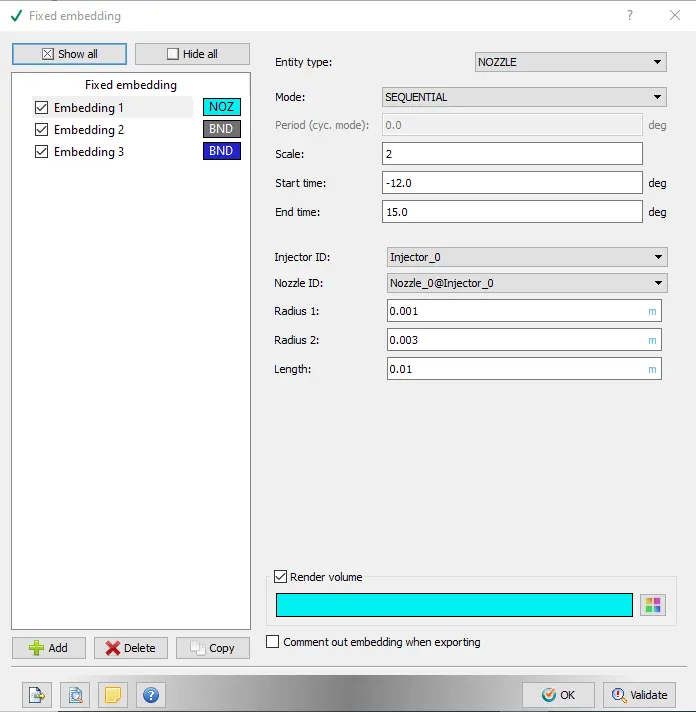
Boundary Embedding
Piston-Sequential, Scale-1, embed layers-1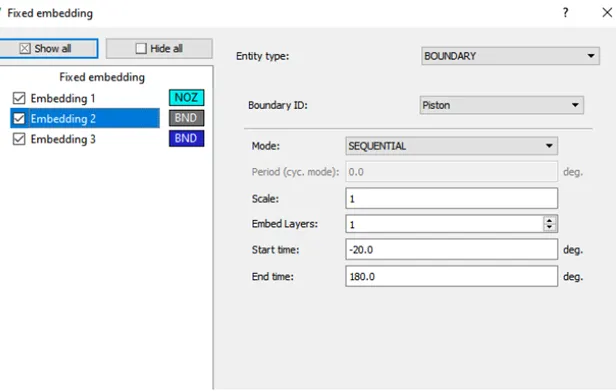
Boundary embedding
cylinder head-Sequential, Scale-1 ,Embed layers-1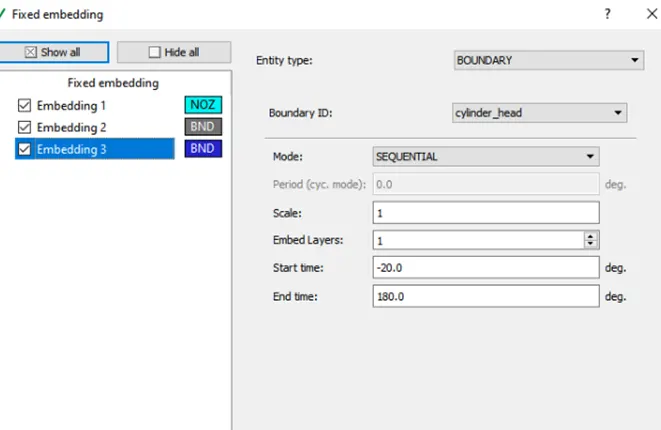
Results
Analysis for Open W and Omega Piston
Pressure Vs Crank angle:
From the below figure we can see that the peak pressure for open W piston is higher than the omega piston.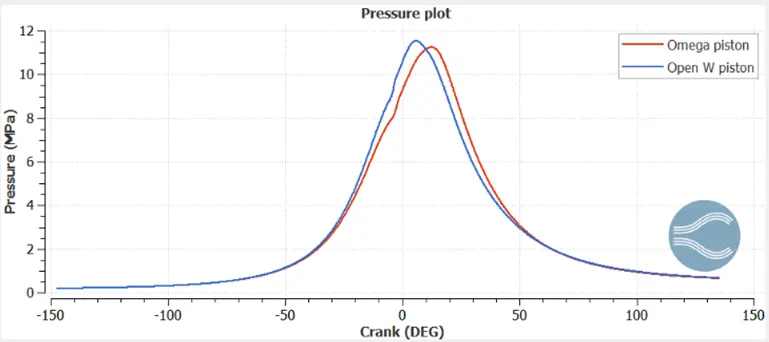
Mean Temperature Vs Crank angle:
From the below figure we can see that the peak mean temperature is significantly lower for open W piston and the omega piston is having a higher peak mean temperature. This might be an indication that the fuel is not burnt properly in case of open W piston.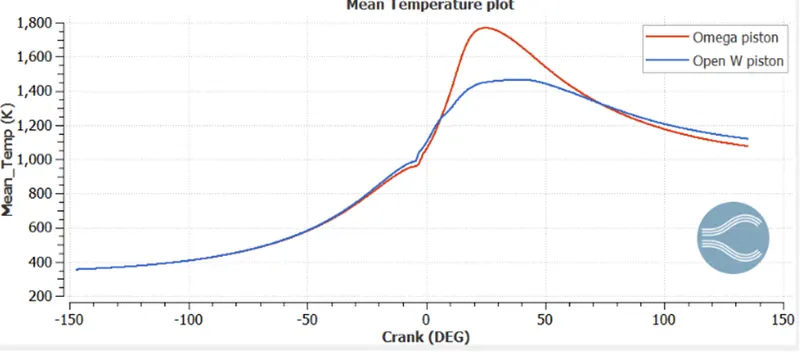
Integrated Heat Release rate:
From the below figure we can see that the integrated heat release rate is lower in case of open W piston. At the end we can see that the total heat release is less in open W piston. That means for same amount of fuel injection we are getting less heat output for open W piston.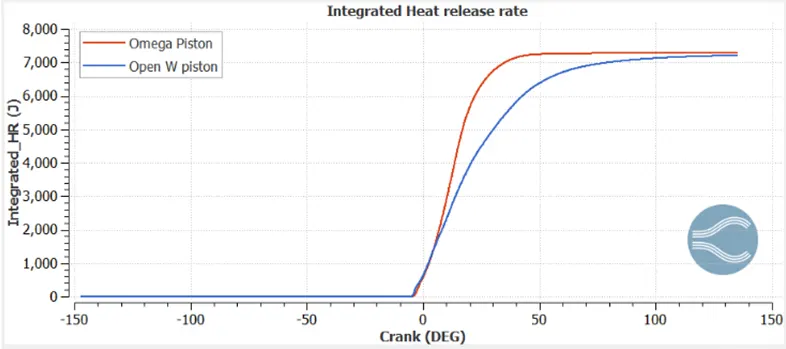
So from the above graph the heat release for Omega piston is 7279.46 J and open W piston is 7211.73 J
Lower heating value(LHV) of C7H18=42.78 MJ/kg
The difference is 67.73 J per cycle.
Mass of fuel required for 67.73 J=67.73/42.78*10^6=1.6e-6 kg
Mass of fuel required for 67.73 J for 1000 cycles=0.0016 kg
So 0.0016 kg mass of fuel wasted for Open W piston configuration for 1000 cycles.
Emissions analysis for Open W and Omega Piston
Comparison of Soot formation:
Open W piston has more soot formation than omega piston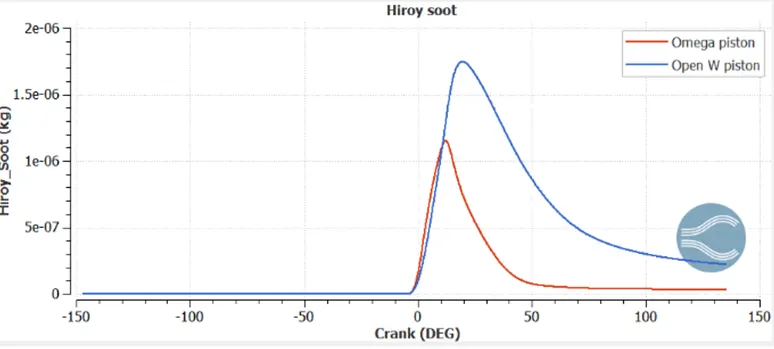
Comparison of NOx formation:
From the below graph its seen that open W piston has very low NOx emissions as compared to Omega piston which is also indicated by the low temperature is our earlier analysis.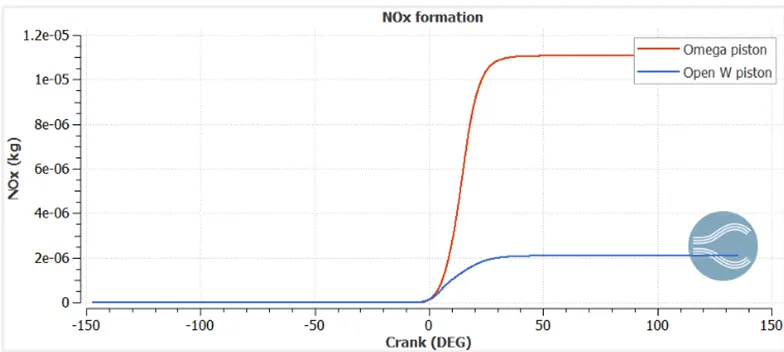
Comparison of CO formation:
From the below graph its seen that open W piston has more CO emissions which signifies that there is unburnt fuel for open W design.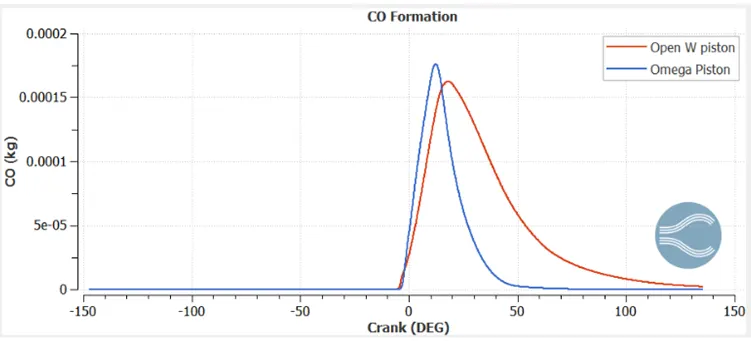
Comparison of CO2 formation:
CO2 formation is more in case of Omega piston.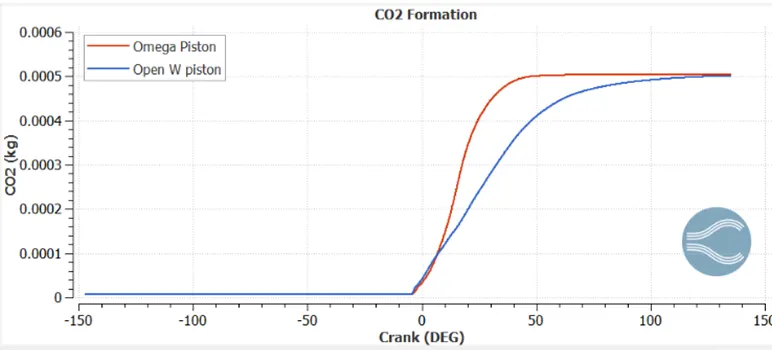
Comparison of Unburnt hydrocarbon:
From the below graph it’s clear that unburnt fuel is significantly higher in case of open W piston.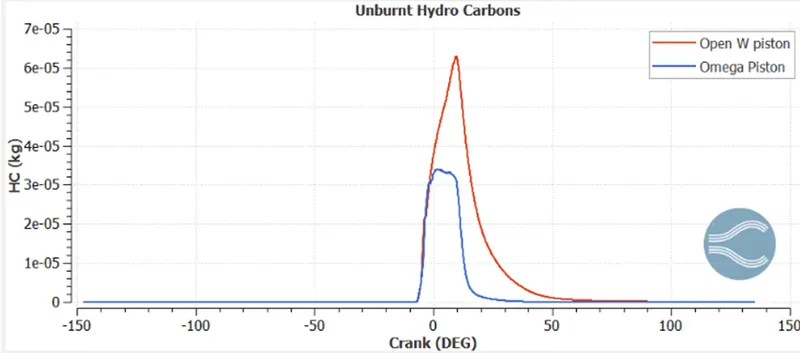
IMEP and Power Calculation:
From the engine performance calculator the following results were obtained:
For Open W Piston:
INDICATED MEAN EFFECTIVE PRESSURE(IMEP)=1.24e+6 pa
Speed of engine=1600 rpm
=1600/60=26.66 rps
Speed in degree/second=360*26.66=9597.6 degree/s
270.156 deg duration in seconds=270.156/9597.6=0.0281 s
Gross Work=3028.53 J
Power=3028.53/0.0281=107.7 KW
From the animation we can clearly see that soot emissions is more in open W piston: https://youtu.be/9C8oB_5kHlE
For Omega Piston:
INDICATED MEAN EFFECTIVE PRESSURE(IMEP)=1.39e+6 pa
Speed of engine=1600 rpm
=1600/60=26.66 rps
Speed in degree/second=360*26.66=9597.6 degree/s
270.156 deg duration in seconds=270.156/9597.6=0.0281 s
Gross Work=3409.28 J
Power=3409.28/0.0281=121.3 KW
From the animation we can clearly see that NOx emissions is more in Omega piston: https://youtu.be/GNg03Piz2VQ
Animation:
Adaptive Mesh Refinement: https://youtu.be/d9Yu3m-_PYE
Animation of temperature variation in engine : https://youtu.be/8vv5fJdwFFc
CONCLUSION:
- Simulations for two types of pistons for diesel engine CAT3410 was performed and following conclusion is drawn.
- The peak mean temperature is significantly lower for open W piston and the omega piston is having a higher peak mean temperature which indicates there is unburnt fuel.
- The integrated heat release rate and power output is lower in case of open W piston.
- Open W piston has very low NOx emissions as compared to Omega piston.
- Open W piston has more CO emissions which signifies that there is unburnt fuel for open W design. And it is confirmed as the soot production is more in open W piston.
- CO2 emissions are more in case of Omega piston. Geometry for Open W Piston: