Week 11: Project 2 - Emission characterization on a CAT3410 engine
Emission Characterization on a CAT 3410 Engine
Objective:
To run 2 3D simulation of a CAT 3410 diesel engine using two different piston bowl profile and to understand the effect of piston bowl geometry on the performance and emission characterization of the engine.
Geometry:
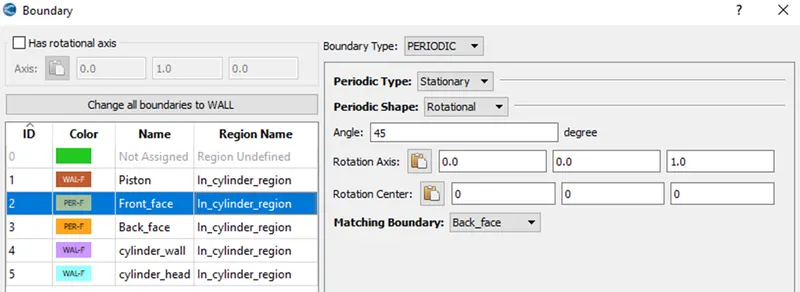
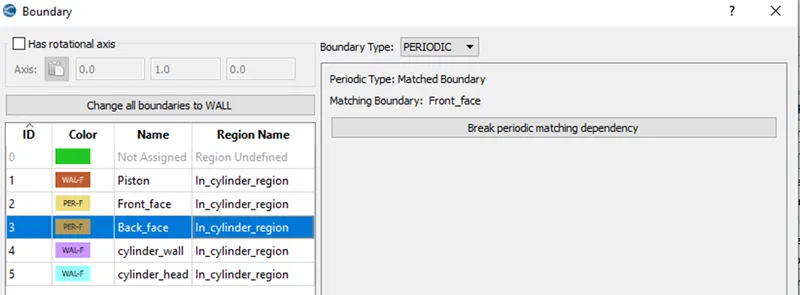
A tool called make engine sector surface is used to create the engine the engine sector model and to perform the closed cycle analysis. The reason behind generating engine sectors is that the geometry is symmetric about its axis and by using periodic boundary condition at the forward and backward face the entire combustion chamber can be simulated using a sector, thereby saving lot of computational resource.
For diesel engine, the fuel injector is mounted exactly at the center of cylinder Head and it will have multiple nozzles. In this case, the spray will be symmetrical. Hence to increase the computational efficiency, one sector of the engine is taken and combustion is simulated with it. It will lead to faster run times. This is called sector modeling and it is carried out as shown below.
Different bowl profile open – w type and omega type:
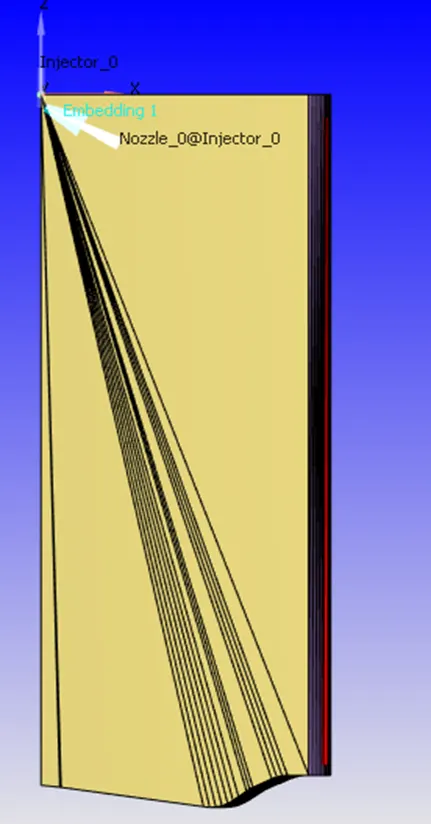
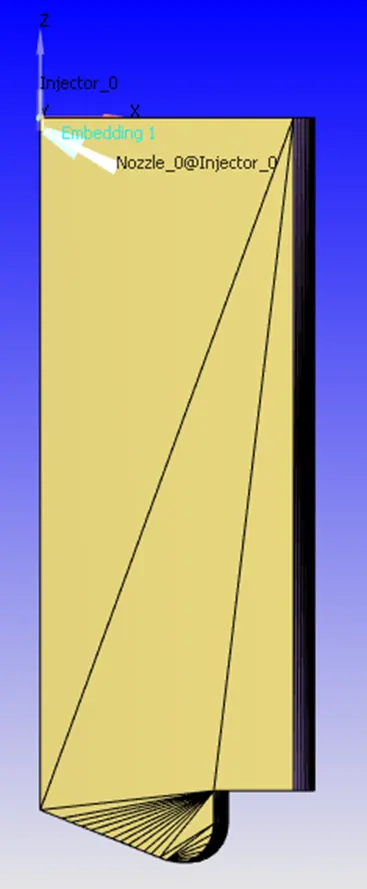
The geometry available with us has six nozzles with engine specification:
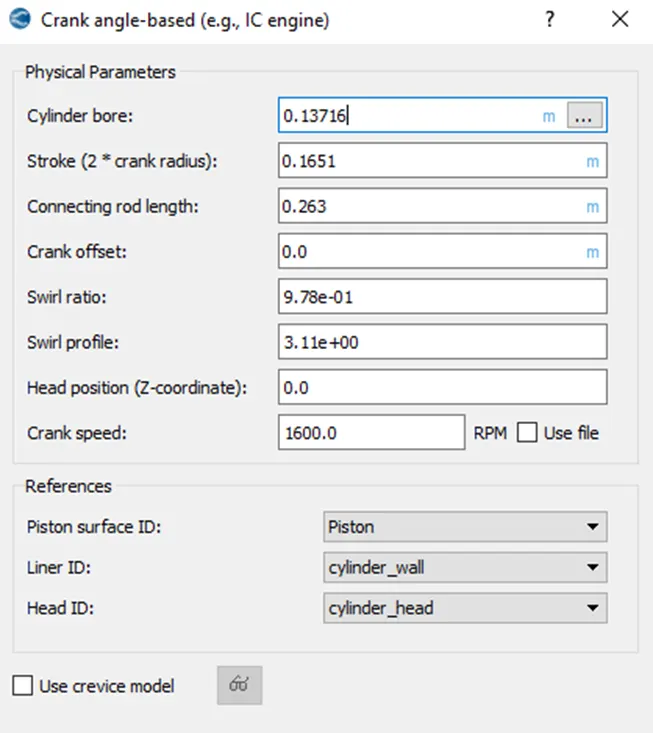
- Bore = 0.13716m.
- Stroke = 0.1651m.
- Connecting rod = 0.263m.
- Speed = 1600 rpm.
- Compression ratio = 17.5:1.
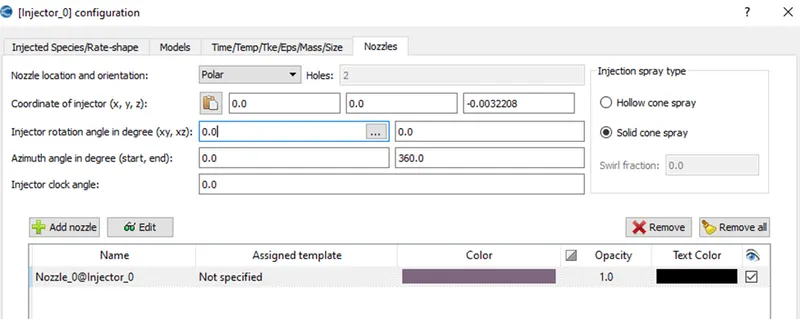
- Sector angle = 60 degree (No. of nozzles = 6; sector angle = 360/60 =60 degree) i.e. Each injector with one nozzle.
Setup:
Converge studio provides us a separate application for IC engine flow.
Materials:
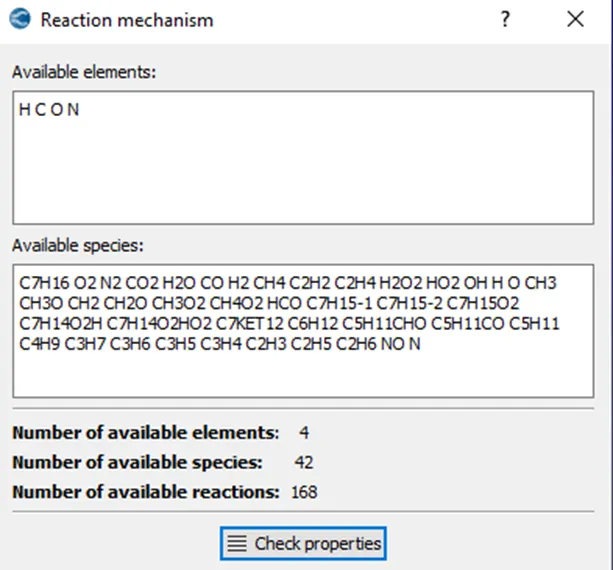
Gas simulation and reaction mechanism are selected and thermodynamic properties are imported for the equation to be solved.
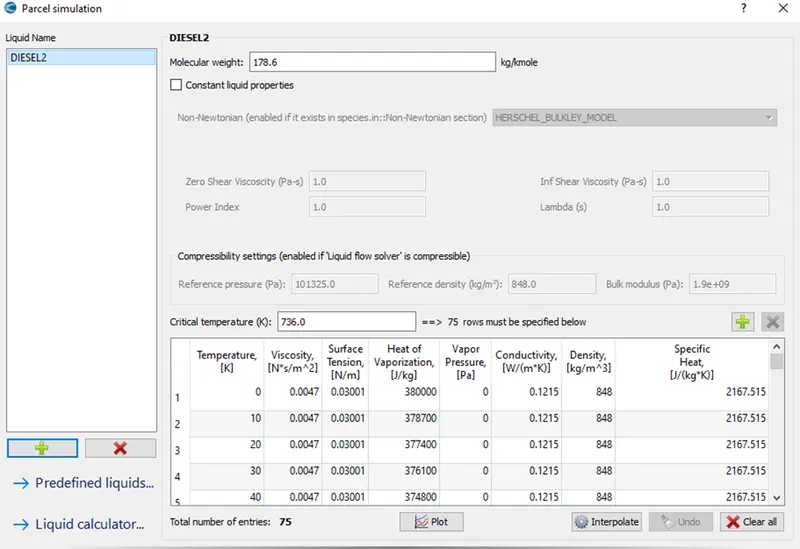
Parcels are used to simulate a special type of liquid that is used in conjunction with spray modeling. Setting up a parcel simulation is identical to setting up a liquid simulation.
Diesel 2 species is selected under parcel simulations this has very close properties to diesel.
Simulation parameters:
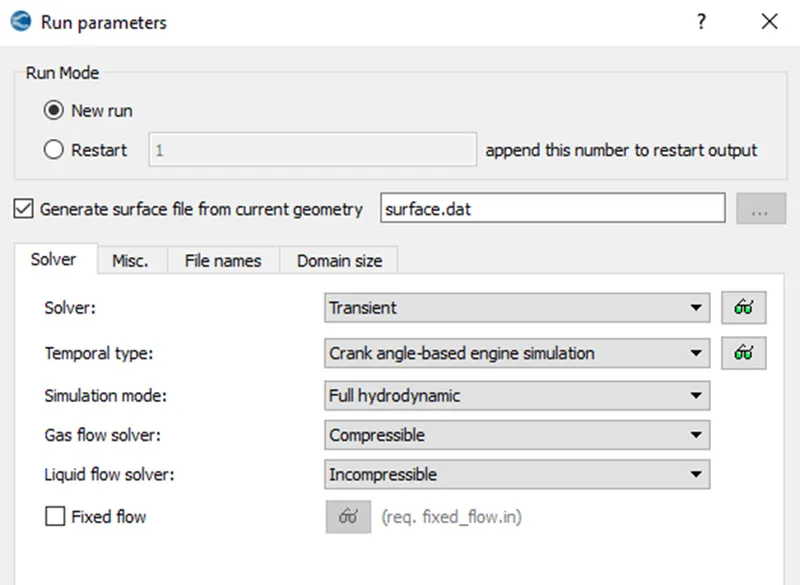
Transient simulation is selected and Full Hydro case is run. Running a on hydro simulation ignores transport equation spray and combustion thus greatly reducing computational time.
Running the simulation in this mode is an efficient way to check for errors in surfaces motion and mesh creation.
We have previously run this and checked for mesh simulation earlier.
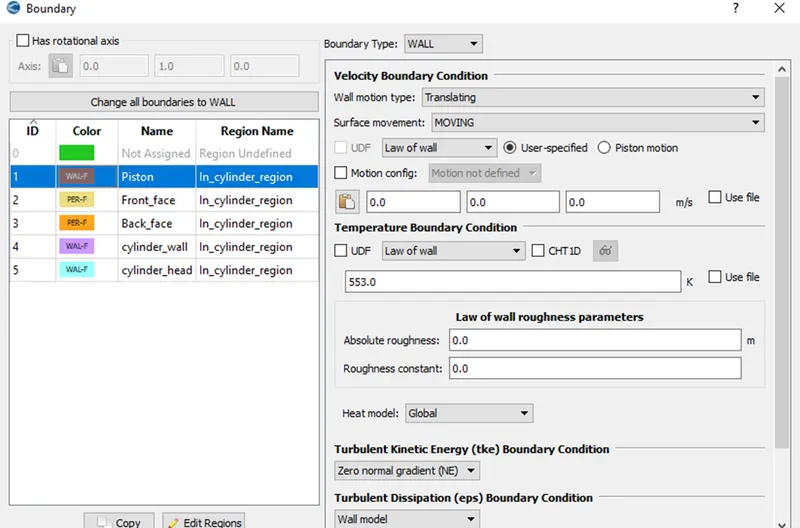
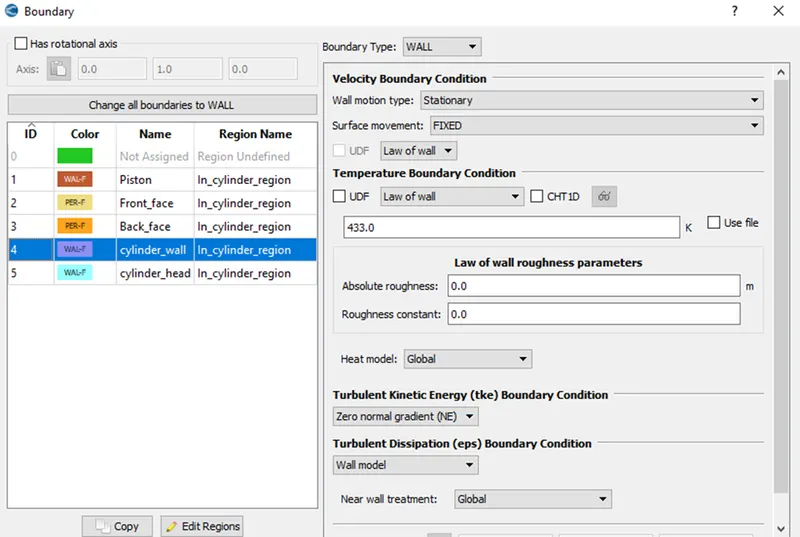
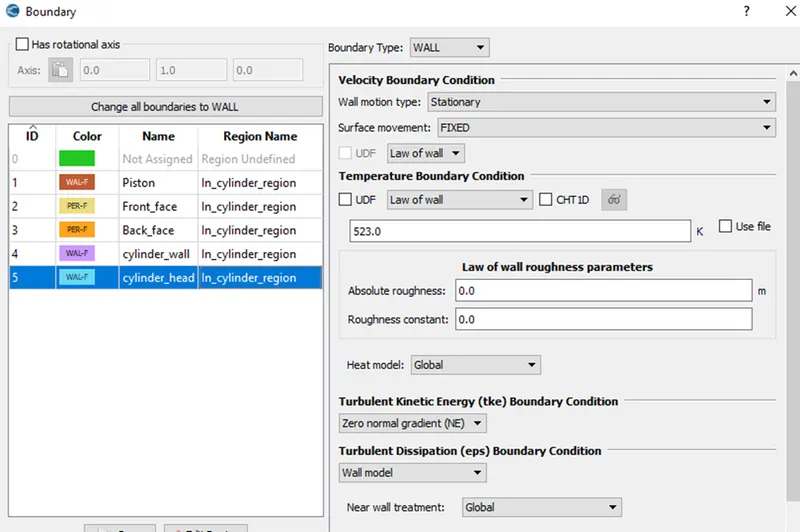
Boundary conditions:
Regions and initialization:
Here we create region id to assign temperature and pressure to each region and initialize species, passives and turbulence in each region. By doing this we can highlight and isolate all boundaries to a region.
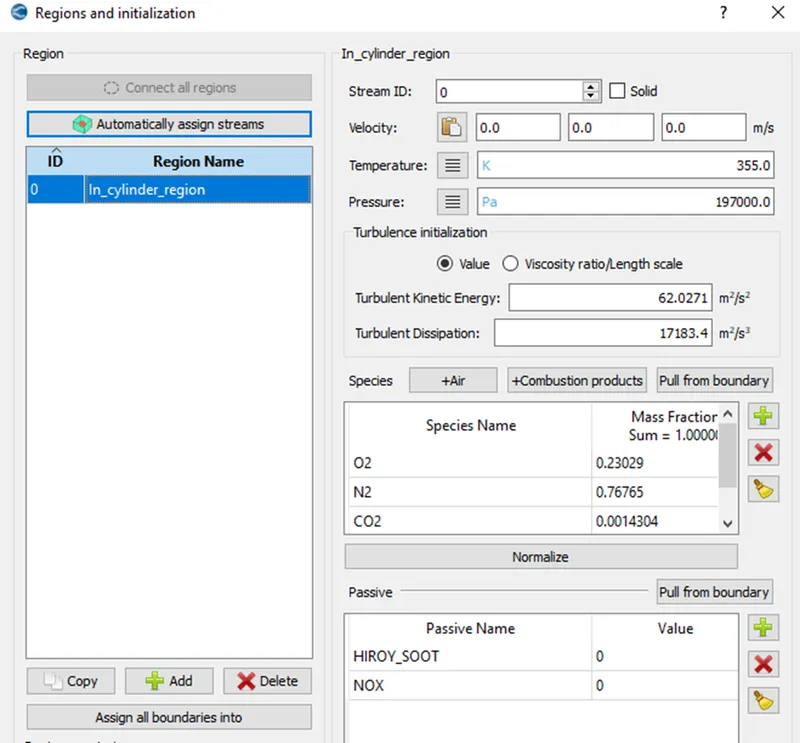
- Region 0 = cylinder region.
- Temperature = 355K.
- Pressure = 197000 pa.
- Species
- O2 = 0.23029.
- N2 = 0.76765.
- CO2 = 0.0014304.
- H2O = 0.0006296.
Spray modeling:
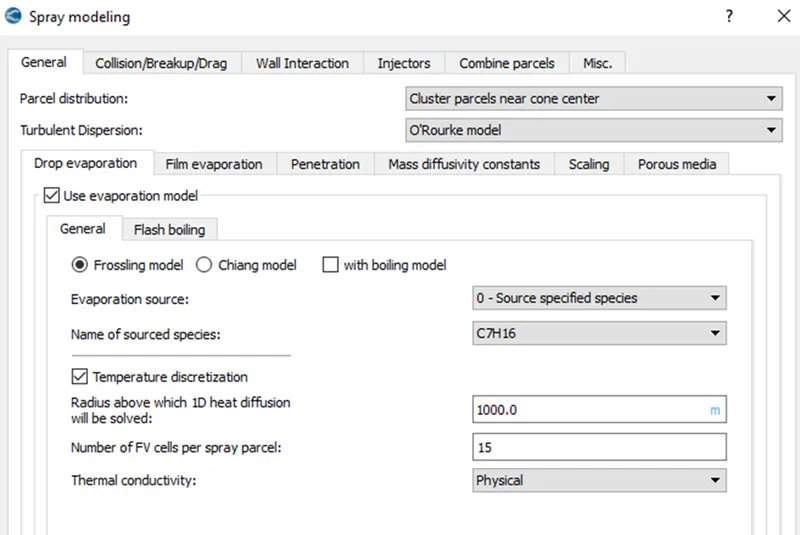
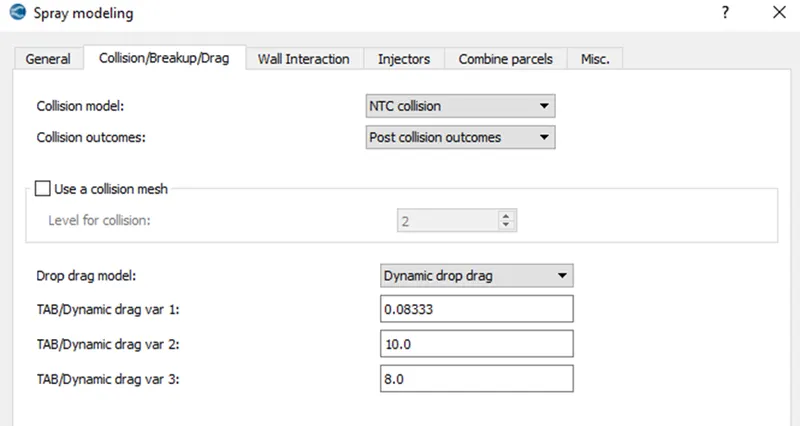
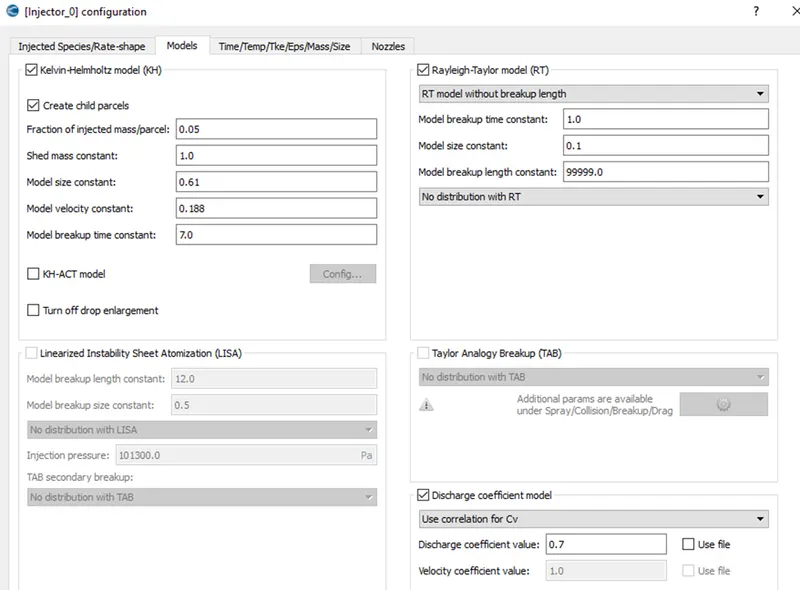
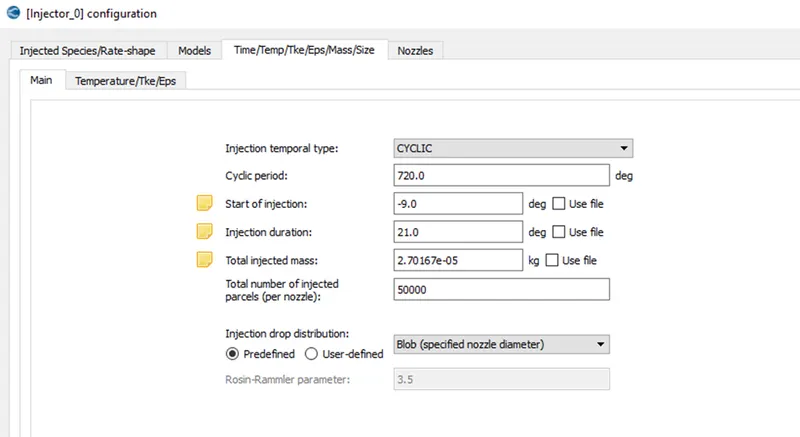
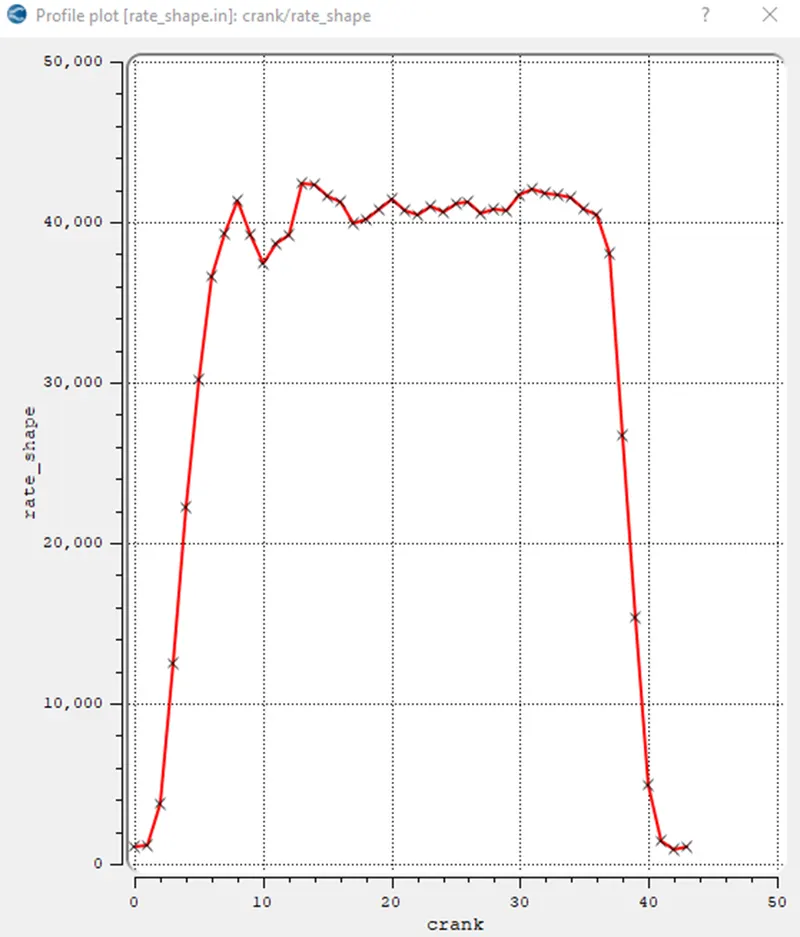
The Kelvin – Helmholtz model and Rayleigh – Taylor model are used for spray modeling. An injector with a nozzle is used to spray the fuel.
Converge offers injectors mechanism that consists of “n” number of nozzle each with different size, orientation, cone angle etc.
- Parcel species = DIESEL2.
- Start of injection = -9.0 degree.
- Injection duration = 21.0 degree.
- Total injection mass = 2.70167e-05 Kg.
- Fuel temperature = 341.0K.
Combustion modeling:
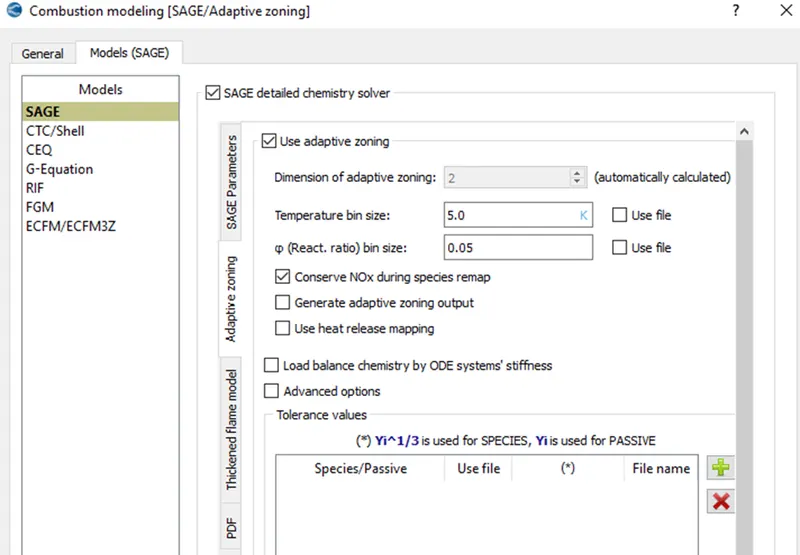
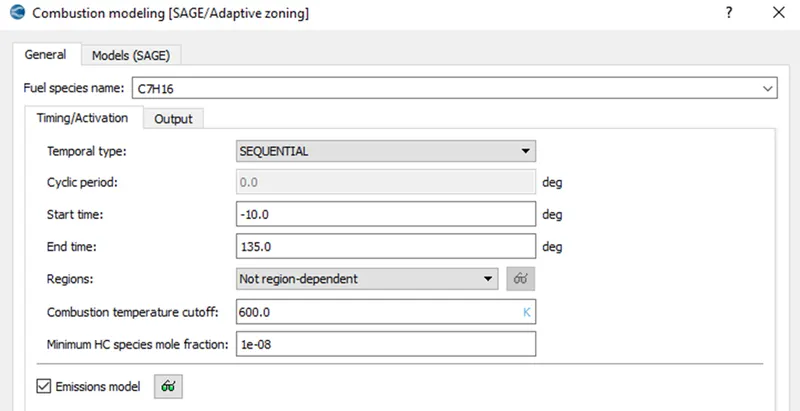
The SAGE detailed chemical kinetics solver is used for the combustion modeling.
CONVERGE uses the multi – zone model which accelerates the chemistry calculation by grouping together similar computational cells and then invoking the chemistry solver once per group rather than once per cell.
On the other hand generally less computational expensive and less predictive. This may be used if we want to use global parameters correctly or just find out the maximum combustion temperature.
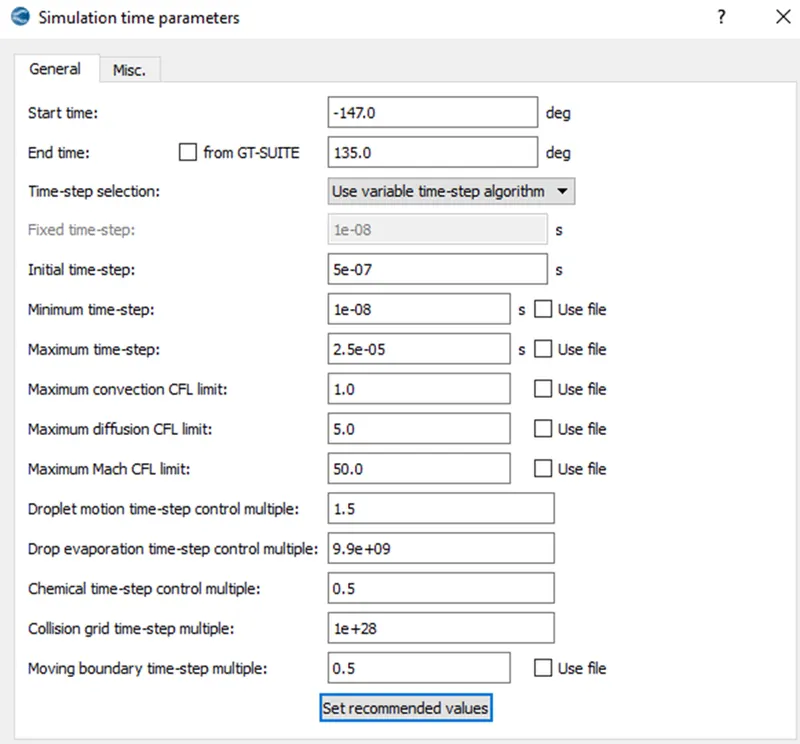
Start time = -10degree.
End time = 135 degree.
Turbulence model = RNG K - ɛ.
Embedding:
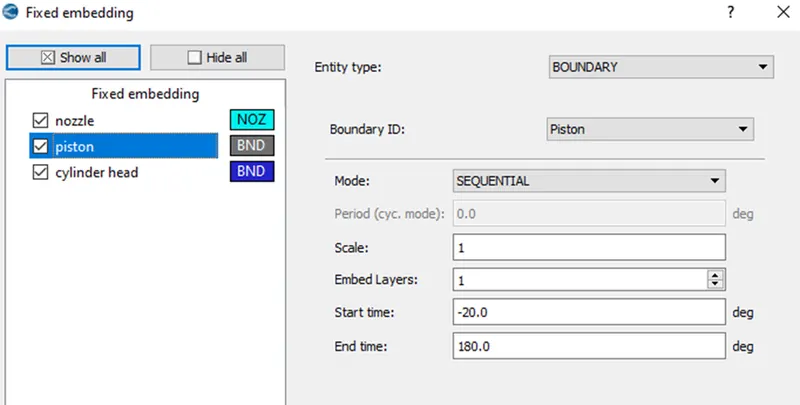
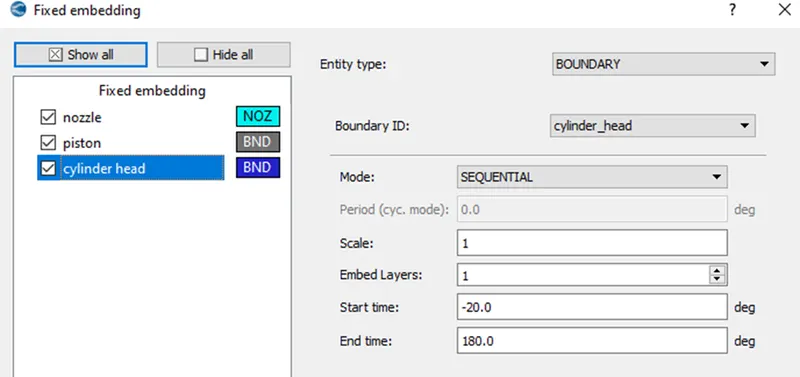
Sequential embedding of factor 1 was defined at the piston and cylinder head boundaries between the crank angles -20 degree to 180 degree when the combustion is said to occur.
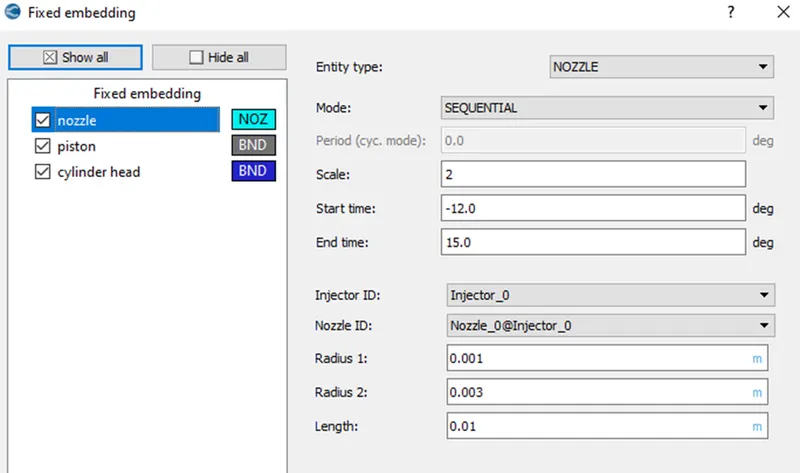
In addition to this, a nozzle embedding of factor 2 was provided at the injector to capture the fuel sprays.
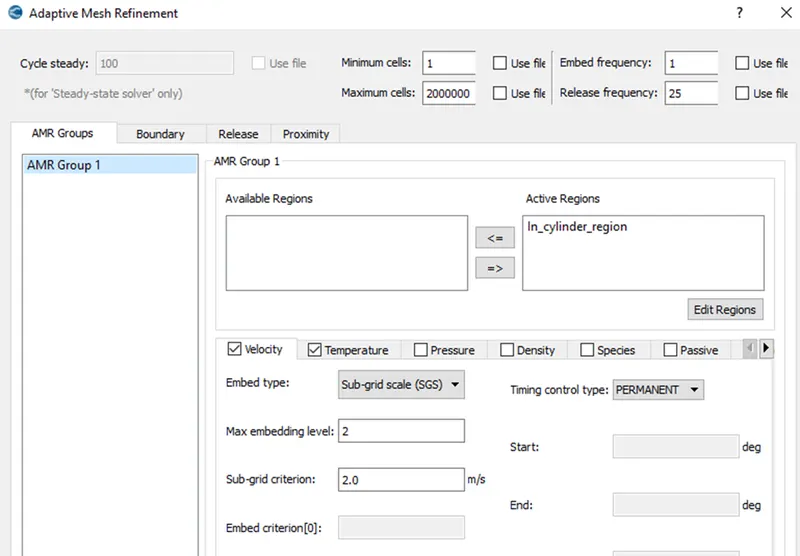
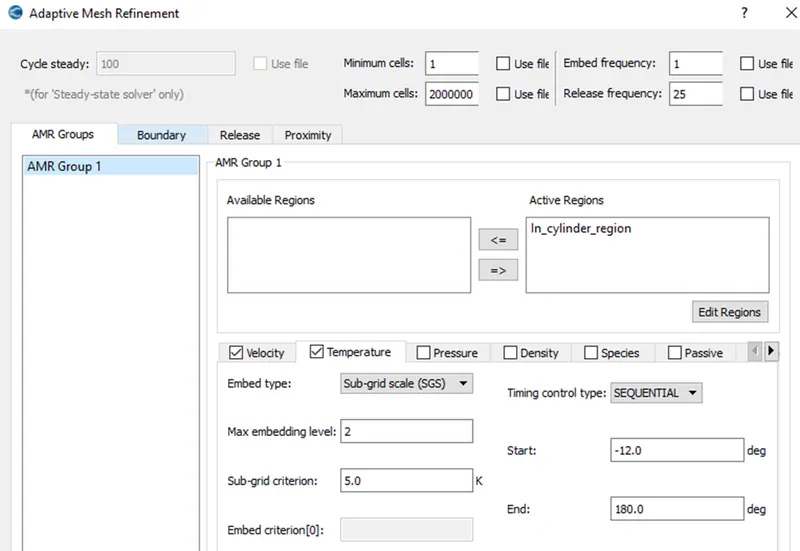
Along with mesh embedding, velocity and temperature adaptive mesh refinement was also enabled.
Adaptive mesh refinement:
It eliminates the need to mesh the whole model finely. Adaptive mesh refinement provides such a dynamic programming environment for adapting the precision of the numerical computational based on the requirements of a computational problem in specific areas which need precision while leaving the other region at lower levels of precision and resolution.
Output/post processing:
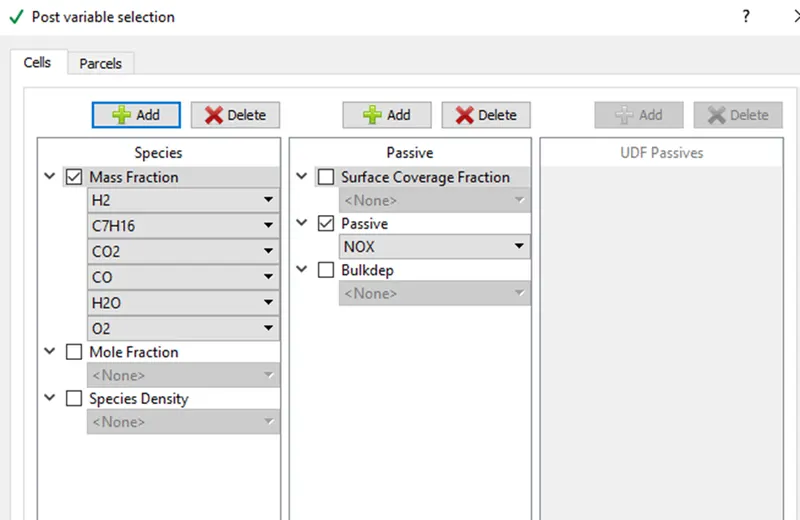
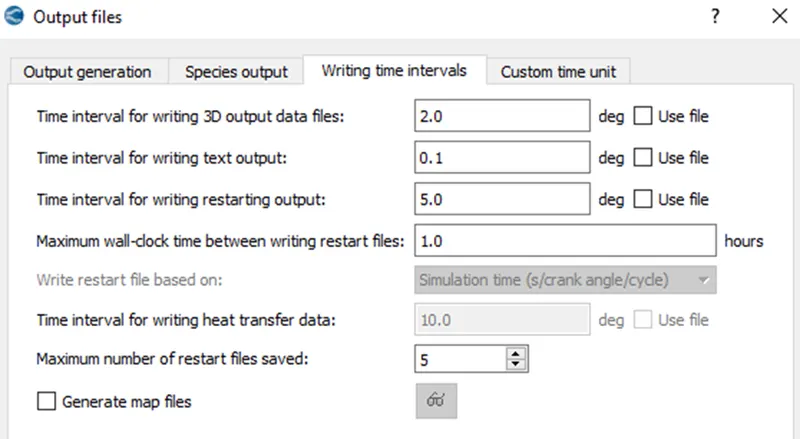
We set all the output parameters to default but in species and passive we have added some of the reactants that are involved in the combustion process to observe their behavior.
Results and plots:
Pressure plot:
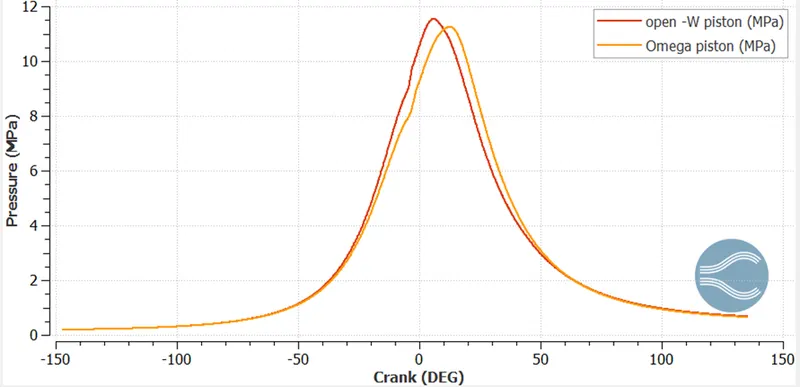
In the below pressure plot, it can be observed that little high pressure is generated by the open – W piston when compared to omega which can be negligible as the different is less that 0.3 bar. Propagation of flame through the gas might have taken little more time as the surface area of the omega piston is high.
Mean temperature:
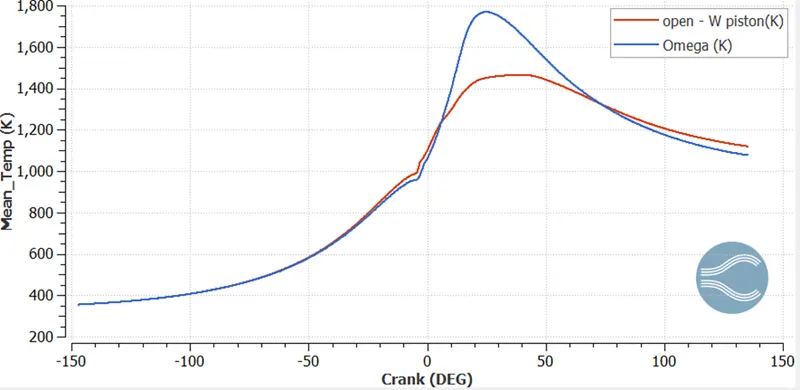
Even though the pressure created is little low with the omega piston, temperature generated is very high, which means that most of the fuel that is sprayed got burnt which could possibly leads less unburnt hydrocarbons.
Integrated heat:
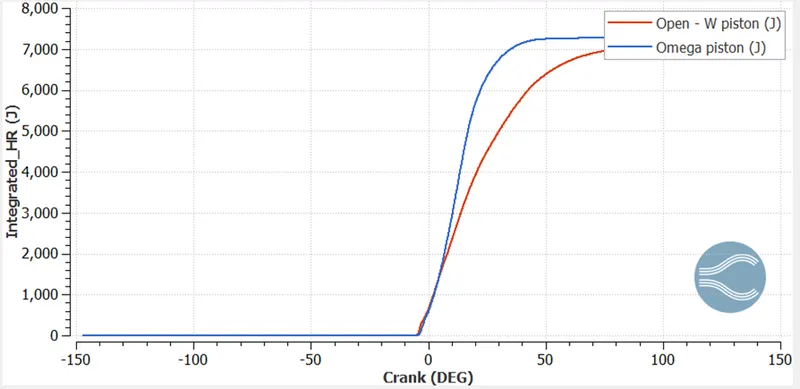
Integrated heat release means the amount of heat that is generated per cycle throughout the volume. The more the heat is generated the less the unburnt gases. Omega piston has the clear edge in this.
Heat release rate:
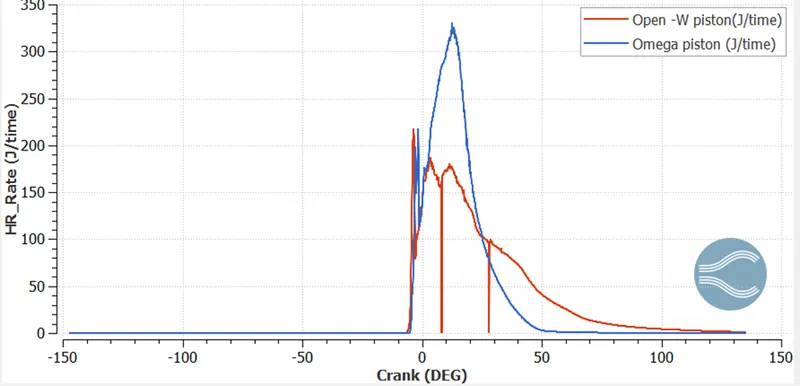
Heat release rate tells us the amount of heat generated per unit time. Omega has a clear and smoother profile than that of open – w. open –W profile is quite unpredictable and this tells that there are lot of incomplete burning of the gases is taking place.
Emissions:
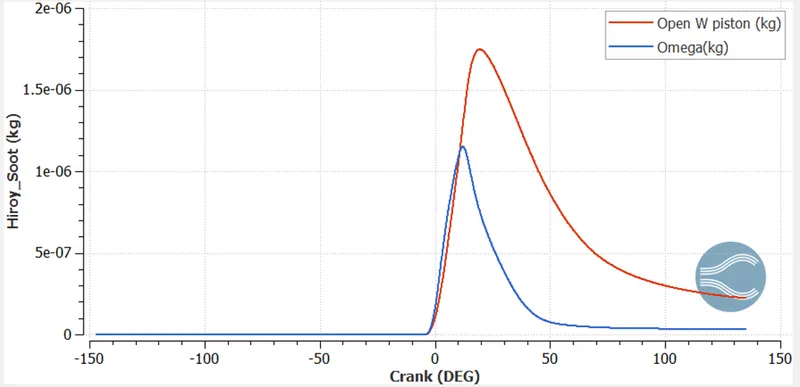
Soot is a mass of impure carbon particles resulting from the incomplete combustion of hydrocarbons. It is evident that the soot formation is very high in case of open - W piston.
NOX:
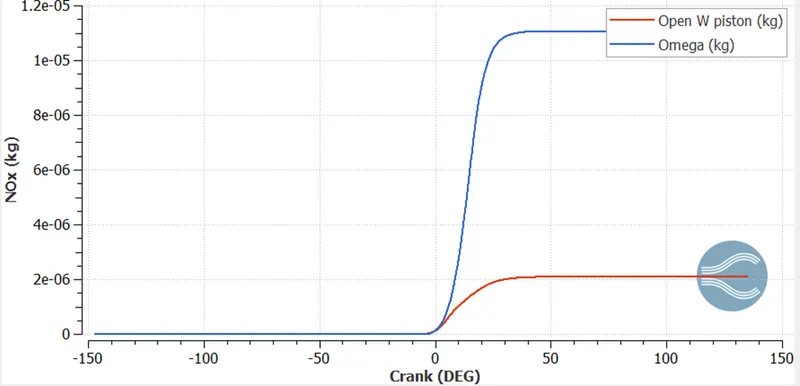
From our observation of the above plots, we can see that high temperature are produced in omega piston engine. NOX are nothing but the oxides of nitrogen they form when the residual gases are exposed to high temperature under certain conditions. As the omega piston profile develops high temperature it led for the formation of high amounts of NOX.
Carbon monoxide:
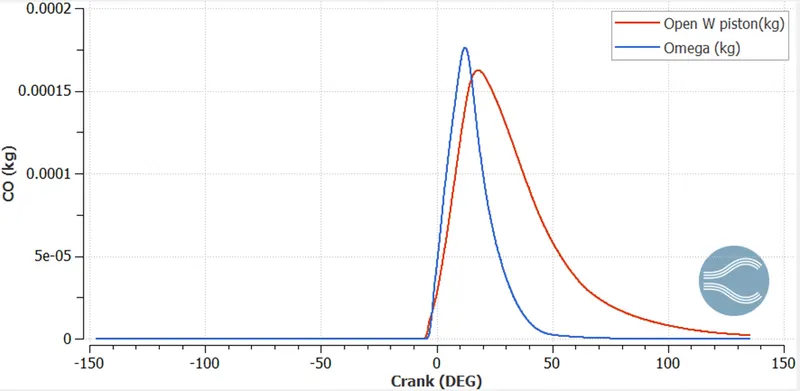
- A two-step process may approximate complete combustion.
- First step is conversion of HC to CO. during this step several oxidation reaction involve formation of intermediate species like; smaller HC molecules, aldehydes, ketones, etc. for R to be HC radical;
- RH→ R → R+O2 → RCHO → RCO → CO
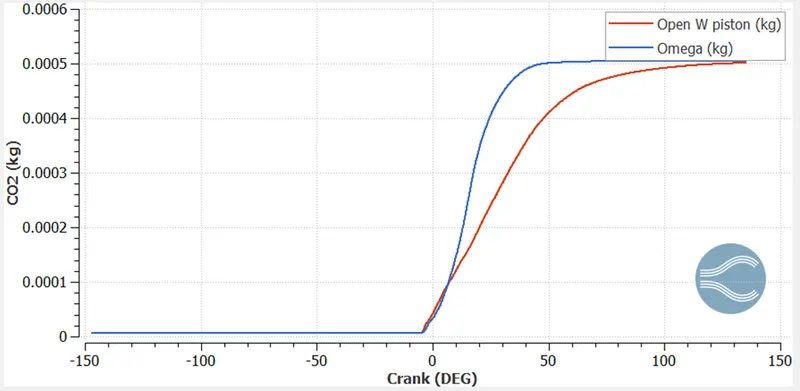
- Second step is conversion of CO to CO2 provided sufficient oxygen is available.
- CO + OH ↔ CO2 +H
Performance Evaluation (open – W type):
- Power(p):
- Power (p) = work done / time taken.
- Work done = 3028.53 N-m.
- Time per degree = 60/(360*1600).
- Hence time for 270.156 degree = (270.156*60)/(360*1600)
= 0.02814125 sec/deg.
- Power (p) = 3028.53 / 0.02814125.
- Power (p) = 107.62 KW.
- IMEP:
- IMEP = 1.24076 E^6 pa (or) 12.4076 bar.
- Work done can also be calculated under the area of P-V graph.
Performance Evaluation (omega type):
- Power (p):
- Power (p) = work done / time taken.
- Work done = 3409.28 N-m.
- Time per degree = 60/(360*1600).
- Hence time for 270.171 degree = (270.171*60)/(360*1600)
= 0.02814281 sec/deg.
- Power (p) = 3409.28 / 0.02814281.
- Power (p) = 121.4 KW.
- IMEP:
- IMEP = 1.39878e^6 pa (or) 13.9878 bar.
- Work done can also be calculated under the area of P-V graph.
- Hence we can say that omega piston is 11.6% more efficient than
open – W open.
Open W piston - preaaure animation:
Omega piston - pressure animation:
Conclusion:
The simulation of sector model is done i.e. Open – W type piston and Omega type of CAT 3410 diesel engine and their parameters plots and performance parameters are compared. The Omega type piston outperforms open – W typein many critical factors and is 11.16% more efficient than the latter with lesser concentrations of Hiroy soot, UHC, CO were generated in the former one. The Nox concentration was higher in the Omega piston due to the higher cylinder temperature. NOx emission can be reduced by primary methods such as retard injection, fuel nozzle modification, change of compression ratio, water direct injection, water emulsification, exhaust gas recirculation (EGR) and secondary method such as selective catalytic reduction (SCR).