Week 11 - Final project
DOOR TRIM PANEL
Aim:
To Create the Door trim panel component through the given Class-A surface. To begin with, the tooling axis for the given Class-A Surface should be created meeting the requirements of the draft angle and at the end perform the Draft analysis on the model.
Objective:
- To design lower substate as per automotive OEM Standard.
- Create B Class and C Class and tooling axis.
- Converting close surface into the solid inside part workbench and provide the thickness of 2.5mm.
- Performing draft analysis to verify the creation of the Tooling axis and C Class surface.
- Creating Engineering Features.
Operations:
- Creating tooling axis.
- Create draft analysis
- Creating Class B surface.
- Creating Class C surface.
- Final product using closed surface.
- To create heat stakes, locators and dog house.
The Parts to be create:
- Door Arm rest
- Lower Substate
- Map Pocket
- Map Pocket with bottle holder.
The material used in those surface are :
-
Acrylonitrile Butadiene Styrene (ABS).
ACRYLONITRILE BUTADIENE STYRENE(ABS):
High Rigidity:
- ABS has high rigidity and impact resistance. Even in low-temperature conditions or over long periods, ABS plastics will retain these characteristics.
- Its tensile strength is around 35-44 Mpa and because of its plastic yield at high strain rates, the impact failure of ABS is ductile rather than brittle.
- It is used in Instrument-Panel, Door-trims,Coin holder etc. As it has good impact resistance, it is used in creating bumpers as well.
Excellent Insulation:
- It has very good insulating properties, both acoustic and thermal.
Highly Weldable:
- It is a good weldable material as it is an amorphous material
- It is usually measured in terms of stiffness or modulus.
High Dimensional Stability:
- It remains mechanically strong over time.
Good Surface Characteristics:
- High Surface brightness and excellent surface finish. ABS is an ideal material whenever superlative surface quality, color fastness, and luster are required. ABS is a two-phase polymer blend.
- A continuous phase of ‘Styrene-Acrylonitrile’ co-polymer(SAN) gives the material rigidity. Hardness and heat resistance. The toughness of ABS is the result of microscopically fine polybutadiene rubber particles uniformly distributed in the SAN matrix.
- Hence, ABS is also used in Wheel-covers, IP substrate, etc
Good Abrasion & Strain Resistance
Followed Constraints:
- The thickness given to all the part is 2.5 mm.
Engineering Features:
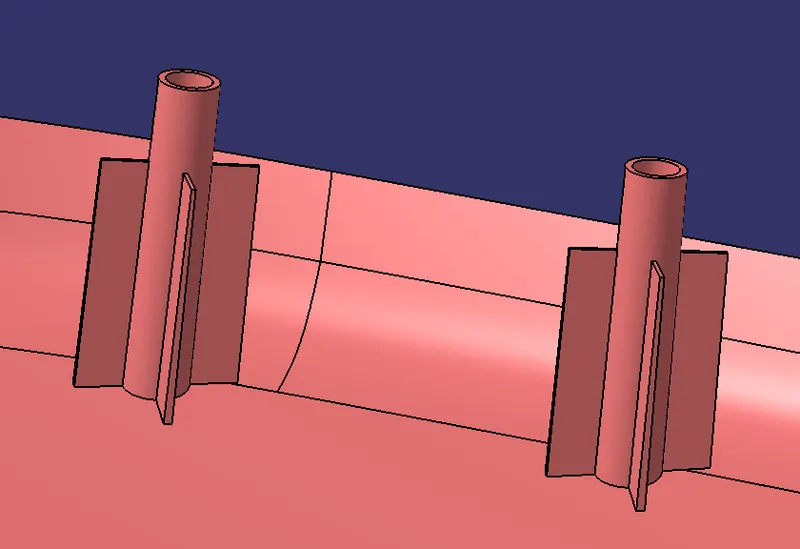
HEAT STAKES:
- Heat staking also known as thermoplastic staking is the process of joining two dissimilar materials together.
- It is also known as permanent joining method. In heat staking we use local heating and cooling to raise the temperature of plastic components and allow plastic reforming to be carried out.
- This reforming can be used in a wide variety of applications. IT consist of ribs.
Guidelines to create Heat Stakes:
- Height of the heat stake consist of. Rib height - (3 - 6 mm); Counterpart height - (>= 2 mm ); Staking part - (12 mm).
- Inner dia - 5 mm
- Outter dia - 7 mm
- Depth of inner Dia - (2.5 - (0.5 t))
- Total width of rib - 22 mm
- Draft angel - 0.5 deg
- Fillet radius - (0.5 mm)
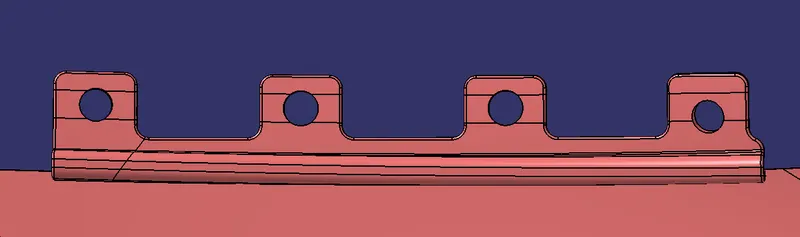
Flanges:
- Flanges are used with heat stakes for permenanet joint with another part. Flanges are also added strength to the part.
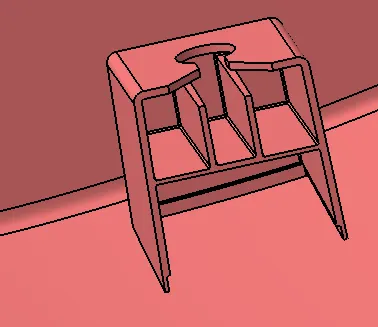
DOG HOUSE:
- Dog house is an engineering feature used in plastic trim design. Dog houses are used as supporting feature.
- Sometimes other engineering features like snaps; locators etc. are mounded on them to increase their strength.
- Dog house wall thickness at intersection of part wall (c) should be 40% or less than main wall stack (T).
Guidelines to create Dog House:
- Width of the DogHouse - (25 - 35mm).
- Height of the Dog House - (45 - 60mm).
- Outter Draft - (> 0.3 deg), Nominal = 1.5 deg.
- Inner Draft - (> 0.1 deg), Nominal = 0.5 deg.
- Thickness - Nominal Wall thickness.
- Height of the Sink mark cut - (3 - 6mm).
- Fillets can be given according to the thichness rule.
- Width of one dog house to another dog house is (w x 3).
Tooling Axis:
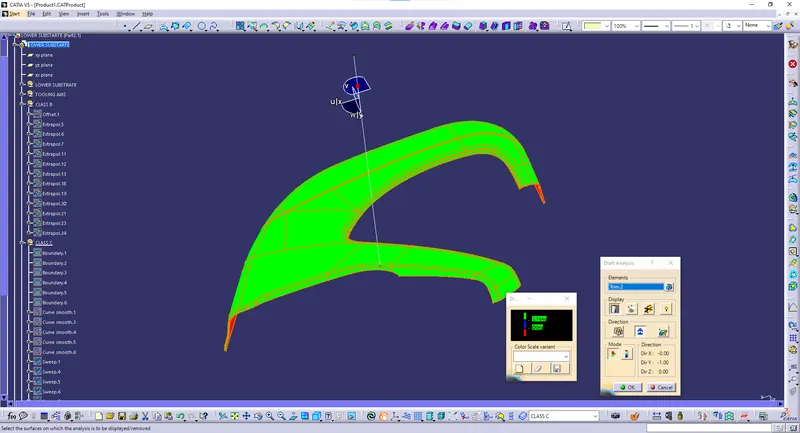
- The tooling axis for this component will be created from the Y component. This should be done using the method of extracting the plane surface and Creating a point in the plane using a point on the surface. And finally, the line should create using the normal surface.
1) Lower Substate
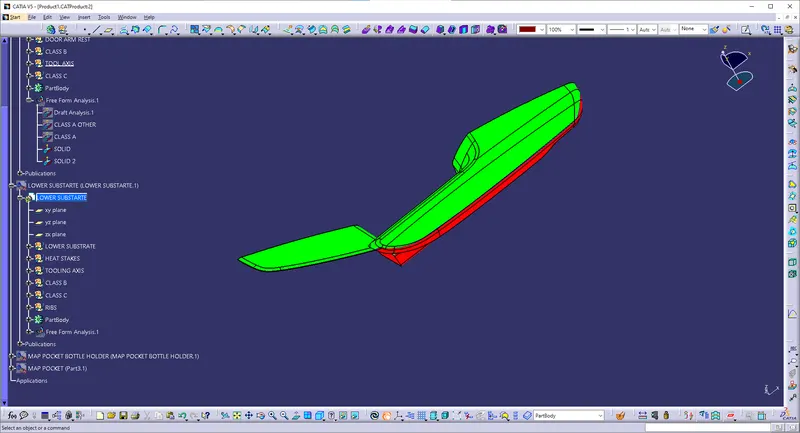
2.Door Arm Rest:
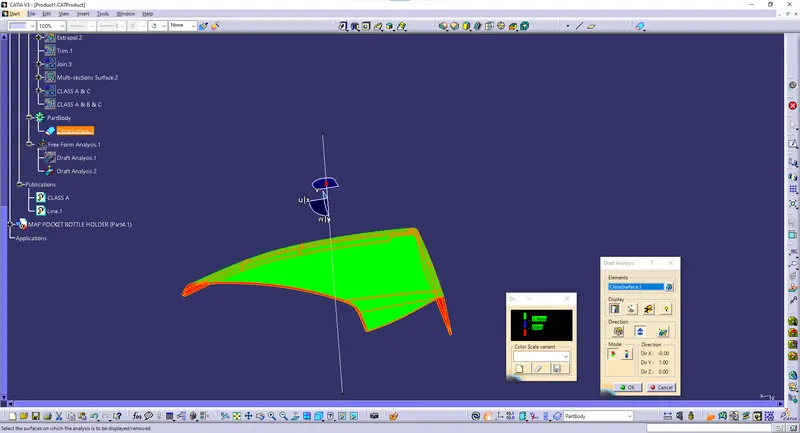
3.Map pocket:
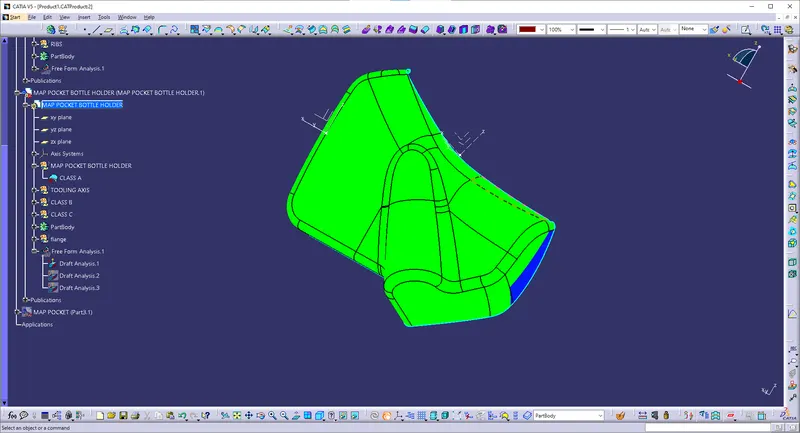
4.Map pocket with bottle holder:
LOCATORS:
2 WAY LOCATORS:
A 2-way locating pin restricts motion along 1 axis (or 2 degrees of Freedom), like a round pin in a slot. Likewise, a 4-way pin restricts 4 degrees of freedom along 2 axes. A round locating pin located concentrically in a hole is a common application of a 4-way pin, and helps to further secure the piece.
4-WAY LOCATORS:
A round locating pin located concentrically in a hole is a common application of a 4-way pin, and helps to further secure the piece. 4-WAY LOCATORS: 4-way mean you prevent movement at 2 axes (+X, -X, +Y and -Y) on the plane. Generally, you have cylindrical pin on the fixture and circular hole at workpiece part.
CLASS C MAP POCKET BOTTLE HOLDER:
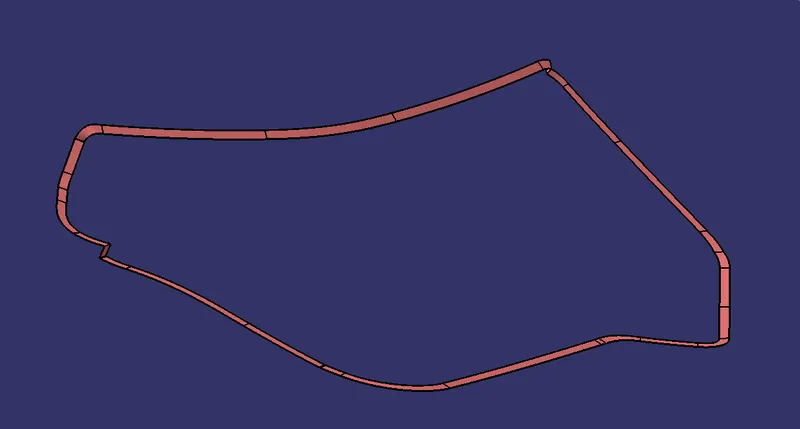
CLASS A & C:
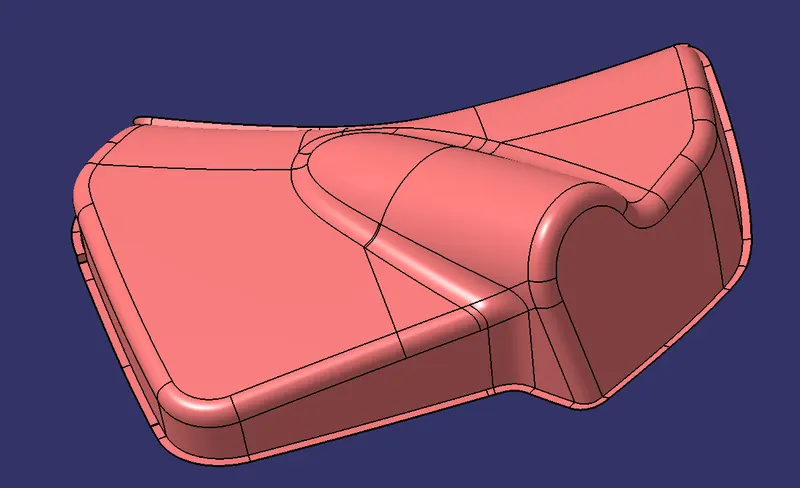
CLASS A & B & C:
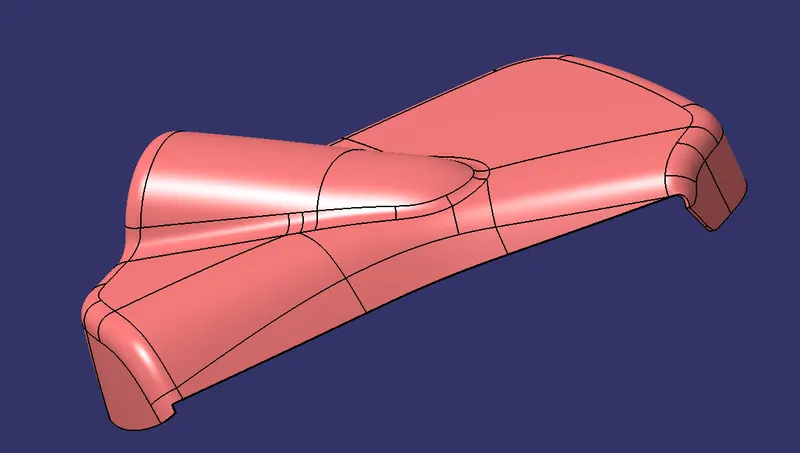
CLASS C MAP POCKET:
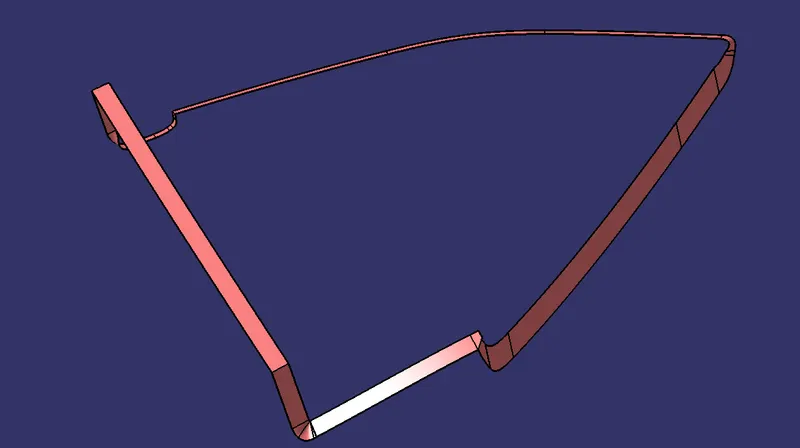
CLASS A & C:
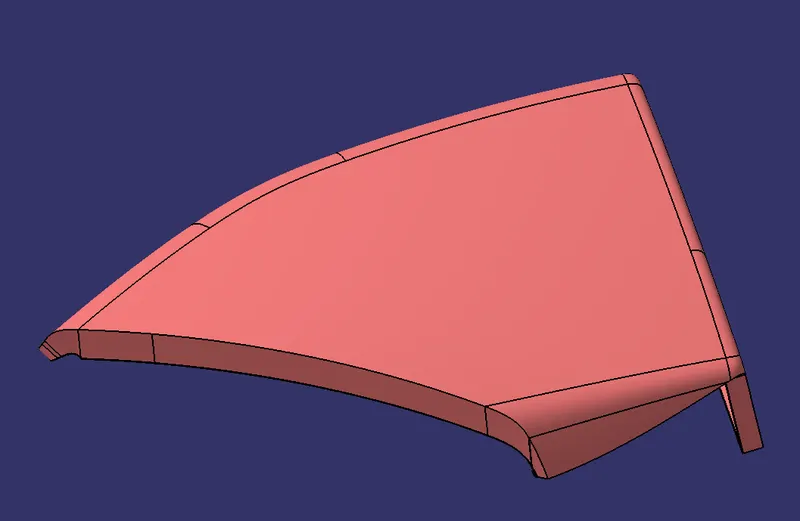
CLASS A & B & C:
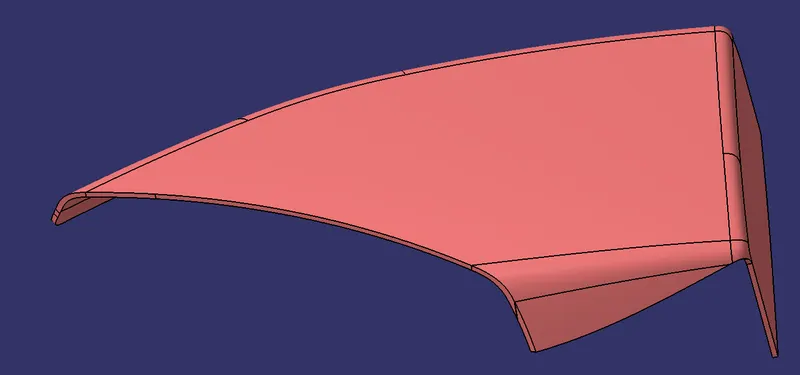
MAP POCKET FINAL DRAFT ANALYSIS:
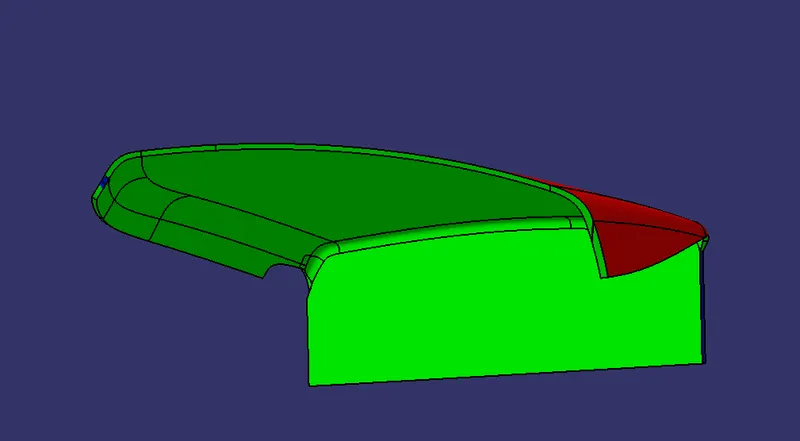
DOORM ARM REST CLASS C:
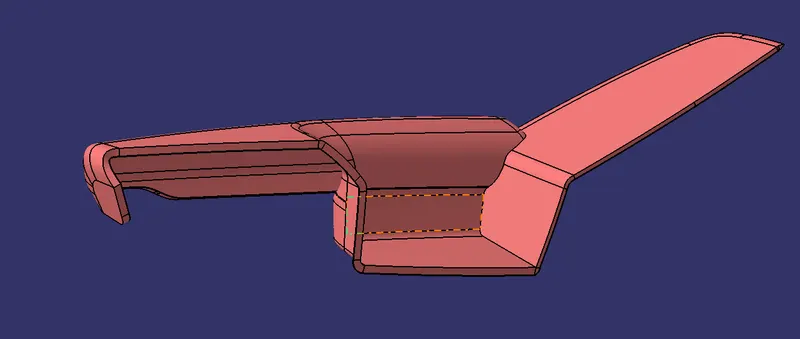
CLASS A&B&C:
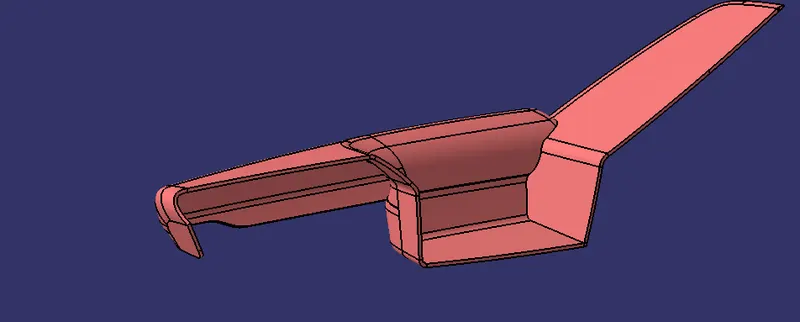
DOOR ARM REST DRAFT ANALYSIS:
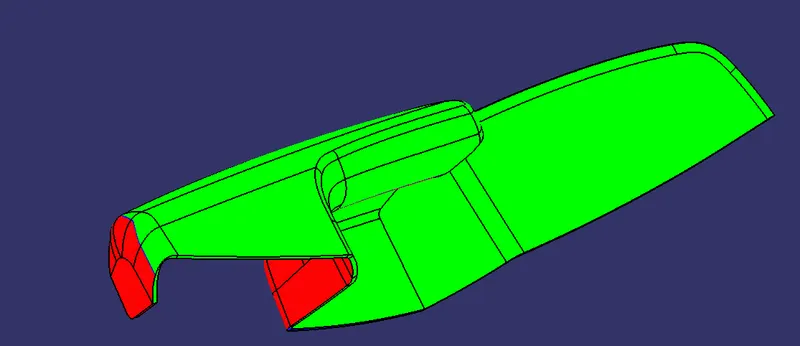
CLASS C LOWER SUBSTATE:
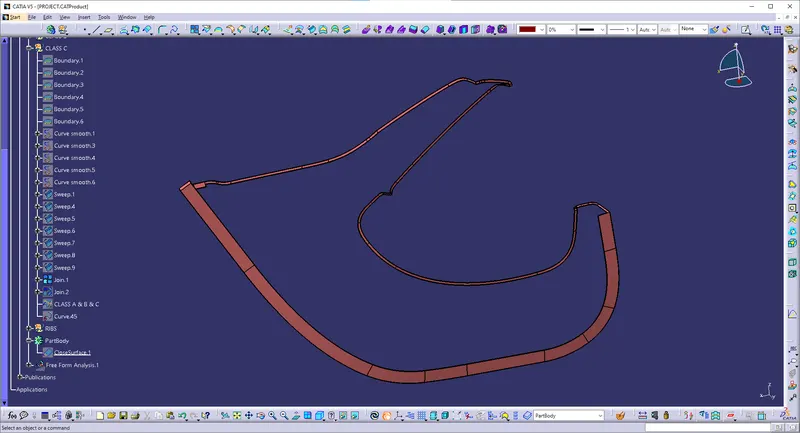
CLASS A & C LOWER SUBSTATE:
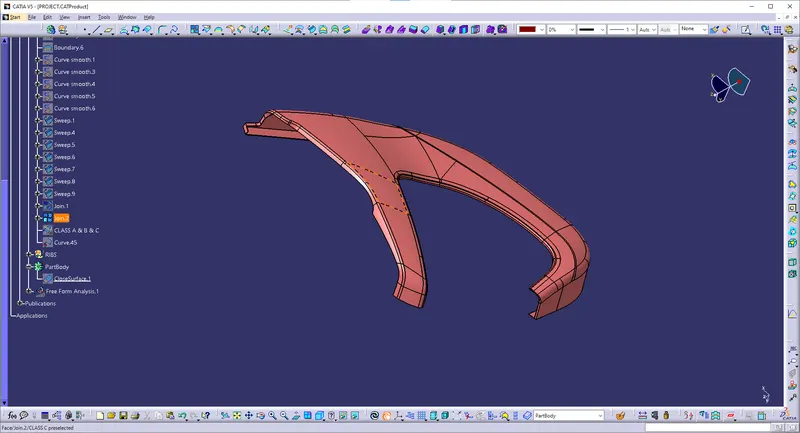
CLASS A & B & C LOWER SUBSTATE:
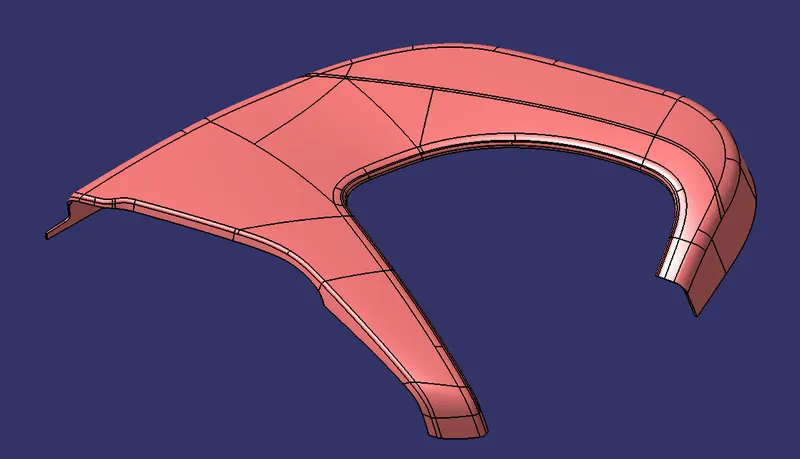
LOWER SUBSTATE DRAFT ANALYSIS:
FINAL PART:
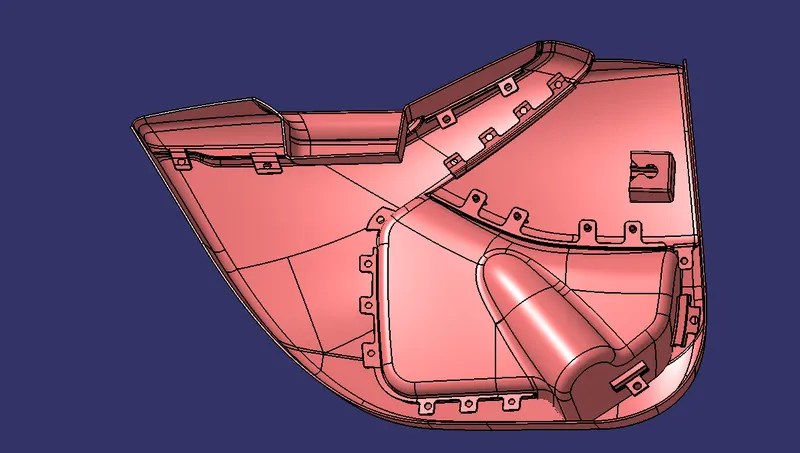
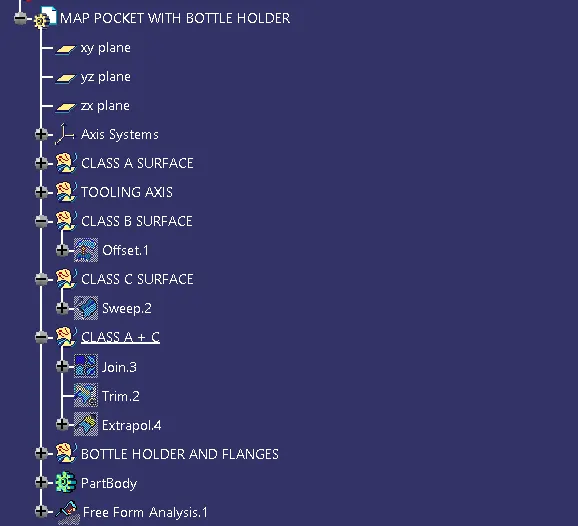
MAP POCKET BOTTLE HOLDER TREE:
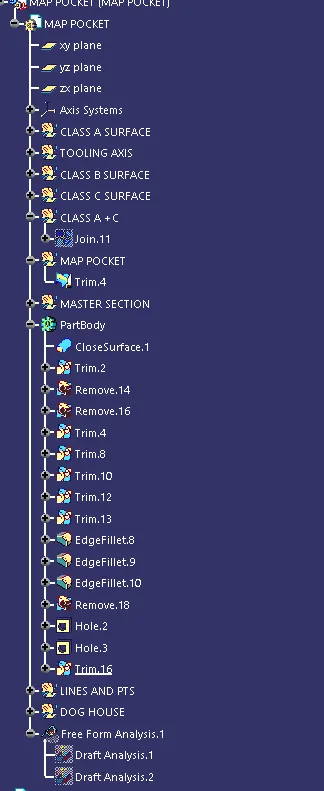
MAP POCKETTREE:
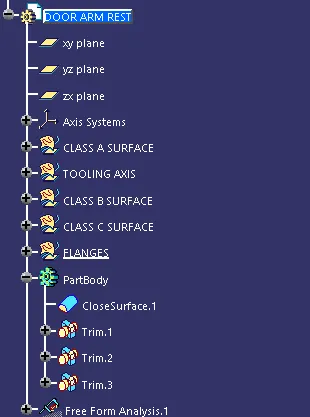
DOOR ARM REST TREE:
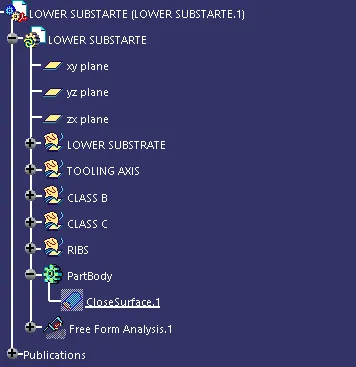
LOWER SUBSTATE: