Week 11 - Final project
AIM:
To design and development of vehicle interior door trim using Catia V5 with given class A surface along with Master section. Also create the Side Attachment features as per design rules.
OBJECTIVE:
* To create thickened part using master section for reference
* To create the mounting features as per design guidelines in the industry and with master sections
* To perform Draft analysis & Tooling analysis
INTRODUCTION:
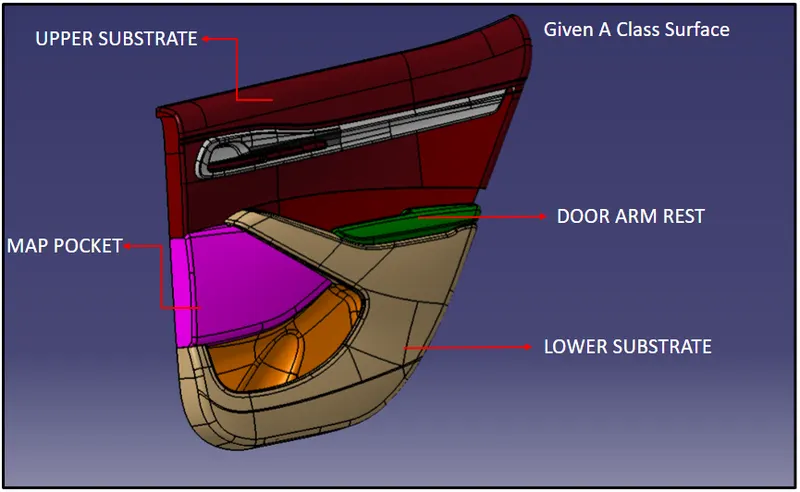
The door panel is the interface between the interior of the car and the inner workings of the door. Generally the door panel is divided into parts for easy designing like arm rest, map pocket, lower substrate. These require one of the toughest requirement among the interior parts of the car. This should be designed to with stand the load while being less than 2mm in thickness and also to protect the occupants during collisions.
Door currently have an inner full width panel consisting of electronic windows, central locking system and speakers. These panels typically consists of a foamed core covered with either textiles or plastics.
TOOLING AXIS:
*The Direction in which the mold or core and cavity opens is the tooling axis.
1) connectivity of class A surface:
cheking the connectivity of the surface,this can be done by creating boundariesor by simply using such as that any opening can be easily visualized.
2) Analysis visually for the best possiable tooling axis.
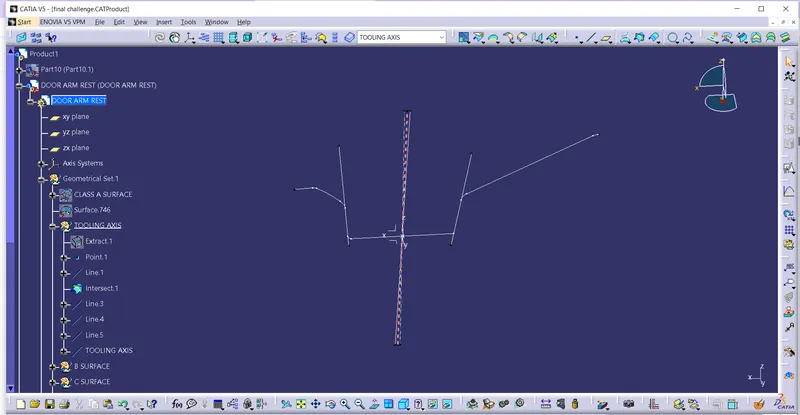
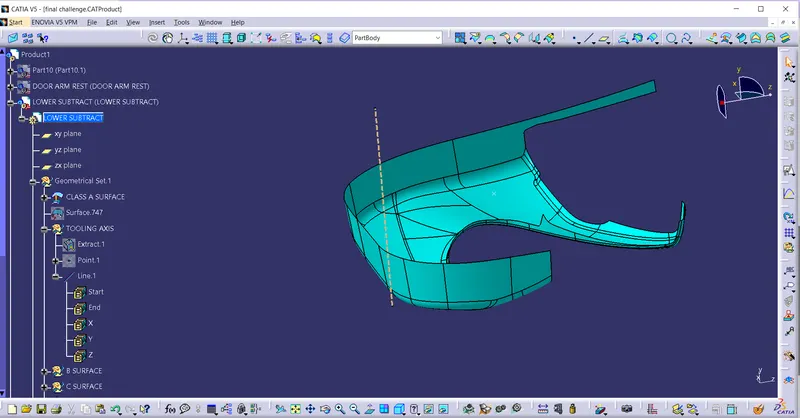
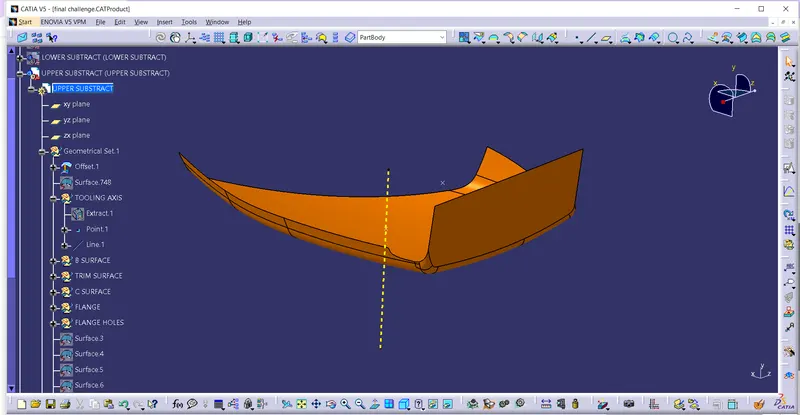
A Dummy tooling axis will be directly created using point dirction command.
checking possiabilities (clearance) in all the direction of axis and find what are the problem creation parts of the component or model.
The clearanace checking along all the axis direction will be done by creating an intersection along an axis on a plan with the model and constructing two lines contact with the walls,the line bisecting the two lines and passing through the point will be the tooling axis.
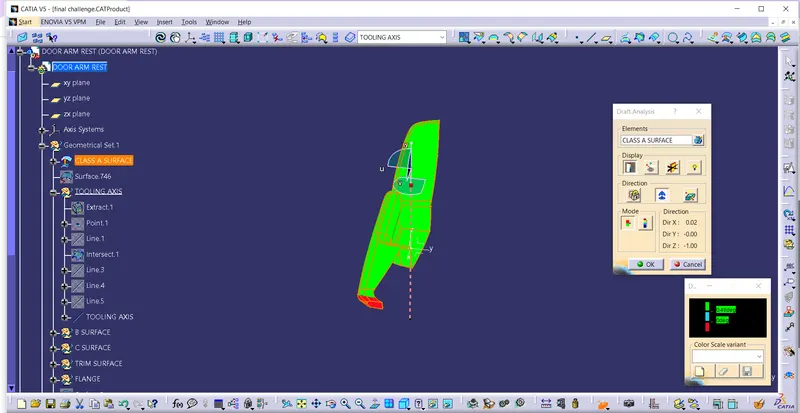
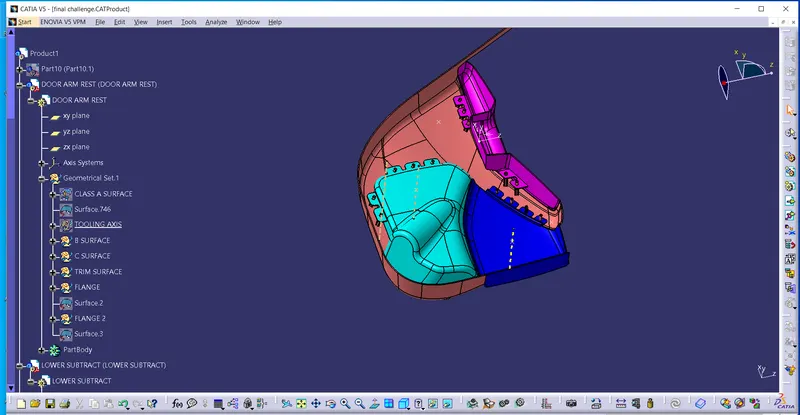
DOOR ARM REST:
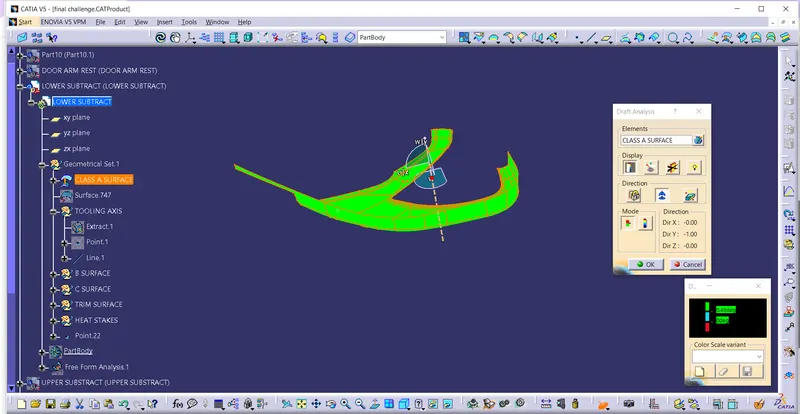
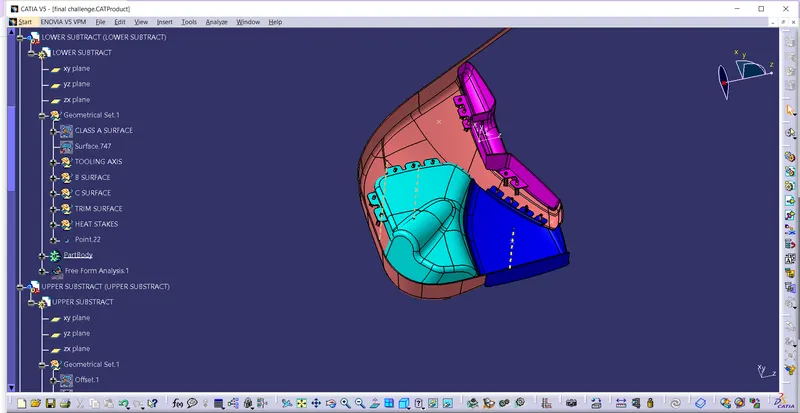
LOWER SUBTRACT:
UPPER SUBSTRACT:
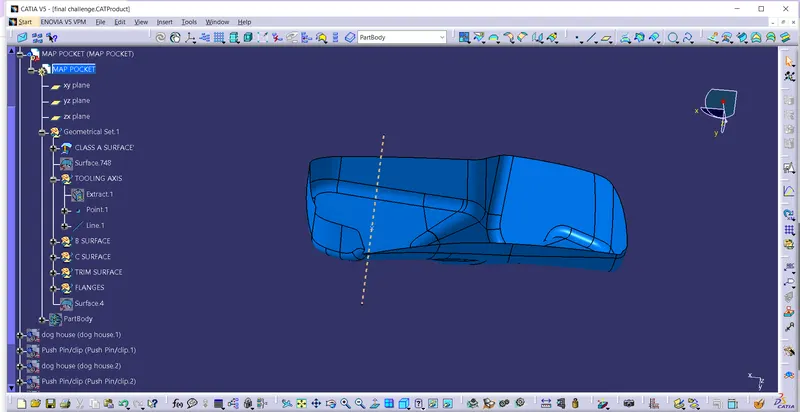
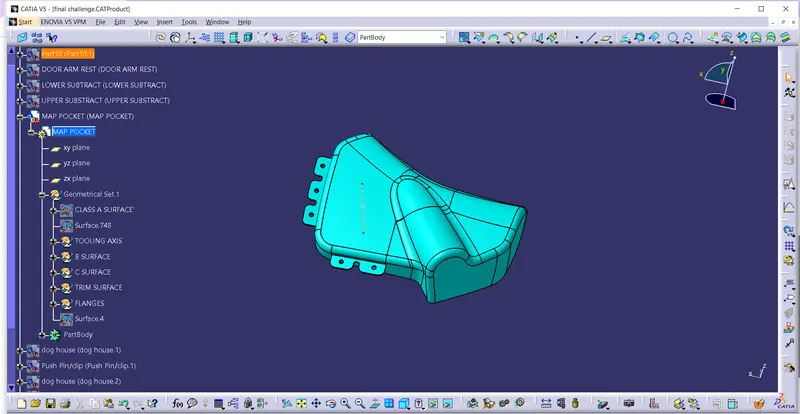
MAP POCKET:
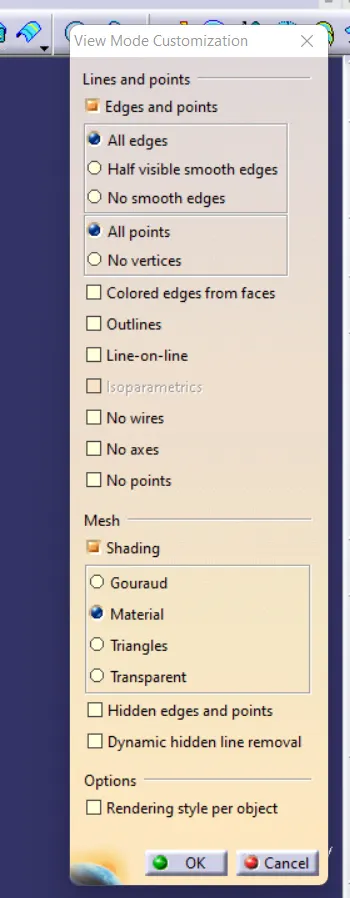
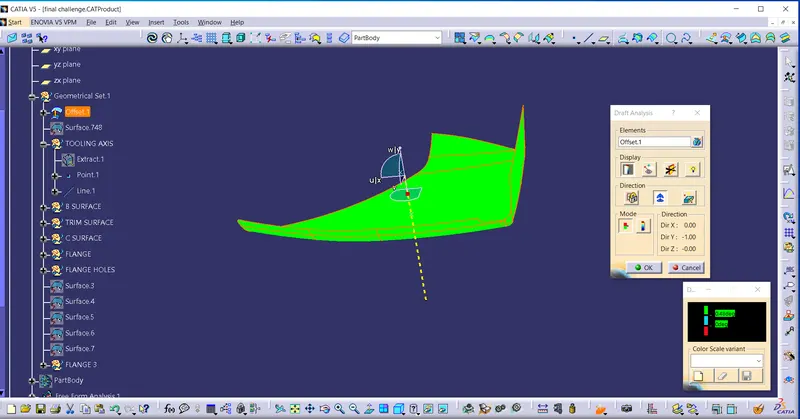
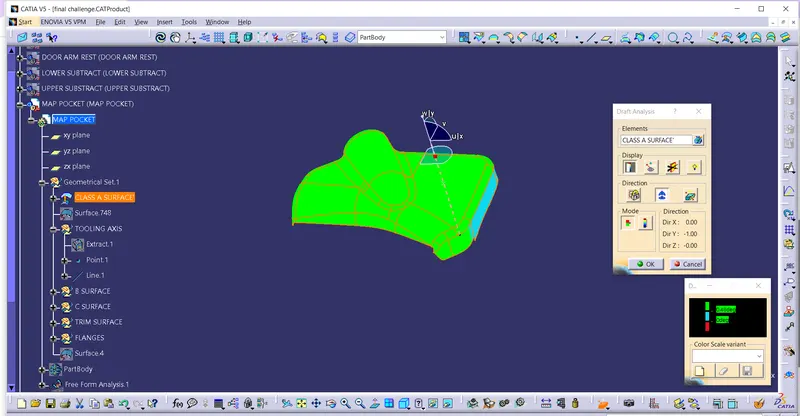
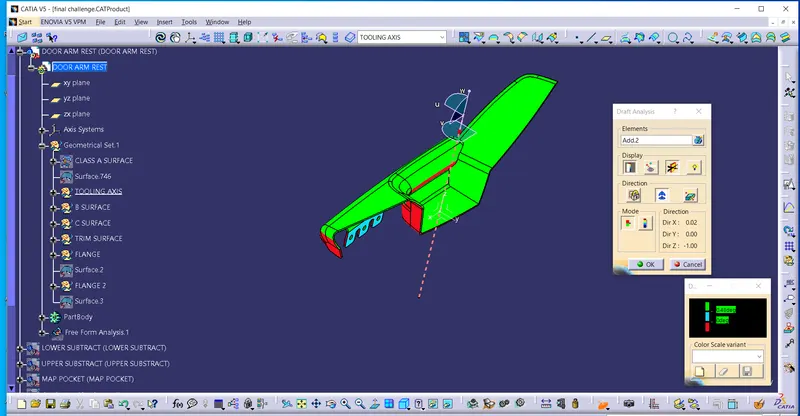
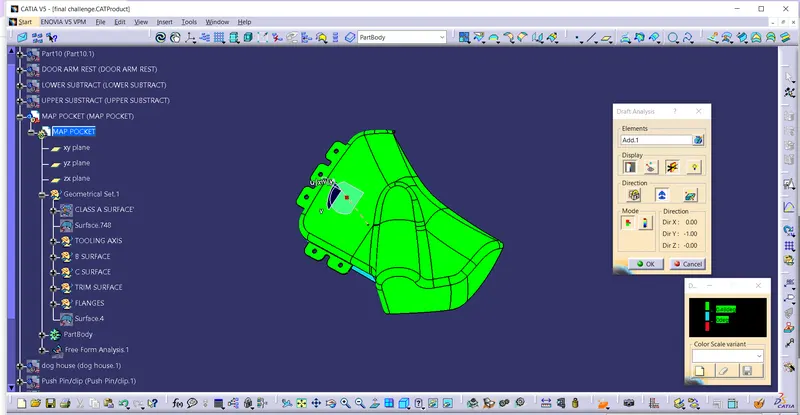
DRAFT ANALYSIS:
* customize view parameter go to to the material mode.
* Creating the B surface.
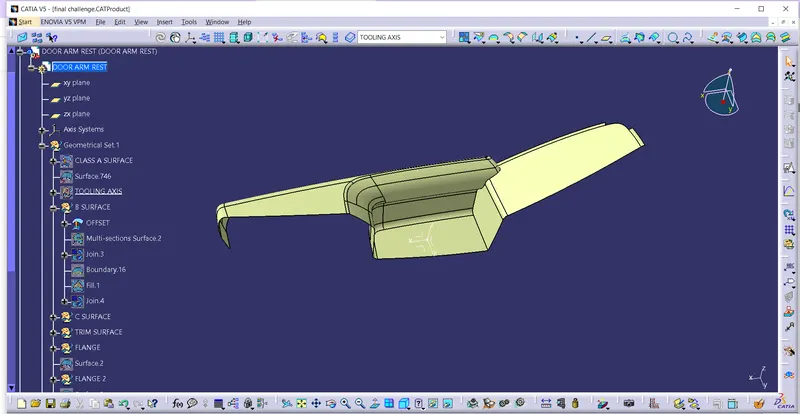
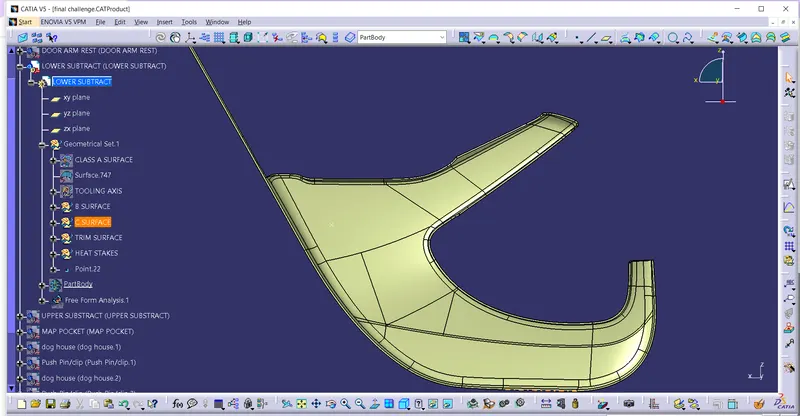
Creating the B-SURFACE by extracting the class A surface, by each surfaces separately, it is offset to certain distance, making point on the master section to get the intersection as shown below.
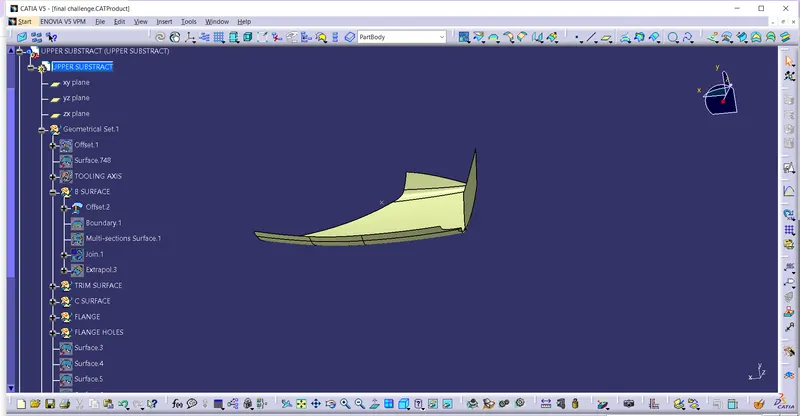
* Creating the B surface.
Creating the B-SURFACE by extracting the class A surface, by each surfaces separately, it is offset to certain distance, making point on the master section to get the intersection as shown below.
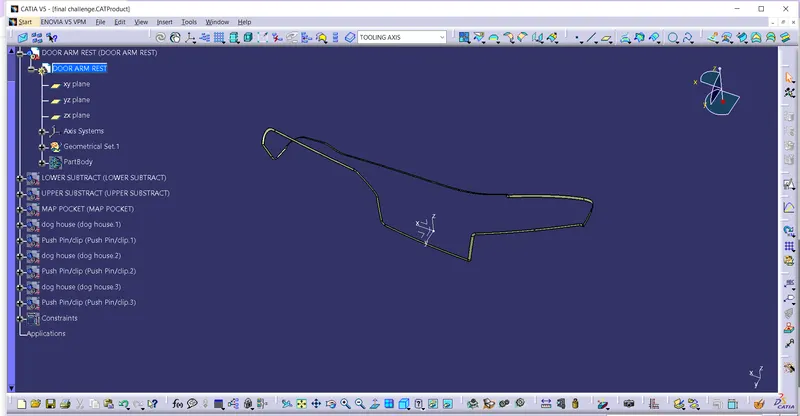
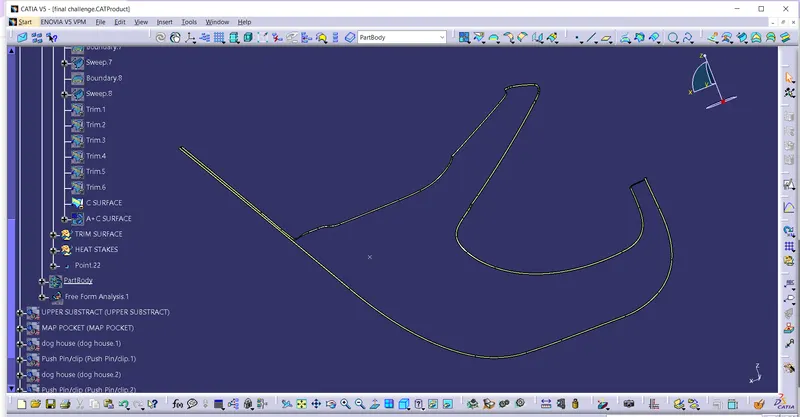
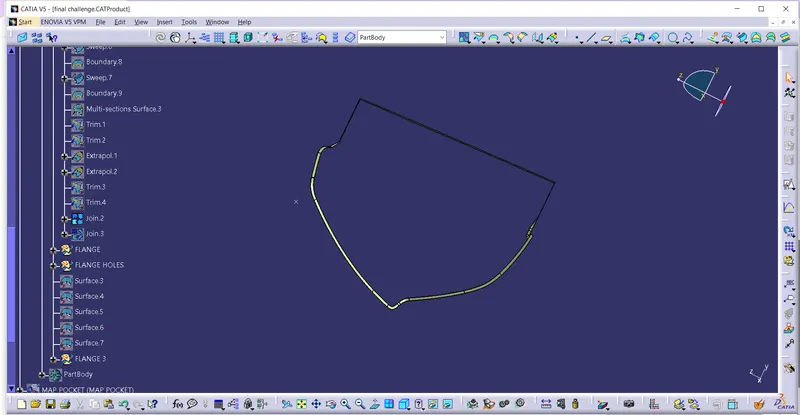
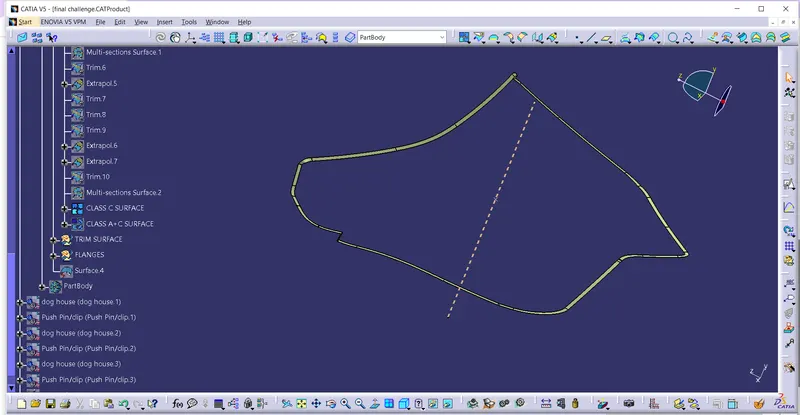
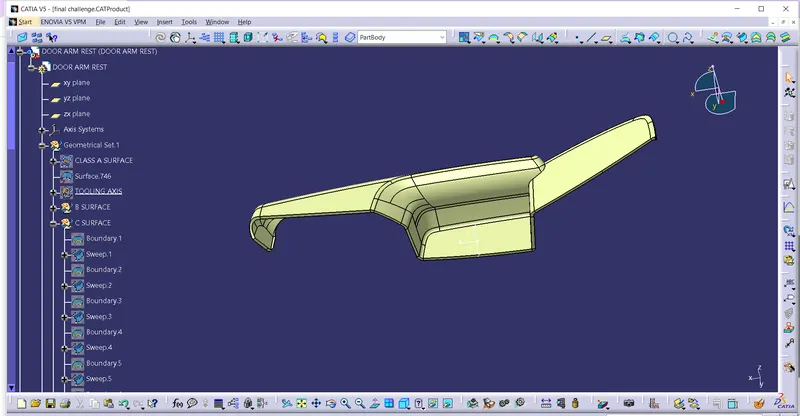
Once the all surface joined together it extrapolated to certain distance to trim with A Class surface to C surface. Finally we created Class C surface.
Making the Final plastic Component:
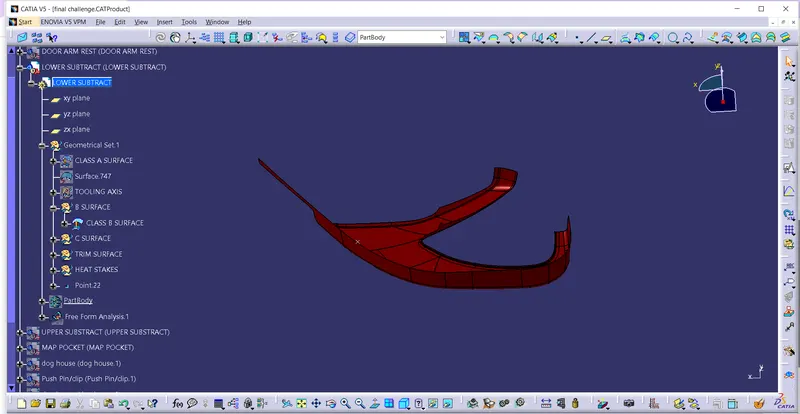
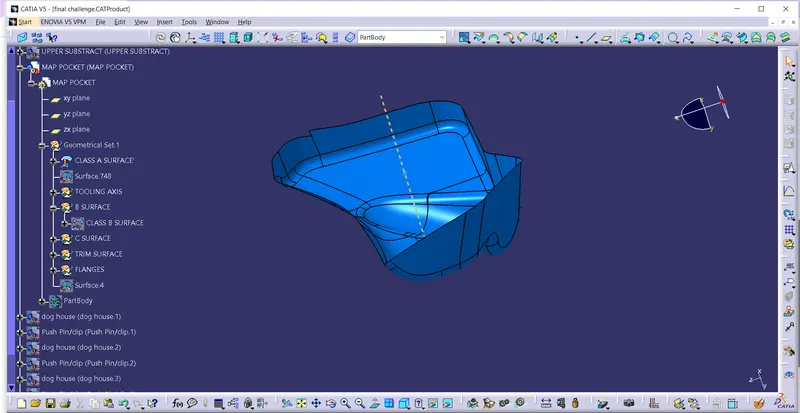
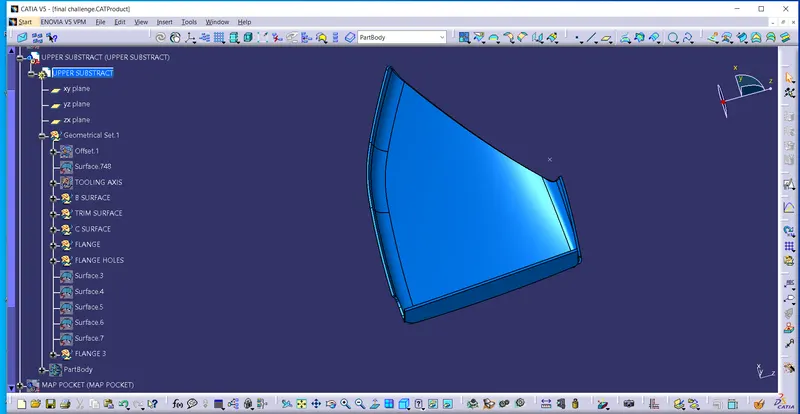
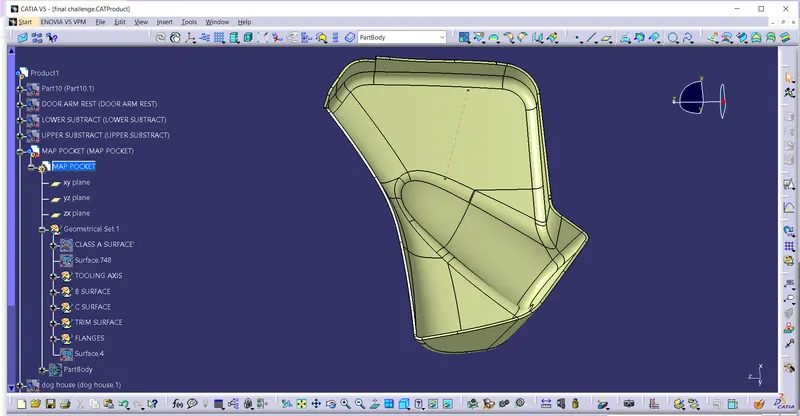
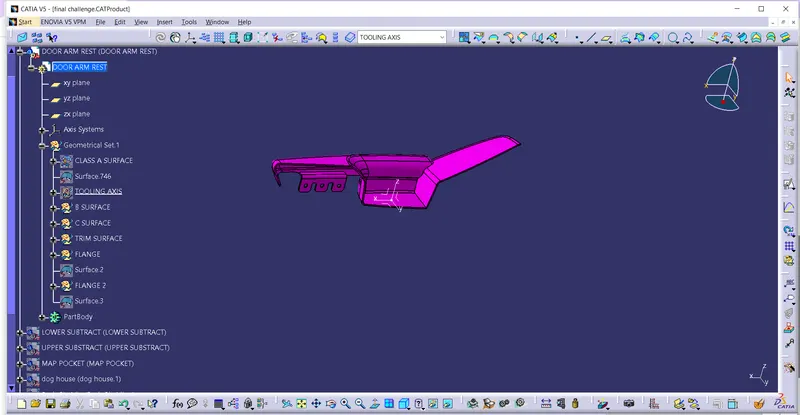
To make the final component the Class C surface is trimmed with Class B surface, the output will get the component with 2.5 mm thickness of surface and it is converted into solid body using insert body option in part design as shown below.
DOOR ARM REST:
LOWER SUBTRACT:
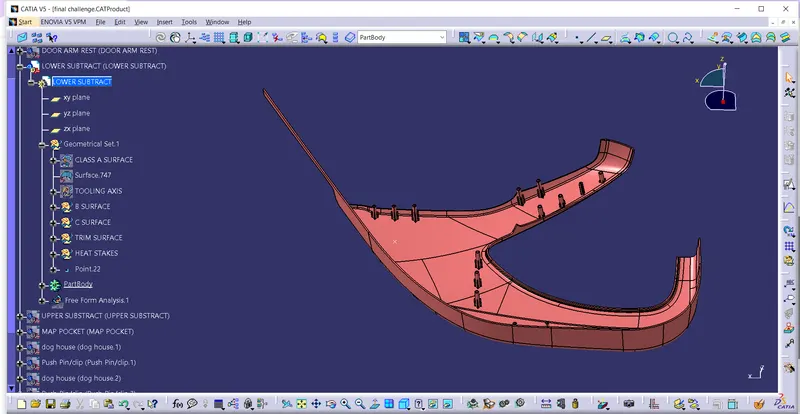
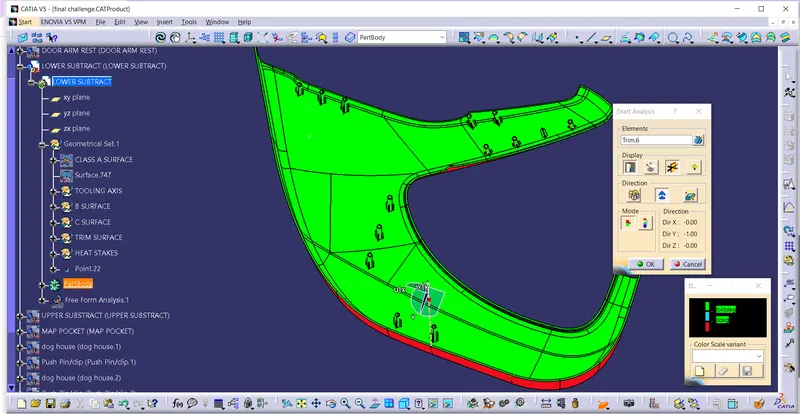
UPPER SUBTRACT:
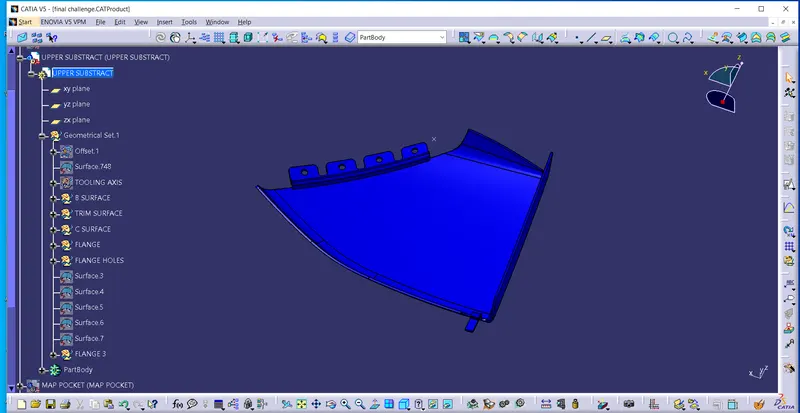
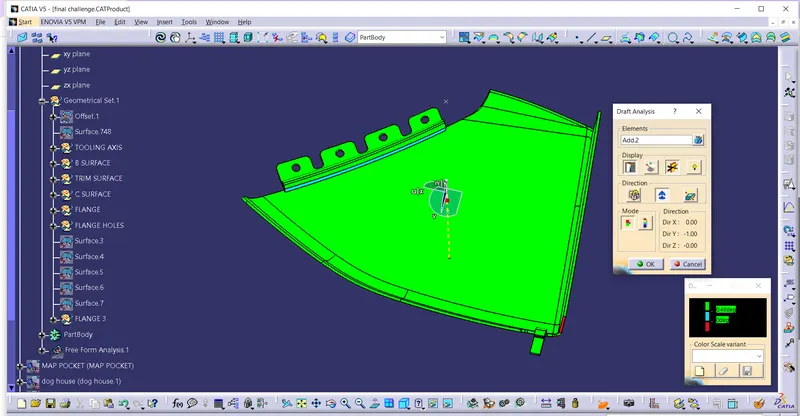
MAP POCKET:
Creation of Attachment Feature to the Door Trim:
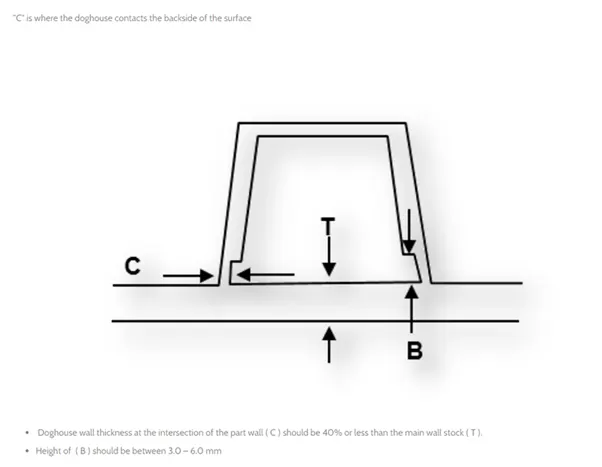
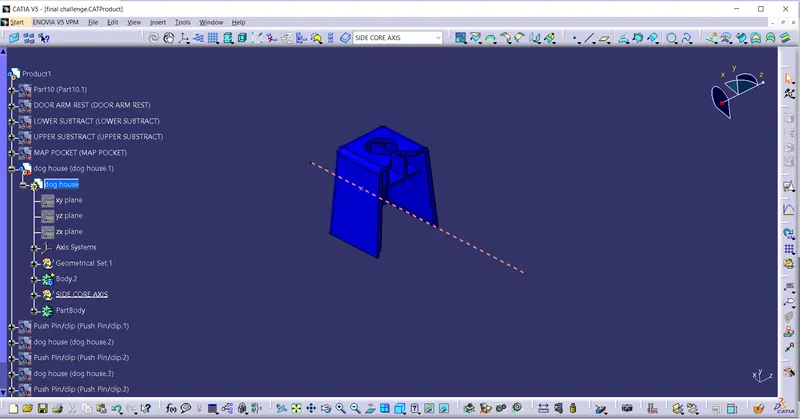
Dog house is an engineering feature used in plastic trim design. Dog houses are used as supporting feature. Sometimes other engineering features like snaps; locators etc. are mounded on them to increase their strength. Dog houses are subjected to draft analysis to prevent breakage of the component during ejection from mould cavity. Dog house and other engineering components are built on B-surface
HEAT STAKE:
Heat staking is a pulsed – heat process to join two or more parts out of which one at least is made of plastic . The plastic is to deform the plastic material using the heat and foam at a set process time. The bond is made by partially de forming the plastic part in order to fix the other. Heat stakes makes it easily to bond metal to plastic is commonly used in high volume and low cost application such as Automotive, IT and consumer appliances.
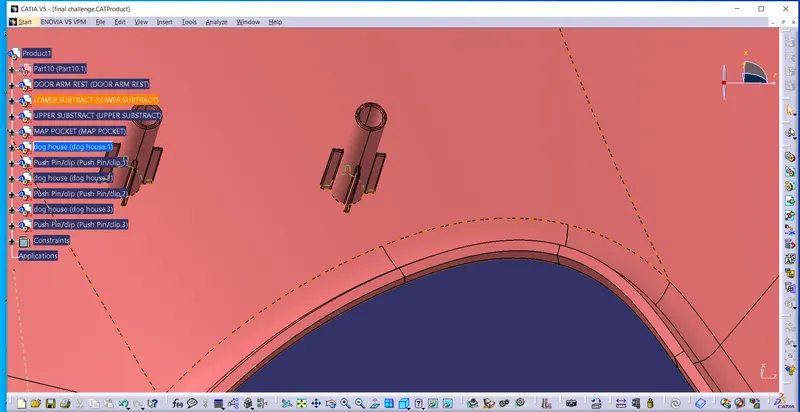
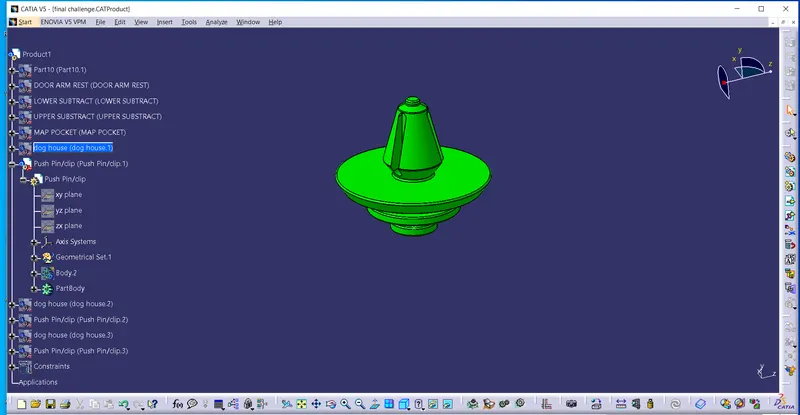
PUSH CLIP:
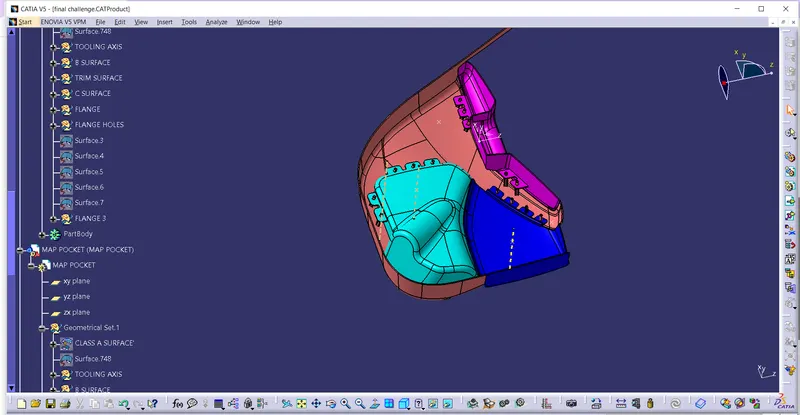
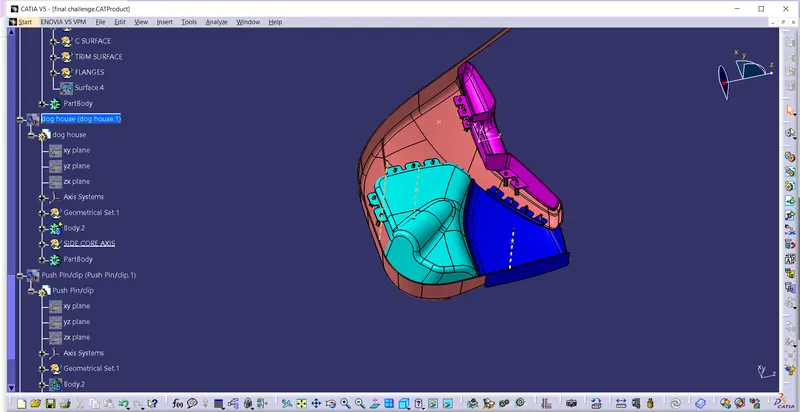
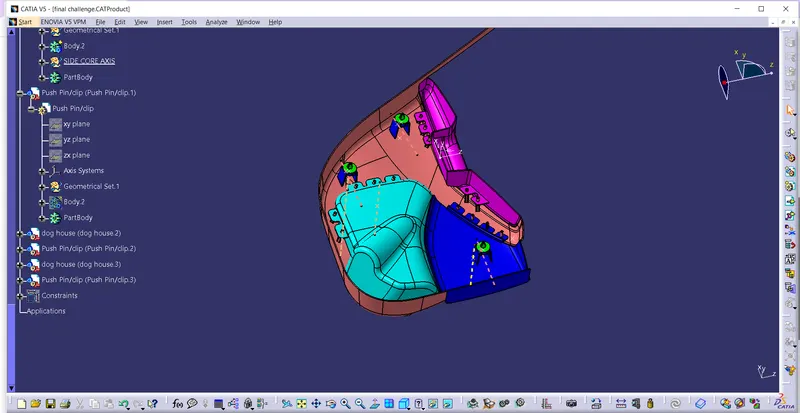
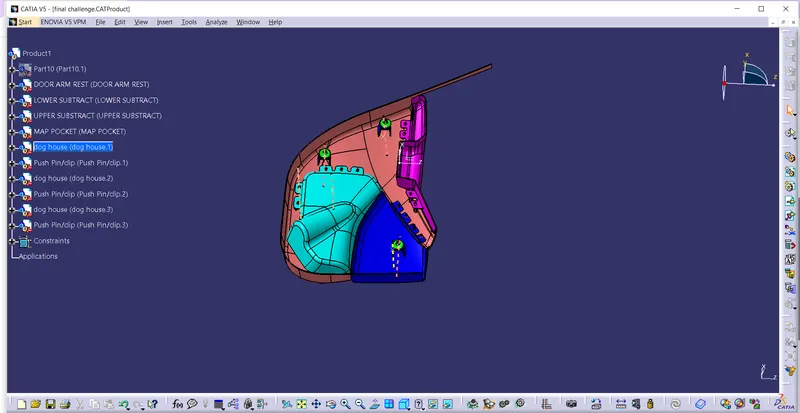
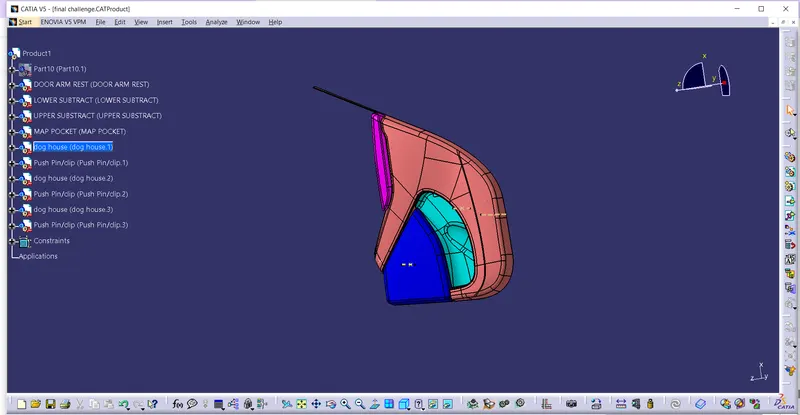
Conclusion:
Creation of the car interior door trim is designed using the given class A surface as the input and Class B and C surface created with the help of Class A surface. By using the given master section attachment features I.e. Heat stakes, Flanges, Dog House and Push Clips are created using the design rules. The draft analysis has been performed to analysis the draft of the component to manufacture easily applying draft to the surface by 3 degree and 0.5 degree to the attachment features. With all data and report we can conclude that draft analysis is very important to design any plastic component to mold the plastic easily. The analysis will verify that all surfaces are favorable for being pulled from a cavity. It may also highlight or given insight to defect areas.