Week 11 - Final project
AIM:
To create a CAD model of a door trim panel with B side features and flanges using the master section, following the design rules and oem standards.
SOFTWARE USED:
CATIA V5
PROCEDURE for Class A,B,C creation:
- Using the given class A surfaces, offset and create a class B for each individual part ( DOOR ARMREST,BOTTLE HOLDER,MAP POCKET,LOWER SUBSTRATE)
- Next using sweep and boundary comands create class C for each of the parts.
- JOIN class A,B&C and check if there are any boundaries still present.
- Once the check for boundaries is complete, create a part body and close the componet.
- Then we crate Tooling and side-core axis for each part.
- Next Draft analysis is performed on each part to make sure they are suitable for manufacturing.
Procedure for flange and b-side features creation:
- Once we have created a closed body, flanges must the created on ( DOOR ARMREST,BOTTLE HOLDER AND MAP POCKET ) to attach the b-side features.
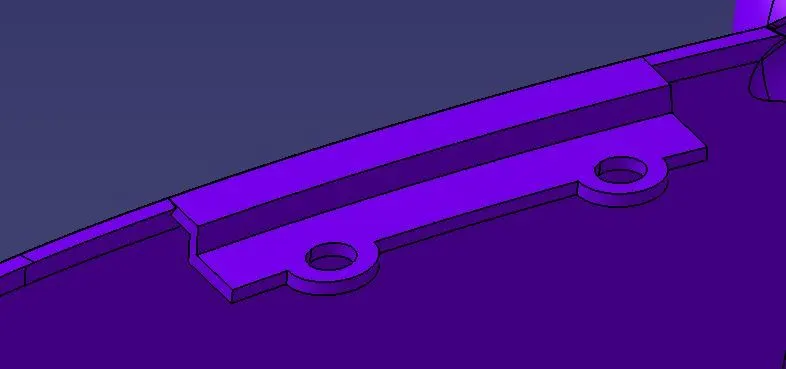
- Use the given master sections to create flanges on the parts.
- Provide holes on the flanges (following design rules) for the b-side features to pass through.
- Next we use the LOWER SUBSTRATE on which we create the b-side features ( HEAT STAKES,LOCATORS AND DOG HOUSE)
- We model one of each feature and then by creating approprite locations for the features using points ,we translate the features to the desired locations on the lower substrate.
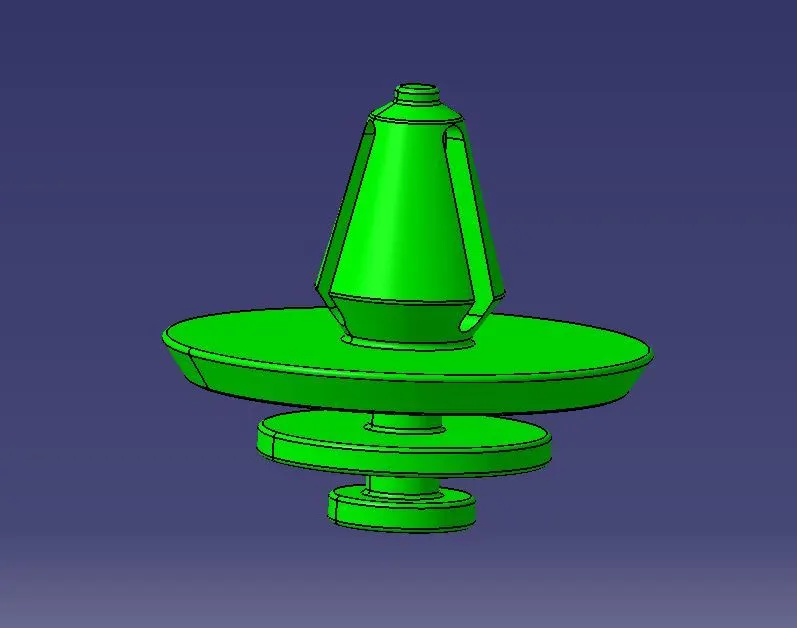
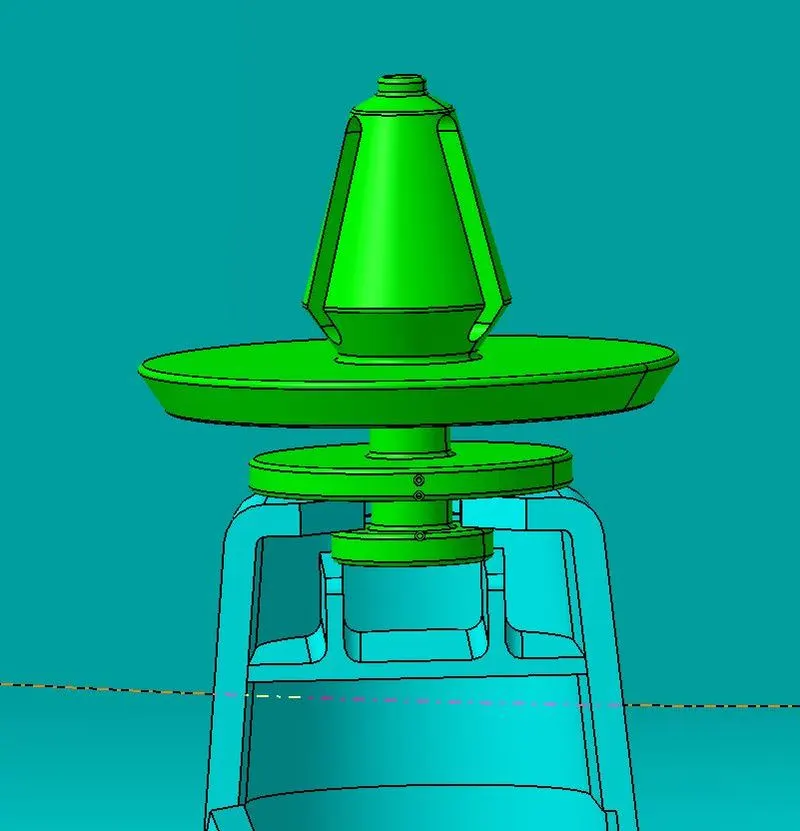
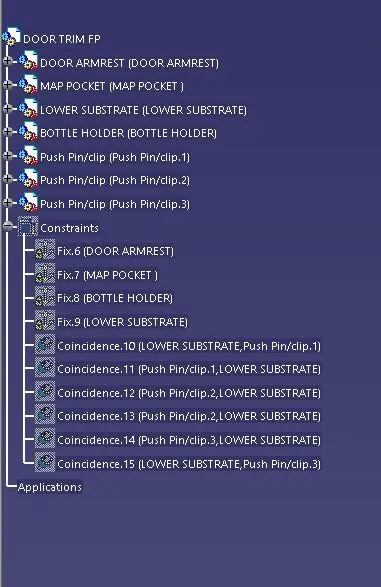
- Using the given Push-pin model, we assemble them on every Dog house we have created.
Draft analysis:
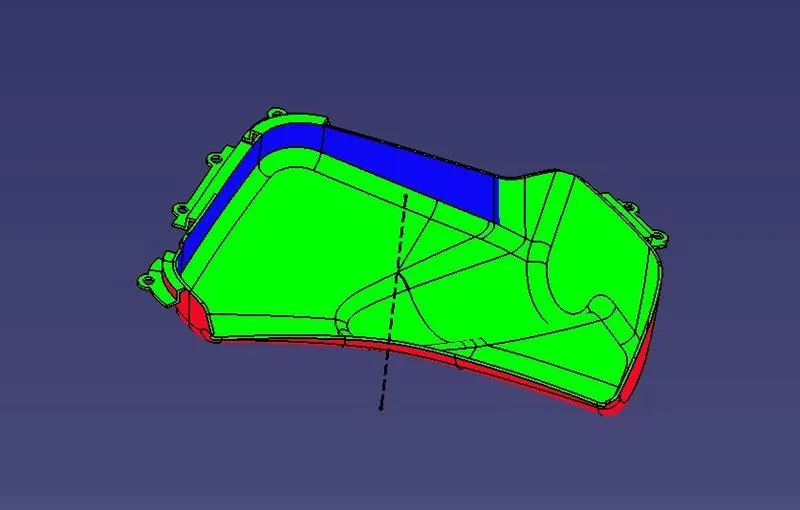
Draft analysis is a method done on the surface of a component, to ensure there will be minimal to no wear during the moulding process. Draft analysis ensures the component can be ejected smoothly from its mould. The component must clear a 3degree draft, which we must set while performing draft analysis.
Tooling axis:
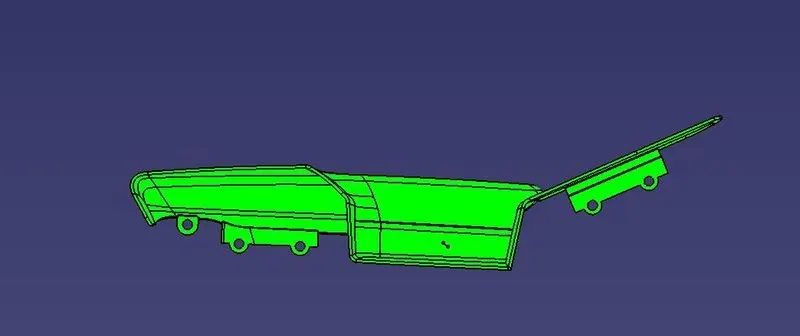
The axis along which the mould and core cavity move is called the tooling axis. Tooling axis is also determined to ensure smooth ejection of the moulded component.
Tooling axis creation:
- Create an axis system at the centre point of the hole, through which the tooling axis must be created.
- Next create an intersection along the zx place and the component.
- Select the faces that are likely to cause friction during ejection and create lines along the faces.
- Next bisect the two lines, by selecting the lines and then the point of intersection with the axis system. This creates a line that determines the correct angle betweeen the selected faces.
- Repeat the same process along the zy plane and the faces along this plane likely to cause disruption.
- Once you have created two tooling axis along X and Y direction, bisect them with the centre point.
- The resulting axis is the required TOOLING AXIS for the component.
Creating final product:
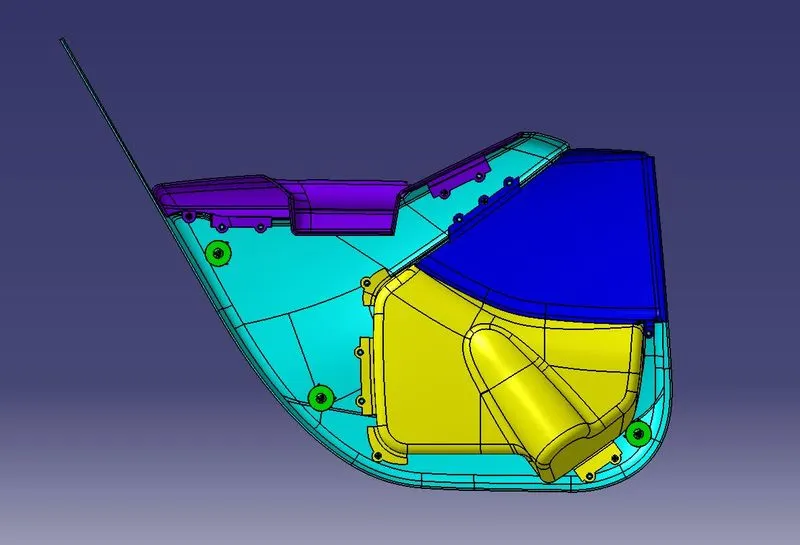
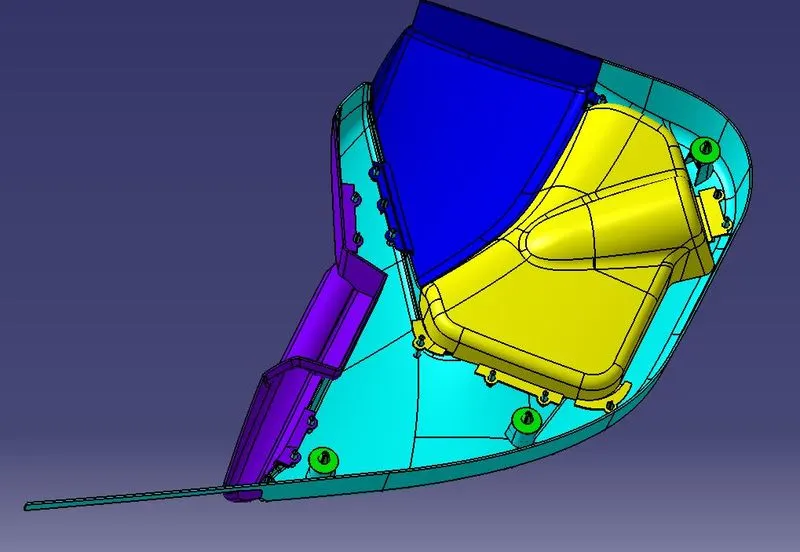
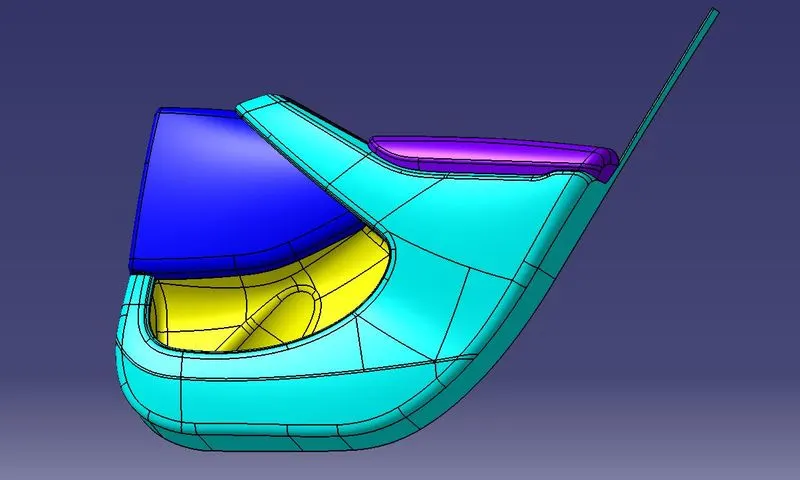
To create the final product, we create a CAT Product and then insert all the parts into the product. Give different colour for each part to identify them easily.
DOOR ARMREST
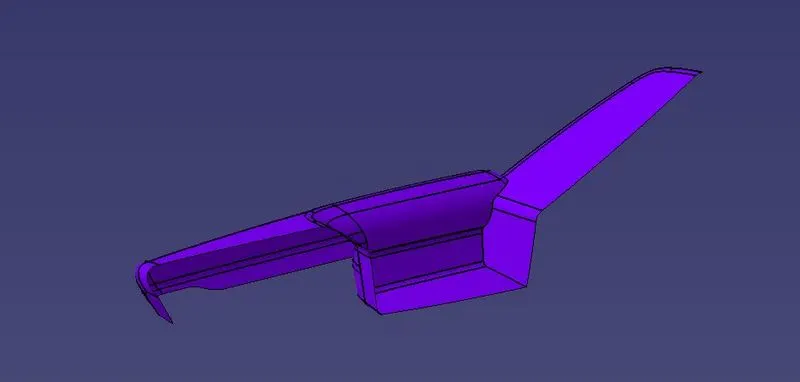
Armrest is a great way to add on some extra space in your cars as they generally have small compartments in them where you can keep food and/or beverages. Armrests which are attached at the front and rear doors work as handles and can make it really convenient to open and shut doors.
CLASS A:
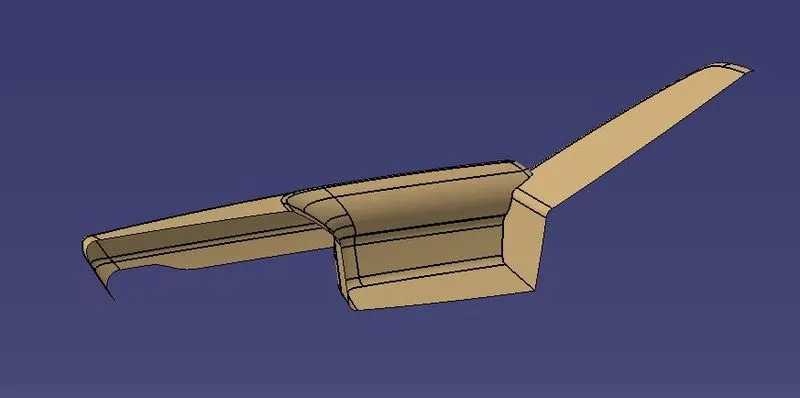
CLASS B:
To create the class B, we offset the class A inwards to a length of 2.5mm
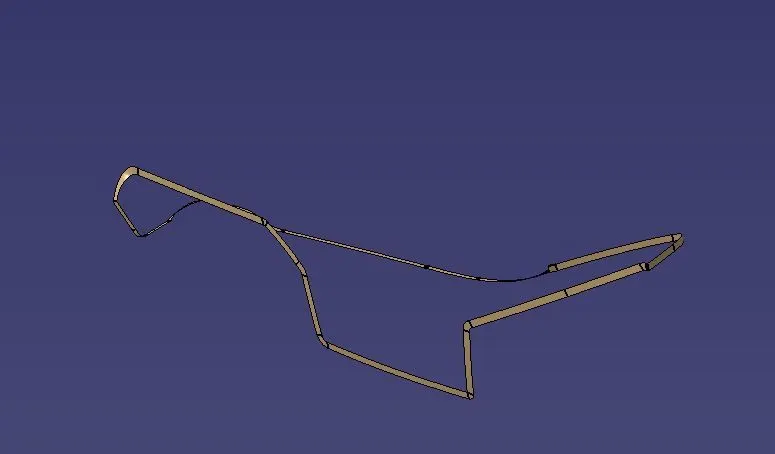
CLASS C:
Create boundary on the class A and sweep it using the class A as reference surface and a draft angle of 3 degrees.
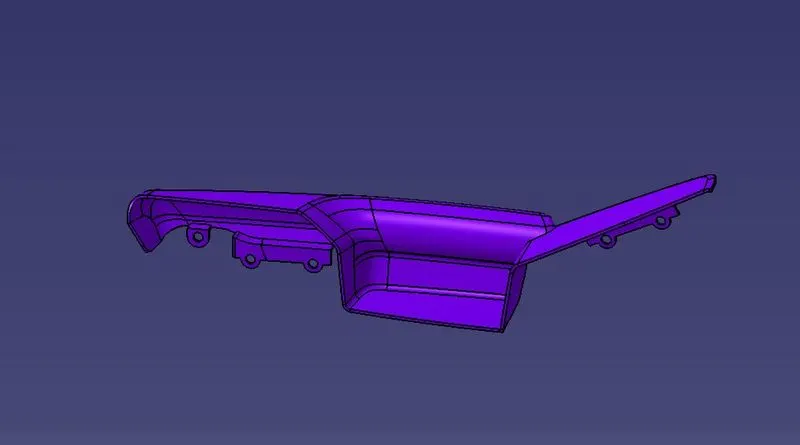
CLOSED COMPONENT:
In part design workbench, use the close surface command to create a closed(solid) component.
DRAFT ANALYSIS :
MAIN TOOLING AXIS
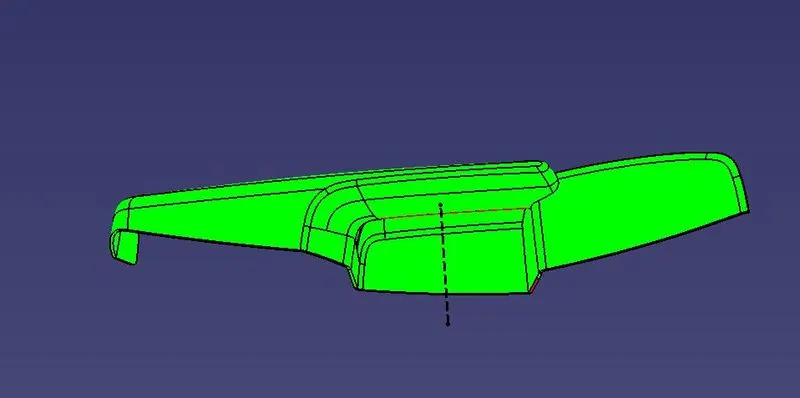
SIDE-CORE AXIS
FLANGE:
Flanges are created with the help of the given master sections.Holes on the flanges are provided for locators and heat stakes to pass through, which helps in fixing the component.
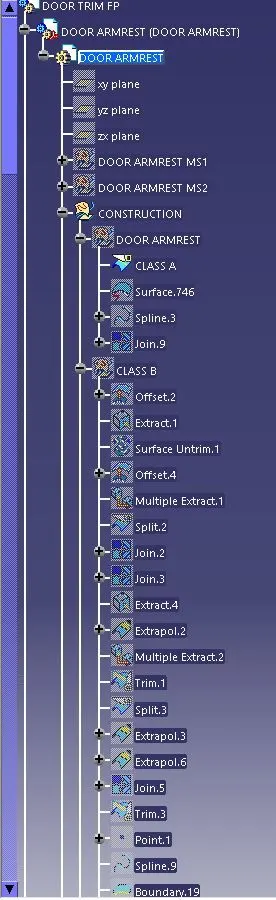
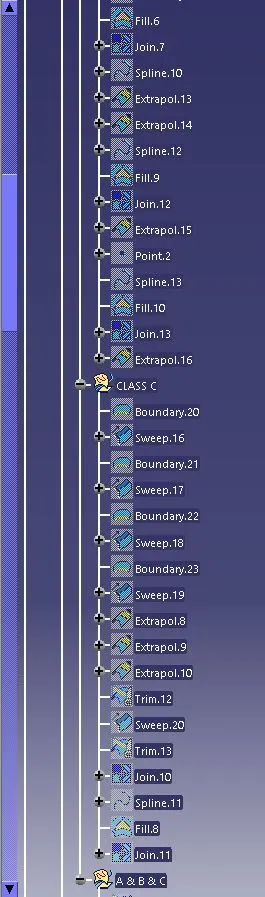
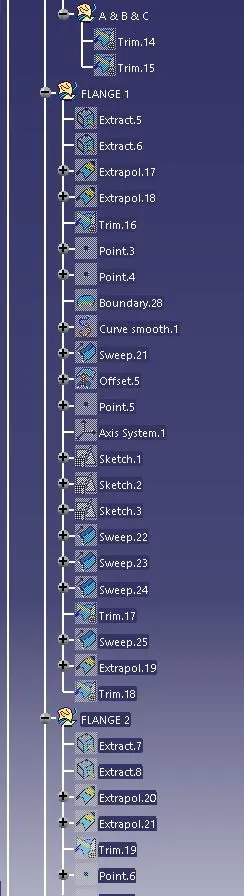
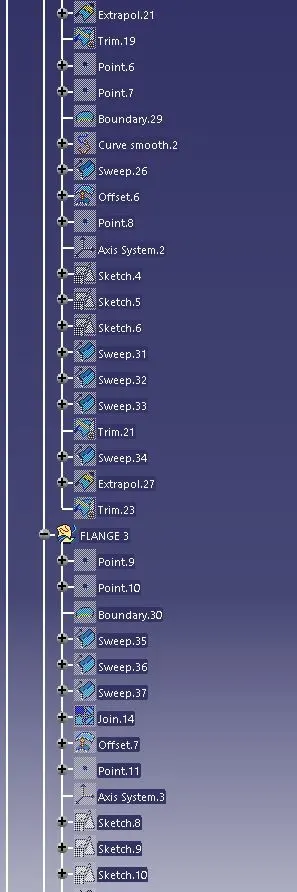
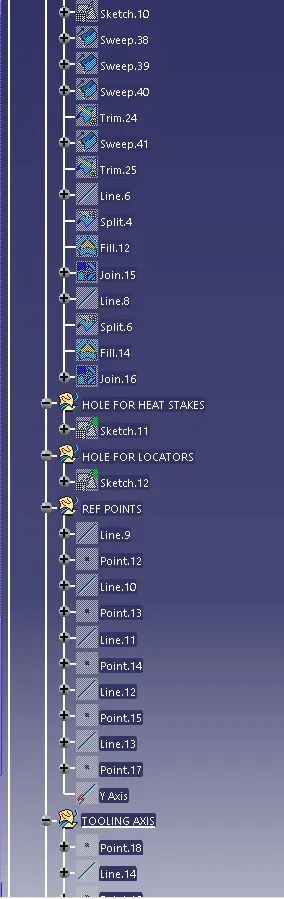
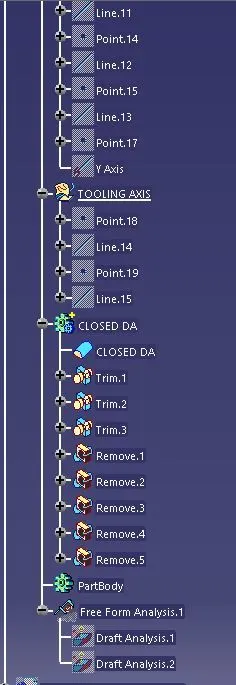
FEATURE TREE:
MAP POCKET
A map pocket structure for a vehicle is provided to prevent the movement of a water bottle while driving and store a variety size of bottles regardless of the size of bottles. It acts as a support to the bottle holder and also gives an aesthetic appeal to the door trim
CLASS A:
CLASS B:
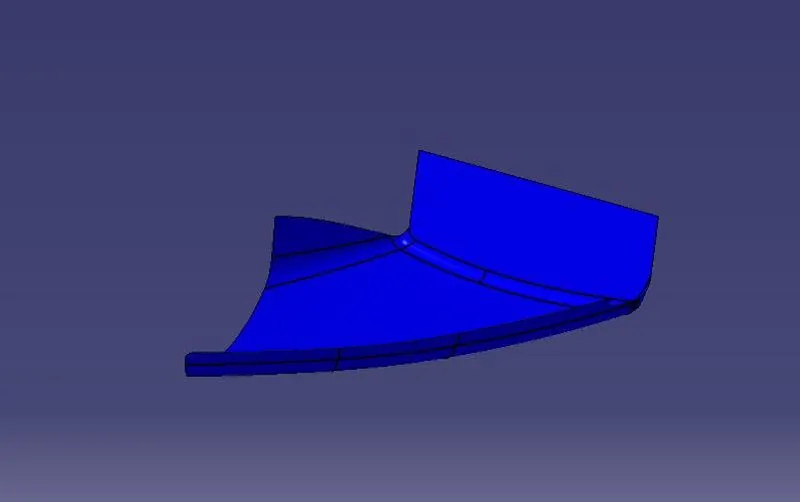
To create the class B, we offset the class A inwards to a length of 2.5mm
CLASS C:
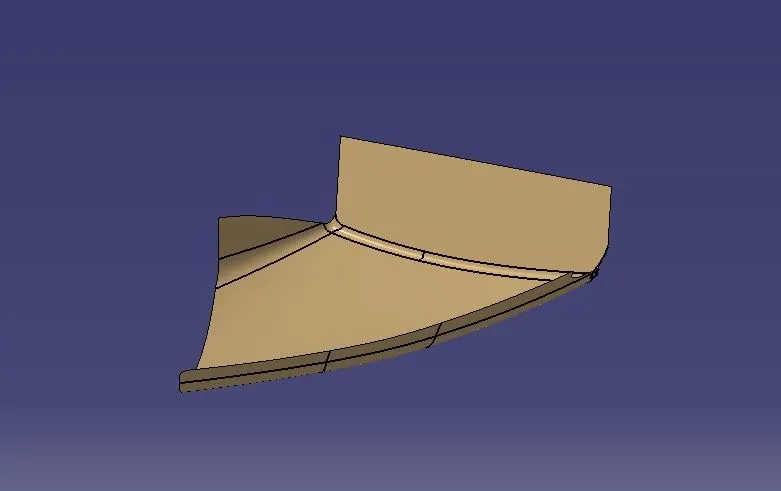
Create boundary on the class A and sweep it using the class A as reference surface and a draft angle of 3 degrees.
CLOSED COMPONENT:
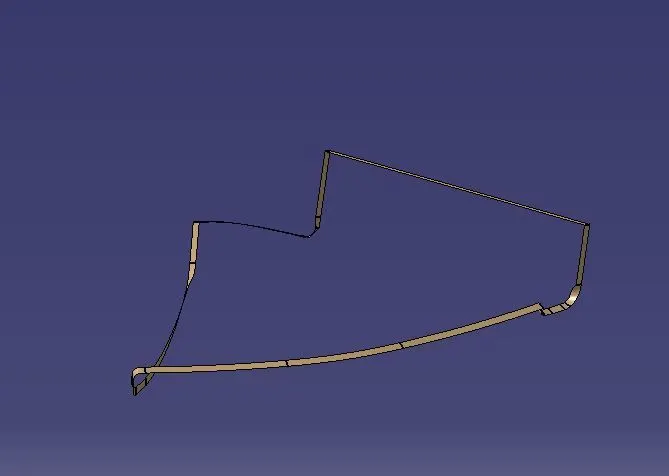
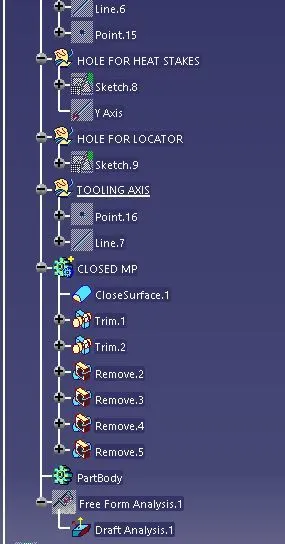
In part design workbench, use the close surface command to create a closed(solid) component.
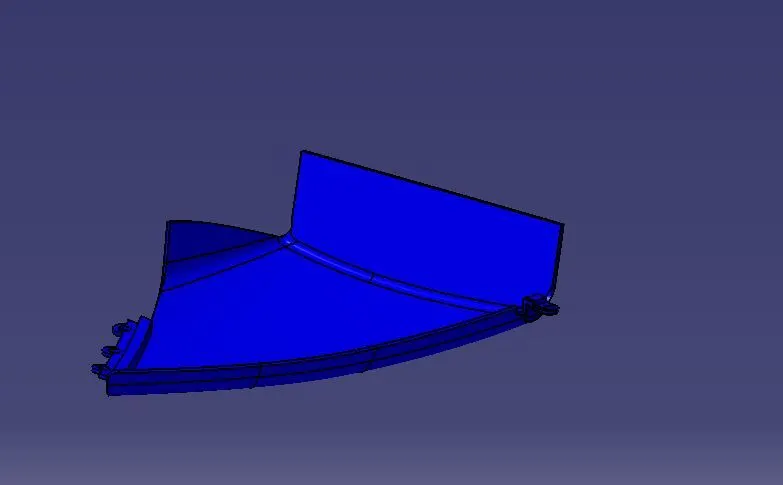
DRAFT ANALYSIS:
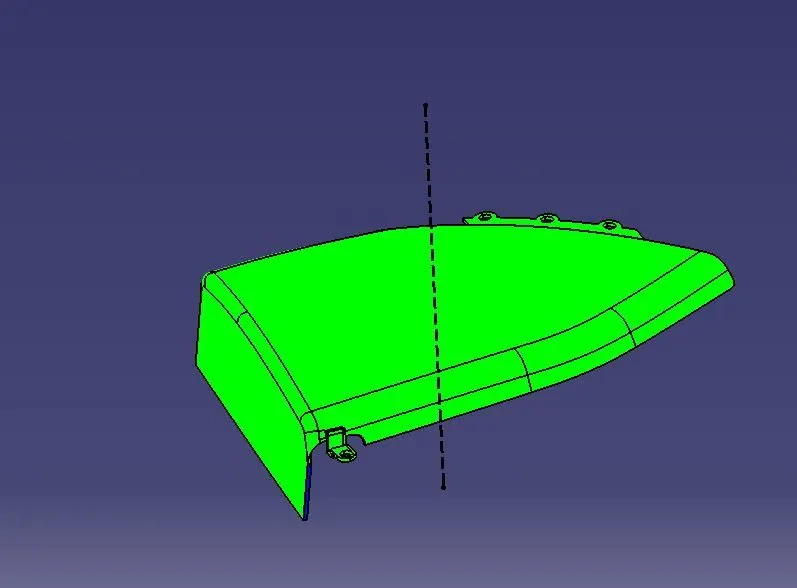
FLANGE:
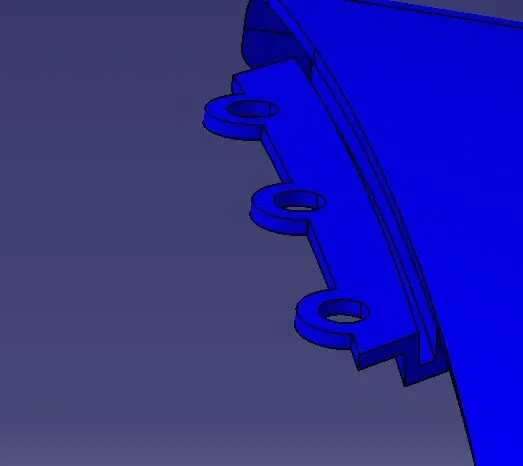
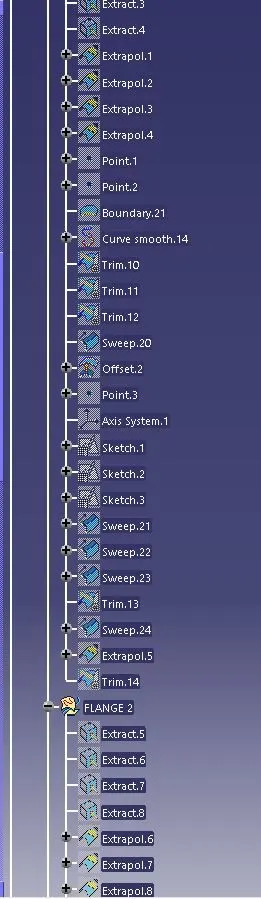
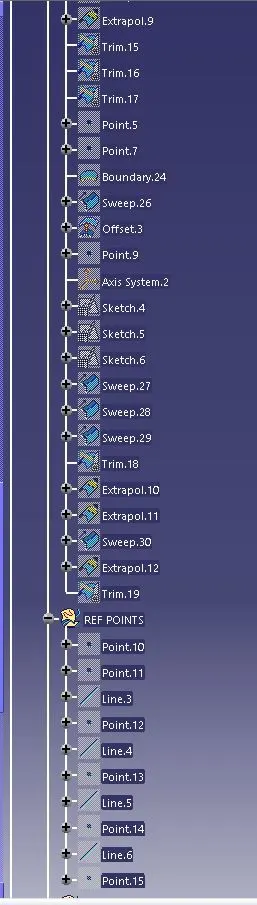
Flanges are created with the help of the given master sections.Holes on the flanges are provided for locators and heat stakes to pass through, which helps in fixing the component.
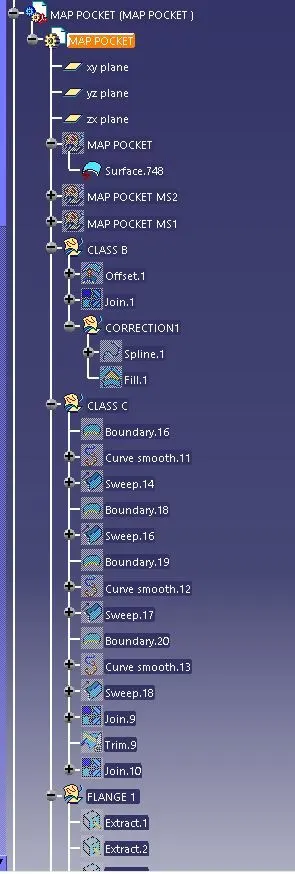
FEATURE TREE:
BOTTLE HOLDER
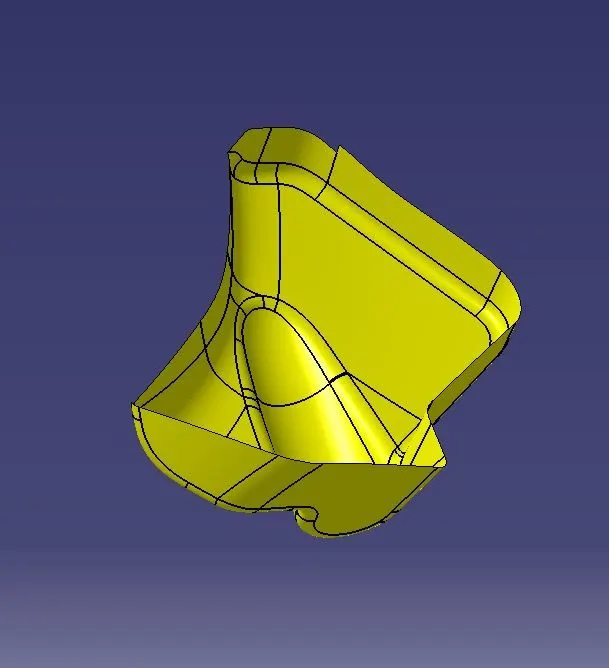
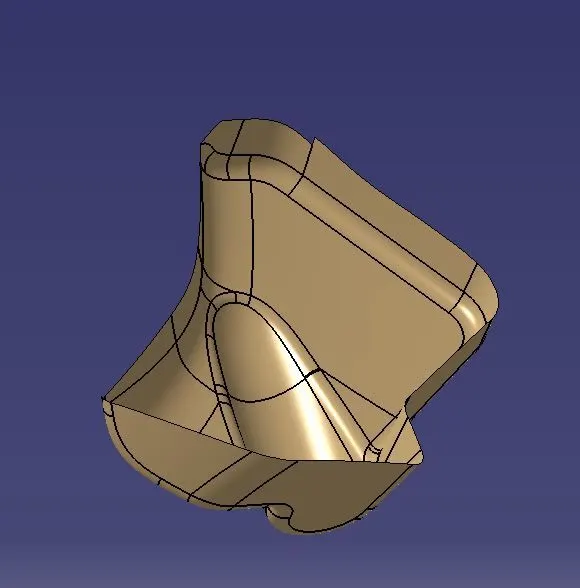
As the name suggests, it helps to store bottles and other stuff in the door.
CLASS A:
CLASS B:
To create the class B, we offset the class A inwards to a length of 2.5mm
CLASS C:
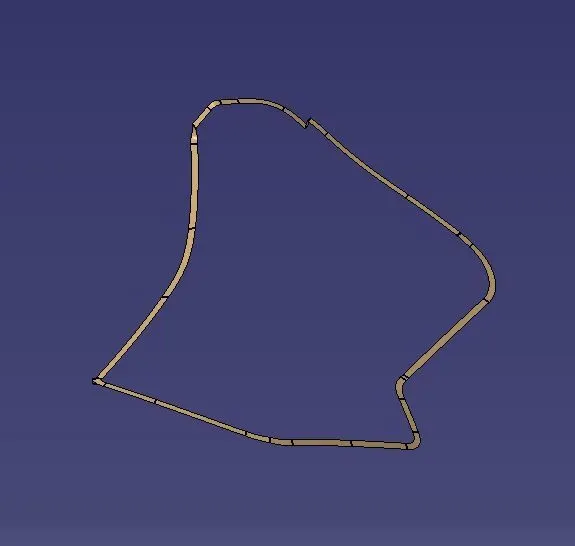
Create boundary on the class A and sweep it using the class A as reference surface and a draft angle of 3 degrees.
CLOSED COMPONENT:
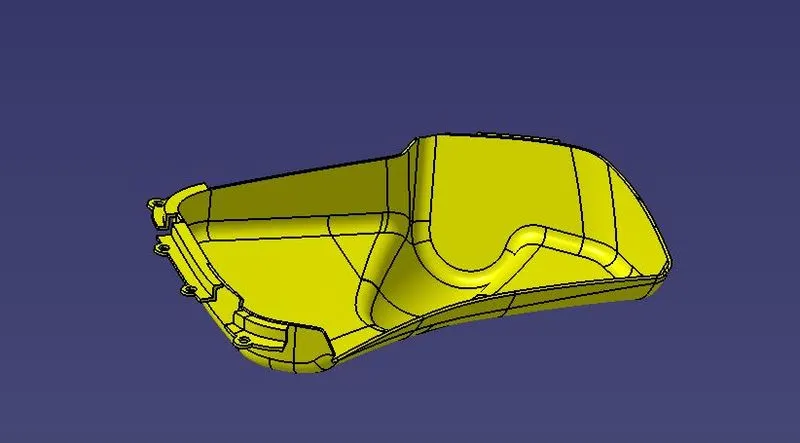
In part design workbench, use the close surface command to create a closed(solid) component.
DRAFT ANALYSIS:
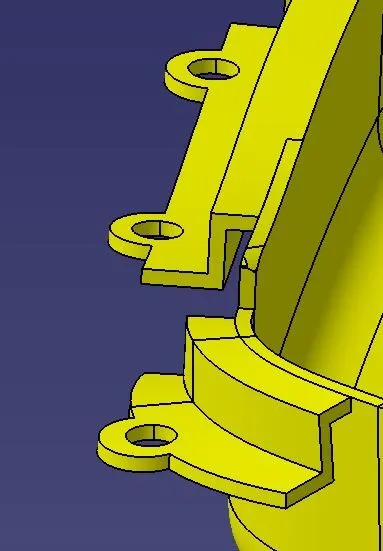
FLANGE:
Flanges are created with the help of the given master sections.Holes on the flanges are provided for locators and heat stakes to pass through, which helps in fixing the component.
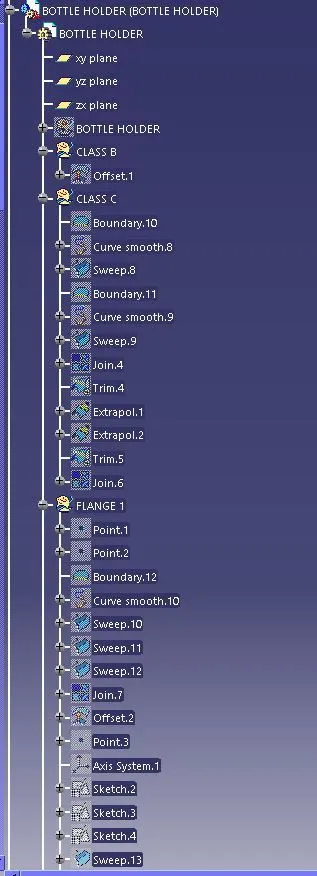
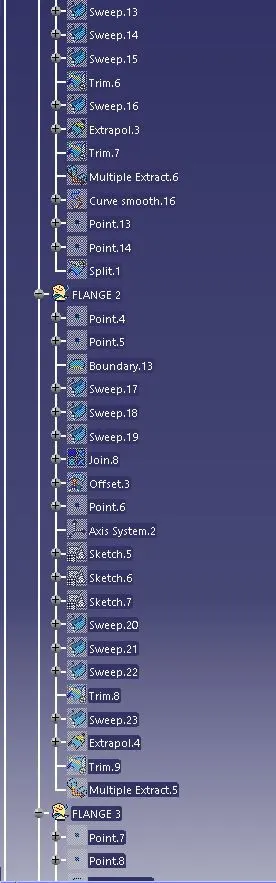
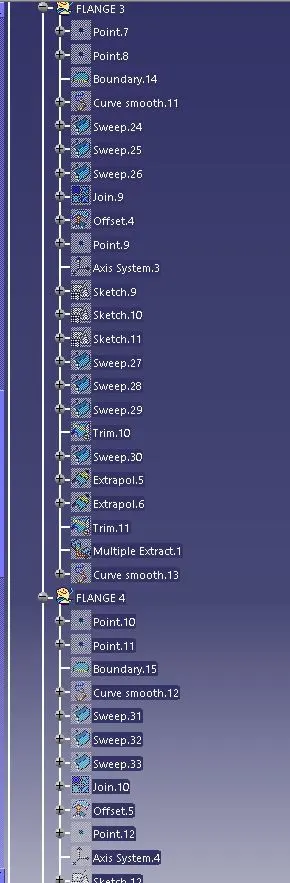
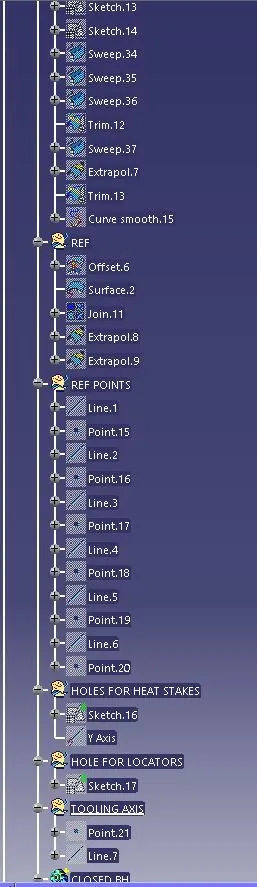
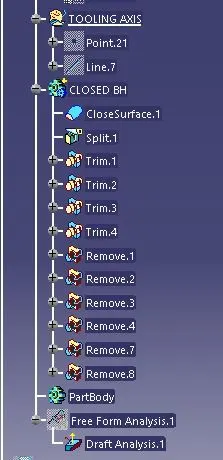
FEATURE TREE:
LOWER SUBSTRATE
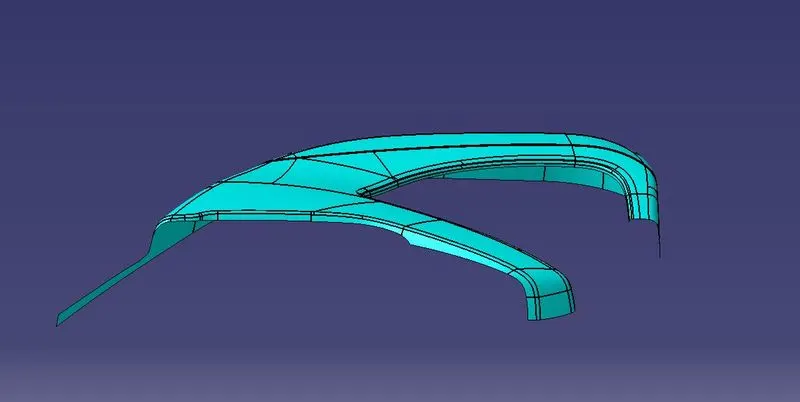
It is one of the mojor components in the door trim, it holds all the b-side features and every other component(door armrest,bottle holder,map pocket) are attached to the lower substrate throught the flanges and engineering features. Speakers can also be fitted to the lower substrate.
CLASS A:
CLASS B:
To create the class B, we offset the class A inwards to a length of 2.5mm
CLASS C:
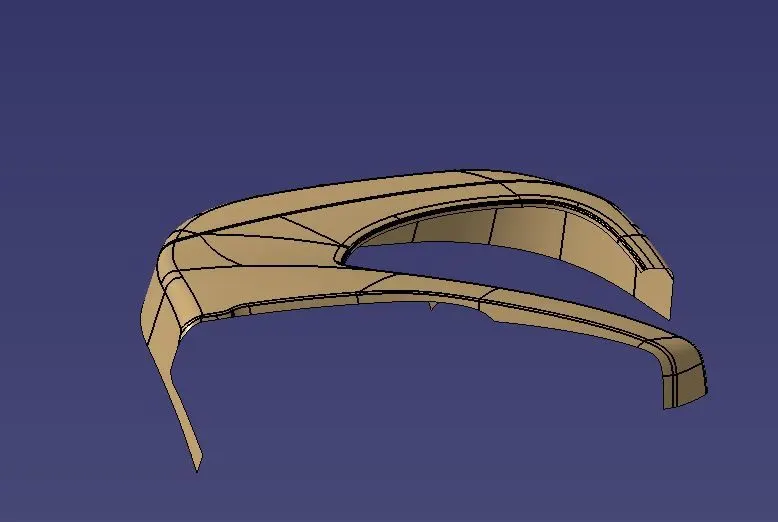
Create boundary on the class A and sweep it using the class A as reference surface and a draft angle of 3 degrees.
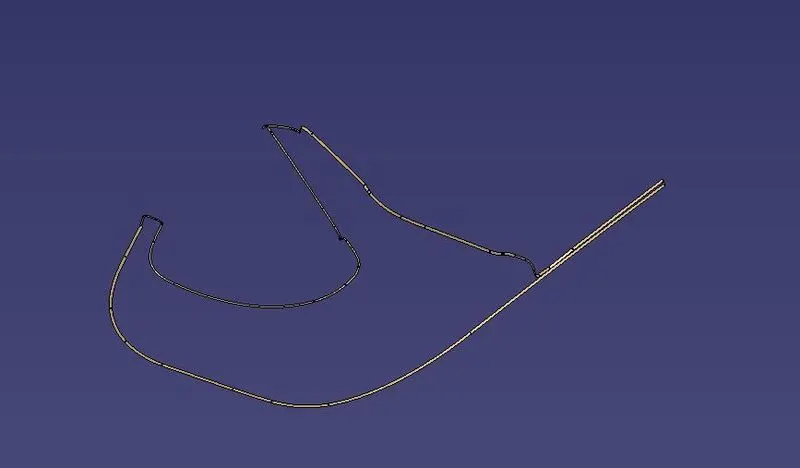
CLOSED COMPONENT:
In part design workbench, use the close surface command to create a closed(solid) component.
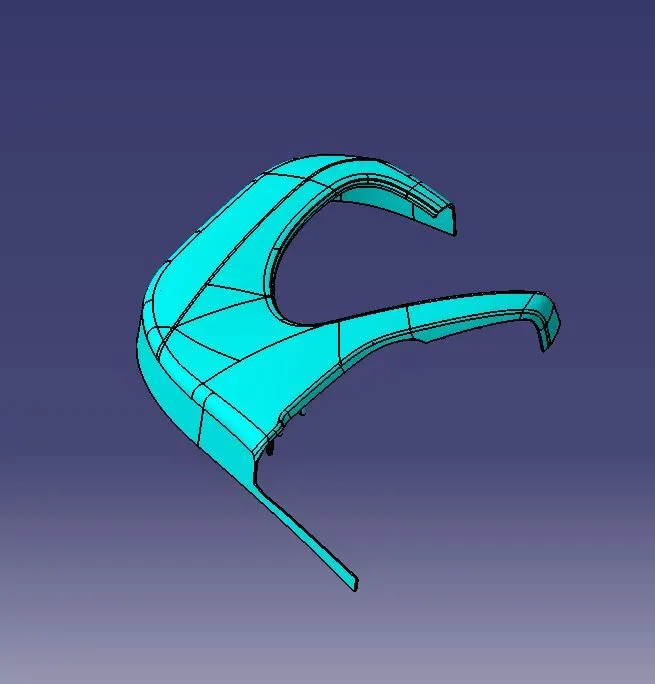
DRAFT ANALYSIS: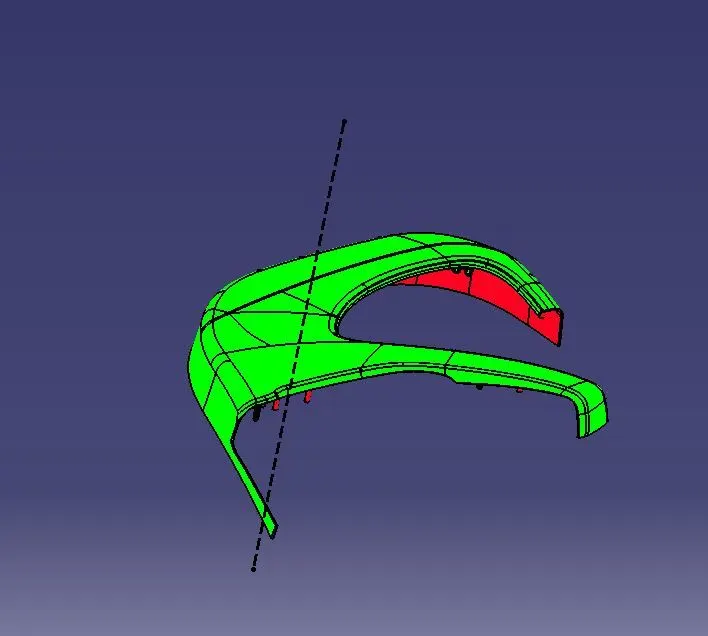
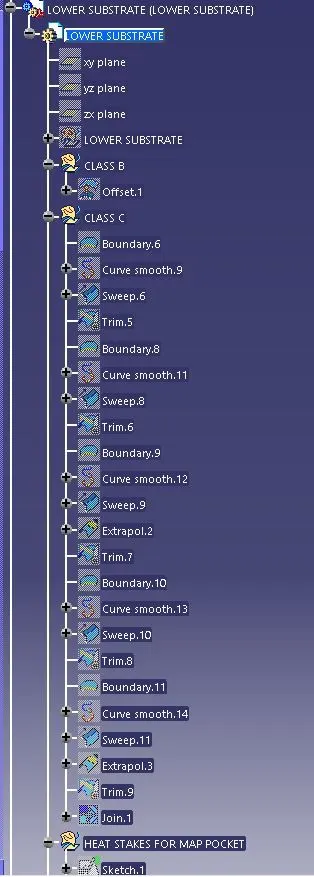
FEATURE TREE:
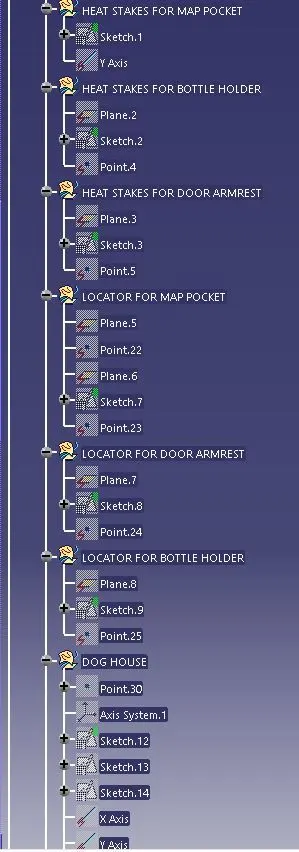
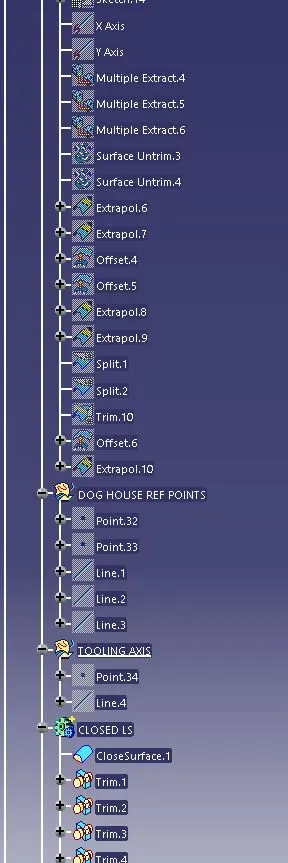
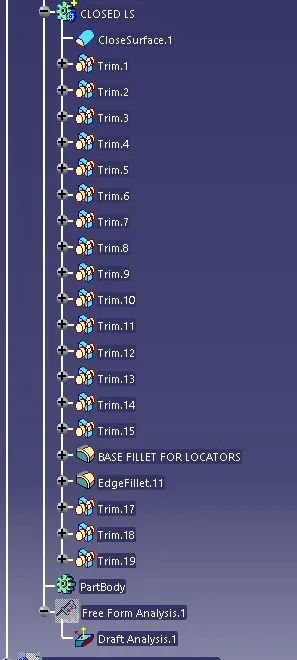
B-SIDE FEATURES
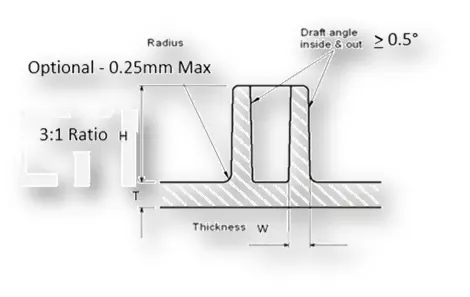
The following B-side features are created by following the design rules in plastic design. The thickness of each engineering feature is approximately 0.4 times the component thickness. Draft has also been applied to every b-side feature.
Parameters:
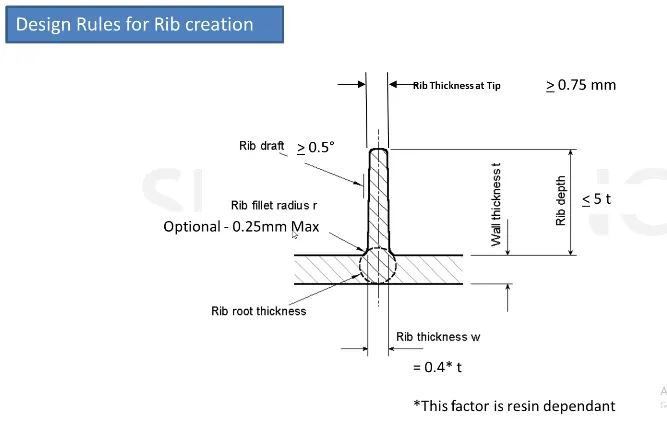
General Guidelines for Bosses:
- Draft - 0.5 degrees on walls of boss
- Thickness - Typically 40%* of the nominal wall at the base.
- Height to Diameter Ratio - 3:1
- Radii - 0.25mm maximum radii.
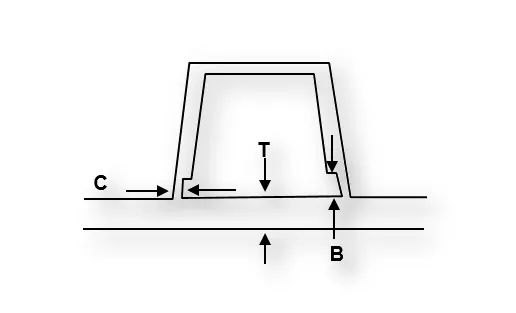
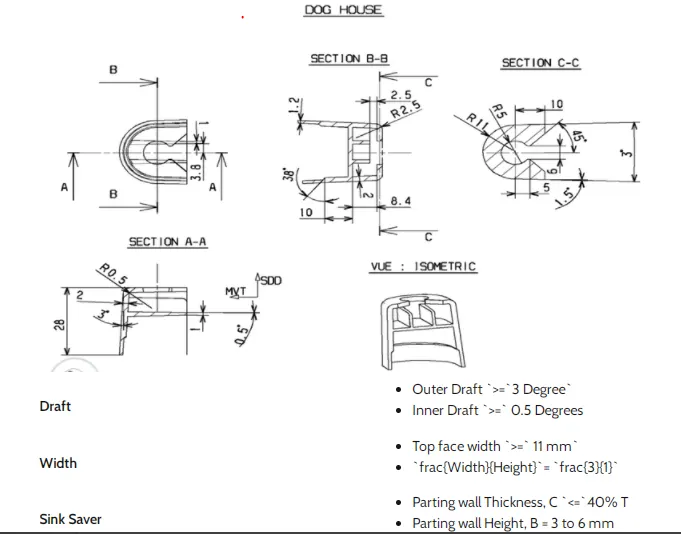
"C" is where the doghouse contacts the backside of the surface
-
Doghouse wall thickness at the intersection of the part wall ( C ) should be 40% or less than the main wall stock ( T ).
-
Height of ( B ) should be between 3.0 – 6.0 mm
HEAT STAKES:
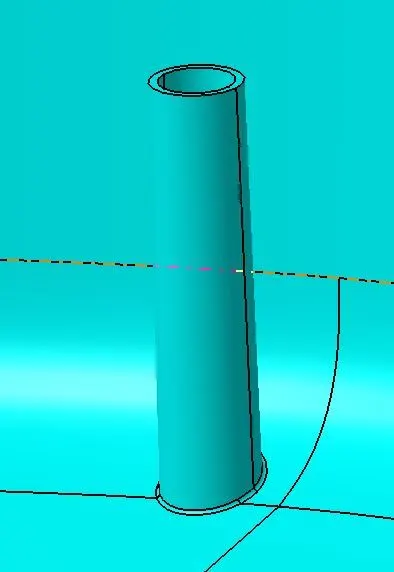
Heat Stakes eliminates the need for extra hardware, which can become defective, break, or otherwise suffer from quality control issues. Additionally, hardware fasteners tend to be more expensive and labor intensive than heat staking plastic fastening options. They help to provide strength to the component and also helps in fixing two parts.
LOCATORS:
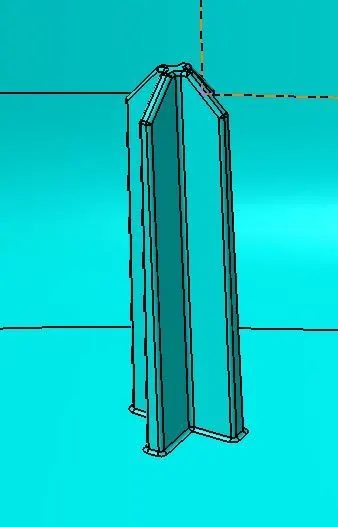
Their main pupose is to provide strength to the component and to place(fix) the component accurately.
DOG HOUSE:
It helps to provide strength to the compont and also acts as a fixing component.
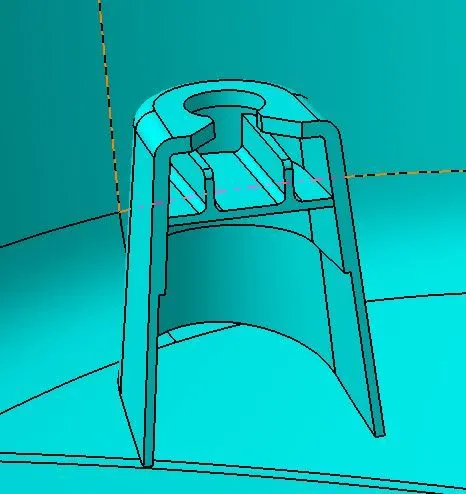
DOG HOUSE PARAMETERS:
PUSH PIN
MODEL:
ASSEMBLY ON DOG HOUSE:
COINCIDENCE CONSTRAIN IN ASSEMBLY WORKBENCH IS USED TO ATTACH THE PUSH PIN ON THE DOG HOUSE.
FINAL DOOR TRIM PANEL
FEATURE TREE:
CONCLUSION:
A DOOR TRIM PANEL along with engineering features is created using the master sections and given class A for each component, following the design rules and oem standards and draft analysis is also performed on them to ensure they are manufacturable.