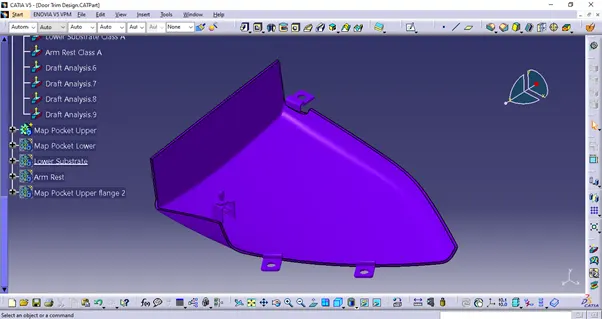
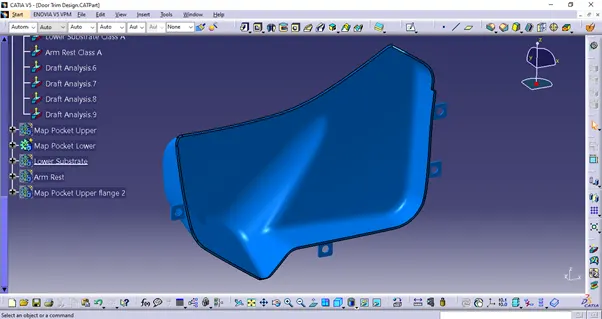
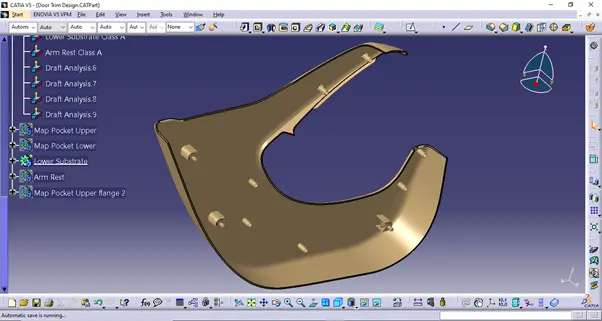
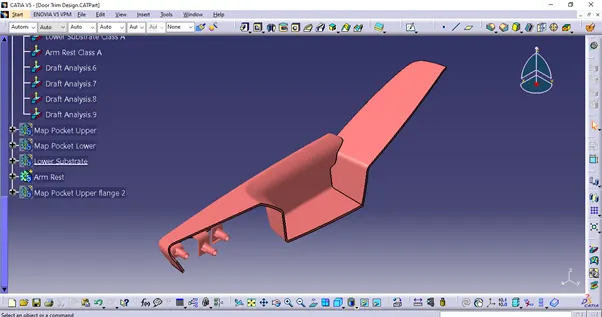
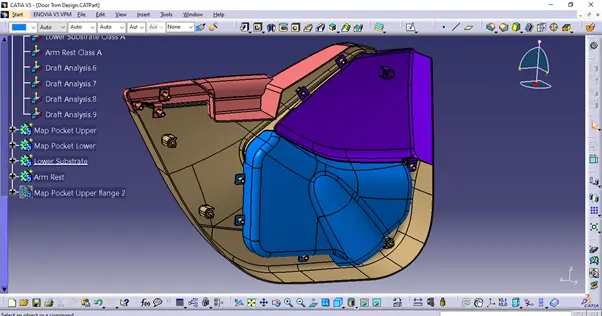
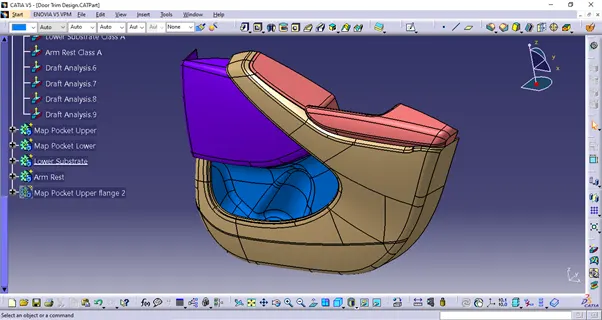
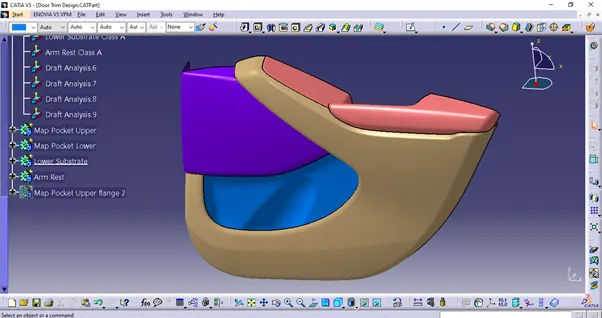
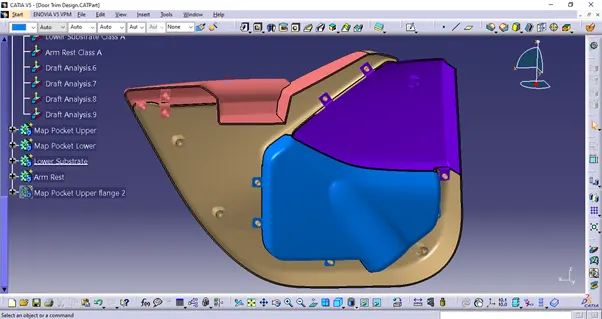
Automobile front door interior plastic trim design
Aim: To design inner trim of an automobile door using provided class A Surfaces and Master sections in Catia V5.
Objectives:
- To create thickened part using values from master sections.
- To create B side mounting features.
- To perform Draft Analysis.
Introduction:
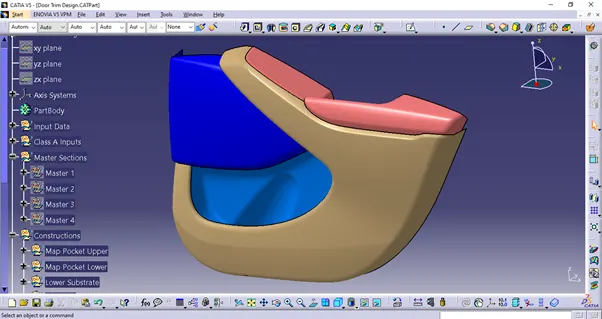
The door inner trim is the plastic part on inside of door on which various switches and other functional pockets are given. It is divided in various parts. Here we will be designing four parts which are Arm rest, Map pocket upper, Map pocket lower and Lower substrate. We need to create thickened parts with mounting features for assembly. Class A for all parts is provided.
Design Procedure:
- Extracting Class A surfaces and improving if required.
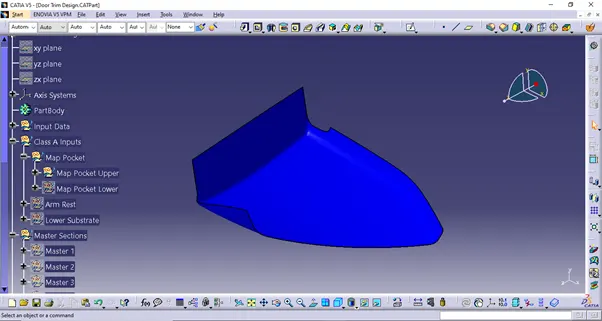
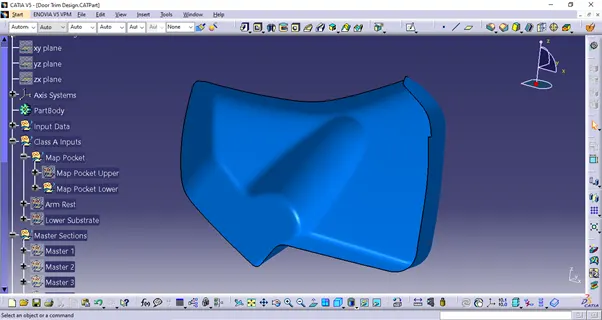
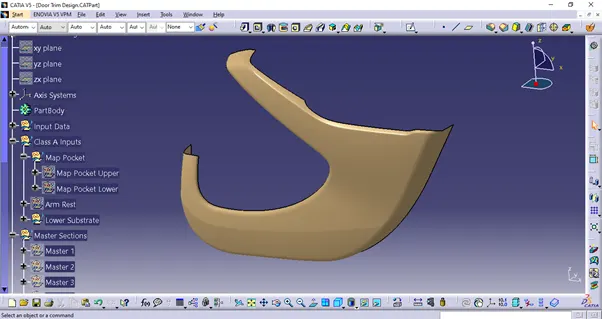
Class A surfaces are extracted from given input and checked for any irregularities.
Map Pocket Upper
Map Pocket Lower
Lower Substrate
Arm Rest
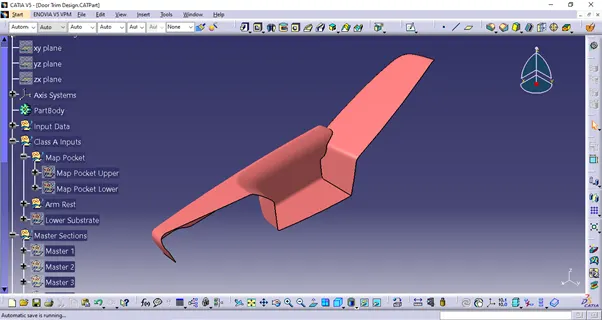
- Tooling Axis Creation
Tooling axis is the direction in which mould cavity open and close. For Map pocket upper and Lower substrate, tooling axis is created in direction of y axis. Map Pocket Lower tooling axis will be derived from bisecting line method. In this method, the intersection of inclined edges is taken with a plane and bisecting line is created. Arm rest will have main tooling axis and one side core axis. Main axis will be created using bisecting method and side core axis will be in y axis.
Map Pocket Upper
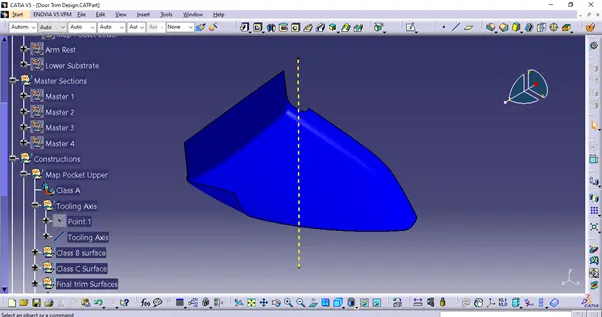
Map Pocket Lower
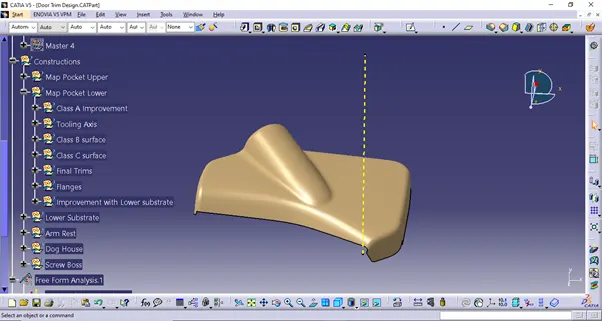
Lower Substrate
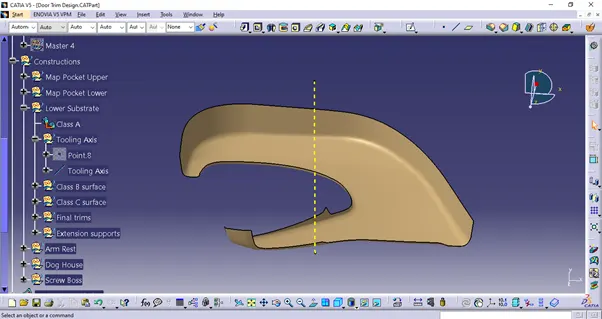
Arm Rest
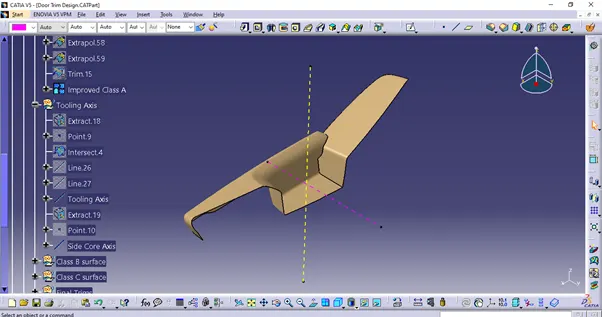
- Draft Analysis on Class A
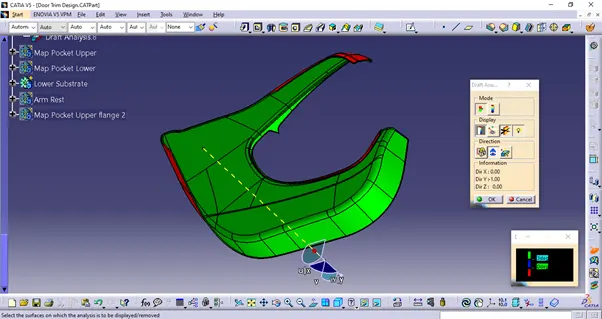
Draft analysis is done on class A surfaces to validate the tooling axis.
Map Pocket Upper
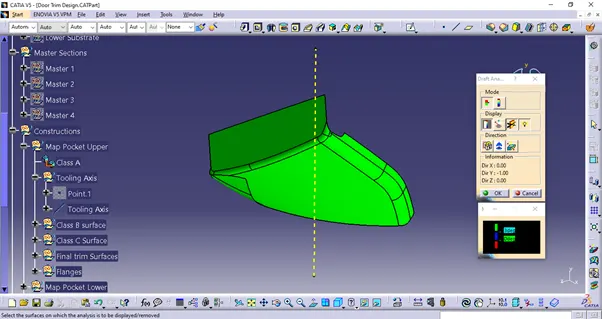
Map Pocket Lower
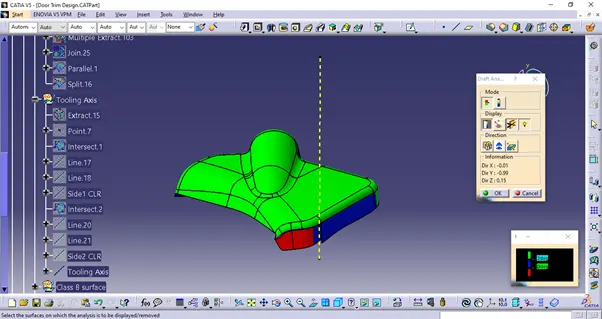
Lower Substrate
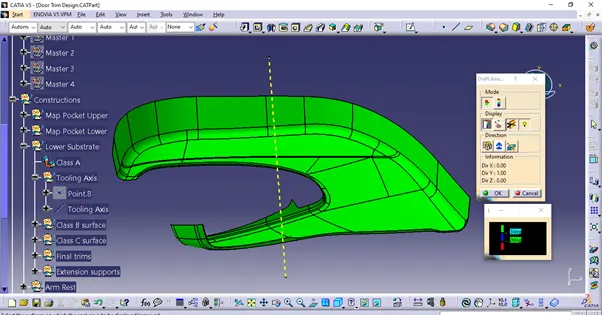
Arm rest
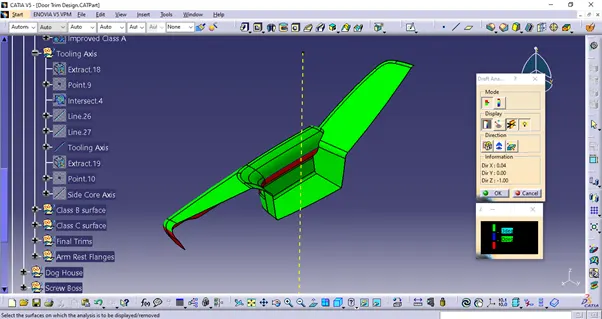
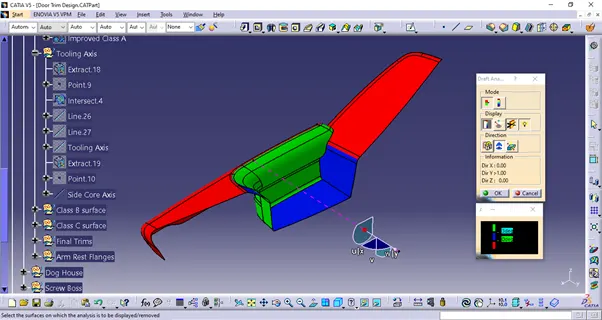
The surfaces highlighted in green have draft of more than 3 degrees and Blue have positive draft between 0 to 3 degrees. Surfaces highlighted in Red have negative draft. These surfaces will be tried to clear in opposite direction or else the same will be reported to class A engineer to modify the surfaces.
- Class B surface creation:
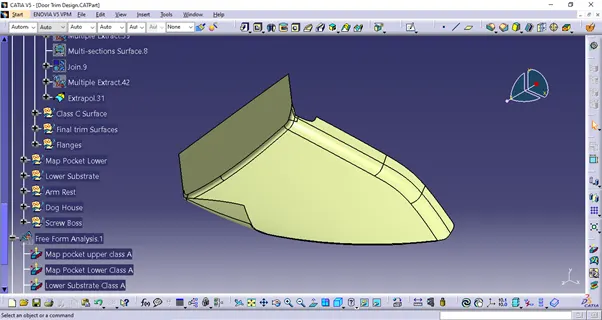
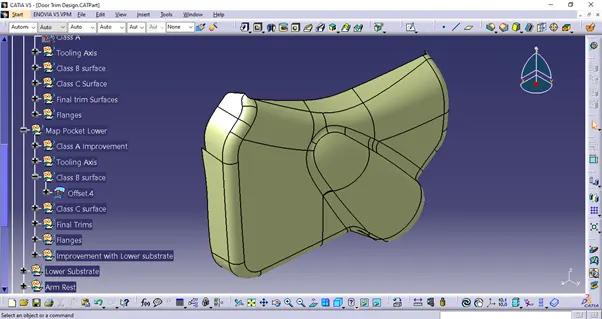
Class B surface is created by making offset of class A surface by value of part thickness. This class B surface is then further extrapolated if required. Generally, if there are fillets in the class A, then only flat surfaces are made offset and then extrapolated to intersect. After that fillet is applied considering part thickness. In case of styling fillets, filleted surface is directly made offset.
Map Pocket Upper
Map Pocket Lower
Lower Substrate
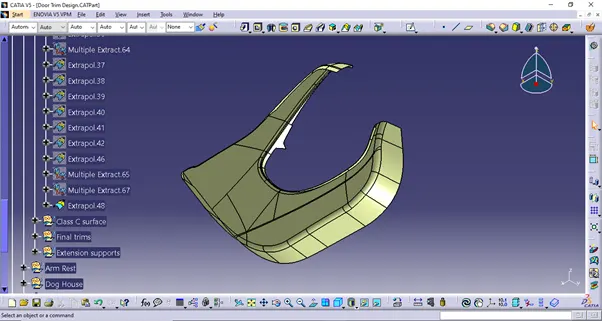
Arm Rest
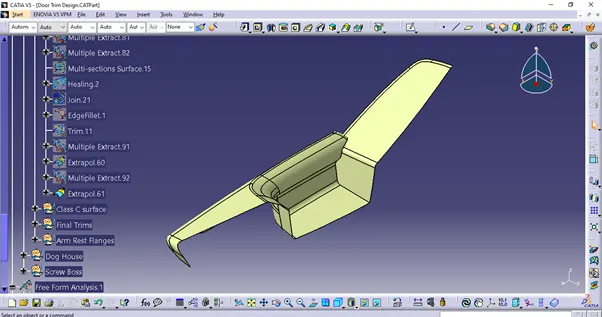
- Class C surface creation:
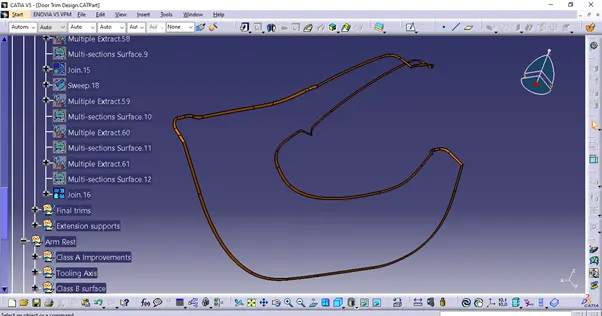
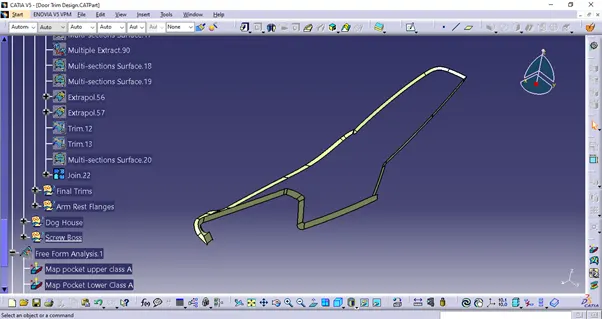
To create class C surface, boundary of class A surface is extracted. To create class c surface in direction of tooling axis, sweep with draft direction option is used. All sections of C surface are created using sweep and Multi section option and then joined together to create single surface.
Map Pocket Upper
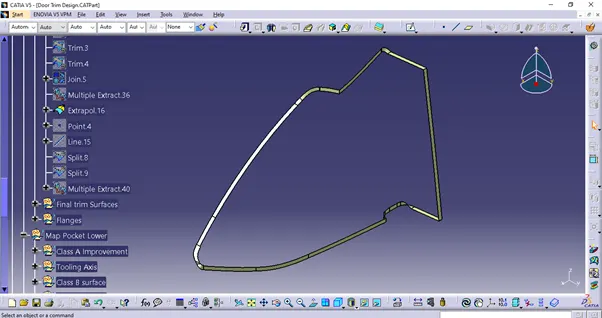
Map Pocket Lower
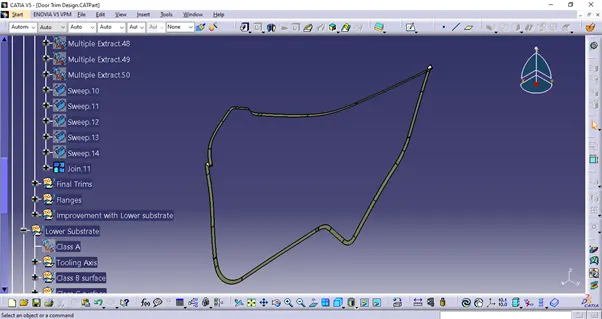
Lower Substrate
Arm Rest
- Creating closed volume and creating Solid Body:
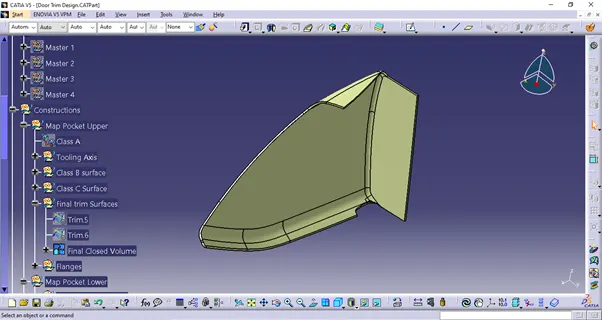
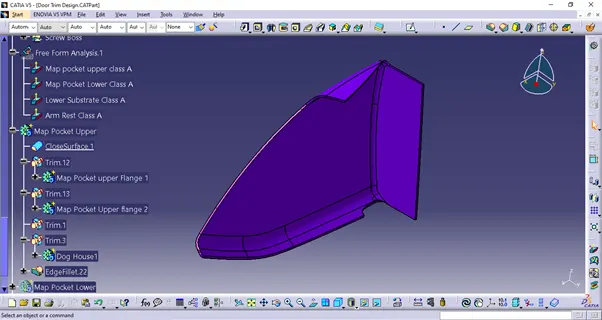
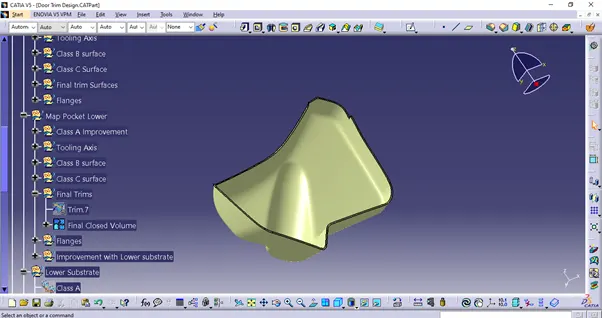
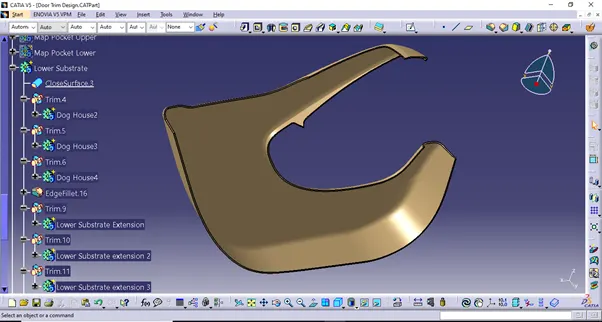
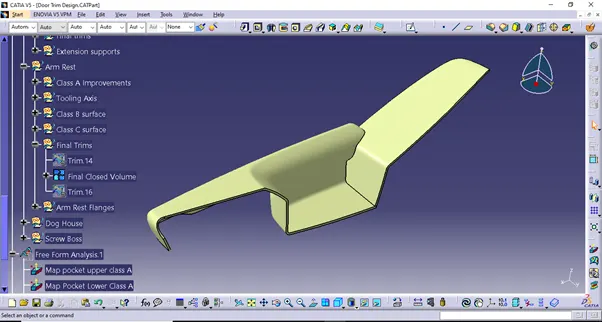
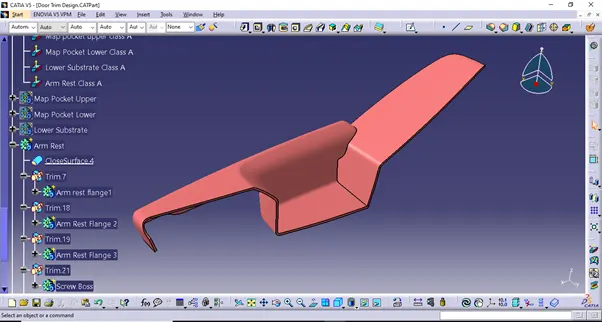
Once surfaces are generated, all surfaces are trimmed and joined together to create closed volume. This closed volume is then converted into solid body using closed volume command in part design.
Map Pocket Upper
Map Pocket Lower
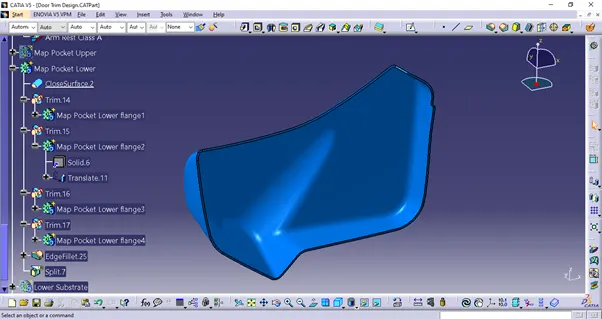
Lower Substrate
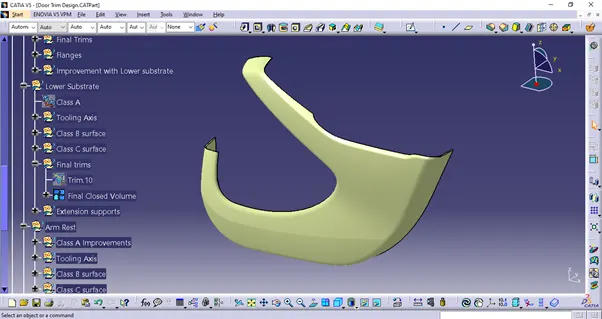
Arm Rest
- Draft Analysis on final components:
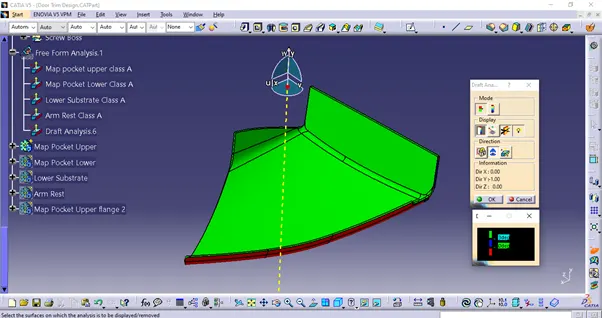
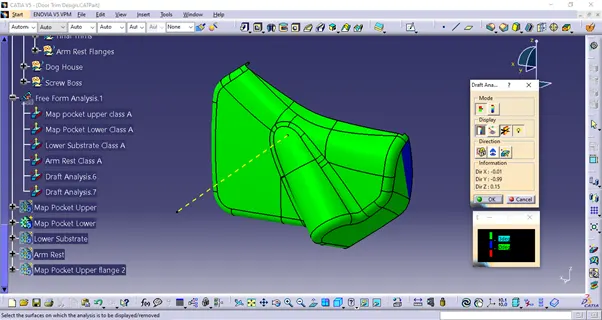
Draft Analysis is done on final components to check for its manufacturing ability along with class C surface.
Map Pocket Upper
Map Pocket Lower
Lower Substrate
Arm Rest
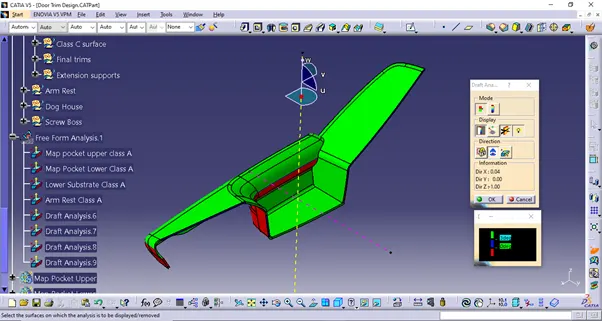
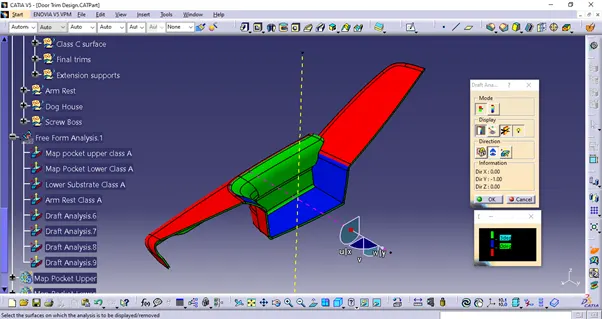
Surfaces highlighted in green and blue have positive draft, whereas surfaces in red have negative draft. Surfaces in red will be cleared in other direction. If not possible, it will be highlighted to class A designer.
- Attachment features creation;
Dog house
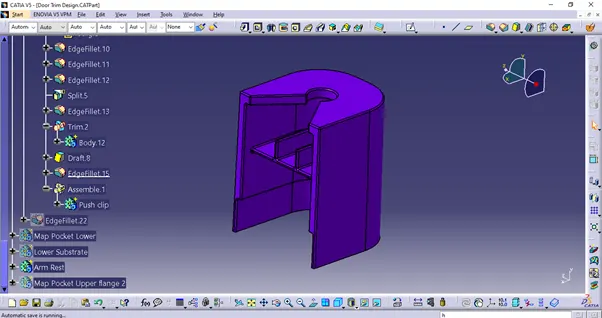
Dog house is created as B side attachment feature. In this case it is used for push pin clip. According to dog house design rules, the thickness at the bottom of dog house should be 40% or less than main wall thickness till the height of 3 to 6 mm. Dog house should be created using required draft with respect to pulling direction and side core axis.
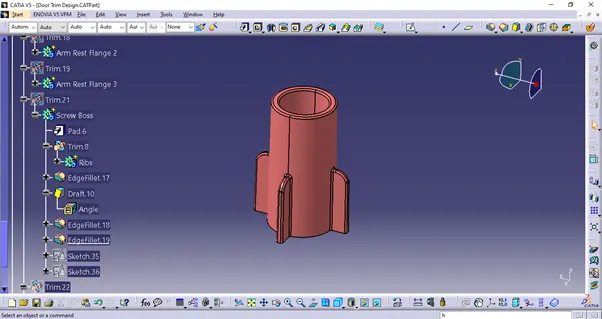
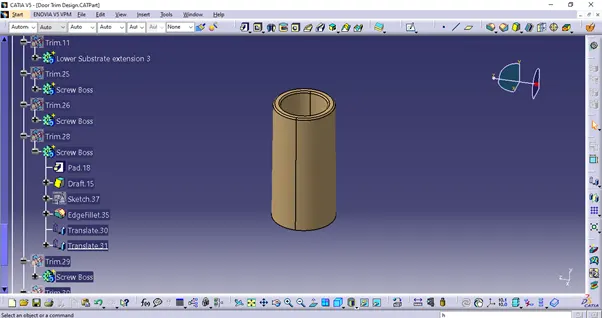
Screw boss and Heat stakes
Heat stakes is pulsed heat process to join to parts in which one of them should be plastic.
Final parts with attachment features: