Week-11 Challenge: Braking
Q1: For a defined driving cycle, calculate the energy required for braking.
In the realm of electric vehicles (EVs), understanding the energy demands for both acceleration and deceleration is crucial. Efficient braking systems are essential to safely and effectively bring vehicles to a stop within specified timeframes. This study aims to explore the energy requirements for braking operations within a defined driving cycle.
Electric vehicles necessitate robust braking mechanisms for controlled deceleration. Unlike internal combustion engine vehicles that rely on friction brakes, EVs utilize regenerative braking systems to convert kinetic energy into electrical energy for storage or immediate use.
Google Drive Links:
Website from which have downloaded drive cycle data :https://www.epa.gov/vehicle-and-fuel-emissions-testing
Drive Cycle Link: https://docs.google.com/spreadsheets
Consideration of a typical driving cycle, such as the Urban Dynamometer Driving Schedule (UDDS), provides insights into braking energy requirements. The UDDS, also known as the "LA4" or "city test," simulates urban driving conditions and is widely employed for light-duty vehicle testing.
The UDDS data can be accessed from various sources, such as the Environmental Protection Agency's (EPA) official documentation on vehicle testing protocols.
Analyzing Braking Energy Requirements:
The energy required for braking is calculated using the formula:
Energy = 0.5 * Mass * (Change in Velocity)^2
1. Reducing Speed from 80 to 40 km/h in 20 Seconds:
Change in velocity = (80 km/h - 40 km/h) = 40 km/h = 11.11 m/s (converted from km/h to m/s)
Time = 20 seconds
Mass of the vehicle (assumed constant) = m
Using the formula, Energy = 0.5 * m * (11.11 m/s)^2 = 0.5 * m * 123.456 kJ
Calculation yields the energy required, which is 0.5 * m * 123.456 kJ = 61.728 * m kJ.
Given the specific value of m, the energy can be determined To reduce speed from 80 to 40 Kmph in 20 sec = 292 KJ.
2. Bringing the Vehicle to a Complete Stop from 80 km/h in 10 Seconds:
Change in velocity = (80 km/h - 0 km/h) = 80 km/h = 22.22 m/s (converted from km/h to m/s)
Time = 10 seconds
Mass of the vehicle (assumed constant) = m
Using the formula, Energy = 0.5 * m * (22.22 m/s)^2 = 0.5 * m * 493.827 kJ
Calculation yields the energy required, which is 0.5 * m * 493.827 kJ = 246.914 * m kJ.
Given the specific value of m, the energy can be determined To reduce speed from 80 to 0 Kmph in 10 sec = 560 Kj.
In both cases, the energy required for braking depends on the change in velocity squared and the mass of the vehicle, following the principle of kinetic energy.
Additional Insights:
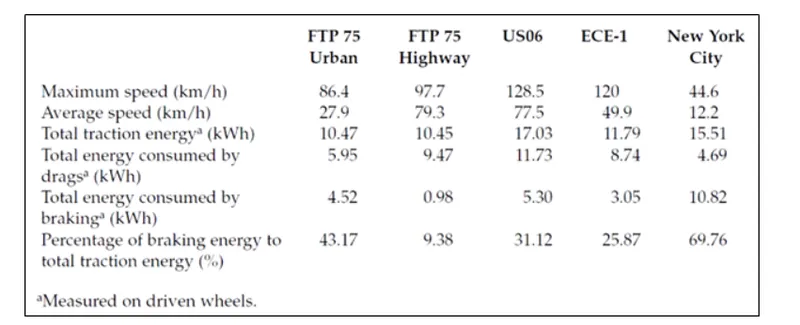
Beyond the UDDS, other driving cycles, such as the Highway Fuel Economy Test (HWFET) or the New European Driving Cycle (NEDC), present varying braking energy demands reflective of different driving environments and conditions. Exploring the energy dynamics across diverse driving cycles enables a comprehensive understanding of EV braking requirements and informs the development of advanced braking technologies tailored to specific usage scenarios.
Moreover, advancements in regenerative braking systems continue to reshape the landscape of electric vehicle technology, offering opportunities for enhanced energy recovery and extended driving range. By integrating sophisticated energy management algorithms and innovative braking hardware, EV manufacturers aim to further optimize braking efficiency and performance, contributing to the ongoing evolution of sustainable transportation solutions.
Conclusion:
The analysis underscores the significance of efficient braking systems in electric vehicles, particularly in urban driving scenarios characterized by frequent stops and starts. By quantifying the energy requirements for braking within specific driving cycles, engineers and researchers can optimize braking strategies to enhance overall vehicle performance, energy efficiency, and safety.
Q2: Why electric motor can’t develop braking torque at high speed similar to starting? How electric and mechanical brakes are coordinated?
Electric Motor Braking Dynamics
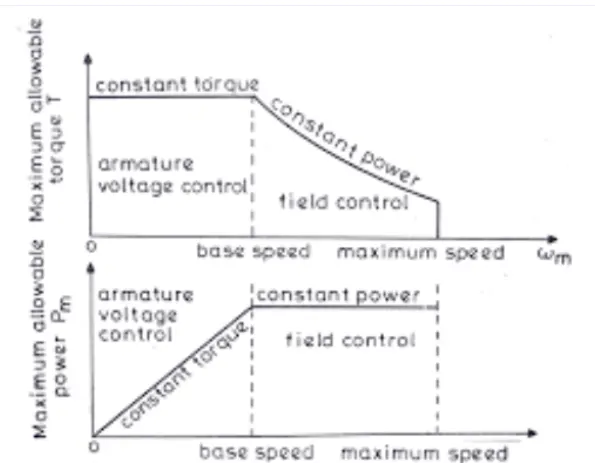
The behavior of electric motors during braking differs from their performance during acceleration. While electric motors exhibit robust torque during acceleration, facilitating swift transitions from 0 to 100 kmph, their braking torque capabilities are limited at high speeds. This limitation arises due to the variance in torque-speed characteristics between the motoring and braking regions.
During acceleration, electric motors demonstrate a progressive increase in torque, enabling efficient power delivery and acceleration. As the vehicle gains momentum, it traverses through different operational regions. Initially, at low speeds, the motor operates in a high torque, constant acceleration phase. Subsequently, it transitions into a constant power region as speed increases, facilitating smoother acceleration and optimal efficiency. However, during braking, the motor encounters challenges in generating equivalent braking torque, especially at high speeds.
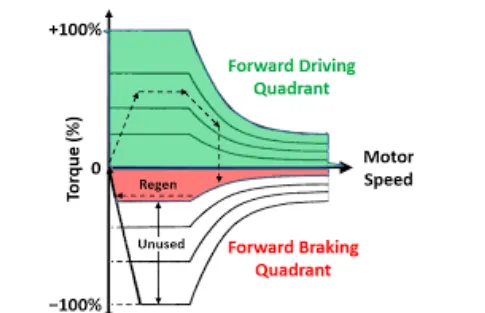
Regenerative braking, a vital aspect of electric vehicle (EV) efficiency, relies on the motor's ability to convert kinetic energy into electrical energy for storage in the battery. Yet, due to the limitations in braking torque at high speeds, regenerative braking efficiency diminishes. Consequently, the ability to recuperate significant power back to the battery diminishes, affecting overall energy regeneration.
Coordination of Electric and Mechanical Brakes
Effective braking systems incorporate a combination of electric and mechanical braking mechanisms, coordinated through various control strategies. Two primary coordination strategies are prevalent: parallel and series.
Parallel Coordination:
In parallel coordination, both electric and mechanical brakes operate simultaneously, enhancing braking performance and efficiency. This approach ensures a coordinated effort between the two systems, optimizing deceleration and ensuring vehicle safety.
Series Coordination:
Contrarily, series coordination involves sequential activation of braking systems, wherein either regenerative braking or mechanical braking is applied one after the other. This strategy allows for the prioritization of braking mechanisms based on specific driving conditions, enhancing flexibility and control.
Electric Driven Intelligent Brake (EDIB):
Innovations in electric vehicle technology have led to the development of advanced braking strategies aimed at optimizing efficiency and performance. One such notable advancement is the Electric Driven Intelligent Brake (EDIB), pioneered by Nissan for their Leaf model. This cutting-edge system integrates electric-driven braking mechanisms with intelligent control algorithms, offering enhanced responsiveness, energy regeneration, and overall braking performance.
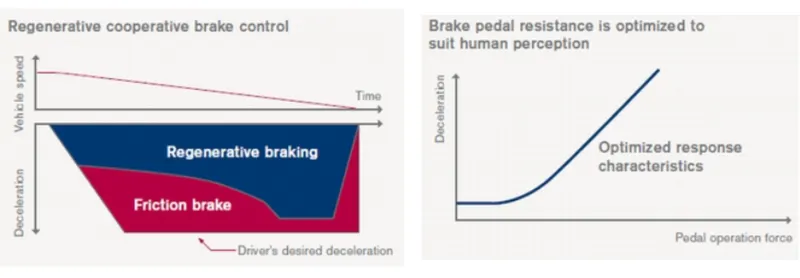
In summary, understanding the dynamics of electric motor braking and the coordination between electric and mechanical braking systems is essential for optimizing the efficiency, safety, and performance of electric vehicles in diverse driving scenarios. Innovations such as the EDIB signify the ongoing evolution of braking technology, promising greater sustainability and driving experience in the realm of electric mobility.
Q3: Make a MATLAB program which plots contour of given motor speed, torque and efficiency values. Attach the code as a .m file attach a screenshot of all the plots.
Analysis:
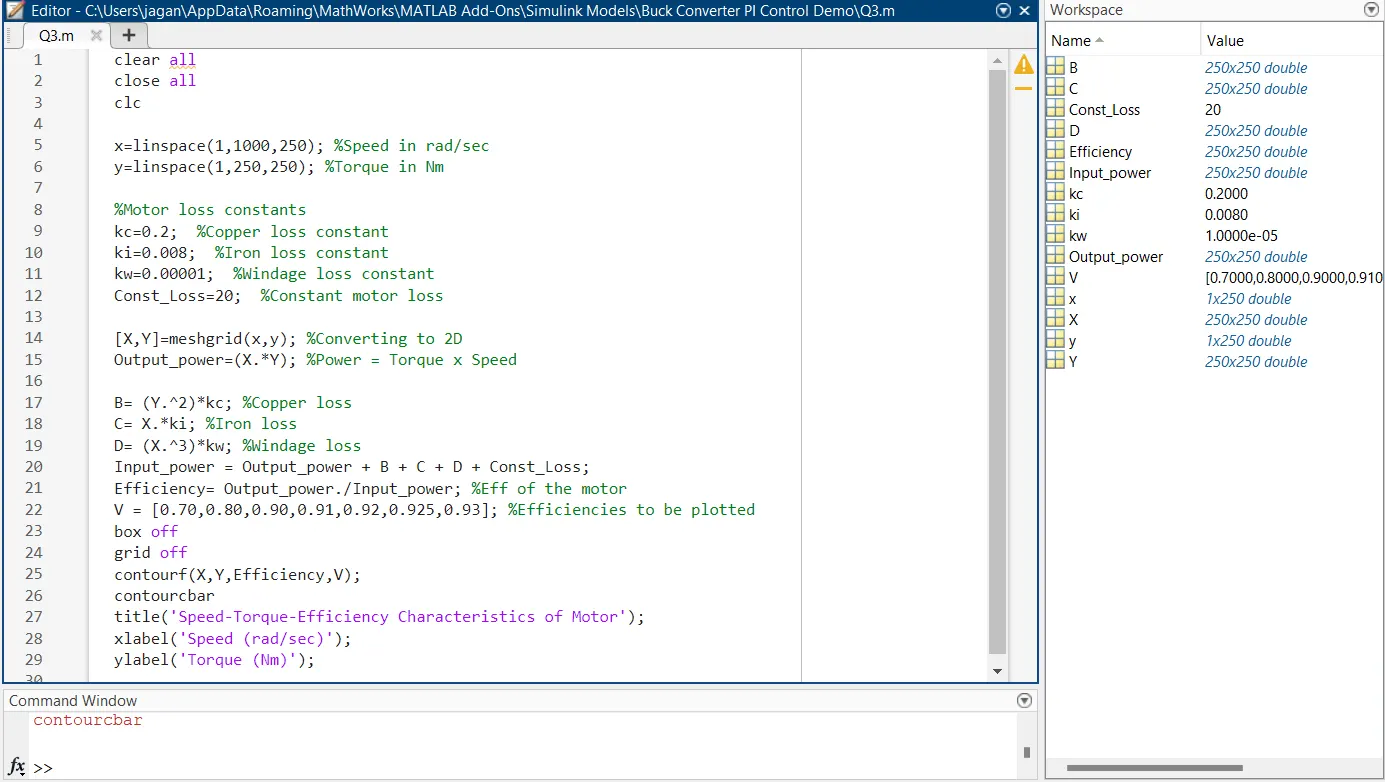
The MATLAB program presented facilitates the plotting of a contour graph representing the relationship between motor speed, torque, and efficiency. It starts by defining the inputs, namely speed and torque, using the linspace command to generate evenly spaced values within specified ranges.
Subsequently, motor constant values such as copper loss, iron loss, and windage loss are assigned. These values are crucial for accurately modeling the motor's performance characteristics.
Using meshgrid, the program evaluates functions of two variables, creating grids of speed and torque values. This enables the generation of three-dimensional mesh/surface plots.
The program then computes the output power by multiplying speed and torque, calculates total losses (including copper, iron, and windage losses), and determines input power.
Efficiency is then calculated as the ratio of output power to input power, expressed as a percentage.
Finally, a contour graph is plotted, visualizing the efficiency distribution across different speed and torque combinations. The color of each contour indicates the corresponding efficiency level, as depicted in the color bar.
Additional Insights:
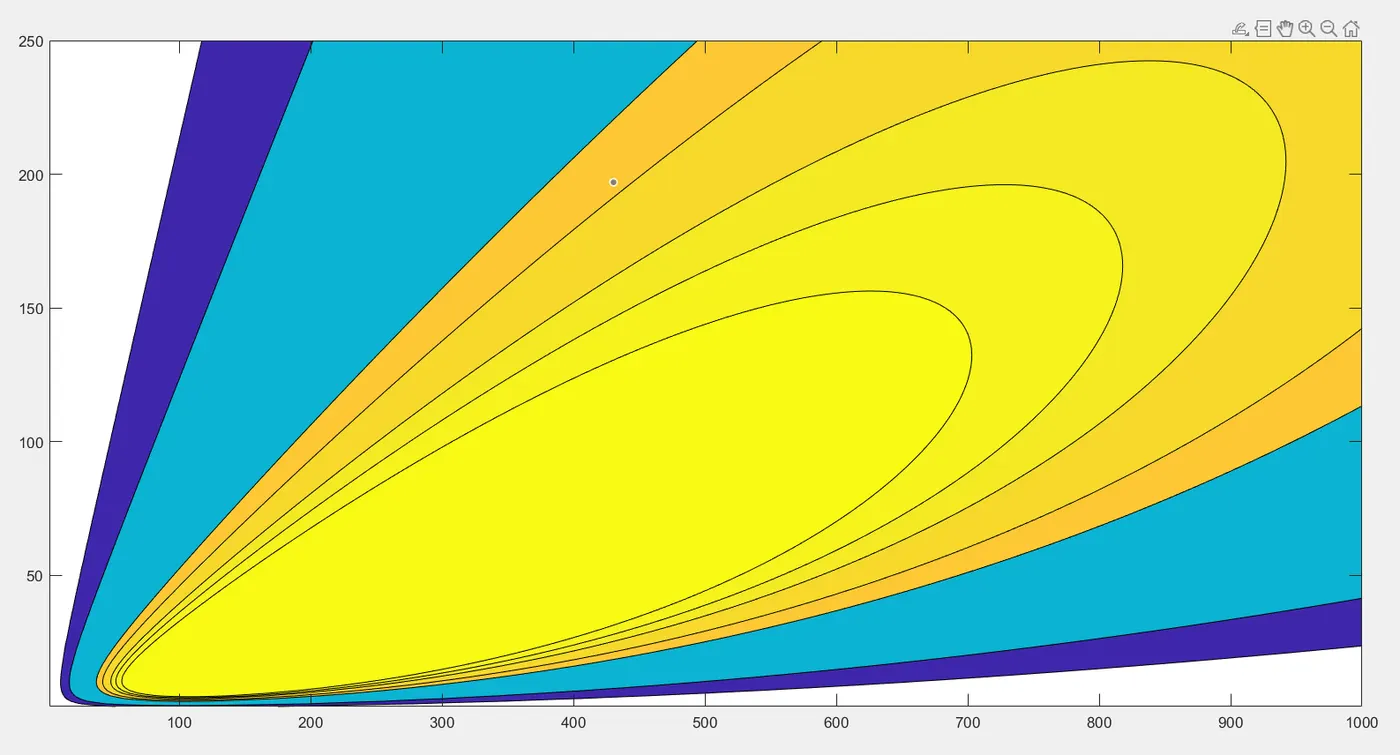
The contour plot reveals valuable insights into the motor's efficiency characteristics. It demonstrates that the motor achieves maximum efficiency (93%) at a speed of 691.1 rad/sec and a torque of 147 Nm. Conversely, the lowest efficiency is observed at a speed of 223 rad/sec and a torque of 105.3 Nm.
This visualization provides engineers and researchers with a comprehensive understanding of the intricate relationship between motor speed, torque, and efficiency. By analyzing the contour plot, they can identify optimal operating conditions for maximizing efficiency and performance while minimizing energy losses.
Moreover, the utilization of MATLAB for such analyses underscores its versatility and effectiveness in engineering applications, enabling sophisticated modeling and visualization of complex systems.
Conclusion:
In summary, this exploration addressed the critical aspects of electric vehicle (EV) technology, focusing on braking energy requirements, electric motor braking dynamics, and the coordination of braking systems. By analyzing the energy demands for braking within defined driving cycles, understanding electric motor braking behavior, and exploring braking system coordination, we gained valuable insights into the optimization of EV braking performance and efficiency.
Key Learnings:
1. Braking Energy Requirements: Quantifying energy demands during braking operations is essential for optimizing braking systems in EVs.
2. Electric Motor Braking Dynamics: The unique behavior of electric motors during braking necessitates the integration of regenerative braking systems for efficient energy recovery.
3. Coordination of Braking Systems: Effective braking systems require coordinated efforts between electric and mechanical brakes, employing strategies such as parallel and series configurations to ensure optimal performance and safety.
4. MATLAB Contour Plotting: MATLAB's capabilities in visualizing motor speed, torque, and efficiency relationships provide valuable tools for optimizing motor performance and energy efficiency in EVs.
5. These insights contribute to advancing electric vehicle technology, driving towards more sustainable and efficient transportation solutions in the future.