Week-11 Challenge: Braking
1. For a defined driving cycle, calculate the energy required for braking.
Ans
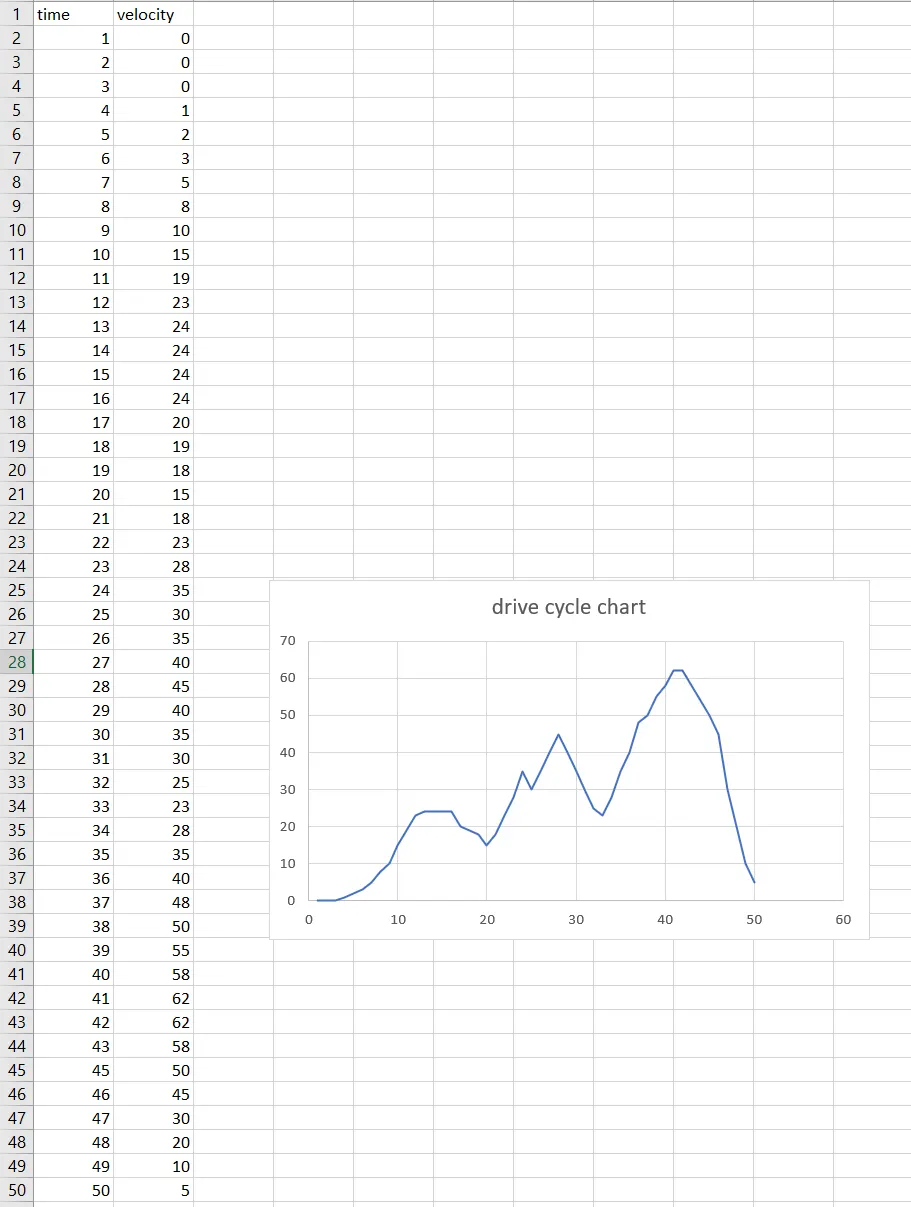
From the above drive cycle, lets take 3 different situations of deccelaration of which energy has to be calculated.
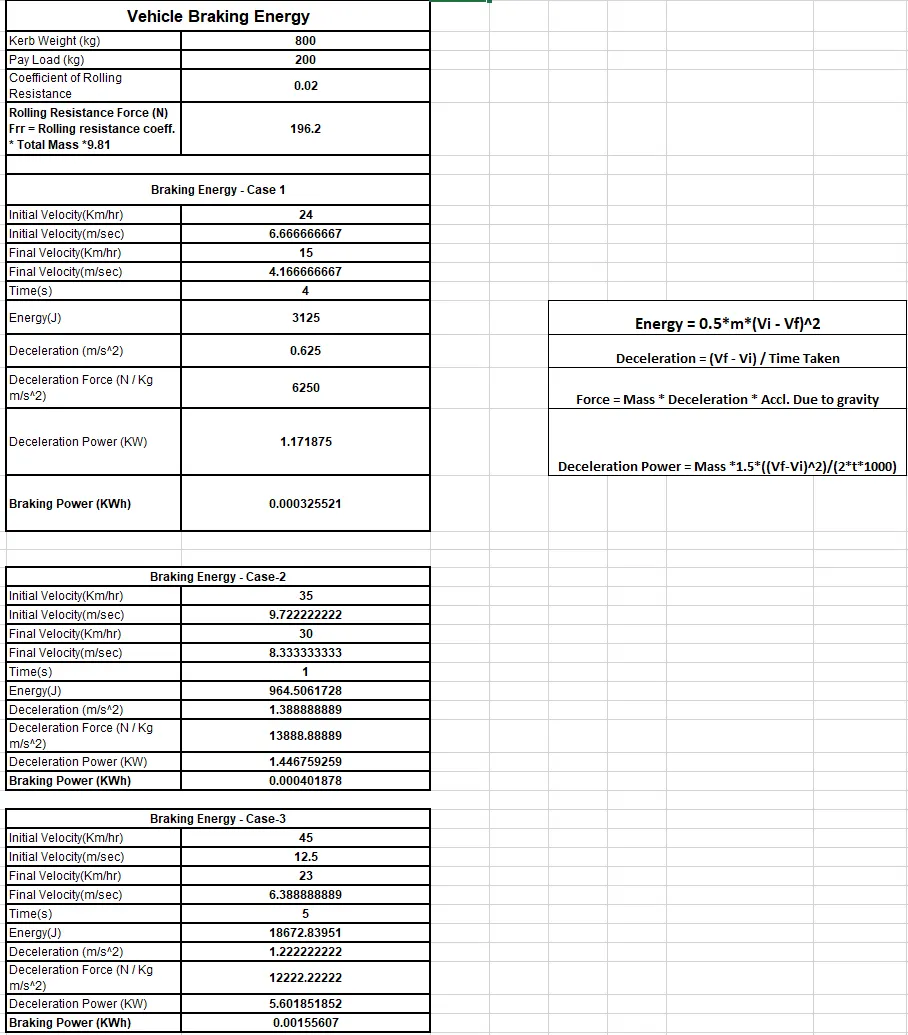
First braking : 24-15km/hr in 4 seconds.
Second braking :35-30km/hr in 1 second.
Third braking :45-23km/hr in 5 seconds.
Using excell we can calculate the enery required for braking
........................................................................................................................................................................................
2.Why electric motor can’t develop braking torque at high speed similar to starting? How electric and mechanical brakes are coordinated?
Ans
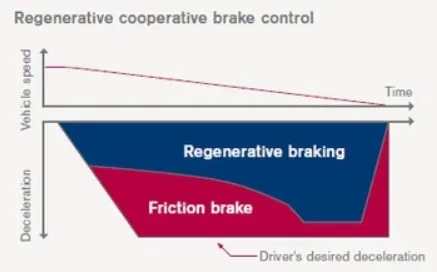
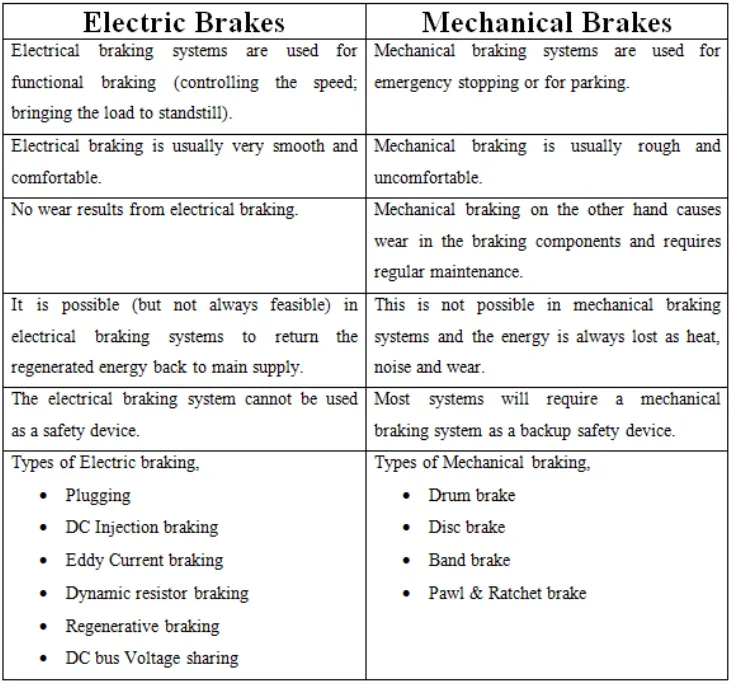
The braking torque in a electric motor is not as high as that of the accelaration torque at higher speeds.this can be attributed to many diffferent reasons.the rate of discharge of the battery is higher than the charging rate it can be said that the discharge rate can betwice as that rate of charging rate.there are other limitations to themotors in the form of power converters too.this power converter is customised 3 phase inverters which are bi directional as it needs to comvert regnerative braking energyback to dc current for the battery and this reduces the efficiency of the power converter at low speedsregenerative braking is very high as speed increases.the regenerative braking reduces as the effictiveness of inverter plays an important role and the overall efficiency reduces resulting in reduced braking torque.hence for effective braking at high speeds,we use a combination of hydraulic brake and regenerative brake.
There are different ways of coordinating between the hydraulic brakes and regnerative brakes.one of the brake control startegies involves series connection where both brakes are connected together which implies that in this scenario both brakes are used together and the next one in the parallel connection where either of the two barkes is operated individually whithout relying on one another depending on the braking requirements.
Types of control strategy:
1.series: the braking is applied one after the other .either of regenerative and mechanical braking is applied alternatively.
2.parallel:both the brakes are applied.the regenarative and mechanical are applied in parallel.
when the brake pedal is applied it supplies the hydrualic fluid to the disc to slow the tires at the same time when the accelaration pedal is lifted a certain in amount of electricbrakes are applied at high speed,since the braking force is required is a high large amount og hydrualic brakes are applied and once the speed is reduced and the torque value is also high so the elctric brakes become pre dominate so the battery charging occurs efficiently.the ECU system witha feedback system to find the torque region and regenerative braking predominates in the high torque region.
.......................................................................................................................................................................................
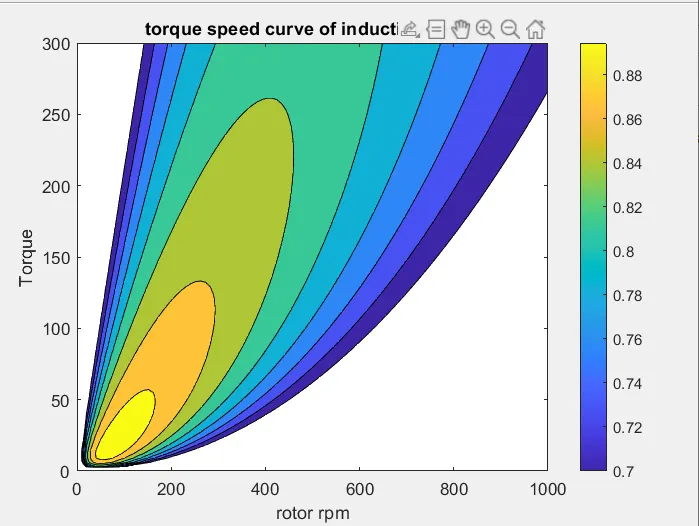
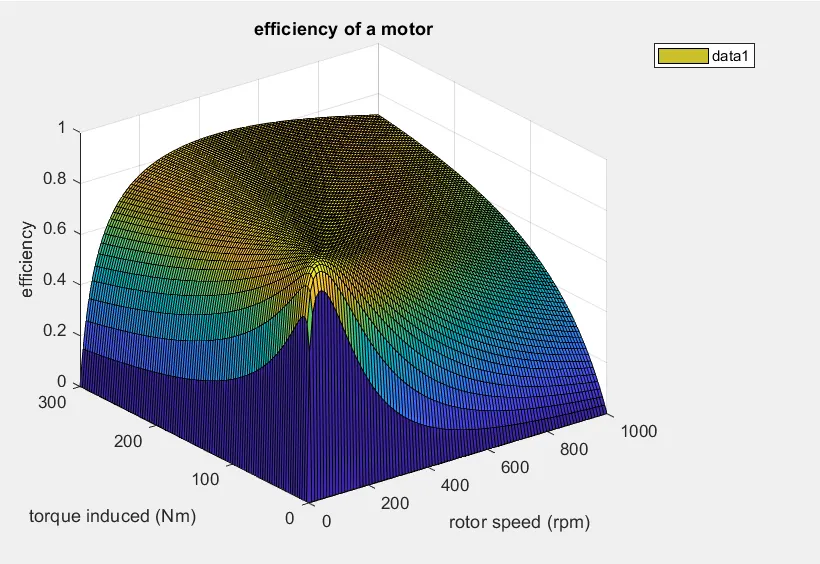
3. Make a MATLAB program which plots contour of given motor speed, torque and efficiency values. Attach the code as a .m file attach a screenshot of all the plots
Ans
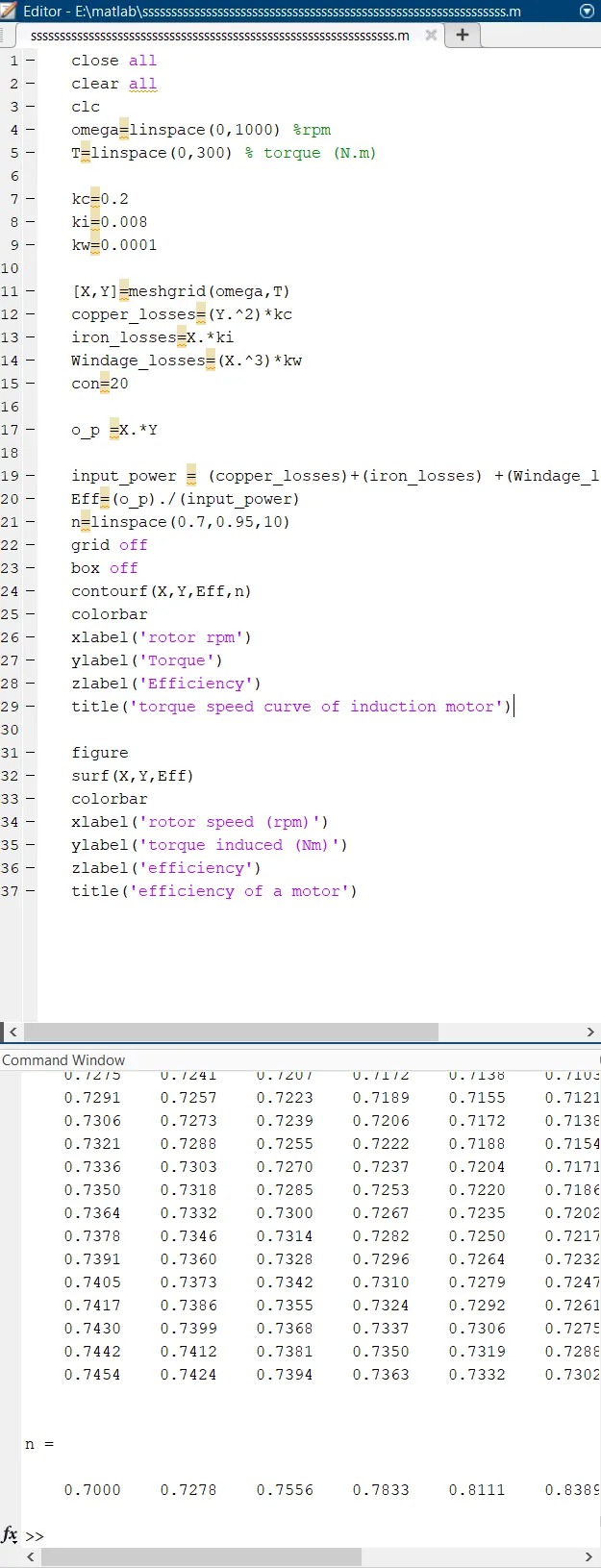
close all
clear all
clc
omega=linspace(0,1000) %rpm
T=linspace(0,300) % torque (N.m)

kc=0.2
ki=0.008
kw=0.0001

[X,Y]=meshgrid(omega,T)
copper_losses=(Y.^2)*kc
iron_losses=X.*ki
Windage_losses=(X.^3)*kw
con=20

o_p =X.*Y

input_power = (copper_losses)+(iron_losses) +(Windage_losses)+(o_p)+(con)
Eff=(o_p)./(input_power)
n=linspace(0.7,0.95,10)
grid off
box off
contourf(X,Y,Eff,n)
colorbar
xlabel('rotor rpm')
ylabel('Torque')
zlabel('Efficiency')
title('torque speed curve of induction motor')

figure
surf(X,Y,Eff)
colorbar
xlabel('rotor speed (rpm)')
ylabel('torque induced (Nm)')
zlabel('efficiency')
title('efficiency of a motor')