Electric Vehicle Braking
1.) For a defined driving cycle, calculate the energy required for braking.
- Driving cycle is a velocity-time profile that describes driving characteristics of specific type of vehicles under. It's real-world driving condition.
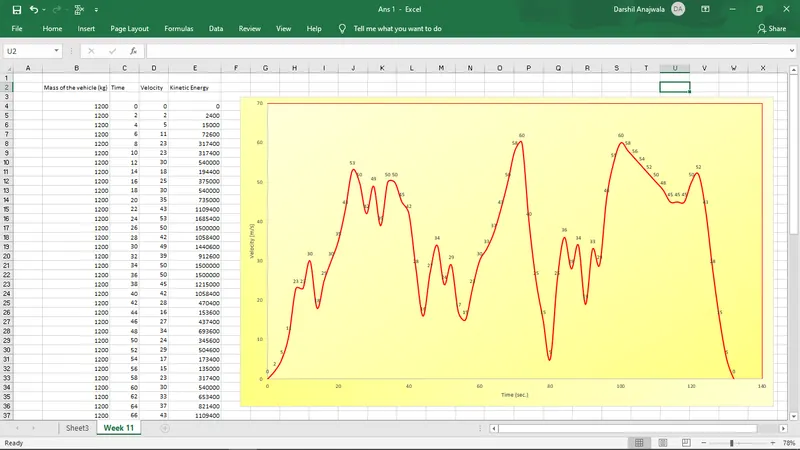
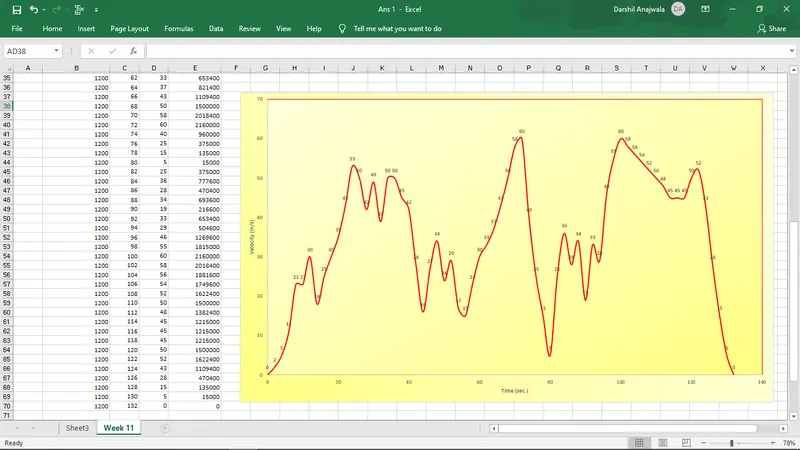
- Here, Mass of the vehicle consider 1200 kg and
- Kinetic energy is directly proportional to the mass of the object and to the square of its velocity.
- Kinetic energy = (1/2)*m*v^2 = 0.5*1200*(60-5)^2 = 1815000 J
2.)Why electric motor can’t develop braking torque at high speed similar to starting? How electric and mechanical brakes are coordinated?
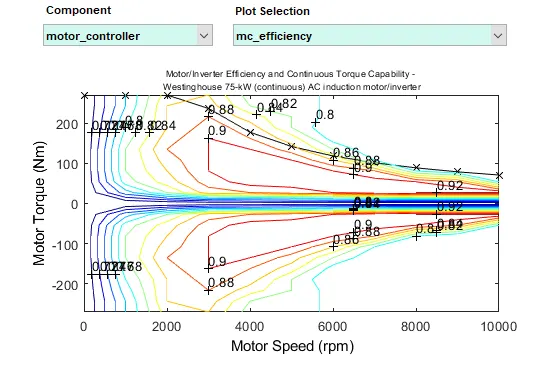
- As we can see in below picture in 1st quadrant at the low speed motor produce high torque (almost constant) & at high speed the torque will be less & operates at constant power region hence it is difficult to bring the vehicle to breaking or decelerate immediately. The peak acceleration torque is greater than the peak deceleration torque. The peak acceleration torque at 7 Nm and same mirror point at 4th quadrant the value of peak decceleration torque at -4 Nm. Hence Braking torque of EV motor is not as high as acceleration Torque.
- We operate motor above base speed it mean we know that the torque value is lower so that's why regenerative braking not work effectively.
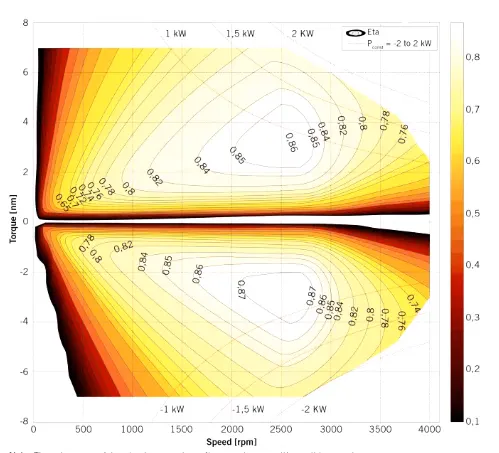
- In this below picture we can see
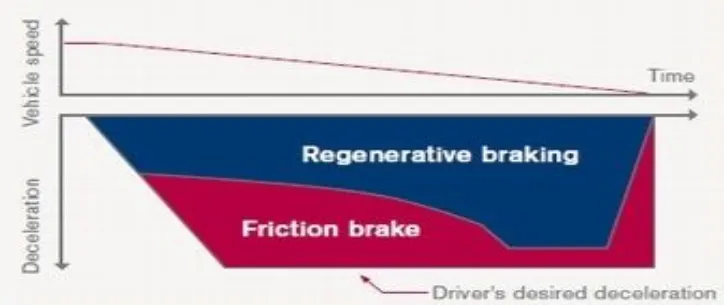
- Electrical(Regenerative) and mechanical(friction) braking systems can are coordinated by using Brake control stratergy subsystem
- Serial braking stratergy (in this stratergy, Regenerative and friction both apply one after another.)
- Parallel braking stratergy (here, Regenerative and friction both are apply at a same time.)
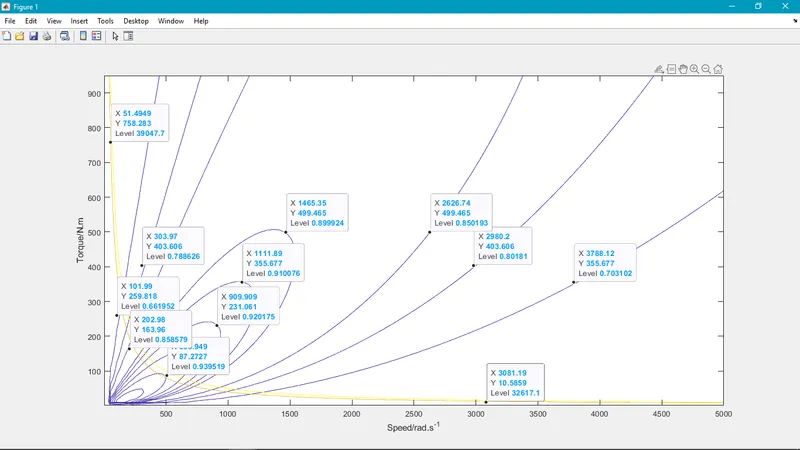
3.) Make a MATLAB program which plots contour of given motor speed, torque and efficiency values. Attach the code as a .m file attach a screenshot of all the plots.