Week-11 Challenge: Braking
1. solution:
FTP DRIVING CYCLE:
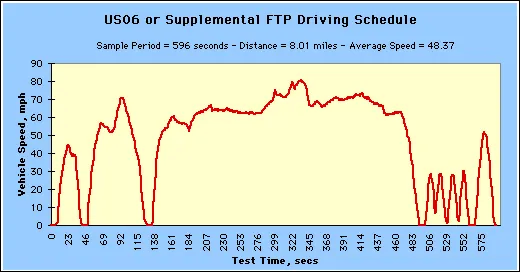
DRIVE CYCLE DATASHEET:
https://www.epa.gov/sites/production/files/2015-10/us06col.txt
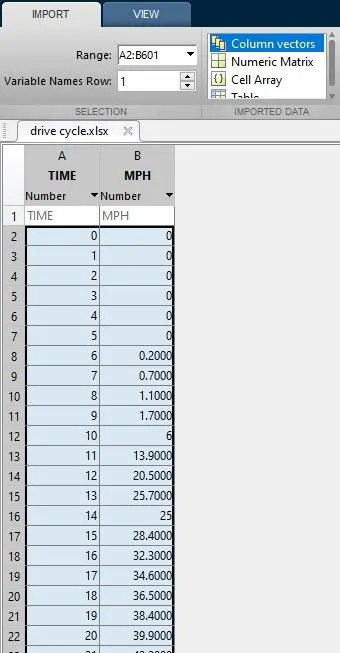
import data TIME AND MPH data excel also attached below
MATLAB PROGRAM IS ATTACHED BELOW AS m.rar
MATLAB PROGRAM :
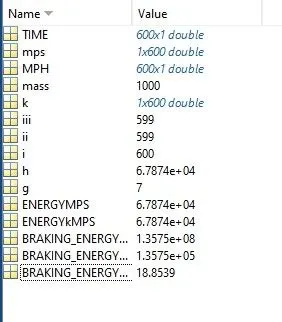
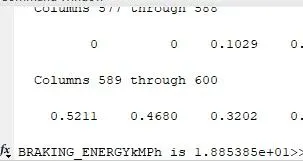
FOR FTP DRIVE CYCLE with 600 time samples the braking energy in kmph is 1.8853e+01 which is 18.85KJ
In DC motor operation (separately excited field type), the speed is proportional to the inverse of field magnetic flux but torque is proportional to the flux. The motor speed is controlled by varying the field voltage. Decrease the field volts (thereby flux) to increase the speed but it reduces the torque.
AC motor speed control is done in a different way. The most commonly used motor is AC induction motor. In variable speed applications, inverter is used to control the speed of the motor by varying the frequency applied to the motor. The speed is proportional to the frequency. Until the base speed (nominal speed) the voltage to frequency ratio is kept constant which in turn keeps the air gap magnetic flux constant. The torque is proportional to the flux hence remains constant until the base speed. As power is the product of speed & torque, the power keeps increasing with speed until the base speed. This is called the constant torque mode of operation.
Beyond base speed, the speed is increased by increasing the frequency alone keeping voltage constant. In this mode, the air gap flux decreases with increasing speed. The product of speed & torque remains constant in this operation beyond base speed. This is constant power operation.
ELECTRICAL AND MECHANICAL MOTOR COORDINATION:
The EDIB (Electric Driven Intelligent Brake) allows and controls optimization of the regenerative brake and regular friction brake (hydraulic brake).
After stepping on the brake pedal, the system produces natural and adequate braking force that corresponds to the operation. The amount of energy regeneration also needs to be increased as much as possible.
EDIB (Electric Driven Intelligent Brake) controls the regenerative brake and friction brake to support both of these requirements. Further, it also controls the reactive force from the pedal in order to unify the feeling when stepping down on the pedal and the sense of deceleration.
When the driver steps on the brake pedal, the stroke sensor detects operation of the brake. That information is communicated to the ECU and controls the motor. The motor engages the piston and amplifies the friction brake's pressure (hydraulic pressure). Through optimum control of the friction brake's hydraulic pressure, the energy regeneration outcome is maximized.