Week 11 Challenge
Aim : To calculate the temeprature loads on the given structures at the given place and to analyse the structure in Staad
Procedure :
Given
width of carriage way = 7m
Span of bridge = 9m
Thickness of deckslab = 0.55m
Assuming the deck is covered with 50mm wearing course on the top
Calculations
(i) Maximum air shade temperature is 47.5
minimum air shade temperature is -2.5
the differrence is 50 i.e., > 20 c
bridge temperature is 22.5+10 = 32.5 C
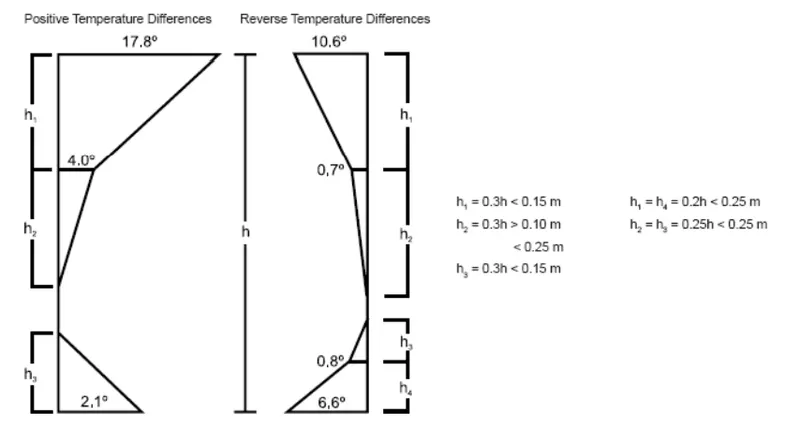
Positive temperature Differences
h1 = 0.3*0.55 = 0.15m
h2 = 0.3*0.55 = 0.165m
h3 = 0.3*0.55 = 0.15 m
Reverse temperature Differences
h1 = 0.2*0.55 = 0.110m
h2 = 0.2*0.55 = 0.110m
h3= 0.25*0.55 = 0.1375m
h4= 0.25*0.55 = 0.1375m
Let us consider the positive rise case
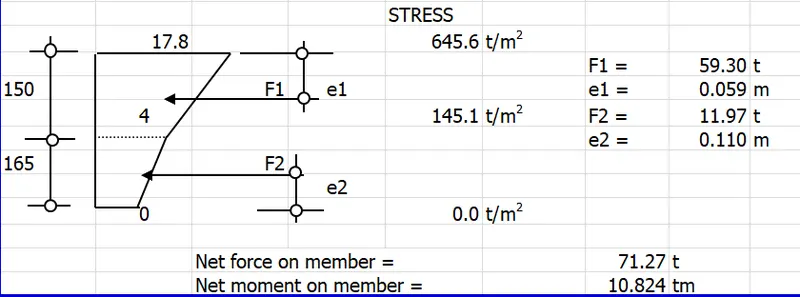
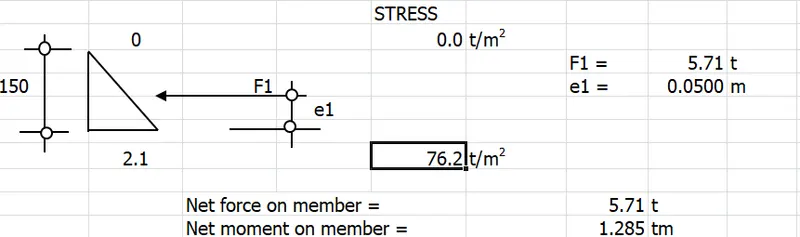
Total axial force = 5.71+71.27 = 76.98 t = 769.8 KN
Total Moment = 10.824-1.285 = 9.539 t-m = 95.39 KN-m
stress due to axial force = 769.8/(0.55*0.5) = 2799.27KN/m^2
stress due to Moment force = 95.39/((0.5*0.55^2)/6) = 3784.07 KN/m^2
Since Rise rate the stress compression
Let us consider the Reverse temperature
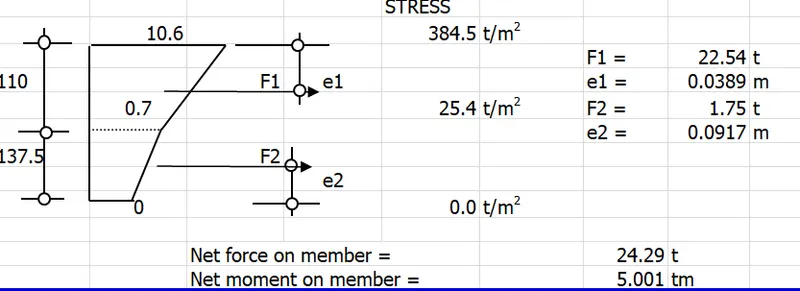
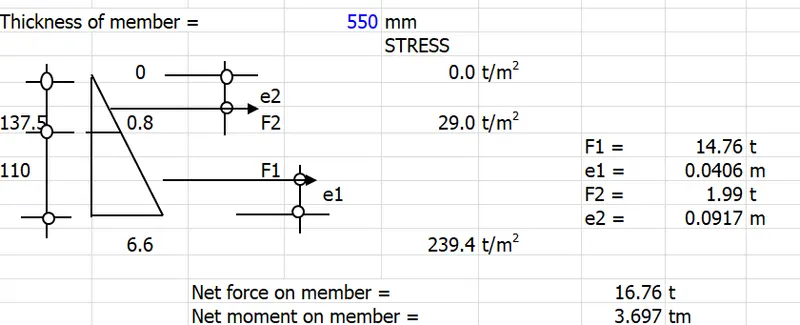
Total Axial force due to fall = 16.76 + 24.29 = 41.05 t =410.5 KN
Total moment = 5.001 -3.697 = 1.304 t-m = 13.04 KN.m
stress due to axial force = 410.5/(0.55*0.5) = 1492KN/m^2
stress due to Moment force = 13.04/((0.5*0.55^2)/6) = 517.289 KN/m^2
Since fall rate the stress tensile
Staad file generation
since the temperature loads are prodominant on the deck slab
The following model is generated
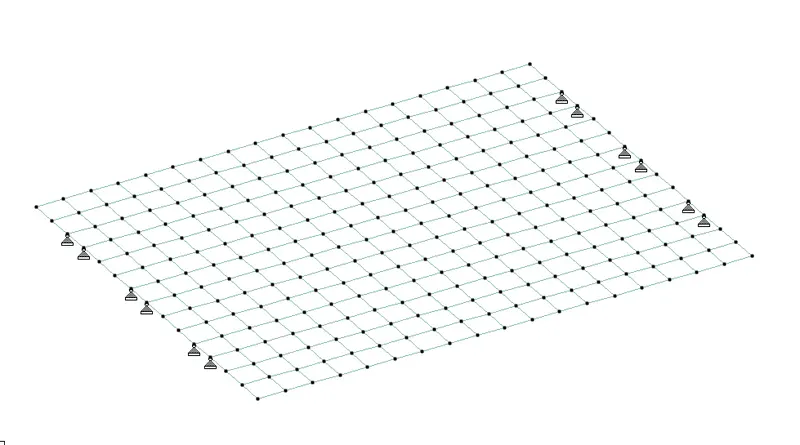
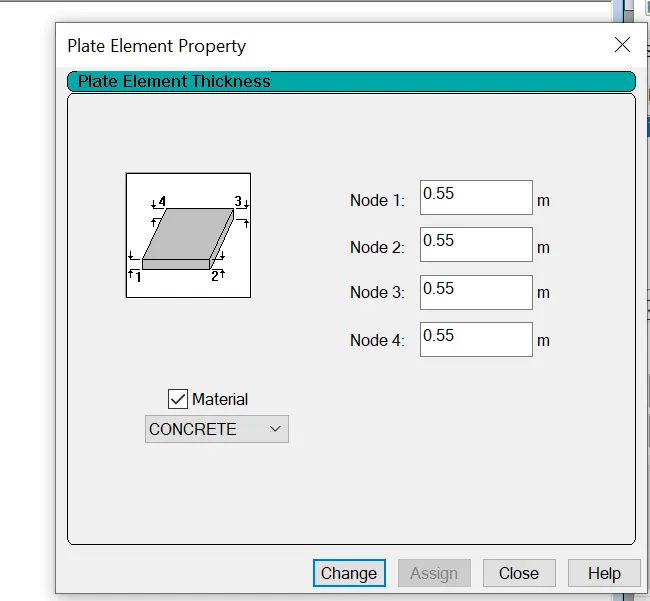
the plate thickness is assumed as 0.55 m
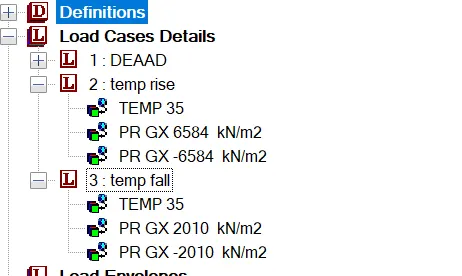
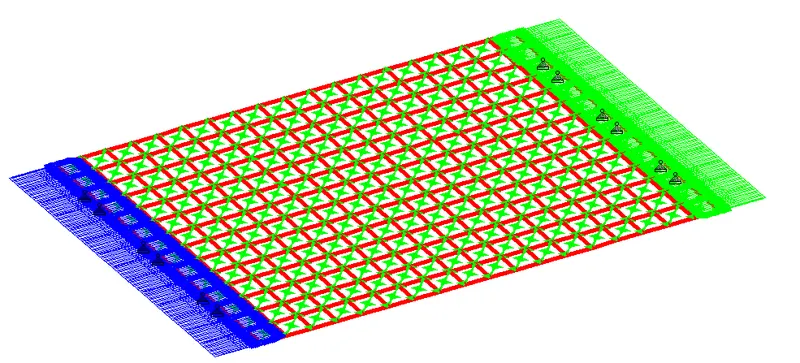
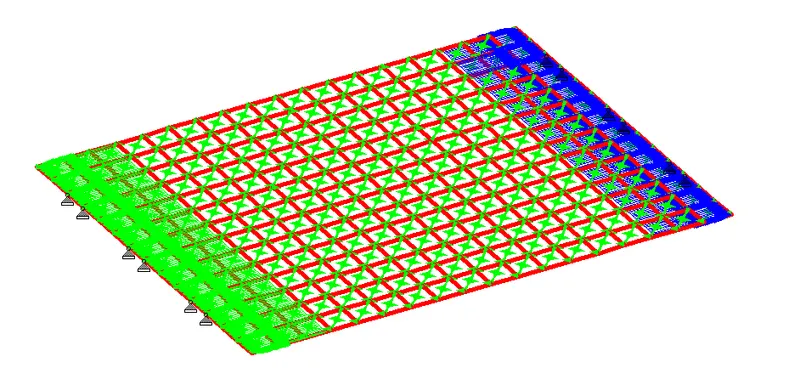
The following temperature loads are generated
in the temperature rise case due to variation of temperature vertically downwards the compressive stress is developed in the members as shown in the figure
In temperature inverse case due to variation of temperature vertically downwards the tensile stresses are generated
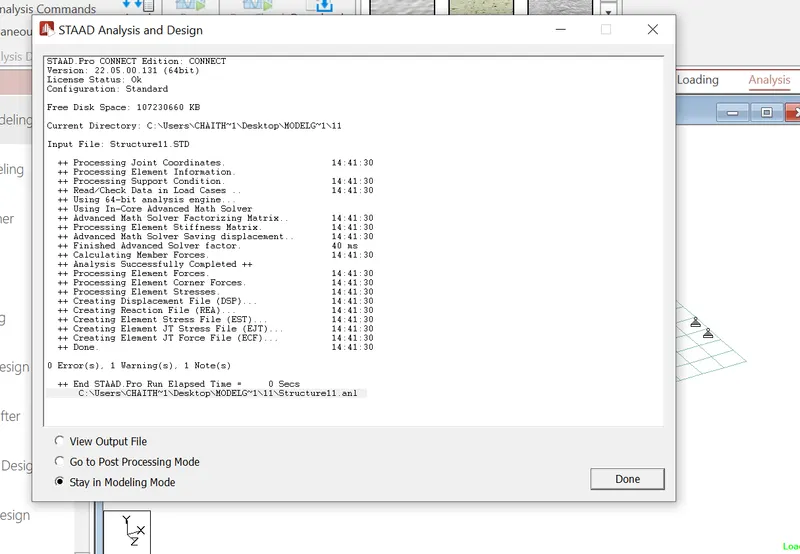
The figure shows that there is no error in the model
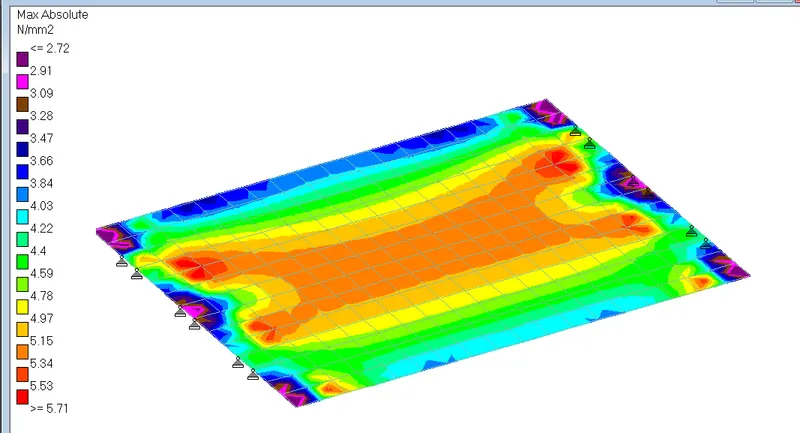
The figure showing the maimum absolute pressure on plates