Week 11 Car Crash simulation
REPORT
CAR CRASH SIMULATION
OBJECTIVE
Frontal car crash simulation using three different thickness of car body and to find total deformation and equivalent stress acting on the body.
PROCEDURE
During car crash assessment, there are three types of testing performed.
1. Frontal impact test.
2. Side impact test.
3. Rear impact test.
In this analysis we are checking frontal impact test.
Open explicit dynamics in Ansys and load the model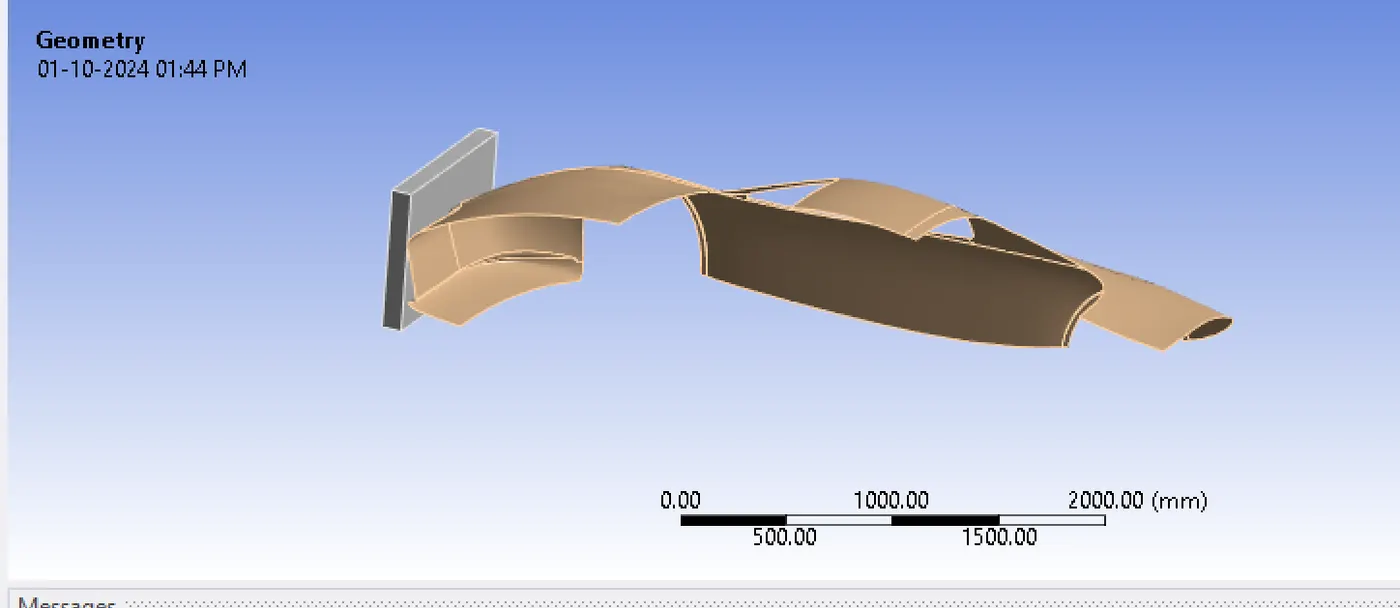
For the wall structural steel us used as material and the properties are shown below,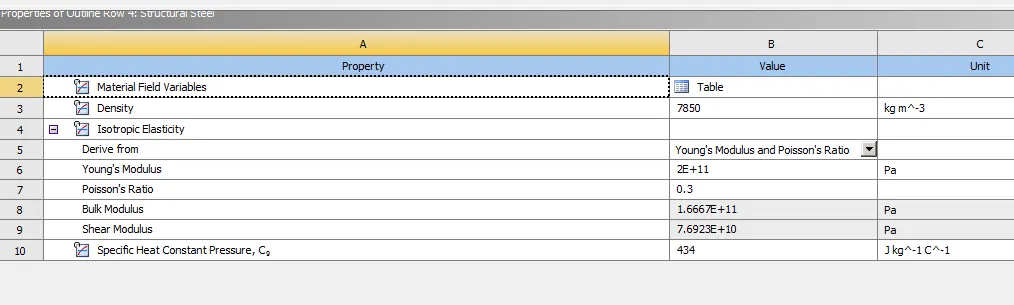 For the car body, stainless steel NL is used.
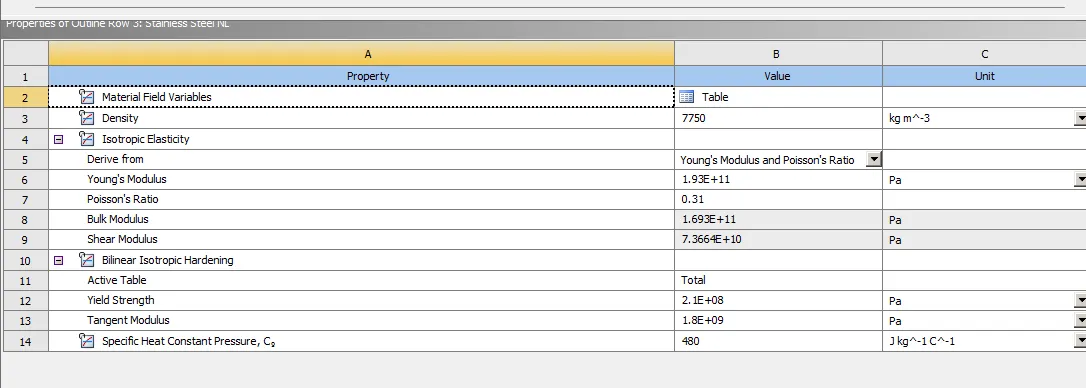 Thickness of 0.3mm is given to car body.
MESH
To reduce computational complexity some additions have been done to mesh setting because this computer may struggle to complete the simulation.
1. Tetrahedron mesh is selected for the wall.
2. Given a sizing of 120mm to the faces that will not come in contact with the wall.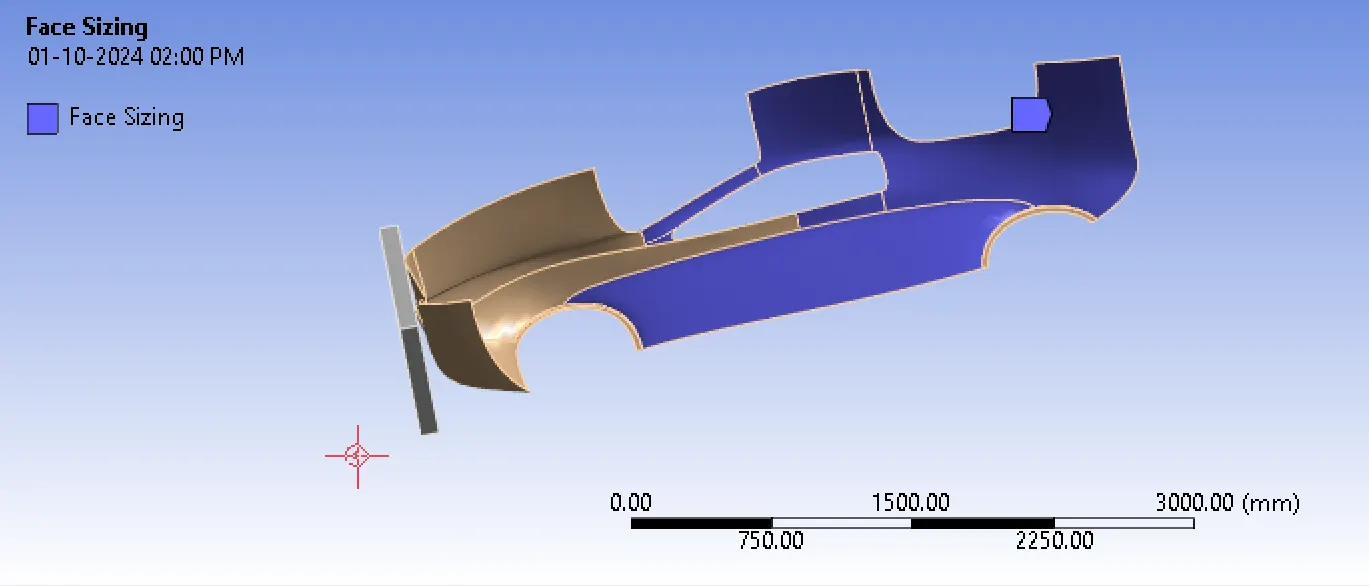
3. Chose the elements for the car body as triangles.
4. Set the smoothing to low.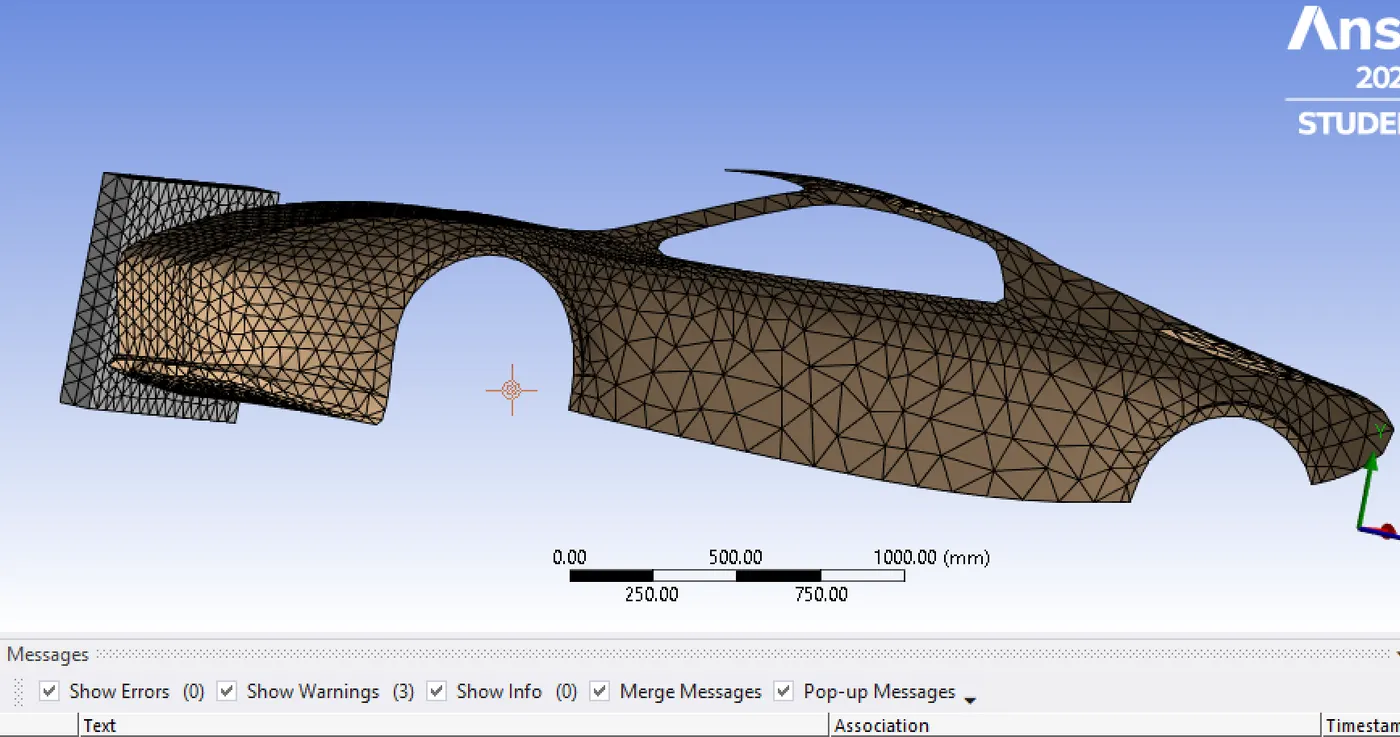
In reality car will come and collide into the wall but here for the analysis we are setting the car fixed and wall is going to collide into the car.
Fixed support is given to car.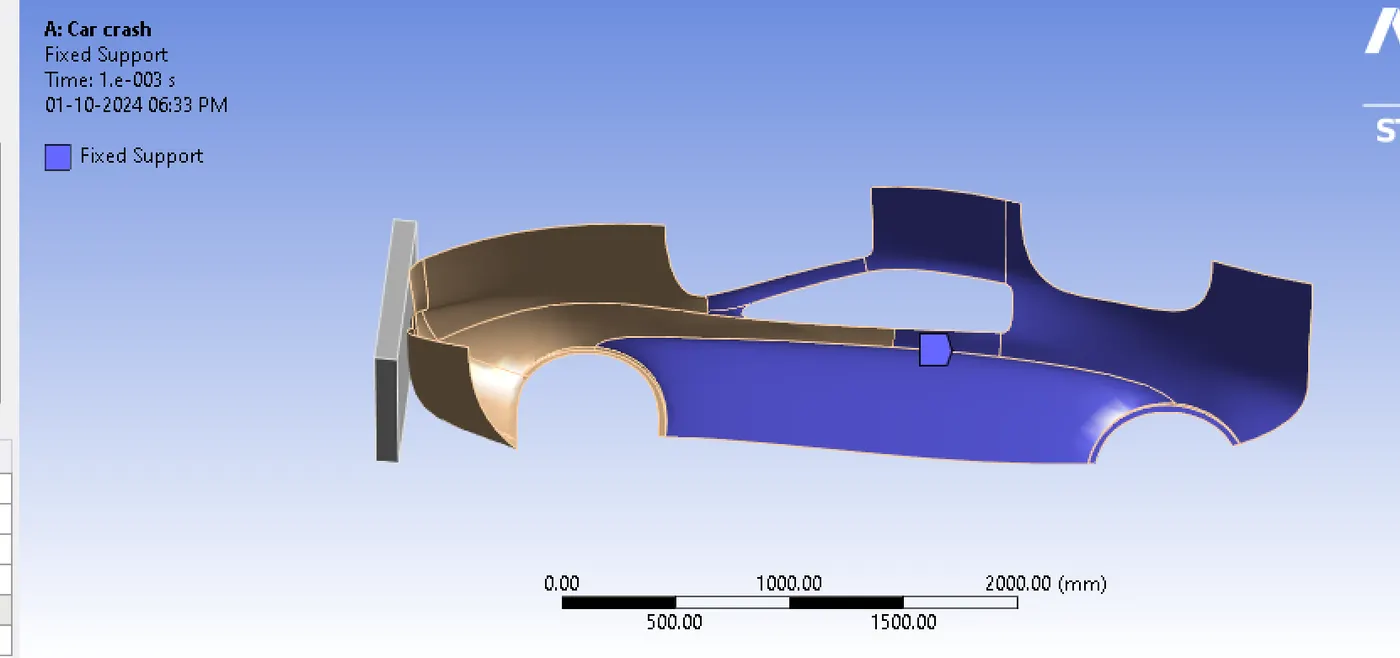
Displacement of 500mm is given to wall.
ANALYSIS SETTING
End time = 0.001
Here is only half of the model so for the other half symmetry option is applied for the wall and car body.
Requested for total deformation and equivalent stress.
Set the parametric study to find maximum equivalent stress and maximum deformation for different car body thickness.
RESULT
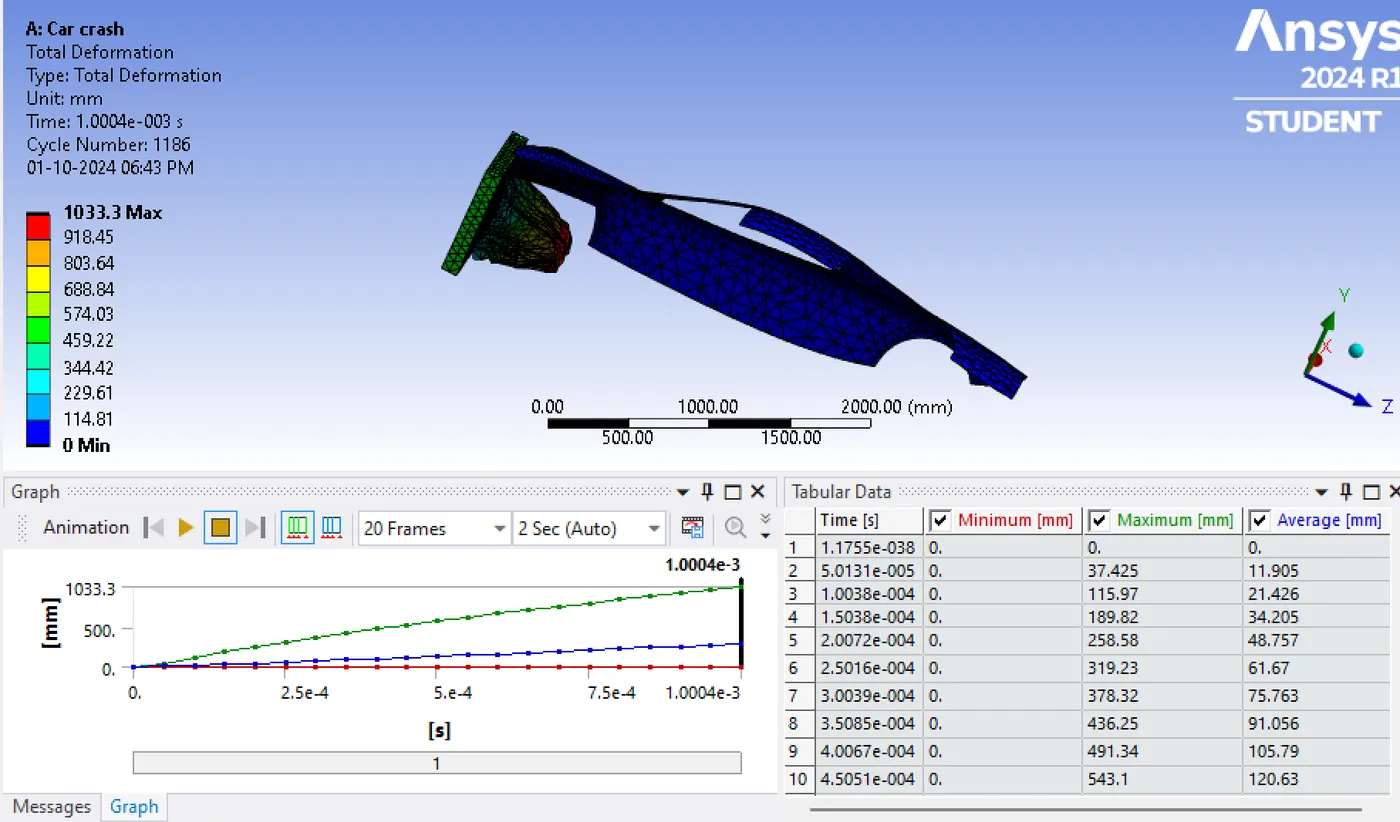
Car body thickness = 0.3mm
TOTAL DEFORMATION
EQUIVALENT STRESS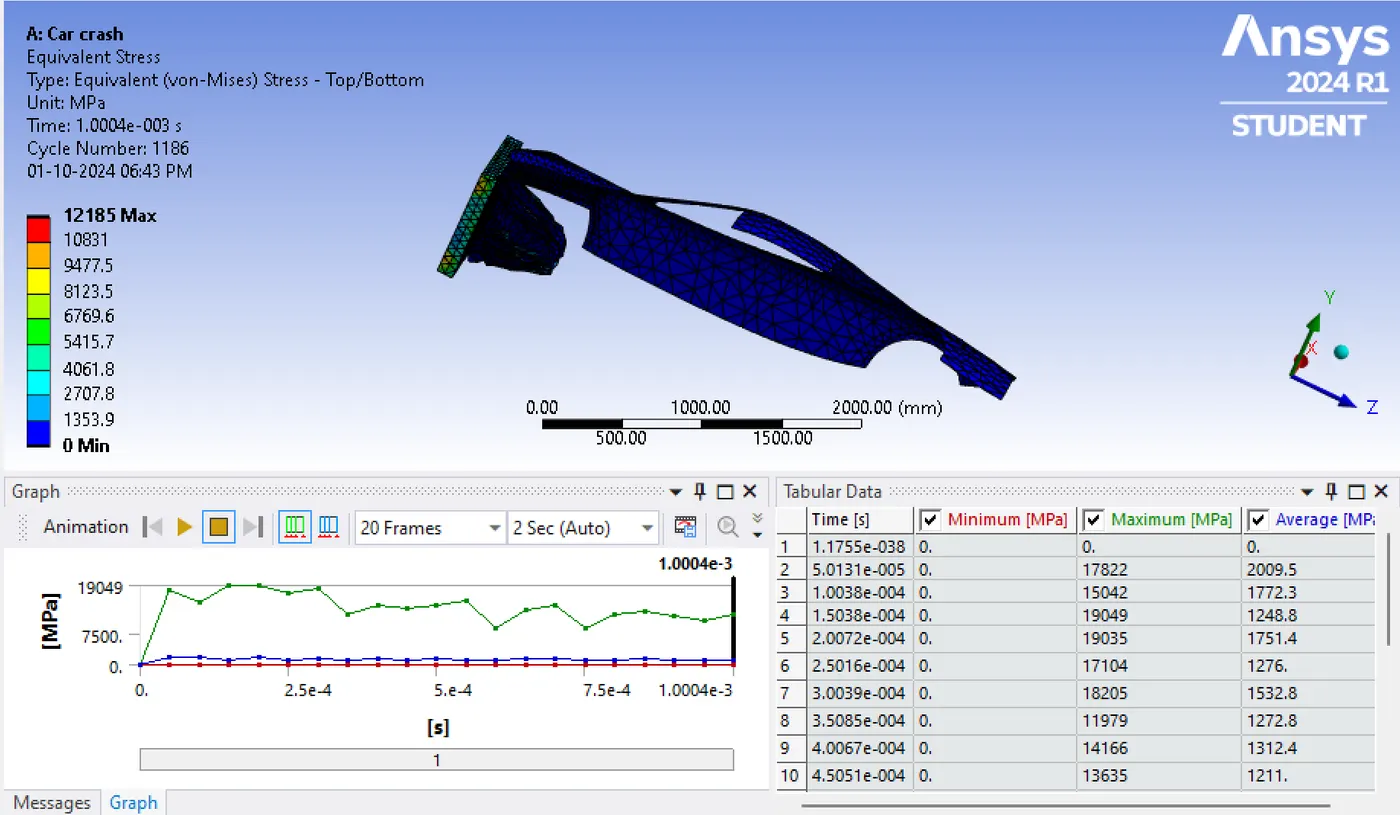
Find the result for thickness 0.4mm and 0.5mm using parametric study.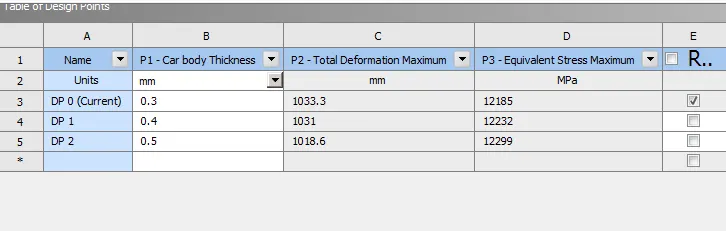
CONCLUSION
The frontal crash scenario and the requested outputs are observed.
As the thickness increases the total deformation decreases and the maximum equivalent stress increasing. When the thickness is more there will be more material strength to resist the force and deformation will reduce.