Week 11 Car Crash simulation
Aim:
The aim of this project is to conduct a parametric study of the thickness of the car body in a car crash simulation.
Model Set-up:
A car model with a wall is loaded into Ansys explicit workbench. Non-linear stainless steel material is attached to the car body. The car thickness was set parametric with initial thickness 0.3(case 1), 0.5 (case 2) and 0.7 (case 3) Symmetry regions are defined to both the wall and the car body as shown in the images 1 & 2 below. Body interactions are left to default.
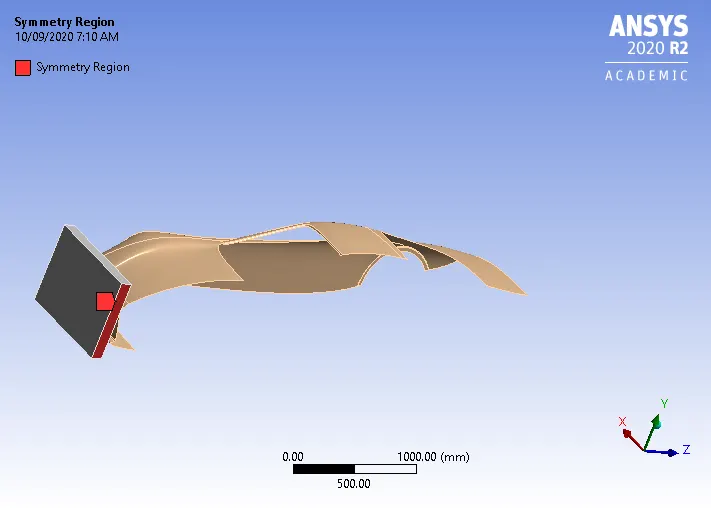
Image 1: Wall symmetry region
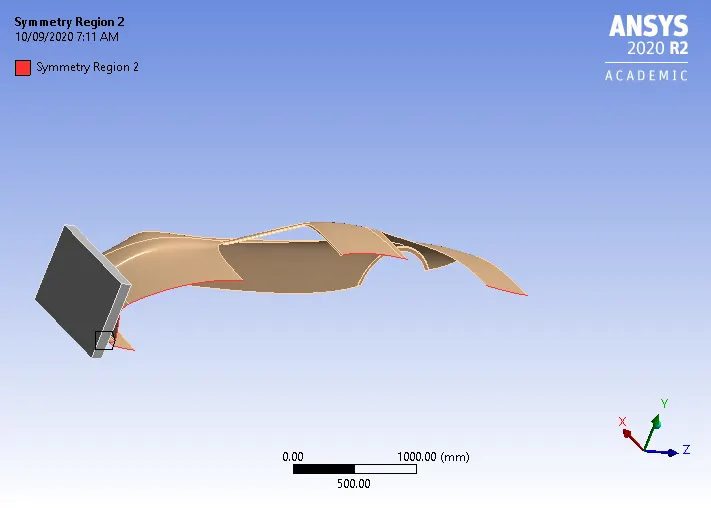
Image 2: Symmetry region for the car.
Mesh:
The wall is given a tetrahedron method of meshing. The car body is given a all triangles method. The inner surfaces of the car which may not be affected by the crash are given a mesh size of 175mm. The faces coming in contact with the wall are given a mesh size of 56mm in image 3, whereas that does not come in contact are given the size of 175mm. The mesh details are given in image 5.
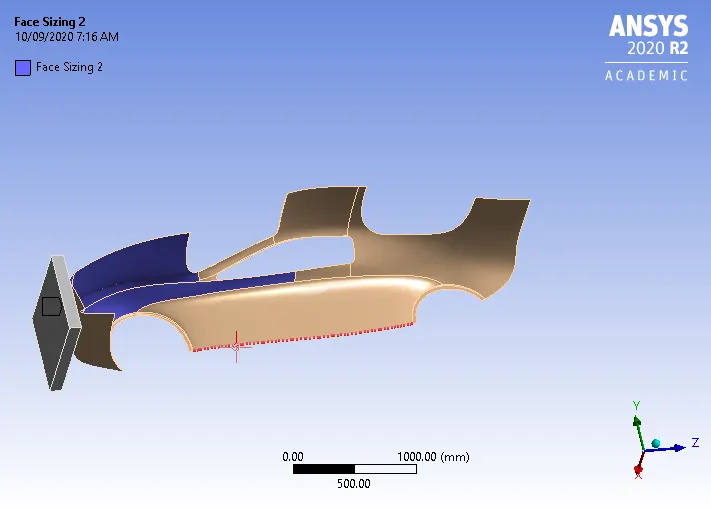
Image 3: Faces with mesh size 56mm
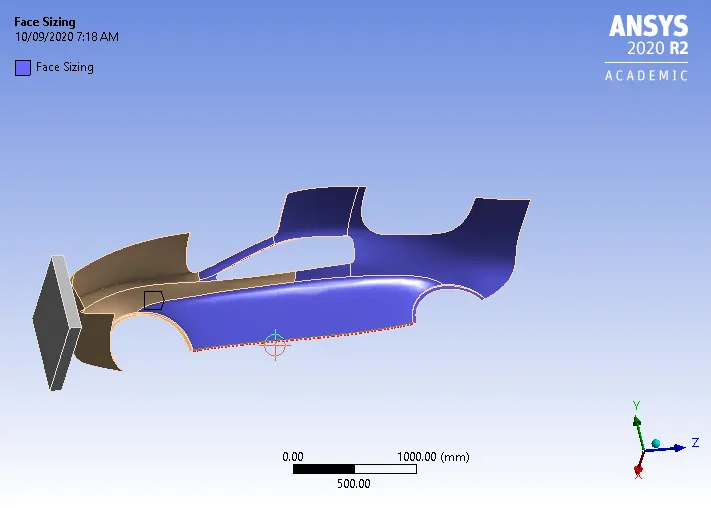
Image 4: Face with a mesh size of 175mm
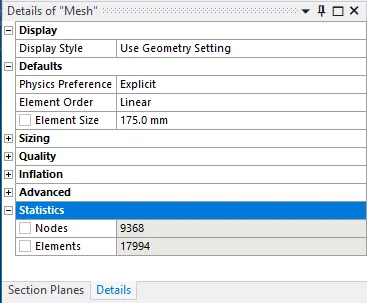
Image 5: Mesh details.
Load: The wall was displaced 500mm in z-direction into the car as shown in image 6.
Fixed: The faces of the car were fixed as shown in image 7.
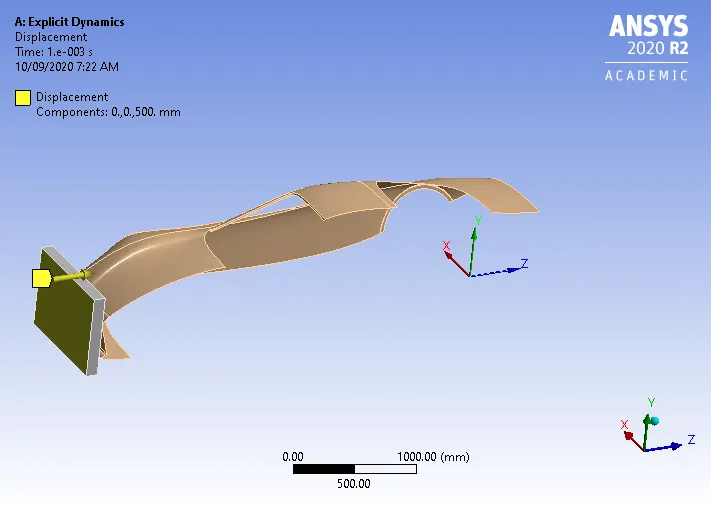
Image 6: Load
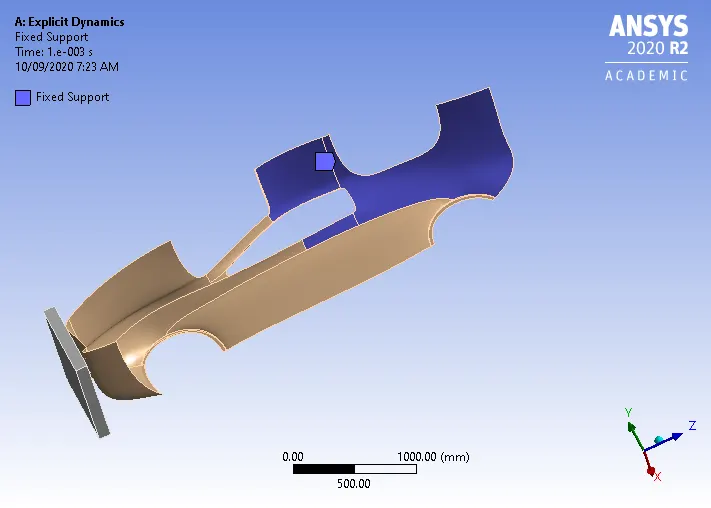
Image 7: FIxed faces of the car
Results and Conclusions:
The results are tabulated as shown below for three thicknesses.
| Case 1 = 0.3mm | Case 2 =0.5mm | Case 3=0.7mm | |
| Deformation(mm) |
880.4 |
877.83 | 876.54 |
| Stress(MPa) | 5375.3 | 5378.2 | 5377.6 |
The images for deformation and stress of case 1 are given in image 8, 9:
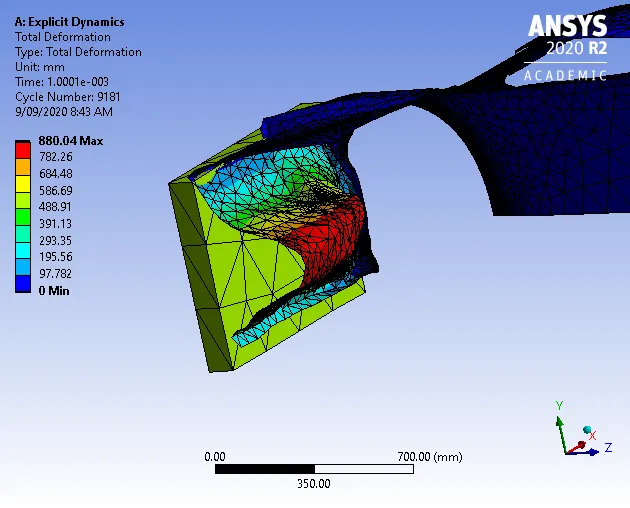
Image 8: Deformation for thickness 0.3mm
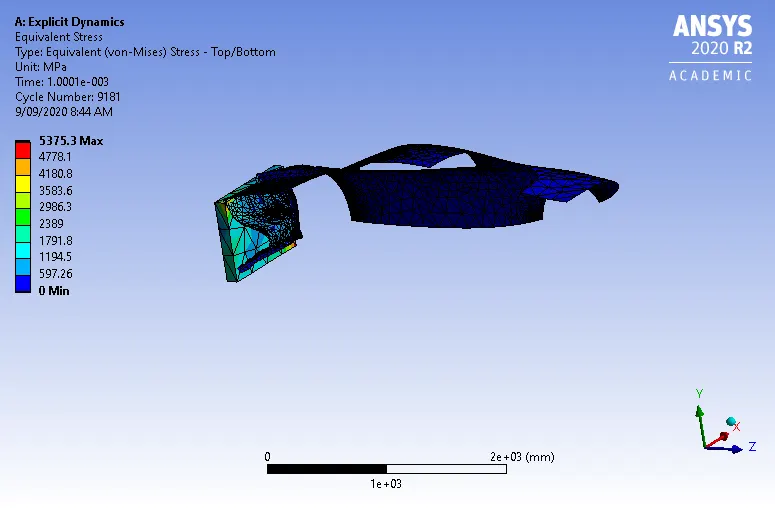
Image 9: Stress for thickness 0.3mm
The images for deformation and stress of case 2 are given in image 10, 11:
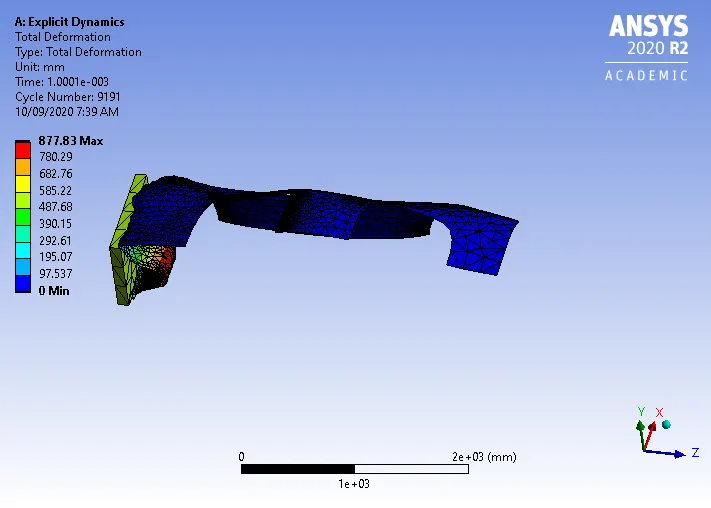
Image 10: Deformation for thickness 0.5mm
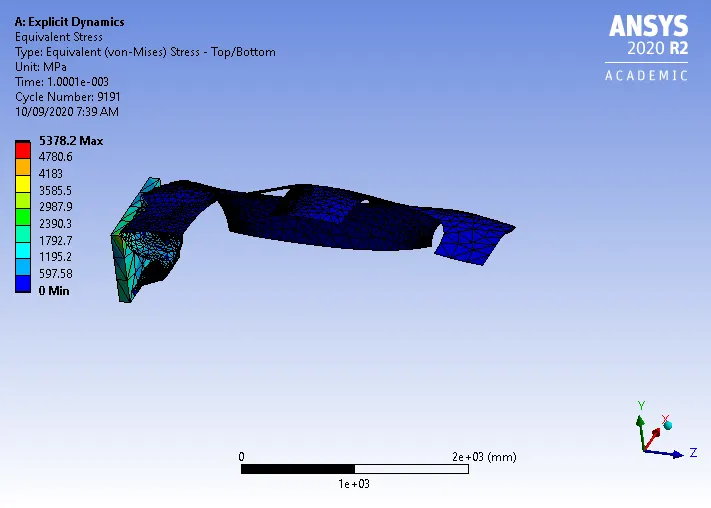
Image 11: Stress for the thickness of 0.5 mm
The images for deformation and stress of case 3 are given in image 12, 13:
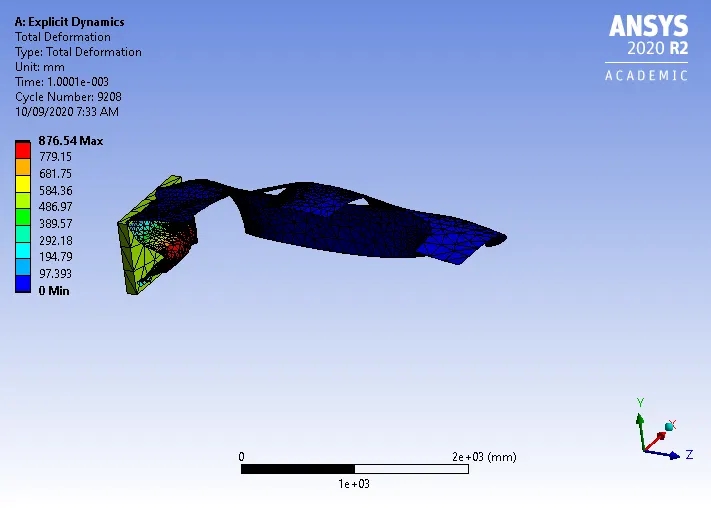
Image 12: Deformation for thickness of 0.7 mm
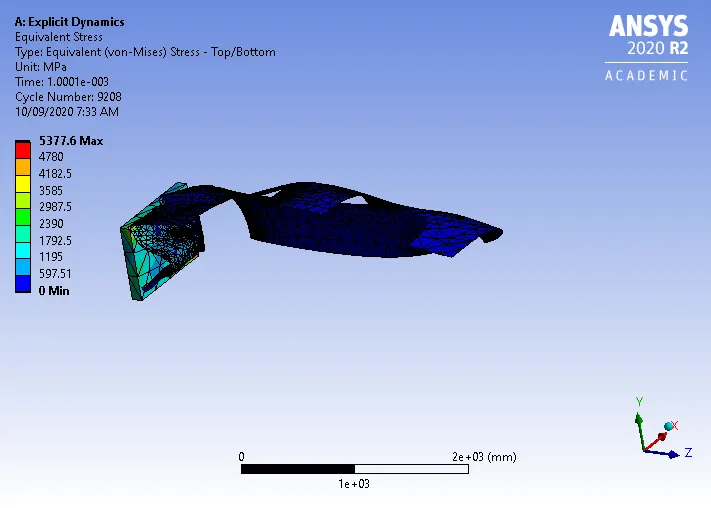
Image 13: Stress for thickness of 0.7 mm
From the above results, we can conclude that as the thickness of the car body increases the deformation decreases and stresses accumulate more.