Week 11- Broadband Noise modelling over Ahmed body
Week 11- Broadband Noise modeling over Ahmed body
In this challenge, you are required to do the following.
- Describe Ahmed's body and its importance.
- Setup the domain and setup assuming body is traveling at 110 mph
- Run the setup till convergence and plot for static pressure and coefficient of drag and lift to check for convergence
- Turn on Broadband- modeling, and detail the acoustic field study over Ahmed body.
Answers:
- Describe Ahmed's body and its importance.
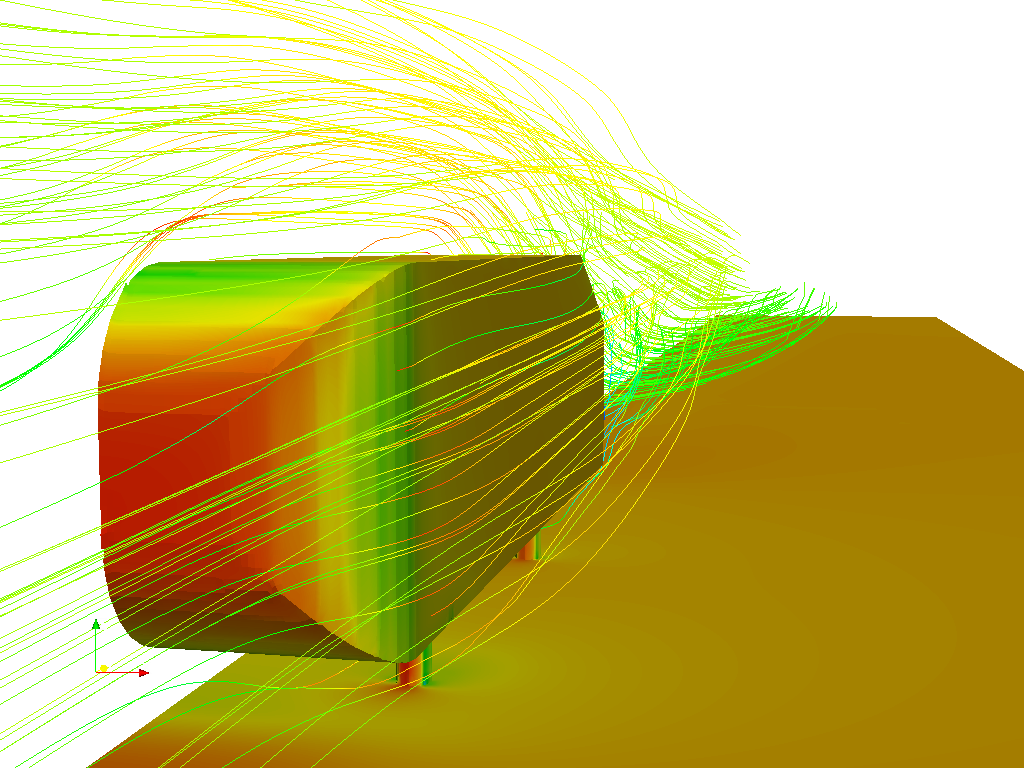
The Ahmed body is a generic car body (a simplified vehicle model). The airflow around the Ahmed body captures the essential flow features around an automobile and was first defined and characterized in the experimental work of Ahmed. Although it has a very simple shape, Ahmed body allows us to capture characteristic features that are relevant to bodies in the automobile industry.
This model is also used to describe the turbulent flow field around a car-like geometry. Once the numerical model is validated, it is used to design new models of the car.
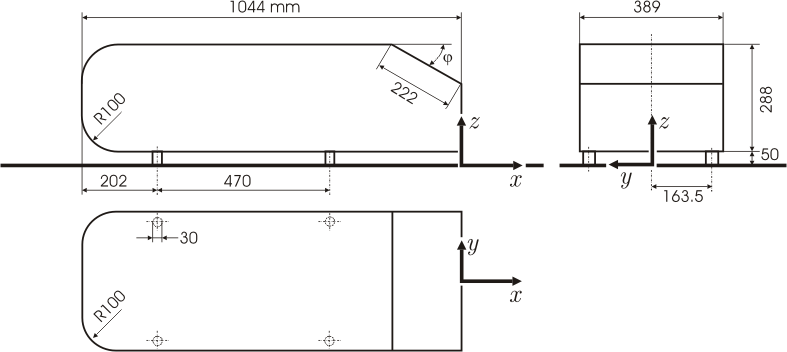
Geometry:
2) Setup the domain and set up assuming the body is traveling at 110 mph
- First we have to import the geometry file which is given to us in SpaceClaim as shown below.
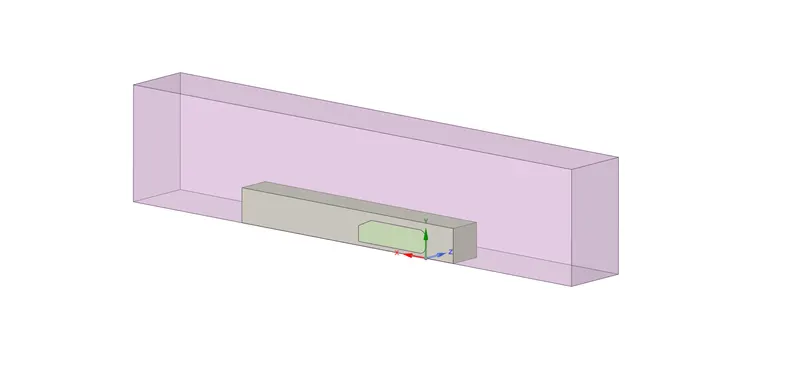
- After importing create the mesh using the following steps,
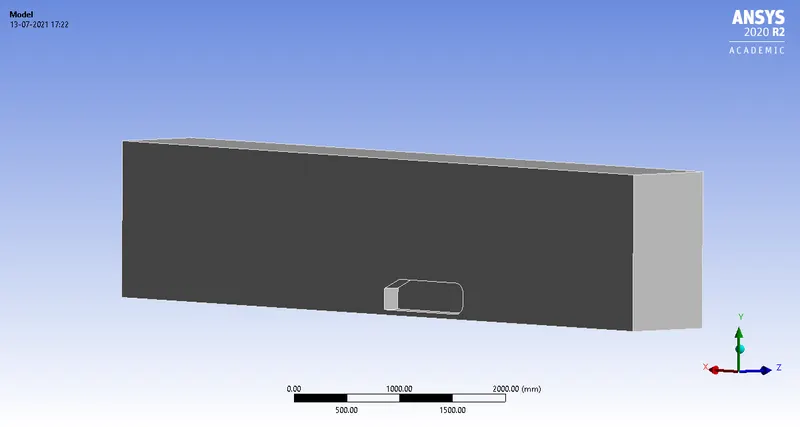
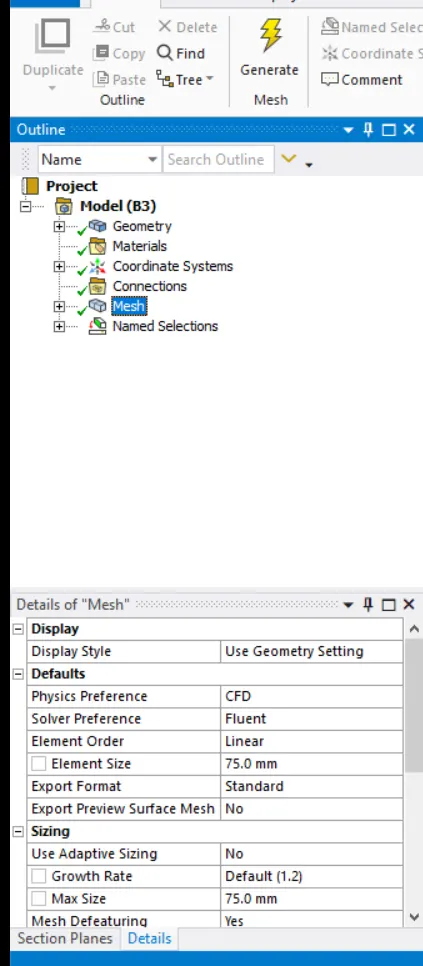
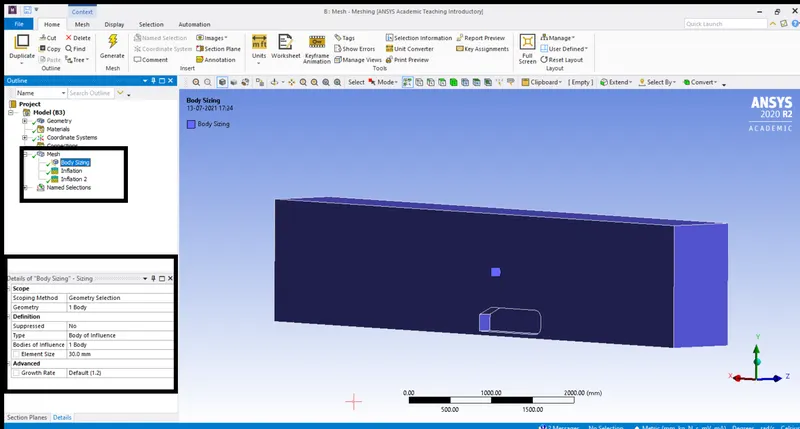
Body Sizing
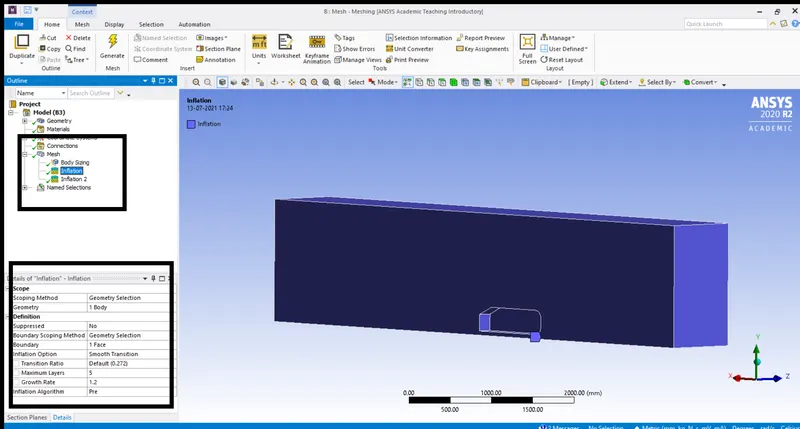
Inflation Layer
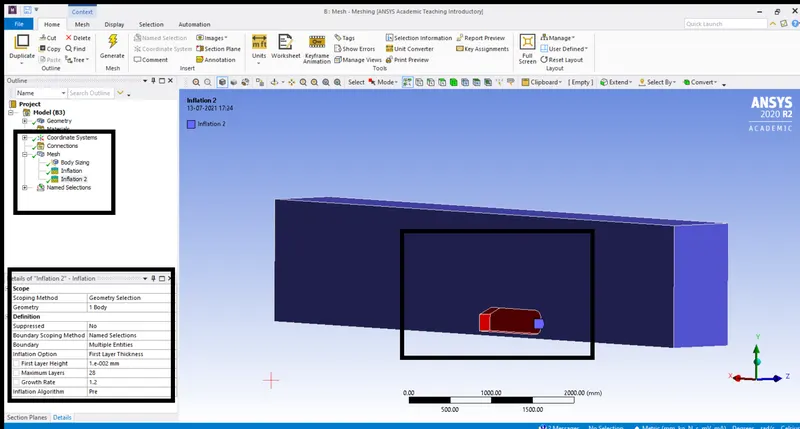
Inflation Layer 2
- Then generate the mesh as shown below,
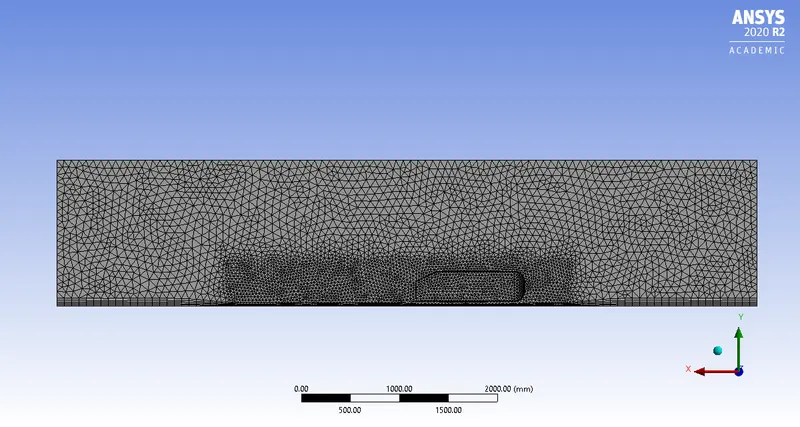
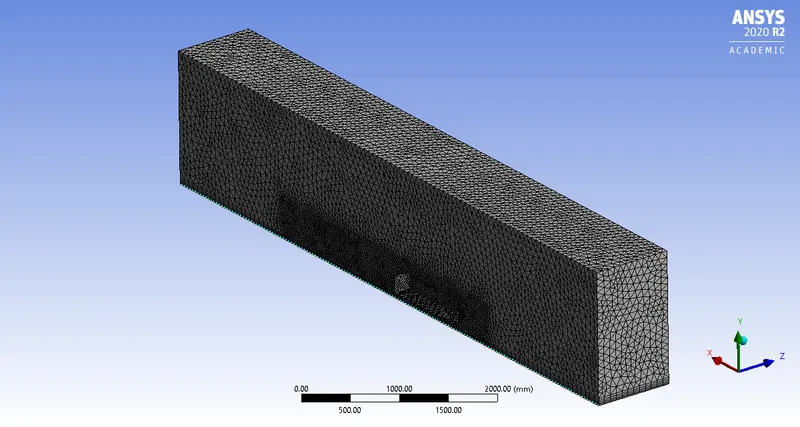
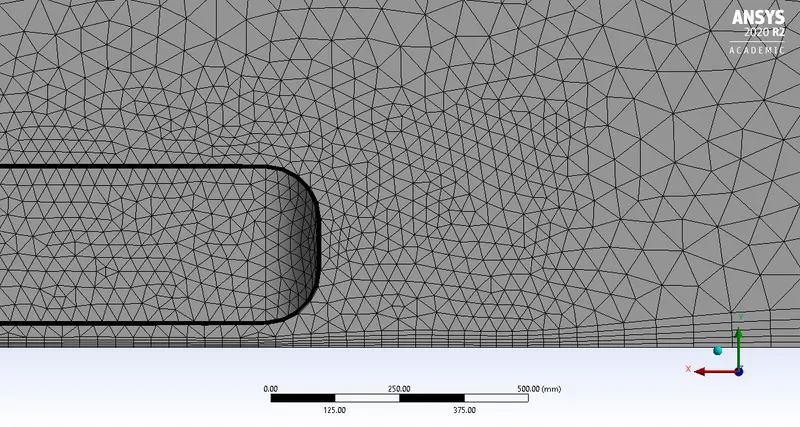
Inflation Layer
3) Run the setup till convergence and plot for static pressure and coefficient of drag and lift to check for convergence
Pre-processing and solver setting
The next step in the simulation after generating the meshing is to set up the physical properties for the case.
- Type of solver: Pressure-based
- Simulation method: Steady-state simulation
- Turbulent Model: k-epsilon realizable
- Material properties of the fluid (Air)
Density: 1.225 kg/m3
Cp (Specific heat): 1006.43 J/kg-k
Thermal Conductivity: 0.0242 w/m-k
Viscosity: 1.7894e-05 kg/m-s
- Inlet velocity: X velocity = 31 m/s
- Inlet Temperature: 300 K
- Outlet: Pressure type, 0-gauge pressure.
- Walls: wall type with no-slip
Results
After setting up a case and providing appropriate initial and boundary conditions, the simulations are performed.
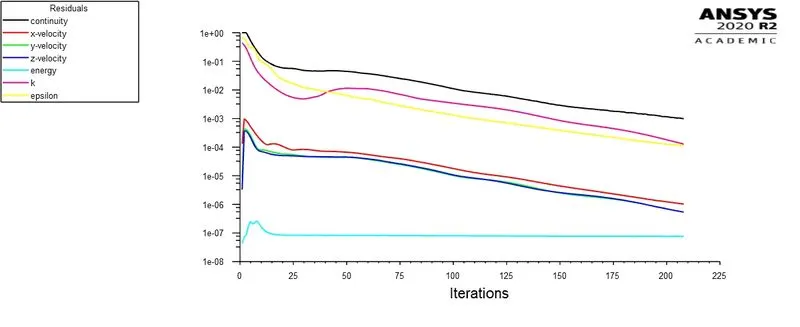
Residuals
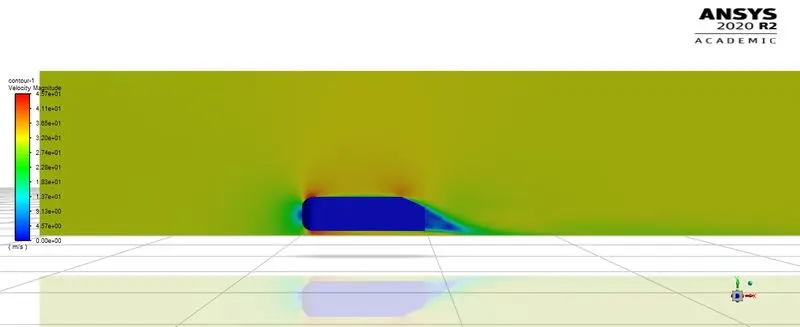
Velocity Contour
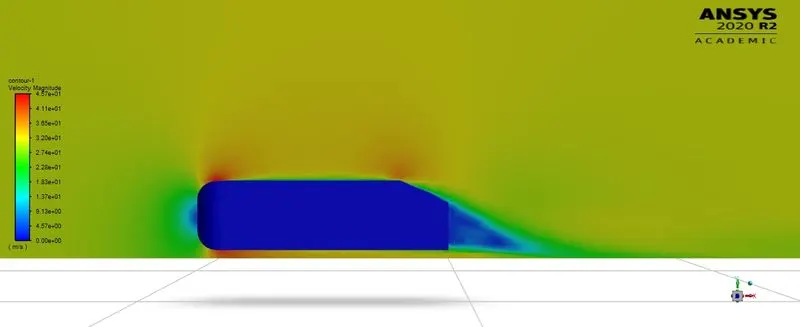
A close look at Velocity Contour
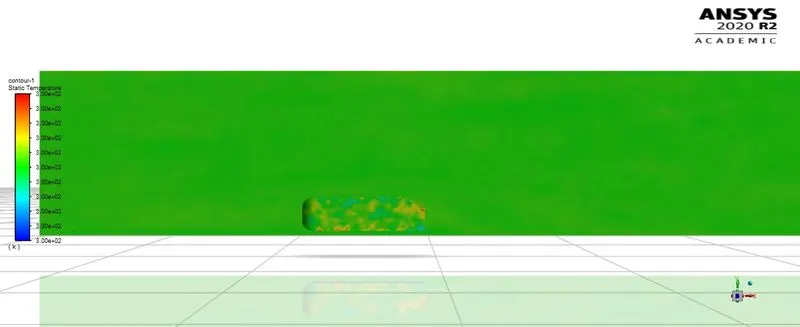
Temperature Contour
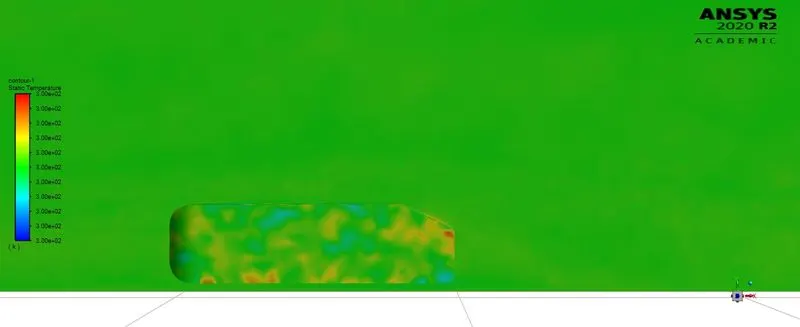
A close look at Temperature Contour
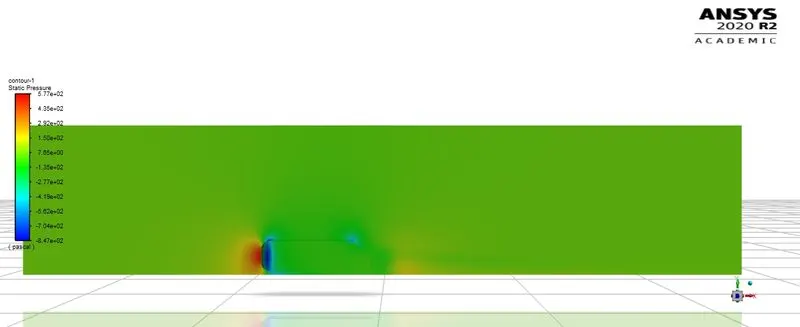
Pressure Contour
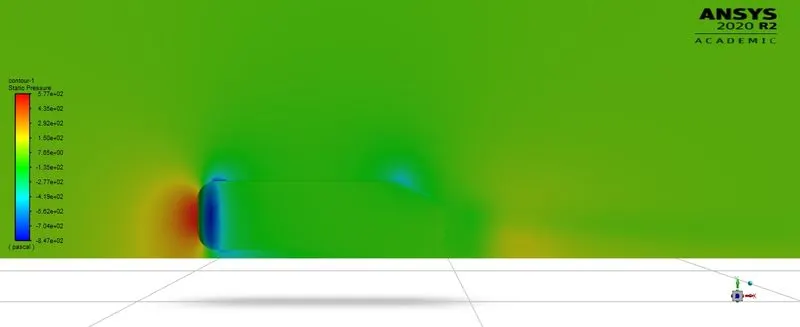
A close look at Pressure Contour
Plots:
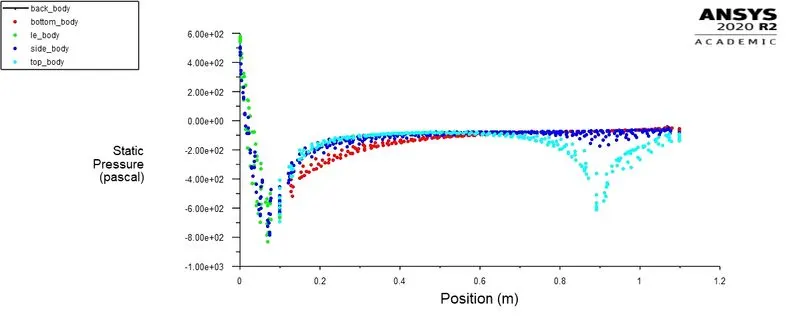
Static Pressure variation along the ahmed body
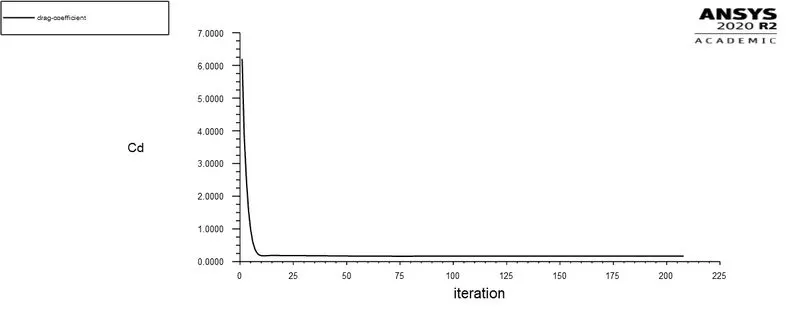
Drag coefficient variation along the ahmed body
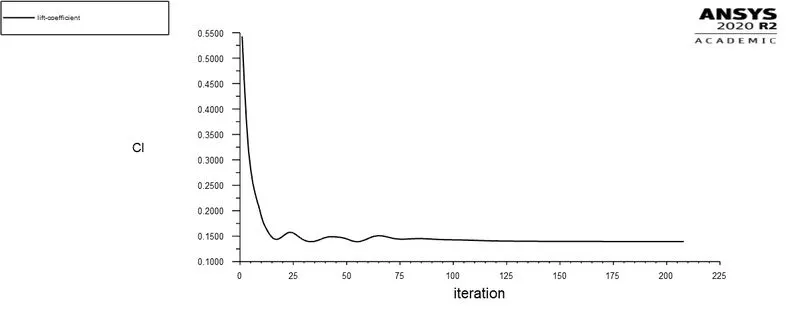
Drag coefficient variation along the ahmed body
4) Turn on Broadband- modeling, and detail the acoustic field study over Ahmed body.
- After attaining the results turn ON the acoustics and extract the other required results as shown below,
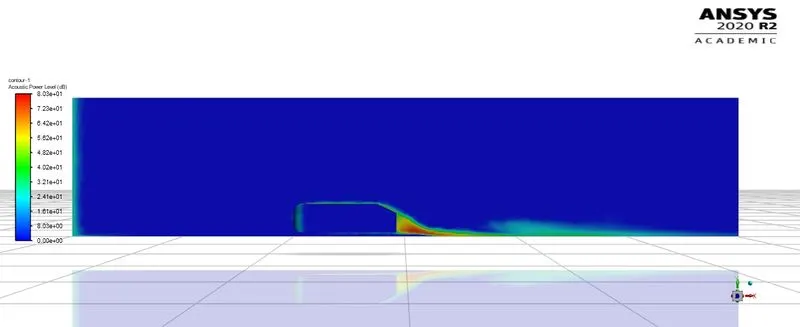
Acoustic Power Level (dB)
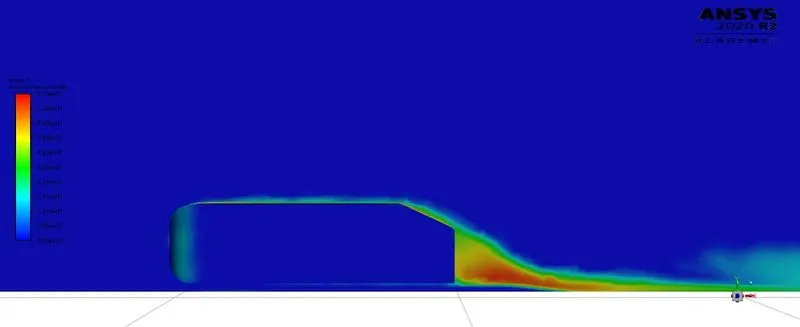
A close look at Acoustic Power Level (dB)
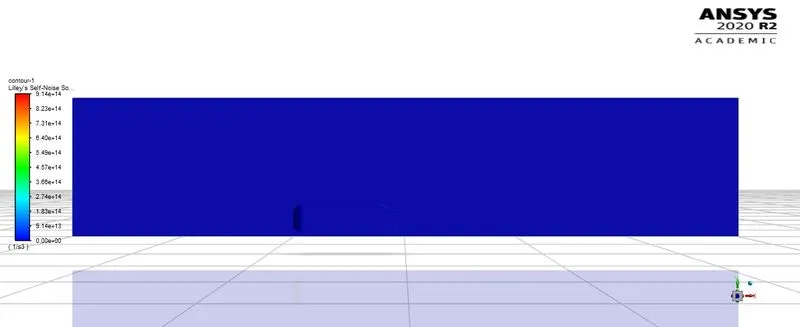
Lilley's Self-Noise Source
Let us take a close look at the source of the noise
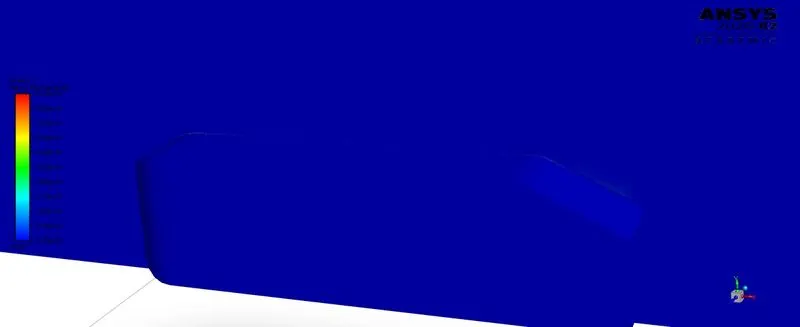
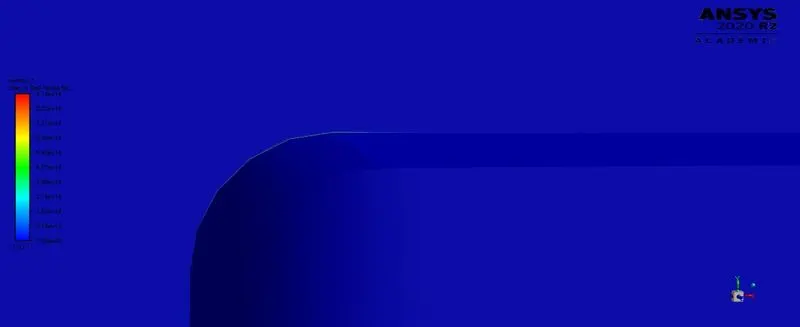
First source is at the front of the ahmed body
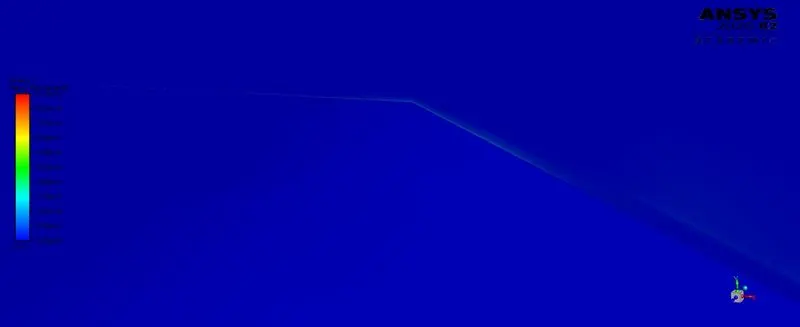
Second source is at the tail of the ahmed body
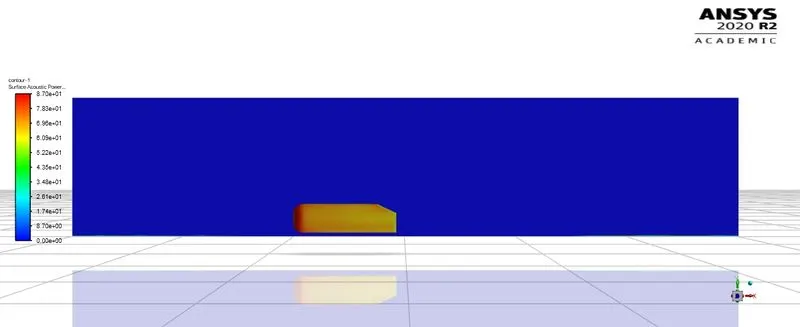
Surface Acoustic Power Level (dB)
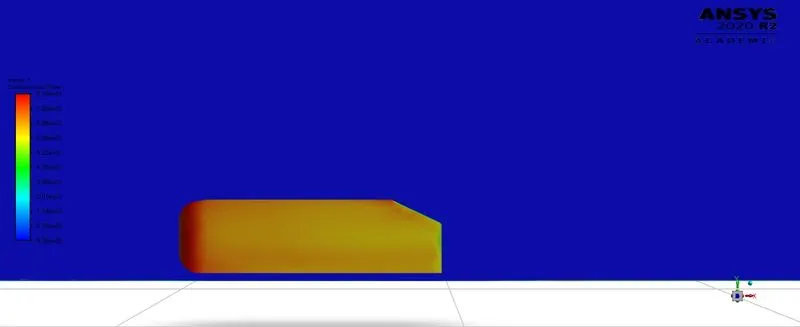
A close look at the Surface Acoustic Power Level (dB)