Week 10 - Simulating Combustion of Natural Gas.
COMBUSTION SIMULATION
AIM:-
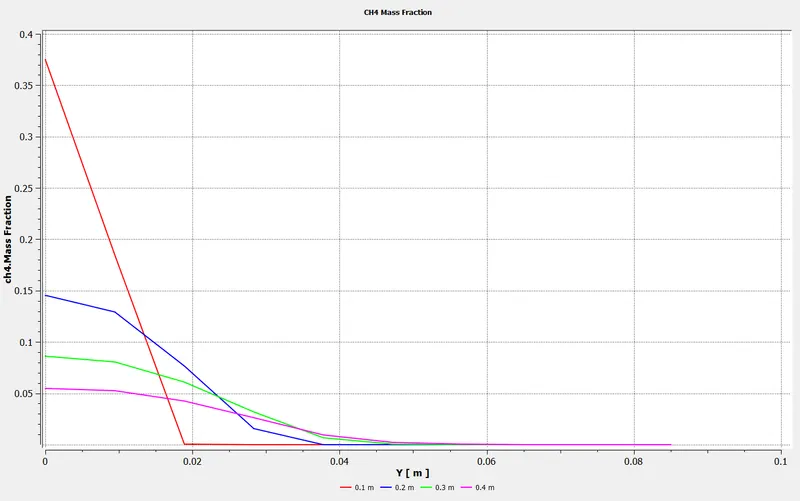
- Case 1:-To Perform a combustion simulation on the combustor model and plot the variation of the mass fraction of the different species’ in the simulation using line probes at different locations of the combustor AND to plot for CO2, H2O, CH4, N2, O2, NOx emissions & Soot formation.
- Case 2:- To simulate the combustion simulation using methane-air-2step as fuel and add the water content in the fuel from 5% to 30% by mole by Parametric study and to observe the effect of it on the results.
INTRODUCTION:-
Combustion is defined as a chemical reaction in which a hydrocarbon fuel reacts with an oxidant to form products, accompanied by the release of energy in the form of heat. Being an integral part of various engineering applications like internal combustion engines, furnaces, power station combustors, combustion exhibits itself as a wide domain during the design, analysis, and performance characteristics stages of the above-mentioned applications. In order to solve the complex equations from chemical kinetics and to yield information about the reaction mechanism, proper physical modeling has to be done. In this project, the combustion process is simulated with the help of CFD software ANSYS fluent. When the combustion is incomplete, various pollutants are formed, some pollutants are carbon dioxide, carbon monoxide, lead, nitric oxide. In this project, the formation of pollutants from NOx emission which mainly consists of No, No2, N2O, and soot formation which is a mass of impure carbon particles are simulated, and the variation of mass fraction of pollutants from NOx emission and soot formation with the addition of water into the fuel in studied.
THEORY:-
ANSYS CFD solvers are based on the finite volume method,
- The domain is discretized into a finite set of the control volumes.
- General conservation equations for mass, momentum, energy, species, etc. are solved on this set of control volumes.
- Partial differential equations are discretized into a system of algebraic equations.
- All algebraic equations are then solved numerically to render the solution field.
Initially, the process involves three major Categories,
Pre-Processing
- Geometry
- Mesh
- Physics
- Solver Settings
Solve
- Compute solution.
Post Processing
- Examine results.
Geometry
- The following Geometry is imported into the Space claim
- Then using a Split body tool we split the geometry into 1/4th of its size.
- This is done to extract the 2-D structure of the Burner.
- The extracted 2-D is then pasted onto a new sheet which is used as the main geometry for the simulation.
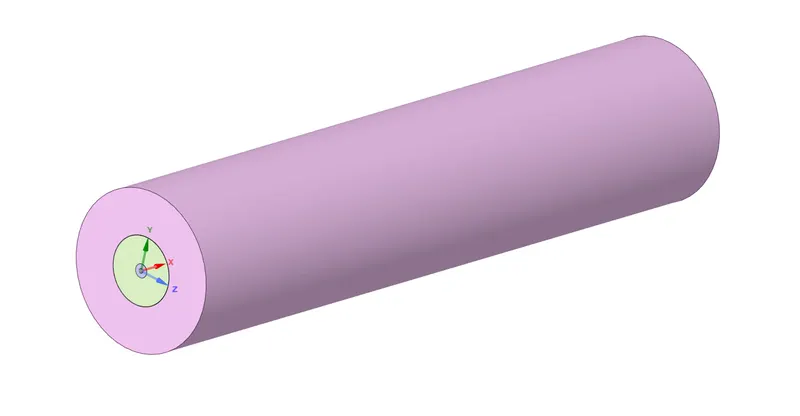
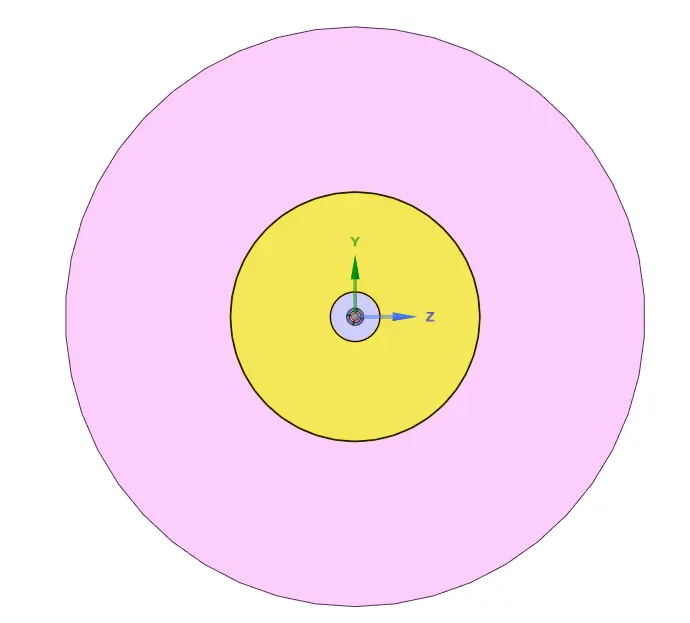
Initial Geometry
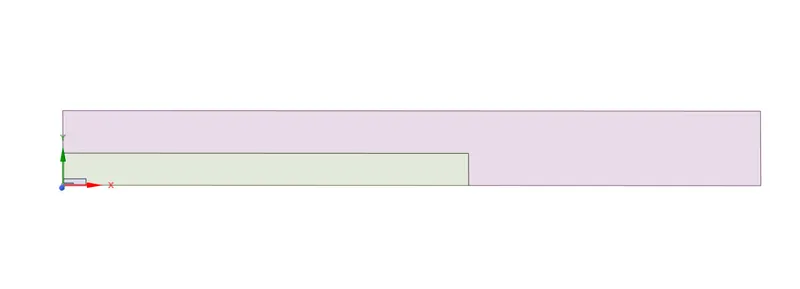
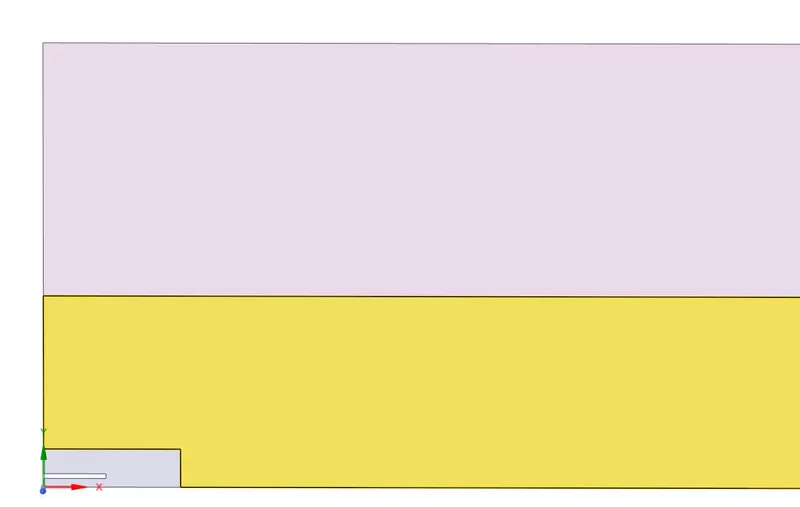
Final Geometry
Meshing
- Initially, we are going to assign a name selection to various components namely Fuel-inlet, Air-inlet, Axis, Wall, and Outlet.
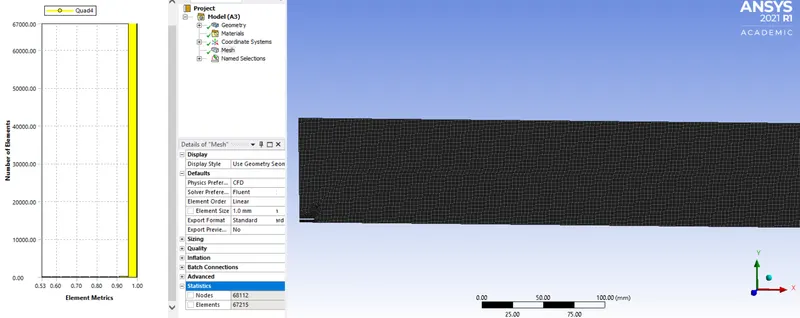
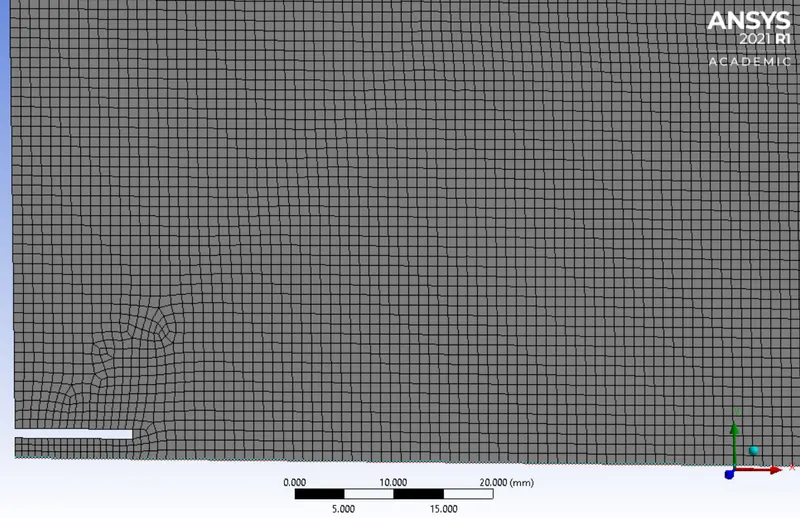
- Then for meshing, we are going to be using the 1 mm element size.
- Proximity capture is turned ON to get a finer mesh at the fuel inlet.
- Nodes = 68112
- Elements= 67215
Setup
- We are going to use Pressure Based solver(Axisymmetric conditions)
- Under Steady-state conditions.
- We are going to use the K-Epsilon RNG model with realizable conditions.
- Enable energy equations.
- Species Model is selected to Species Transport with NOx and Soot model also activated.
- Turbulence-Chemistry In reaction is set to Eddy-Dissipation.
- The mixture material used is Methane-Air-2 Step.
- One Step Model is Selected as Soot model.
- Air Inlet is set at 0.5 m/s.
- Fuel Inlet is set at 80m/s.
- The Mass Fraction of Oxygen is set at 0.23 as its content in the air.
- And Mass Fraction of methane is set to 1.
- The solution is Initialized using Hybrid Initialization.
- The Simulation is run for 400 Iterations.
Case-1:-(Fuel= CH4 only + 0 Water)
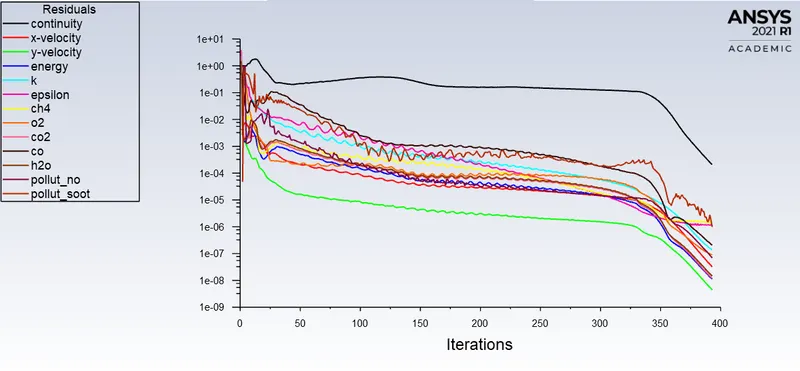
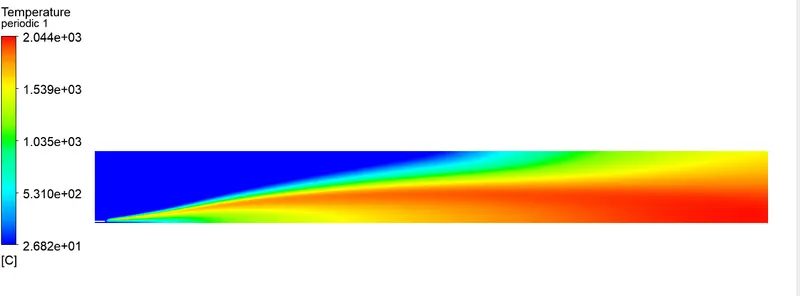
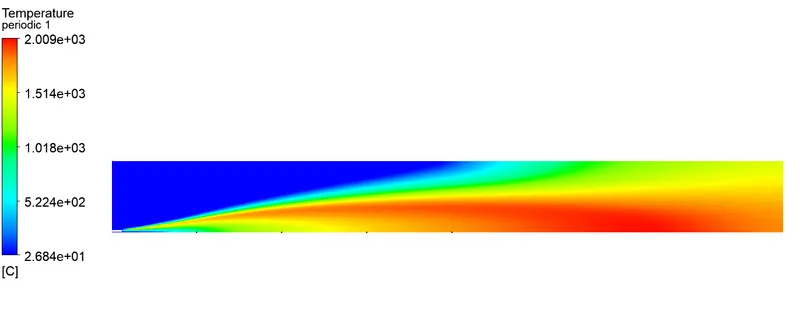
Scaled Residuals Temperature Contours
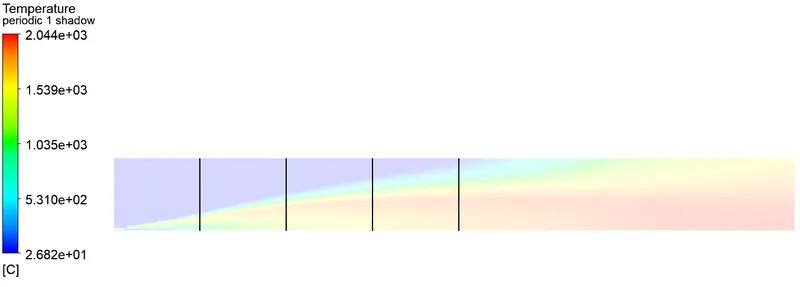
4 Equilateral line probes across the burner
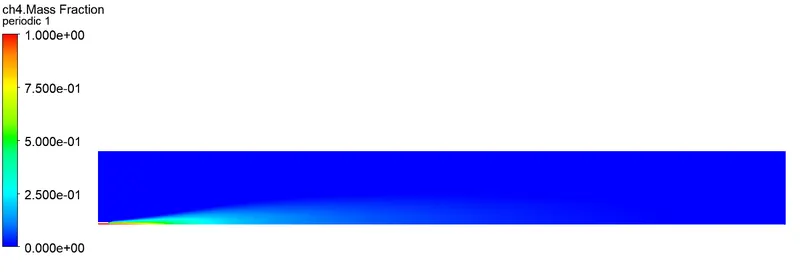
A) Mass Fraction of CH4:-
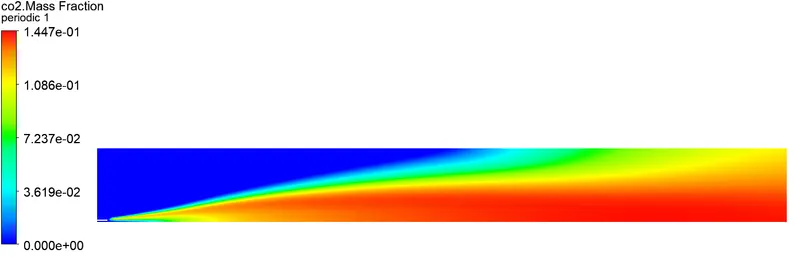
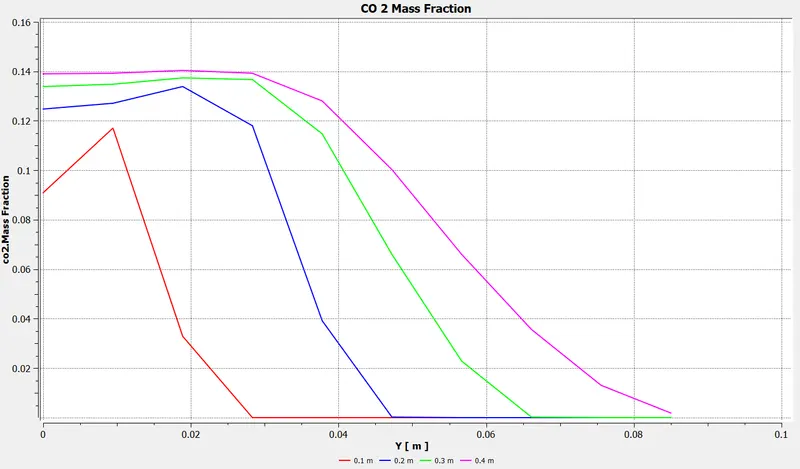
B) Mass Fraction of CO2:-
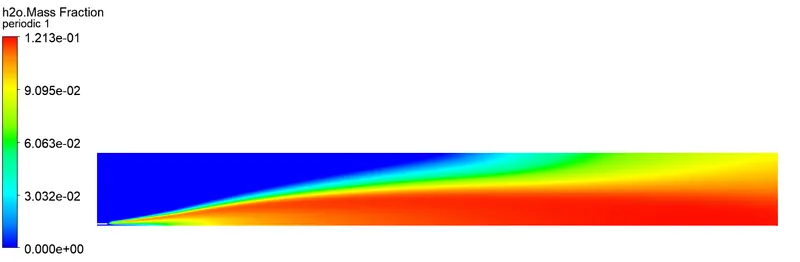
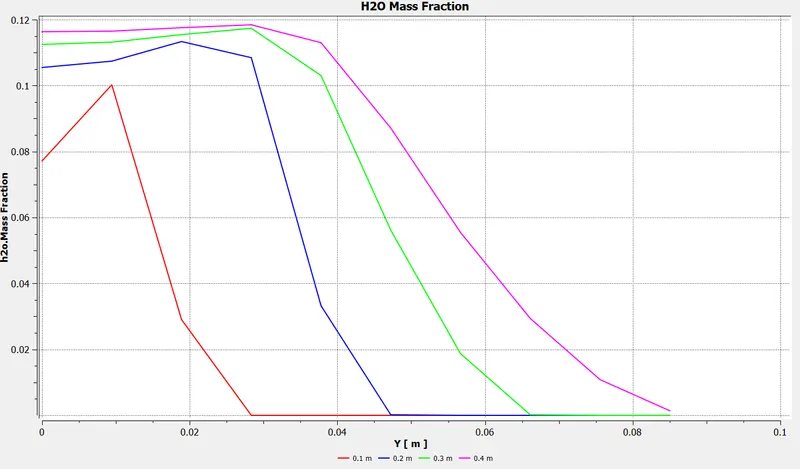
C) Mass Fraction of H2O:-
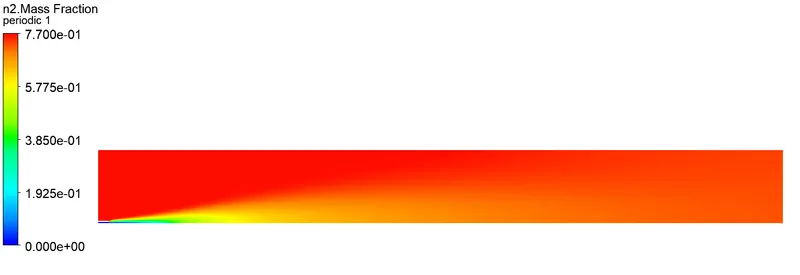
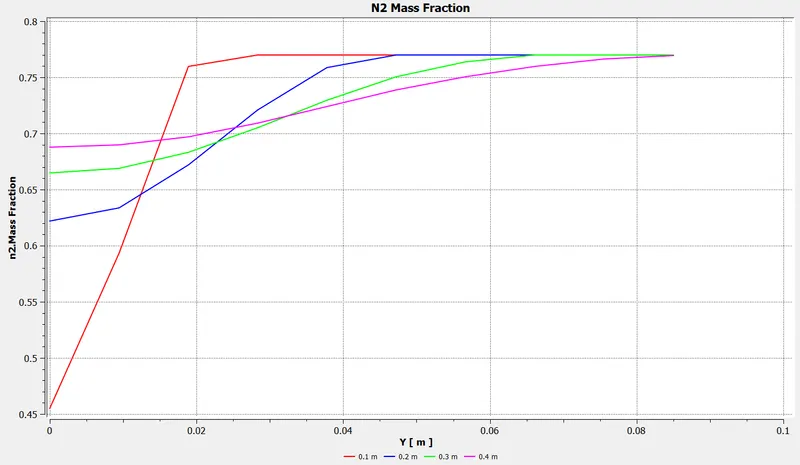
D) Mass Fraction of N2:-
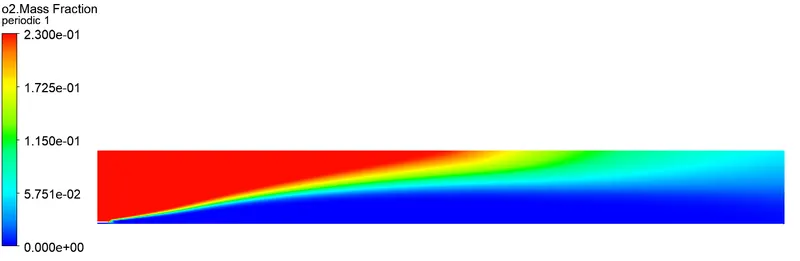
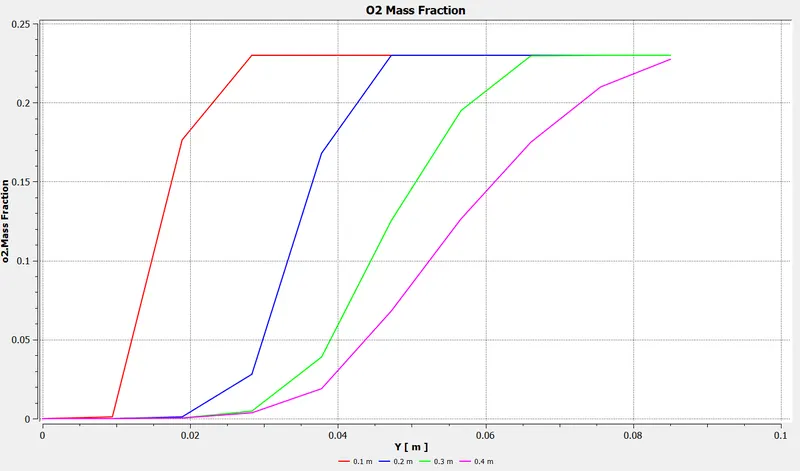
E) Mass Fraction of O2:-
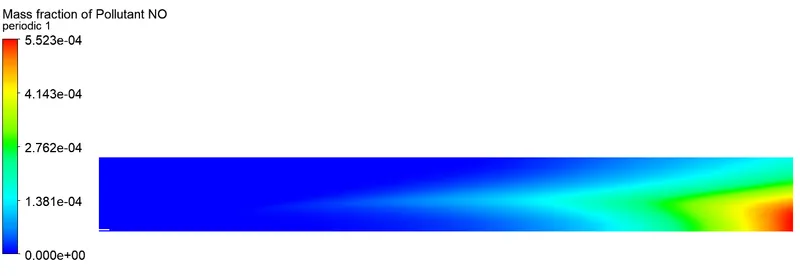
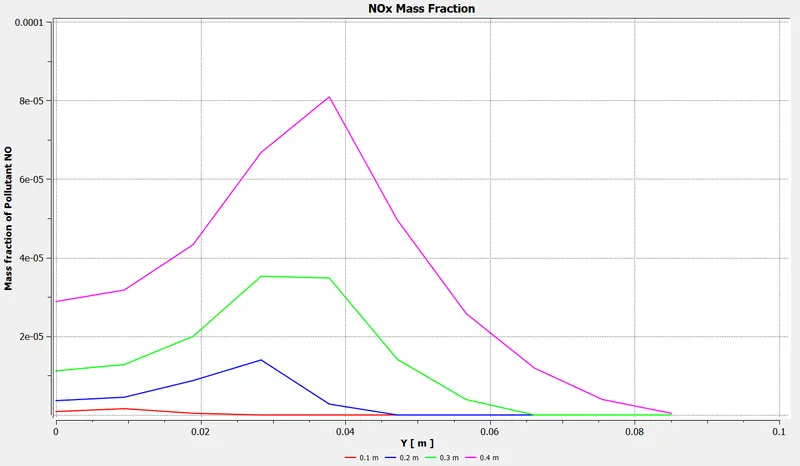
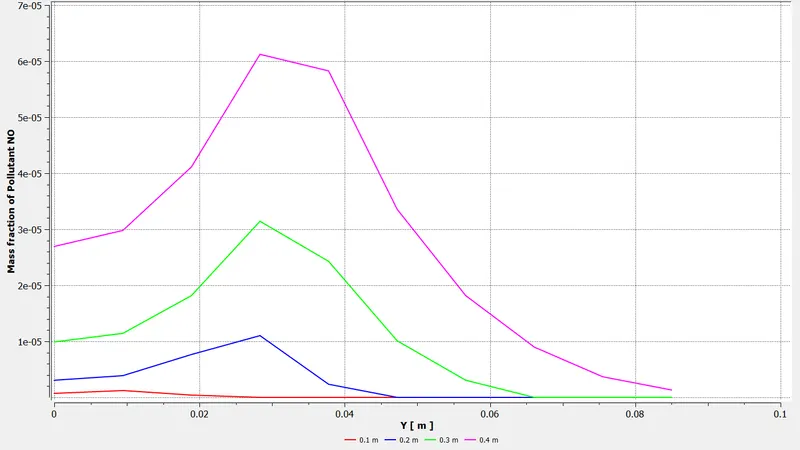
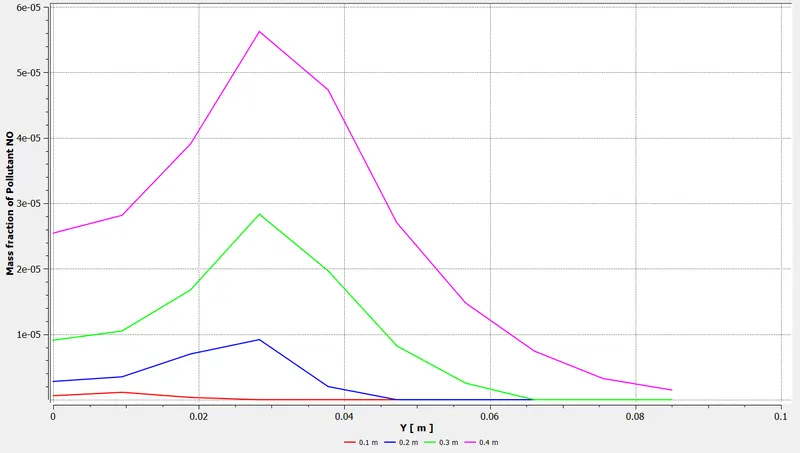
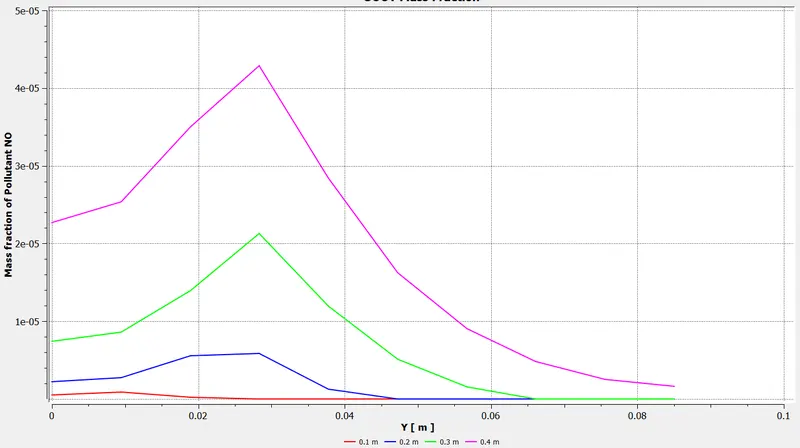
F) Mass Fraction of NOx Pollutant:-
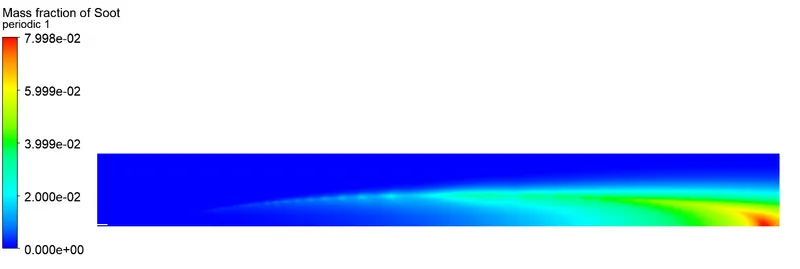
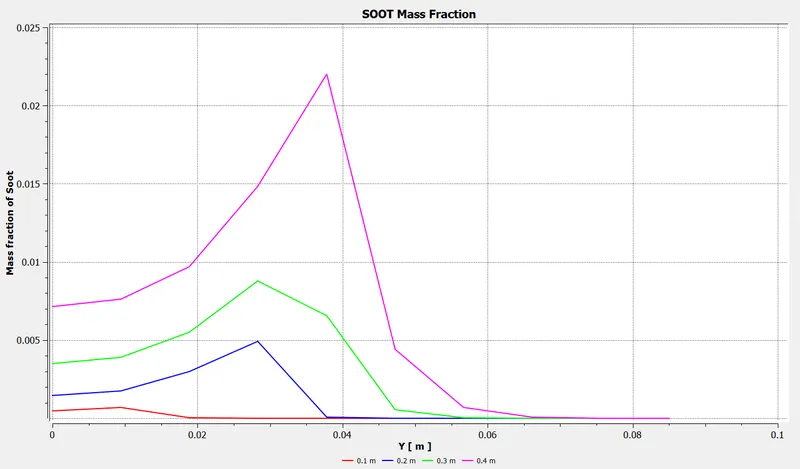
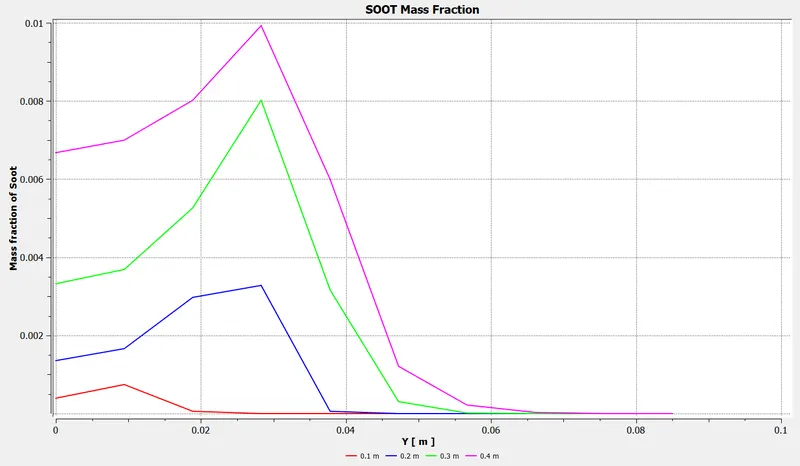
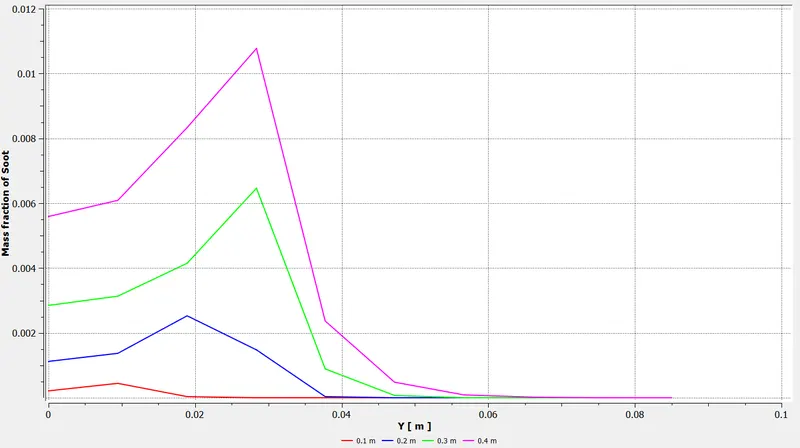
G) Mass Fraction of Soot Pollutant:-
OBSERVATIONS:-
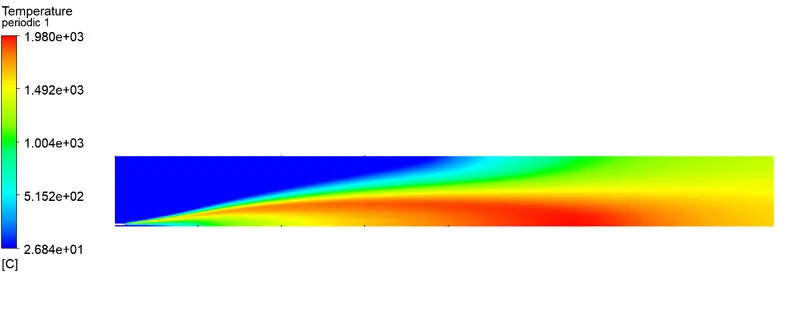
1.In the temperature contour, it can be seen that the highest temperature was 2044.15°C and observed ahead of the inlet of combustor where the mixing of fuel-air mixtures takes place.
2.In the Ch4 mass fraction contour, the highest mass fraction of Ch4 is observed near the fuel inlet where the fuel is discharged and as combustion takes place Ch4 mass fraction decreases.
3.Highest mass fraction of Co2 and H2o is observed in the high-temperature zone.
4.The oxygen mass fraction is highest near the air-inlet and very low in the region of combustion, that is, the initial lower region of the domain as it gets consumed to generate heat and other byproducts.
5.The pollutant like NOx and soot mass fraction is more near the outlet of the combustor.
Case-2:-(Fuel= CH4 + 5%-30% of Water)
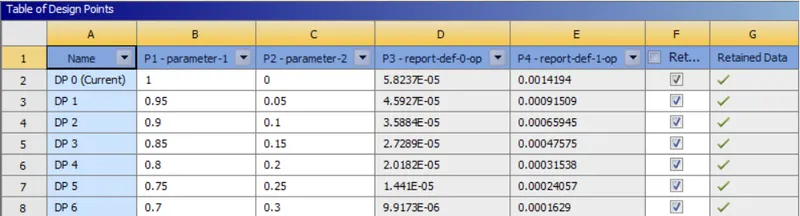
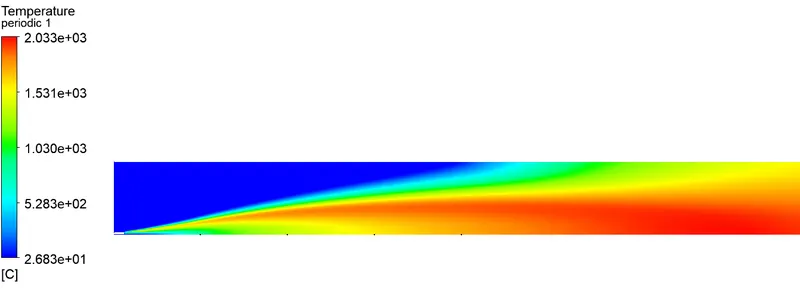
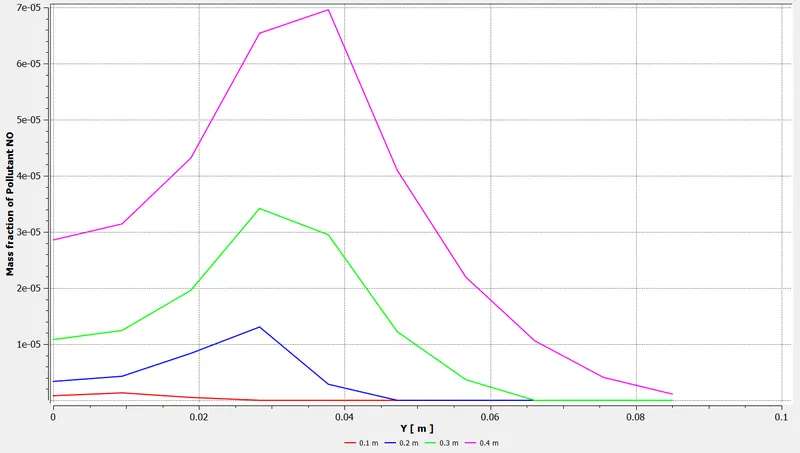
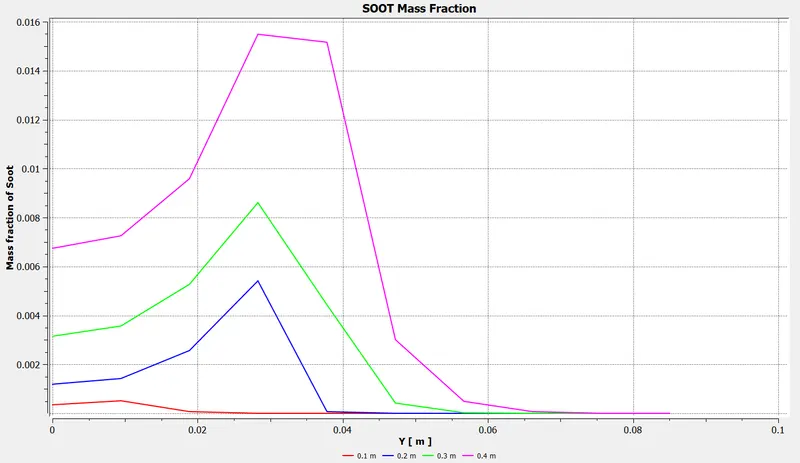
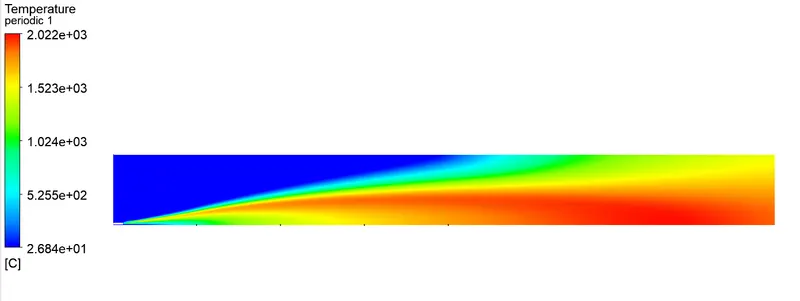
In Case 2 the Water(H20) content is added to the fuel Methane(CH4) by a mole form of 5%-30%. A Parametric-Study is performed for Case 2 with all the same Setup with the mole fraction of water is set as Input Parameter.
A)Addition of 5% Water:-
B)Addition of 10% Water:-
C)Addition of 15% Water:-
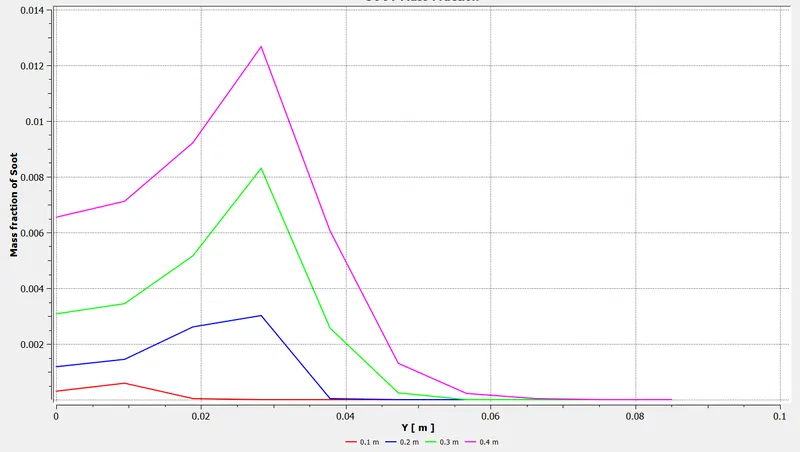
D)Addition of 20% Water:-
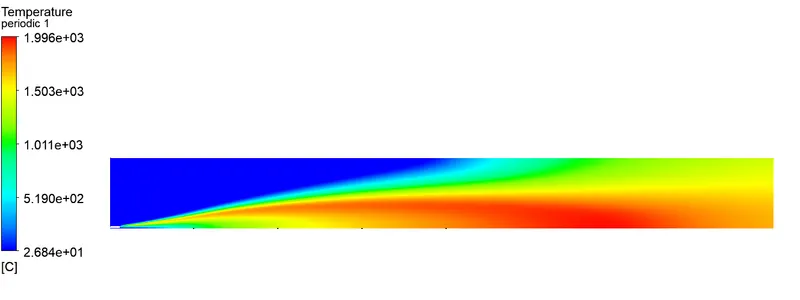
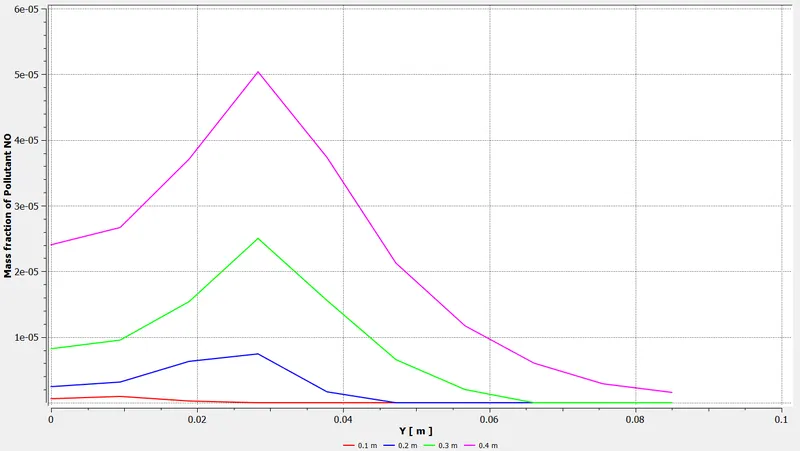
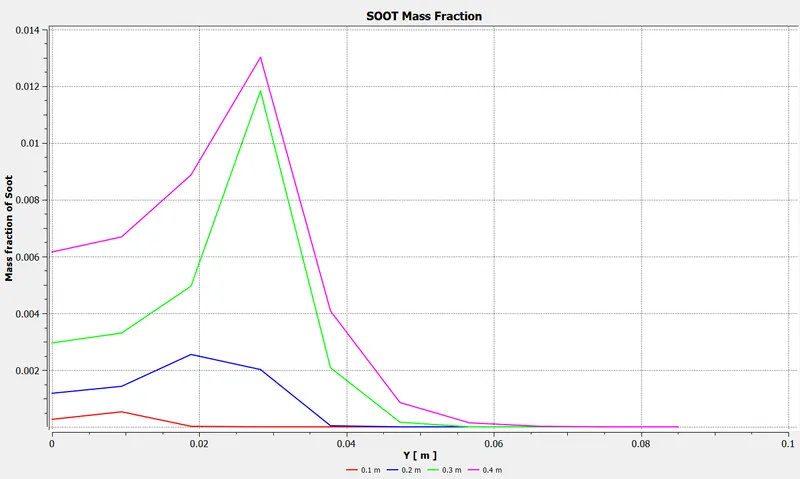
E)Addition of 25% Water:-
F)Addition of 30% Water:-
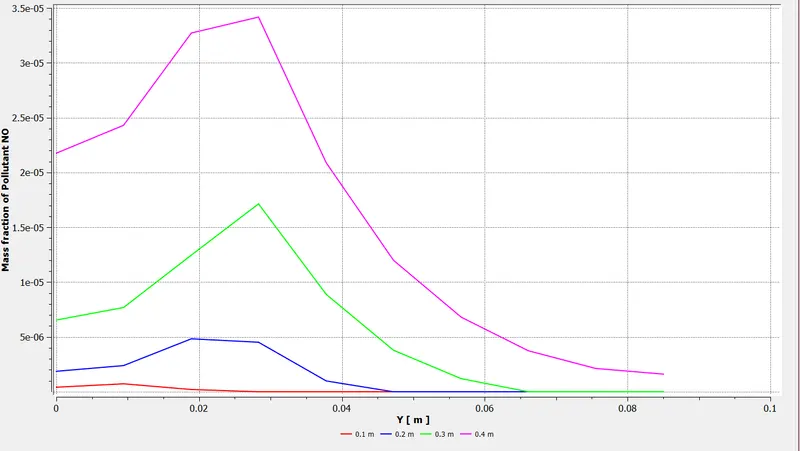
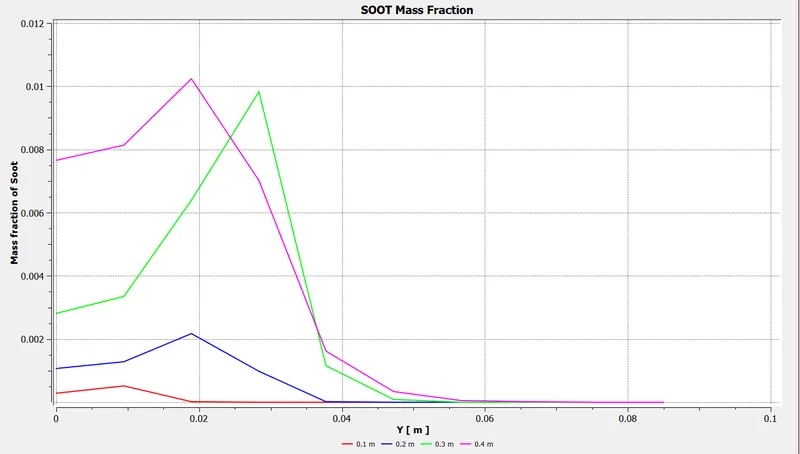
Observations:-
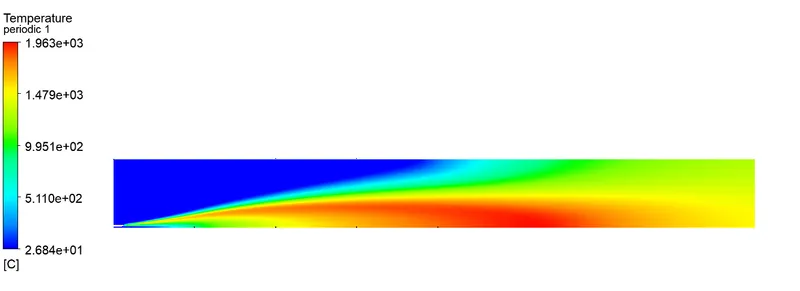
- The temperature drops from 2033 C to 1963 C as the water content is increased from 5% to 30% in the fuel.
- The mass fraction of pollutants like NOx and soot decreases as the water content in the fuel is increased this is due to the oxygen molecule from the water caused more unburnt fuel to burn resulting less soot particles and NOx particles.
Results:-
The Combustion Simulation is done Successfully and various charts of mole fraction for various species are shown. Also, the soot particles and NOx decreased with the addition of water content in the fuel. Also, the higher the addition of water the more there are chances of incomplete combustion which will result in unburnt hydrocarbons. So, the addition of water to the fuel should be reducing the soot and NOx rather than resulting an incomplete combustion.