Week 10 - Simulating Combustion of Natural Gas.
Aim:-Simulating Combustion of Natural Gas.
objective:-
Perform a combustion simulation on the combustor model and plot the variation of the mass fraction of the different species’ in the simulation using line probes at different locations of the combustor.
add the water content in the fuel from 5% to 30% by mole and observe the effect of it on the results.
theory:
Combustion is a chemical process in which a substance reacts rapidly with oxygen and gives off heat. The original substance is called the fuel, and the source of oxygen is called the oxidizer. The fuel can be a solid, liquid, or gas, although for airplane propulsion the fuel is usually a liquid. The oxidizer, likewise, solid, liquid, or gas.
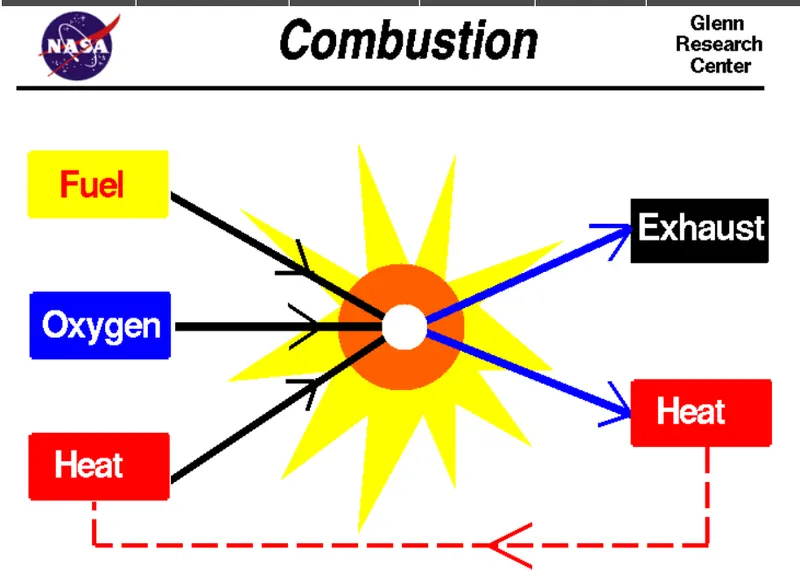
During combustion, new chemical substances are created from the fuel and the oxidizer. These substances are called exhaust. Most of the exhaust comes from chemical combinations of the fuel and oxygen. When a hydrogen-carbon-based fuel (like gasoline) burns, the exhaust includes water (hydrogen + oxygen) and carbon dioxide (carbon + oxygen). But the exhaust can also include chemical combinations from the oxidizer alone. If the gasoline is burned in air, which contains 21% oxygen and 78% nitrogen, the exhaust can also include nitrous oxides (NOX, nitrogen + oxygen). The temperature of the exhaust is high because of the heat that is transferred to the exhaust during combustion. Because of the high temperatures, exhaust usually occurs as a gas, but there can be liquid or solid exhaust products as well. Soot, for example, is a form of solid exhaust that occurs in some combustion processes.
During the combustion process, as the fuel and oxidizer are turned into exhaust products, heat is generated. Interestingly, some source of heat is also necessary to start combustion. Gasoline and air are both present in your automobile fuel tank; but combustion does not occur because there is no source of heat. Since heat is both required to start combustion and is itself a product of combustion, we can see why combustion takes place very rapidly. Also, once combustion gets started, we don't have to provide the heat source because the heat of combustion will keep things going. We don't have to keep lighting a campfire, it just keep burning.
Stoichiometric Combustion
Stoichiometric combustion is a theoretical position where the optimal amount of oxygen and fuel mix generates the most heat possible, achieving maximum combustion efficiency.
Chemical kinetics
Chemical kinetics, also known as reaction kinetics, is the branch of physical chemistry that is concerned with understanding the rates of chemical reactions. It is to be contrasted with chemical thermodynamics, which deals with the direction in which a reaction occurs but in itself tells nothing about its rate. Chemical kinetics includes investigations of how experimental conditions influence the speed of a chemical reaction and yield information about the reaction's mechanism and transition states, as well as the construction of mathematical models that also can describe the characteristics of a chemical reaction.
Chemical reaction models
Chemical reaction models transform physical knowledge into a mathematical formulation that can be utilized in computational simulation of practical problems in chemical engineering. Computer simulation provides the flexibility to study chemical processes under a wide range of conditions. Modelling of a chemical reaction involves solving conservation equations describing convection, diffusion, and reaction source for each component species.
Species transport equation
`(partial(rho Y_i))/(partialt)+nabla(rhovecvY_i)=nabla*vecJ_i+R_i`
Ri is the net rate of production of species i by chemical reaction and Si is the rate of creation by addition from the dispersed phase and the user defined source. Ji is the diffusion flux of species i, which arises due to concentration gradients and differs in both laminar and turbulent flows. In turbulent flows, computational fluid dynamics also considers the effects of turbulent diffusivity. The net source of chemical species i due to reaction, Ri which appeared as the source term in the species transport equation is computed as the sum of the reaction sources over the NR reactions among the species.
These reaction rates R can be calculated by following models:
- Laminar finite rate model
- Eddy dissipation model
- Eddy dissipation concept
Laminar finite rate model
The laminar finite rate model computes the chemical source terms using the Arrhenius expressions and ignores turbulence fluctuations. This model provides with the exact solution for laminar flames but gives inaccurate solution for turbulent flames, in which turbulence highly affects the chemistry reaction rates, due to highly non-linear Arrhenius chemical kinetics. However this model may be accurate for combustion with small turbulence fluctuations, for example supersonic flames.
Eddy dissipation model
The eddy dissipation model or the Magnussen model, based on the work of Magnussen and Hjertager, is a turbulent-chemistry reaction model. Most fuels are fast burning and the overall rate of reaction is controlled by turbulence mixing. In the non-premixed flames, turbulence slowly mixes the fuel and oxidizer into the reaction zones where they burn quickly. In premixed flames the turbulence slowly mixes cold reactants and hot products into the reaction zones where reaction occurs rapidly. In such cases the combustion is said to be mixing-limited, and the complex and often unknown chemical kinetics can be safely neglected. In this model, the chemical reaction is governed by large eddy mixing time scale. Combustion initiates whenever there is turbulence present in the flow. It does not need an ignition source to initiate the combustion. This type of model is valid for the non-premixed combustion, but for the premixed flames the reactant is assumed to burn at the moment it enters the computation model, which is a shortcoming of this model as in practice the reactant needs some time to get to the ignition temperature to initiate the combustion.
Eddy dissipation concept
The eddy dissipation concept (EDC) model is an extension of the eddy dissipation model to include detailed chemical mechanism in turbulent flows. The EDC model attempts to incorporate the significance of fine structures in a turbulent reacting flow in which combustion is important. EDC has been proven efficient without the need for changing the constants for a great variety of premixed and diffusion controlled combustion problems, both where the chemical kinetics is faster than the overall fine structure mixing as well as in cases where the chemical kinetics has a dominating influence.
case setup:
geometry:
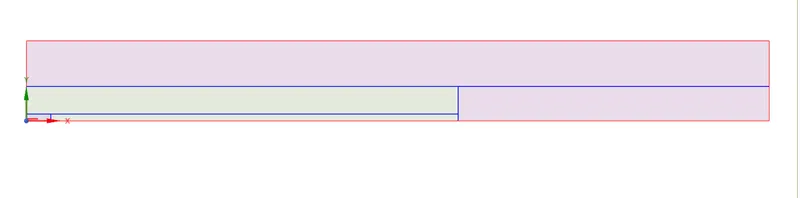
in spaceclaim application import the provide geometry and split body in to 1/4 then enable 3d editing and copy the model and paste it in new tab then save the model and clore the application
Mesh
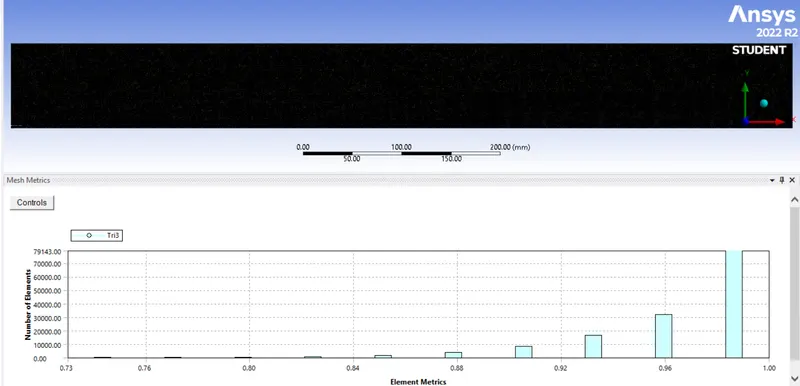
name air inlet, fuel inlet, wall, and outlet and mesh
fluent case setup
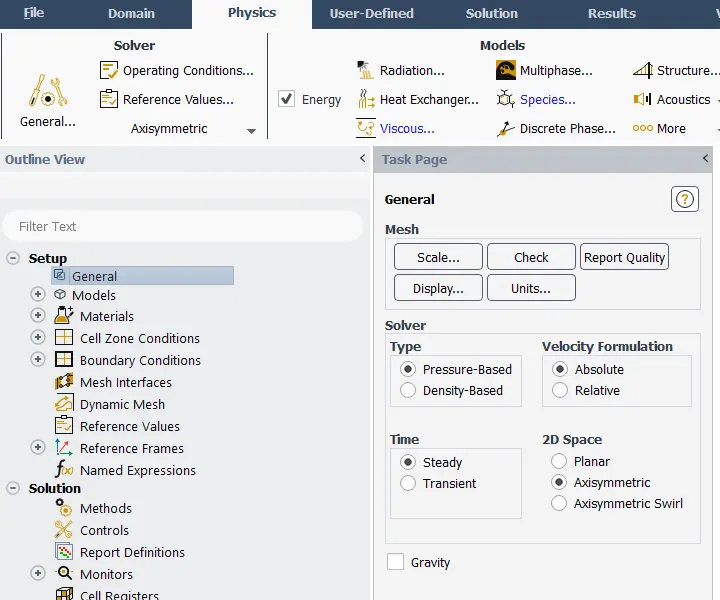
genereal
presuure base
velocity absolute
time steady
2D space axisymetric
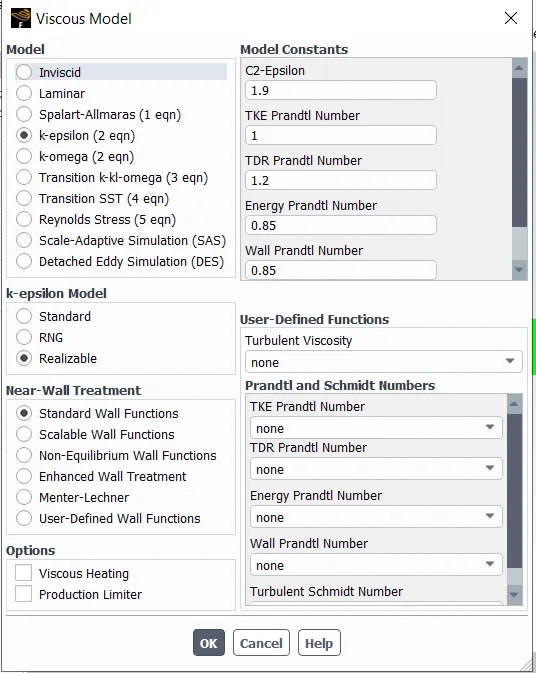
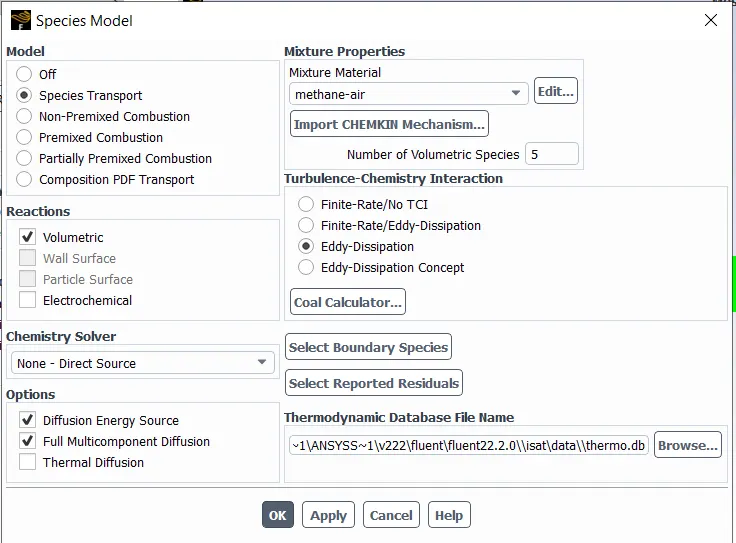
after species model enable nox and soot in model section
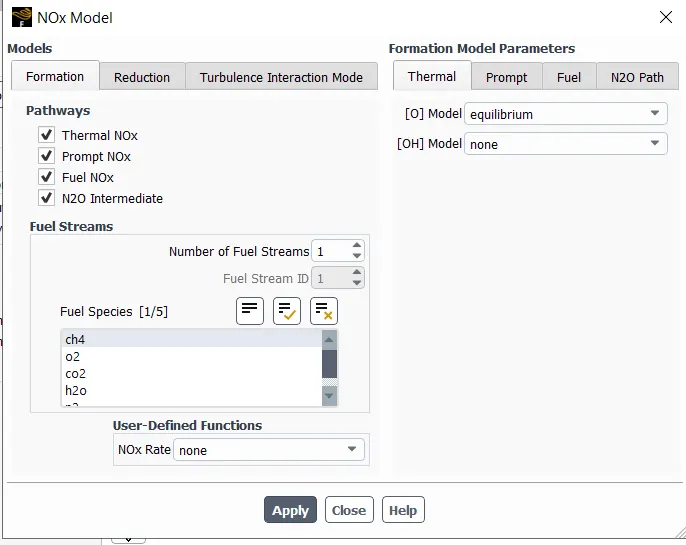
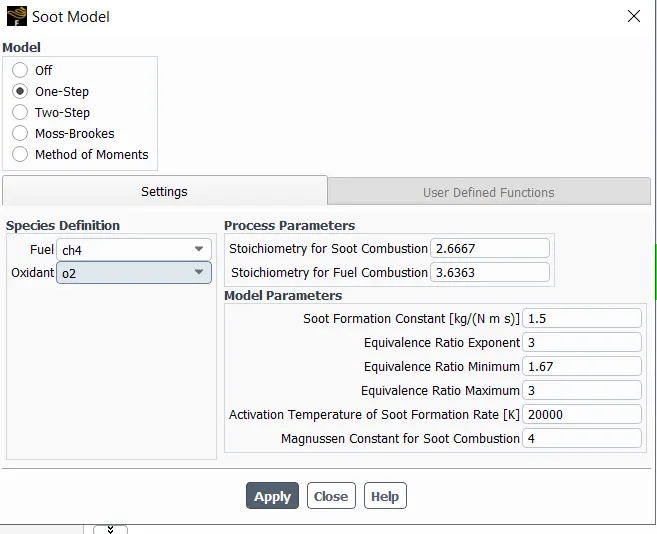
Boundary condtion
air inlet
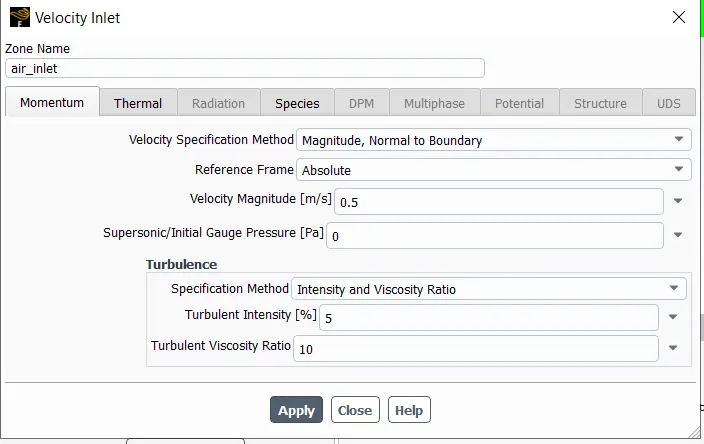
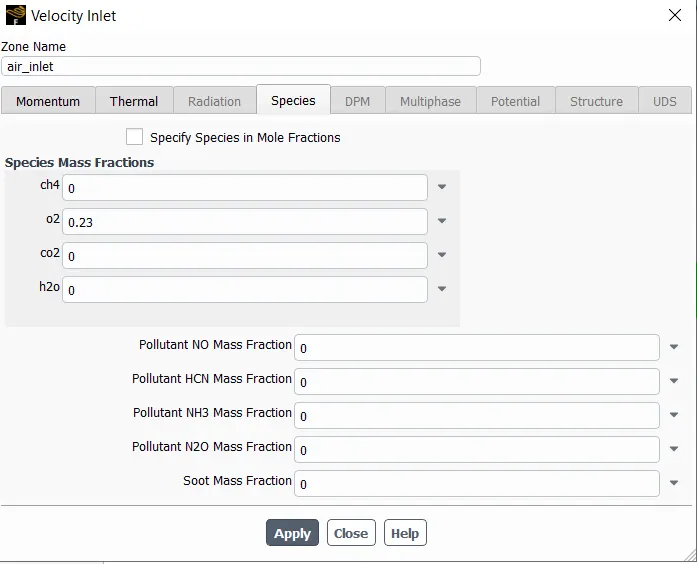
fuel inlet
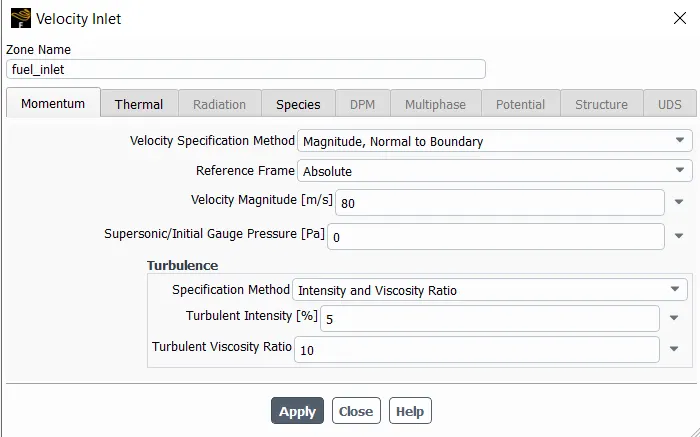
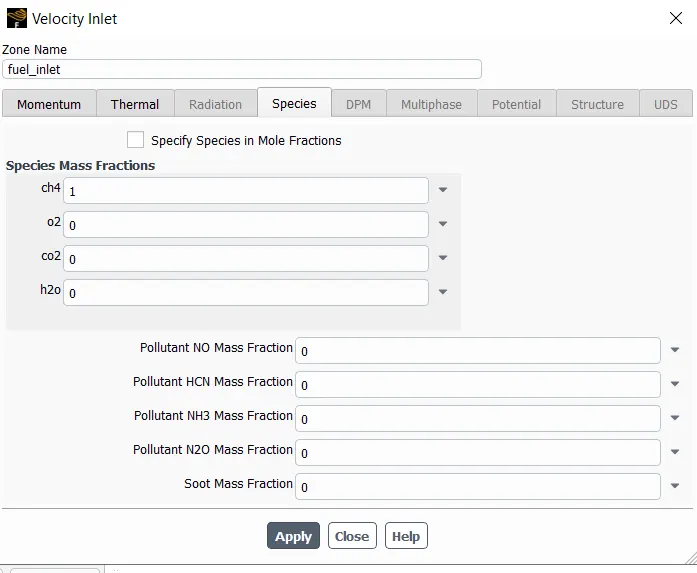
intilize solution and set contor for post processing and animation then calculate for 1500 iteration
results
CH4
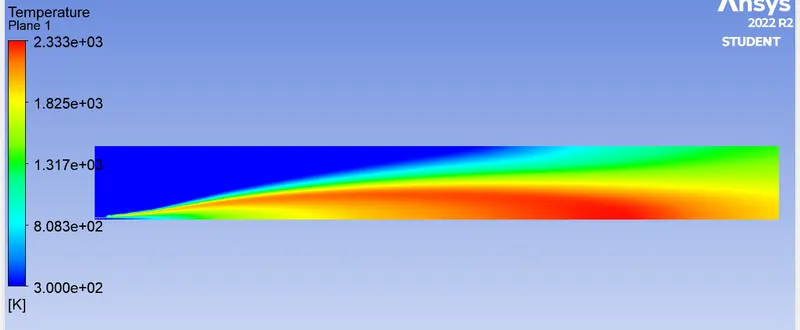
temprature
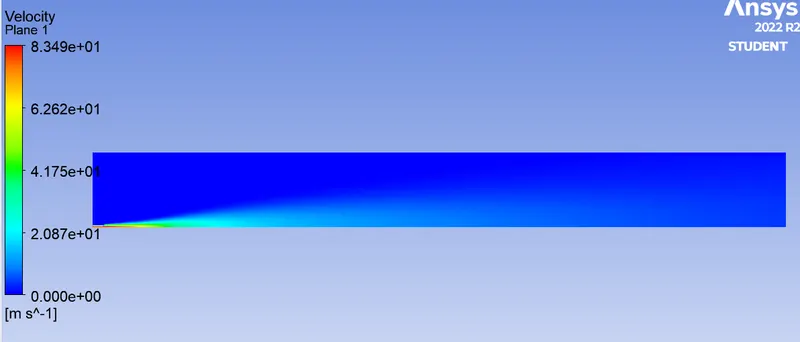
velocity
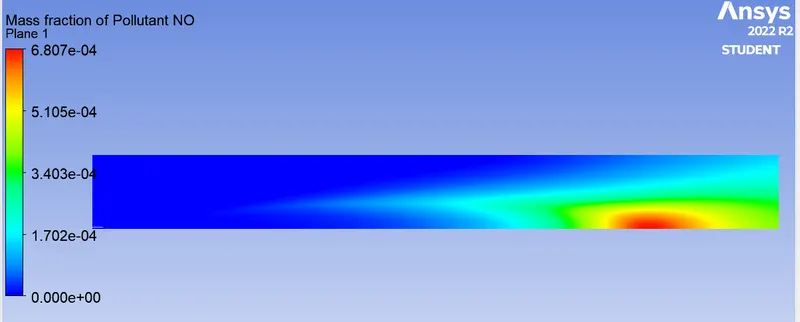
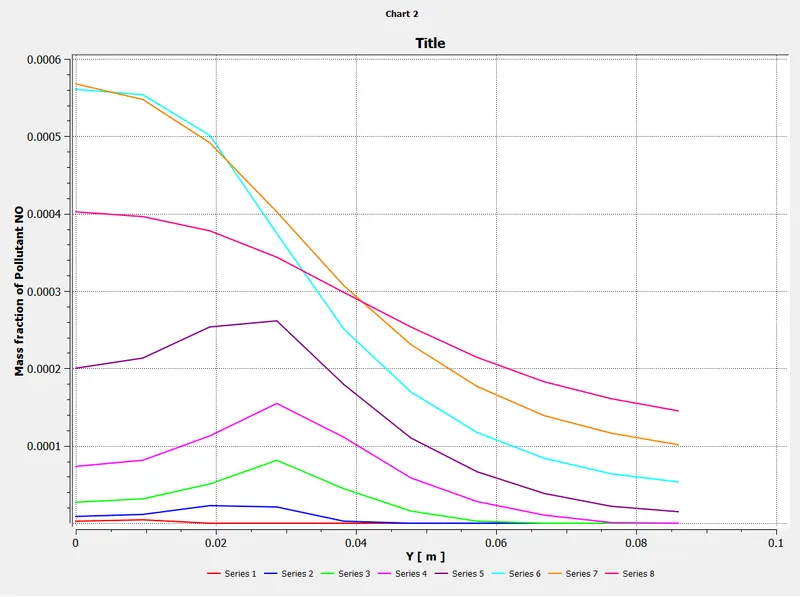
mass fraction NO
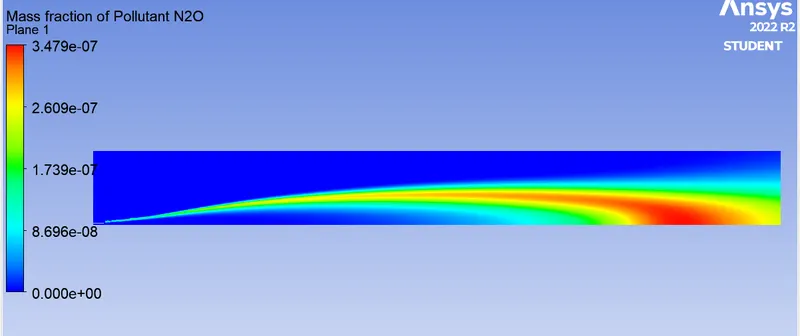
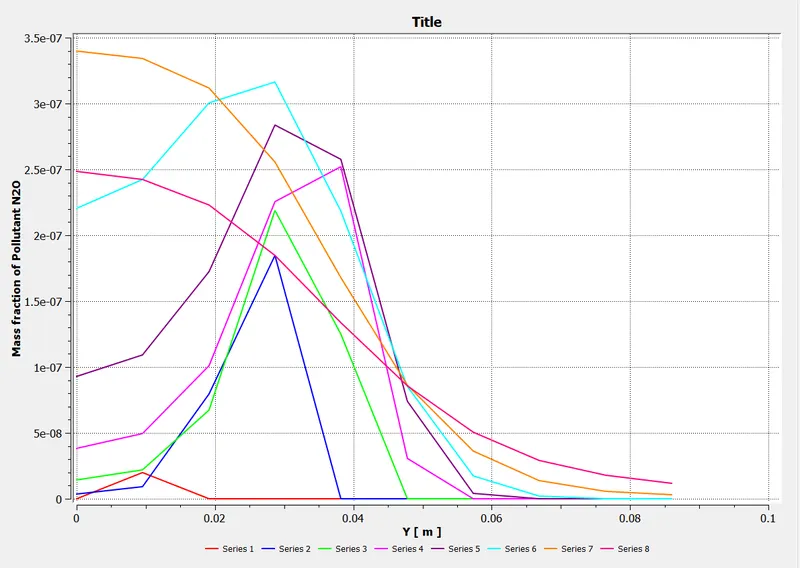
mass fraction of N2O
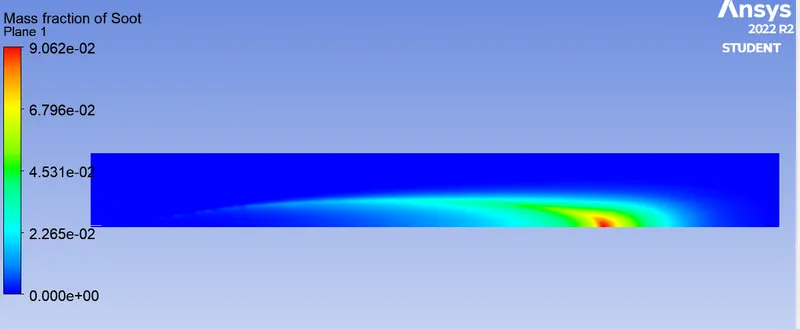
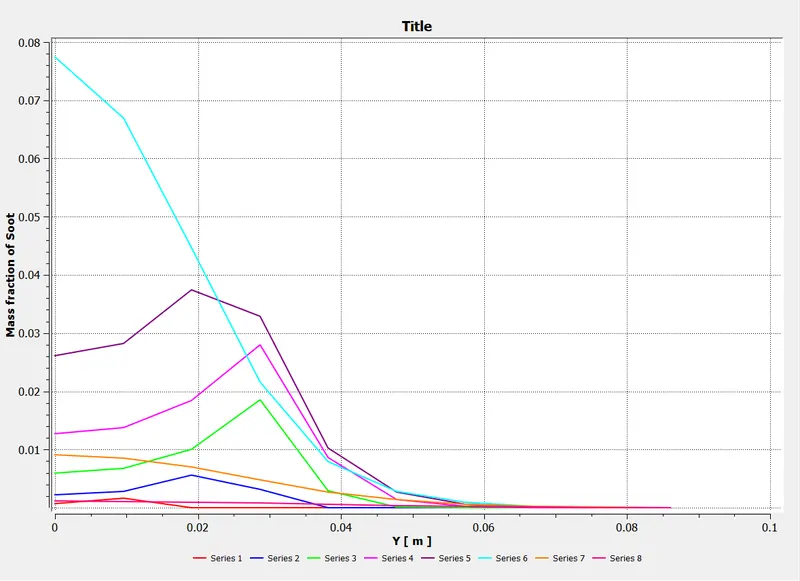
mass fraction of soot
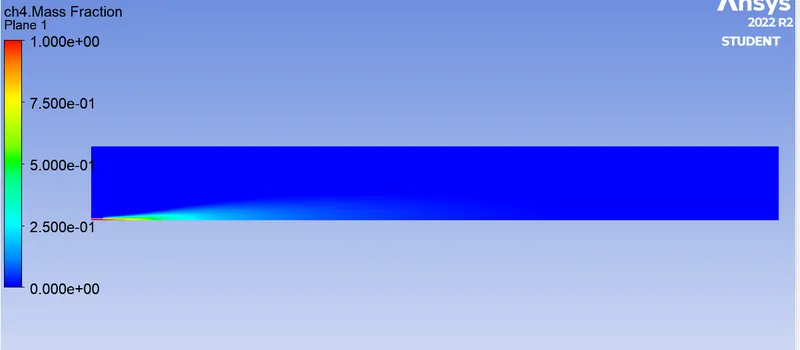
mass fraction of CH4
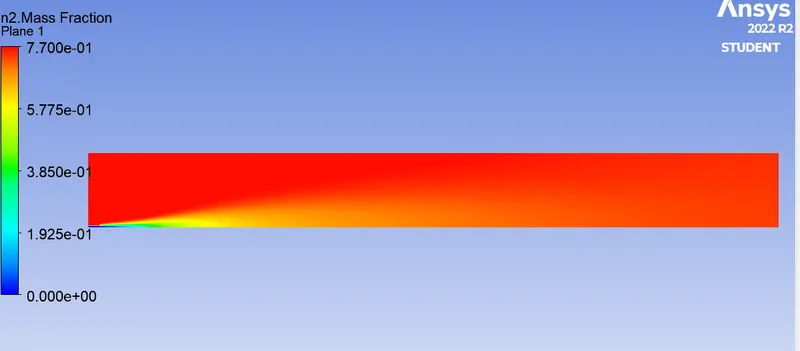
mass fraction of N2
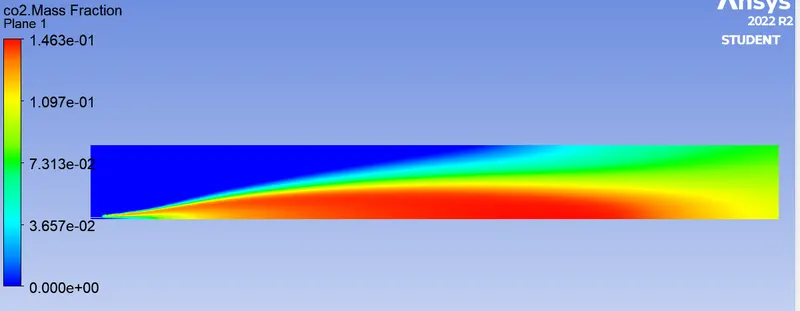
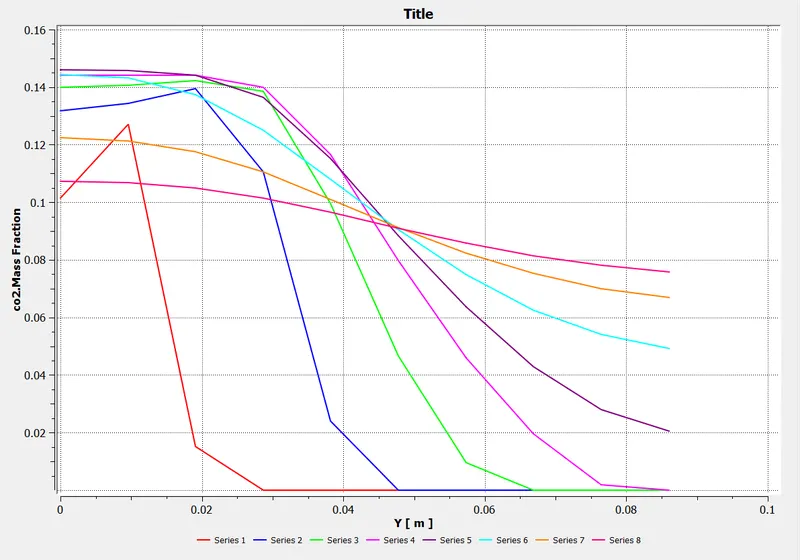
mass fraction CO2
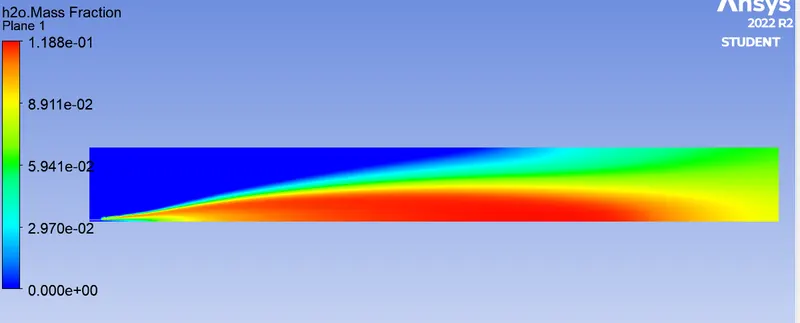
mass fraction of H2O
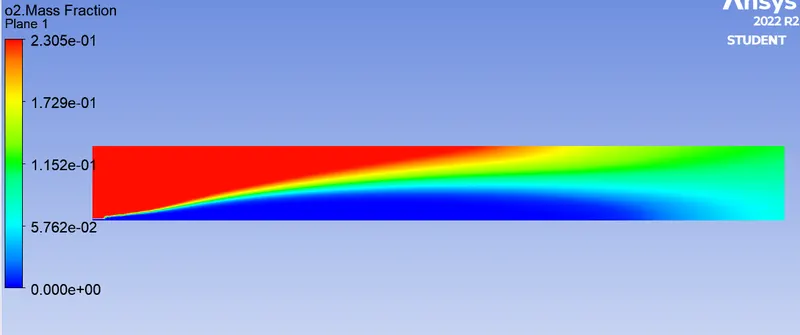
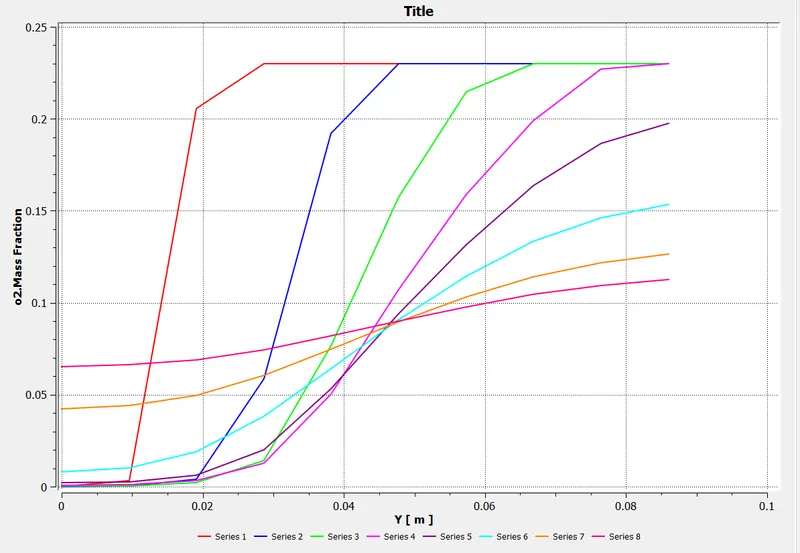
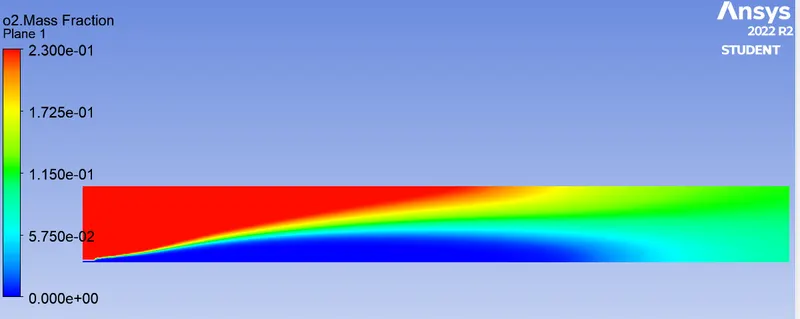
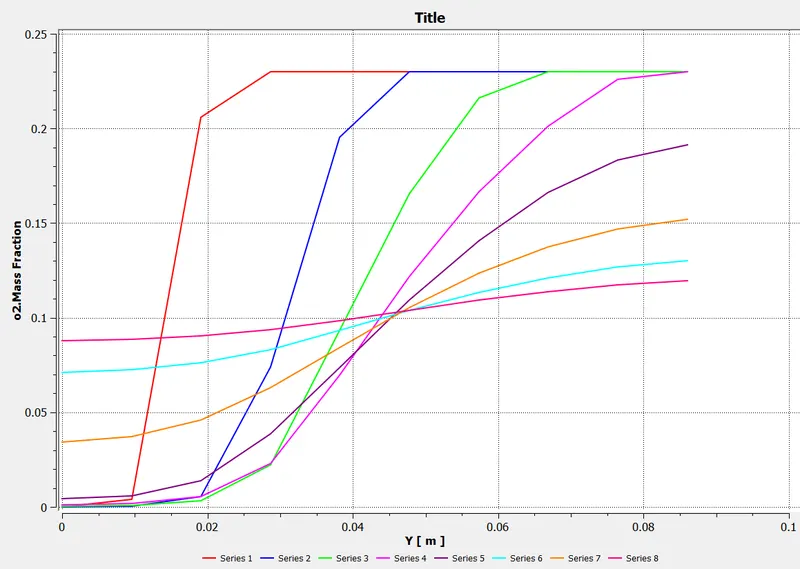
mass fraction of O2
CH4+10 mole fraction H20
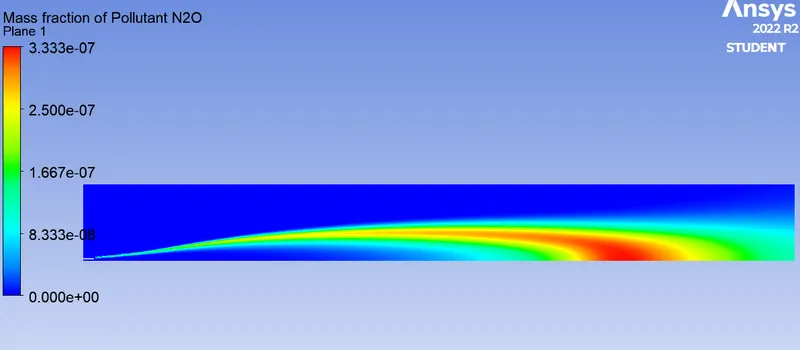
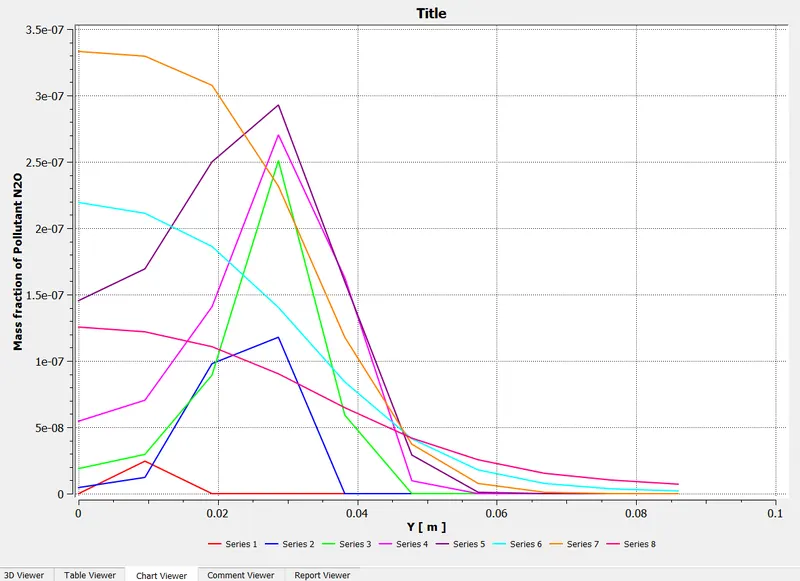
mass fraction N2O
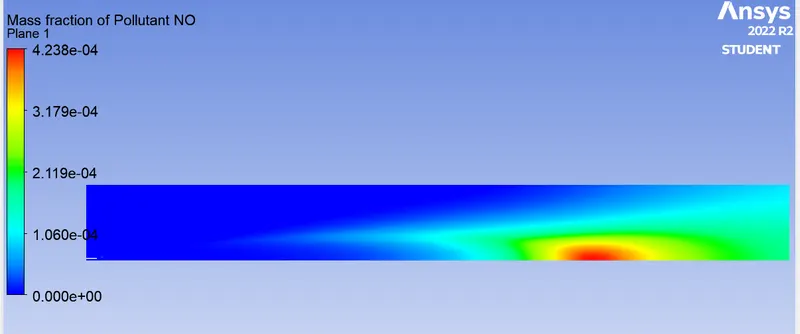
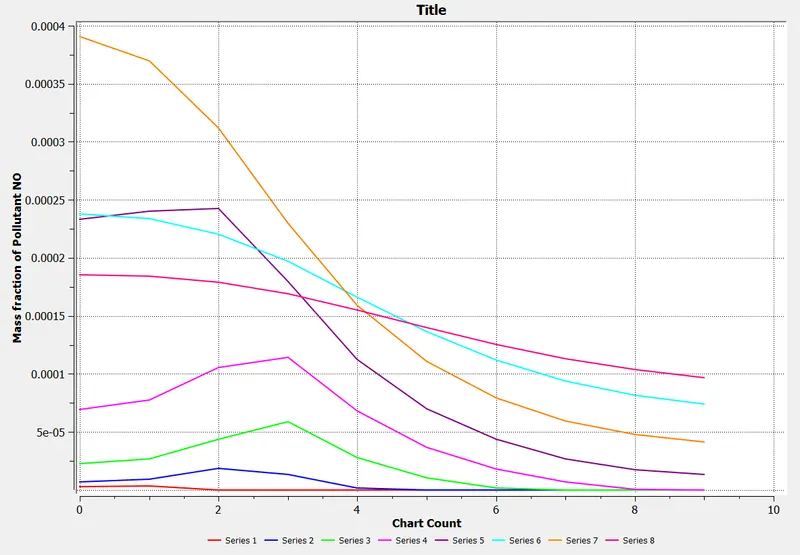
mass fraction NO
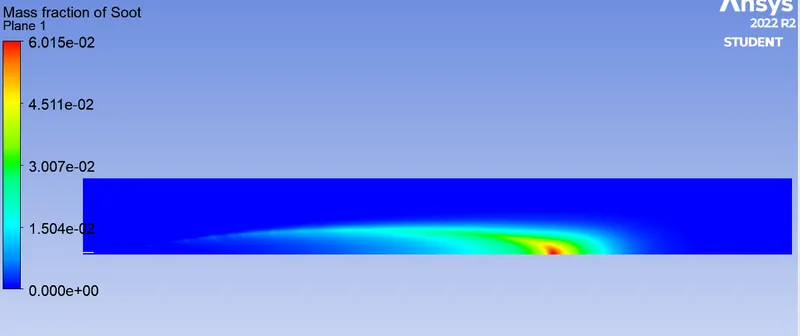
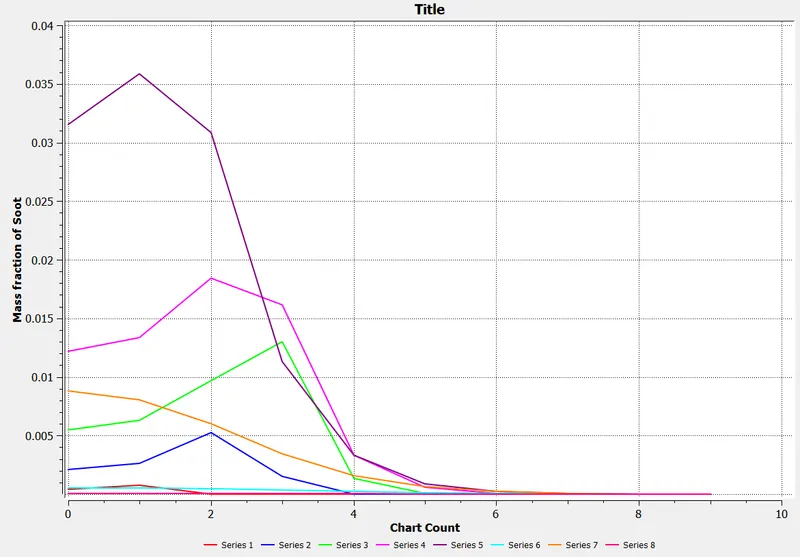
mass fraction soot
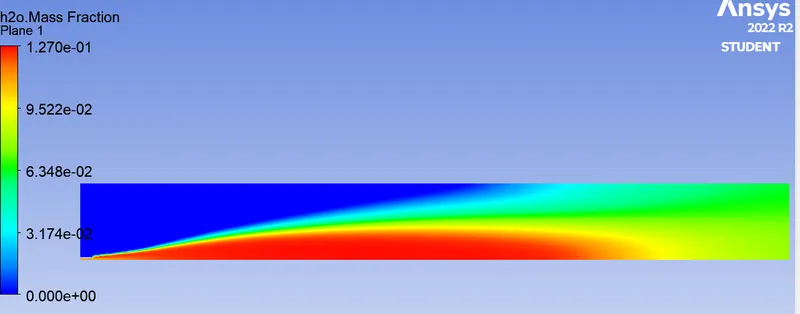
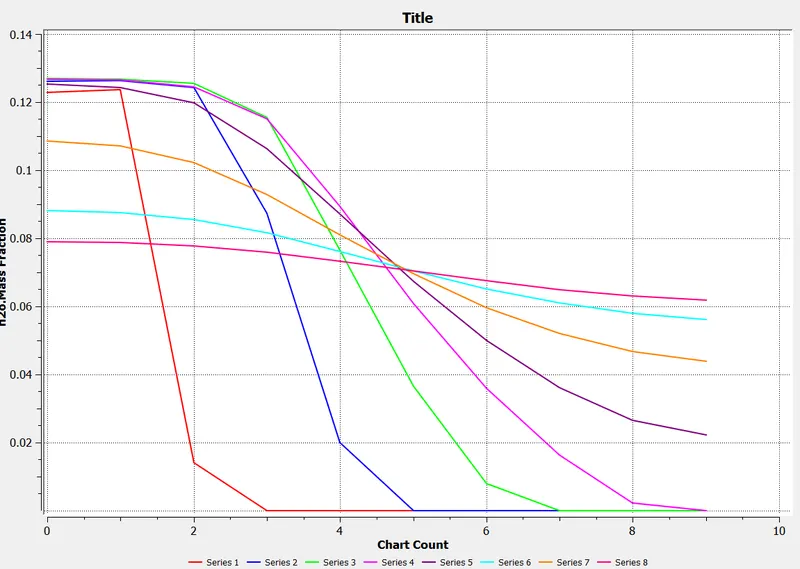
masss fraction H2O
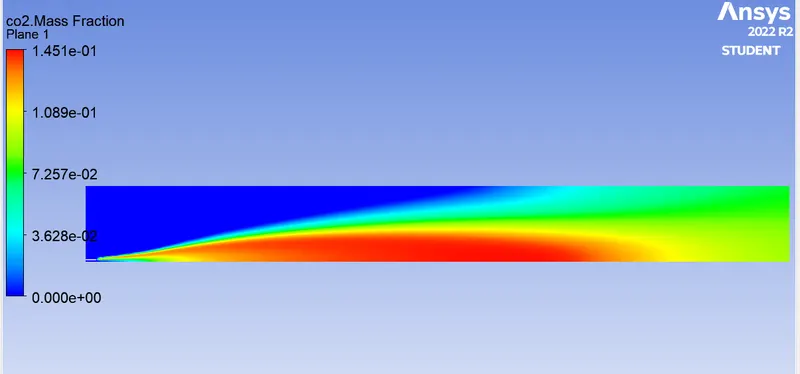
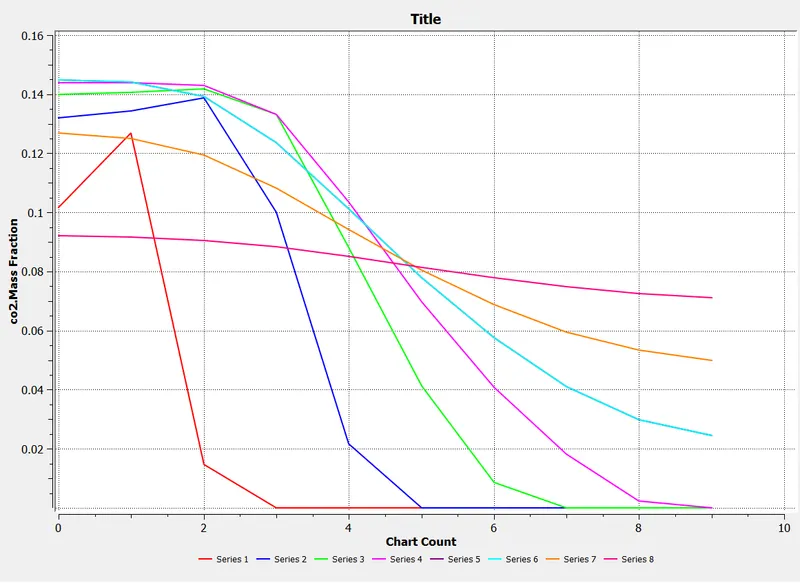
mass fraction CO2
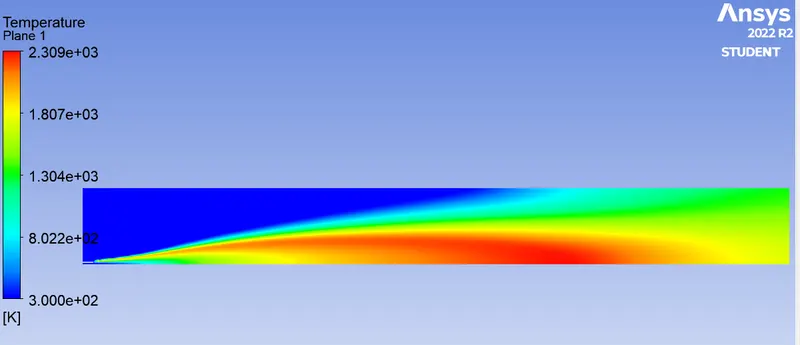
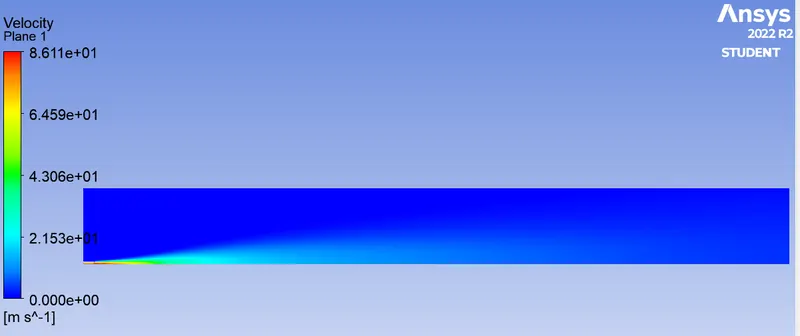
velocity and temp
CH4+H2O (0.2 mole fraction)
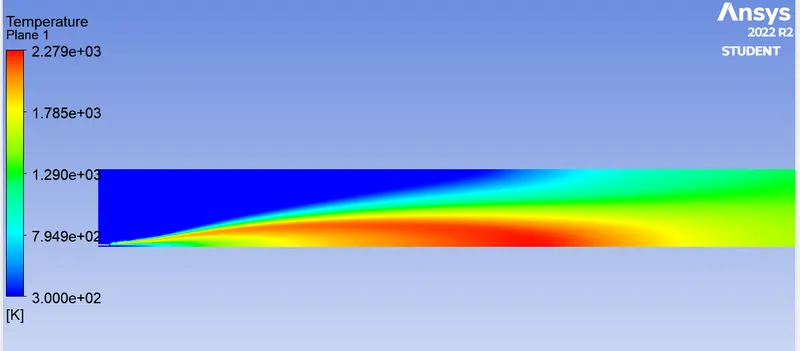
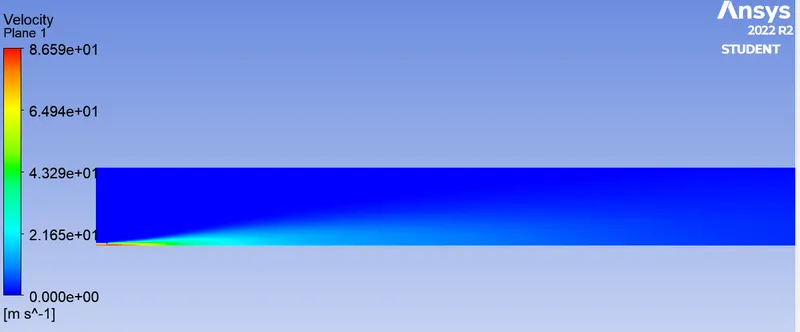
temp and velocity
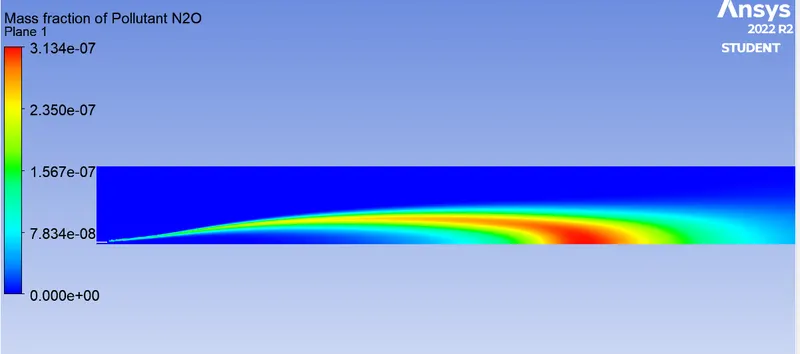
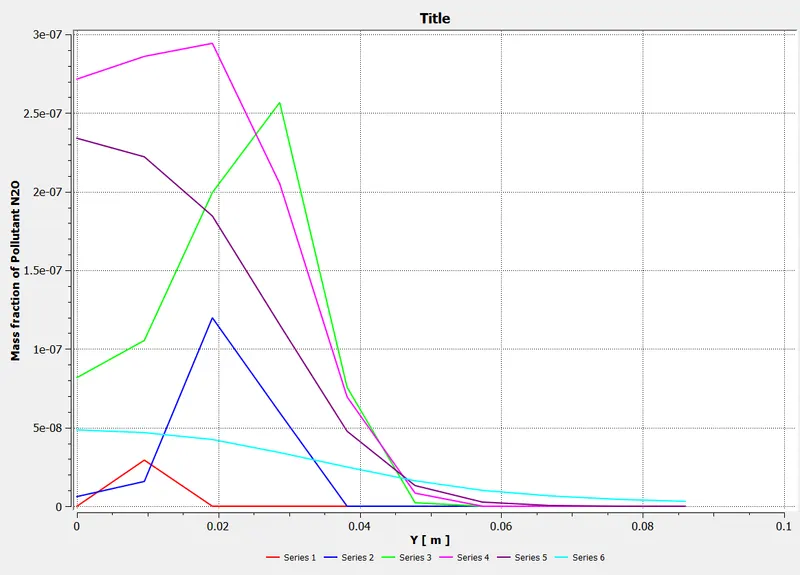
mass fraction of N2O
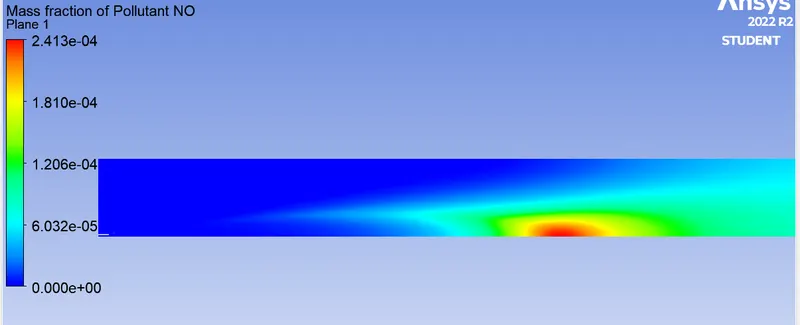
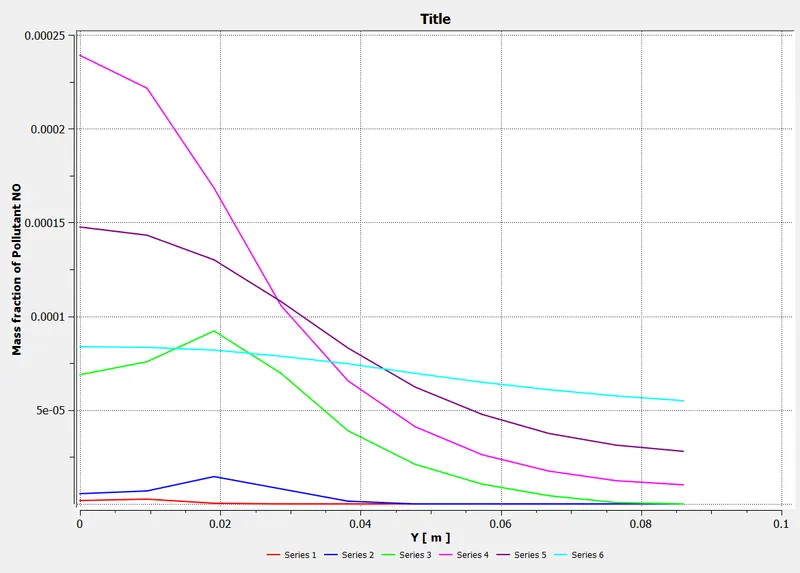
mass fraction of NO
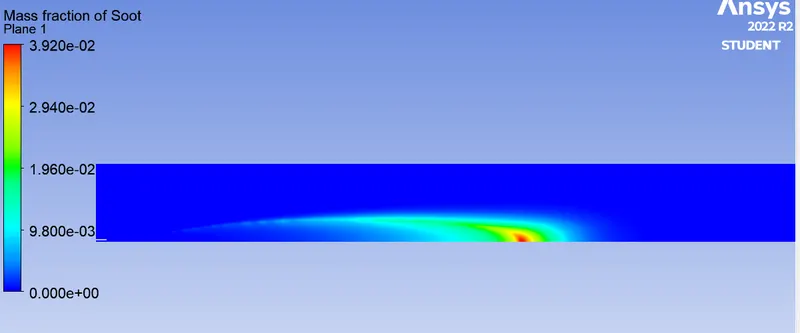
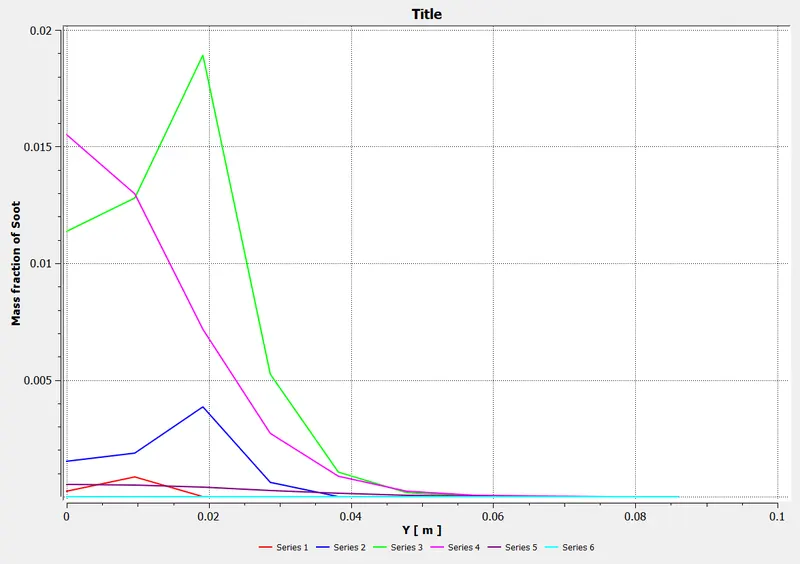
mass fraction of soot
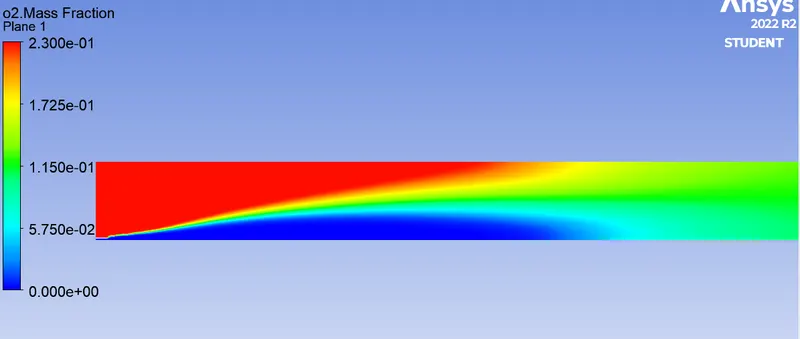
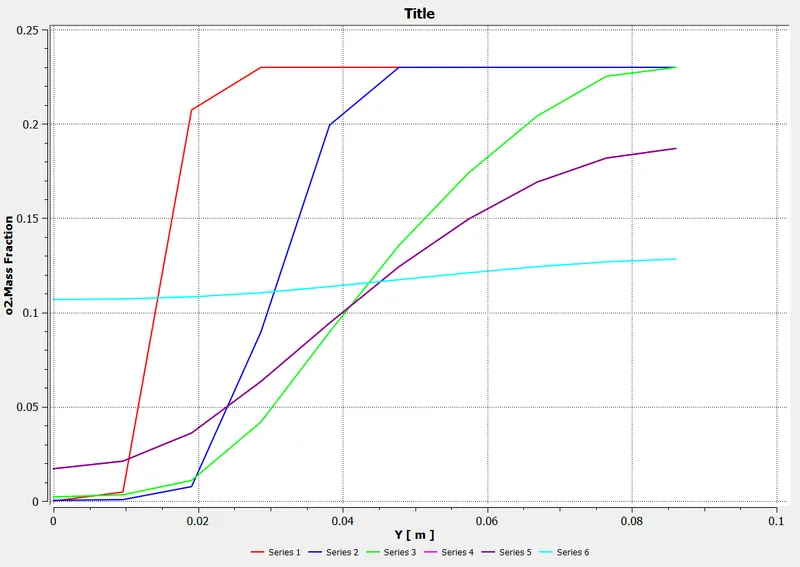
mass fraction of O2
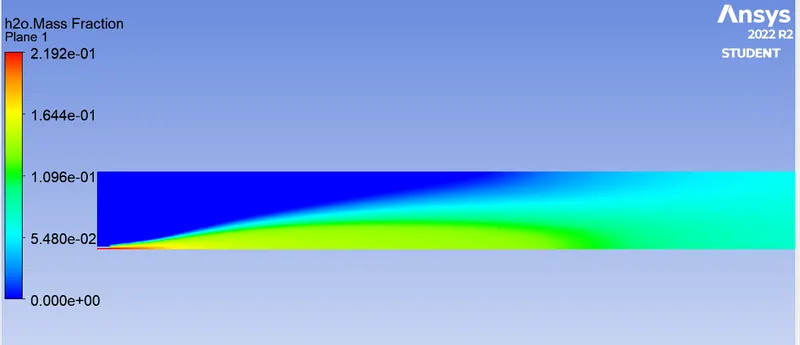
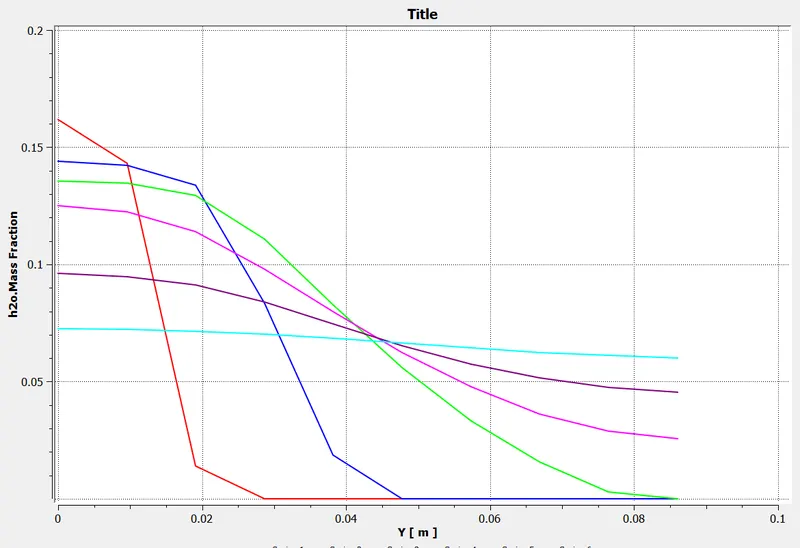
mass fraction of H20
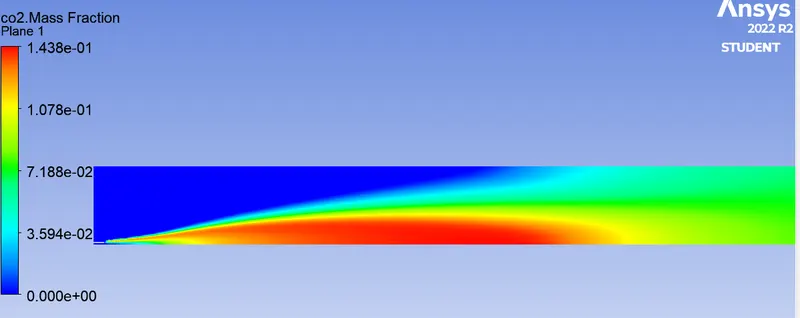
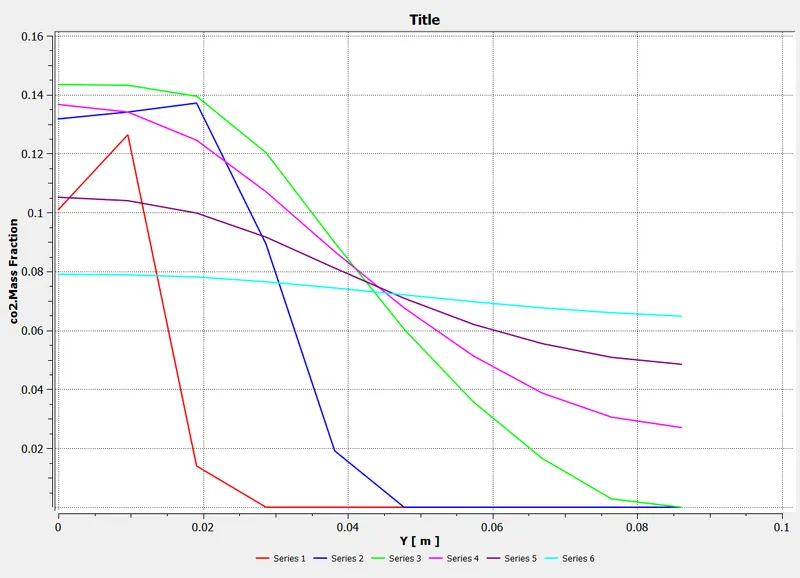
mass fraction of CO2
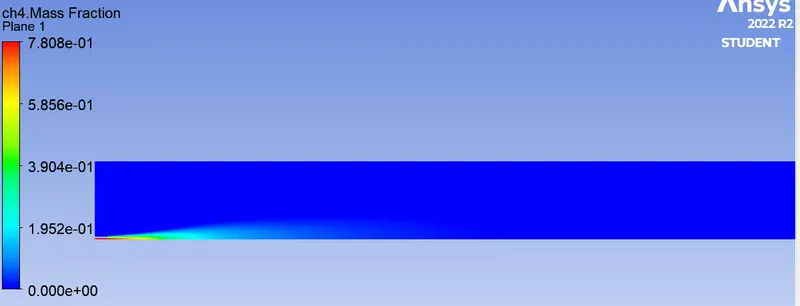
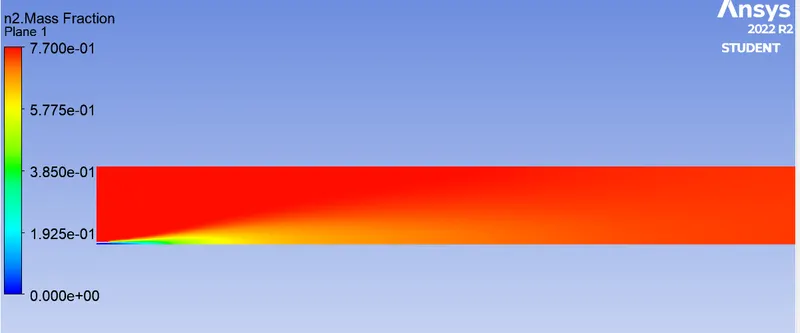
mass fraction of CH4 N2
conclusion
as we move towords outlet the mass fraction of pollutent N20 NO and soot increases
maximum mass fraction and temp of cumbustion as follows
| CH4 (1:0) | CH4+H2O(0.9:0.1) | CH4+H2O(0.8+0.2) | |
| N2O *10^(-7) | 3.48 | 3.33 | 3.134 |
| NO *10^(-4) | 6.8 | 4.238 | 2.413 |
| soot *10^(-2) | 9.06 | 6.019 | 3.92 |
| CO2 *10^(-1) | 1.46 | 1.45 | 1.43 |
| TEMP in K | 2333 | 2309 | 2279 |
from above table it can be seen that with increasing water in fuel will reduce the polution but it also resuces the cumbustion effiency
the animation and contor are share in zip file