Week 10 - Simulating Combustion of Natural Gas.
Aim: To Perform heat transfer analysis in Battery.
Introduction& Theory:
Battery:
Is a source of generating electric power measured by flow rate per time by whiich electrical energy is transferred to electric circuit, consisting of one or more electrochemical cells capable of generating electric power from chemical reactions.The cells are called as voltaic /galvanic cells which involves chemical reactions When a battery is supplying power, its positive terminal act as the cathode and its negative terminal act as the anode.
All electrochemical cells consist of two electrodes separated by some distance. The space between the electrodes is filled with an electrolyte an ionic liquid that conducts electricity.
Cathode (-)& Anode(+):
Are Electrodes ,an electrode is a substance that helps in the conduction of electricity wherein the electric current either enters or leaves the non-metallic medium like an electrolytic cell.& describes the direction of flow of current
They are both defined by the flow of current. Therefore, a cathode is an electrode from which the current exits a polarized electrical device. Likewise, an anode is an electrode from which a current enters into a polarized electrical device.
The anode is the electrode where electricity moves into.
The cathode is the electrode where electricity is given out or flows out of.
A battery for the purposes of this explanation will be a device that can store energy in a chemical form and convert that stored chemical energy into electrical energy when needed.
Heat:
- The Conjugate Heat Transfer (CHT) analysis type allows for the simulation of heat transferbetween solid and fluid domains by exchanging thermal energy at the interfaces between them This type of heat transfer includes both convection (between fluids) and conductive (between solids) heat transfer, as well as both forced and natural convection.
Forced convection:
Convection is the mechanism of heat transfer through a fluid in the presence of bulk fluidmotion. Convection is classified as natural (or free) and forced convection depending on how the fluid motion is initiated. In natural convection, any fluid motion is caused bynatural means such as the buoyancy effect, Whereas in forced convection, the fluid is forced to flow over a surface or in a tube by external means such as a pump or fan
Convection heat transfer is complicated since it involves fluid motion as well as heat conduction. The fluid motion enhances heat transfer (the higher the velocity the higher the heat transfer rate).The rate of convection heat transfer is expressed by Newton’s law of cooling,
Q=hA(T2-T1).
The convective heat transfer coefficient h strongly depends on the fluid properties and roughness of the solid surface, and the type of the fluid flow (laminar or turbulent)It is assumed that the velocity of the fluid is zero at the wall, this assumption is called no‐slip condition. As a result, the heat transfer from the solid surface to the fluid layer adjacent to the surface is by pure conduction, since the fluid is motionless.
About Heat:
Energy transfer to & from a open system in two distinct forms
1.Heat
2.Work
- Both heat & work recognized at the boundary of the system ie., at the walls as they cross boundaries.
- Heat & work are boundary phenomenon
- Both are associated with the process not a state
- Both are path functions ie,.there magnitudes depend on the path followed during a process
- Path functions have inexact diffentials .
Energy transfer b/w the system & surroundings on the temp diffie., from higher temp to lower temp until it attains thermal equillibrium is established.
An Energy interaction is heat only ,it takes place because of temp diff,no heat transfer takes place when both system & surroundings attains same temp/equillibrium.
Temp is the driving Force for heat transfer ,the larger temp diff ,the higher rate of heat transfer, once it transfer to surroundings the transfer heat becomes part of Internal energy of the surroundings.
An Energy interaction that is not caused by a temp diff b/w system & surroundings is work.Work is the energy transfer associated with force acting trough a distance during adiabatic process.
Heat & work are directional quantities ,thus complete description of heat & work requires specification of both Magnitude & direction.
Adiabatic Means:
- Either the system is well insulated so that neglizable amt of heat can pass.
- Both system & surroundings are at the same temp thermal equillibrium and there is no temp diff ie., driving force.
- Even though there is no heat transfer during adiabatic process, the Energy content /temp of the system can still be changed by other means such as work.
Modelling:
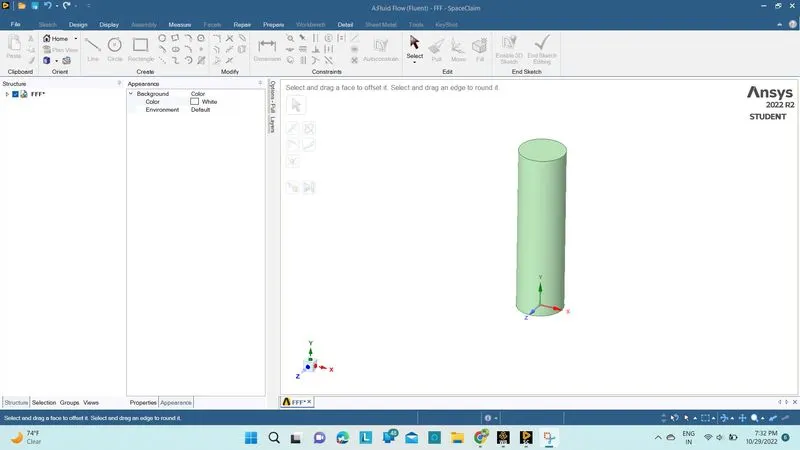
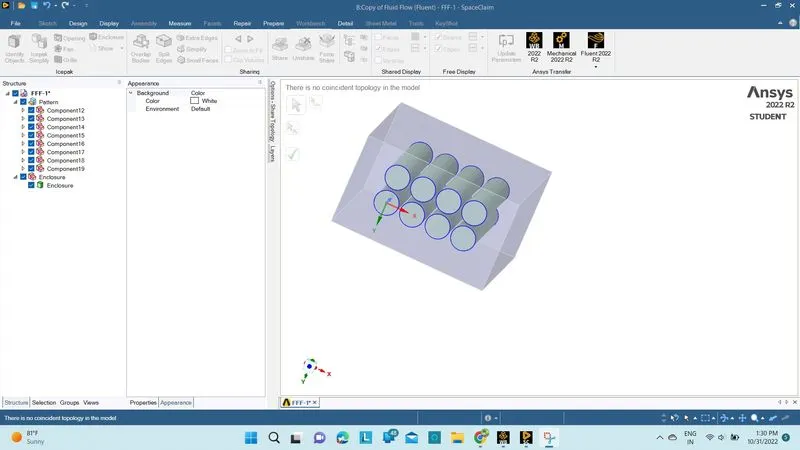
- Open_spaceclaim
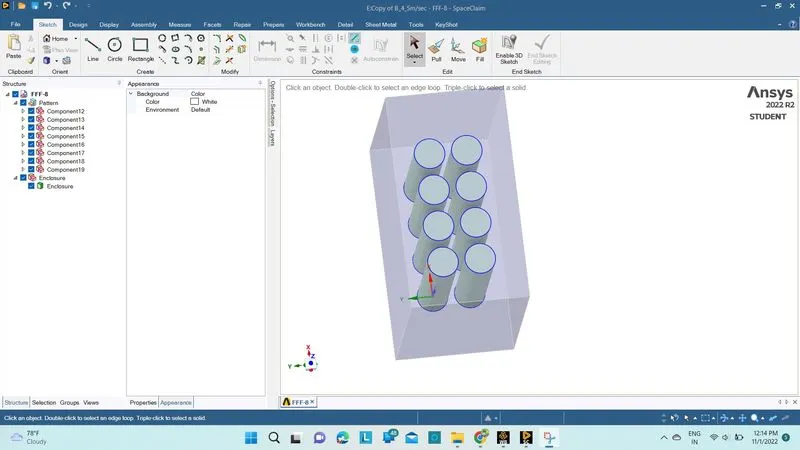
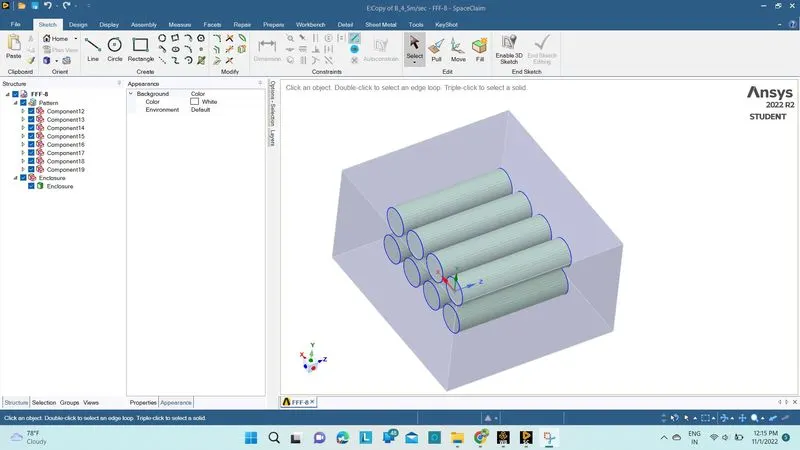
- Spaceclaim_sketch_create circle(18mm)
- Spaceclaim_sketch_Pull surface_(65mm) length.
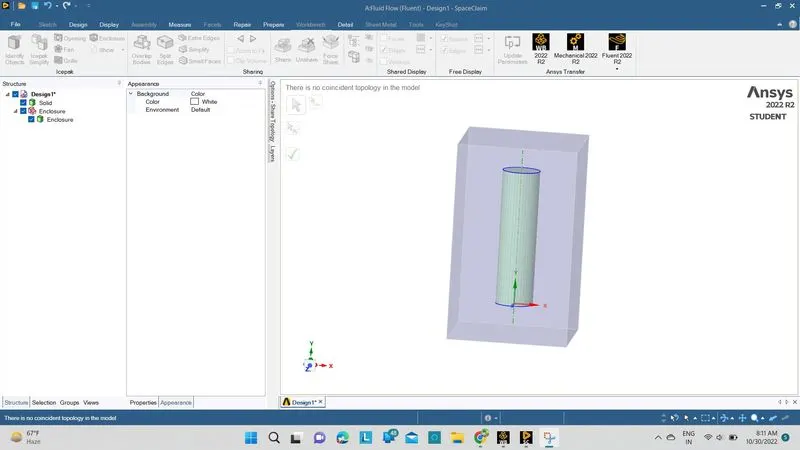
- Spaceclaim_Sketch_prepare_Enclosure.
- Spaceclaim_workbench_sharetopology
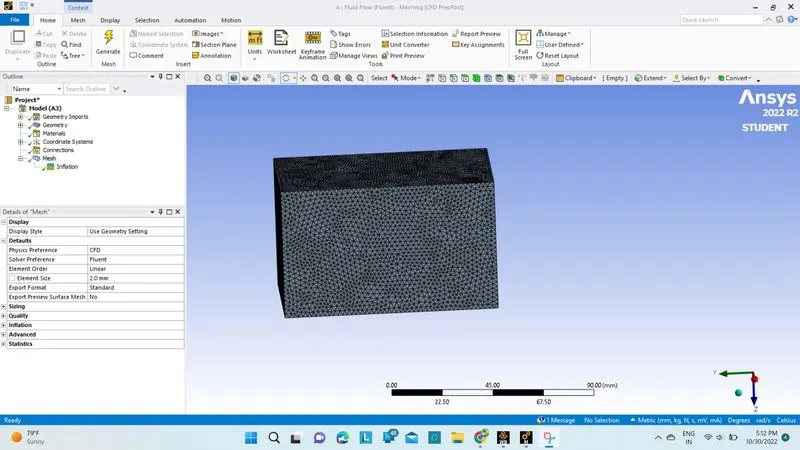
Mesh:
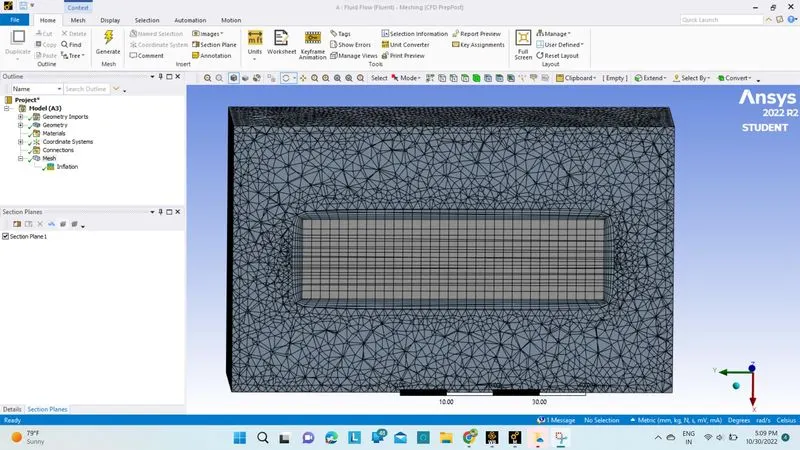
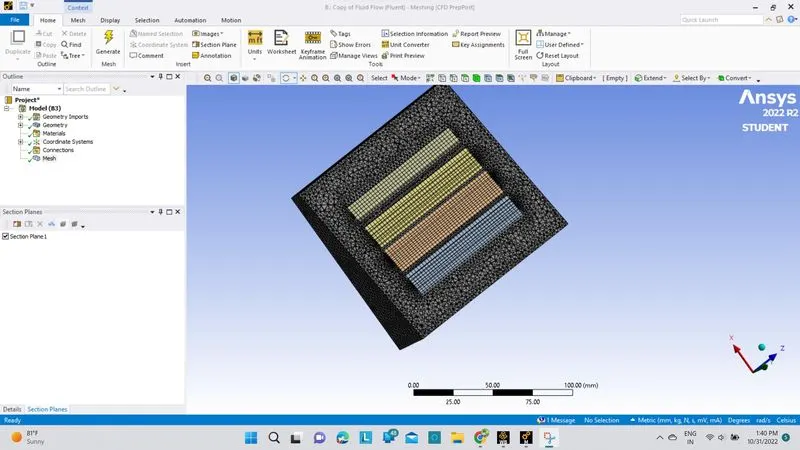
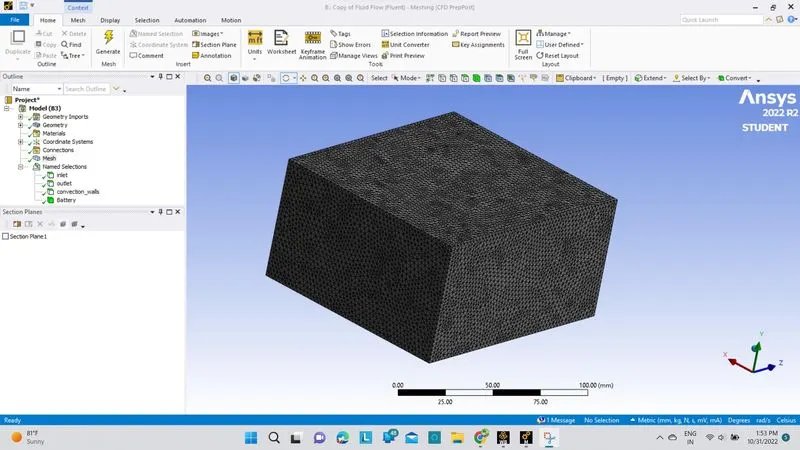
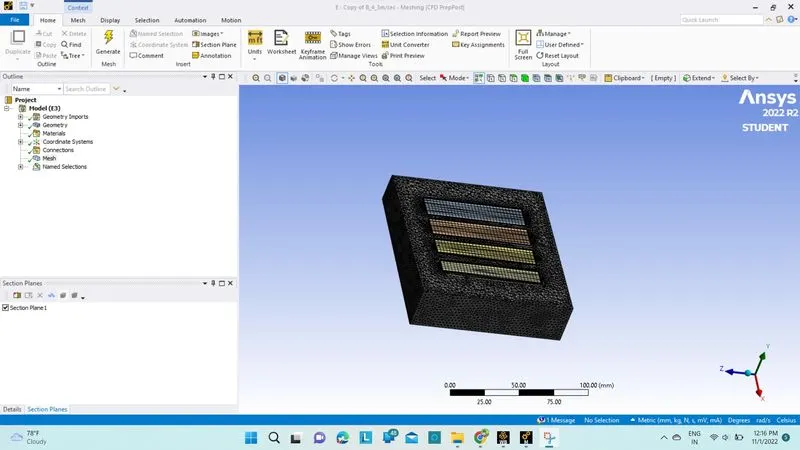
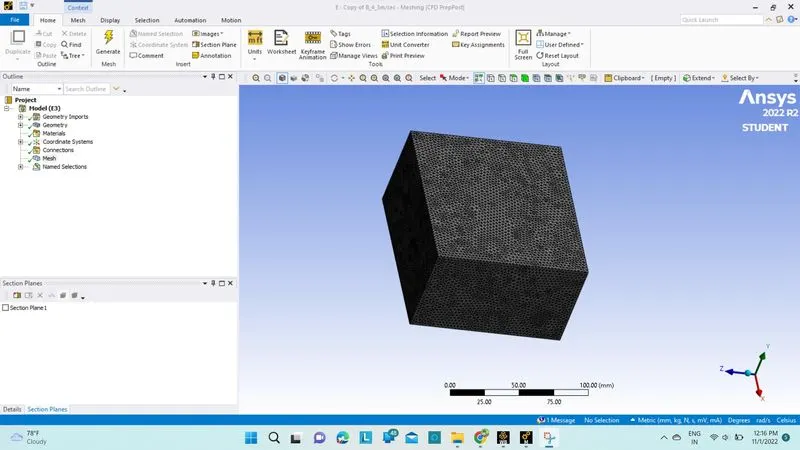
- Mesh _Right click _generate mesh(2mm)
- Mesh _Insert_Inflation Layers
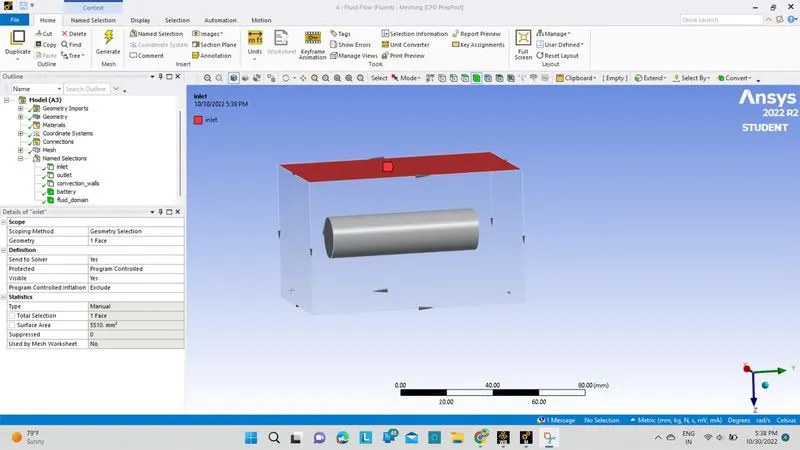
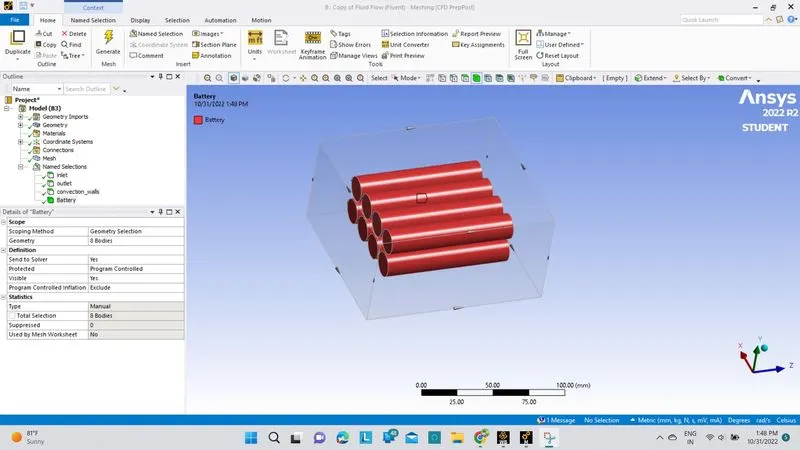
- Mesh_rightclick_Namedselection.
Fluent:
- Open_fluent_
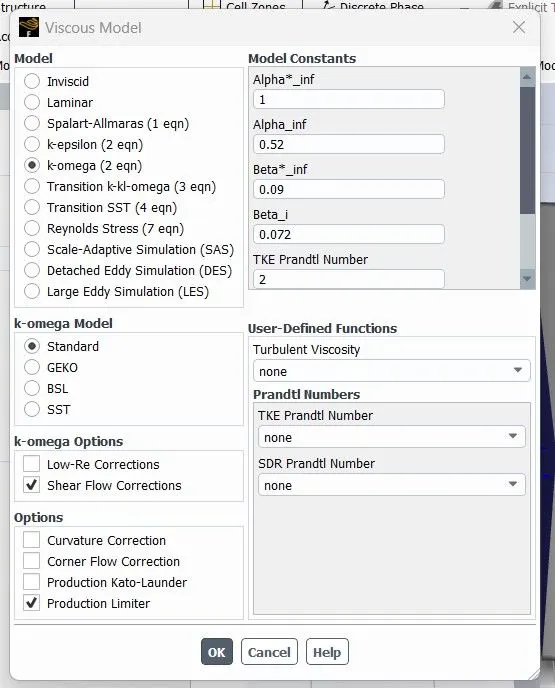
- Fluent_physics_viscous_k-omega
- Fluent_physics_Enable Energy eq.
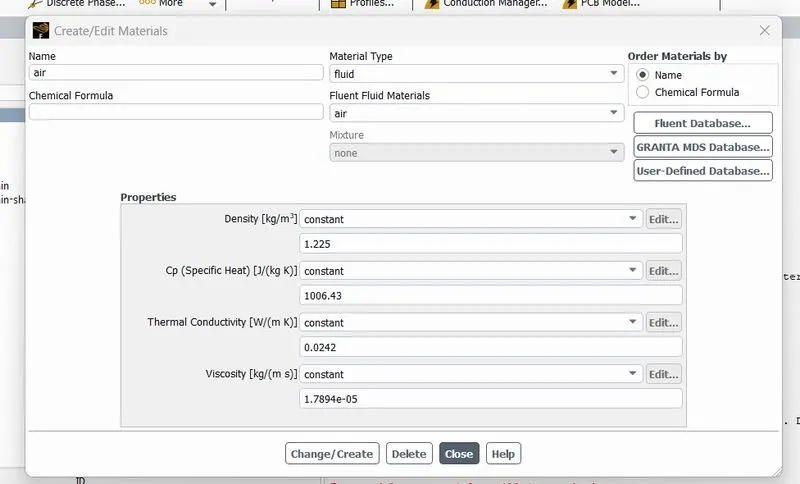
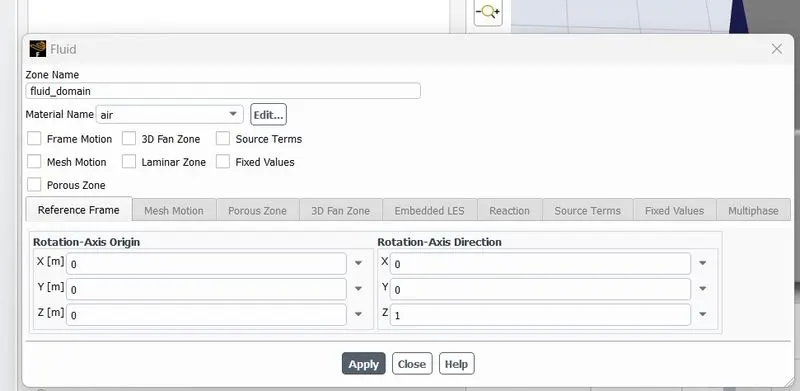
- Fluent_physics_materials_fluid_air
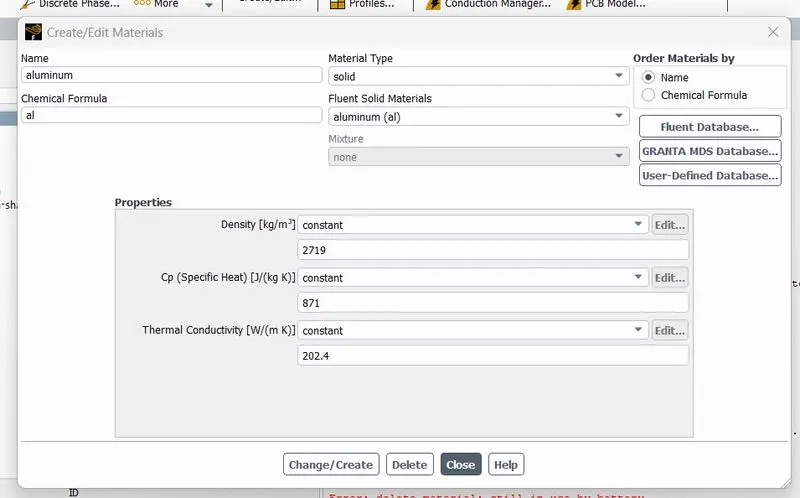
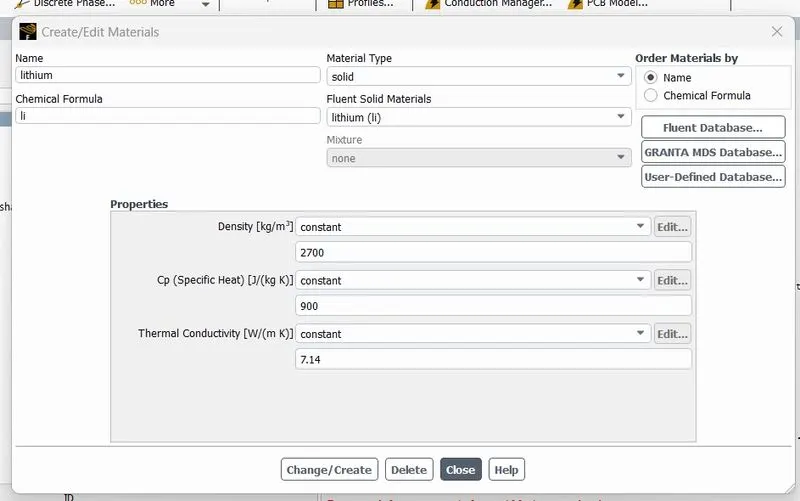
- fluent_physics_materials_solid_aluminium,lithium
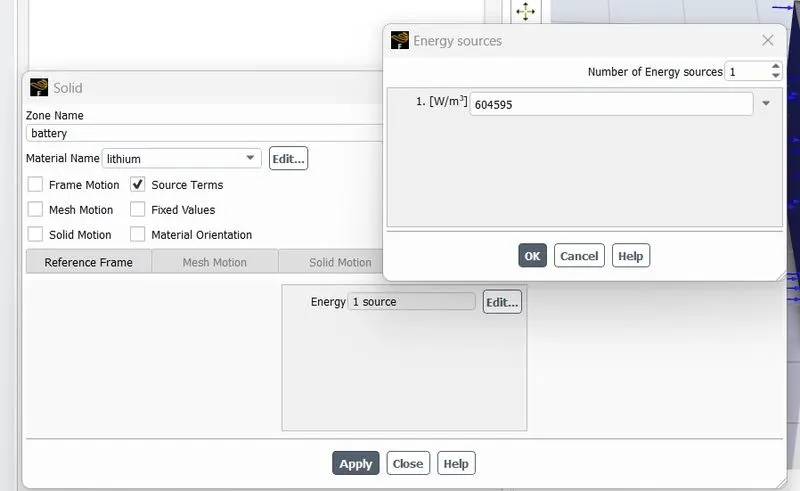
- Fluent_physics_zones_battery_source
STEADY:
For single Battery:
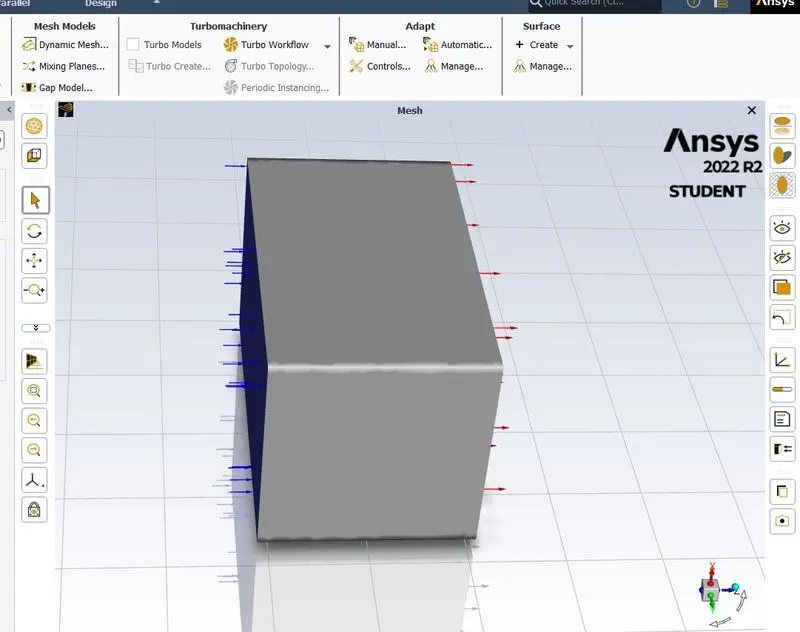
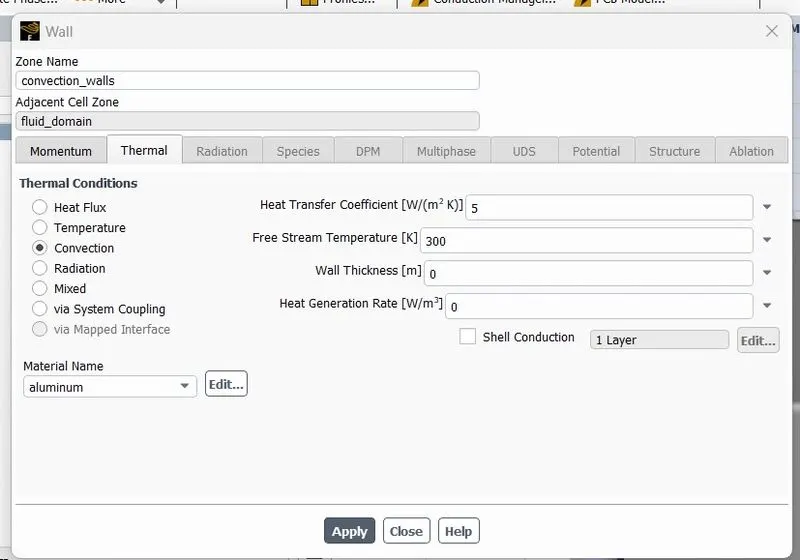
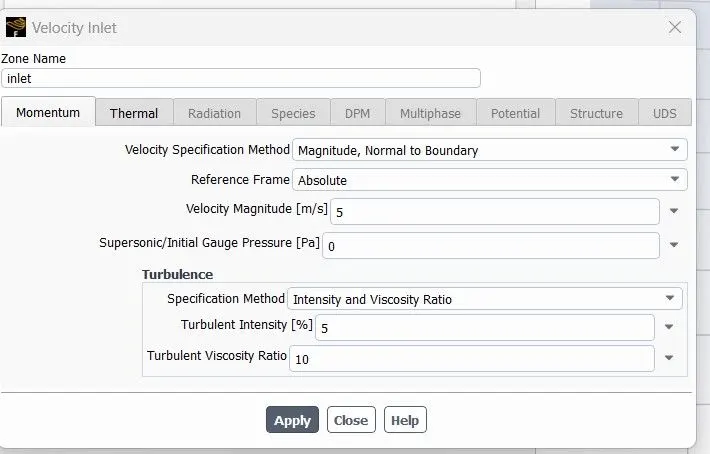
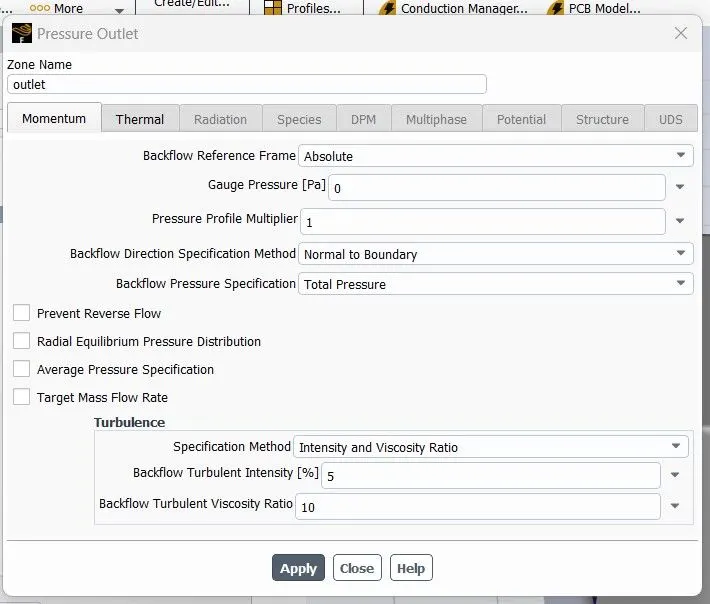
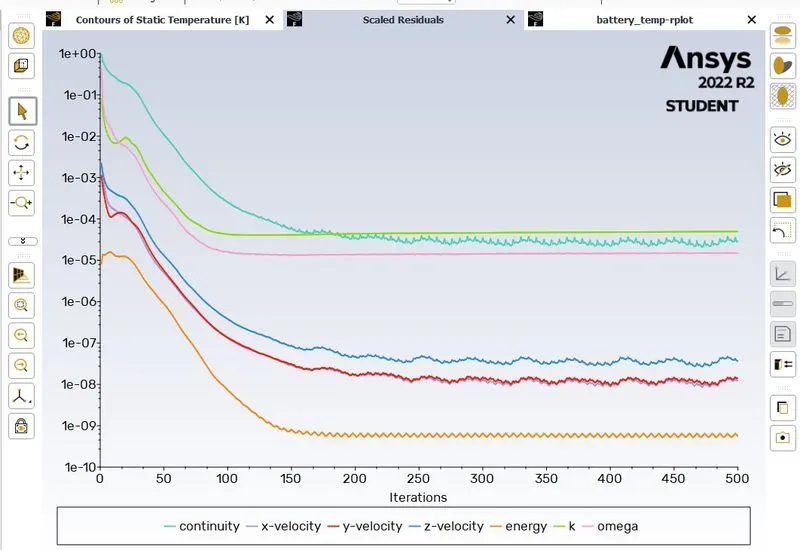
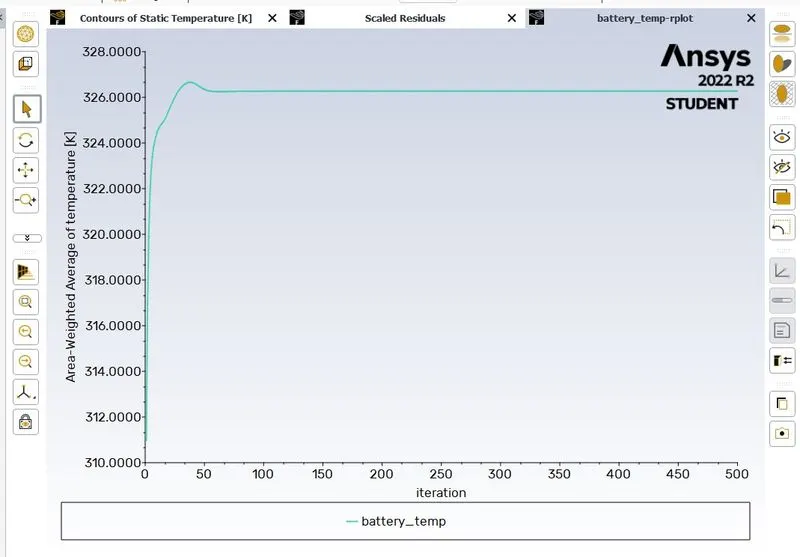
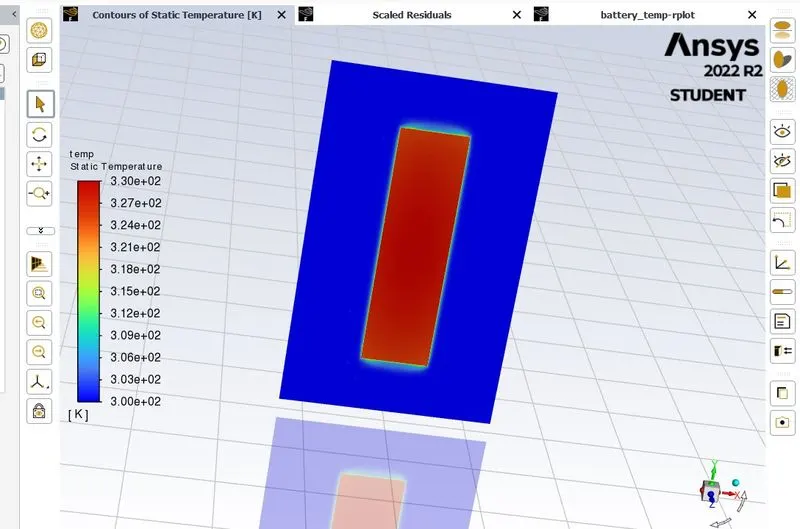
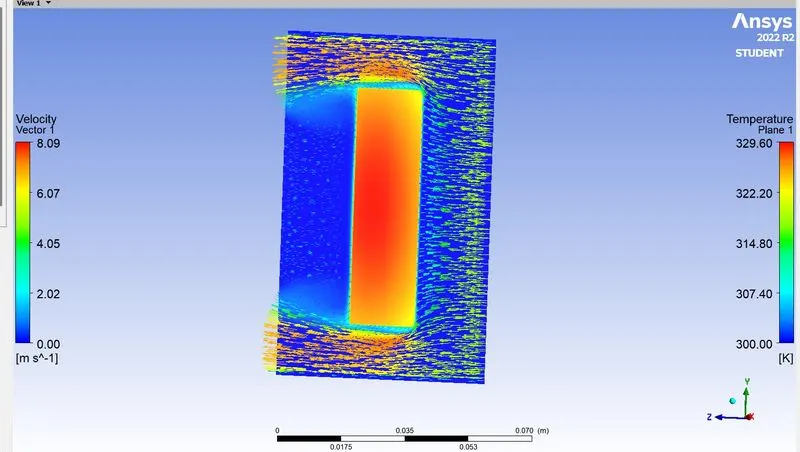
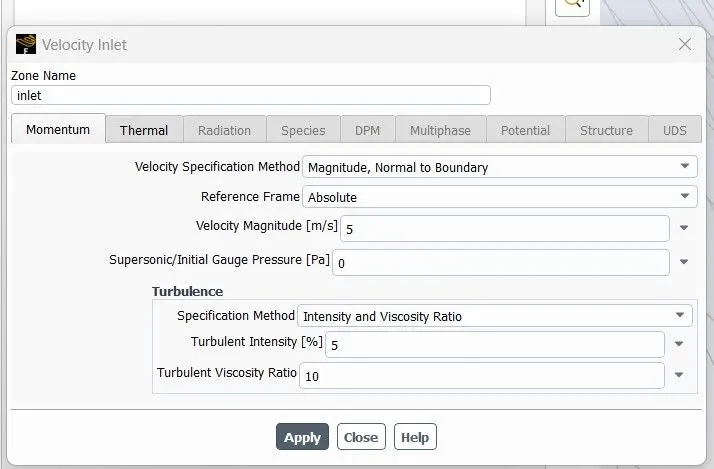
- velocity=5m/sec
For Mutiple Batterie's:
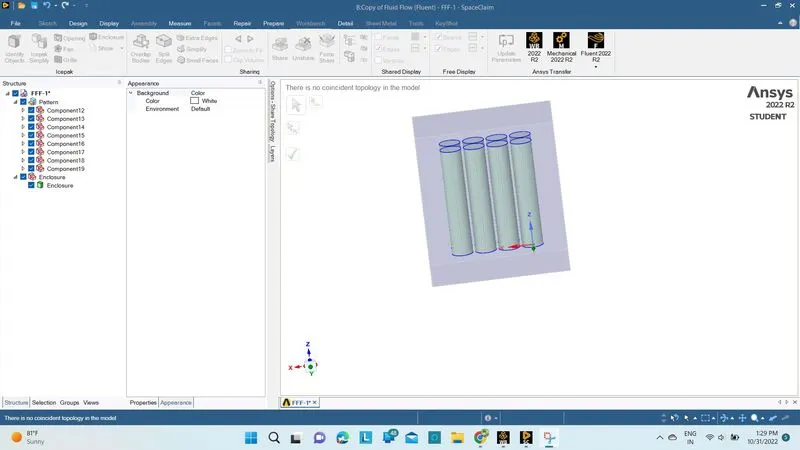
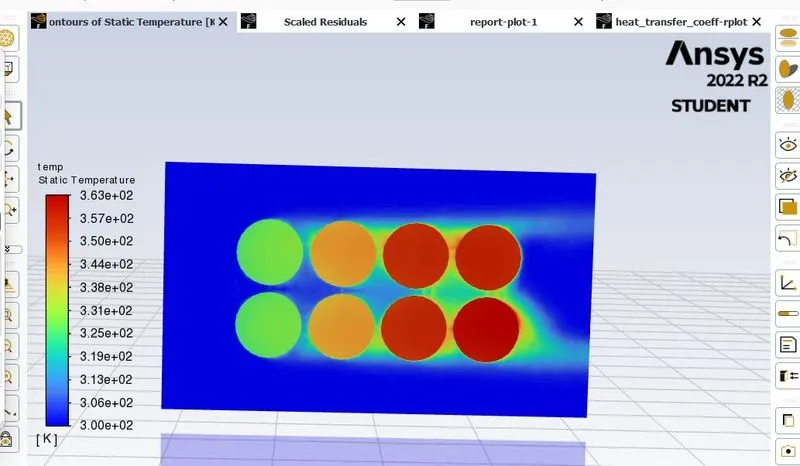
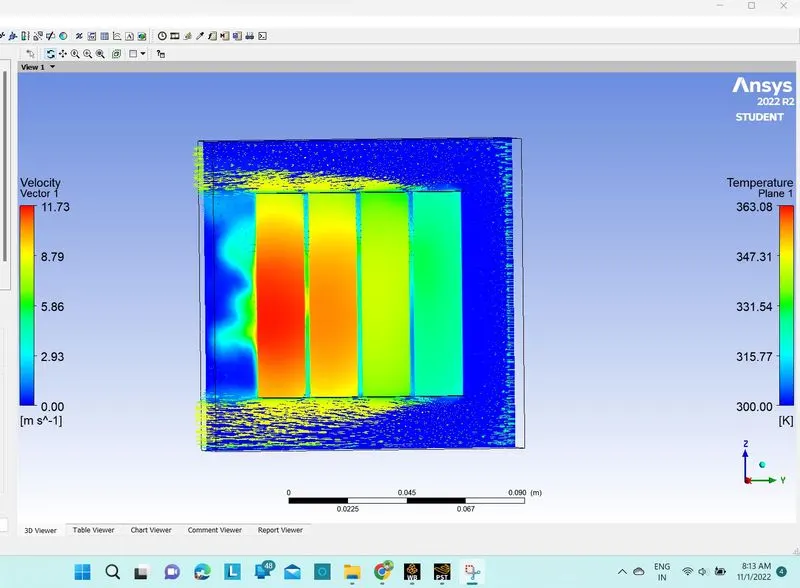
Case1:
velocity=5m/sec,
mesh size=2.5mm
spacing=2mm
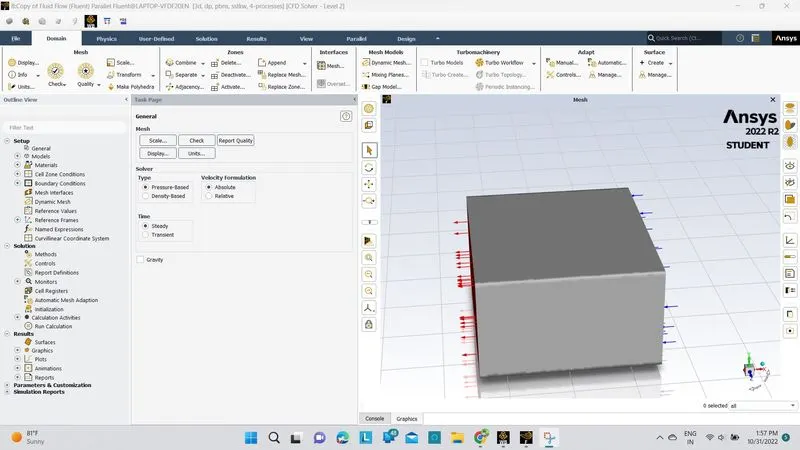
https://drive.google.com/file/d/16BzYQWtabb-8iFk4KQTy0yp8cZ7BPfUN/view?usp=share_link
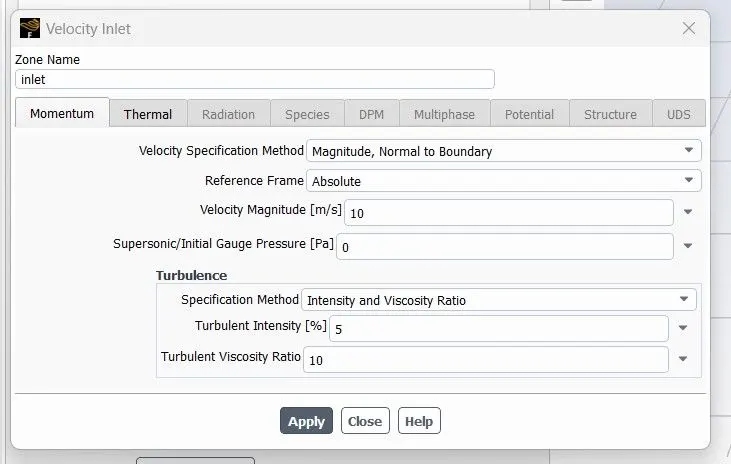
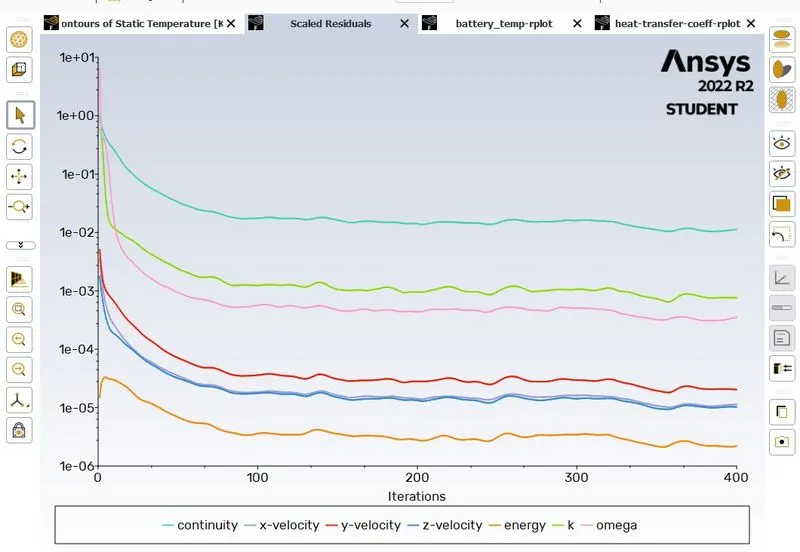
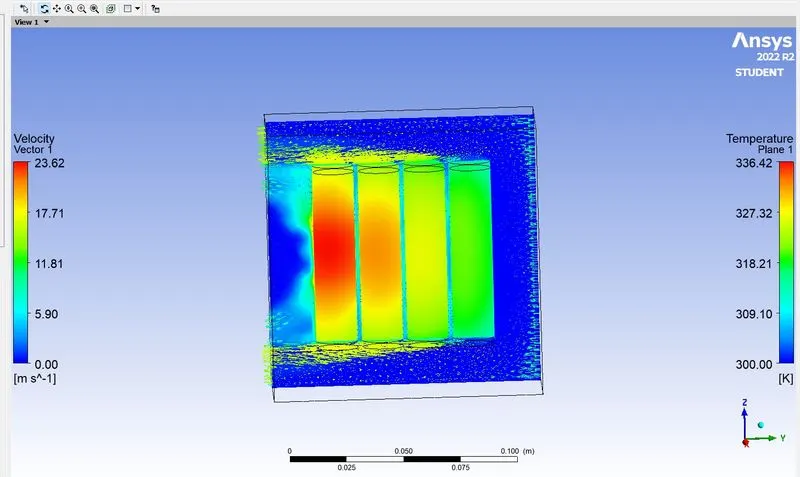
Case2:
velocity=10m/sec,
mesh size=2.5mm
spacing=2mm
Case3:
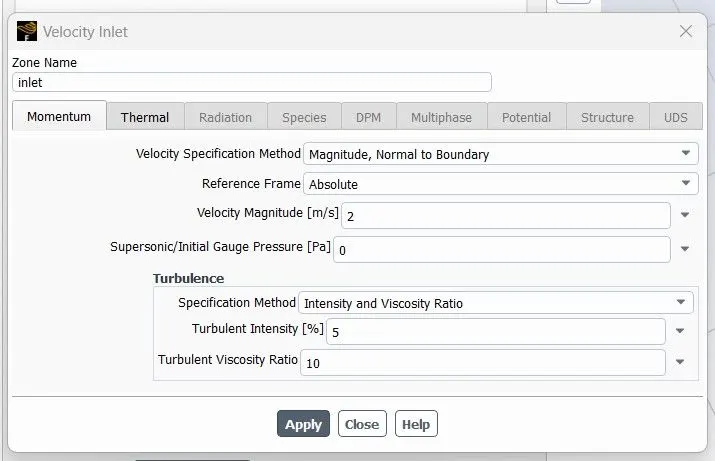
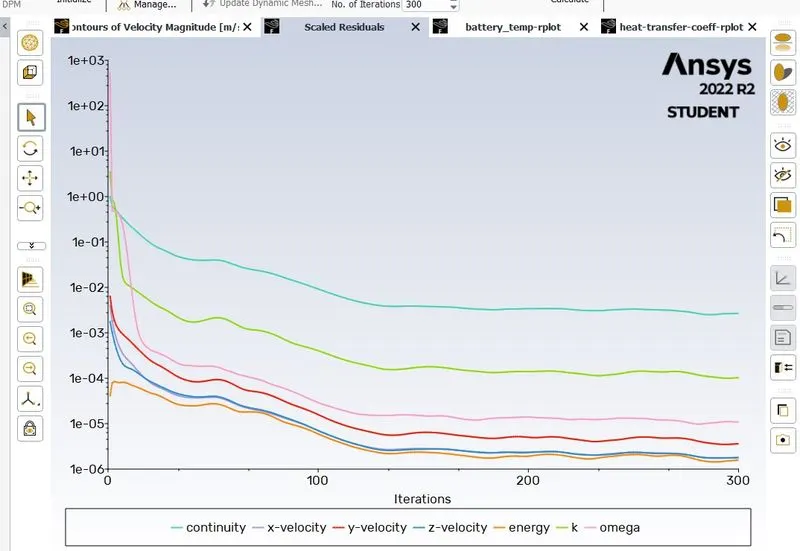
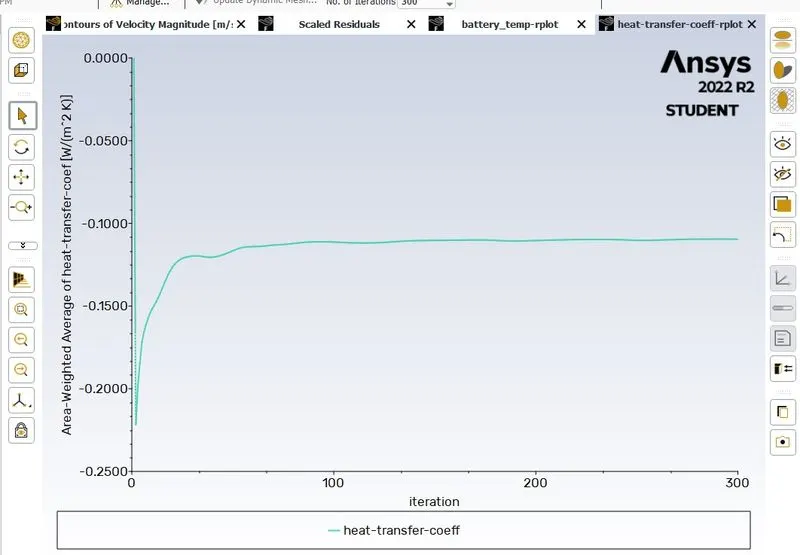
velocity=2m/sec,
mesh size=2.5mm
Spacing=2mm
Case1:
velocity=5m/sec,
mesh size=2.5mm
Spacing=4mm
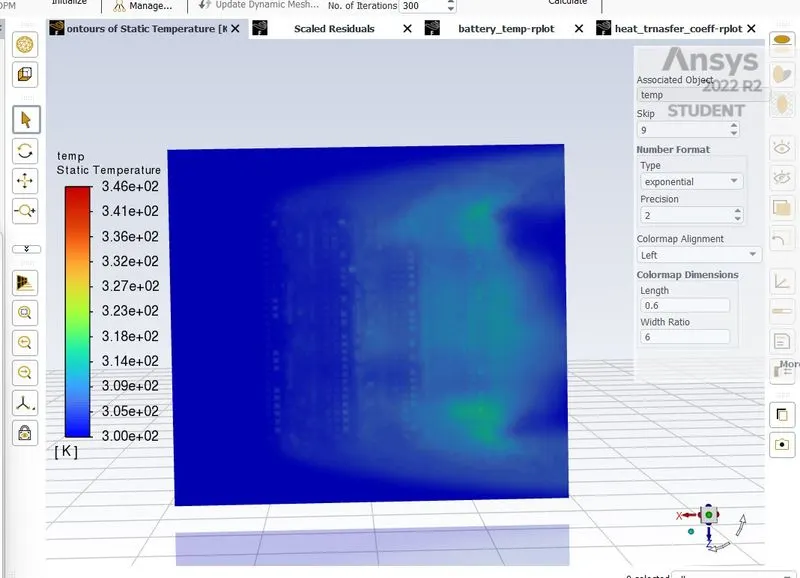
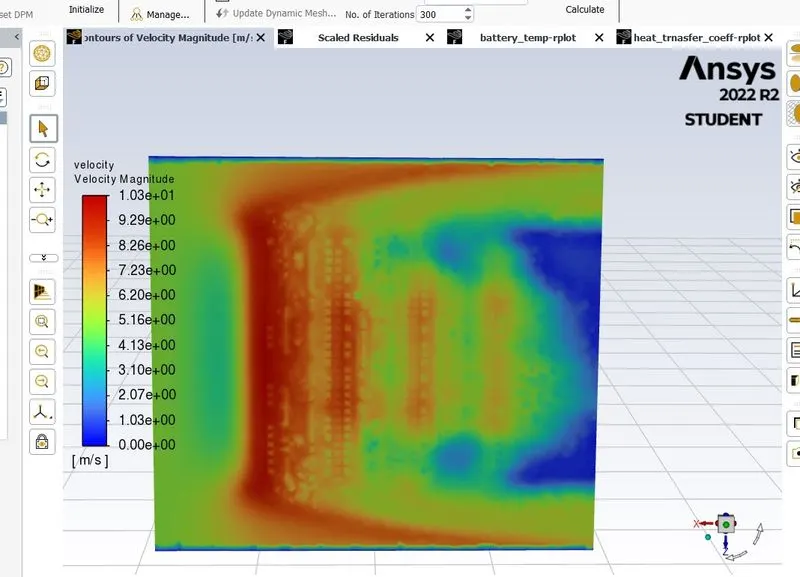
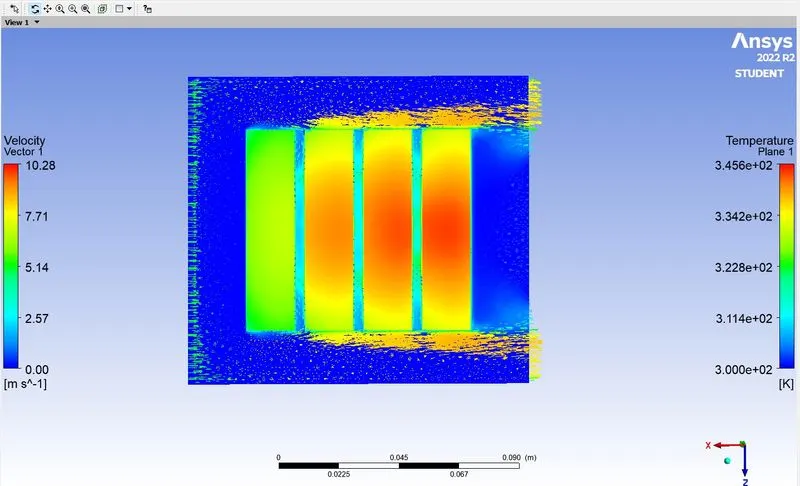
Case2:
velocity=10m/sec,
mesh size=2.5mm
Spacing=4mm
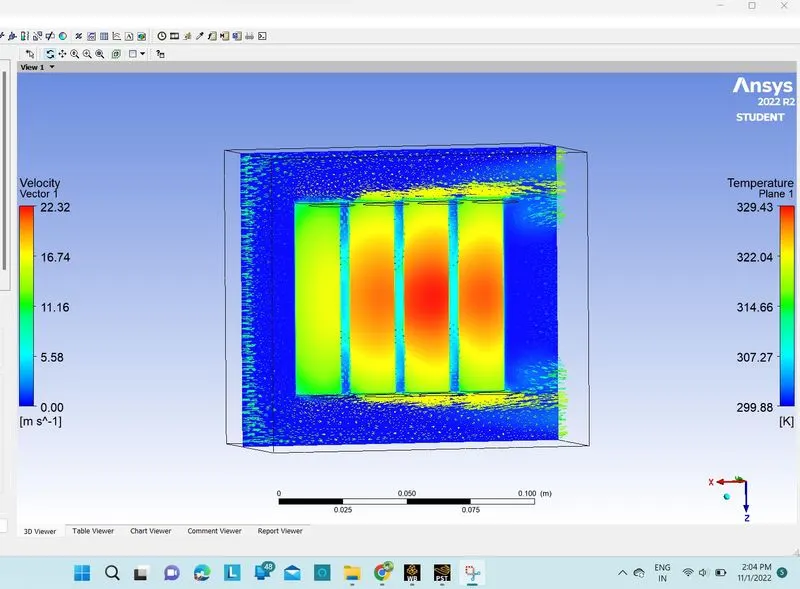
Case3:
velocity=2m/sec,
mesh size=2.5mm
Spacing=4mm
My observation:
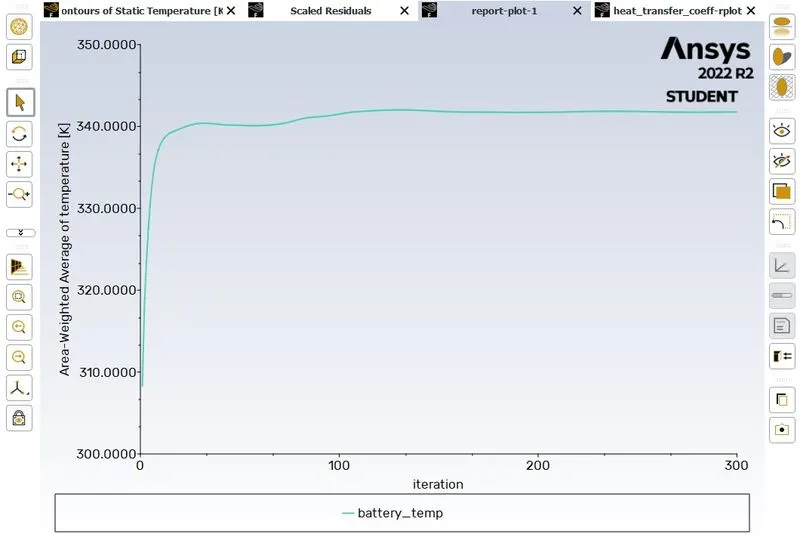
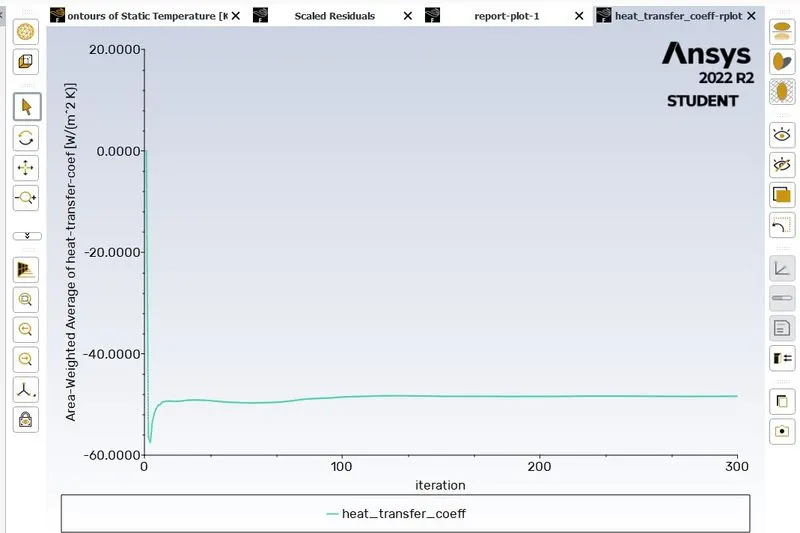
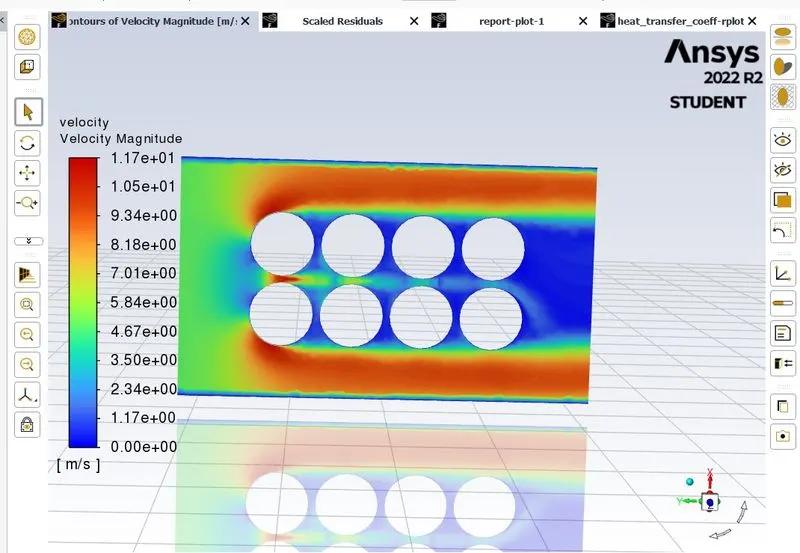
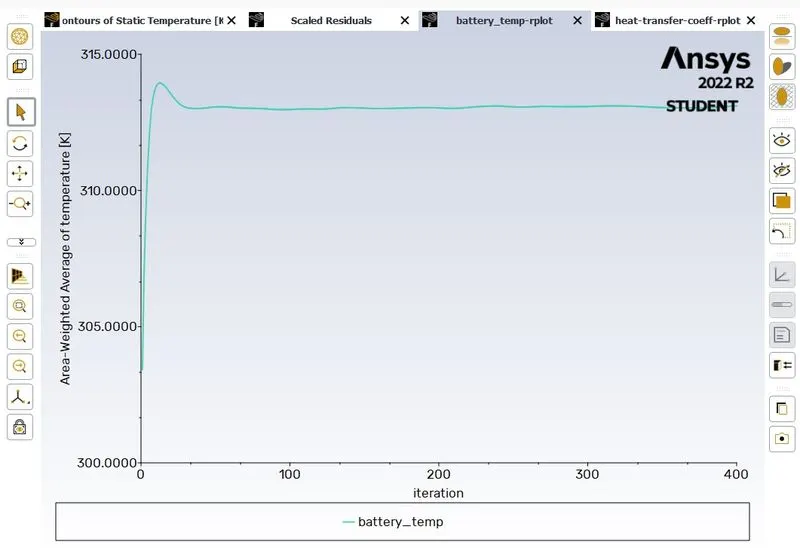
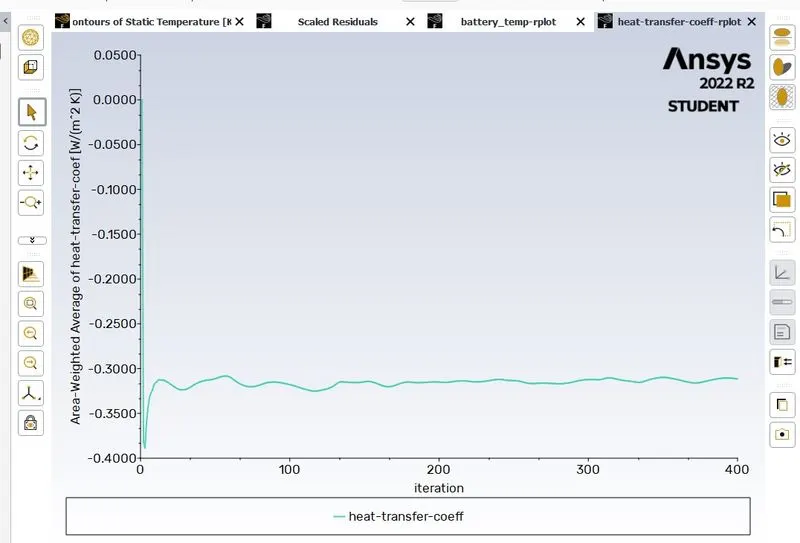
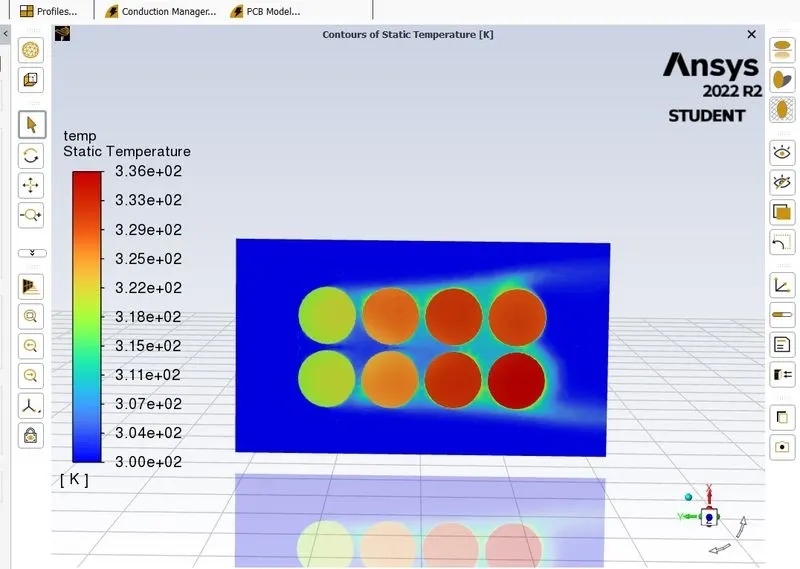
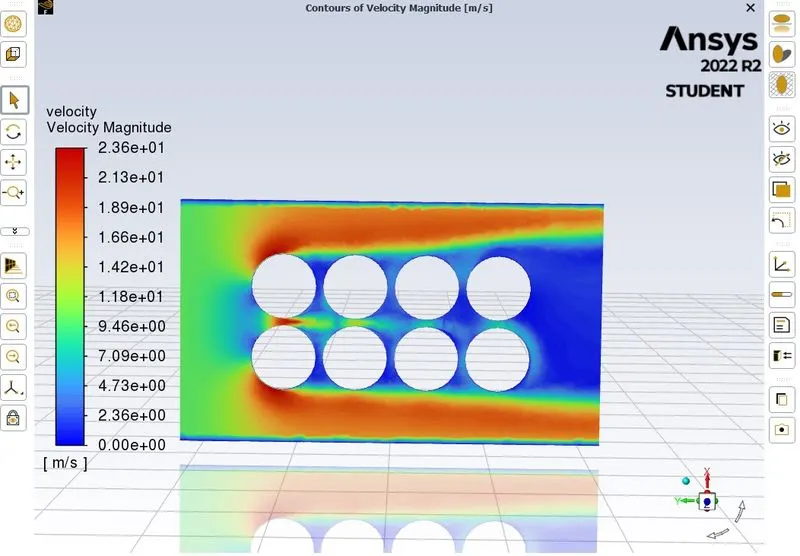
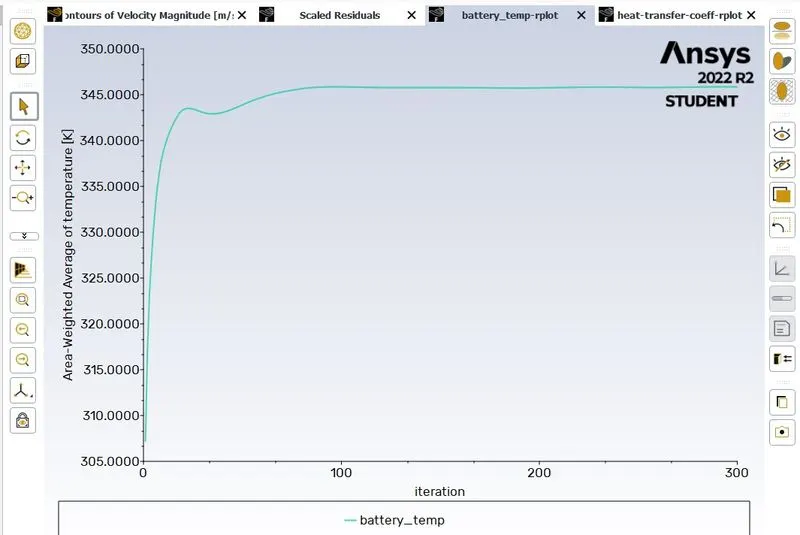
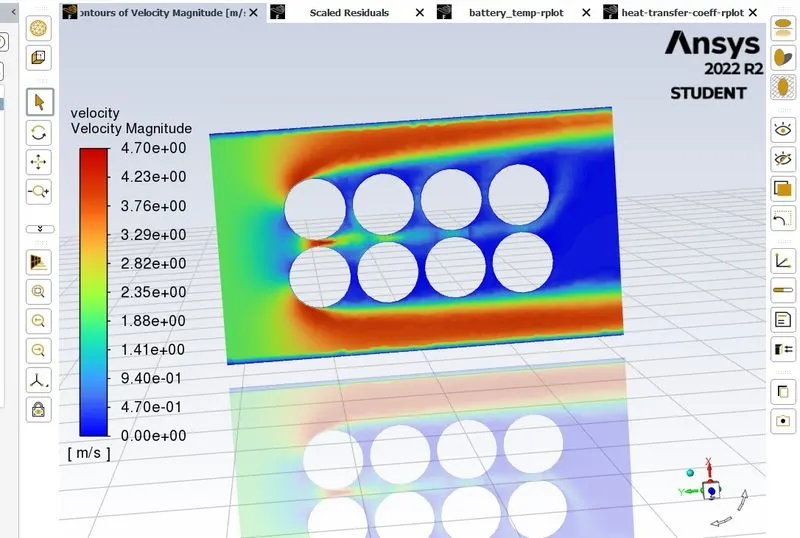
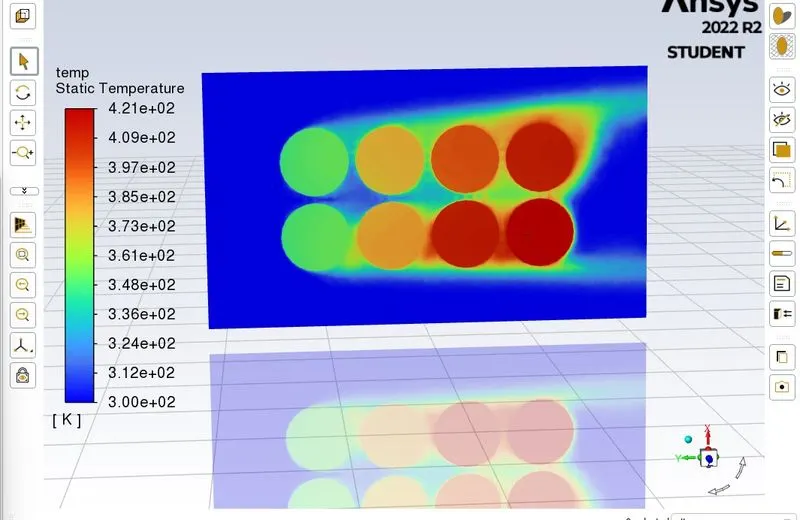
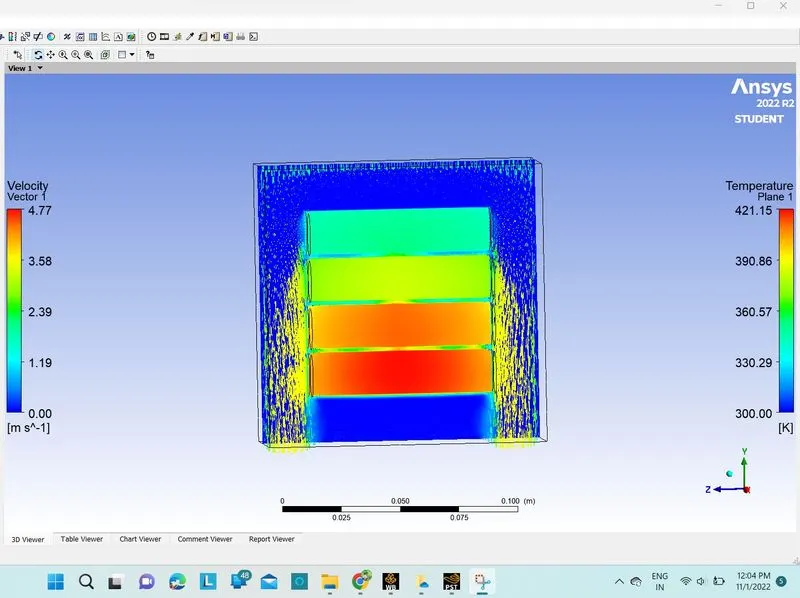
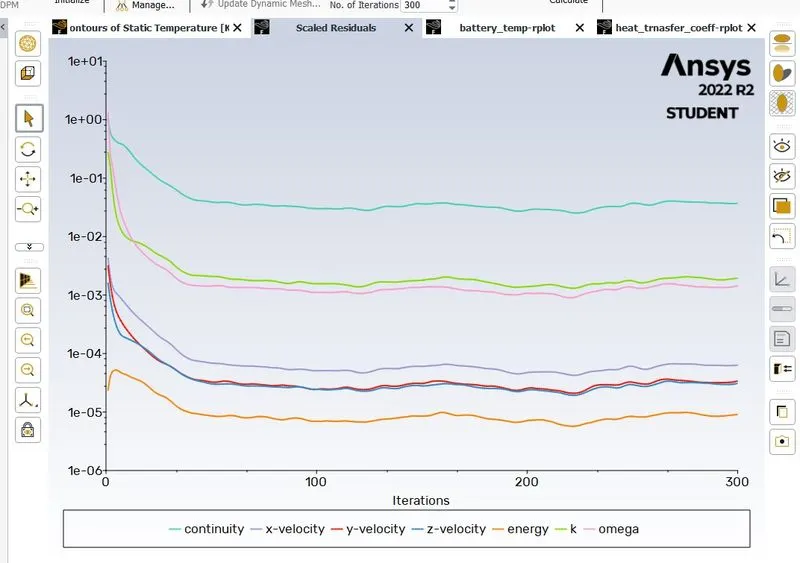
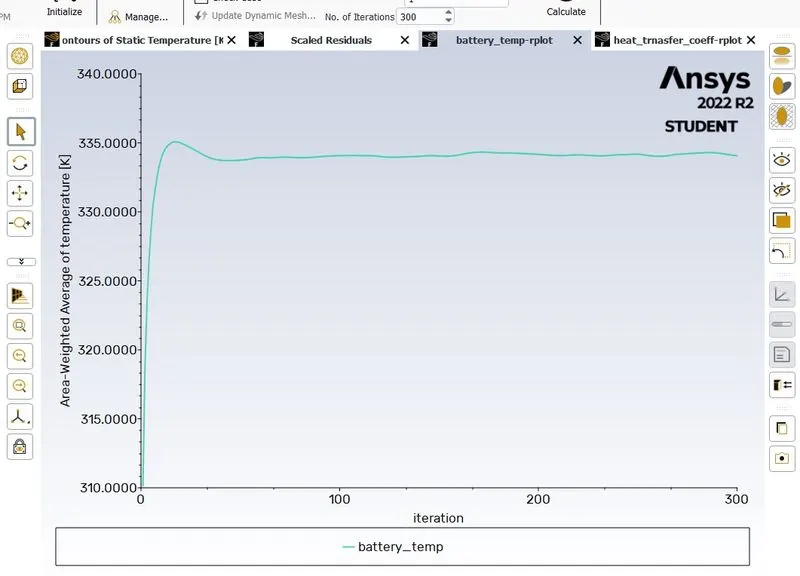
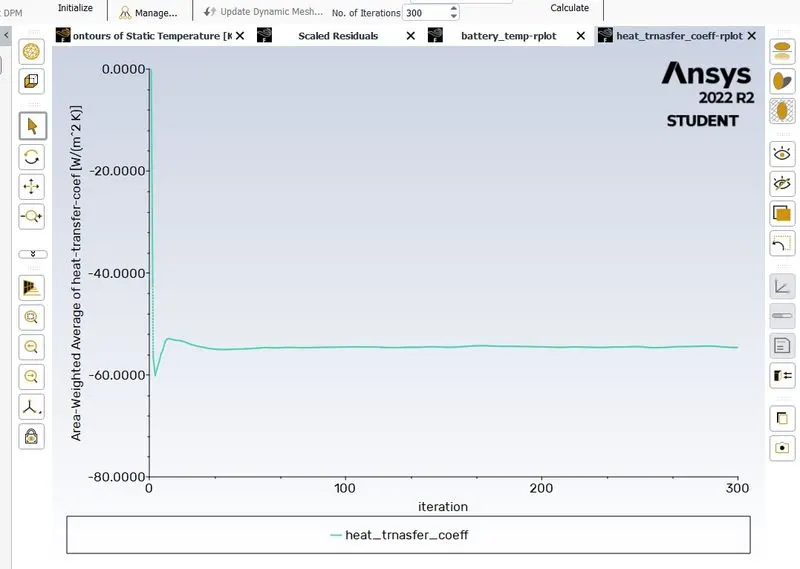
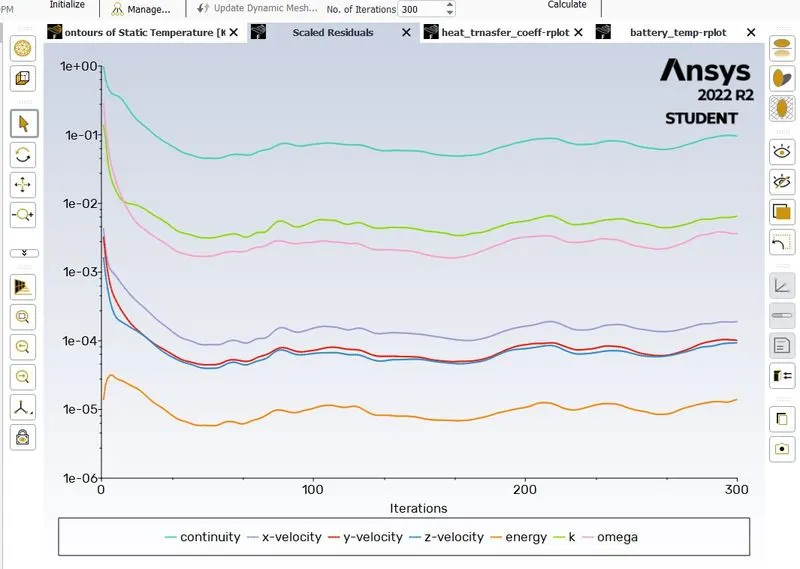
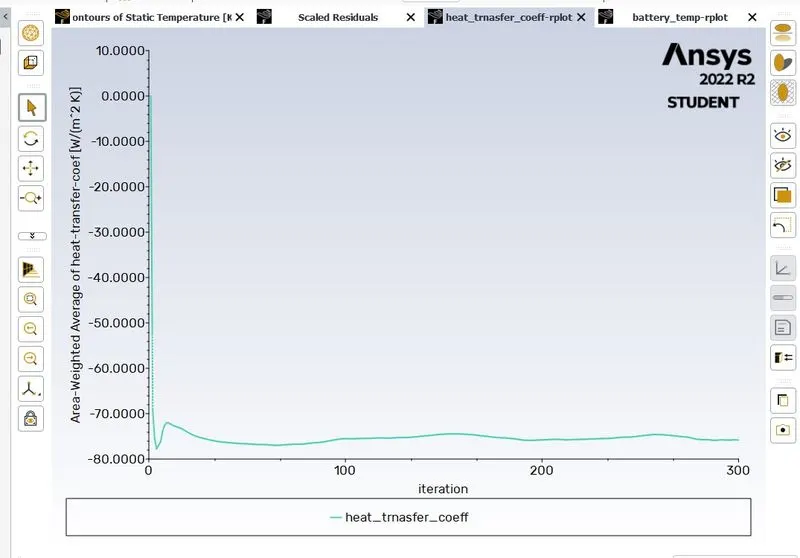
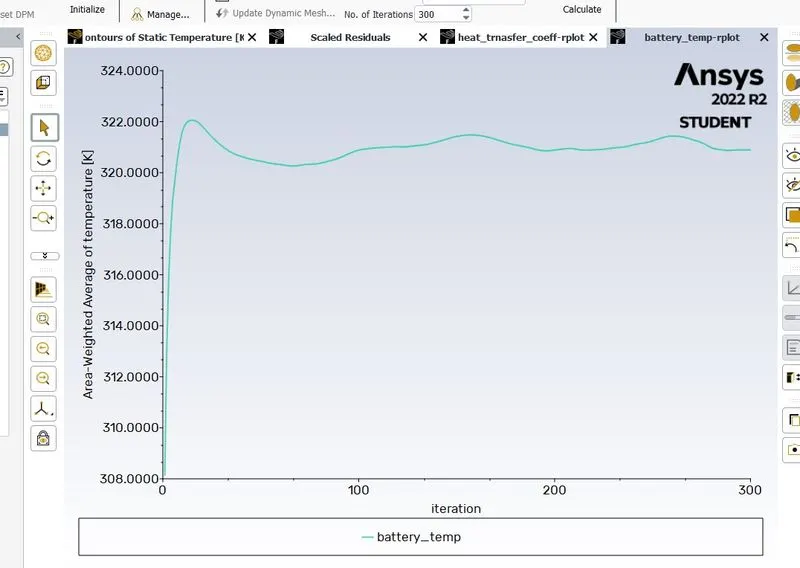
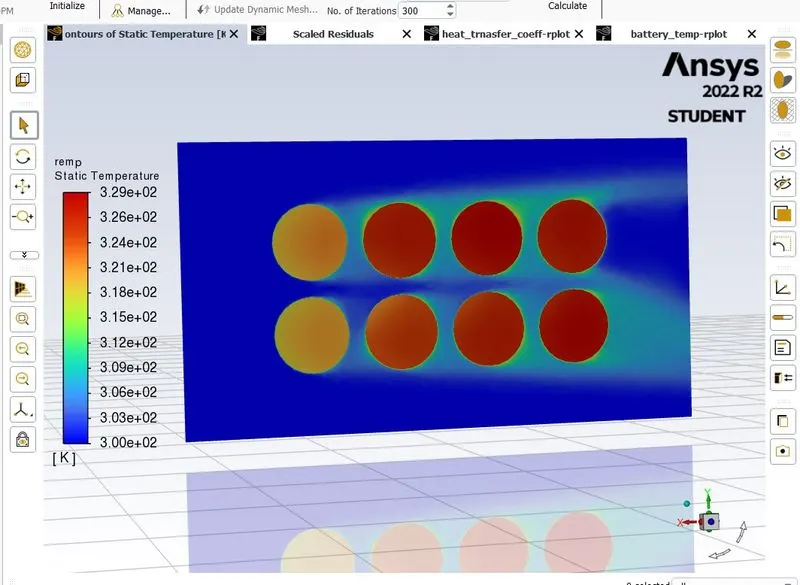
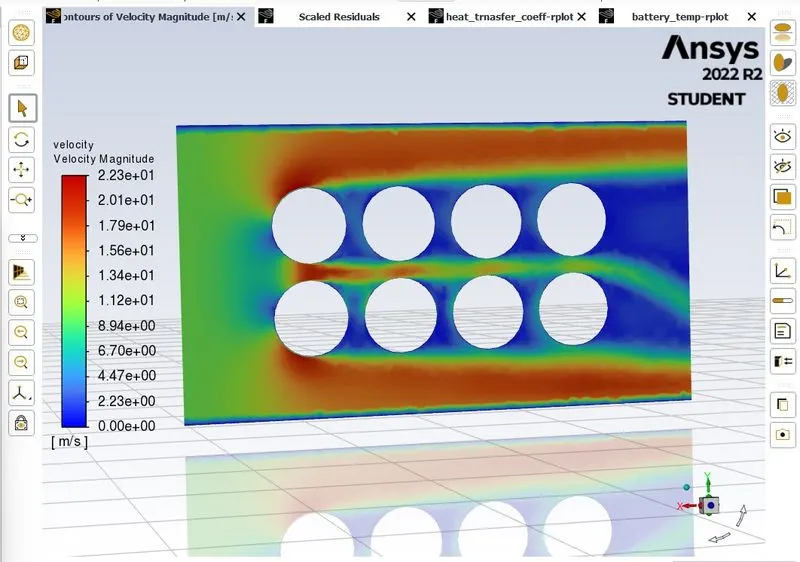
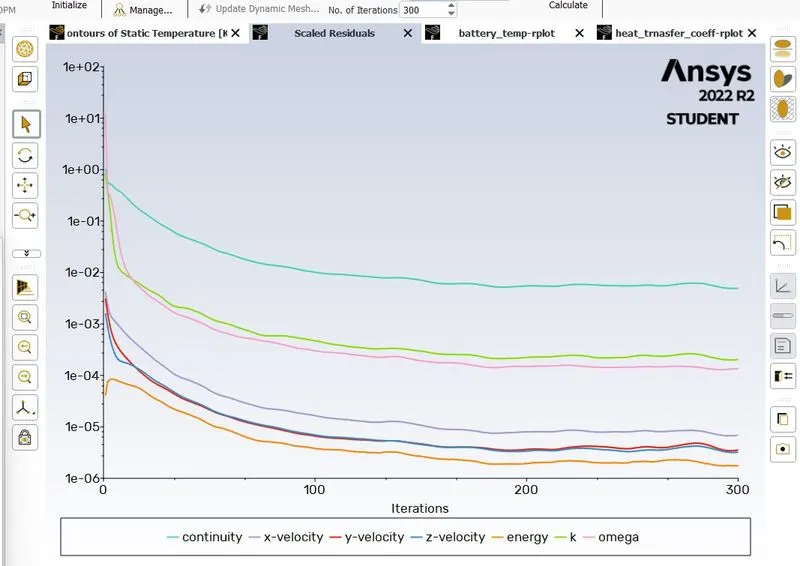
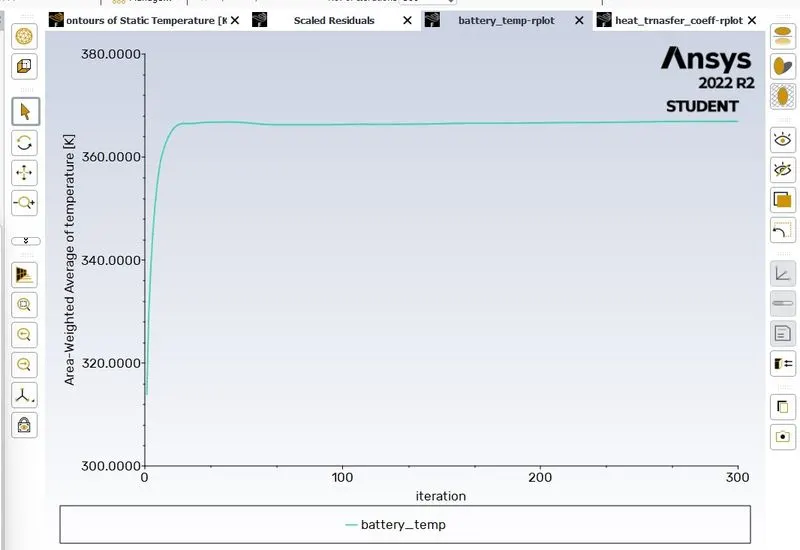
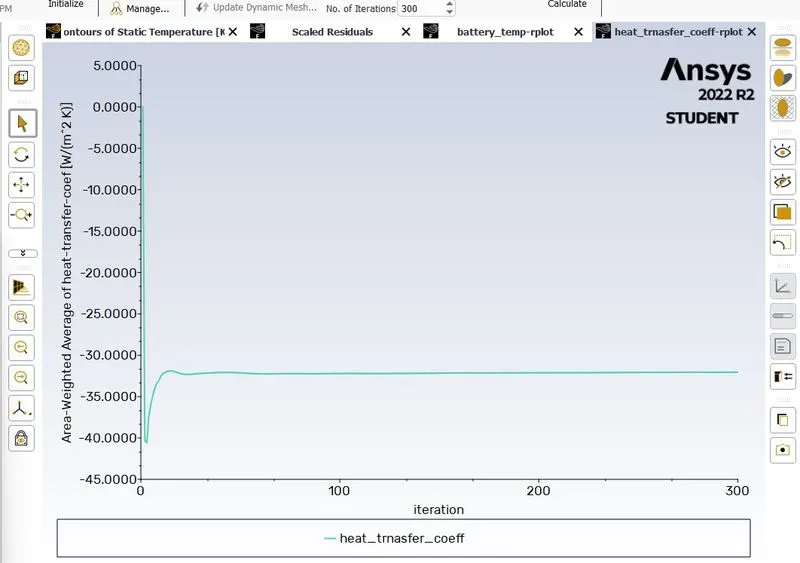
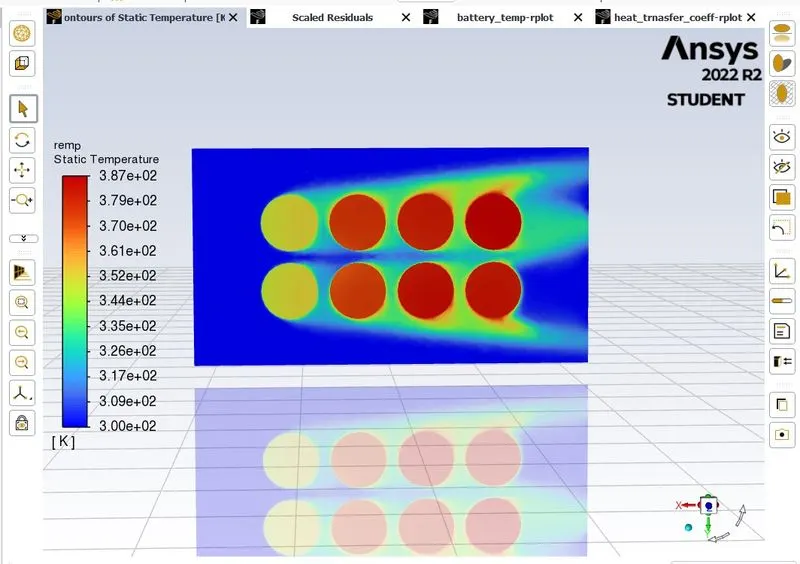
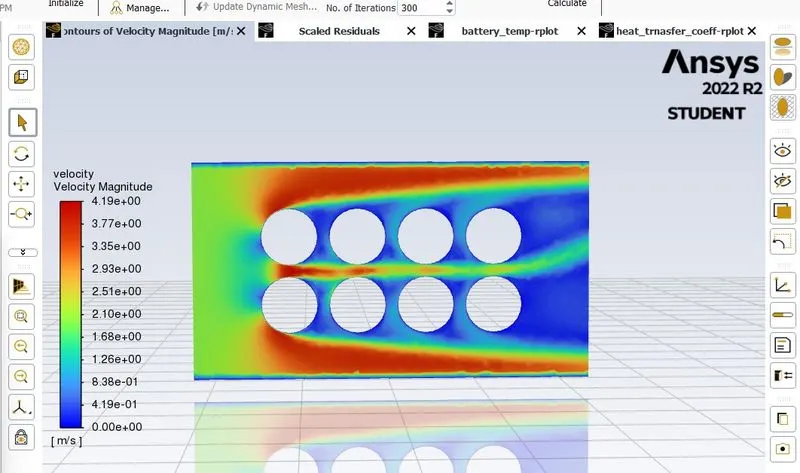
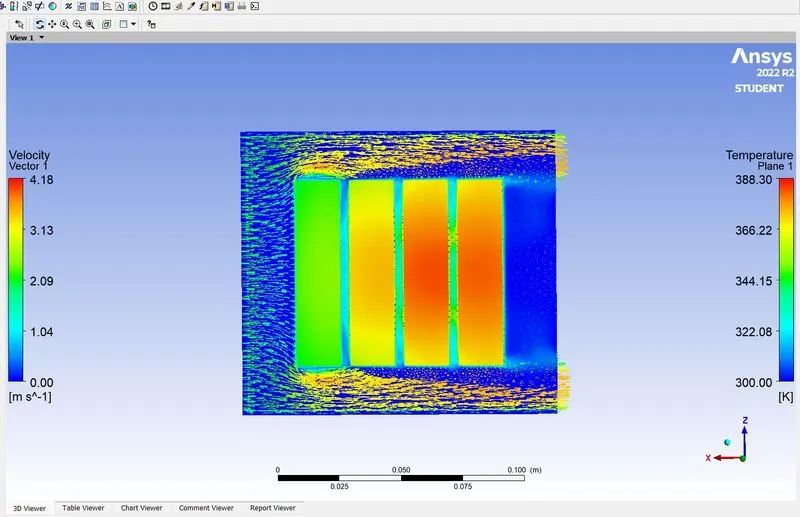
Here Energy developed is Battery ..so Battery is the source of energy ..In order to give an cooling effect to the Battery,the air is passed which gives an air cooling effect .the air is passed with different or varying velocities (2,5,10 m/sec)..the temp of the processor gradually decreases to some extent. the heat generated by Battery will reject heat to the air ie.,which flow over.because of high temp,according to the first law of thermodynamics heat transfer takes place b/w two bodies from Higher temp to the Low temp untill it attains thermal equillibrium.The above graphs briefly explains the for given rate of velocities the temp change..
For 2mm spacing
(vel,temp)
case1 Case2 Case3
(5,300) (10,300) (2,300)
[0 2.93 5.36 11.7] [0 ,5.9 11.8 23.8] [0 1.19 2.39 4.57]
[300 315 331 363] [300 309 318 336] [300 330 360 421.5]
For 4mm spacing
(5,300) (10,300) (2,300 )
[0 2.57 5.14 10.28] [0 5.58 11.0 22.3] [0 1.04 2.39 4.18]
[300 311 322 334] [299 307 314 322] [300 322 344 385]
Mu conclusion:
- Here as rate of velocity increases the rate of temp decreases as we discuss in the above.
- Here if we increase displacement ,rate of temp decreases .