Week - 10 Hyperelastic Material Models
Aim :
To simulate a tensile test by calculating the Mooney Rivlin and Ogden material constants and compare the both using stress-strain data from a Dogbone specimen tensile test with 100 percent strain.
Explanation :
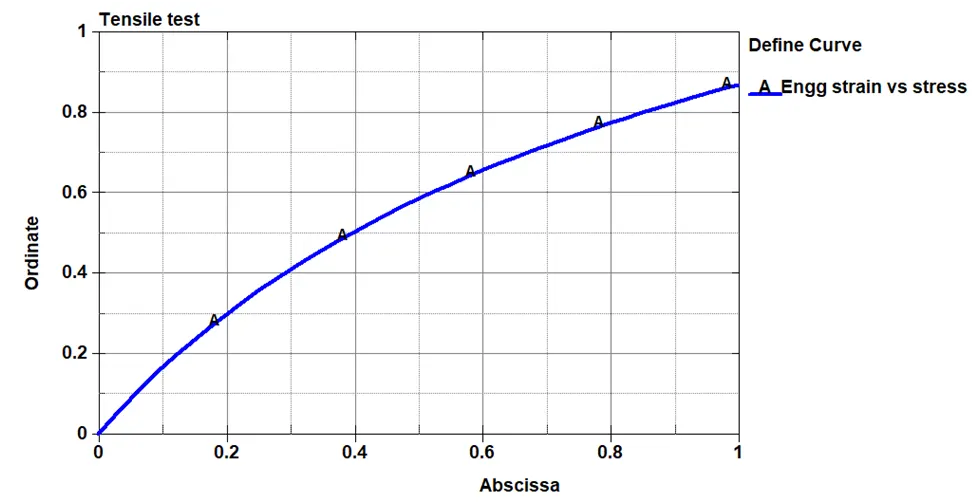
Mooney Rivlin and Ogden material models are used to represent the hyperelastic materials. Hyperelastic materials are those material which have huge strain for small amount of stress and have Poisson’s ratio more than 0.49. To calculate the Mooney Rivlin and Ogden material constants from LS Dyna, the engineering stress strain curve is used as input.
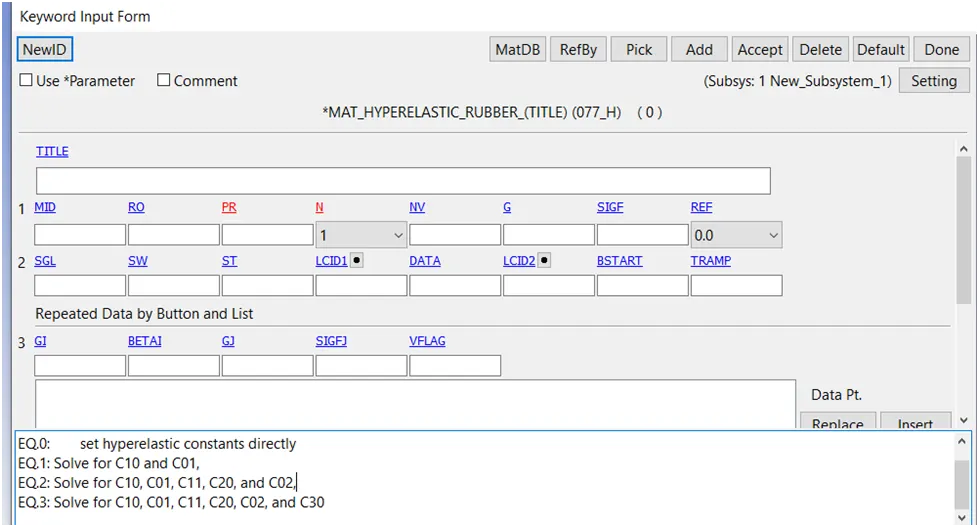
077_H_HYPERELASTIC_RUBBER
This material model provides a general hyperelastic rubber model combined optionally with linear viscoelasticity.
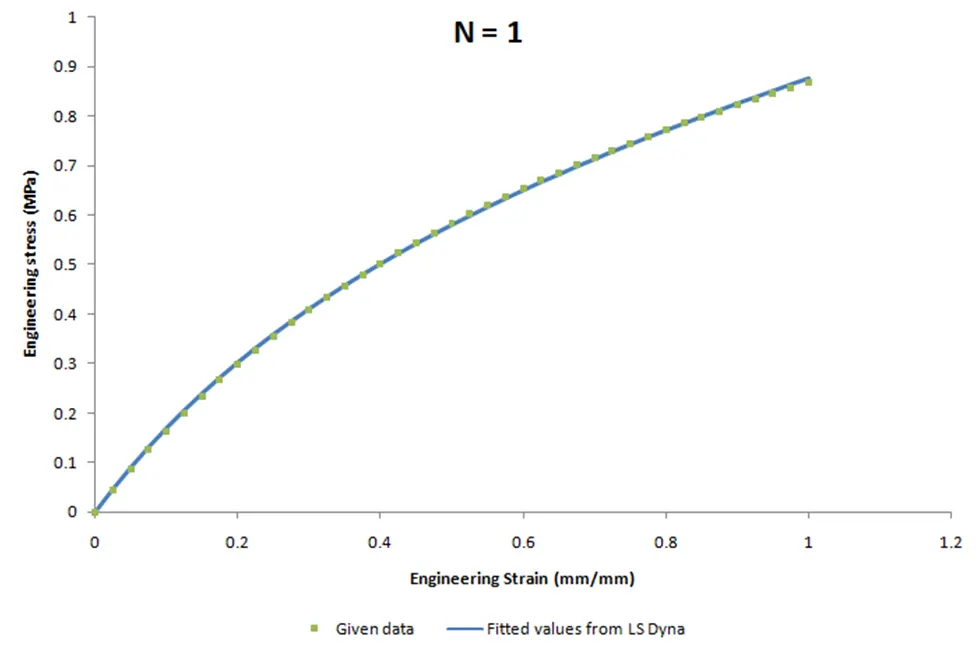
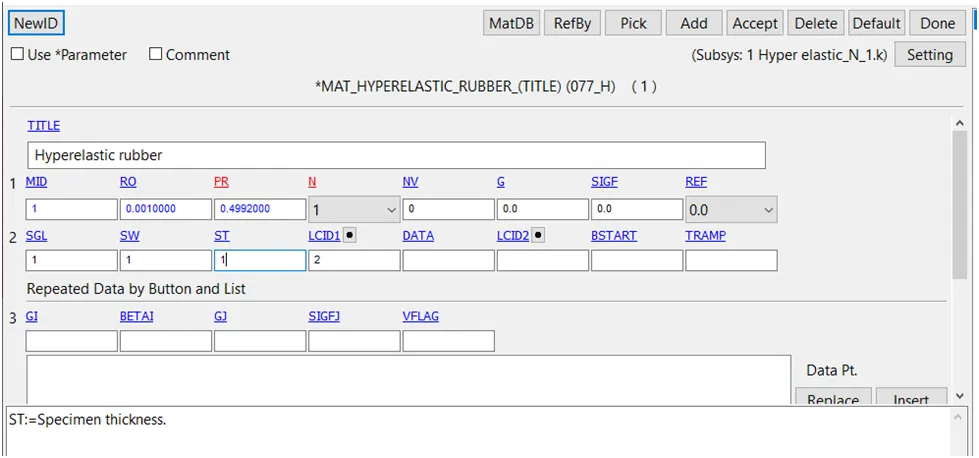
To calculate the Mooney Rivlin constants, the order(N) is toggled to either 1,2 or 3 and additionally, a load curve is loaded representing engineering stress vs strain. The values of SGL, SW, ST are toggled to 1.
The constants for N=1 as reported from d3hsp file are
N=1
Mooney constant c1 = 0.1768,
Mooney constant c2 = 0.1474
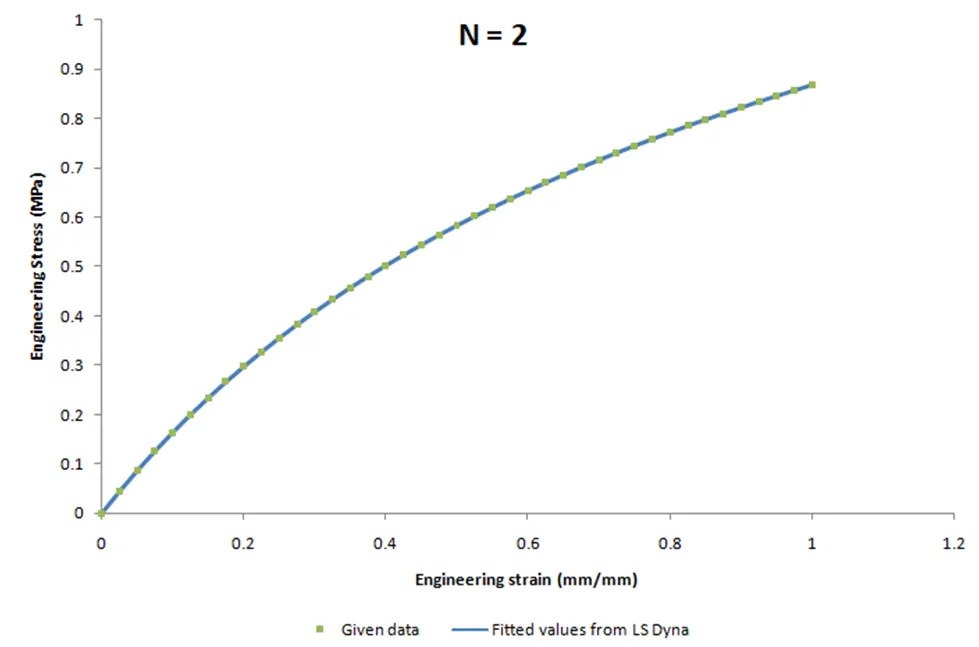
N=2
Hyperelastic Constant C10= 0.2595
Hyperelastic Constant C01= 0.04594
Hyperelastic Constant C11= -0.02092
Hyperelastic Constant C20= 0.002914
Hyperelastic Constant C02= 0.001016
Hyperelastic Constant C30= 0.0000
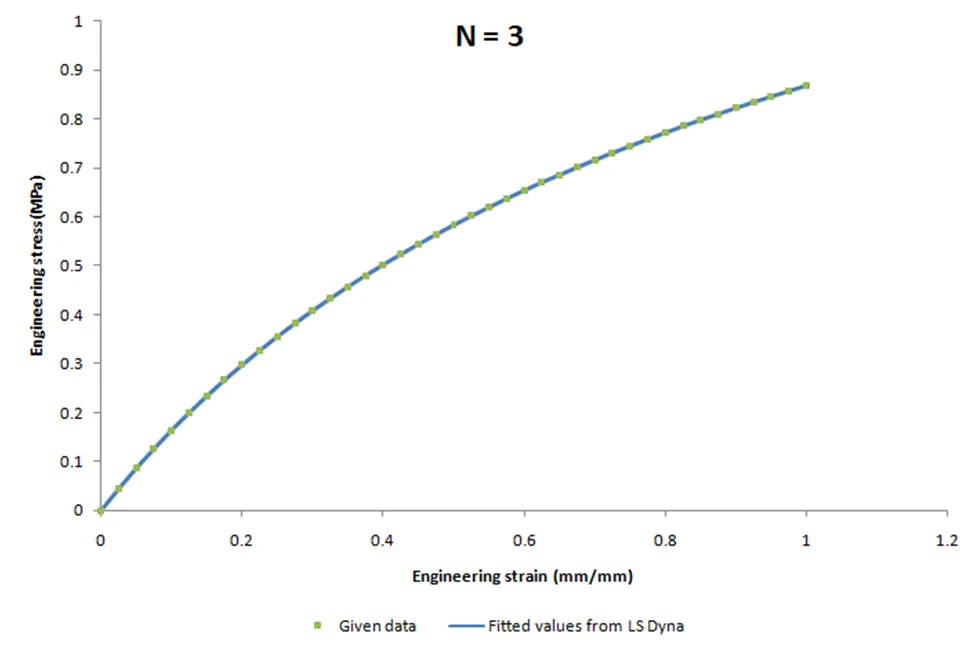
N=3
Hyperelastic Constant C10= 0.2611
Hyperelastic Constant C01= 0.04420
Hyperelastic Constant C11= -0.006074
Hyperelastic Constant C20= -0.002667
Hyperelastic Constant C02= -0.009968
Hyperelastic Constant C30= 0.0001565
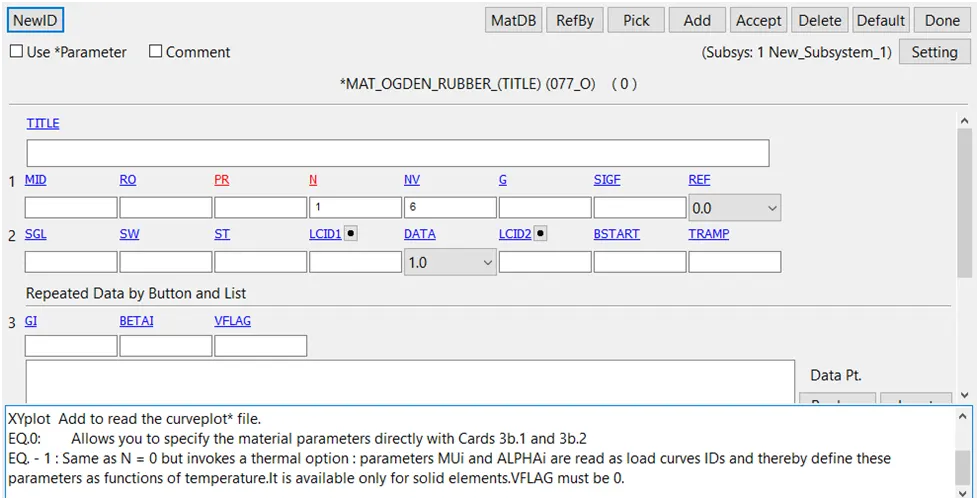
077_O-OGDEN_RUBBER
This material model provides the Ogden rubber model combined optionally with linear viscoelasticity.
To determine, the constants order(N) of the equation is entered and SGL,SW,ST is toggled to 1 and given load curve of engineering stress vs strain is loaded as curve in LS Dyna.
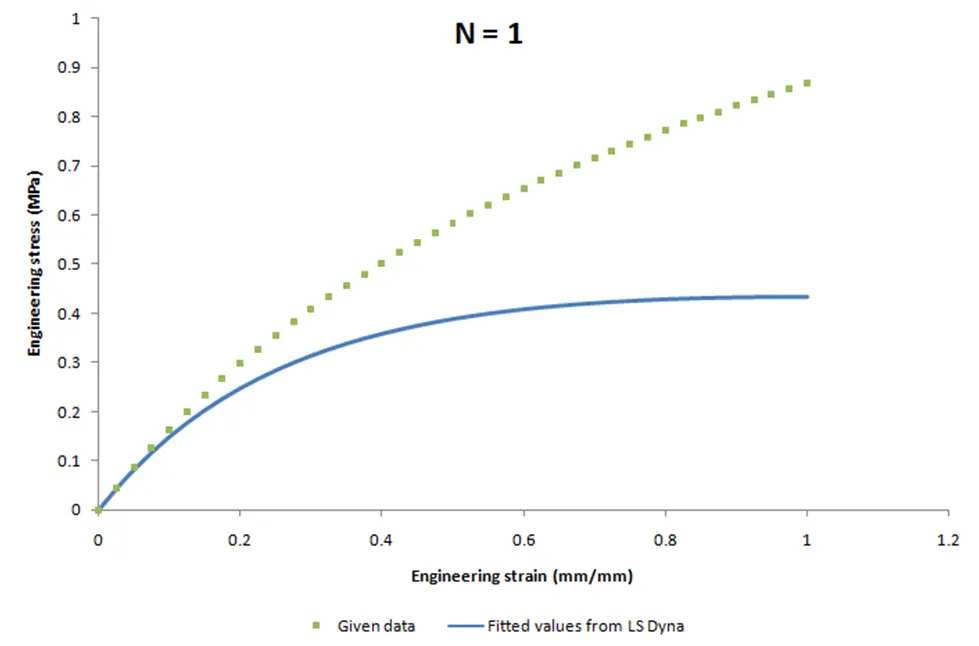
N=1
mu(1)= 0.910760 alpha(1)= 1.342723
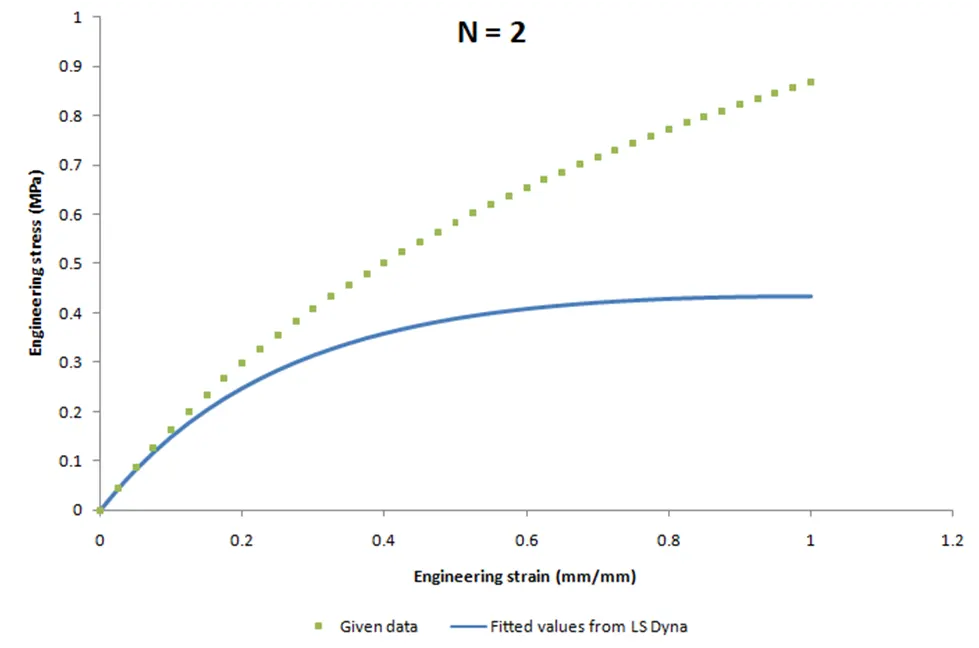
N=2
mu(1)= 0.915647 alpha(1)= 1.339909
mu(2)= 2.225955 alpha(2)=-0.001843
N = 3
mu(1)= -0.031842 alpha(1)= 1.926332
mu(2)= 0.261375 alpha(2)= 1.550340
mu(3)= 0.681991 alpha(3)= 1.288782
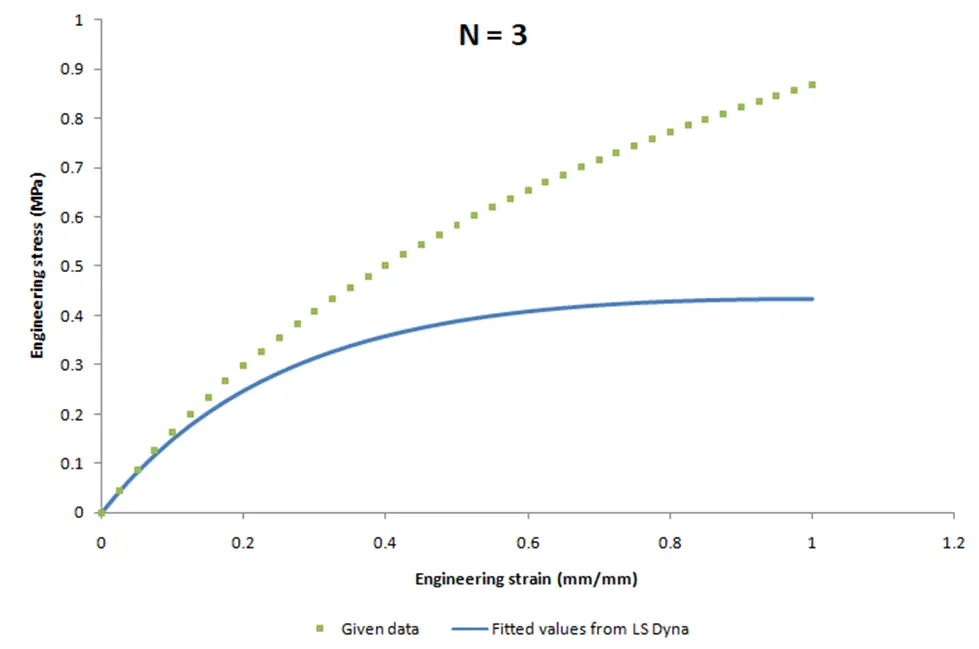
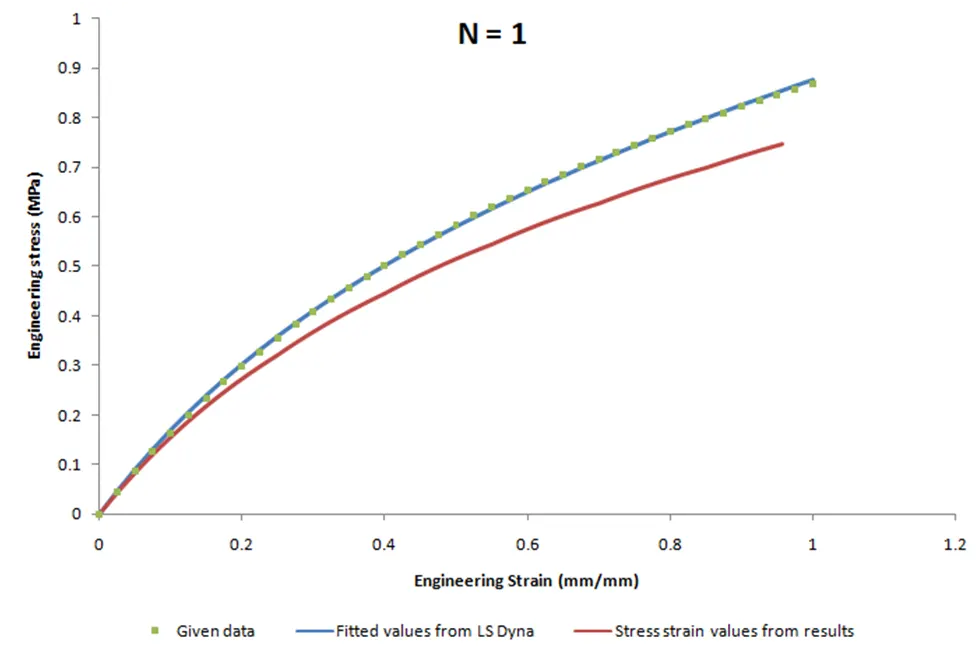
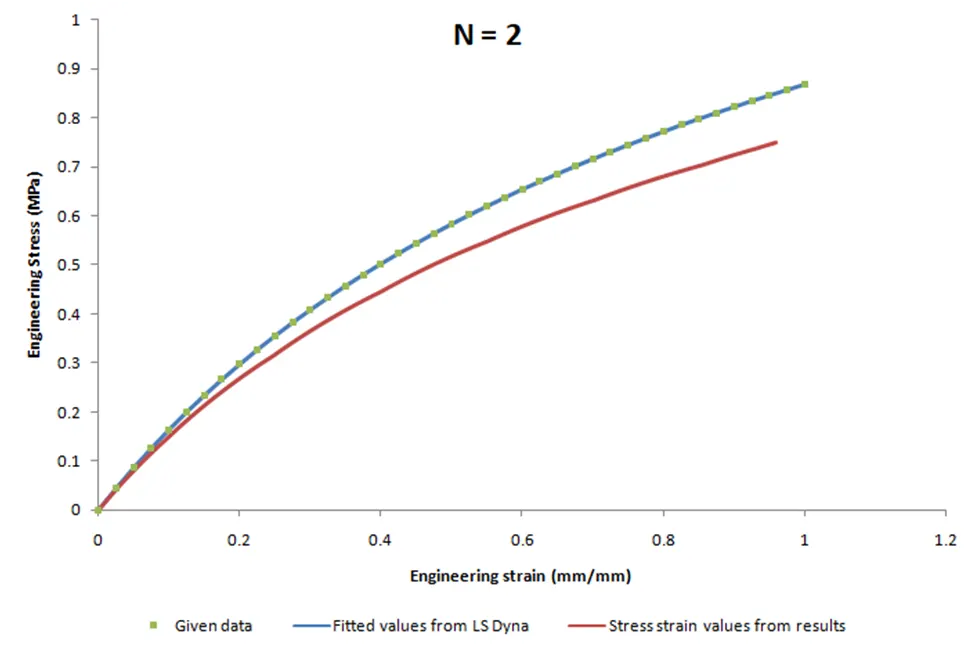
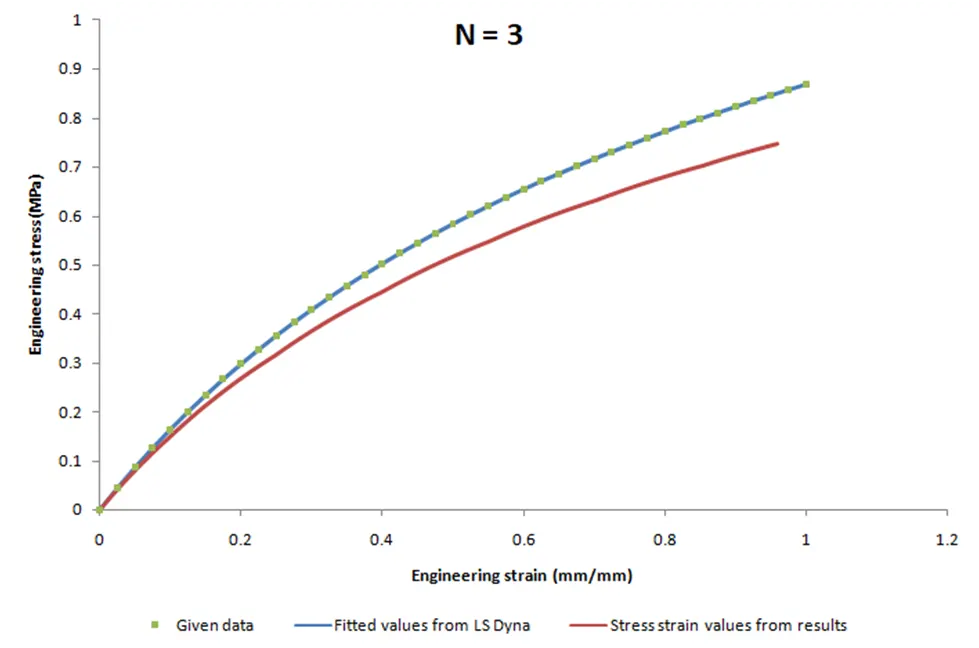
Comparing the various order fits of the two models, Hyperelastic model is able to capture all the features of the material than the ogden rubber. Further, using these constants, the dogbone case is setup. The stress strain values are compared against the different fits of two material model.
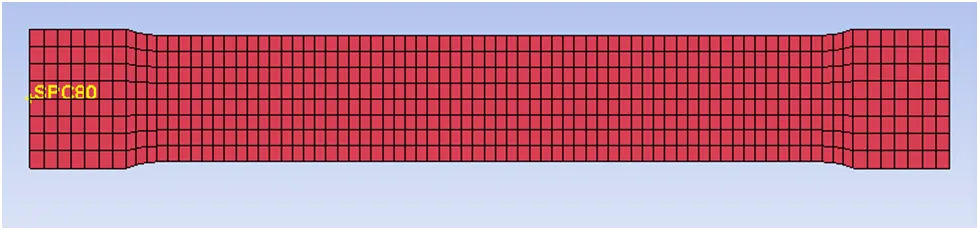
The input file consists of a dogbone specimen.
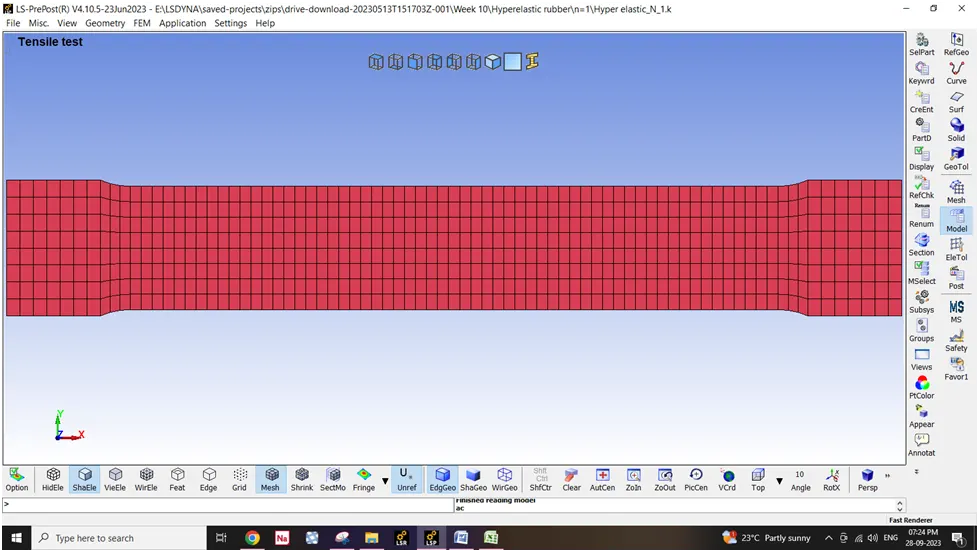
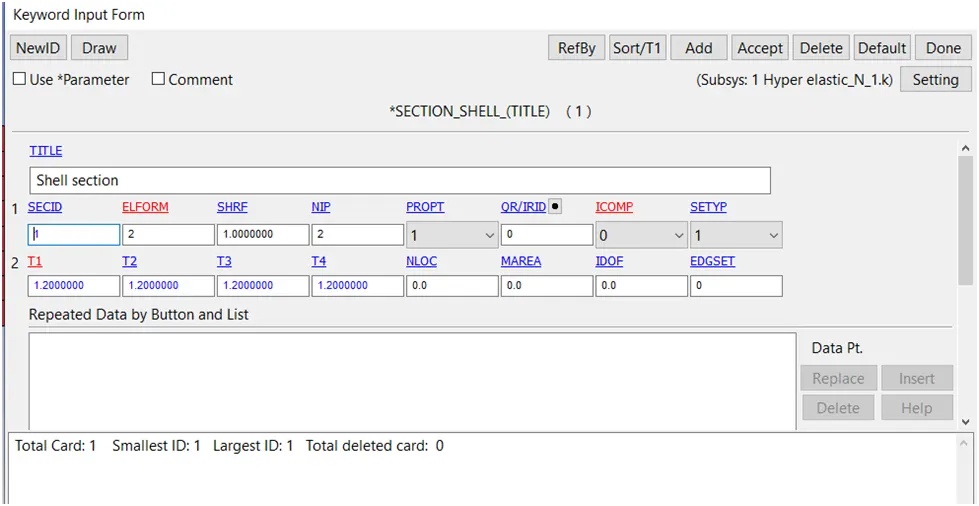
Section
Material
Boundary conditions
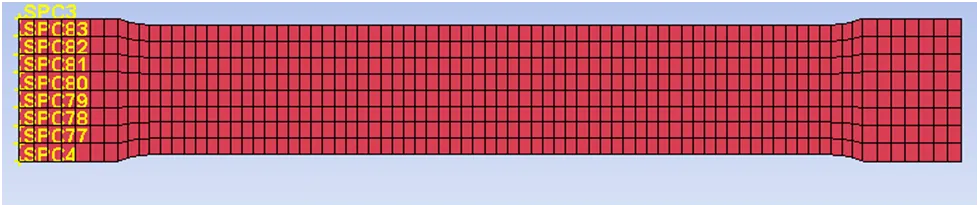
To simulate the fixed end, one side of the nodes are constrained in the axial direction (along x direction).
Given engineering stress strain curve
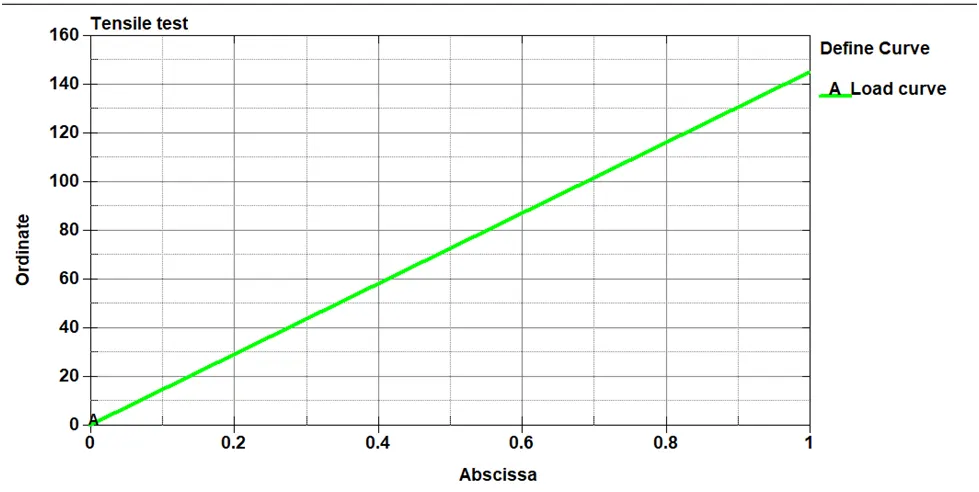
A load curve is created to define the load vs displacement curve to apply the prescribed strain(100%). Since the length of the specimen is 145 mm, a load of 145 mm is applied in 1 step.
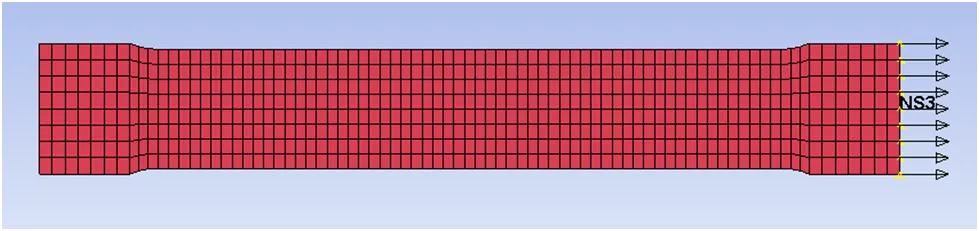
A PRESCRIBED_MOTION_SET is defined on the other end of the specimen to apply the load.
Control cards
Implicit general:
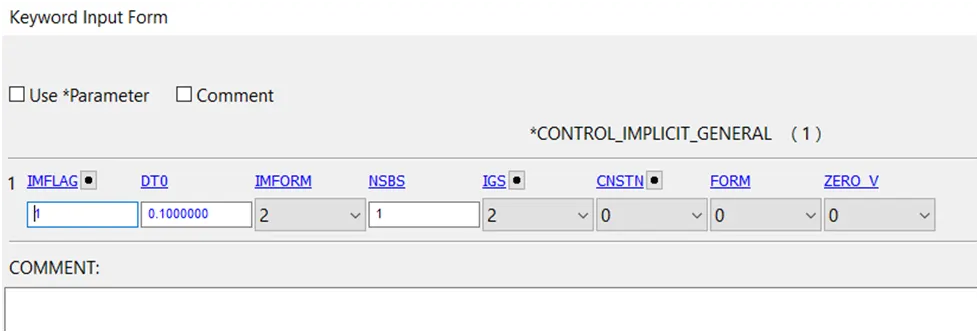
As tensile test is a steady state test, we run an implicit analysis. To activate implicit analysis Control_Implicit_General keyword is to be added. IMFLAG = 1 activates the implicit analysis. DT0 is initial time step that is defined as 0.1
Implicit auto:
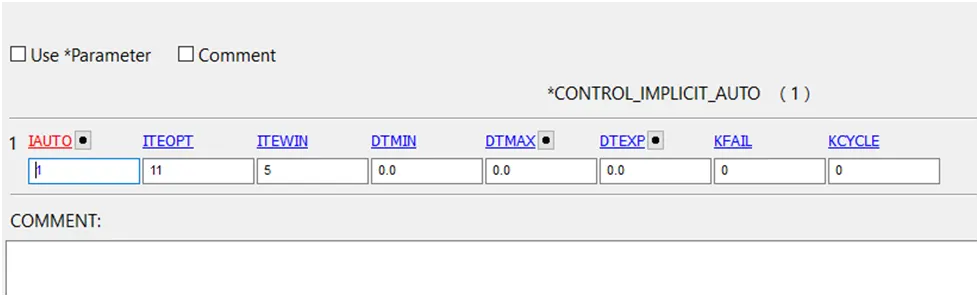
Implicit auto used to fine tune the solver. IAUTO is used to automatically adjust time step size in order to lessen the number of load increments. ITEOPT and ITEWIN are used to either increase or decrease the load increments. These have to be cautiously selected so as to run the solution in unreliable or expensive condition.
Implicit solution:
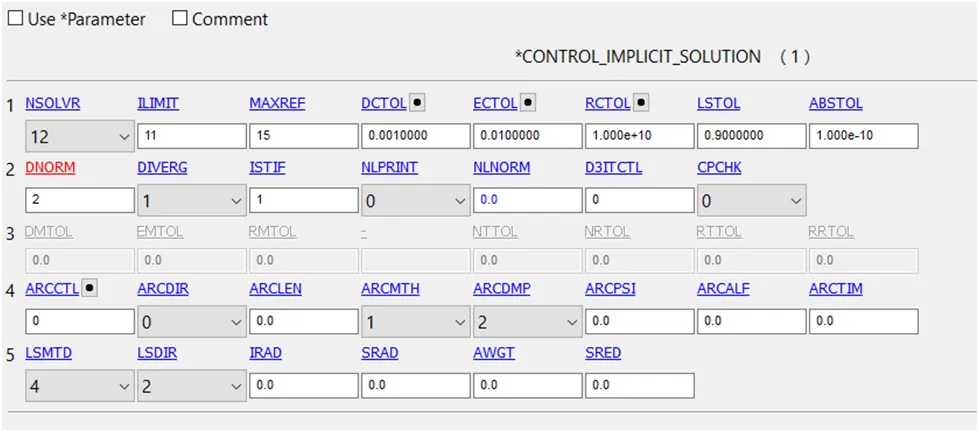
NSOLVER is used to select the solution method for implicit analysis. Since the material is non linear, Nonlinear with BFGS updates + optional arclength solver (NSOLVER =12) can be used with rest of parameters left default.
Implicit solver:
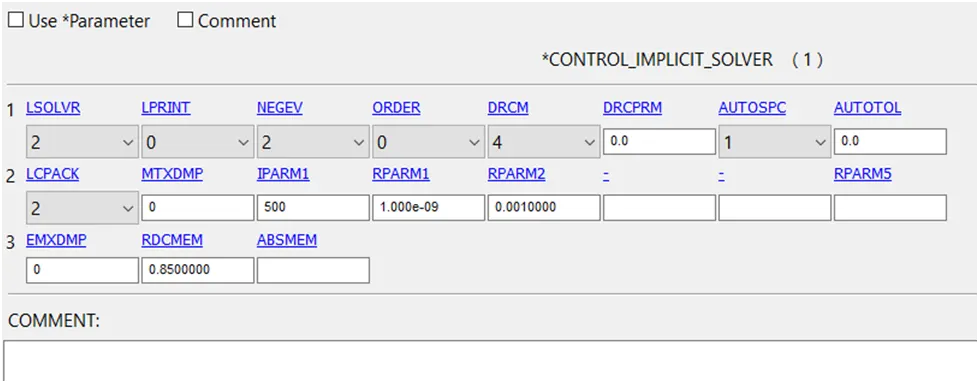
Implicit solver is used to invert the stiffness matrix in each iteration to check for residuals. The default Parallel multi-frontal sparse solver is used with LCPACK library.
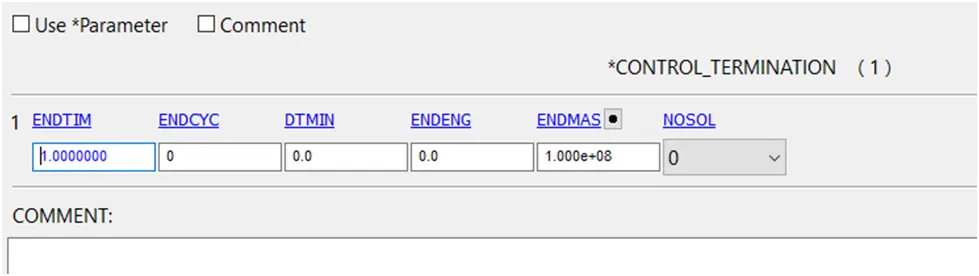
Termination:
Database
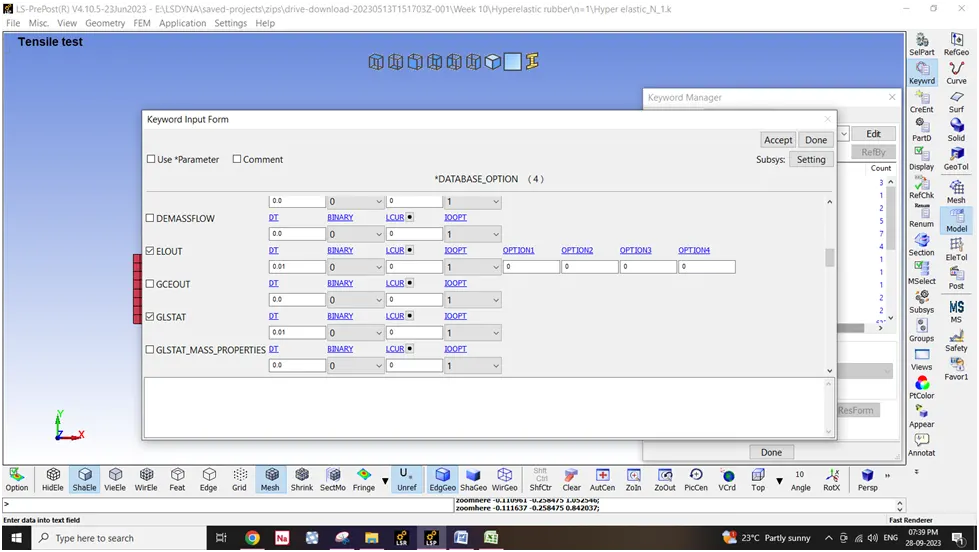
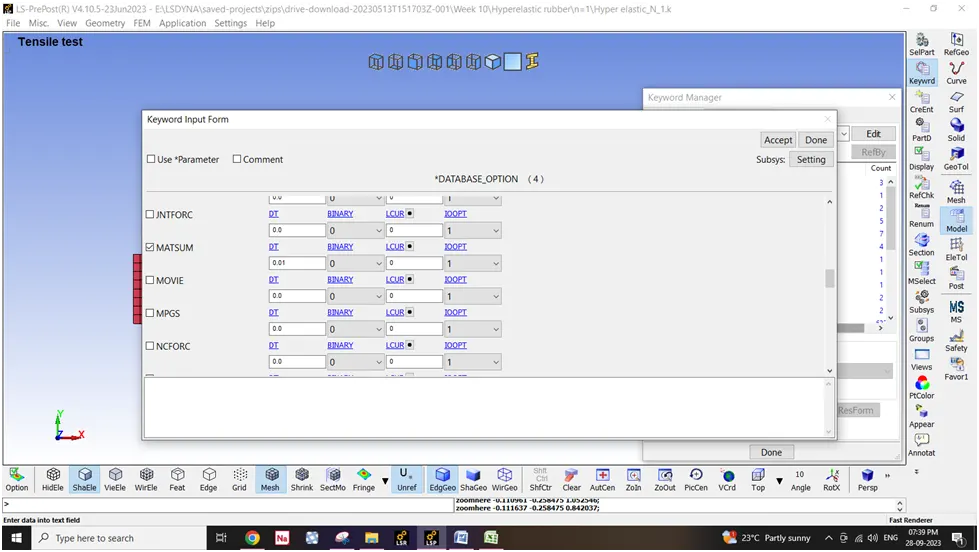
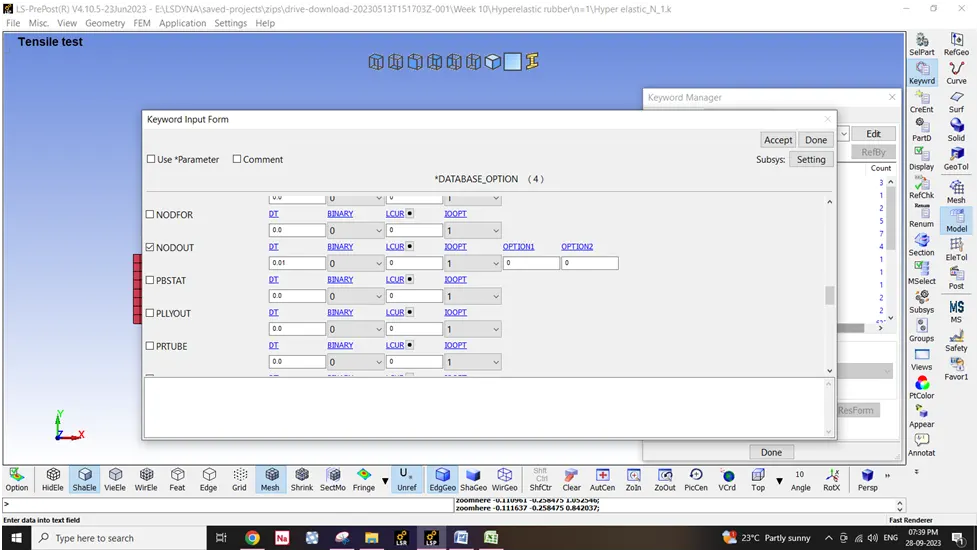
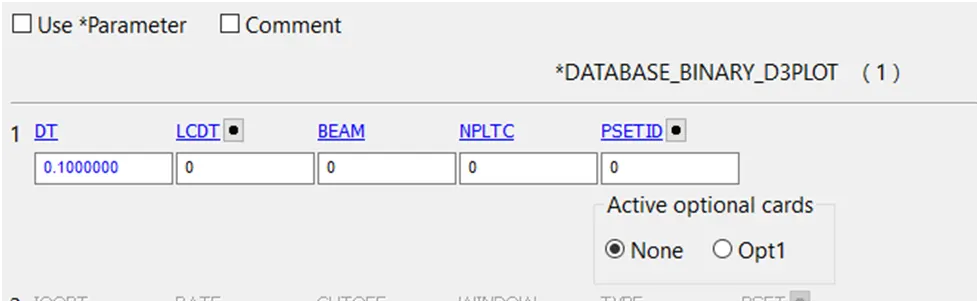
The above created input file is saved as keyword file (.k extension). This keyword file is solved using LS DYNA manager.
Results
Animation
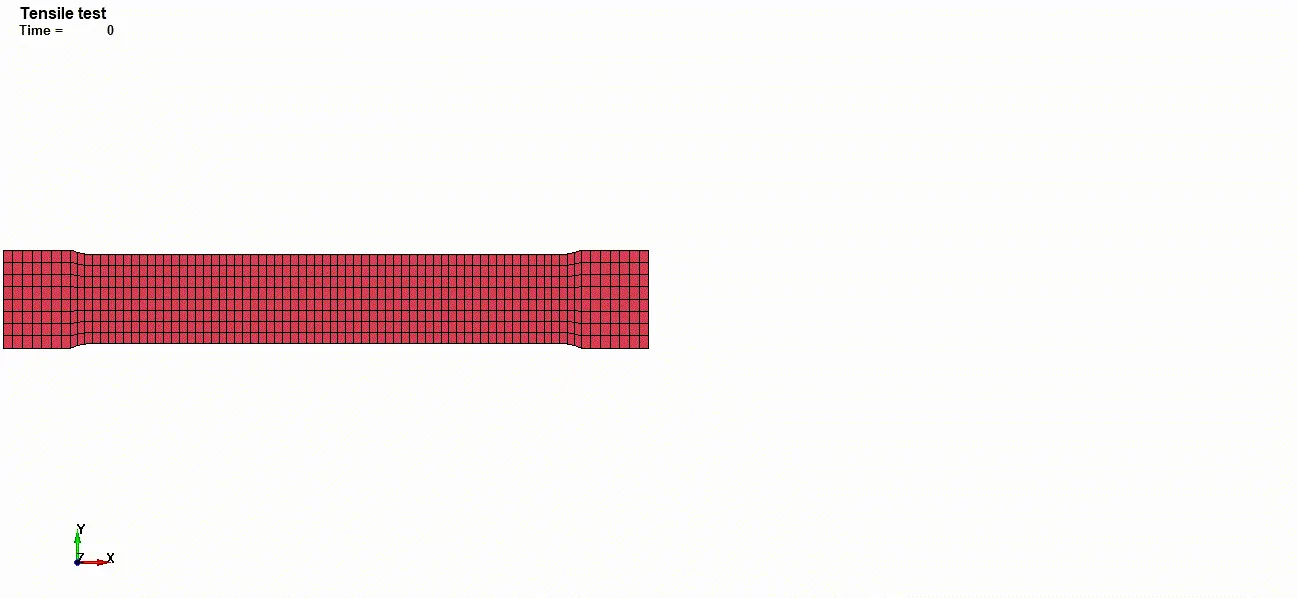
stress
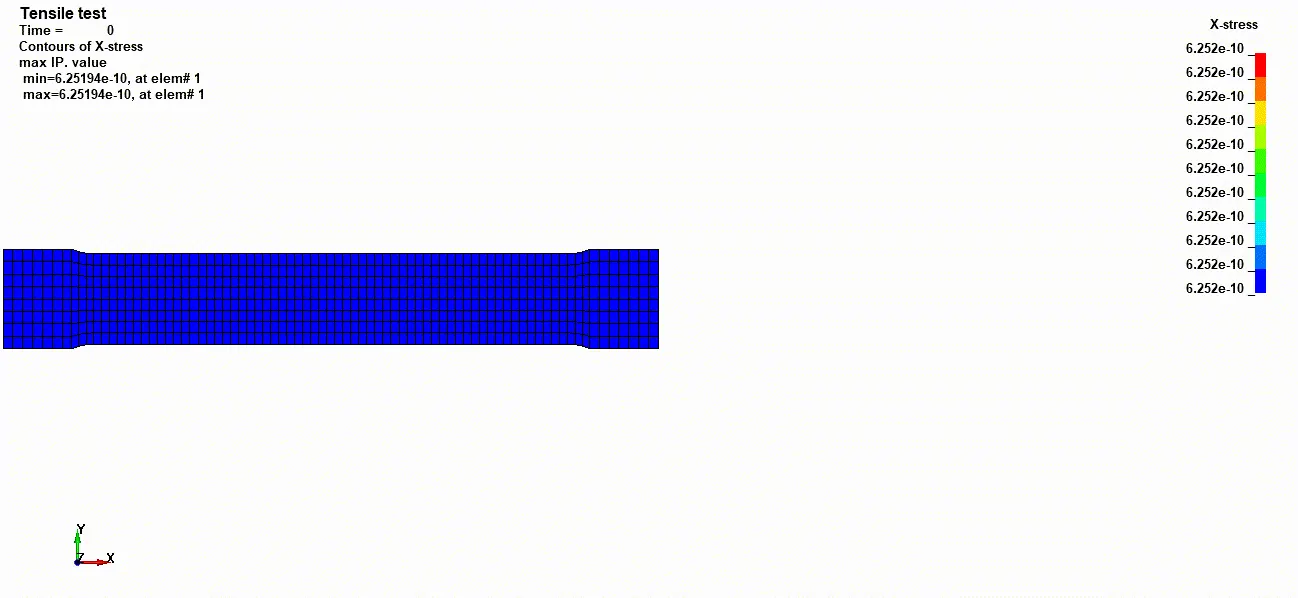
strain
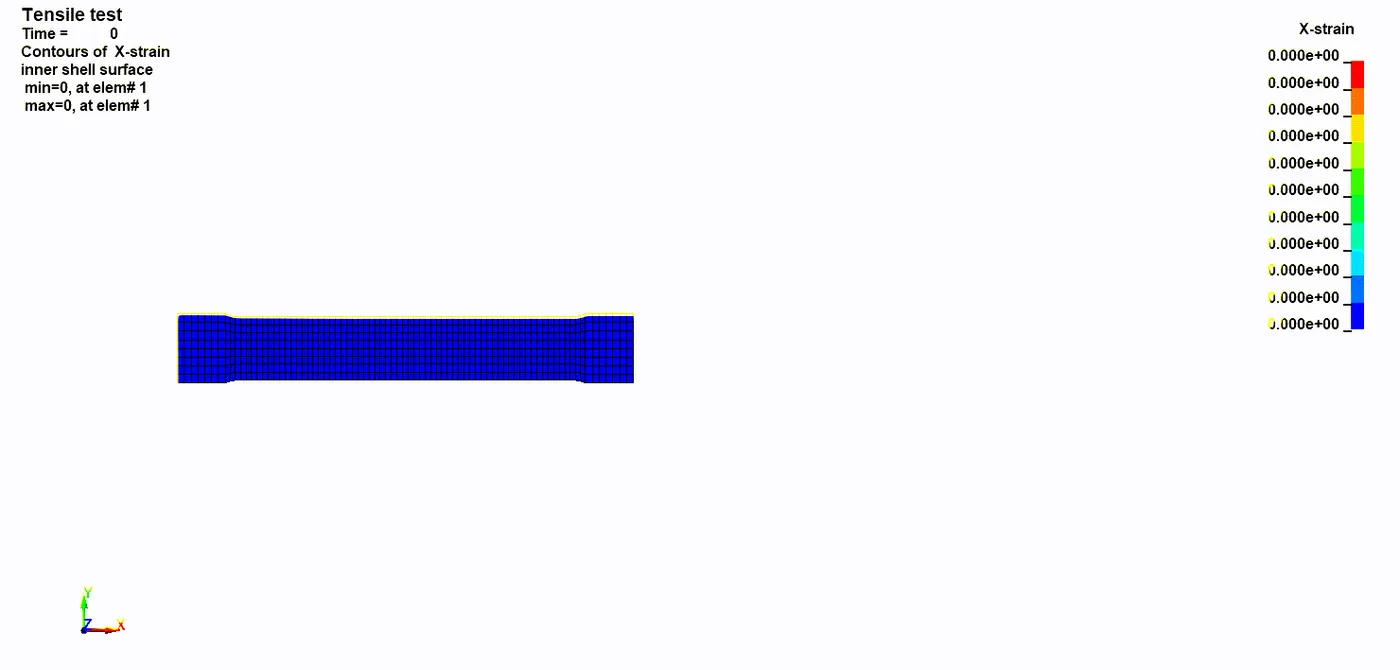
Comparison of different fits of the two material models:
Hyperelastic Rubber
Ogden rubber
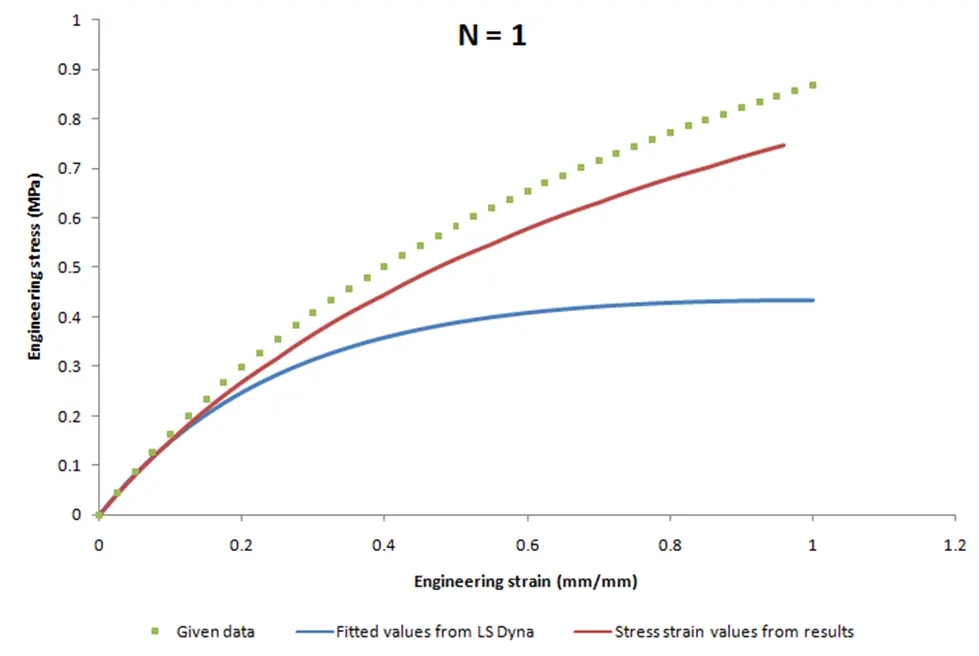
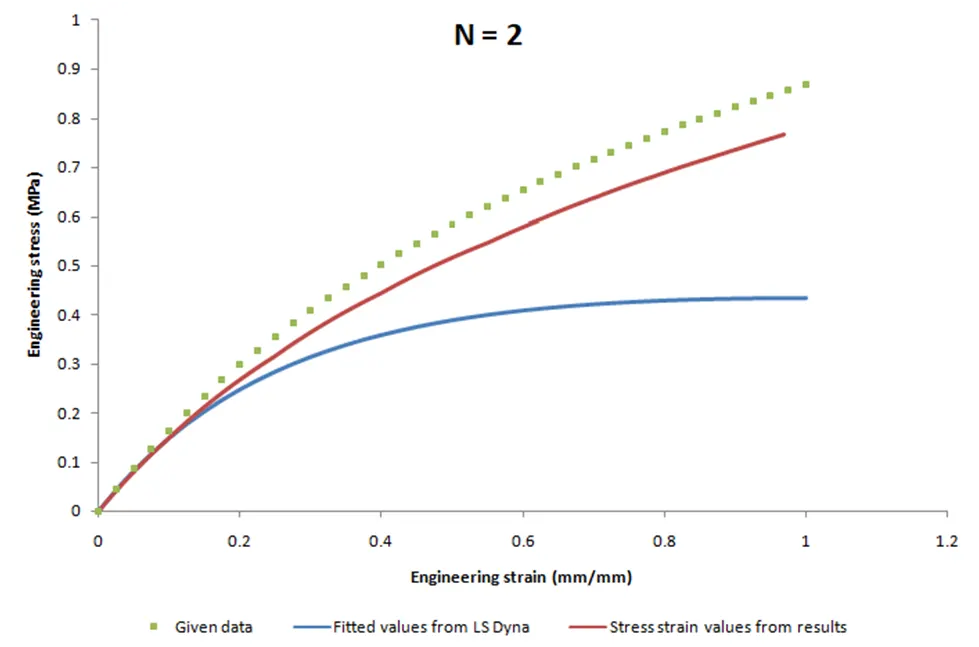
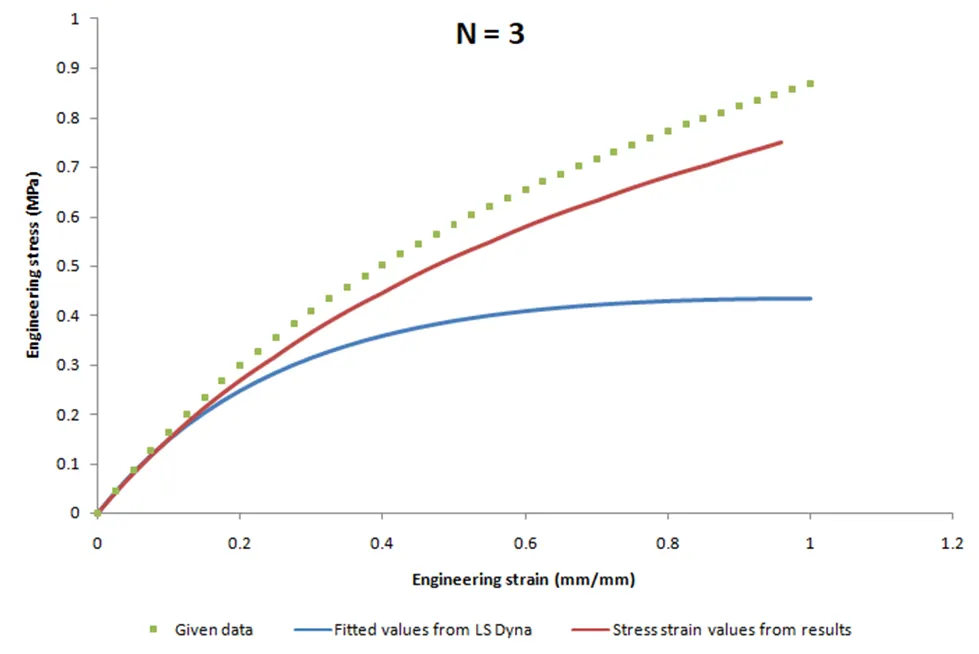
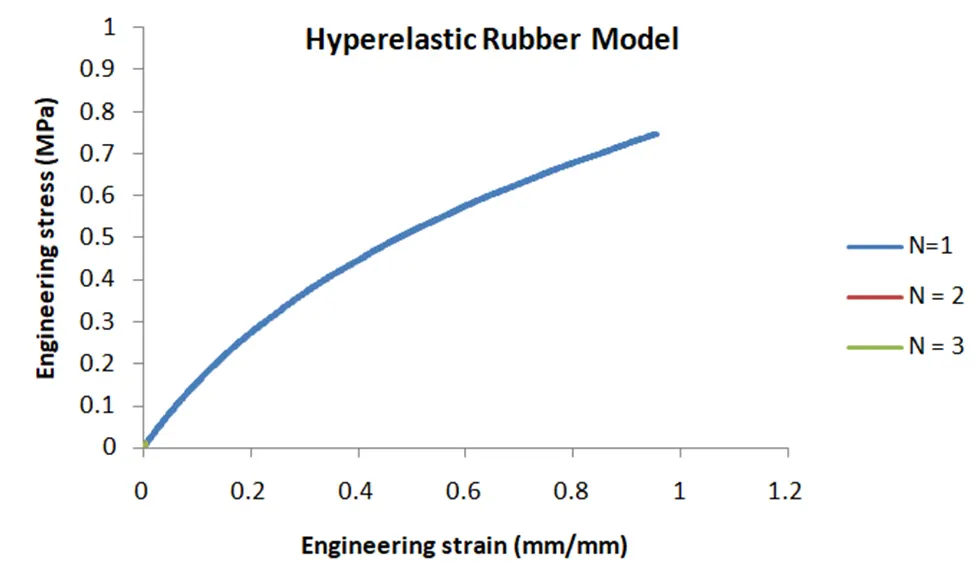
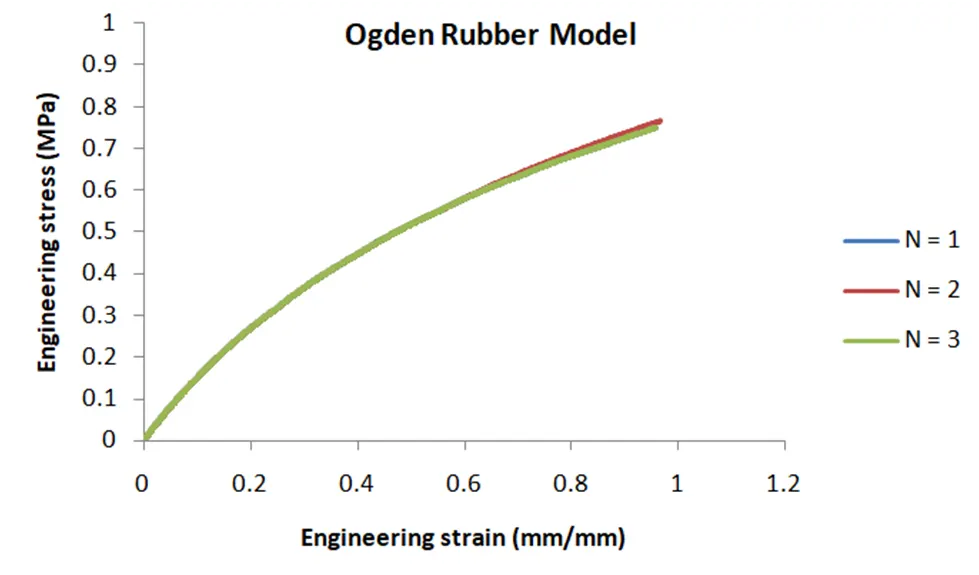
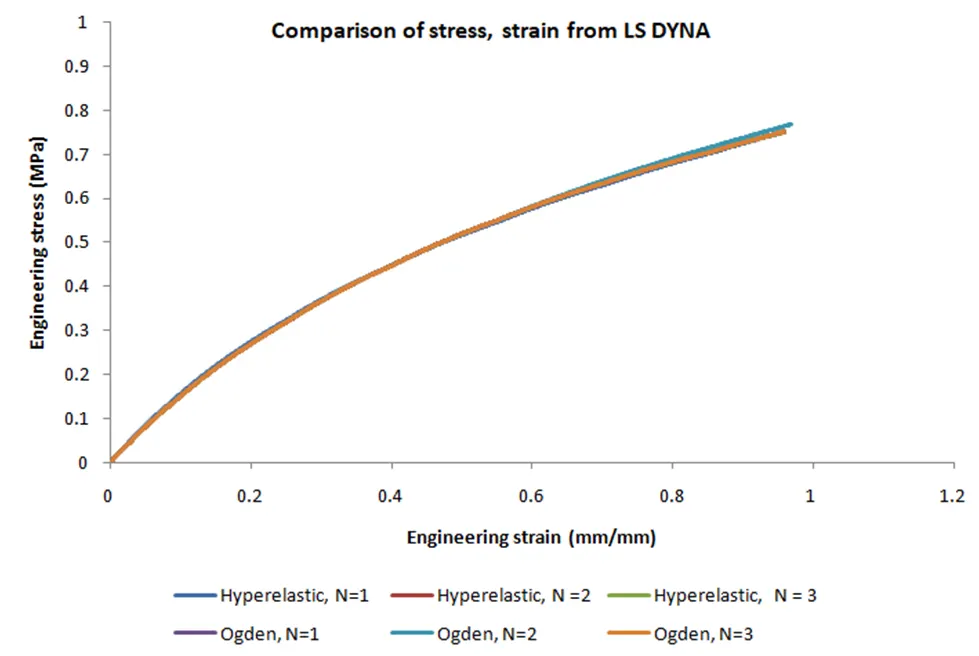
From the above plots, we can infer that Hyperelastic rubber model is better at capturing the features of the material compared to Ogden model. Though there is no much change in values of stress and strain as extracted from simulation test because of small coefficients of higher order models both in Hyperelastic rubber model and Ogden models.
Conclusion:
Material constants were determined using Hyperelastic rubber and Ogden models of various orders (N=1,2,3). The different models were compared and the Hyperelastic model was found to be a better fit. Tensile tests were run for the two material models of all the orders. The stress and strain values were compared and the values did not vary much.