Week 1 Understanding Different Battery Chemistry
DETAILED REPORT:
INTRODUCTION:
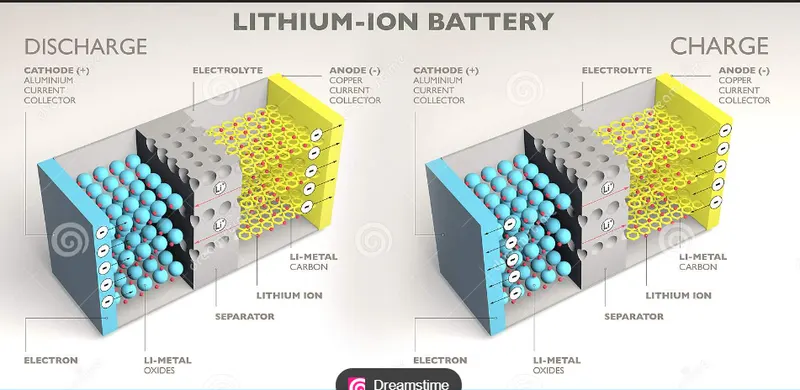
Battery is a source of electric power and which consists of two or more electrodes and electrolyte. By charging and discharging or by redox actions battery is working. The shape and size of battery is different based on the applications. The flow of ions will takes place through the electrolyte and flow of electrons takes place through the load which is connected external to the battery.The seperator which is placed inbetween the anode and cathode will prevent the flow of any electrons through it.Batteries are commonly classified as primary cells and secondary cells.Li-ion battery comes under secondary cell.
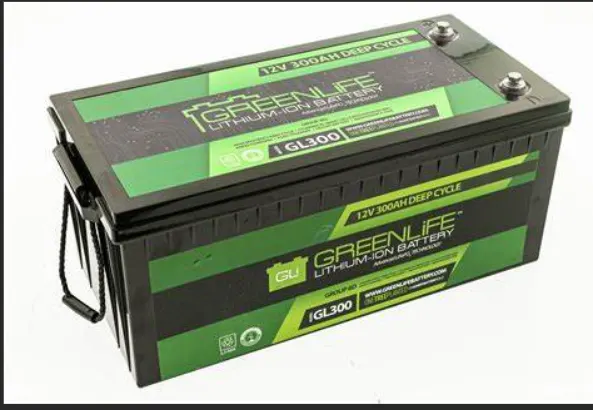
Lithium-Ion batteries are commonly used battery nowdays. In short we can written as Li-ion battery. It is a rechargable type battery. Here while discharging Li ions will move from negative electrode to the positive electrode through electrolyte and while charging it will flow in reverse direction.
There are different types of Li-ion battries like LCO,LMO, NCA, NMC, LFP and LTO etc.
(1) LCO - Lithium Cobalt Oxide Battery.
It is commonly using Li-ion battery.It is having high specific energy.This battry consist of a cobalt oxide cathode and a graphite carbon anode.The cathode has a layered structure and during discharge, lithium ions move from the anode to the cathode. The flow reverses on charge. The drawback of Li-cobalt is a relatively short life span, low thermal stability and limited load capabilities.
(2)LMO-Lithium Manganse Oxide Battery
The architecture forms a three-dimensional spinel structure that improves ion flow on the electrode, which results in lower internal resistance and improved current handling.It has highthermal stability and more safety.
(3)NCA-Lithium Nickel Cobalt Aluminium Oxide Battery
. It shares similarities with NMC by offering high specific energy, reasonably good specific power and a long life span. Less flattering are safety and cost. NCA is a further development of lithium nickel oxide; adding aluminum gives the chemistry greater stability.
(4) NMC-Lithium Nickel Manganese Cobalt Oxide Battery
One of the most successful Li-ion systems is a cathode combination of nickel-manganese-cobalt (NMC). Similar to Li-manganese, these systems can be tailored to serve as Energy Cells or Power Cells.The secret of NMC lies in combining nickel and manganese. An analogy of this is table salt in which the main ingredients, sodium and chloride, are toxic on their own but mixing them serves as seasoning salt and food preserver. Nickel is known for its high specific energy but poor stability.
NMC is the battery of choice for power tools, e-bikes and other electric powertrains. The cathode combination is typically one-third nickel, one-third manganese and one-third cobalt, also known as 1-1-1. Cobalt is expensive and in limited supply.
(5)LFP-Lithium Iron Phosphate Battery
Li-phosphate offers good electrochemical performance with low resistance.The key benefits are high current rating and long cycle life, besides good thermal stability, enhanced safety and tolerance if abused.Li-phosphate is more tolerant to full charge conditions and is less stressed than other lithium-ion systems if kept at high voltage for a prolonged time.Li-phosphate is more tolerant to full charge conditions and is less stressed than other lithium-ion systems if kept at high voltage for a prolonged time.
(6) LTO-Lithium Titanate Oxide Battery
Li-titanate replaces the graphite in the anode of a typical lithium-ion battery and the material forms into a spinel structure. The cathode can be lithium manganese oxide or NMC. Li-titanate has a nominal cell voltage of 2.40V, can be fast charged and delivers a high discharge current of 10C, or 10 times the rated capacity.
LTO (commonly Li4Ti5O12) has advantages over the conventional cobalt-blended Li-ion with graphite anode by attaining zero-strain property, no SEI film formation and no lithium plating when fast charging and charging at low temperature. Thermal stability under high temperature is also better than other Li-ion systems; however, the battery is expensive.
Materials & chemical reactions occur at the anode and cathode of LCO, LMO, NCA, NMC, LFP, and LTO type of lithium-ion cells are given below:
| Sl.NO | Battery | Full Form | Cathode | Anode | Electrolyte | Reaction at anode | Reaction at cathode | Redox reaction |
| 1 | LCO | Lithium Cobalt Oxide | LiCoO2 | LiC6 | LiPF6 | LixC6→xLi++xe-+C6 | Li1-xCoO2+xLi++xe-→LiCoO2 | C6+LiCoO2↔LiC6+CoO2 |
| 2 | LMO | Lithum Manganese Oxide | LiMn2O4 | LiC6 | LiPF6 | LixC6→xLi++xe-+C6 | Li1-xMn2O4+xLi++xe-→LiMn2O4 | C6+LiMn2O4↔LiC6+Mn2O4 |
| 3 | NCA | Lithium Nickel Cobalt Aluminium Oxide | LiNiCoAlO2 | LiC6 | LiPF6 | LixC6→xLi++xe-+C6 | Li1-xNiCoAlO2+xLi++xe-→LiNiCoAlO2 | C6+LiNiCoAlO2↔LiC6+NiCoAlO2 |
| 4 | NMC | Lithium Nickel Manganese Cobalt Oxide | LiNi0.8Mn0.1Co0.1O2 | LiC6 | LiPF6 | LixC6→xLi++xe-+C6 | Li1-xNi0.8Mn0.1Co0.1O2+xLi++xe-→LiNi0.8Mn0.1Co0.1O2 | C6+LiNi0.8Mn0.1Co0.1O2↔LiC6+Ni0.8Mn0.1Co0.1O2 |
| 5 | LFP | Lithium Iron Phosphate | LiFePO4 | LiC6 | LiPF6 | LixC6→ xLi++xe-+C6 | Li1-xFePO4+xLi++xe-→LiFePO4 | C6+LiFePO4↔LiC6+FePO4 |
| 6 | LTO | Lithium Titanium Oxide | LiMn2O4 | Li4Ti5O12 | LiPF6 | Li4Ti5O12→Ti5O12+4Li++4e- |
4Li1-xMn2O4+4Li++4e-→4LiMn2O4 |
Li4Ti5O12+4Mn2O4↔4LiMn2O4+Ti5O12 |
2.Comparison between each type of Li+ion batteries based on their characteristics given below:
| Lithium-ion battery Types | SP | SE | SF | LS | CS | PF |
|---|---|---|---|---|---|---|
|
Lithium Cobalt Oxide |
L |
H |
L |
L |
L |
M |
|
Lithium Manganese Oxide |
M |
M |
M |
L |
L |
L |
|
Lithium Nickel Manganese Cobalt Oxide |
M |
H |
M |
M |
L |
M |
|
Lithium Iron Phosphate |
H |
L |
H |
H |
L |
M |
|
Lithium Nickel Cobalt Aluminum Oxide |
M |
H |
L |
M |
M |
M |
|
Lithium Titanate |
M |
L |
H |
H |
H |
H |
- SP stands for specific power
- SE stands for specific energy
- SF stands for safety
- LS stands for lifespan
- CS stands for cost
- PF stands for performance
- L stands for low
- M stands for moderate
- H stands for high
From the above table we can understand about the performance factors of the different types of Li-ion batteries.