Week 1 Understanding Different Battery Chemistry
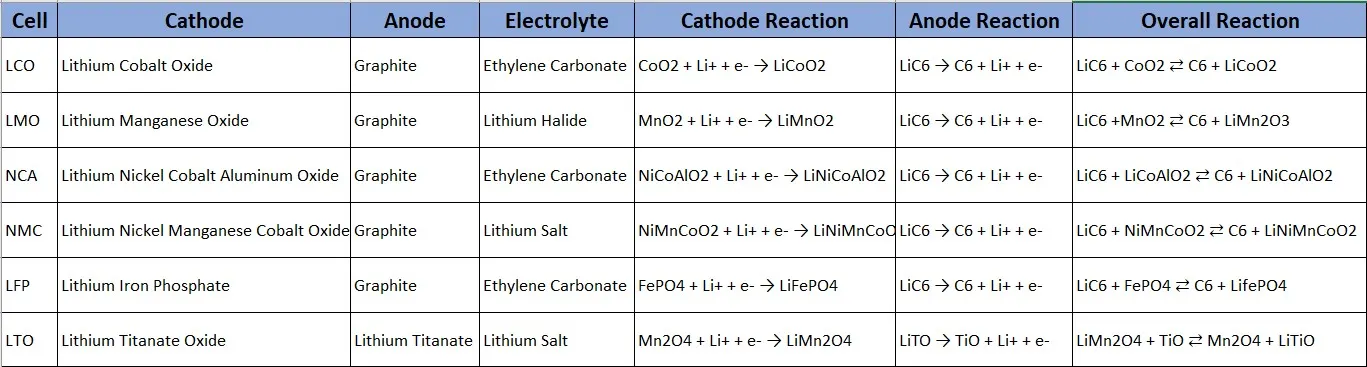
Aim: Preparing a table which includes materials & chemical reactions occurring at the anode and cathode of LCO, LMO, NCA, NMC, LFP and LTO type of lithium ion cells and Comparing the differences between each type of Li+ion batteries based on their characteristics
Objective #1: Preparing a table which includes materials & chemical reactions occurring at the anode and cathode of LCO, LMO, NCA, NMC, LFP and LTO type of lithium-ion cells
Lithium-ion is a kind of Secondary battery type, is the most popular rechargeable battery (i.e. Electrical energy is converted into chemical energy vice versa,) chemistry used today. Lithium-ion batteries power the devices we use every day, like our mobile phones and electric vehicles.
Lithium-ion batteries consist of single or multiple lithium-ion cells, along with a protective circuit board. They are referred to as batteries once the cell, or cells, are installed inside a device with the protective circuit board.
Components of Lithium-ion Cell:
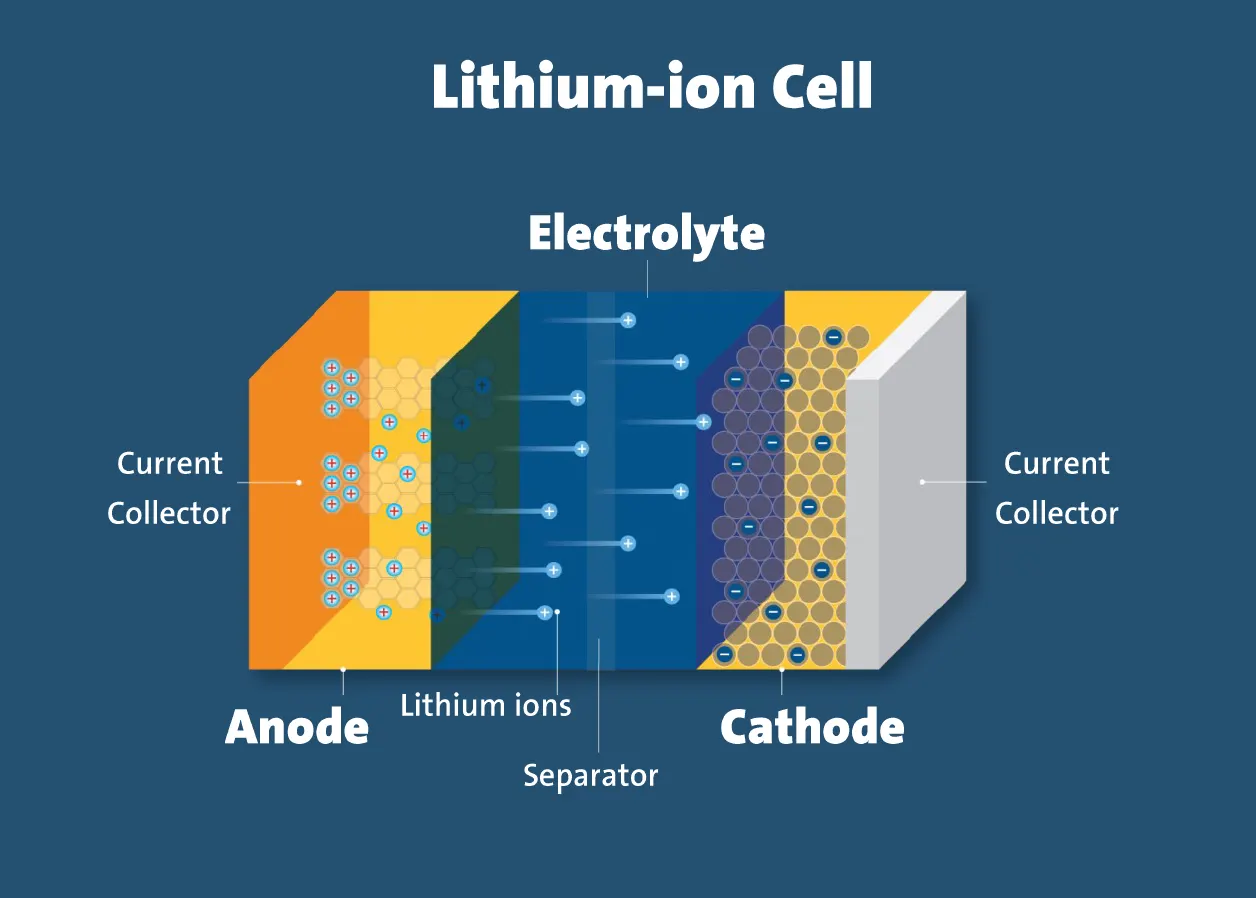
Electrodes: The positively and negatively charged ends of a cell. Attached to the current collectors
Anode: The negative electrode
Cathode: The positive electrode
Electrolyte: A liquid or gel that conducts electricity
Current collectors: Conductive foils at each electrode of the battery that are connected to the terminals of the cell. The cell terminals transmit the electric current between the battery, the device and the energy source that powers the battery
Separator: A porous polymeric film that separates the electrodes while enabling the exchange of lithium ions from one side to the other
Components of Lithium-ion Cell:
In a lithium-ion battery, lithium ions (Li+) move between the cathode and anode internally. Electrons move in the opposite direction in the external circuit. This migration is the reason the battery powers the device—because it creates the electrical current.
While the battery is discharging, the anode releases lithium ions to the cathode, generating a flow of electrons that helps to power the relevant device.
When the battery is charging, the opposite occurs: lithium ions are released by the cathode and received by the anode.
Understanding the chemistry of different Lithium-ion batteries:
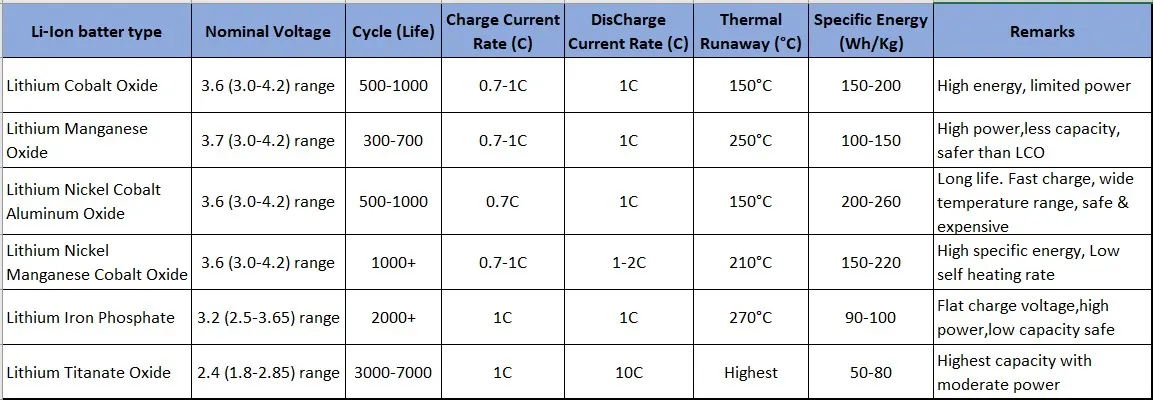
Objective #2: Comparing the differences between each type of Li+ion batteries based on their characteristics
1. Lithium cobalt (LCO) acid battery is a type of lithium-ion battery. Among all other types of Lithium batteries, the lithium cobalt acid battery is best at charging. It has a stable structure, holds a lot of power, and works really well. But, it’s not very safe and costs a lot. It’s mostly used in small and medium-sized devices
Application: Lithium cobalt oxide batteries are mainly used as cathode materials for lithium-ion batteries used in the manufacture of mobile phones laptops and other portable electronic devices.
2.Lithium manganate (LMO) battery uses a material called lithium manganate for its positive part. This battery is cheap, safe, and used a lot. The way lithium manganate is made and its properties depend on the materials and how it’s processed.
Application: Lithium manganate is used in power tools, medical devices, and hybrid and pure electric vehicles.
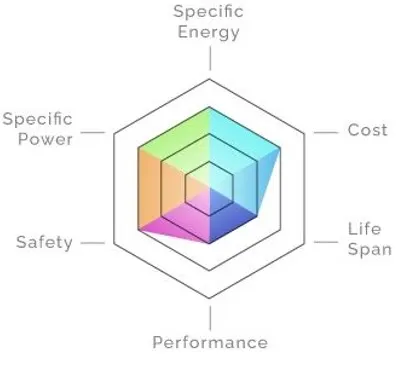
3.Lithium nickel-cobalt aluminate (NCA) Lithium nickel-cobalt aluminate batteries or Ncas have been used since 1999. It has a high specific energy, quite good specific power, and a long service life similar to NMC. Less flattering are security and cost.
Application: Generally used for electric vehicles.
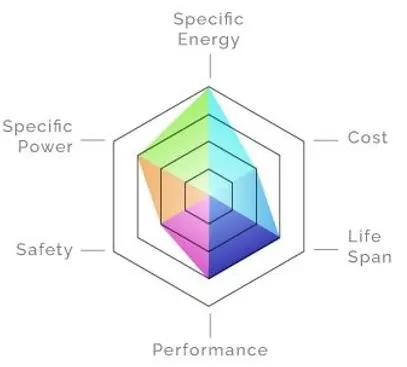
4. Lithium nickel-cobalt-manganate (NMC) – It is named after different ratios of minerals in the cathode. For example, the NMC811 cathode comprises 805 nickel, 10% manganese and 10% cobalt, along with lithium. It is a battery material that uses less expensive nickel and manganese instead of a lot of cobalt. This makes it cheaper. It works almost as well as lithium cobaltite in batteries. It’s becoming a new material for batteries and is slowly taking the place of lithium cobaltite.
Application: In the fields of new energy vehicles, electric vehicles, air tools, energy storage, intelligent vacuum cleaners, drones, intelligent wearable devices, and so on.
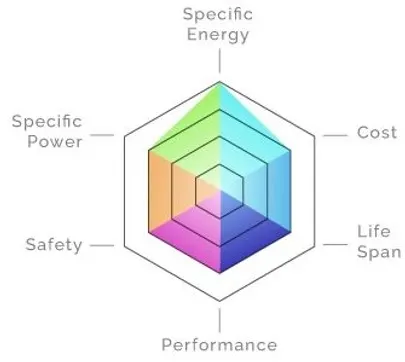
5. Lithium iron phosphate (LFP) – Lithium iron phosphate battery is a kind of lithium battery, like the battery used in our mobile phone, because the positive electrode material of lithium iron phosphate battery is mainly phosphorus, acid, iron, and lithium compound.
Application: Because the lithium iron phosphate power battery has the above characteristics, it has a wide range of applications. LFP batteries are used in energy storage systems and short -range EVs for their unmatched safety and long lifespans. For example: large electric vehicles, power tools, solar and wind power energy storage equipment, UPS and emergency lights, warning lights, and mining lights instead of small medical equipment and portable instruments.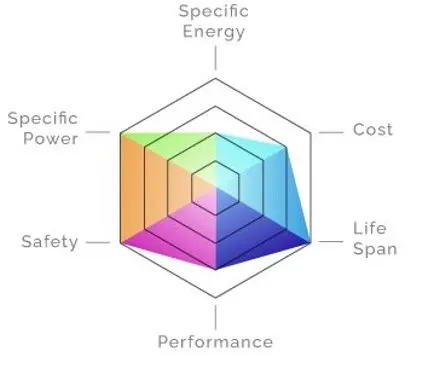
6. Lithium titanate oxide (LTO) – Lithium titanate replaces graphite in the anode of a typical lithium-ion battery, and the material forms a spinel structure. The cathode can be lithium manganate or NMC.
Application: The battery is generally used in UPS, electric powertrains, and solar
streetlights.
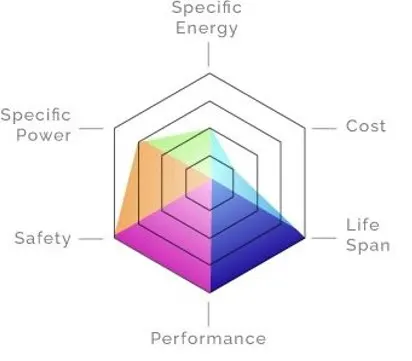
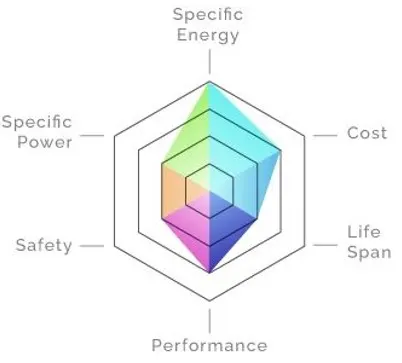
Characteristics chart of different types of Lithium-ion batteries –