Week 1 Understanding Different Battery Chemistry
Aim:-
1.Prepare a table which includes materials & chemical reactions occurring at the anode and cathode of LCO, LMO, NCA, NMC, LFP and LTO type of lithium ion cells.Give your detailed explanation on it
Ans:-
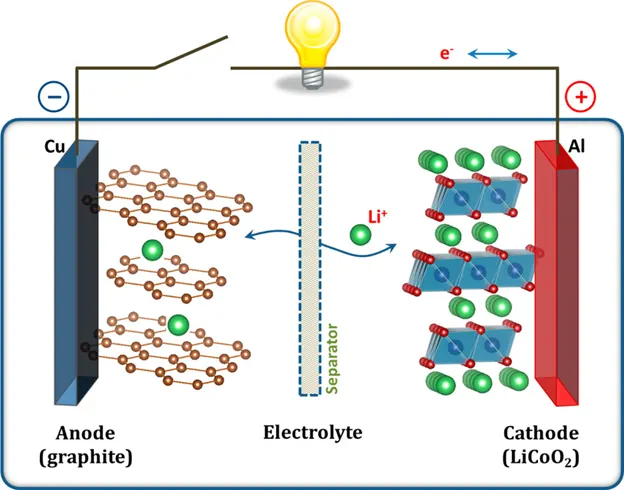
Lithium-ion battery (Li-ion) is an advanced battery technology that uses lithium ion as a key component of its electrochemistry. During the extraction cycle, the lithium atoms in the anode ion ion and are separated from their electrons. Lithium ion ions from the anode and passes through the electrolyte to the cathode, where it combines with its electrons and decomposes with electricity. Lithium ions are small enough to travel through a small separator that can fit between the anode and the cathode. Partly due to the small size of lithium (only a third of hydrogen and helium), Li-ion batteries can have very high voltage and charge storage per unit weight and unit volume.
Li-ion batteries can use a number of different substances such as electrodes. The most common compounds are lithium cobalt oxide (cathode) and graphite (anode), which are commonly found in portable electronic devices such as cell phones and laptops. Other cathode materials include lithium manganese oxide (used in mixed electric and electric vehicles) and lithium iron phosphate. Li-ion batteries usually use ether (part of living compounds) as an electrolyte.
Charging:-
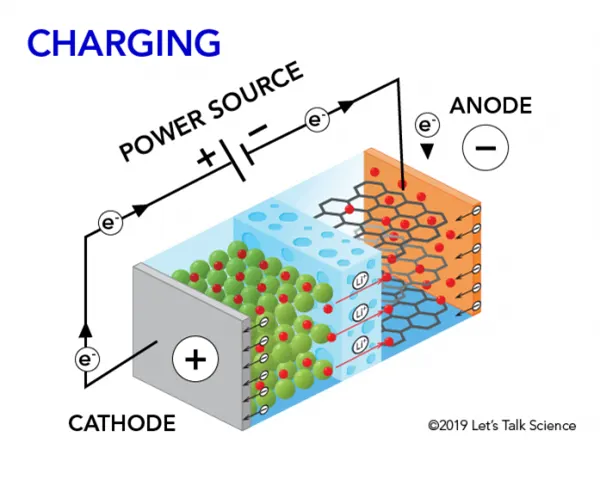
Lithium ions are released from the anode and returned to the electrolyte cathode. This also releases the electrons they bind to the anode, and these flow to outer wire, which provides the electrical energy we used to do the job. That is the external cable connection makes the reaction continuous — when the electrons are free to move, as well as lithium ions are well charged that will balance the movement of their evil case. When the cathode is filled with lithium ion, the reaction stops and the battery is flat. Then it is charged again lithium-ion batteries also, and the external electric charge we use pushes lithium ions back anode from cathode.
Discharging:-
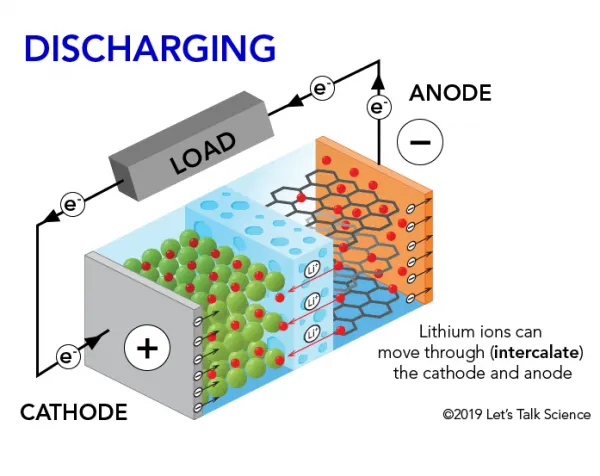
Lithuim ion cell are four main components:-
i.Cathode
ii.Anode
iii.Seprater
iv.Electrolyte
i.Cathode:-
When we talk about a cathode in chemistry, it is called an electrode where decomposition occurs. This is normal in an electrochemical cell. Here, the cathode is negative as the electrical energy supplied by the cell results in the decomposition of chemical compounds. However, it may also be as good as in the case of a galvanic cell where a chemical reaction leads to the production of electrical energy.
ii.Anode:-
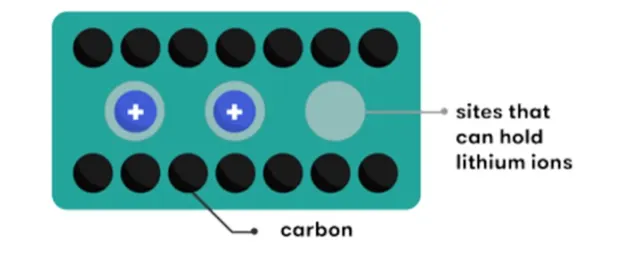
In the most basic form, an anode in electrochemistry is the point at which an oxidation reaction occurs. Typically, in an anode, negative ions or anions due to their electrical potential often react and emit electrons. These electrons then ascend and enter the driving space. When we take a galvanic cell, the anode is naturally negative and the electrons usually go to the outer part of the circuit. In an electrolytic cell, it is also active. Additionally, an anode can be a plate or a phone with very good cost.
iii.Seprater:-
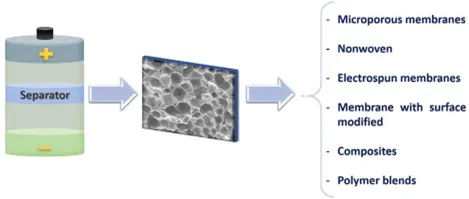
Battery separators provide a barrier between the anode -VE and the cathode +VE while providing power.
the exchange of lithium ion from one side to the other.
They are ions that form ions but do not transfer electrons to them.
Li-ion cells use polyolefin as a separator. This item has excellent mechanical features, good chemicals
stability is also less expensive.
iv.Electrolyte:-
The molten electrolyte breaks down into cations and anions, which are dispersed evenly by the solvent.
Normally Lithium ion cells contain electrolytes in Organic solvents such as, Ethylene carbonate, dimethyl carbonate, propylene carbonate and lithium salt as solute.
Types of Lithum – ion battery:-
- LITHIUM COBALT OXIDE (LiCoO2) LCO:-
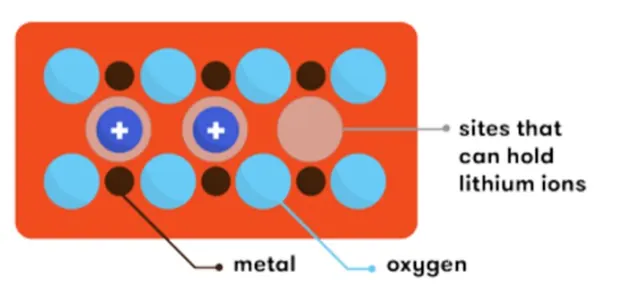
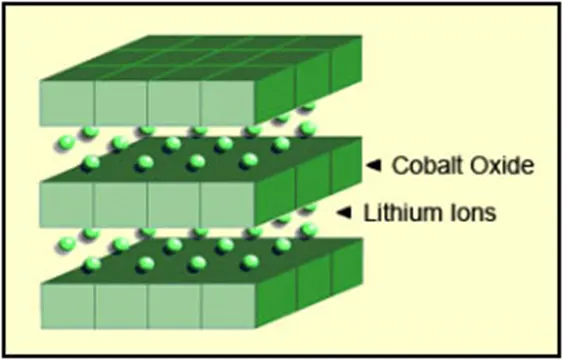
Normal lithium-ion cells have a carbon (C) anode and a lithium cobalt oxide (LiCoO2) cathode. In fact, the lithium cobalt oxide battery was the first lithium-ion battery developed since the pioneer work of R Yazami and J Goodenough, and was sold by Sony in 1991. Binds cobalt and oxygen together to form structural layers of octahedral cobalt oxide. , separated by lithium sheets. It is important that this structure allows cobalt ions to convert their valence circuits between Co + 3 and Co + 4 (lose and gain a badly charged electron) when it charges and emits.
Chemical Reaction:-
DURING DISCHARGE
In the anode, lithium is oxidized. Lithiumions are released from carbon, as well as electrons.
LiC6→xLi++xe−+C6LiC6→xLi++xe−+C6
At the cathode, the lithium-ion is absorbed by the lithium dioxide, and the electrode is reduced as it recovers electrons from the cycle:
Li1−xCoO2+xLi++xe−→LiCoO2Li1−xCoO2+xLi++xe−→LiCoO2
The overall reaction is:
C6+LiCoO2⟷LixC6+Li1−xCoO2
- LITHIUM MANGANESE OXIDE (LiMn2O4) LMO:-
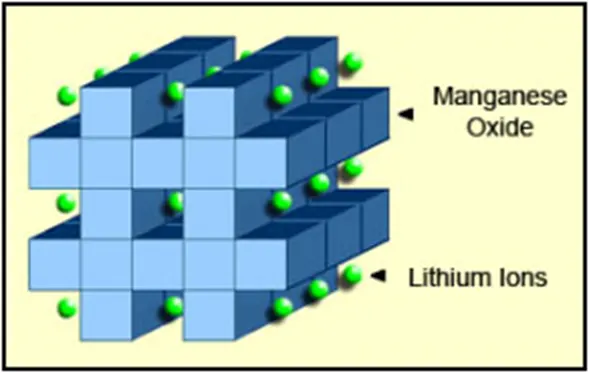
This type of lithium battery uses a cathode made of lithium-manganese spinel (Li + Mn3 + Mn4 + O4). Spine is a type of mineral with a different structure of AB2O4. The spinel structure has excellent thermal stability, improving battery safety. It also promotes ion flow within the electrolyte and reduces internal resistance which contributes to the loss of battery power over time. Although this type of lithium battery offers high levels of discharge and recharge (and due to the spinel structure of the cathode) it has a low capacity and short life span.
Chemical Reaction:-
DURING DISCHARGE
In the anode, lithium is oxidized. Lithium ions are released from carbon, as well as electrons.

At the cathode, the lithium-ion is absorbed by the lithium dioxide, and the electrode is reduced as it recovers electrons from the cycle.

The Overall Reaction :

3.Lithium Nickel Cobalt Aluminum Oxide (LiNiCoAIO2)NCA:-
Lithium nickel cobalt aluminum oxide batteries are also called NCA batteries, and are increasingly important for electrical powertrains and grid maintenance.
NCA batteries are rare in the consumer industry, but they are promising in the automotive industry.
NCA batteries offer the option of high power and good health, but are not as safe as they could be compared to other types of lithium-ion batteries and more expensive.
Chemical Reaction:-
DURING DISCHARGE
In the anode, lithium is oxidized. Lithium ions are released from carbon, as well as electrons.

At the cathode, the lithium-ion is absorbed by the lithium dioxide, and the electrode is reduced as it recovers electrons from the cycle.

The Overall Reaction :

- Lithium Nickel Manganese Cobalt Oxide (LiMnCoO2)NMC:-
Also known as lithium manganese cobalt oxide or NMC batteries, they form a composite cathode nickel, manganese and cobalt Like other lithium-ion batteries, NMC batteries can have some high or high power
This type of battery is most common in power tools and electric trains in cars.
The cathode compound ratio is usually 60 percent nickel, 20 percent manganese and 20 percent cobalt.
This means that the cost of raw materials is lower than other lithium-ion battery options, as cobalt can actually be it is expensive.
These batteries may drop in price in the future, as some battery makers plan to replace them their battery charge is more than% Nickel%, so they can use less cobalt.
Chemical Reaction:-
DURING DISCHARGE
In the anode, lithium is oxidized. Lithium ions are released from carbon, as well as electrons:

At the cathode, the lithium-ion is absorbed by the lithium dioxide, and the electrode is reduced as it recovers electrons from the cycle:

The Overall Reaction :

- Lithium Iron Phosphate (LiFePo4)LFP:-
Lithium iron phosphate batteries, also known as phosphate batteries, use phosphate as a cathode.
They benefit from low resistance, which improves their safety and thermal stability.
Li-phosphate batteries are often the least expensive option and when their long battery life is incorporated consideration. However, the low voltage of the li-phosphate battery means it has less power than other types of lithium batteries.
Therefore, these batteries are commonly used in electric motorcycles and other long-term applications cycle of health and safety critical.Lithium iron phosphate batteries, also known as phosphate batteries, use phosphate as a cathode.
Other benefits include durability and longer life cycle - fully charged batteries can be maintained with minimal changes in the overall life expectancy of the battery.
Li-phosphate batteries are often the least expensive option and when their long battery life is incorporated consideration. However, the low voltage of the li-phosphate battery means it has less power than other types of lithium batteries.
Therefore, these batteries are commonly used in electric motorcycles and other long-term applications cycle of health and safety critical.
Chemical Reaction:-
DURING DISCHARGE
In the anode, lithium is oxidized. Lithium ions are released from carbon, as well as electrons:

At the cathode, the lithium-ion is absorbed by the lithium dioxide, and the electrode is reduced as it recovers electrons from the cycle:

The Overall Reaction :

6.Lithuim Titanium Oxide(LiTiO2)LTO:-
Finally, lithium titanate, also known as li-titanate, is a battery class that allows for continuous use. The biggest advantage of li-titanate battery is its fast charging time.
Currently, manufacturers of electric vehicles and bicycles are using titanate batteries, and it is possible that this type of battery may be used in electric buses for public transportation.
However, these batteries have a relatively low voltage, or low power consumption, than other types of lithium-ion batteries, which can cause problems by powering cars effectively. However, the density of lithium titanate batteries is still higher than other non-lithium-ion batteries, inclusive.
Chemical Reaction:-
DURING DISCHARGE
In the anode, lithium is oxidized. Lithium ions are released from carbon, as well as electrons:

At the cathode, the lithium-ion is absorbed by the lithium dioxide, and the electrode is reduced as it recovers electrons from the cycle:

The Overall Reaction :

2.Compare the differences between each type of Li+ion batteries based on their characteristics.
Ans:-
Lithuim – ion Battery characteristics Table:-
|
Li-ion types |
LCO |
LMO |
NCA |
NMC |
LFP |
LTO |
|
Specific Energy |
High |
Low |
High |
High |
Low |
Low |
|
Specific Power |
High |
Medium |
High |
Medium |
Low |
Low |
|
Cycle Life |
Medium |
Low |
Medium |
High |
Low |
Low |
|
Energy Density (Wh/kg) |
150 To 200 |
100 To 150 |
150 To 220 |
90 To 120 |
200 To 260 |
50 To 80 |
|
Perfor- mance |
High |
Low |
High |
High |
High |
Low |
|
Saftey |
Highest saftey concern |
Good Saftey |
Some saftey concern |
Good saftey |
Saftey Li-ion cell chemistry |
Highest safe |
|
Cost |
Low |
Medium |
Medium |
Medium |
High |
High |