Week 1 Understanding Different Battery Chemistry
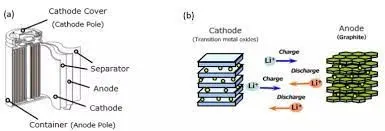
LITHIUM ION: It is a rechargeable battery composed of cells in which lithium ion moves from the negative electrode through an electrolyte to the positive electrode during discrage and vice versa while charging.
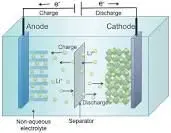
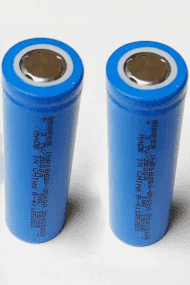
The images shows the lithium ion battery.
Types of LI-ions batteries :
LCO :
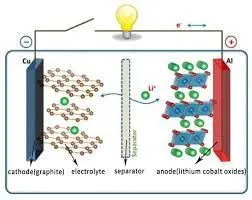
- Lithium cobalt Oxide or Lithium Cobaltate with chemical formula of LiCoO2.
- It is a dark blue gray crystalline solid commanly used as positive electrode.
- Lco Was discovered in 1980 by an Oxford university
- IT consist if solid layer of monovalent cations that lies between O2 atoms. The cobalt atom are formed in the trivalent oxidation state and its layered between two layers of oxygen atom.
- Cathode graphite to carbon and anode lithium cobalt to almunium is sepearted by the seperator in battery as shown which on reaction dissolves and gets deposited on their respective connecting rods.
LMO :
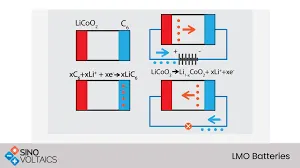
- The above fig shows the LMO battery which is called as Lithium Ion Manganese Oxide battery (LiMn2O2).
- It is the most popular battery which is also used in applications like electric and hybrid vehicles and has renewable energy source application.
- LMO was invented in 1996. Its anodeis LiaC6 and cathode matrial is LibMn2O4.
- It is also used in power tools as it is capable of driving high load of energy in showrt period of time
- High temperature stability and high rate cabability of charging is the main advantage.
NCA :
- The above fig shows the NCA battery called as Lithium Nickel Cobalt Aluminium Oxide.
- Its chemical formula is (LiNiCoAlO2).
- NCA (Lithium nickel cobalt aluminum oxide) battery was invented in the year 1999.
- It is used in different applications like power grid , electric cars and medical devices.
- Its main advantages are High specific energy, Long life span, NCA cathodes contains the most energy amount by weight and volume.
NMC :
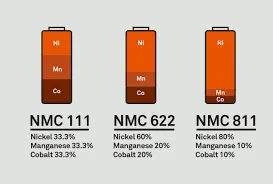
- The above ig shows the NMC type of battery having different types of comositions of components.
- NMC (Nickel Manganese Cobalt Oxide) Was invented in 2008.
- Its anode material is LiaC6 and cathode material is LibNi1-x-yCoxMnyO2.
- IT has nickel which has high specific energy but poor stability and manganese which has low internal resistance but provides low specific energy which in hand balance the bettery and strengths the material by combining.
- NMC has longer cell life, lower cost and high energy density.
- MNC cathode also has the most energy amount by weight and volume.
LFP :
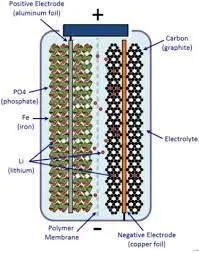
- The above fig shows the arrangement of LFP battery.
- LFP stands for Lithium Iron Phosphate (LiFePO4).
- It uses phosphate as cathode material as it benefits in low resistance and enhance thermal stabilty.
- It was discovered in 1996.
- Its anode is LiaC6 and cathode is LibFePO4.
- LFP is used in haeavy work as it produce high load so it is used in electric buses , trucks and cars.
- LFP provides good electrochemicalperformance with low resistance.
- Its main advantage is durability , low cost, excellent safety and long life.
LTO :
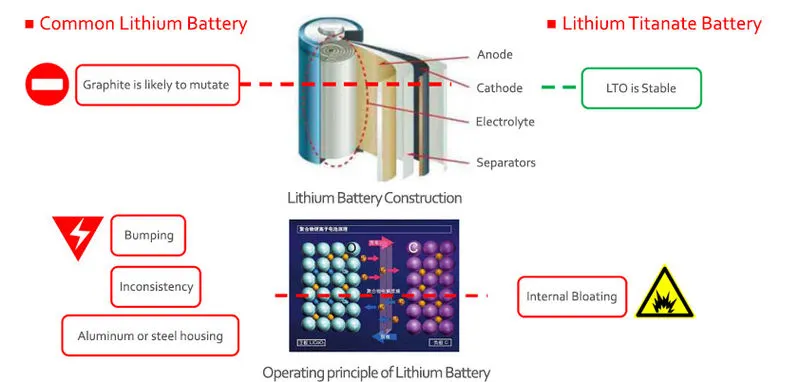
- The above fig shows the LTO arrangements.
- LTO is called as lithium titanium or li-titanate (Li2TiO3).
- These are high power batteries which require powerful charging stations.
- LTO was invented in 2008.
- Its anode is Li4+aTi5O12 and the cathode material is LibFePO4.
- Other applications for LTO batteries include aerospace and military uses, and more importantly wind and solar energy storage and smart grids creation.
- .Li-titanate is used instead of the graphite in the anode of a common lithium-ion battery and the material is formed into a spinel structure.
- It had excellent low temp discharge characteristics, long life, fast chrage and its the safest of all Li-ion batteries.
| Battery type | cathode | anode | solute | solvent | cathode reaction | anode reaction |
| Lithium Cobalt LCO | Lithium cobalt oxide LiCoO2 | Graphite C6 | Lithium Hexafluorophosphate LiPF6 | Ethylene Carbonate | Li(1-x)CoO2(s)+XLi*+xe<->LiCoO2(s) | C6Li<->Li++e- |
| lithium Mnaganese LMO | Lithium Manganese Oxide LiMnO4 | Graphite C6 | Lithium Hexafluorophosphate LiPF6 | Ethylene Carbonate | Li(1-x)Mn2O2(s)+XLi*+xe<->LiMn2O2(s) | C6Li<->Li++e- |
| Lithium Almunium NCA | Lithium Nickel Cobalt AlmuniumOxide LiNiMnAlO2 | Graphite C6 | Lithium Hexafluorophosphate LiPF6 | Ethylene Carbonate | Li(1-x)NiCoAlO2(s)+XLi*+xe<->LiNiCoAlO2(s) | C6Li<->Li++e- |
| Lithium Nickel Manganese Cobalt NMC | Lithium Nickel Manganese Cobalt Oxide LiNiMnCoO2 | Graphite C6 | Lithium Hexafluorophosphate LiPF6 | Ethylene Carbonate | Li(1-x)NiMnCoO2(s)+XLi*+xe<->LiNiMnCoO2(s) | C6Li<->Li++e- |
| Lithium Iron Phosphate LFP | Lithium Iron Phosphate LiFePO4 | Graphite C6 | Lithium Hexafluorophosphate LiPF6 | Ethylene Carbonate | Li(1-x)LiFePO4(s)+XLi*+xe<->LiFPO4(s) | C6Li<->Li++e- |
| Lithium Titanate LTO |
Lithium manganese oxide LiMnO4 Lithium Nickel Manganese Cobalt Oxide LiNiMnCoO2 |
Titanate Ti5O12 | Lithium Hexafluorophosphate LiPF6 | Ethylene Carbonate |
Li(1-x)Mn2O2(s)+XLi*+xe<->LiMn2O2(s) Li(1-x)NiMnCoO2(s)+XLi*+xe<->LiNiMnCoO2(s) |
Li2Ti5O12<-> Li4Ti5O12+3Lui++3e- |