Week 1 Understanding Different Battery Chemistry
AIM :
1.Prepare a table which includes materials & chemical reactions occurring at the anode and cathode of LCO, LMO, NCA, NMC, LFP and LTO type of lithium ion cells.Give your detailed explanation on it
2.Compare the differences between each type of Li+ion batteries based on their characteristics
- Lithium ion batteries can be designed foe optimal capacity with the drwaback of limited loading, slow charging and reduced longetivity. an industrial batterz maz have a moderate amphere rating but thw focus is on durability. SPecific energy only provides part og battery performance
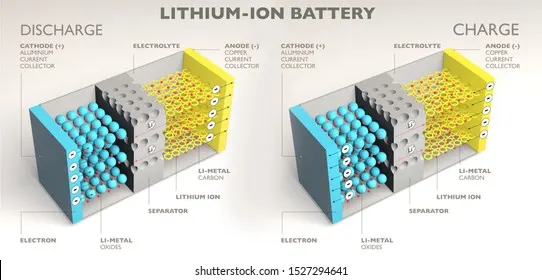
- A battery is made up of anode, cathode, electrolyte, and two ncurrent collectors. The anode and cathode store the lithium
- The electrolyte carries positieblz charged lithium ions from the anode to the cathode and vicce versa through the seperator. The movemmet of the lithium ins creates free electros in the anode which creates a charge then flows from the current collector. The seperator blocks the flow of electrons inside the battery
PARTS OF LITHIUM_ION BATTERY :
- ELectrolyte
- porus seperator
- anode
- cathode
- lithium metal oxide
- lithium ion
- lithium carbon (graphite)
WHile the battery is discharging and providig an electric current the anode releases lithium ions to the cathode generating a flow of electroms from one side to other. When plugging in the device the opposite will happen that the lithium ions are released by the cathode and recived by the anode.
Commonly used Lithium ion batteries are:
- Lithium cobakt oxide
- lithium manganese oxide
- lithium nickel manganese cobalt oxide
- lithium iron phosphate
- lithium nickel cobalt aluminum oxide
- lithium oxide
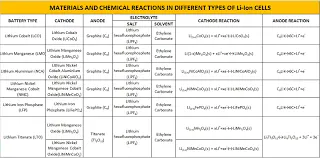
- Lithium cobalt oxide battery was invented in the year 1991 its anode material is liaC6 the cathode material is LibCoO2 and the carrier is Li+ it is used in applications from electronic devices to all laptops and phone batterires the system contains a cobalt oxide and graphit rcarbon anode
- Lithium ion manganese ixide batterz is a lithium ion celll that uses manganese dioxide Mno2 as a cathode material. Their main function is the same intercalation or de-intercalation mechanism as other commercialized secondarz battery technologies such as LicoO2. Cathodes based on manganese oxide components are earth-Abumdamt , inexpensive, non-toxic and provifr better thernal stability
- lithium nickel cobalt aluminium oxides battery has been around since 1999 for special application. it shares similarites with MC by offering high specific energy reasonably good specific power and a long life span
- Lithium nicke manganese cobalt oxide battery offera combinatuon a nickel, Manganese cobalt oxide batteries NMC batteries have a high specific energy or power
- Lithium iron phosphate battery known as li-phosphate batteries as well. They use phosphate as cathode meterial in addition they benefit from the low resistance properties that enhance thier thermal staibility ad safety
- Lithiium nickel cobalt aluminum oxides battery has been around since 1999 for special applications. It shares similarities with NMC by offering high specifc energy reasonably good specific power and a long life span
- Lithium nickel manganese cobalt oxide battery offer a combination a nickel manganese and cobalt. They are sometimes known as lithium manganese cibat oxide batteries
- lithium titanate oxide batteries is a type of rechargable battery which has a advantage of being faster to charge than other lithium ion batteries but its disadvantages of having a much lower energy density.
2) Compare the differences between each type of Li+ion batteries based on their characteristics
The major 6 types of lithium ion batteries was discussed. The major things that can diffrentitate from one another
- Nominal voltage : It is the system voltage at which the device is designed to operate. The rated voltage is usually higher than the nominal voltage to ensure the safe operation of the device
- Cycle : The charge and discharge when took plave for a single time makes a cycle. The cycle can take place the then lifespan is higher.
- Thermal runway : Thermal runway begins when the heat generated within the battery exceeds the amunt of heat that is dissipated to its surroundings Internal battery temperature continue to rise casuing the battery current to rise creating a domino effect The rise in temperature will continue to rise. The rise in temperature in a single battery willl begin to affect other batteries nearby and the pattern will continue.
- specific energy : It is the amount of energy stored per unit mass (Wh/kg). This is a very important deciding factor that decides how much energy or power from different batteries with same amount f weight.
SPecific energy of different types of lithium based batteries :
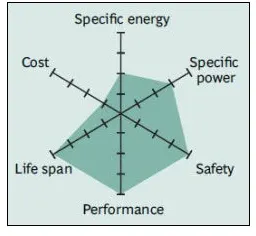
For ease of choosing a battery from laymans perspective the 6 key features are given a value within 0-5 range for all of the are given with the same parameters which are considered a=in cas of 5 pint hexagonal analysis of batteries they are
1. Specific energy
2. Specific power
3. Safety
4. Performance
5. Life span
6. cost
LCO :
li-cobalt excels on high specific but offers only moderate perfomance on specific ower safety and life span
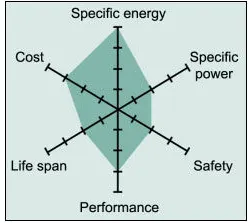
LMO :
Although moderate in overall performance newer designs of li-manganese offer impovements in specific power safety and life span.
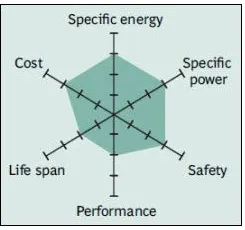
NMC :
NMC has a good overall performance and excels on specific energy. This battery is the preffered candidate for the electric vehicle and has the lowest self heating rate.
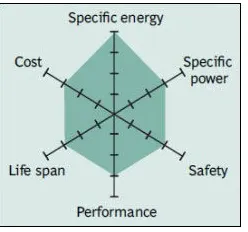
LFP :
Li-phosphate has excellent safety and long life span but moderate specific energy and elevated self discharge.
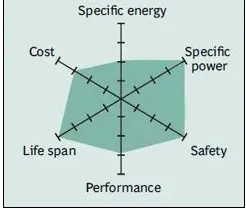
NCA :
High energy and power densities as well as a good life span make NCA a candidate for EV powertrains. High cost and marginal safety are negative.
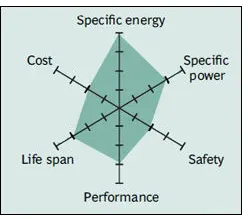
LTO :
Li-titanate excels i safety, low tempertatutre performance and life span. efforts are being made to improve the specific enegry and lower the cost