Week 1 Understanding Different Battery Chemistry
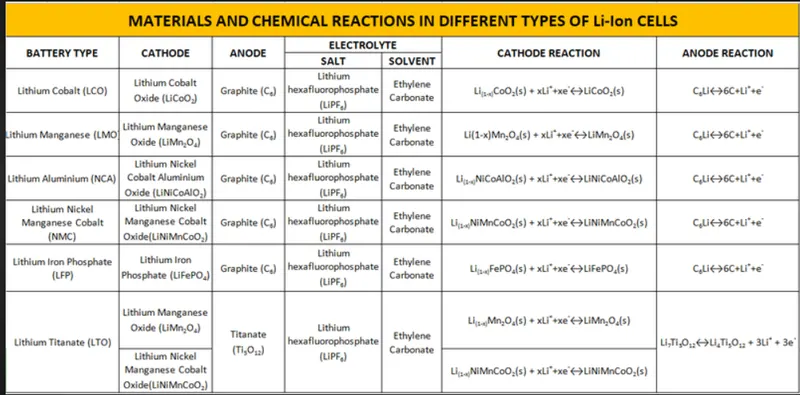
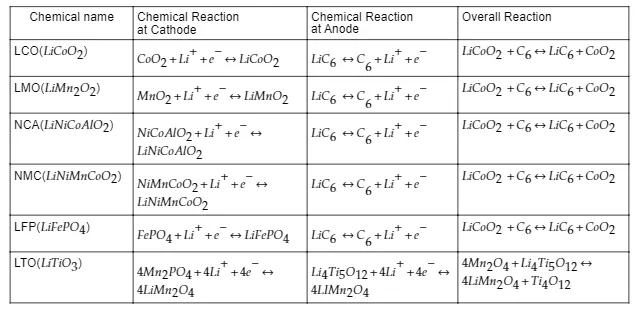
1.Prepare a table which includes materials & chemical reactions occurring at the anode and cathode of LCO, LMO, NCA, NMC, LFP and LTO type of lithium ion cells.Give your detailed explanation on it
A battery is a device consisting of one or more electrochemical cells with external connections for powering electrical devices such as flashlights, mobile phones, and electric cars. When a battery is supplying electric power, its positive terminal is the cathode and its negative terminal is the anode. The terminal marked negative is the source of electrons that will flow through an external electric circuit to the positive terminal. When a battery is connected to an external electric load, a redox reaction converts high energy reactants to lower-energy products, and the free-energy difference is delivered to the external circuit as electrical energy. Historically the term "battery" specifically referred to a device composed of multiple cells, however, the usage has evolved to include devices composed of a single cell.
Working Principle of Battery
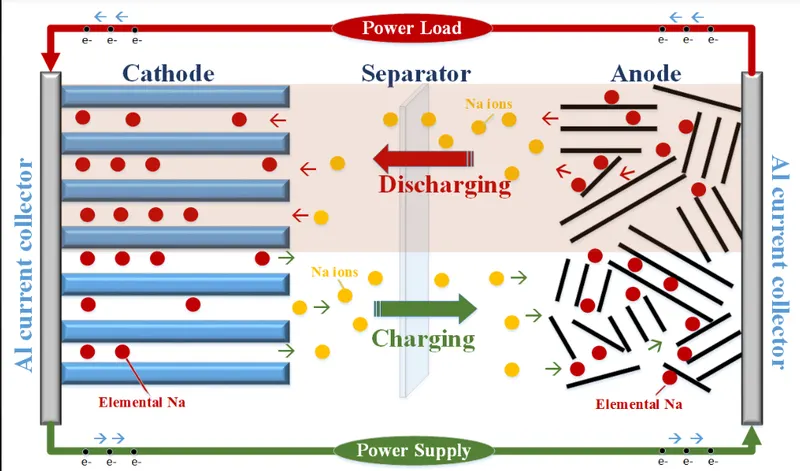
A battery works on the oxidation and reduction reaction of an electrolyte with metals. When two dissimilar metallic substances, called electrodes, are placed in a diluted electrolyte, oxidation and reduction reactions take place in the electrodes respectively depending upon the electron affinity of the metal of the electrodes. As a result of the oxidation reaction, one electrode gets negatively charged called cathode and due to the reduction reaction, another electrode gets positively charge called as Anode
Lithium Ion Battery
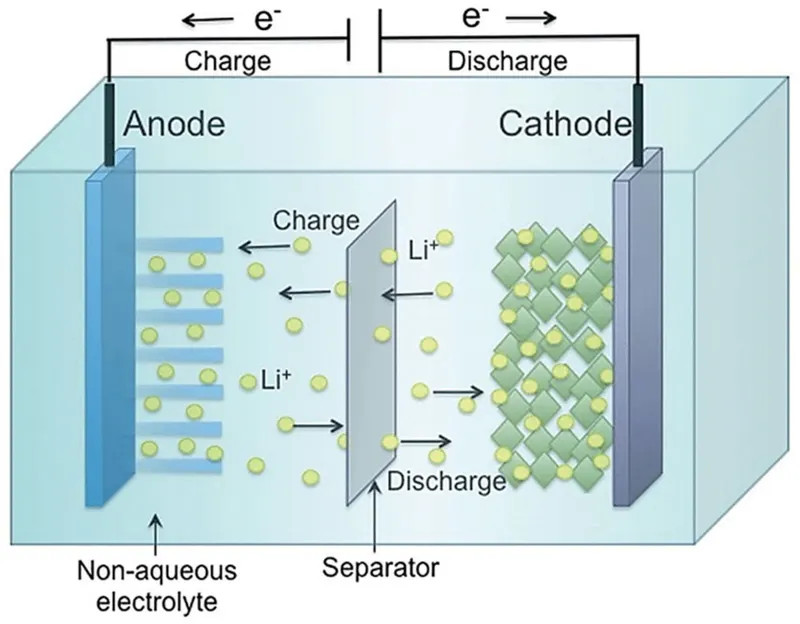
A lithium-ion (Li-ion) battery is an advanced battery technology that uses lithium ions as a key component of its electrochemistry. During a discharge cycle, lithium atoms in the anode are ionized and separated from their electrons. The lithium ions move from the anode and pass through the electrolyte until they reach the cathode, where they recombine with their electrons and electrically neutralize. The lithium ions are small enough to be able to move through a micro-permeable separator between the anode and cathode. In part because of lithium's small size (third only to hydrogen and helium), Li-ion batteries are capable of having a very high voltage and charge storage per unit mass and unit volume.
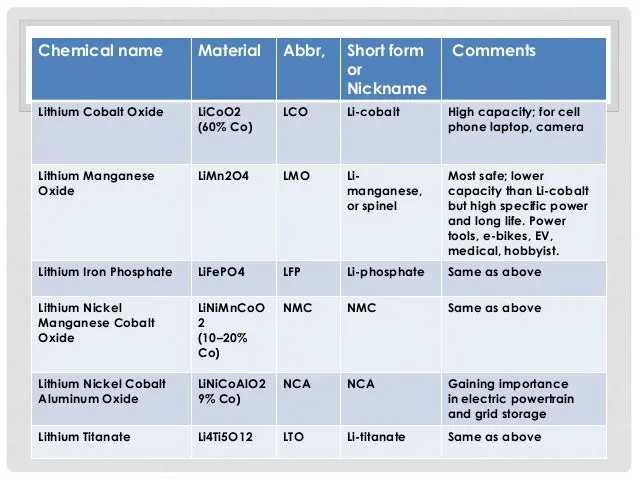
Li-ion batteries can use a number of different materials as electrodes. The most common combination is that of lithium cobalt oxide (cathode) and graphite (anode), which is most commonly found in portable electronic devices such as cellphones and laptops. Other cathode materials include lithium manganese oxide (used in hybrid electric and electric automobiles) and lithium iron phosphate. Li-ion batteries typically use ether (a class of organic compounds) as an electrolyte.
Types of Lithium-Ion batteries
- Lithium Cobalt Oxide(LiCoO2) — LCO
- Lithium Manganese Oxide (LiMn204) - LMO
- Lithium Nickel Manganese Cobalt Oxide (LiNiMnCoOz) – NMC
- Lithium Iron Phosphate (LiFePO4) - LFP
- Lithium Nickel Cobalt Aluminum Oxide (LINICOALO2) - NCA
- Lithium Titanate (Li2TiO3) – LTO
Lithium Cobalt Oxide (LiCoO2) – LCO
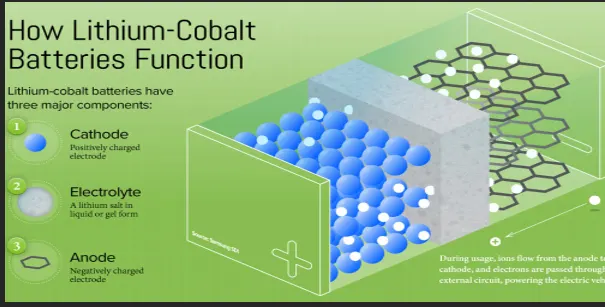
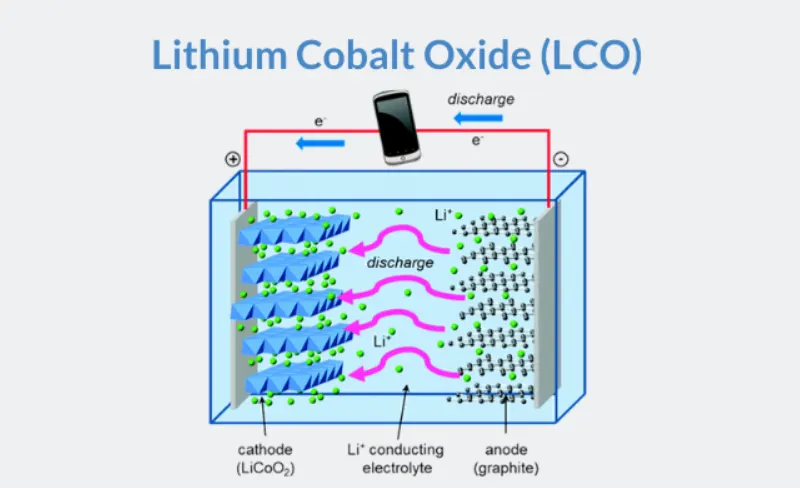
Lithium Cobalt Oxide has high specific energy as compared to the other batteries which make it the preferred choice for laptops and mobile phones. It also has a low cost and a moderate performance. However, it is highly unfavorable in all the other aspects when compared to the other lithium-ion batteries. It has low specific power, low safety, and a low lifespan.
Lithium Manganese Oxide (LiMn204) – LMO
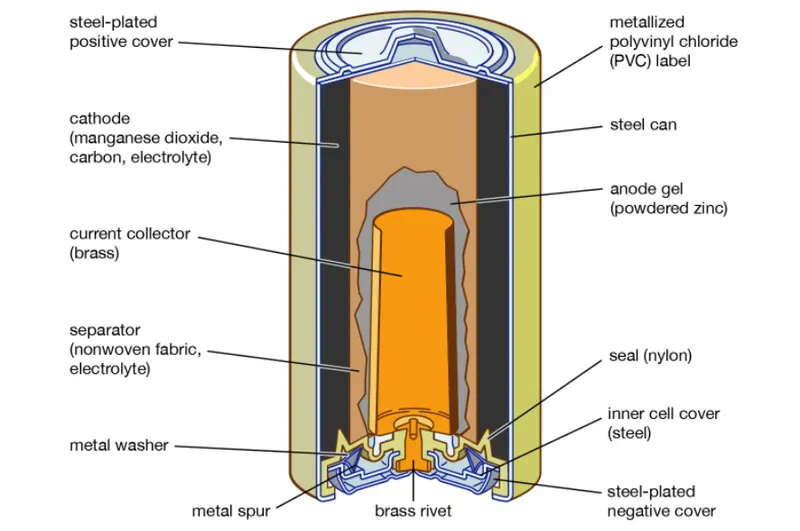
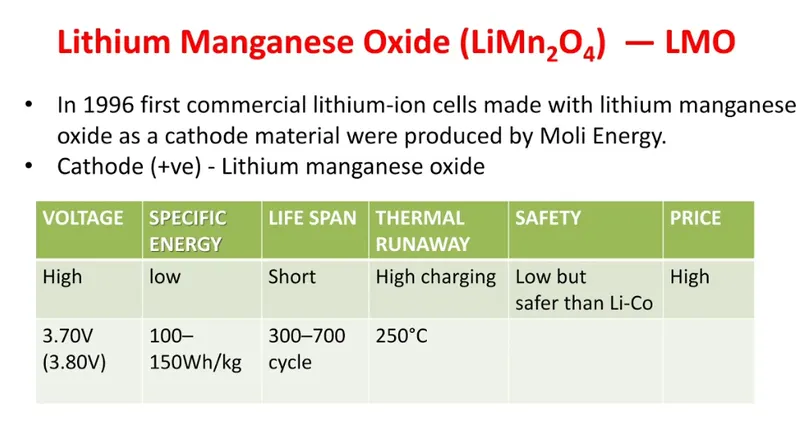
Lithium Manganese Oxide has moderate specific power, moderate specific energy, and a moderate level of safety when compared to the other types of lithium-ion batteries. It has the added advantage of a low cost. The downsides are its low performance and low lifespan. It is usually used in medical devices and power tools.
Lithium Nickel Manganese Cobalt Oxide (LiNiMnCoO,)_ NMC
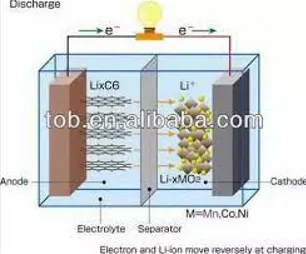
Lithium Nickel Manganese Cobalt Oxide has two major advantages as compared to the other batteries. The first one is its high specific energy which makes it desirable in electric powertrains, electric vehicles, and electric bikes. The other is its low cost. It is moderate in terms of specific power, safety, lifespan, and performance when compared to the other lithium-ion batteries. It can be optimized to either have high specific power or high specific energy.
Lithium Iron Phosphate (LiFePO4) – LFP
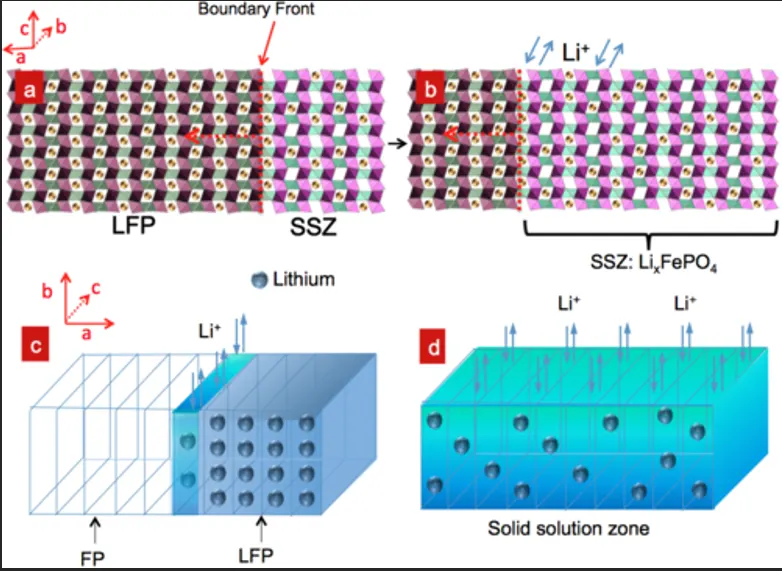
Lithium Iron Phosphate only has one major disadvantage when compared to other types of lithium-ion batteries and that is its low specific energy. Other than that, it has moderate to high ratings in all the other characteristics. It has high specific power, offers a high level of safety, has a high lifespan, and comes at a low cost. The performance of this battery is also moderate. It is often employed in electric motorcycles and other applications that require a long lifespan and a high level of safety.
Lithium Nickel Cobalt Aluminum Oxide (LINICOALO2)-NCA
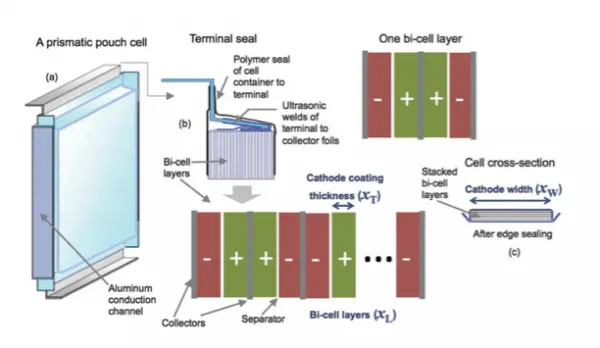
Lithium Nickel Cobalt Aluminum Oxide offers one strong advantage as compared to the five other batteries and that is high specific energy. It is pretty moderate in the rest of the characteristics like performance, cost, specific power, and lifespan. The only downside to this battery type is its low level of safety. Its high specific energy and moderate lifespan make it a good candidate for electric powertrains.
Lithium Titanate (Li2TiO3) — LTO
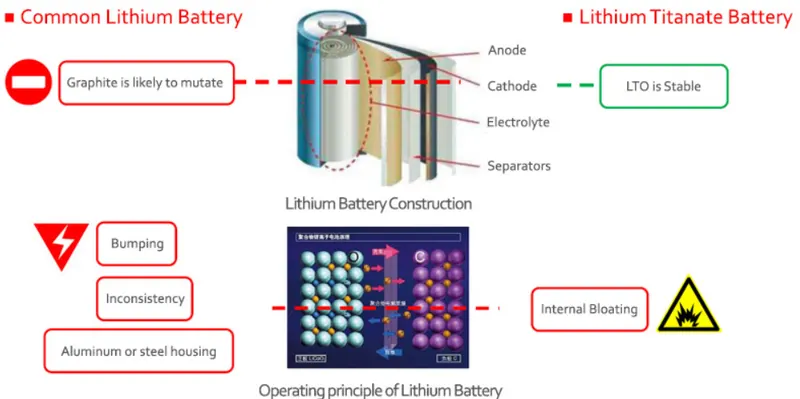
Lithium Titanate offers high safety, high performance, and a high lifespan which are very important features every battery should have. Its specific energy is low compared to the five other lithium-ion batteries but it compensates for this with moderate specific power. The only major disadvantage of lithium titanate as compared to the other lithium-ion batteries is its extremely high cost. Another important feature of this battery worthy of mention is its remarkably fast recharge time. It can be used for storing solar energy and creating smart grids.
Anode and Cathode Reaction
2.Compare the differences between each type of Li+ion batteries based on their characteristics
The difference between nickel manganese cobalt and lithium ion batteries can be clearly determined with the following detailed discussion.
" Nickel manganese cobalt batteries
This is one of the most famous lithium ion systems which have a cathode combination of nickel-manganese-cobalt. This system can be used to operate as power cells or energy cells. The components of NMC are combined and made with nickel and manganese. Nickel is popular for its high energy density but low and poor stability. Whereas, manganese has the merit of forming a spinel structure to gain low internal resistance but provides low specific energy. When these two metals are combined together, they enhance each other strengths very well.
Nickel manganese cobalt batteries are an excellent choice for e-bikes, power tools, and other electronic power trains. The cathode combination consists of one third of nickel, one third cobalt, and one third of manganese. The ratio stands as 1:1:1, which offers a unique mix and blend; it also lowers the cost of raw material due to the low amount of cobalt content. The nickel based batteries systems have a high energy density, low cost, and long life span as compared to the cobalt based cells, but they possess slightly low voltage output. Nickel manganese cobalt batteries serve as a hybrid cell as well, whose market share is increasing.
" Lithium ion battery
The lithium batteries started beginning to produce in 1912 by G.N Lewis. Lithium is the lightest among all the metals. It offers great electrochemical potential and enormous energy density. Many attempts got failed to manufacture rechargeable lithium batteries because it had some safety issues. Lithium ion batteries that are rechargeable are a safe option provided that certain precautions are taken into consideration when the battery is put to charge and discharge.
There is a thing to notice in lithium ion batteries, which are the energy density of lithium ion batteries is twice than the standards of nickel cadmium batteries. The lithium ion batteries have similar characteristics in terms of discharge. The high cell voltage of 3.6 volts allows battery pack designs with only one cell, whereas the nickel based batteries require three 1.2 volt cells.
Aging is one of the issues with most lithium ion batteries. The deterioration of capacity is noticeable after around one year. The battery fails to perform after two or three years. The producers are trying to improve lithium batteries continually. There are new and enhanced chemical combinations in every six months.
Lithium is expensive because the resources are irregular distribution across the planet. Gallons of drinking water are used in the extraction of lithium. Also, the extraction techniques are becoming more costly and energy intensive due to the rising demand for lithium. With the continually growing demands of electric power trains, electric cars, and electronic bikes, the requirement of rechargeable batteries is increasing drastically. Therefore, it would be best to discover something that carries similar features to lithium ion batteries, which does not cost much and is available.
The nickel manganese cobalt batteries can prove to be a great replacement because, as mentioned earlier, nickel based batteries have high density and low cost. It is true that lithium ion batteries cannot be replaced entirely because they carry low maintenance costs. They have relatively low self discharge; the self discharge rate of lithium ion batteries is low than that of the nickel based batteries. Therefore it is a bit hard to say that lithium ion can be replaced on the whole with nickel manganese cobalt batteries.