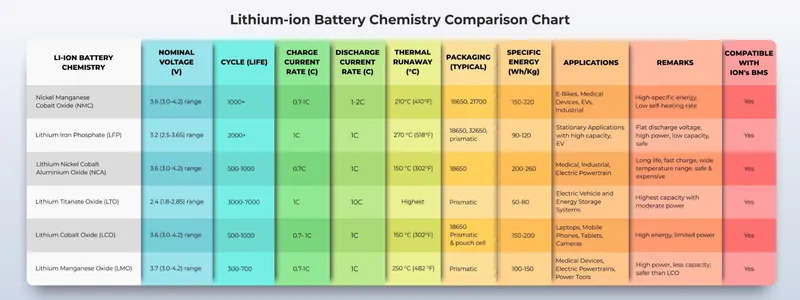
Understanding Different Battery Chemistry
Question 1.
Prepare a table which includes materials & chemical reactions occurring at the anode and cathode of LCO, LMO, NCA, NMC, LFP and LTO type of lithium ion cells.Give your detailed explanation on it
Answer 1. :-
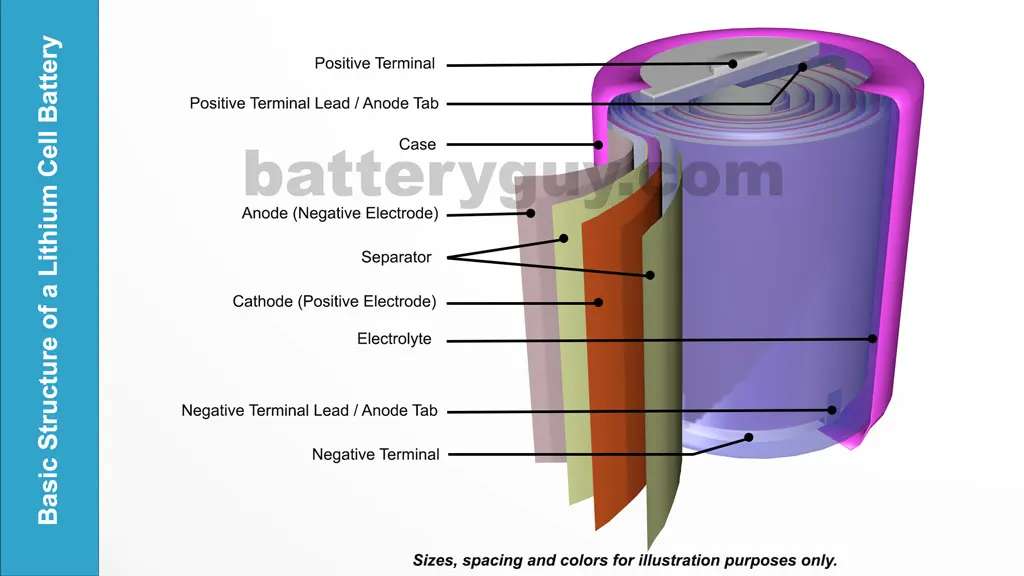
- Main elements of lithium-ion batteries
- Anode:
- The anode is the negative electrode in the cell. It is very common, in lithium-ion batteries, for it to be composed of lithium and carbon, usually a graphite powder. The current can be collected due to the copper film that is combined with the electrode. The purity, particle size, and uniformity of the anode all contribute to the aging behavior and capacity.
- Cathode:
- The cathode is the positive electrode. This is where all the different chemistries come into play. The cathode is what determines the overall lithium chemistry. Like the anode, a current collector is combined with the material so the flow of electrons can occur. The cathode is typically combined with an aluminum film. As shown above there are many different chemistries. The key differences between them is temperature at which they react with the electrolyte (thermal runaway) and the voltages they produce.
- Electrolyte:
- The electrolyte allows the transfer of the lithium ions between the plates. Typically, it is composed of different organic carbonates, such as ethylene, carbonate, and diethyl carbonate. The different mixtures and ratios vary depending on the application of the cell. For example, for a low temperature application the electrolyte solution will have a lower viscosity compared to one made for a room temperature environment. Lithium salts are essential in the mixture of the electrolyte, the salt determines the conductivity of the solution as well as aids in the formation of the solid electrolyte interface (SEI). In lithium batteries, lithium hexafluorophosphate (LiPF6) is the most common lithium salt. LiPF6 can produce hydrofluoric acid (HF) when mixed with water. The SEI is a chemical reaction between the lithium metal and electrolyte. Under normal conditions the cell manufacturer typically slow charges the cell to form an even SEI on the carbon anode.
- Separator:
- Lithium-ion cell separators are porous plastic films that prevent direct contact of the anode and cathode. The films are usually 20 μm thick and have small pours that allow lithium ions to pass through during the charge and discharge process. A “shutdown” separator is the most common. This separator will close the pores to prevent lithium ions to pass through, once the cell is out of the temperature range or a short occurs. Separators continue to be developed today to improve safety, while also increasing the capacity of the cells.
- Li-ion cells use polyolefin as a separator. This material has excellent mechanical properties, good chemical stability and is low-cost. A polyolefin is a class of polymer that is produced from olefin by polymerizing olefin ethylene. Ethylene comes from a petrochemical source; polyolefin is made from polyethylene, polypropylene or laminates of both materials.
- The Li-ion separator must be permeable and the pore size ranges from 30 to 100nm. (Nm stands for nano-meter, 10-9, which is one millionth of a millimeter or about 10 atoms thick.) The recommended porosity is 30–50 percent. This holds enough liquid electrolyte and enables the pores to close should the cell overheat.
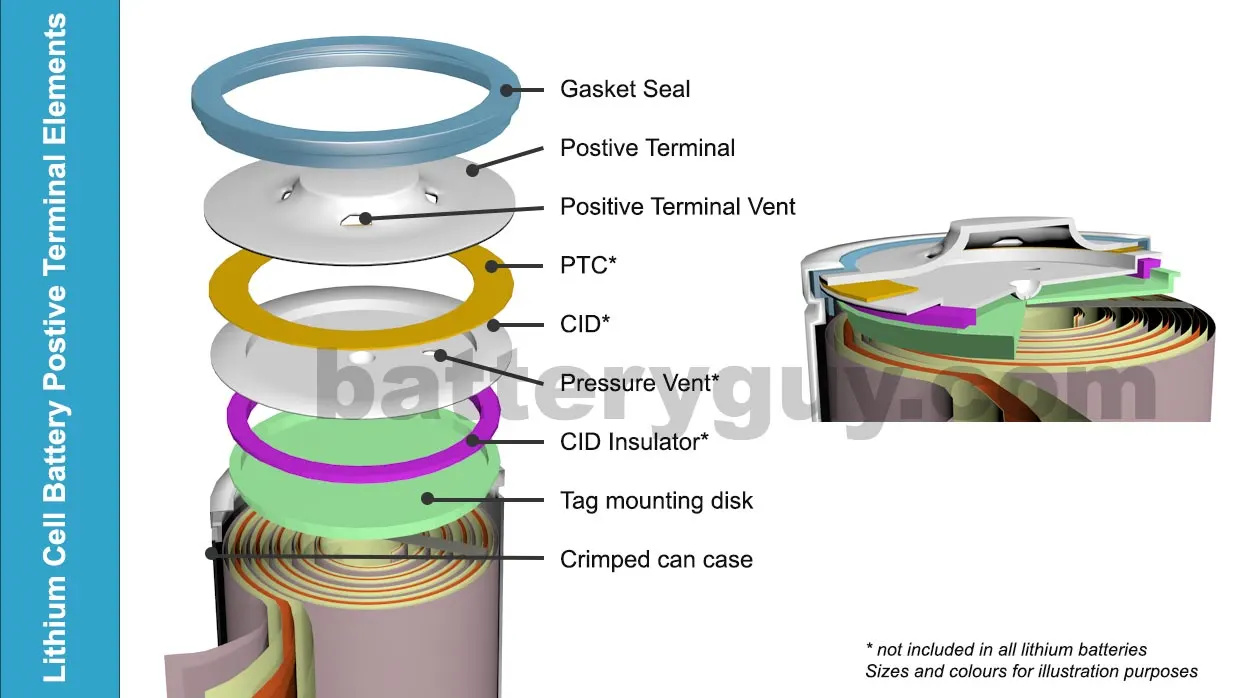
- Additional elements of lithium-ion batteries
- Gasket Seal – the negative terminal is often connected directly to the battery case in effect making the entire battery case the negative terminal. The gasket seal separates the case from the positive terminal
- Positive Terminal Vents – these are simply holes in the positive terminal to let out any gases that are released by the pressure vent in the CID (see below)
- PTC (Positive Temperature Coefficient also sometimes referred to as the “Pressure, Temperature, Current Switch“) – if the battery becomes excessively hot this material increases in resistance effectively cutting the positive terminal off from the battery.
- CID ( Circuit Interrupt Device ) – a metal alloy element that changes shape when the temperature rises above a certain point and by doing so disconnects the positive terminal from the battery.
- Pressure Vent – malfunctioning batteries can generate large volumes of hot gases which, if not released, can cause fire or an explosion.
- CID Insulator – ensures the tag mounting disk does not touch the Circuit Interrupt Device anywhere except at the point designed to change shape at high temperatures
- Tag mounting disk – ensures a strong connection with the positive tab.
|
|
|
|
|
|
|
|
|
|
|
|
|
|
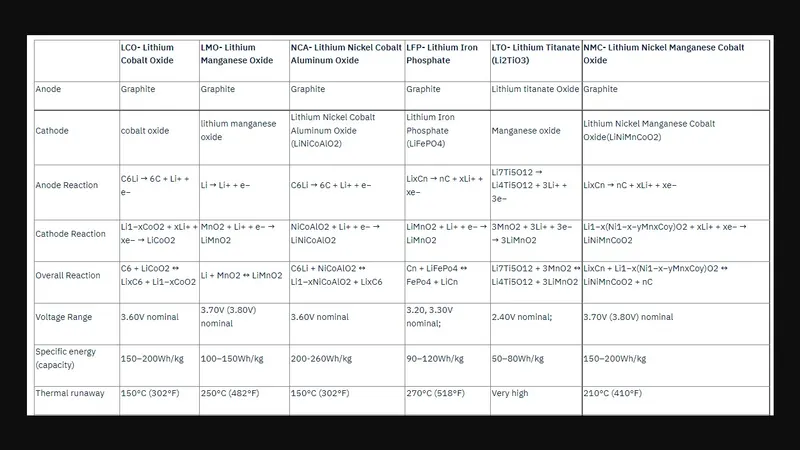
- LCO,
- Lithium cobalt oxide was the first widely commercialized cathode material and is still in common use in consumer products. LCO has high energy density but is not well suited for use in off-grid products because of lower cycle life and poorer safety. Nonetheless, LCO batteries are ubiquitous and still frequently used for these applications.
- LCO became very popular because of its high energy density (3.6 V/Cell). Cobalt is a very energy-dense material but is extremely volatile and expensive. It is a resource that is depleting quickly due to its recent increase in consumption. LCO has many negatives, it cannot handle large charge currents, are very sensitive to temperature, and have a short cycle life.
- LMO :-
- Pure LMO batteries have good thermal stability and safety but lower cycle life; they have declined in commercial use and have been replaced by blending the manganese oxide with nickel and cobalt (NMC).
- The coin type lithium manganese dioxide battery uses manganese dioxide (MnO2) as its positive active material, lithium (Li) as its negative active material, and an organic electrolyte solution.
- NCA :-
- NCA batteries have lower thermal stability than competing technologies. Their cost and cycle life also make them less attractive for off-grid products.
- NMC :-
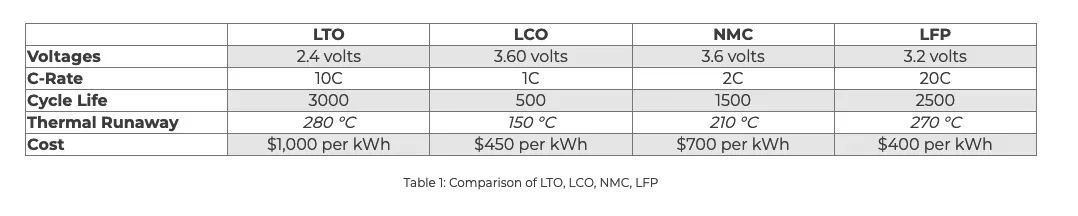
- NMC is a rapidly developing chemistry, at the time this is written. The blending of nickel, manganese, and cobalt produces a very well-rounded battery. With a high energy density (3.6V/Cell) and a decreased use of cobalt, it has become one of the most desired batteries in the industry. Due to its lower cobalt concentration, it is safer than LCO. Its life cycle is longer than LCO but shorter than LTO. It can handle charge currents up to 2C and a greater range in temperature. It is also important to know that batteries that contain cobalt require more safety features which make the batteries more expensive.
- Different blends of nickel, manganese, and cobalt are a successful and promising approach for Li-ion batteries. The ratio of these three elements is sometimes listed in the electrode name – an equal mix would have the chemical formula LiNi1/3Mn1/3Co1/3O2 and be listed as NMC 1-1-1 or simply NMC 111. NMC blends offer combinations of good cycle life, safety, and high energy density. The ratios of elements can be tailored to emphasize qualities that target specific applications including off-grid products
- LFP :-
- LFP is popular in industries with heavy use and rough environments. While this chemistry has a slightly lower energy density (3.2V/Cell), it can withstand a lot of abuse. It has a long lifespan, it is less costly and much safer because it does not contain cobalt. It can even withstand a very wide range of temperatures. LFP can also withstand discharge currents up to 20C but typical usage patterns include 1C. Overall this is the safest and most reliable chemistry.
- The anode stores the lithium and is typically made from carbon. The cathode also stores the lithium and is made from a chemical compound that is a metal oxide.
- Electrolyte: ethylene carbonate–dimethyl carbonate (EC–DMC) 1–1 lithium perchlorate (LiClO4) 1M
- Anode: graphite or hard carbon with intercalated metallic lithium
- LiFePO4 batteries exhibit qualities that make them ideally suited for off-grid products where cost, safety, stability, and cycle life are primary requirements.3 They have lower energy density than competing Li-ion chemistries and a lower output voltage of 3.2V, but this is acceptable for most off-grid applications. Many successful off-grid products use LiFePO4 batteries.
- LTO :-
- LTO has a very long life and a wide temperature range. They are capable of handling large charge currents greater than 10C. They have one of the lowest energy densities (2.4V/Cell) of all lithium batteries and are one of the most expensive.
- Lithium titanate (LTO) anode materials can be used with LMO or NMC cathodes to make a Li-ion cell. LTO cells offers very high cycle life, excellent thermal stability, excellent safety, and good low temperature operation. However, they have much lower energy density than other Li-ion technologies and a low cell voltage of 2.4V.
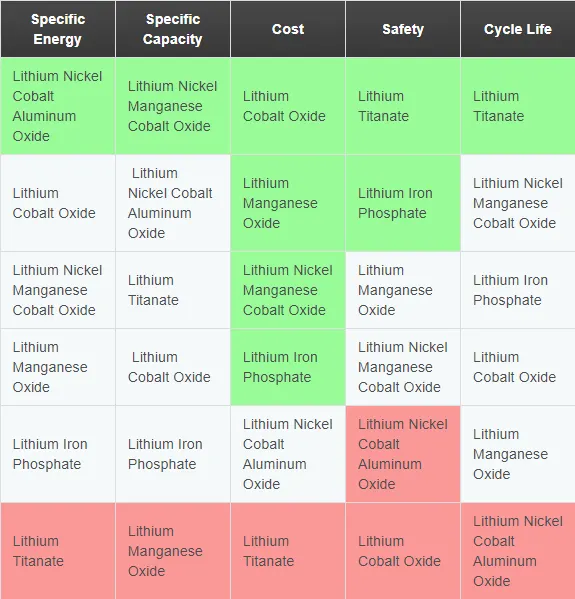
- The following table ranks from ‘best’ at the top to ‘worst’ at the bottom based on lithium-ion battery types for a number of characteristics using data currently available and assuming the battery is sourced from a reputable manufacturer.
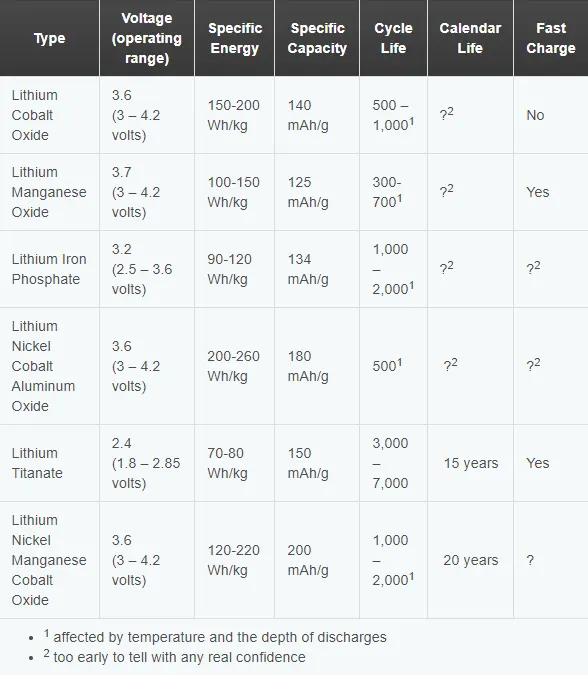
- Lithium-ion development has centered around trying to find one cell that could cover both long discharges as well as high energy on demand by adding metals such as iron, aluminum and nickel.
Question 2.
Compare the differences between each type of Li+ion batteries based on their characteristics.
Answer 2. :-