Week 1 Understanding Different Battery Chemistry
A battery is a source of electric power consisting of one or more electrochemical cells with external connections for powering electrical devices such as flashlights, mobile phones, and electric cars. When a battery is supplying electric power, its positive terminal is the cathode and its negative terminal is the anode. The terminal marked negative is the source of electrons that will flow through an external electric circuit to the positive terminal. When a battery is connected to an external electric load, a redox reaction converts high-energy reactants to lower-energy products, and the free-energy difference is delivered to the external circuit as electrical energy. Historically the term "battery" specifically referred to a device composed of multiple cells, however the usage has evolved to include devices composed of a single cell.
A lithium-ion battery or Li-ion battery is a type of rechargeable battery. Lithium-ion batteries are commonly used for portable electronics and electric vehicles and are growing in popularity for military and aerospace applications.[9] A prototype Li-ion battery was developed by Akira Yoshino in 1985, based on earlier research by John Goodenough, M. Stanley Whittingham, Rachid Yazami and Koichi Mizushima during the 1970s–1980s, and then a commercial Li-ion battery was developed by a Sony and Asahi Kasei team led by Yoshio Nishi in 1991.
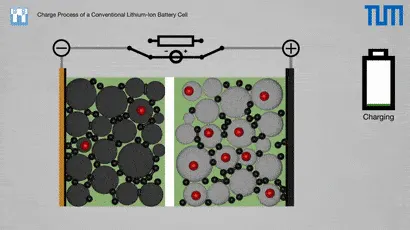
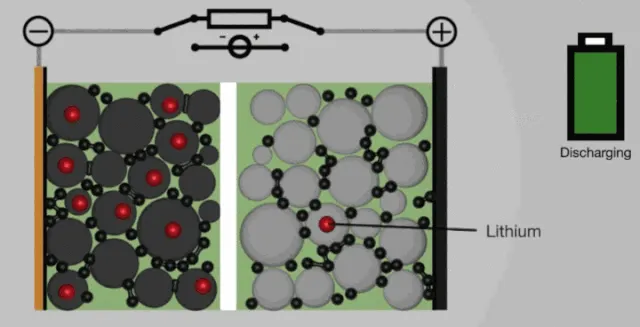
A detailed presentation on different Lithium Ion Batteries is attached with the question. Kindly have a look.