Week 1 Stress Concentration on a Plate with hole
Case 1
1. Open ANSYS workbench - select static structural.
2. Go to the materials library in engineering data and select material as structural steel.
3. Select design modeler and go to modeling - choose XY plane.
4. In sketching use the rectangle commnad and sketch the figure. Next dimension according to the mentioned specifications.
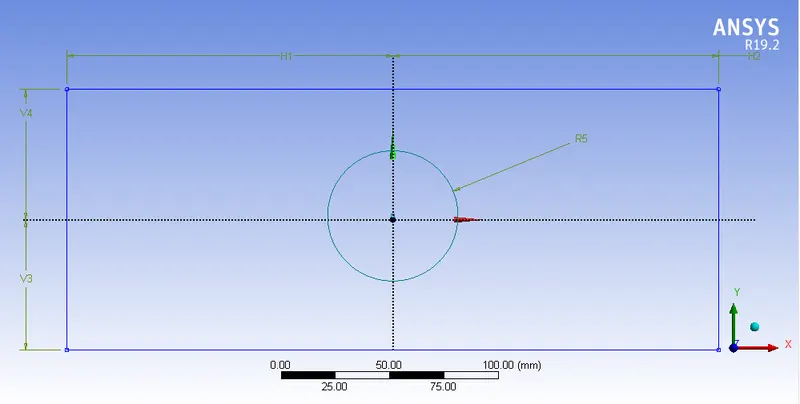
5. Use the extrude option and extrude to the required thickness.
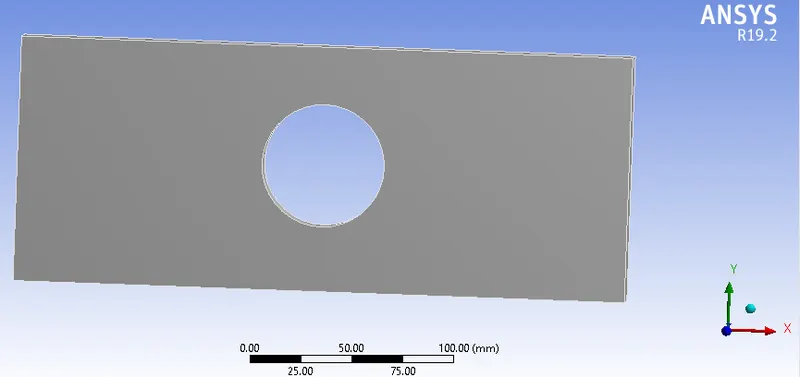
6. Exit the design modeler.
7. Go to Setup.
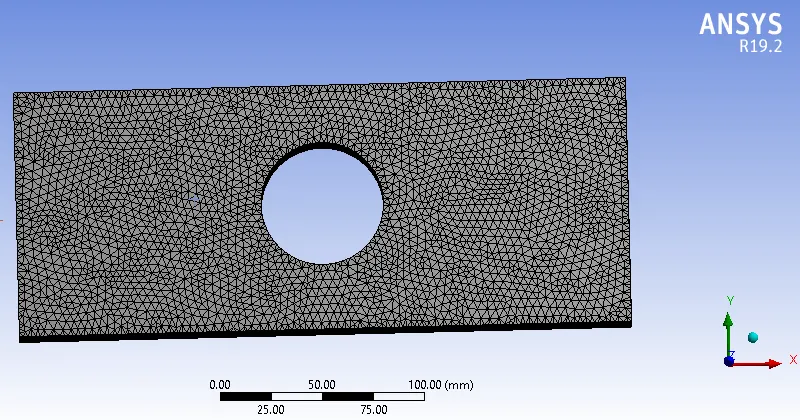
8. In meshing enter mesh size as 2. Right click mesh and select insert methods. Slect the geometry. Change the method from automatic to tetrahedron.
9. Update the mesh.
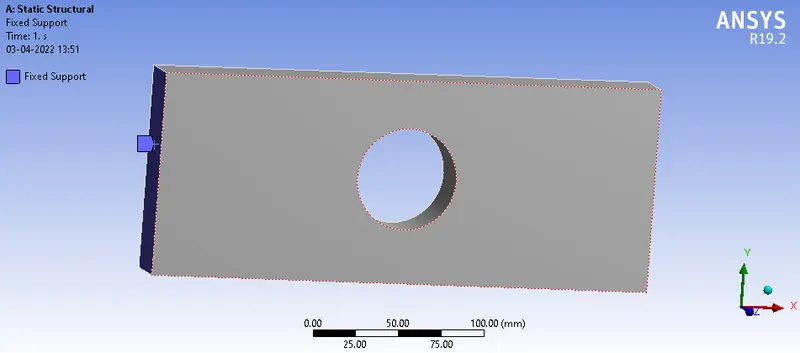
10. Now apply the bounary the conditions. Right click static structural in the tree, insert- fixed support and select the left face. Next insert - force and select the right face. Enter load value as 500N.
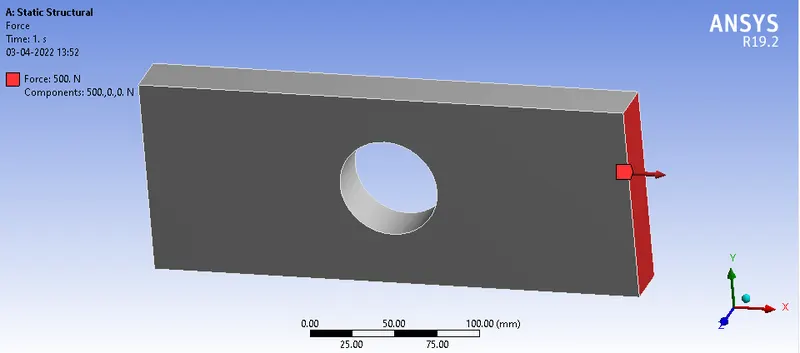
11. Right click solutioin - insert- deformation - total. Next again insert - stress - equivalent stress.
12. CLick Solve.
13. The contours for the deforation and equivalent stress are obtained. Change the view settings to "No Wireframe" and "Smooth Contours".
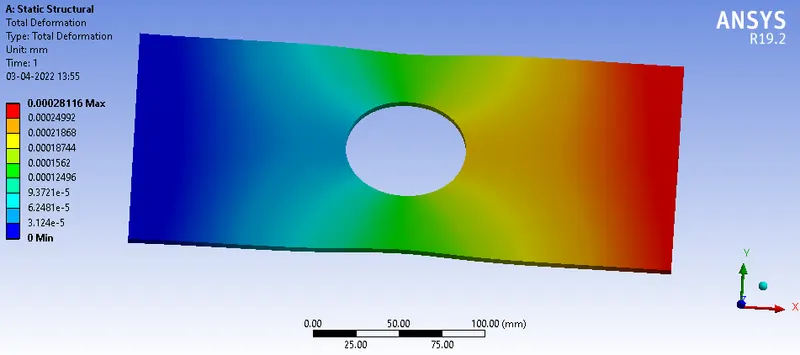
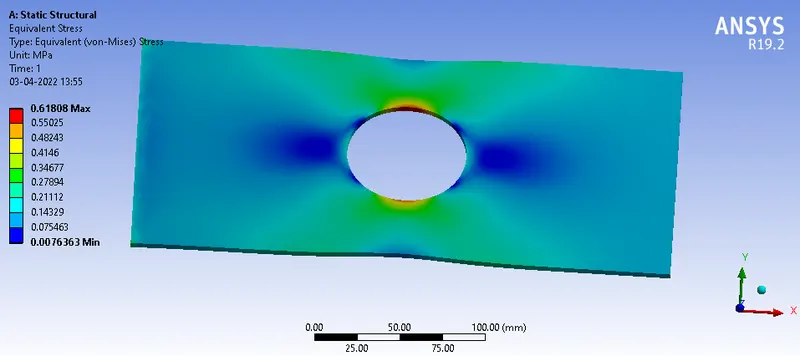
Case 2
Here the plate is modified to accompany two smaller holes on either sides of the big hole. Rest methodology is same as for Case 1. Follow the steps as mentioned above and make the necessary changes accordingly.
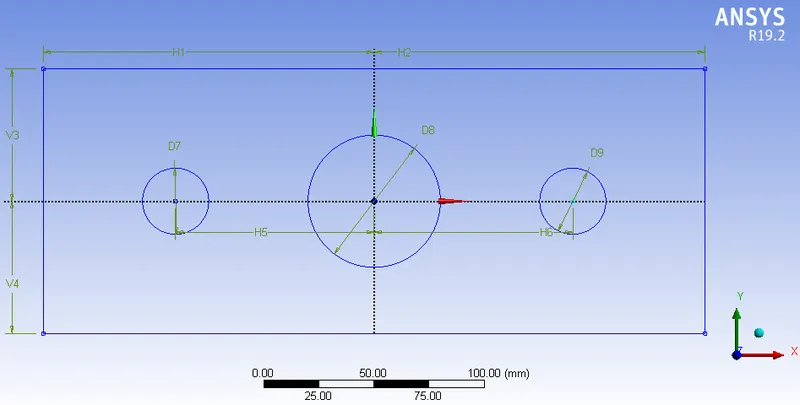
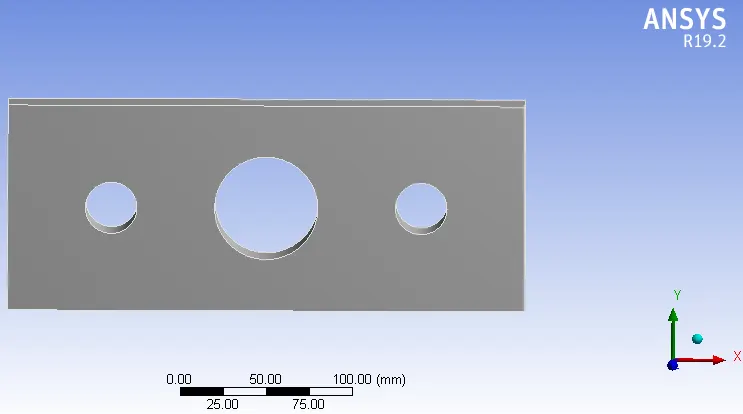
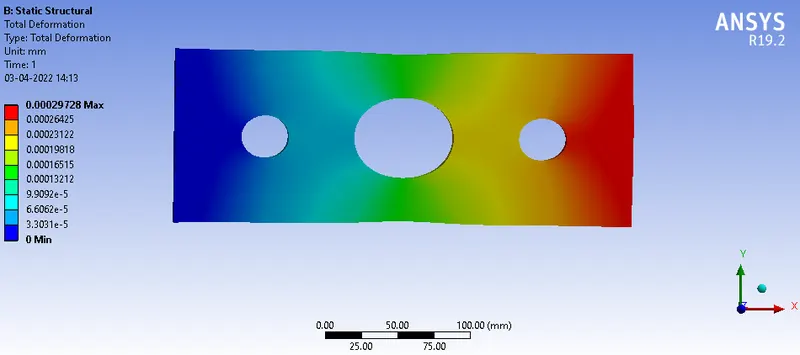
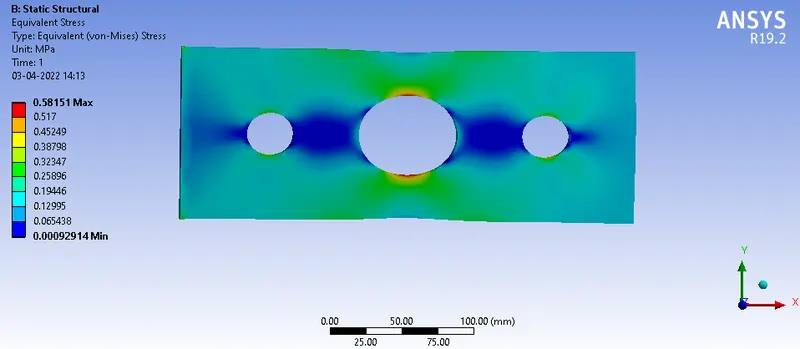
Hence we have obtained the results of total deformation and equivalent stress for the 2nd case.
From an analysis perspective I would select the second plate over the first. The variation in deformation is very minimal between both the cases. However the maximum and minimum equivalent stress in Case 2 is considerably lower than in Case 1. Hence Plate 2 is chosen over Plate 1.
From a manufacturing perspective plate 1 is easier to fabricate as it has just a single circular cutting in the centre. However Plate 2 has 3 cut-outs to be made, making the manufacturing a little bit more complicated compared to plate 1 where the material removal is minimal thereby taking less time to fabricate.