Week 1 Spur Gear Challenge
OBJECTIVE
- Setup a case of static structural analysis in Ansys for 2 spur gears using 3 different materials i.e. cast iron (Ductile), cast steel, and bronze cast
- Extract results like deformation, strain, and stress.
- Compare the results and provide proper inferences based on them.
PROCEDURE
Step 1 - Engineering Data
- Add the required materials for the analysis from the engineering database.
- Cast iron (ductile), Cast steel, and Bronze cast.
Step 2 - Setting up the geometry
- Import the given geometry to Spaceclaim.
- Check if the geometry is perfect or not
Step 3 - Meshing
- Assign global mesh size = 0.8 mm
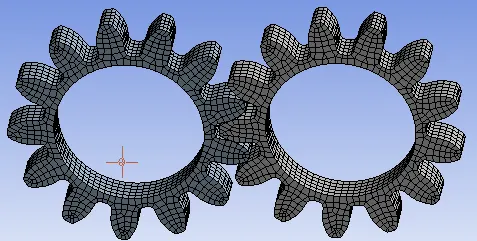
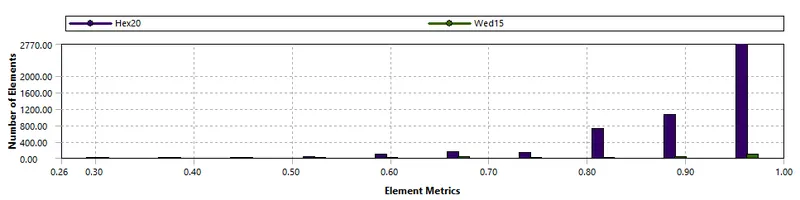
- Check mesh quality
Step 4 - Connection
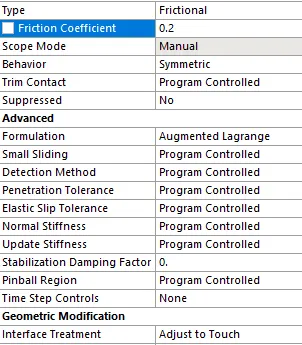
- Contact - surface to surface frictional contact is defined for the motion between 2 gears.
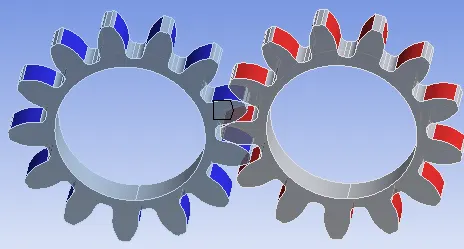
- Joints - Revolute joint is created for both the gear using Inset -> Joint -> Revolute
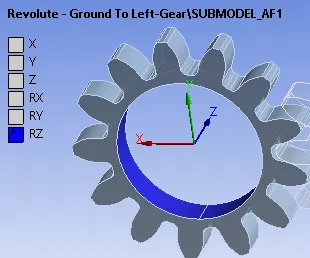
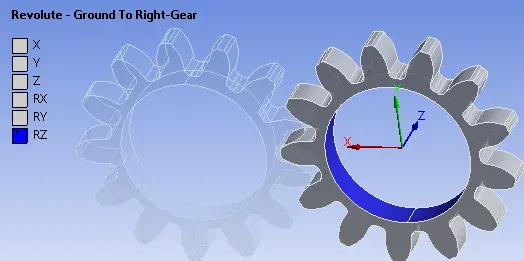
Step 5 - Assign Material
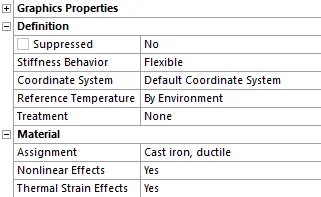
- Assign the required material to the components from the geometry tab. In our case for each case change from cast iron to cast steel to bronze cast.
Step 6 - Boundary conditions
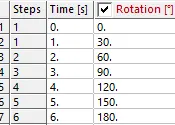
- Here since we require the motion of gears, the movement assigned to them should be in opposite directions.
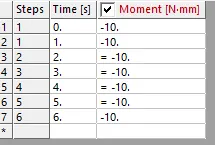
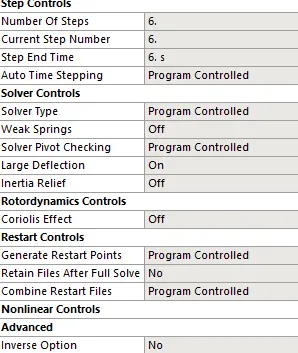
- Assign the rotation in one gear (total 180 degrees) and a moment of 10 N-mm in the other as shown below. The inputs are given in 6 steps.
Step 7 - Analysis settings
Step 8 - Output requests
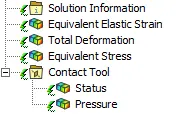
- Make a request for the deformation, stress, strain, contact pressure
Step 9 - Results
- Review the results of stress and deformation and check the animation.
- Based on the confirmation of the correctness of analysis, review, and extract other relevant results.
RESULTS
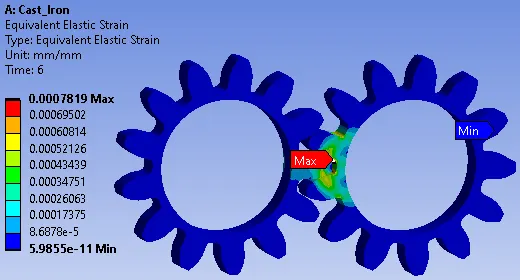
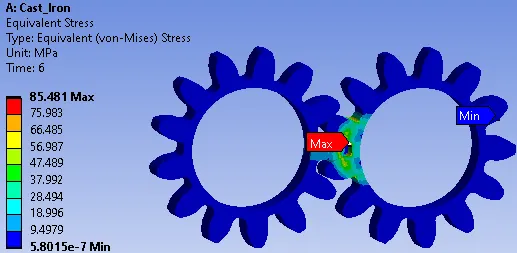
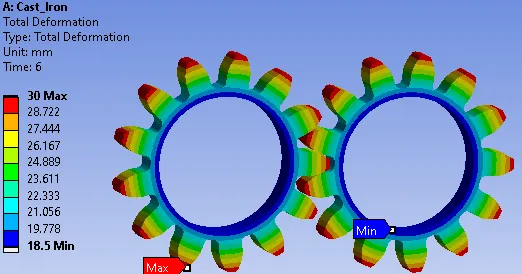
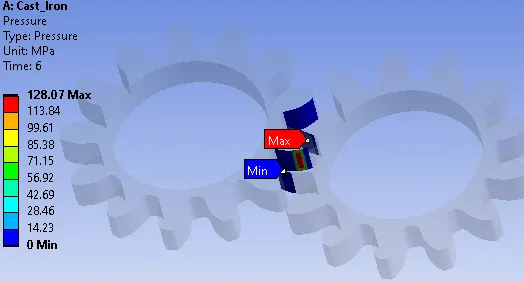
Case 1: Cast Iron ductile
- Strain
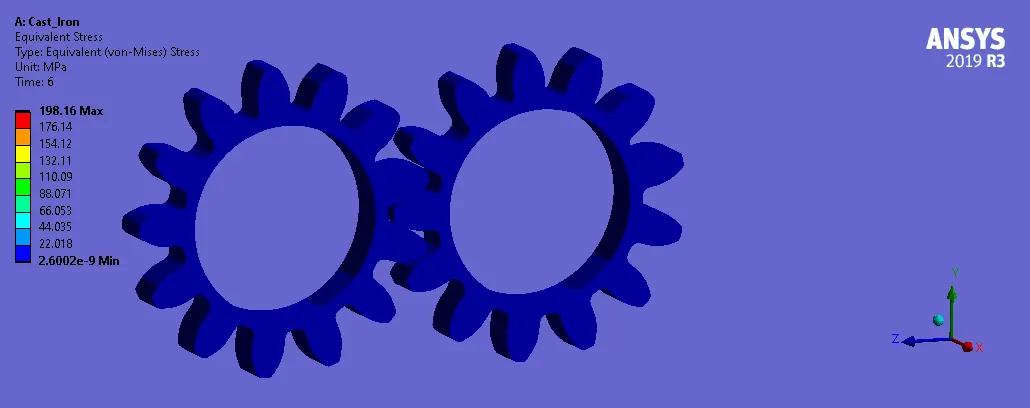
- Stress
- Deformation
- Contact Pressure
- Result Summary

Case 2: Cast steel
- Strain
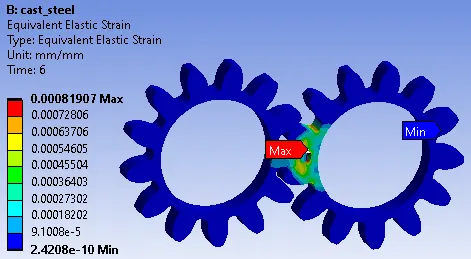
- Stress
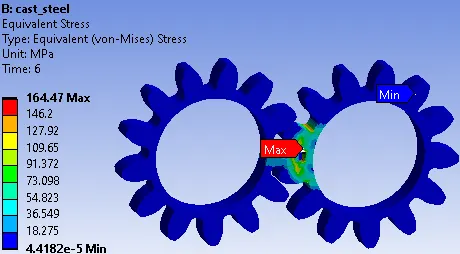
- Deformation
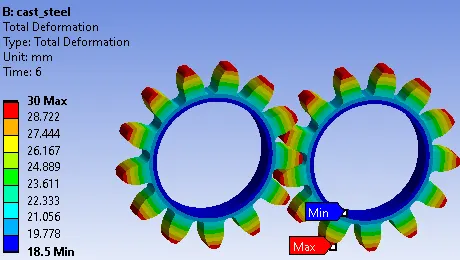
- Contact Pressure
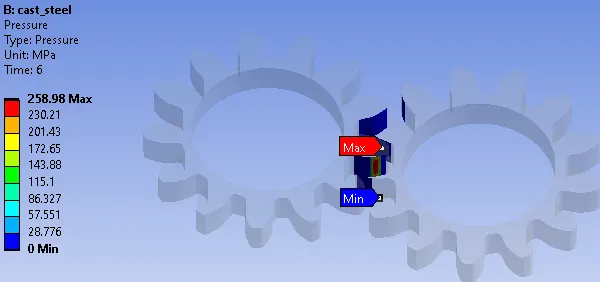
- Result Summary

Case 3: Bronze cast
- Strain
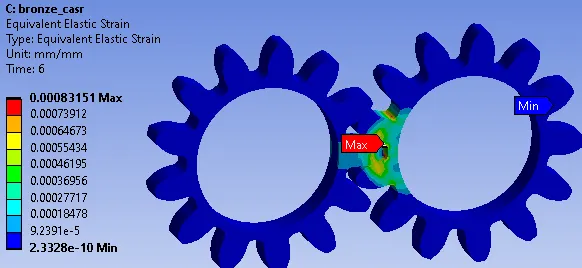
- Stress
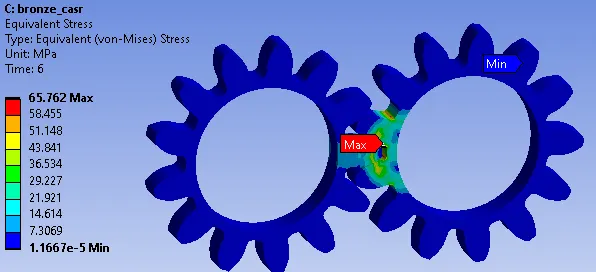
- Deformation
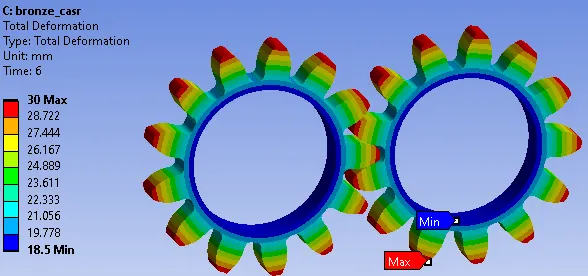
- Contact Pressure
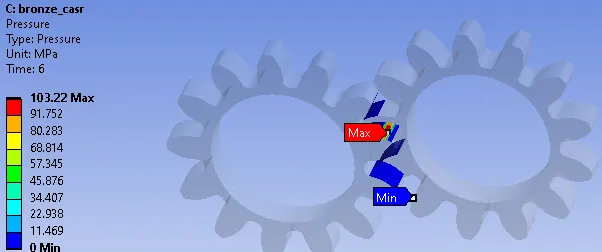
- Result Summary

CONCLUSION
Based on the results discussed above, a table is prepared showing the max and min values of individual results for all 3 cases.
| Cast iron | Cast steel | Bronze cast | |
| Stress (Max) (MPa) | 84.481 | 164.47 | 65.762 |
| Strain (Max) | 7.819e-4 | 8.190e-4 | 8.315e4 |
| Deformation (mm) | 30 | 30 | 30 |
| Contact Pressure (MPa) | 128.07 | 258.98 | 103.22 |
From the above table, we can conclude that the stresses induced in cast iron and bronze cast are lower than in cast steel