Week 1 Spur Gear Challenge
OBJECTIVE:
To perform a static structural analysis on the given model of spur gear to find out Equivalent stress, Total deformation, and Stress intensity, and also to find a location for possible fracture for 3 different cases and compare the results obtained.
- CASE 1: MATERIAL USED: Cast Iron(ductile)
- CASE 2: MATERIAL USED: Cast Steel
- CASE 3: MATERIAL USED: Cast Bronze
Theory:
Equivalent Stress:
Equivalent stress (also called von Mises stress) is often used in design work because it allows any arbitrary three-dimensional stress state to be represented as a single positive stress value. Equivalent stress is part of the maximum equivalent stress failure theory used to predict yielding in a ductile material.
The von Mises or equivalent strain εe is computed as:
where:
ν' = effective Poisson's ratio, which is defined as follows:
-
Material Poisson's ratio for elastic and thermal strains computed at the reference temperature of the body.
-
0.5 for plastic strains.
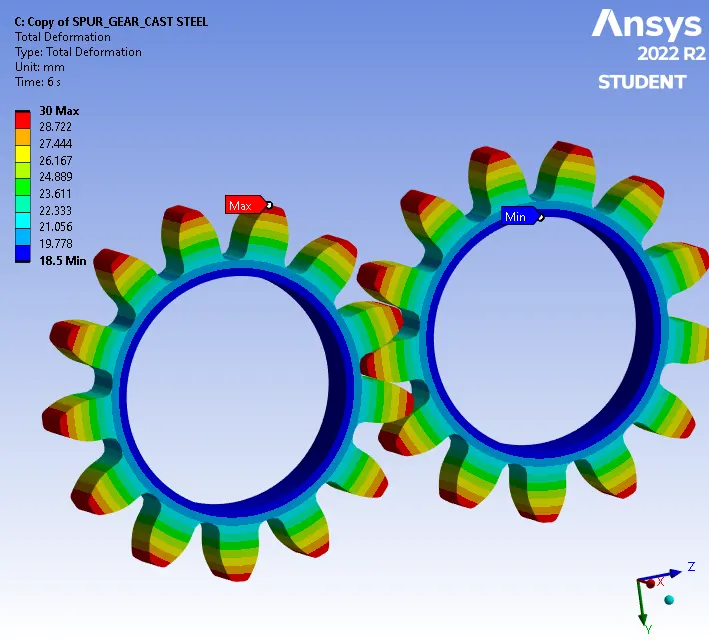
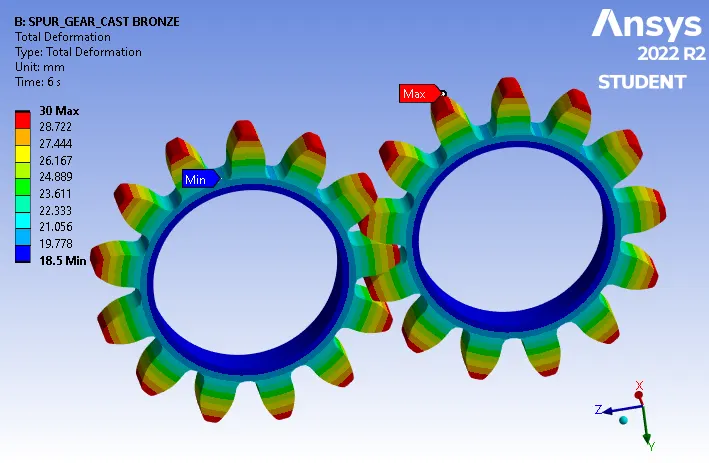
Total Deformation: Total deformation gives a square root of the summation of the square of the x-direction, y-direction, and z-direction.
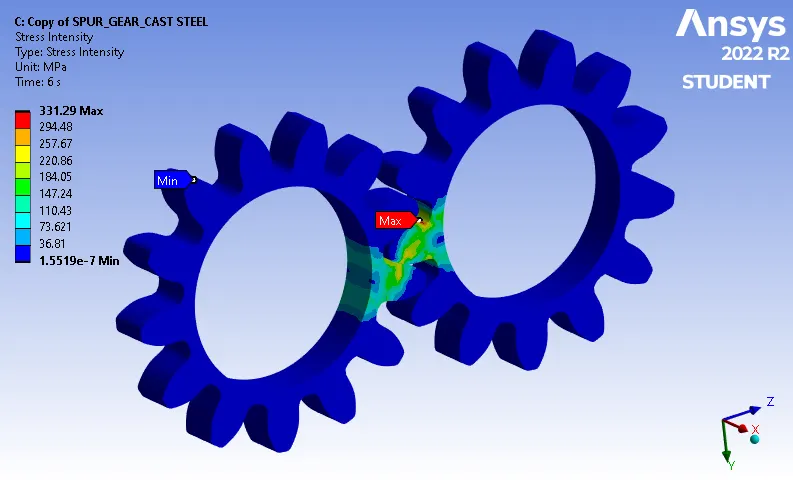
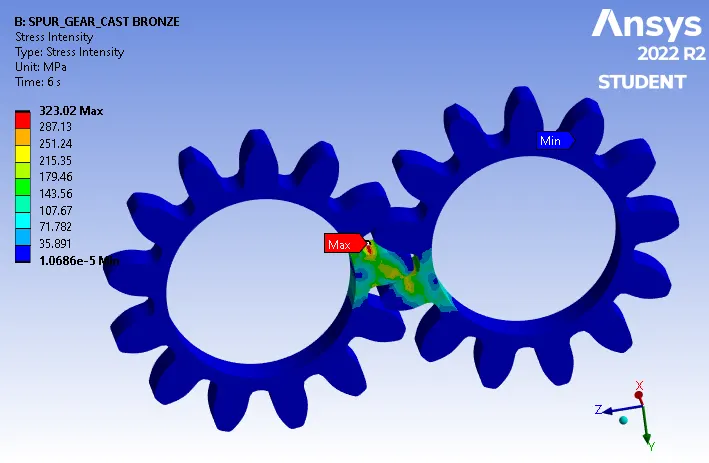
Stress Intensity:
Stress intensity is defined as the largest of the absolute values of σ1 - σ2, σ2 - σ3, or σ3 - σ1:
- 1. Stress intensity factor accounts for asymptotic stress variation. How stresses vary near the crack tip.
- 2. It is a dimensionless quantity that varies with the load and geometry.
- 3. Stress intensity at a kinked crack tip determines the crack deflection at the load when the crack starts to propagate.
SPUR GEAR MODEL:
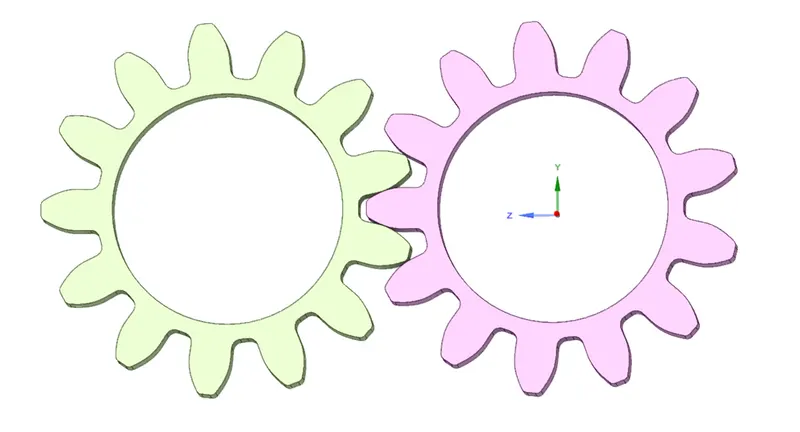
MATERIAL USED:
|
CASE 1(CAST IRON) |
CASE 2(CAST STEEL) |
CASE 3(CAST BRONZE) |
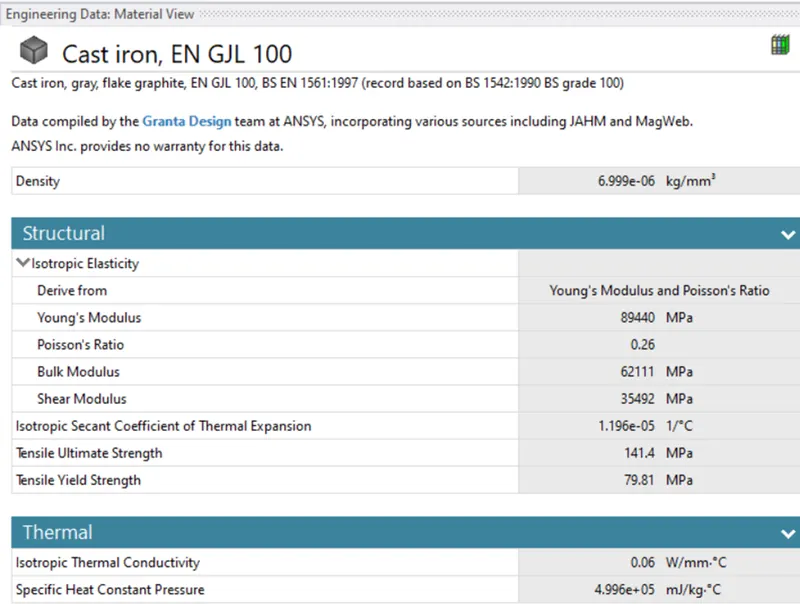 |
|
|
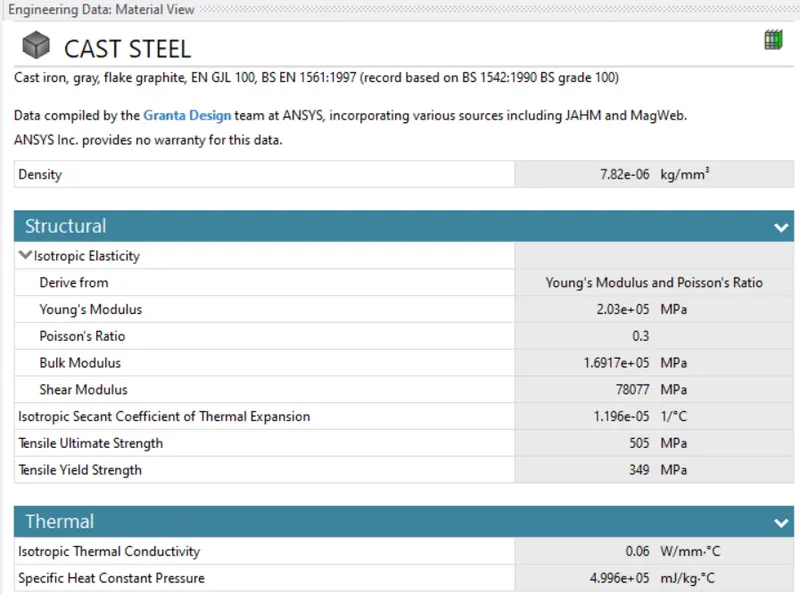
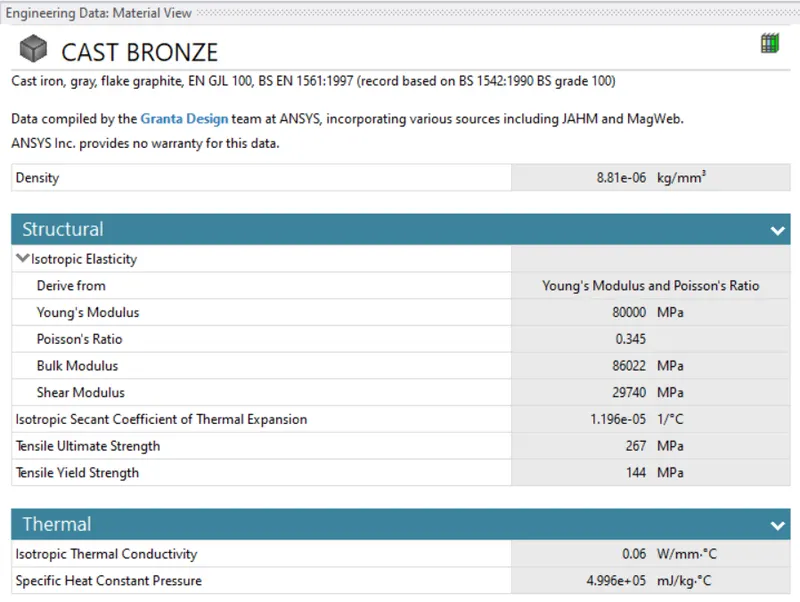
COORDINATE SYSTEM FOR ALL THE CASES REMAIN SAME (i.e Gobal coordinate system)
Connections for the cases are as follows:
1.contacts:

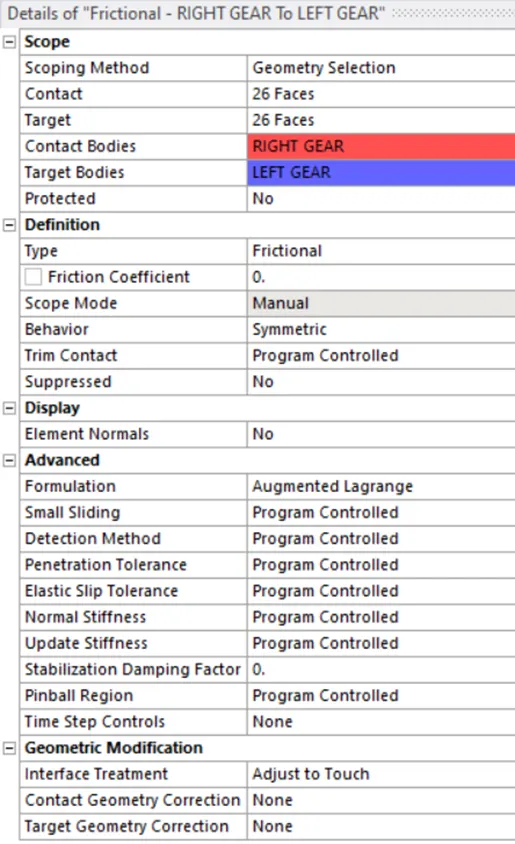
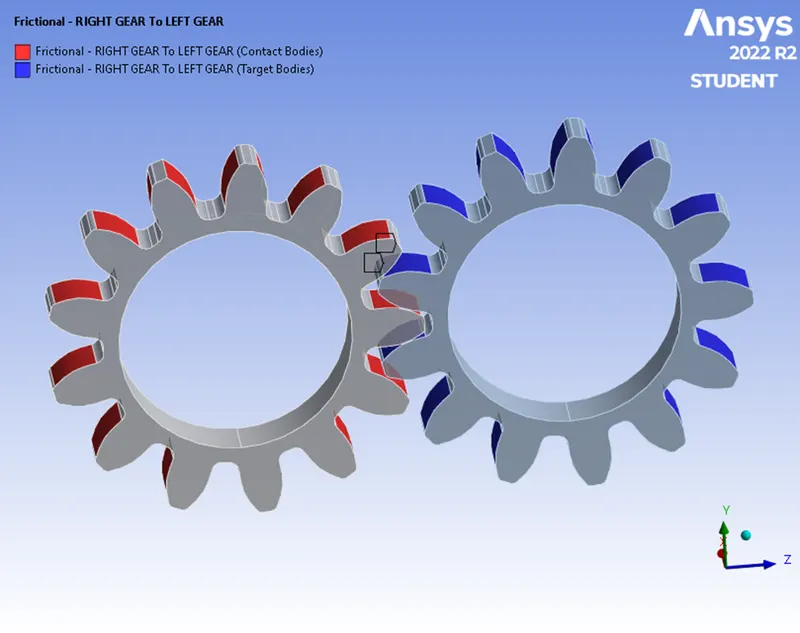
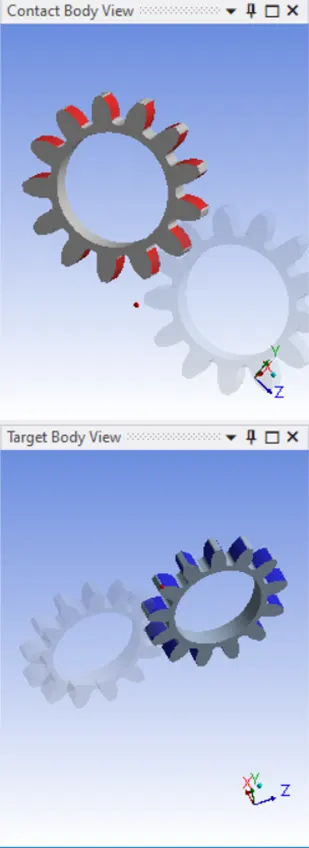
The contacts are given for the faces of the left and right gear teeth as shown in the image. all the details are attached in the image for the contact.
The contact between the tooth is frictional and symmetric. The formulation is set to Augmented Lagrange.
2. Joints

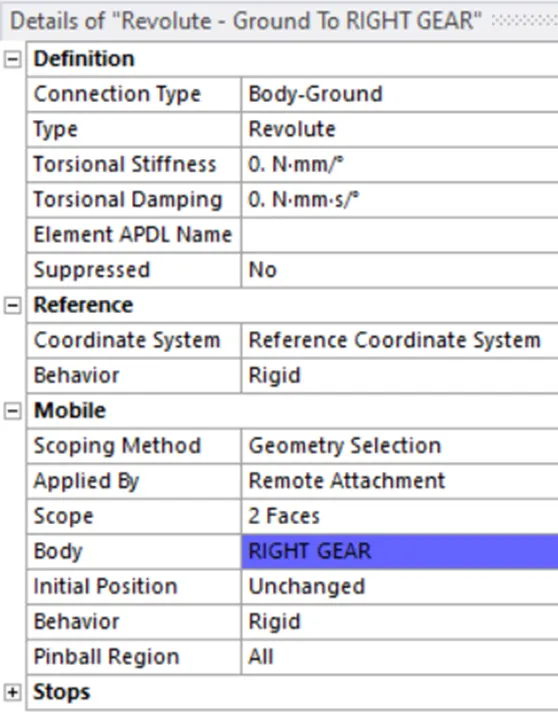
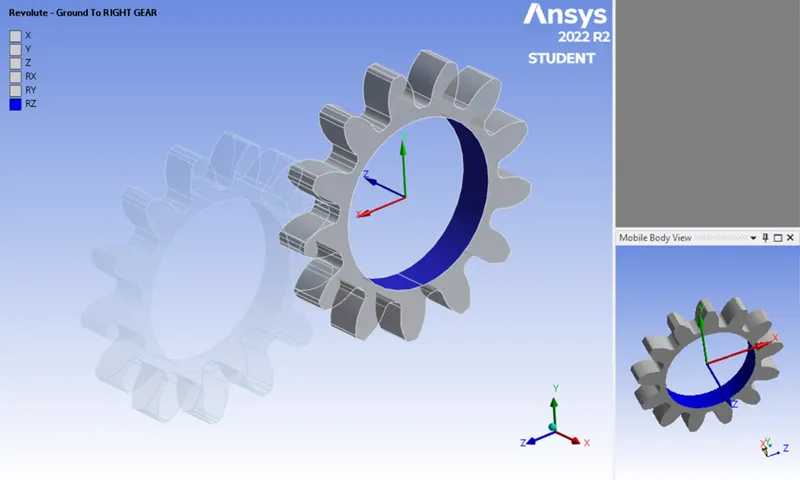
I: Revolute - Ground To RIGHT GEAR:
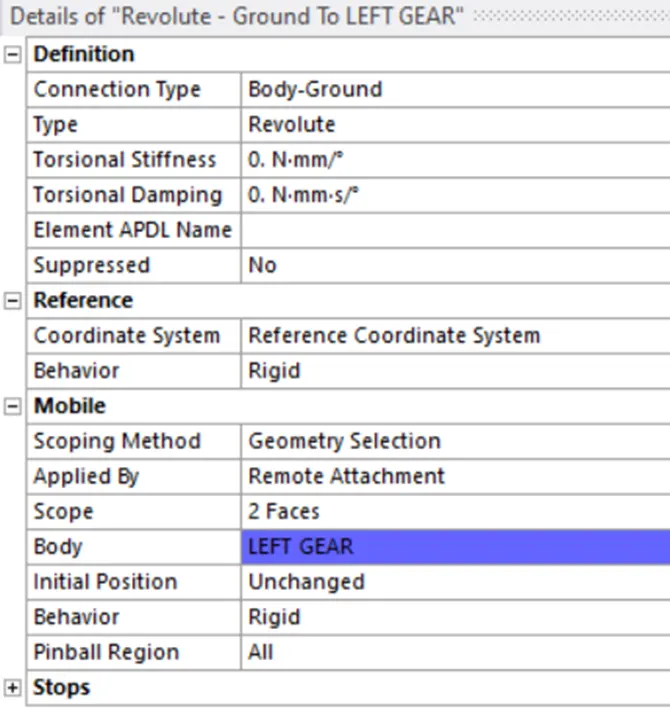
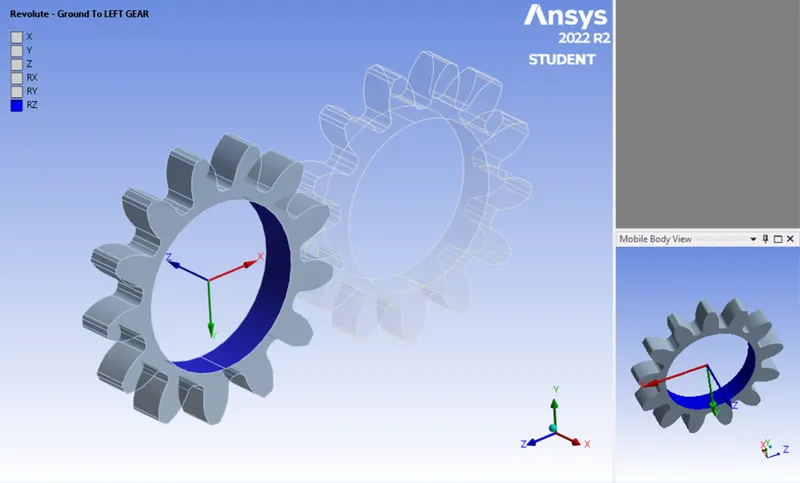
II: Revolute - Ground To LEFT GEAR:
MESH:
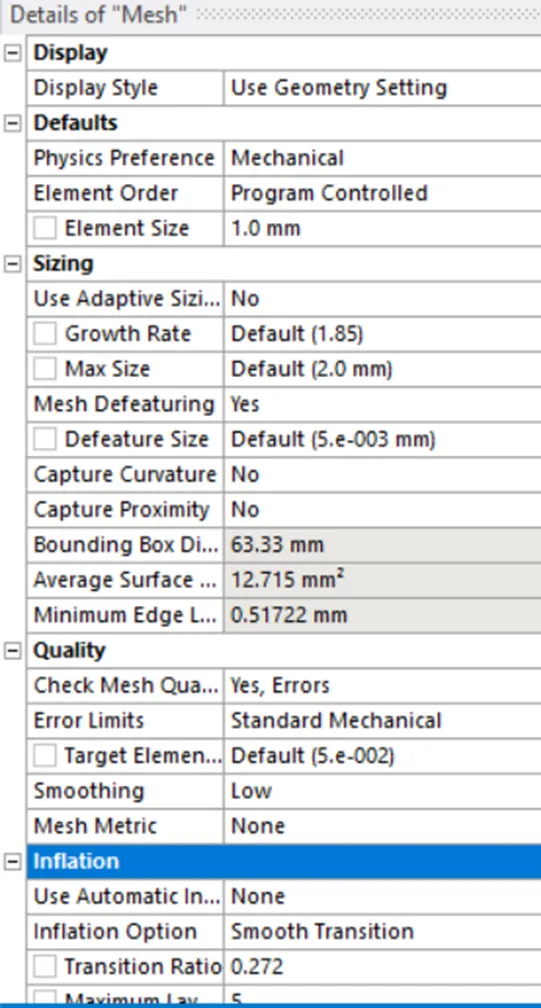
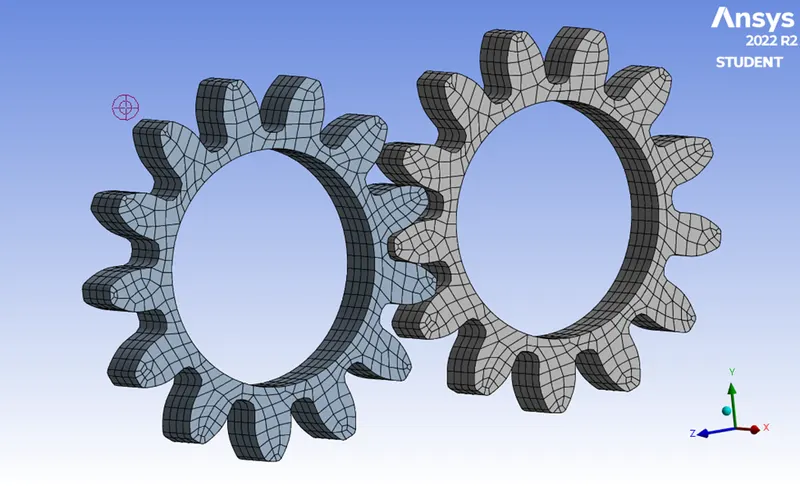
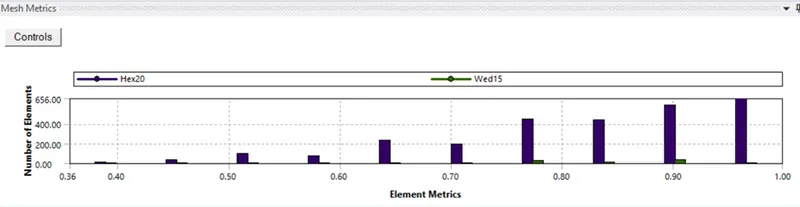
FOR ALL CASES THE MESH AND MESH QUALITY IS THE SAME SO AS TO ANALYSE THE RESULTS OF ALL CASES FOR THE SAME MESH.
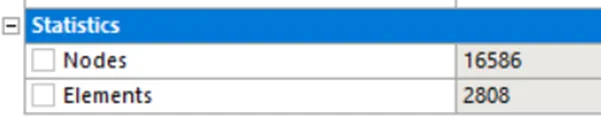
For all the cases the mesh and mesh quality are the same so as to analyze the the results for same mesh. The element size is set to 1.00mm.
Other details are mentioned in the below images.
Mesh quality:
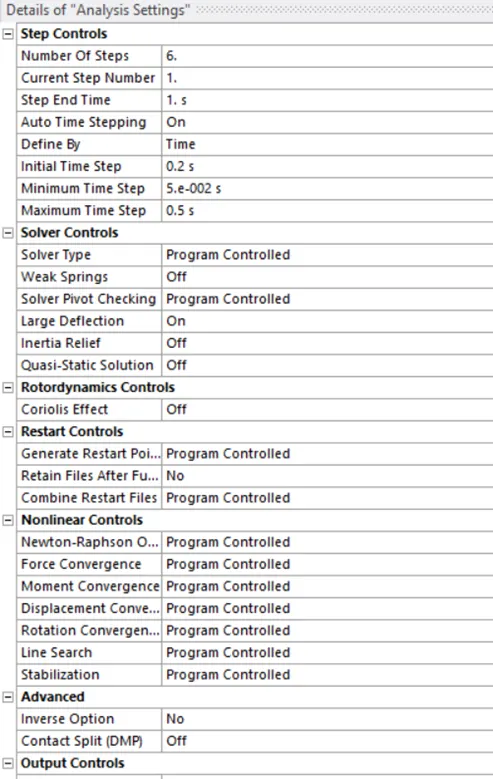
Static structural analysis settings:
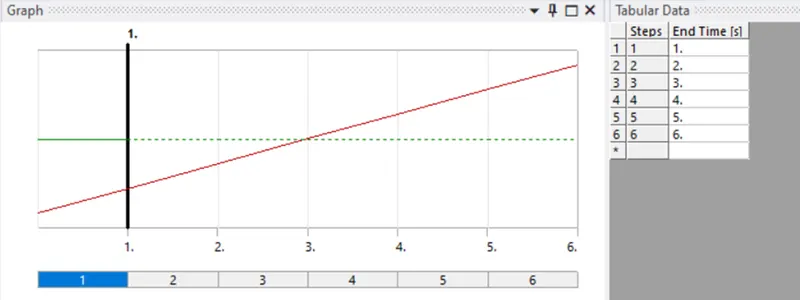
APPLIED CONDTIONS:
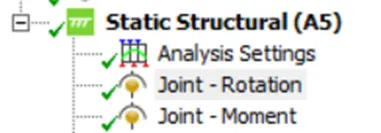
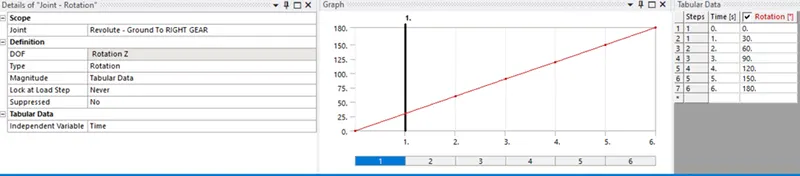
I: JOINT ROTATION
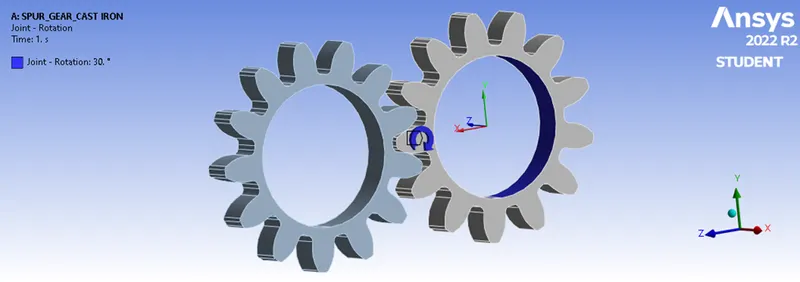
The revolute joint is applied to the right gear, rotating it about the z-axis at 30 degrees in each time step.
I: JOINT MOMENT
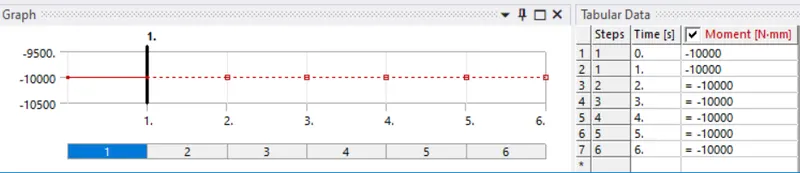
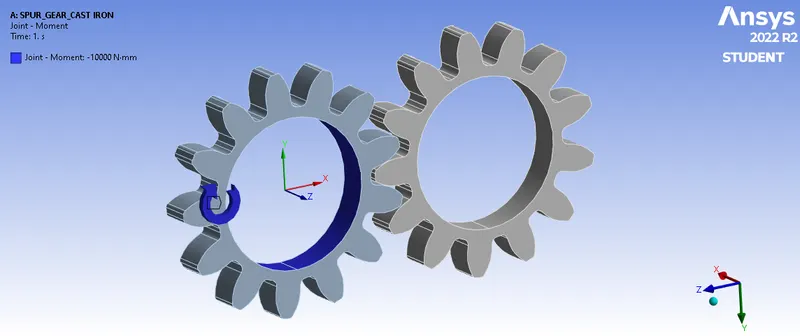
Revolute Ground to left gear moment is applied with -10N-m at each time step.
Solution:
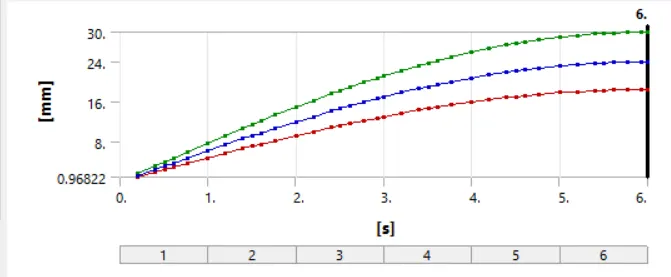
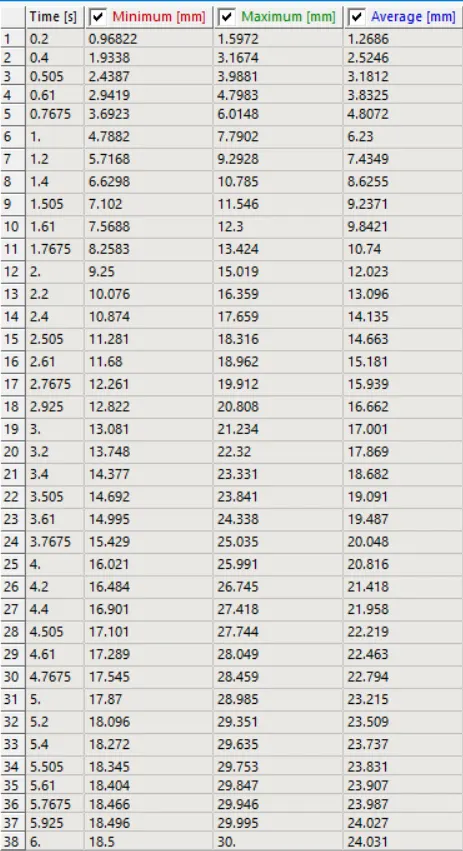
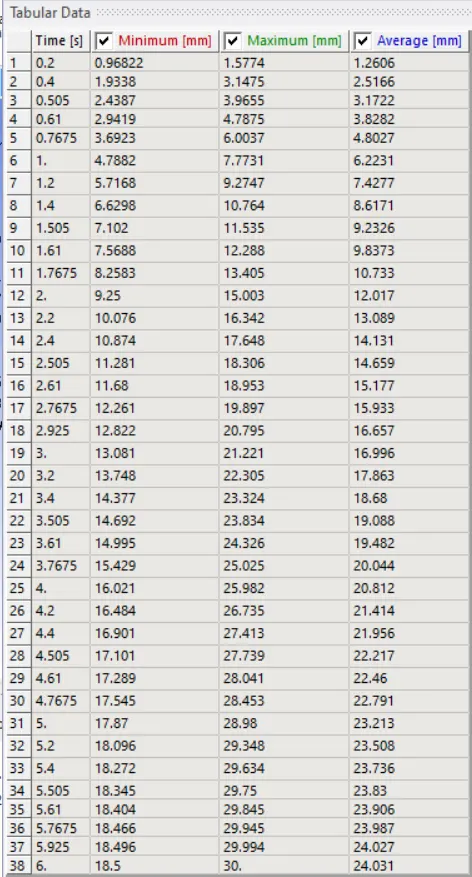
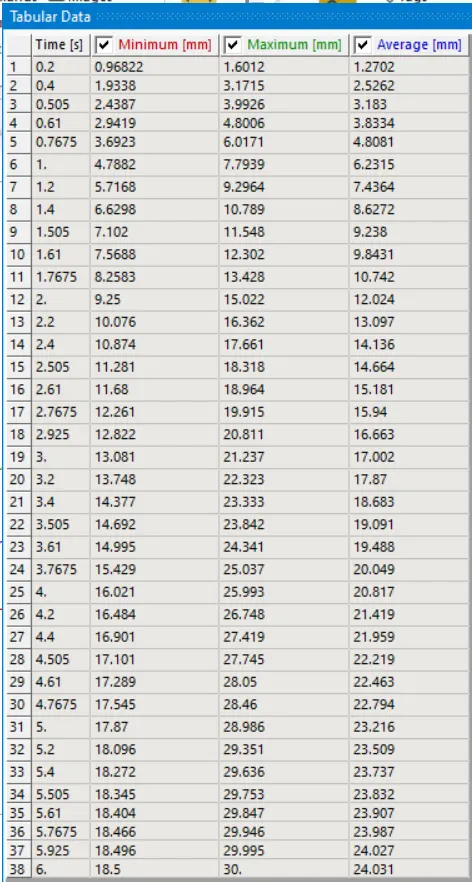
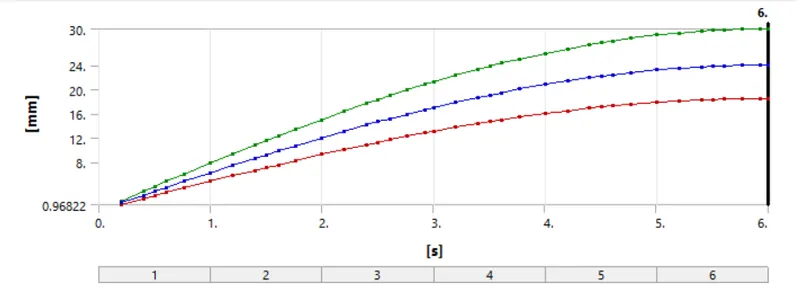
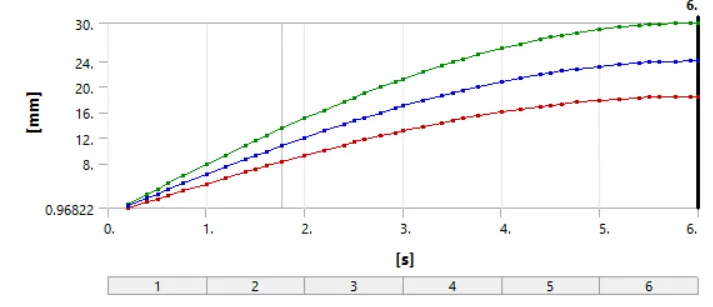
I.Total deformation
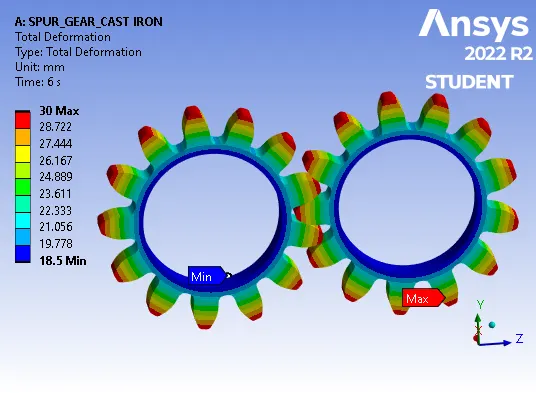
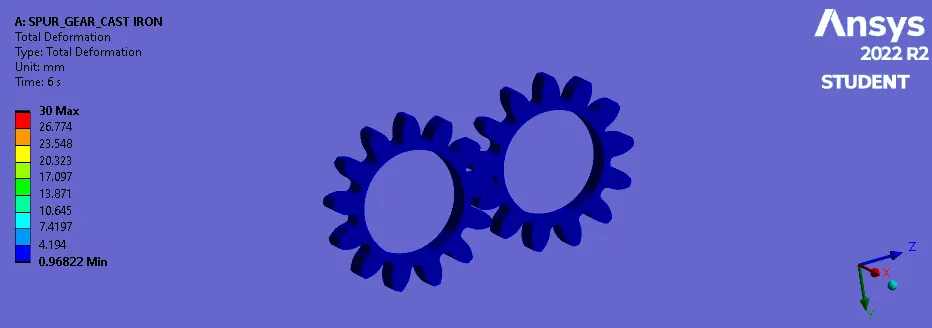
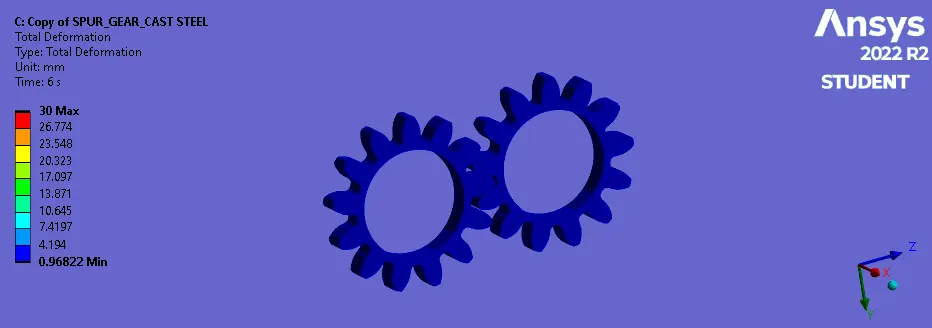
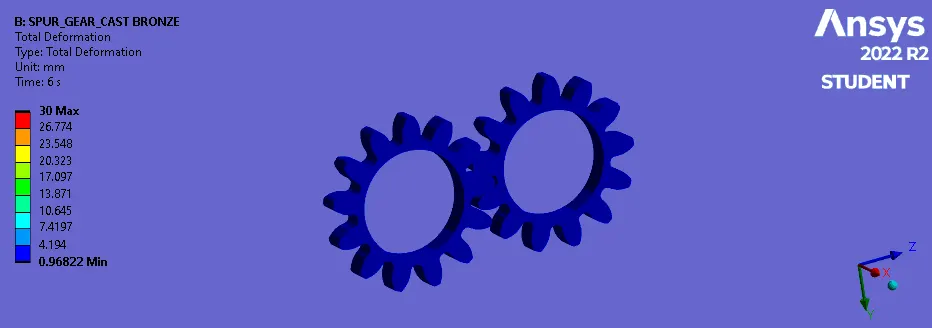
Total deformation is the same in all three cases.
|
CASE 1(CAST IRON) |
CASE 2(CAST STEEL) |
CASE 3(CAST BRONZE) |
 |
|
|
 |
|
|
 |
|
|
 |
 |
 |
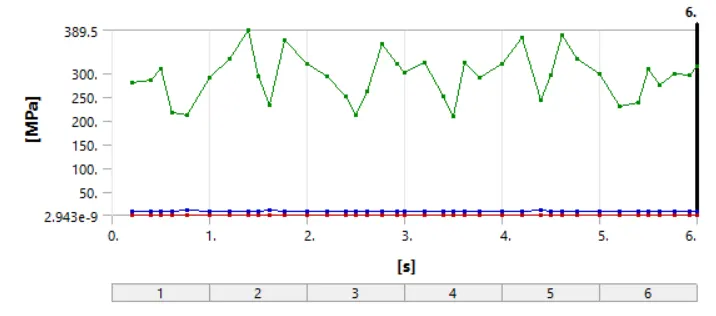
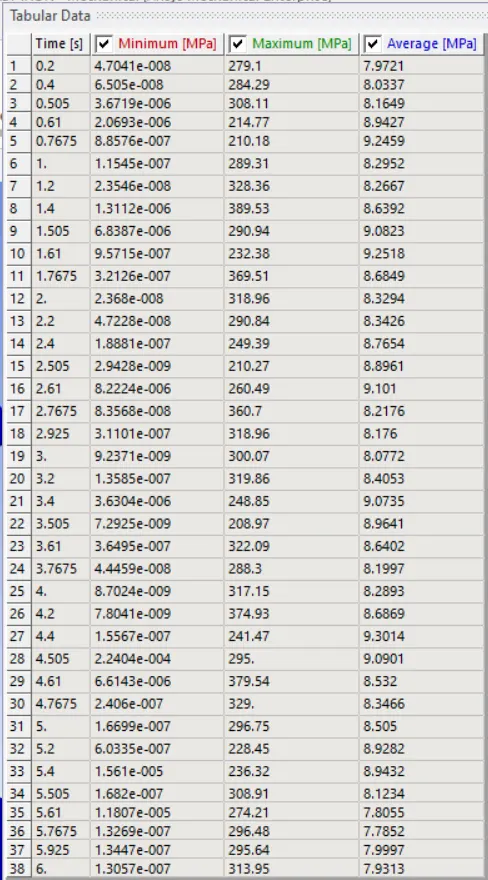
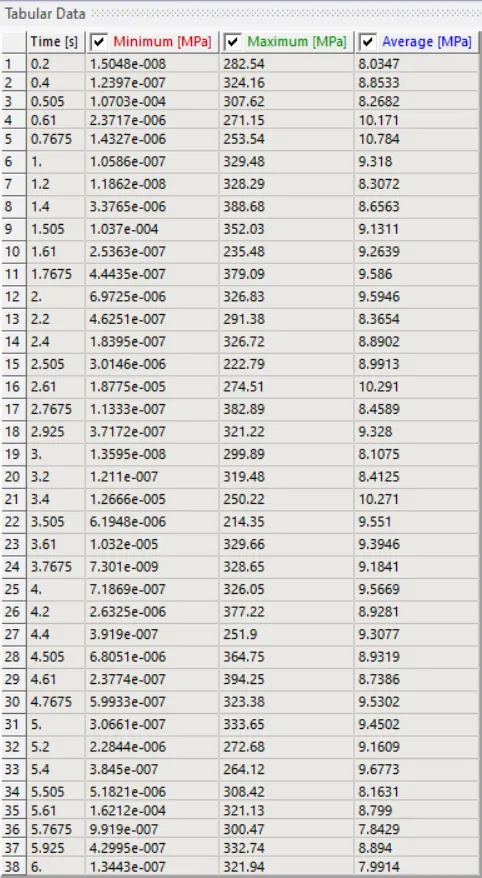
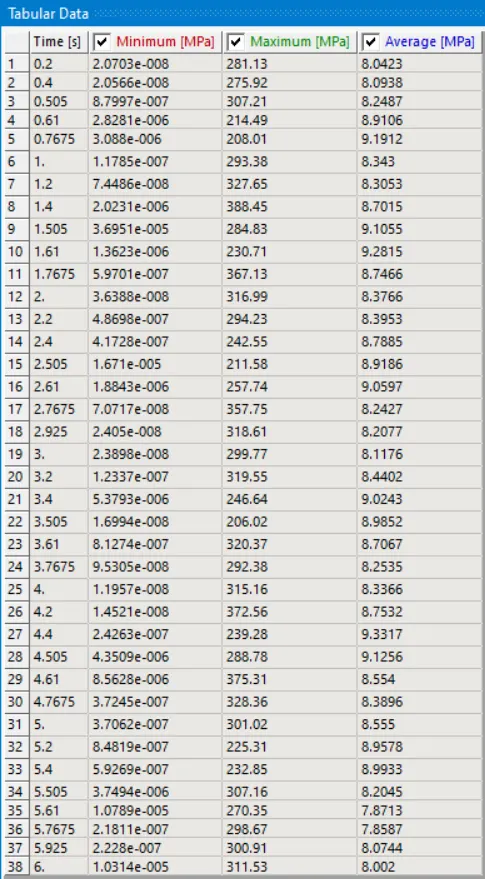
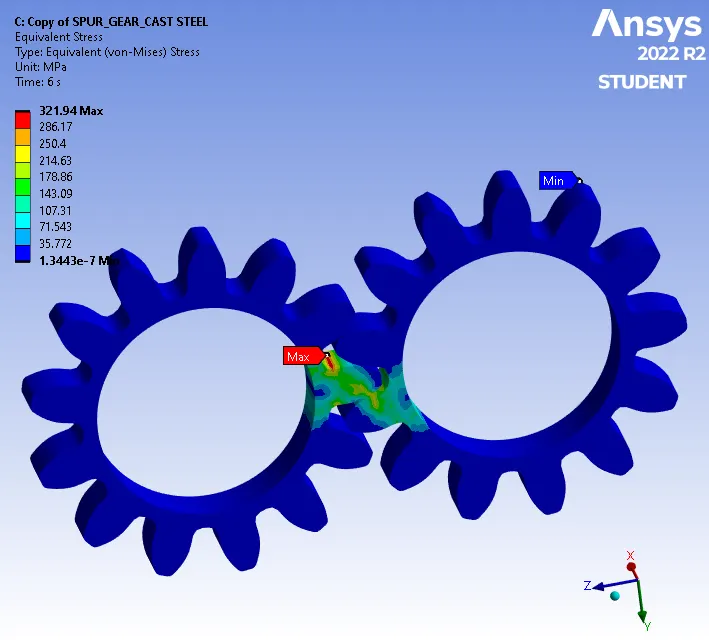
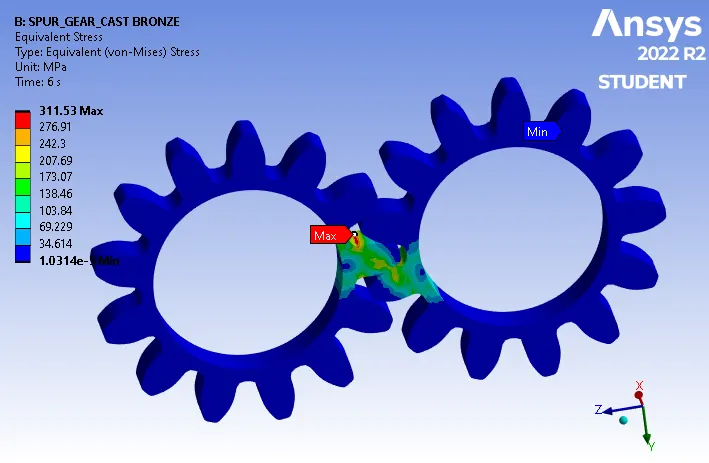
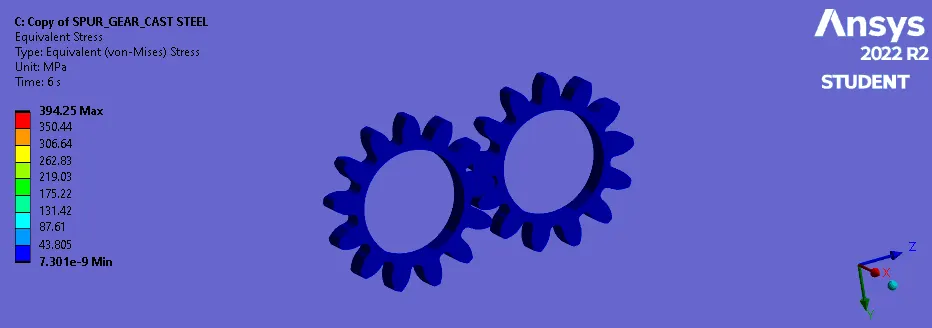
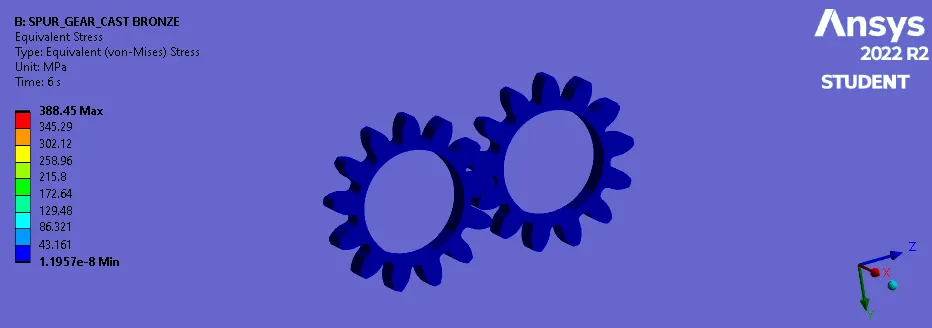
II.Equivalent stress
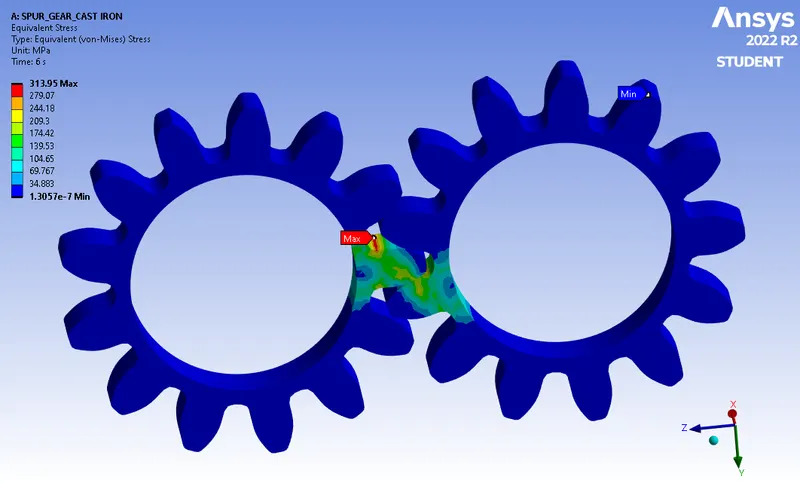
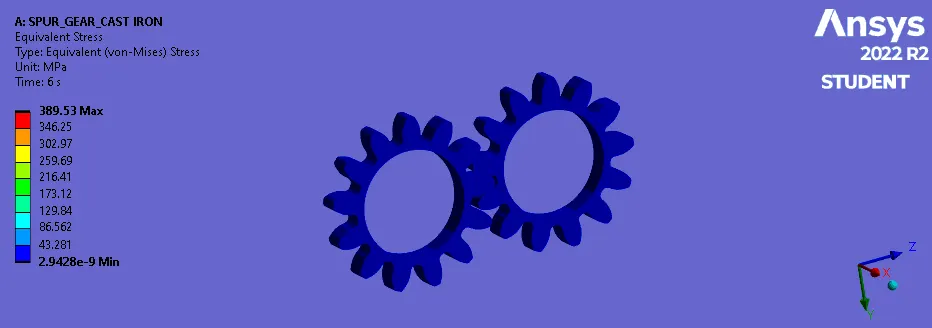
Equivalent stress is highest in case 2 (i.e cast steel) followed by case 1 and case 2.
|
CASE 1(CAST IRON) |
CASE 2(CAST STEEL) |
CASE 3(CAST BRONZE) |
 |
|
|
 |
|
|
 |
|
|
 |
 |
 |
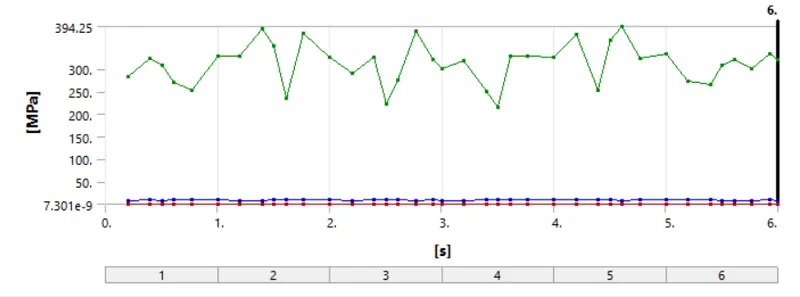
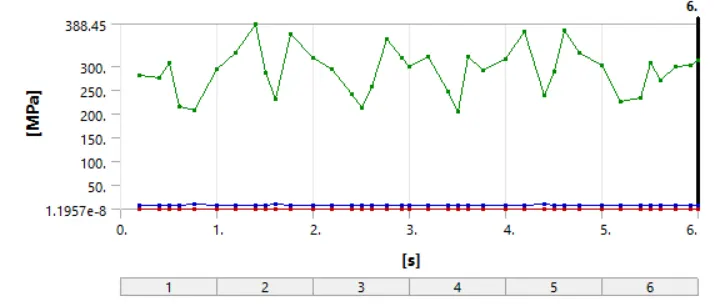
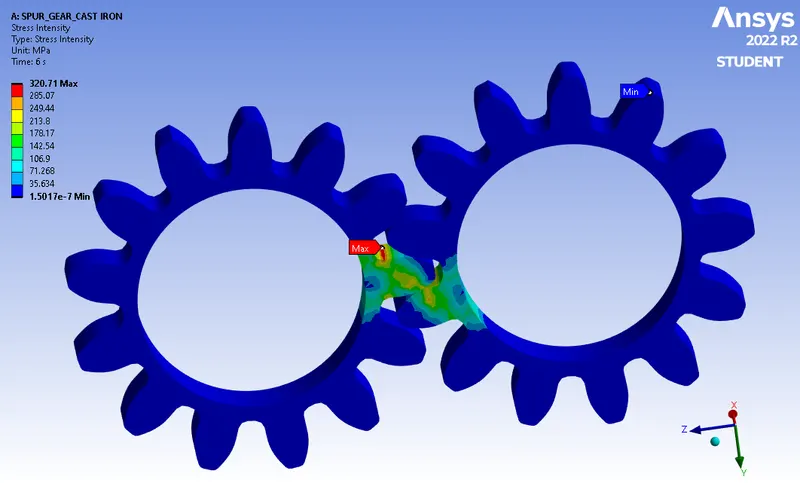
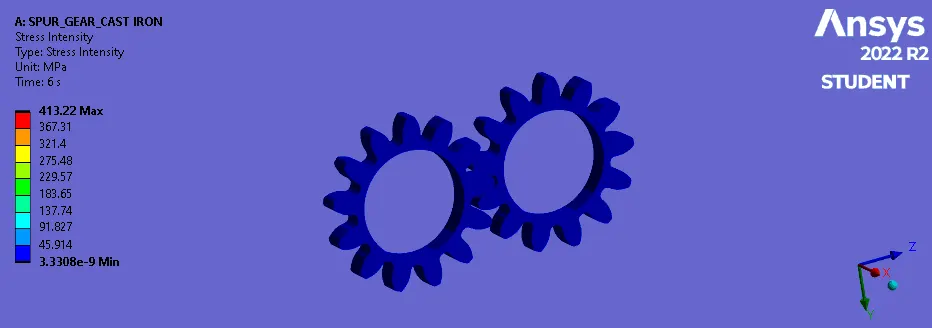
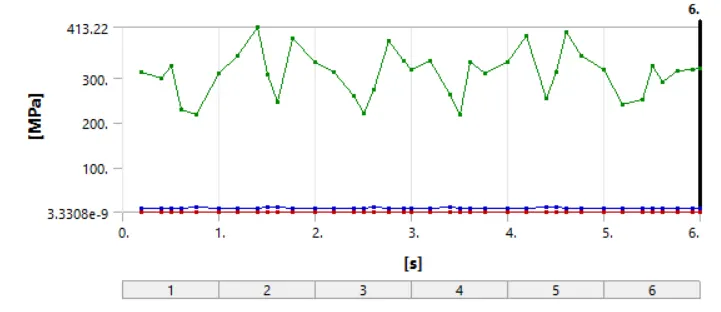
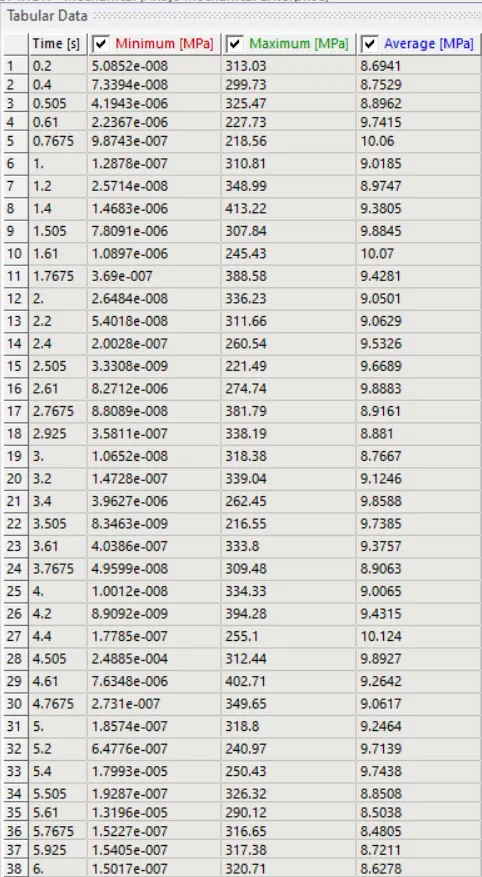
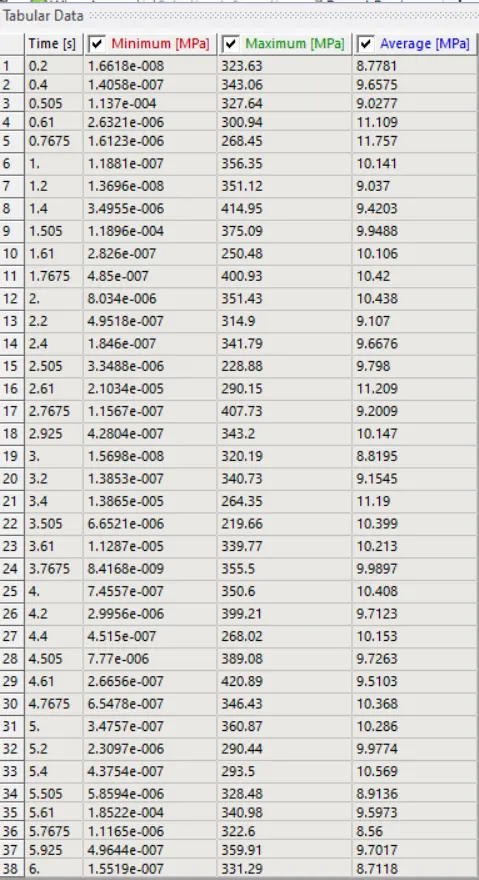
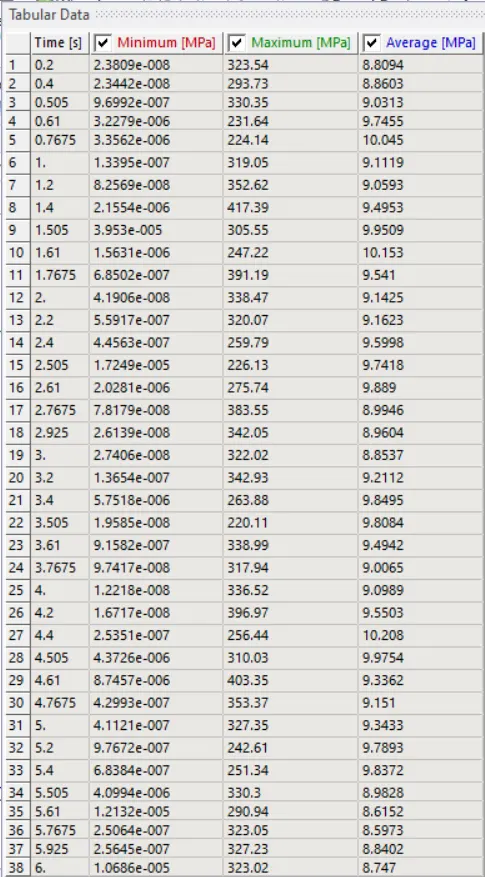
III.Stress Intensity
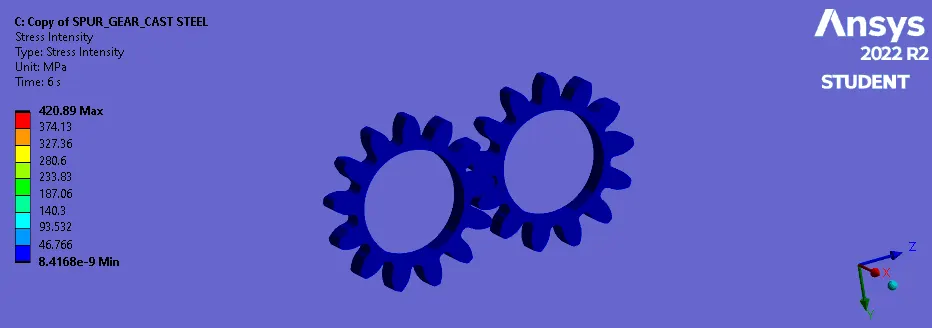
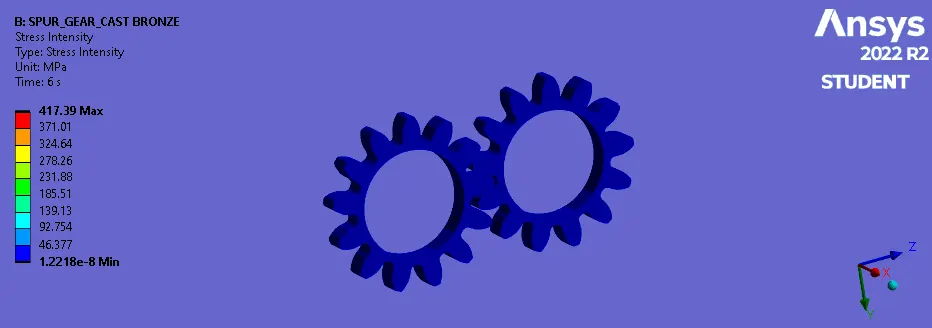
Stress Intensity is highest in case 2 (i.e cast steel) followed by case 1 and case 2.
|
CASE 1(CAST IRON) |
CASE 2(CAST STEEL) |
CASE 3(CAST BRONZE) |
 |
|
|
 |
|
|
 |
|
|
 |
 |
 |
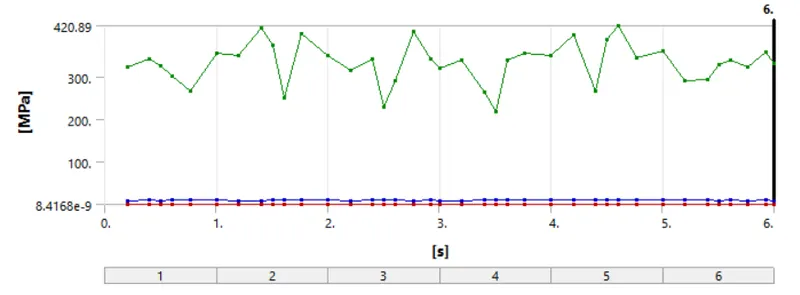
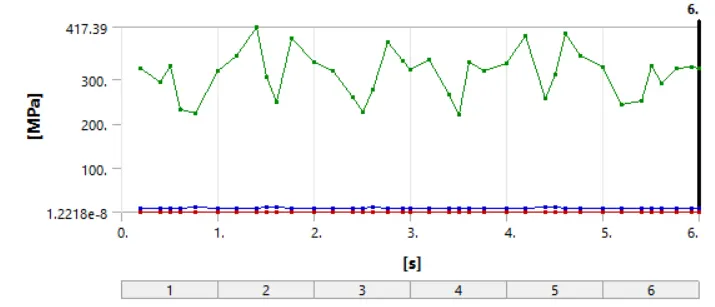
Summary of all cases
| Material | Max Total deformation(mm) at 6s | Max Equivalent stress at 6s(Mpa) | Max Stress intensity at 6s(Mpa) |
| case1 | 30 | 313.95 | 320.71 |
| case2 | 30 | 321.94 | 331.29 |
| case3 | 30 | 311.53 | 323.02 |
Conclusion:
- It is observed that Total deformation is the same for all Three cases and we cannot conclude the material to be used.
- Going forward it is observed that since young's modulus of Cast Iron and Cat bronze are almost near to each other therefore for same deformation the von-mises stress and Maximum stress intensity is also near to each other.
- Young's modulus of Cast steel is more therefore the von-mises stress and Maximum stress intensity is high.
- Location of possible Fracture: It can be seen from the animation that the bottom root of the teeth experiences maximum stress intensity, and therefore we can say that the stress concentration is high in those regions. Therfore chances of failure is high in those areas.
- The stress intensity factor is least for Cast iron followed by cast steel and Cast Bronze.
- It can be observed that cast iron is less ductile among all so it can't be selected and its resistance is low. Cast bronze is highly ductile and its fracture rate is the lowest.
- In this particular case, we would prefer to Cast steel due to its high stress intensity factor also strength and availability of the material are high.
- In general case due to good vibration damping, good wear resistance, good maintainability, low notch sensitivity cast Iron is preferred.