Week 1 Spur Gear Challenge
Aim :
To analyse the given spur gear model.
Objective :
- Case 1:
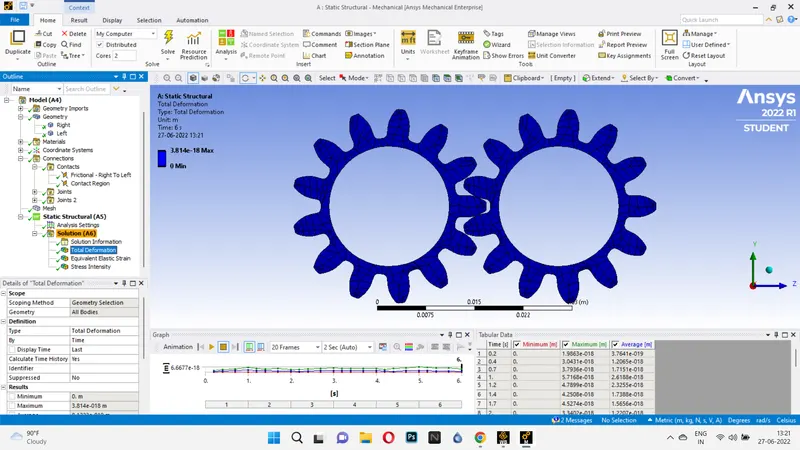
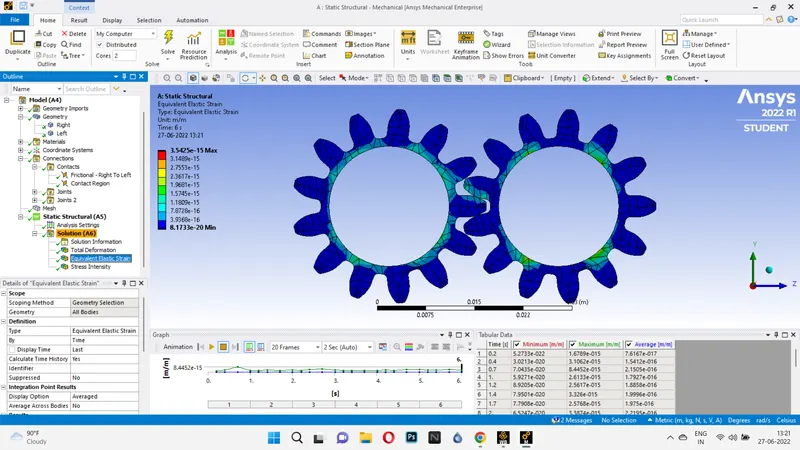
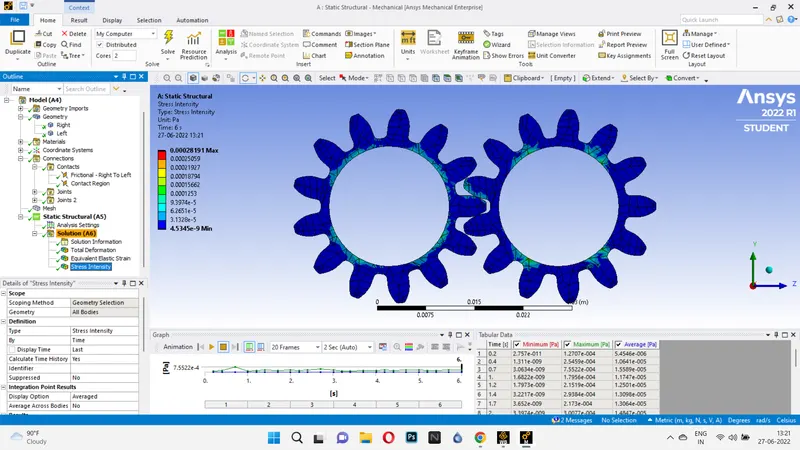
Using Cast Iron(ductile) as a material, carry out a static structural analysis to find out Equivalent stress, Total deformation and Stress intensity(Learn about what stress intensity is). Find location for possible fracture
- Case 2:
Using Cast Steel as material, perform the same analysis for the results as in Case 1.
- Case 3:
Using Cast Bronze as material, perform the same analysis for the results as in Case 1.
And to write detailed report comparing the results of the three cases and conclude which material would you recommend based on these results.
Procedure:
Open the file in the ansys,
assign the material in engineering data
then update the geometry
open the model and edit it will open in mehanical tab
define the materials
define the axis
define the contact point of spur gear,
give inputs in the static structural and in the solutions.
and solve the problem.
Case 1:
Case 2 :
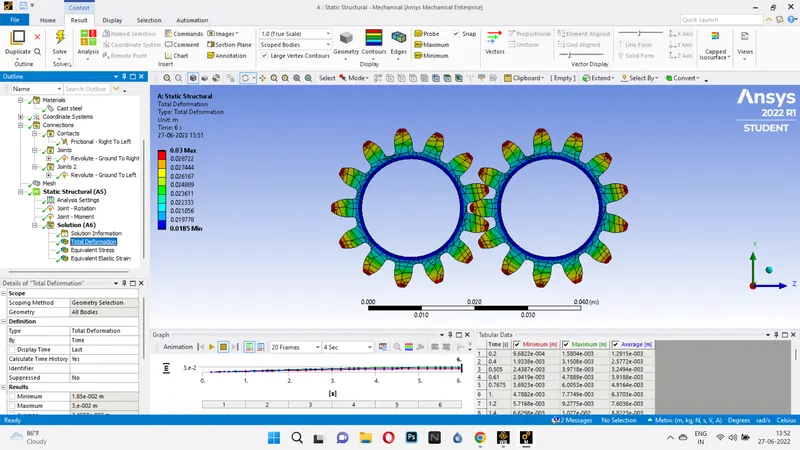
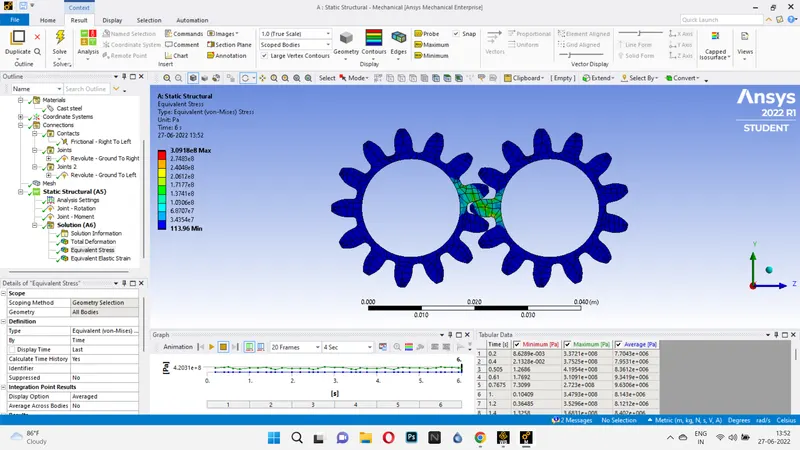
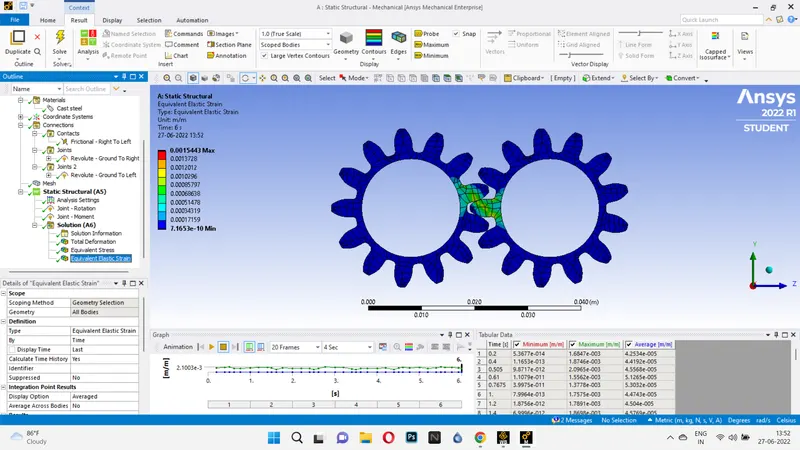
Case 3 :
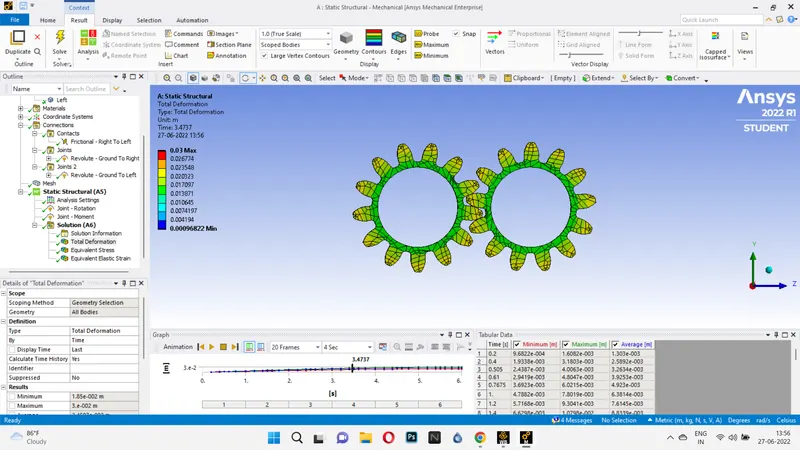
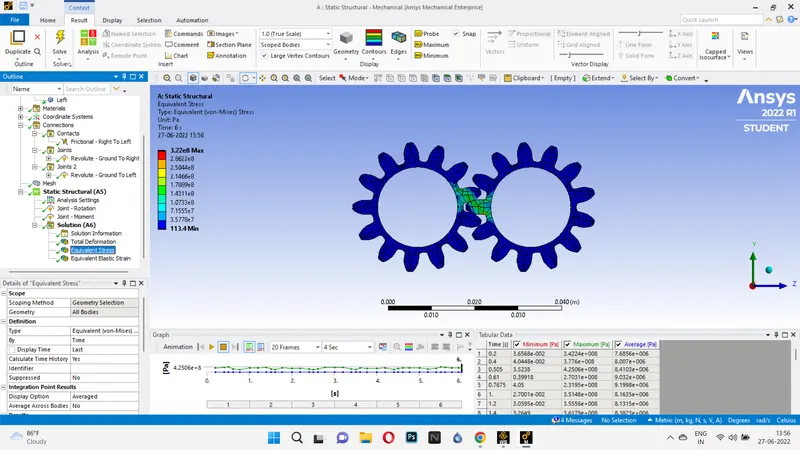
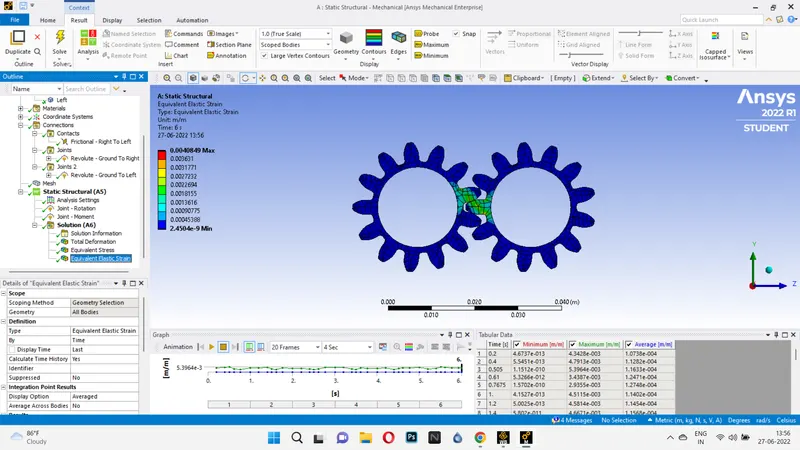
The archive file and animation has been attached in the asset.
Note:
The stress intensity factor in fracture mechanics is used to predict the stress state near the tip of a crack or notch caused by a remote load or residual stress. Essentially it gives the stress variation in cracks or notch or tip of the material.
There is a considerable difference between the screenshot values and gif values. This is because of dynamic values obtained during the gif values. For convenience, the screenshot values are taken for comparison.
CONCLUSION:
From the above results, it can be seen that cast bronze fails more quickly than other materials since it has more stress intensity and also has higher equivalent stress. The crack formation or failure for the same number of cycles is quicker in the case of cast bronze since it has higher stress intensity values. So, it is the least preferred material,
Between gray cast iron and cast steel, the equivalent stress is higher for gray cast iron but the value of stress intensity is less. The machinability of gray cast iron is better than that of cast steel. Also, as discussed above the crack formation or failure for the same number of cycles is quicked for cast steel when compared to gray cast iron since the value of stress intensity is higher for cast steel. The other properties which include compressive strength, castability, and cost are better for gray cast iron in comparison with cast steel.Therefore, going by the above trade-off gray cast iron is the most preferred material in spite of having higher equivalent stress than others.