Week 1 Spur Gear Challenge
STATIC STRUCTURAL ANALYSIS ON SPUR GEAR USING ANSYS
OBJECTIVE
To carry out a static structural analysis on spur gear with following type of materials,
Case-1: Cast Iron
Case-2: Cast Bronze
Case-3: Cast Steel
To find and compare the results of Equivalent stress, Total deformation, Stress intensity for all the cases. To recommend the choice of materid based on the results.
THEORY
Spur Gear:
Gears are defined as toothed wheels or multilobed cams, which transmit power and motion from one shaft to another by means of successive engagement of teeth. Gears are broadly classified into four groups, viz., spur, helical, bevel and worm gears. A pair of spur gears is shown in Fig.
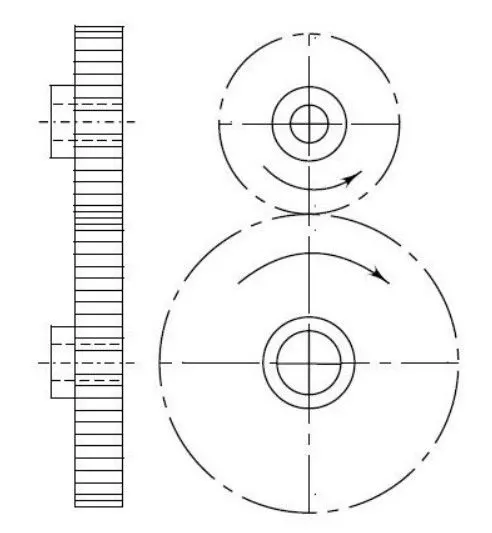
In case of spur gears, the teeth are cut parallel to the axis of the shaft. As the teeth are parallel to the axis of the shaft, spur gears are used only when the shafts are parallel. The profile of the gear tooth is in the shape of an involute curve and it remains identical along the entire width of the gear wheel. Spur gears impose radial loads on the shafts.
Gear Tooth Failures:
There are two basic modes of gear tooth failure breakage of the tooth due to static and dynamic loads and the surface destruction. The complete breakage of the tooth can be avoided by adjusting the parameters in the gear design, such as the module and the face width, so that the beam strength of the gear tooth is more than the sum of static and dynamic loads. The surface destruction or tooth wear is classified according to the basis of their primary causes. The principal types of gear tooth wear are as follows: یا
1. Abrasive Wear
ii. Corrosive Wear
iii. Initial Pitting
iv. Destructive Pitting
v. Scoring
Selection material :
The desirable properties of gear material are as follows:
(i) The load carrying capacity of the gear tooth depends upon the ultimate tensile strength or the yield strength of the material. When the gear tooth is subjected to fluctuating forces, the endurance strength of the tooth is the deciding factor. The gear material should have sufficient strength to resist failure due to breakage of the tooth.
(ii) in many cases, it is 'wear rating' rather than 'strength rating' which decides the dimensions of the gear tooth. The resistance to wear depends upon alloying elements, grain size, percentage of carbon, and surface hardness. The gear material should have sufficient surface endurance strength to avoid failure due to destructive pitting.
(iii) For high-speed power transmission, the sliding velocities are very high and the material should have low coefficient of friction to avoid failure due to scoring.
(iv) The amount of thermal distortion or warping during the heat treatment process is a major problem in gear applications. Due to warping, the load gets concentrated at one corner of the gear tooth. Alloy steels are superior to plain carbon steels in this respect, due to consistent thermal distortion.
Gears are made of cast iron, steel, bronze and phenolic resins. Large size gears are made of grey cast iron of Grades FG 200, FG 260 or FG 350. They are cheap and generate less noise compared with steel gears. They have good wear resistance. Their main drawback is poor strength. Case-hardened steel gears offer the best combination of a wear resisting hard surface together with a ductile and shock-absorbing core. The plain carbon steels used for medium duty applications are 50C8, 45C8, 50C4 and 55C8. For heavy duty applications, alloy steels 40Crl, 30Ni4Crl and 40Ni3Cr65M055 are used.
Although steel gears are costly, they have higher load carrying capacity. Bronze is mainly used for worm wheels due to its low coefficient of friction and excellent conformability. It is also suitable where resistance to corrosion is an important consideration in applications like water pumps. Their main drawback is excessive cost.
Geometry :
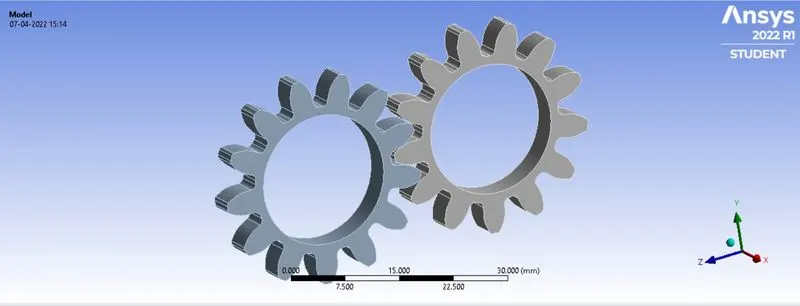
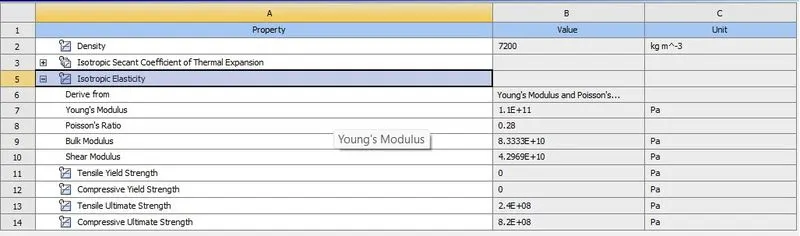
Material Properties :
Case 1) Gray Cast Iron
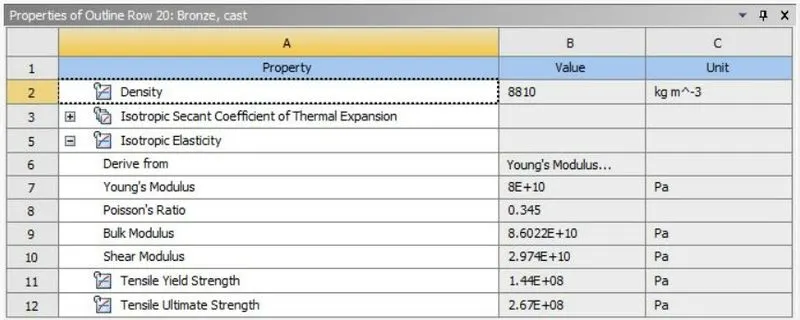
CAse 2) Cast Bronze
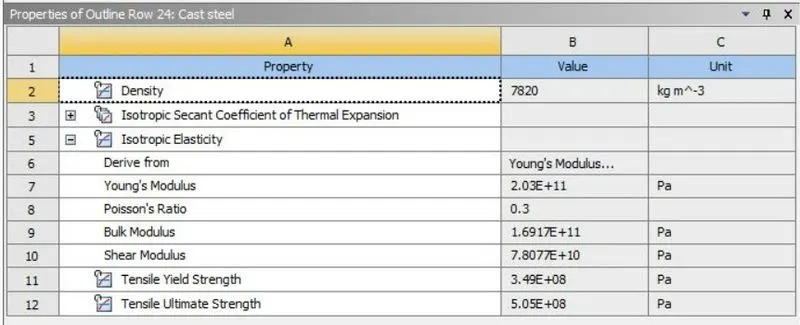
Case 3) Cast steel
Connection Details :-
Case 1
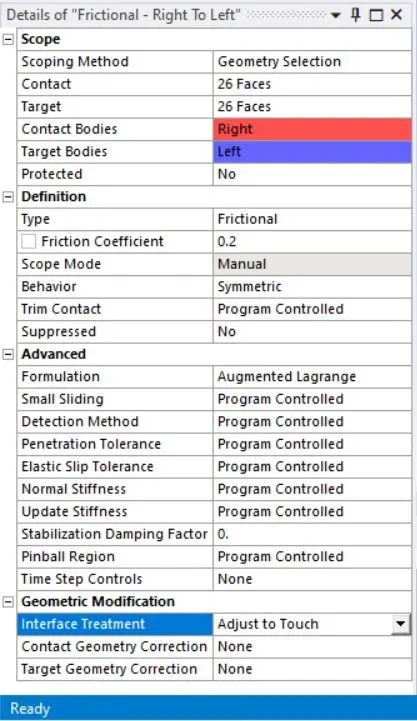
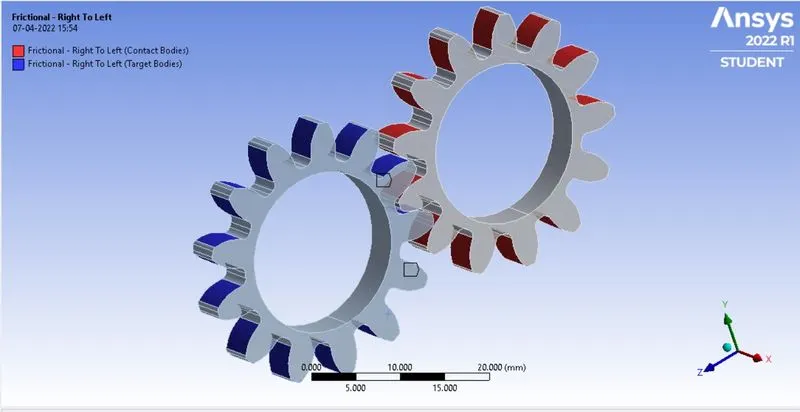
Contact detail:
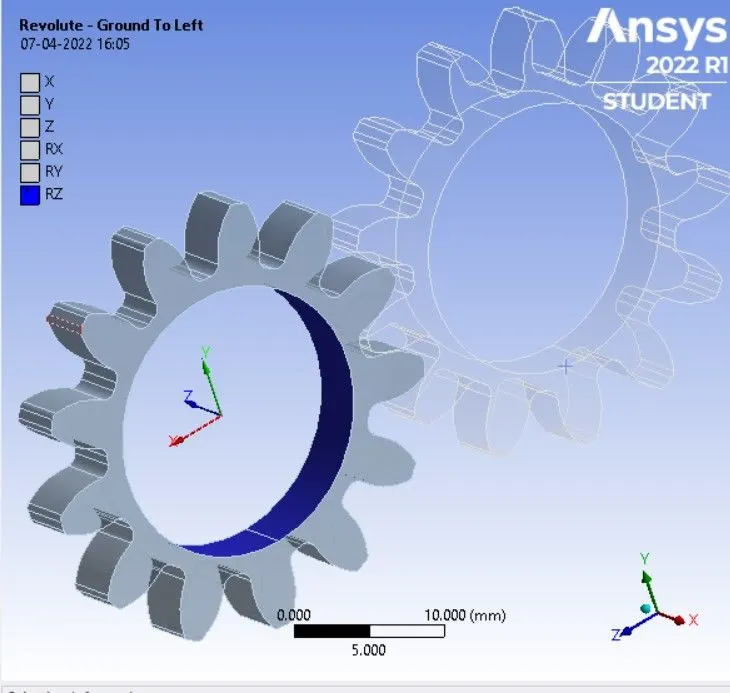
Joint Detail :
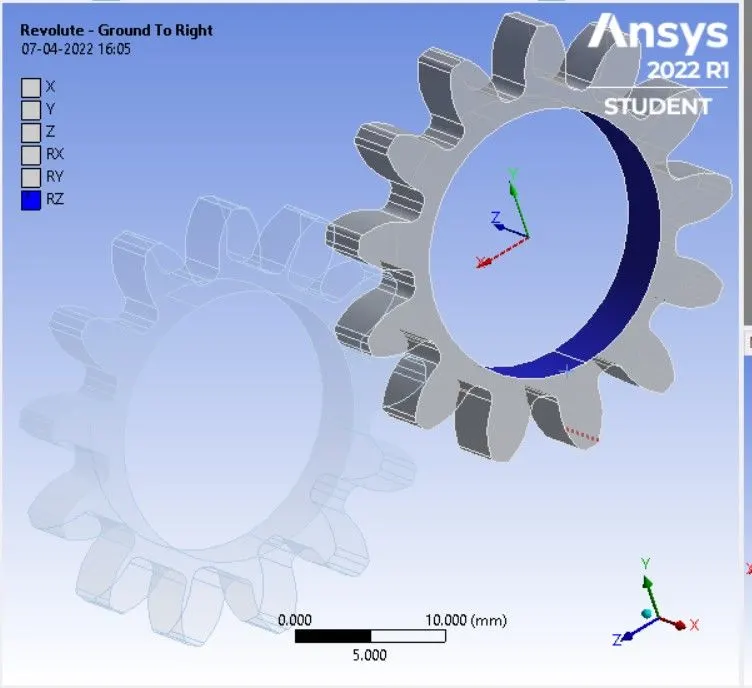
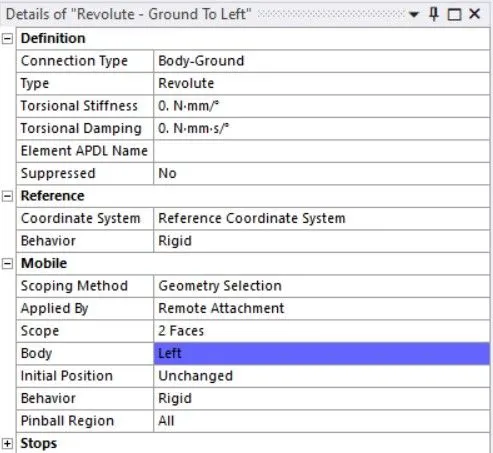
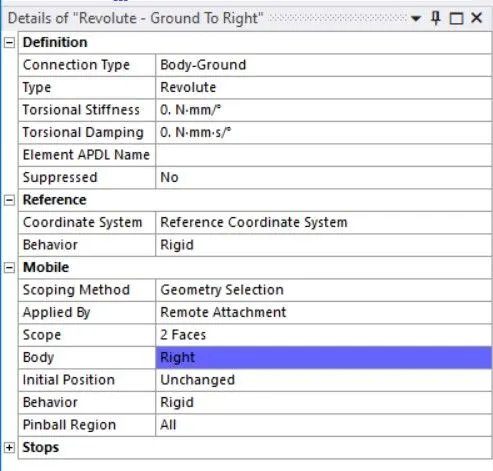
Meshing :
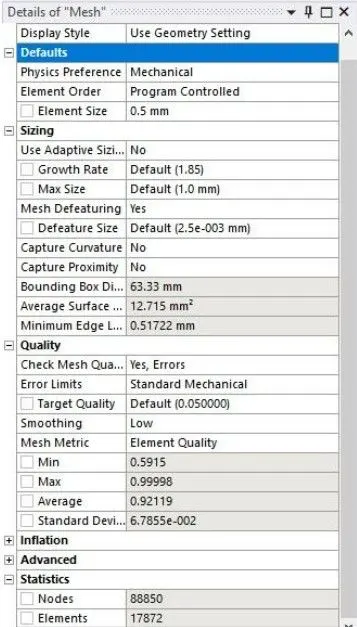
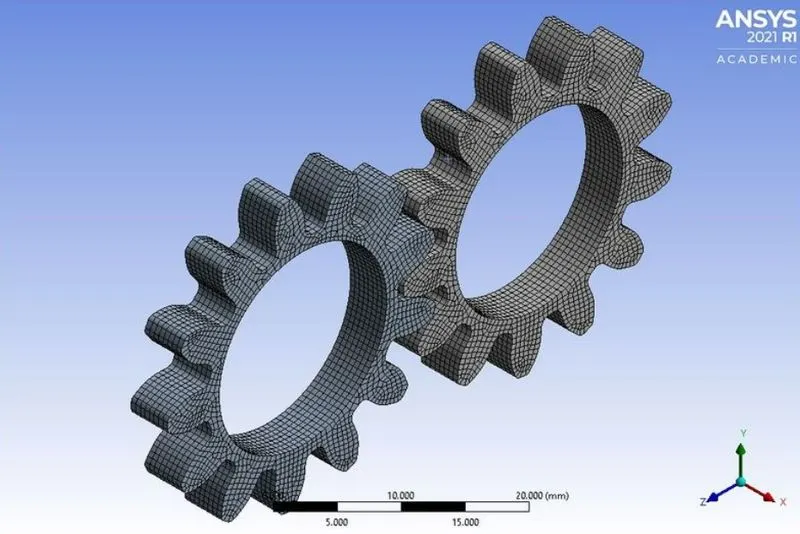
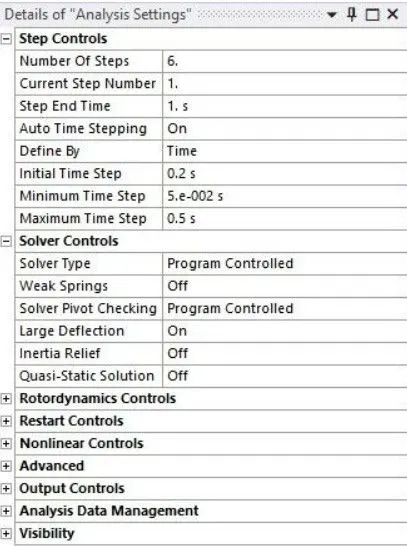
Analysis Setting :
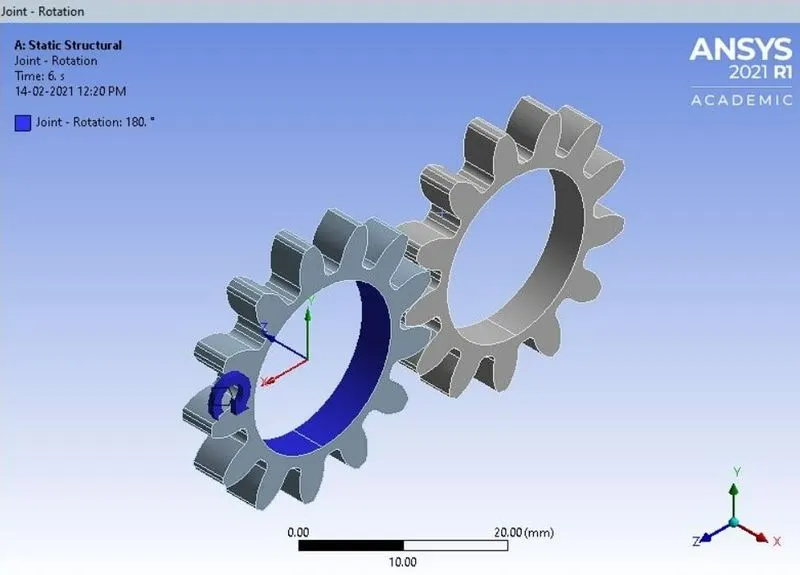
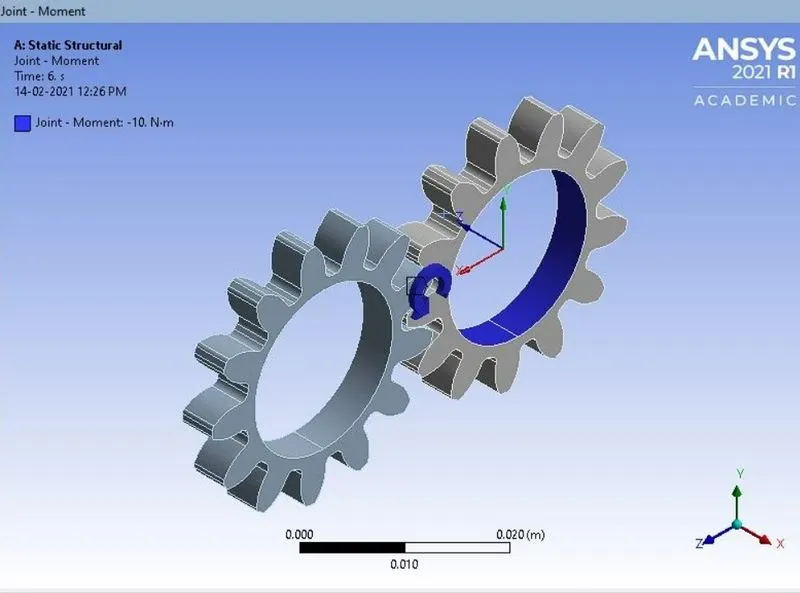
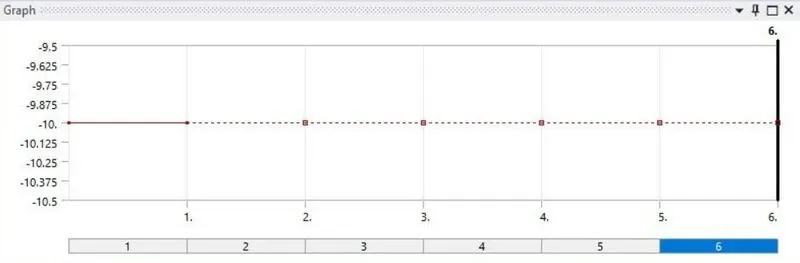
Joint Load Details :
Left Gear
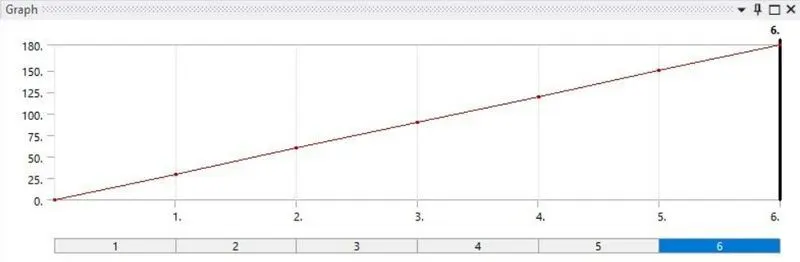
Right Gear
Results And Discussion:
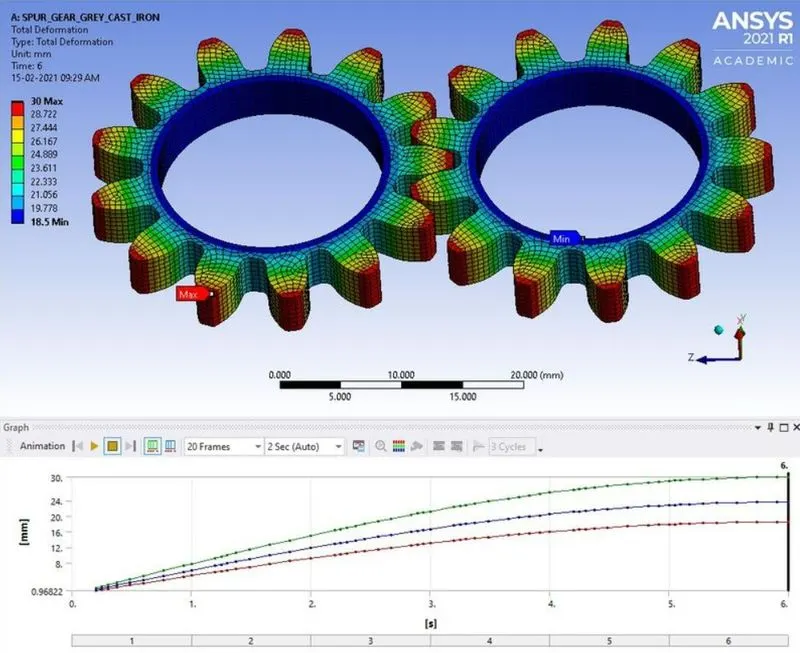
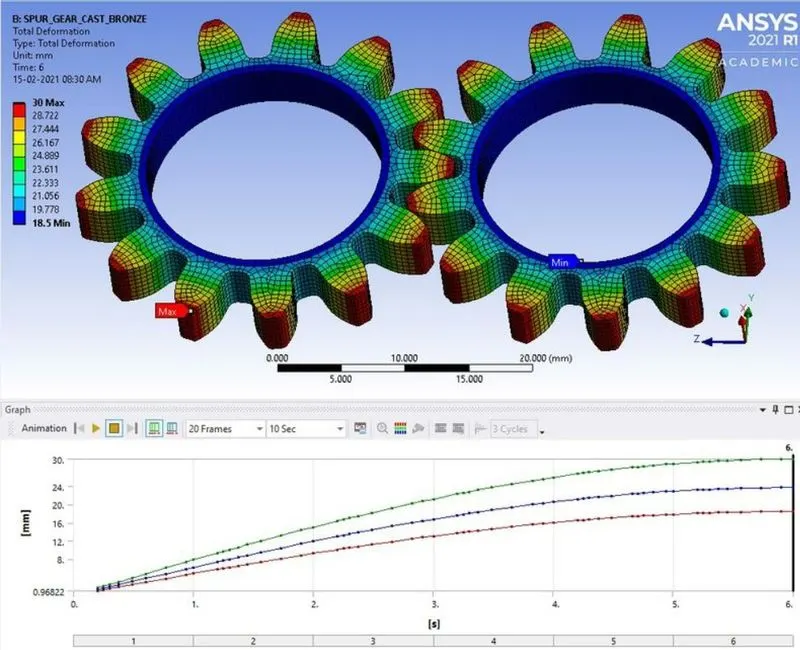
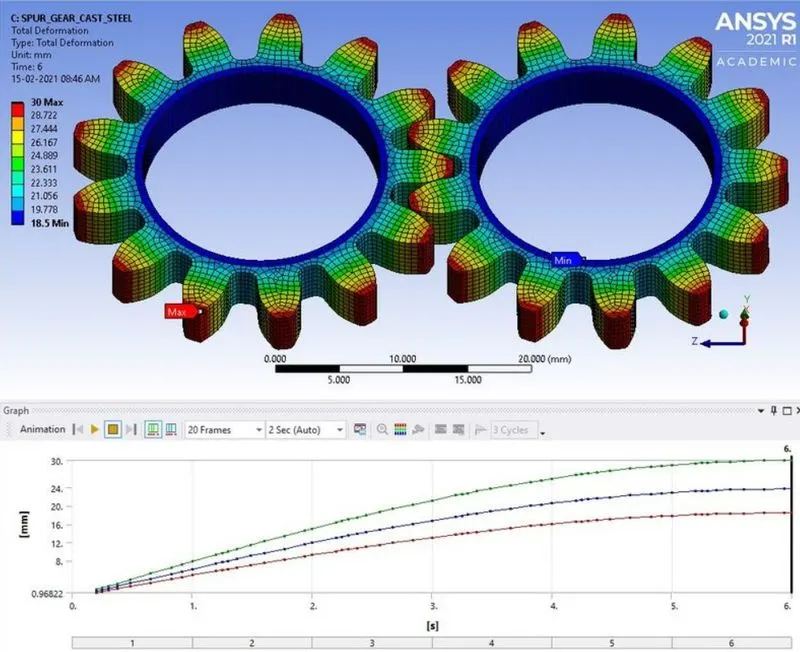
Total Deformation
CAst Iron
CAst Bronze :
CAst Steel :
Equivalent Stress Distribution :
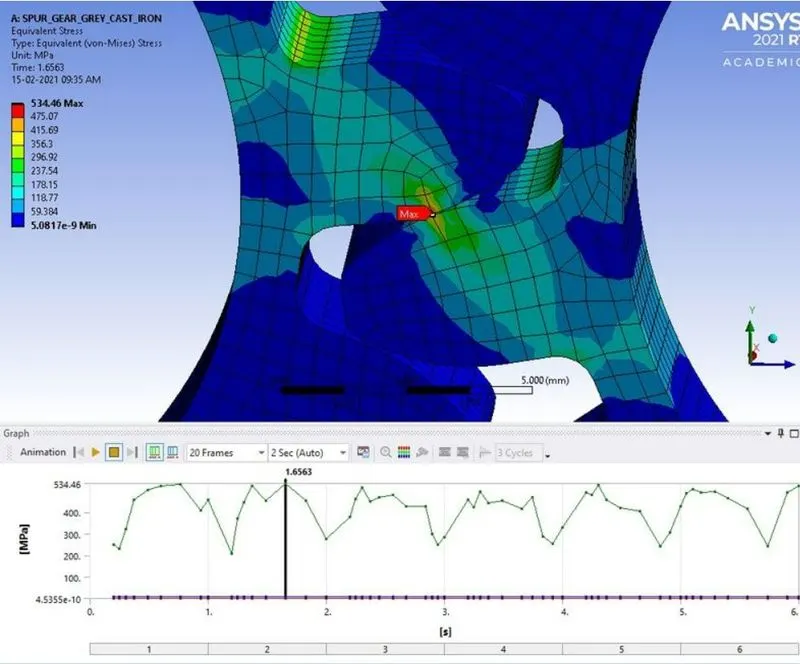
Gray Cast Iron
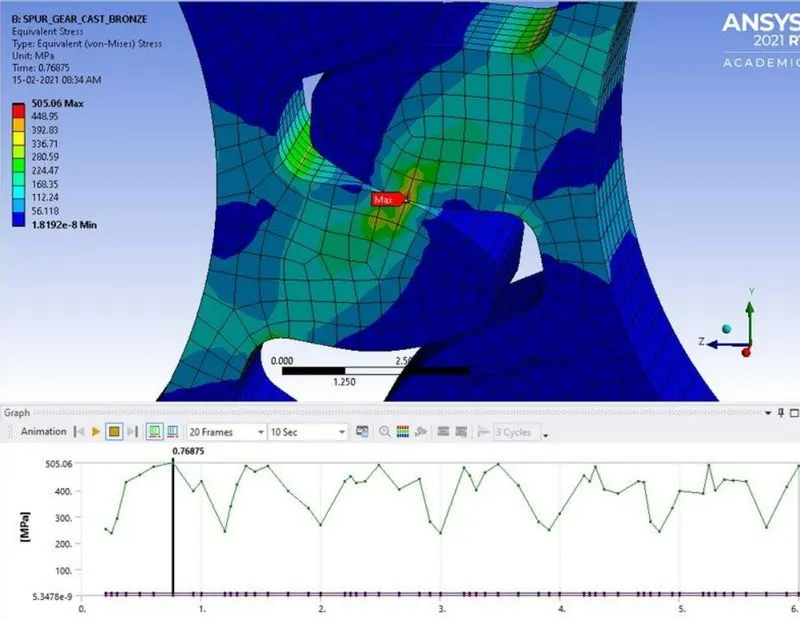
CAst Bronze
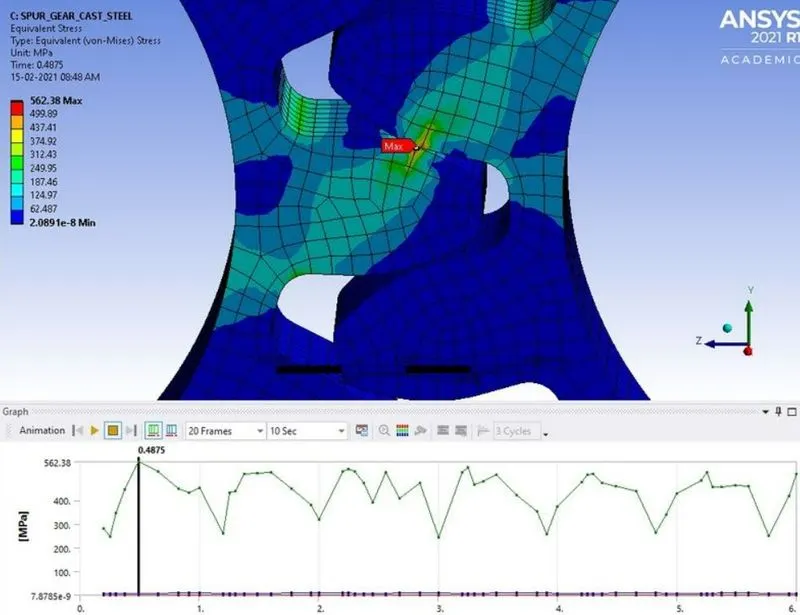
CAst steel
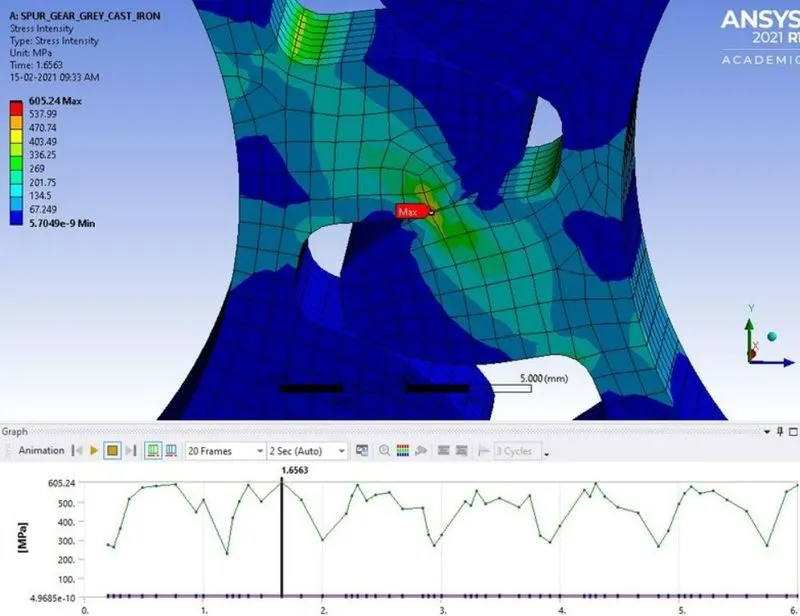
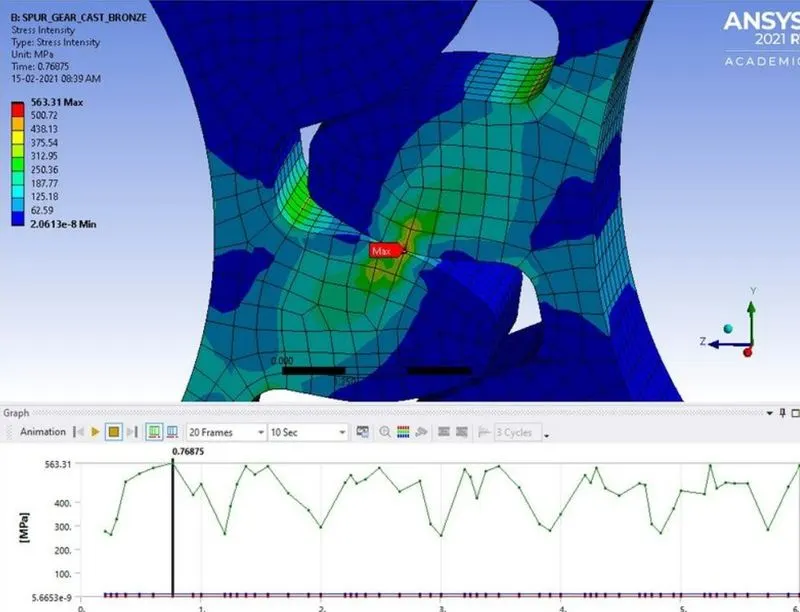
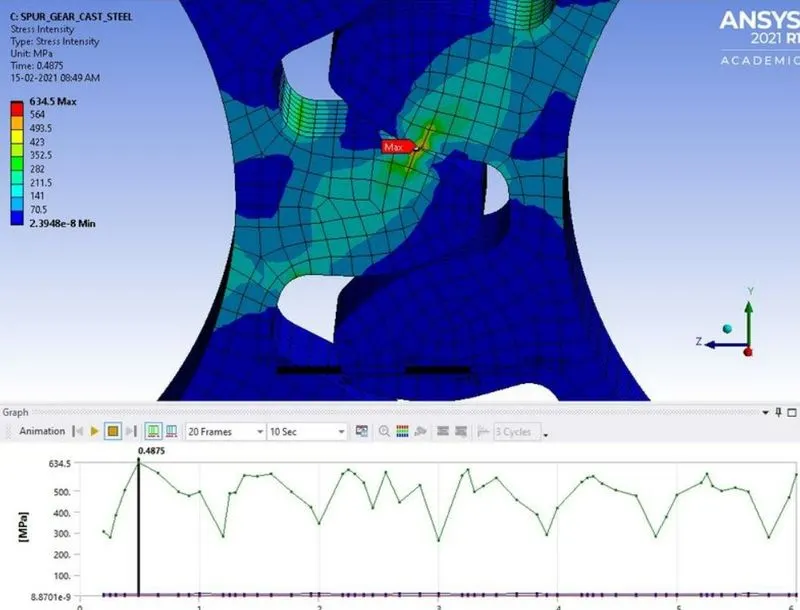
Stress Intensity :-
Gray Cast IRon
CAst Bronze
CAst Steel
Comparison of results :
The maximum and minimum values of total deformation, v-m stress and stress intensity is tabulated as shown below.
MAterial TotalDeformation Equivalent stress Stress intensity
(mm) (Mpa) (Mpa)
MAx. Min. Max. min. max. min.
CAst Iron 30 18.5 534.46 5.0817e-9 605.24 5.7049e-9
Cast bronze 30 18.5 505.06 1.8192e-8 563.31 2.0631e-8
cast steel 30 18.5 562.38 2.0891e-8 634.5 2.3948e- 8
From the table, it is observed that the maximum and minimum value of total deformation is 30 mm and 18.5 mm respectively for all the cases of spur gear. The maximum value of Equivalent stress developed in cast bronze spur gear is least Le, 505.06 MPa whereas, the maximum Equivalent stress developed in cast steel spur gear is highestie, 562.38 MPa. Hence, based on traditional strength of materials approach Le, from the results of Equivalent stress and Total deformation for all the cases of spur gear, case-2: Cast bronze is the preferred choice of material
The maximum value of stress intensity developed in cast steel spur gear is highest Le, 634.5 MPa whereas, the maximum stress intensity developed in cast bronze spur gear is leastle. 563.31 MPa The stress intensity is nothing out folure stress due to fracture. The higher value of stress intensity indicates that the material has more service life Bated on fracture mechanics approach ie, from the results of Stress intensity for all the cases of spur gear, case-3: Cost steel is the preferred choice of material
Winter Combustion Engine
Case-1: Cast Iron spur gear are cheap and generate less noise compared to other gears. They have good wear resistance from the analysis results it has moderate values of stress intensity and equivalent stress. Hence, the recommended choice of material is Cast Iron.
conclusion :
Static structural analysis was carried out successfully on spur gear having following type of materials,
i. Case-1: Cast Iron
ii. Case-2: Cast Bronze
iii. Case-3: Cast Steel
Based on traditional strength of materials approach Le, from the results of Equivalent stress and Total deformation for all the cases of spur gear, case-2: Cast bronze is the preferred choice of material.
Based on fracture mechanics approach i.e., from the results of Stress intensity for all the cases of spur gear, case-3: Cast steel is the preferred choice of material.
The recommended choice of material is Cast Iron.