Week 1- Mixing Tee
Aim:-
To set up steady-state simulations on two versions of the mixing tee. One of them is longer than the other. And to compare the mixing effectiveness when hot inlet temperature is 36C & the Cold inlet is at 19C.
- Case 1
- Short mixing tee with a hot inlet velocity of 3m/s.
- Momentum ratio of 2, 4.
- Case 2
- Long mixing tee with a hot inlet velocity of 3m/s.
- Momentum ratio of 2, 4.
Momentum ratio = velocity at cold inlet / velocity at hot inlet
In a table, compare the following values from the 2 cases.
- Cell count
- Average outlet temperature
- Number of iterations for convergence
Tool Used:- Space-claim , Ansys meshing , Ansys Fluent , Ansys CFD Post
Explanation :-
Mixing Tee is a device used in mixing two fluids having different properties . Its application is in air conditioner , Refrigerator.
In this project there are two version of mixing tee having air as fluid medium at different temperature and entering at different velocity, creating two cases which is given above.
Procedure :-
Pre processing
- Open workbench
- Import the geometry in space-claim and extract the required volume also supress the outer pipe shell.
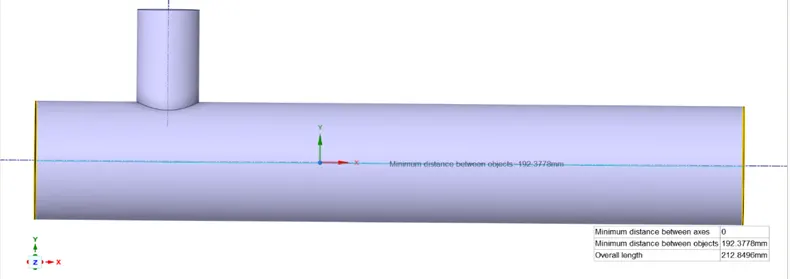
Short Mixing Tee :- 192.377 mm
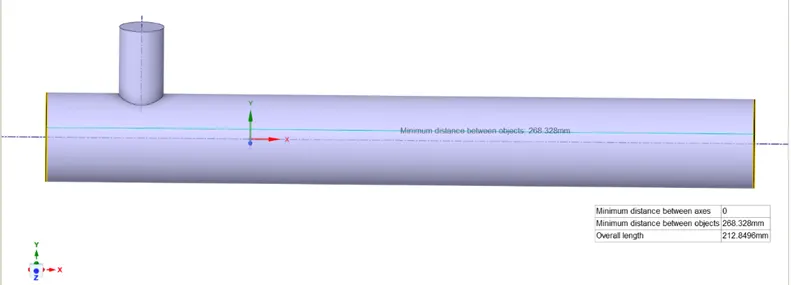
Long Mixing Tee :- 268.328 mm
- After extracting volumes, export the geometry in Ansys meshing.
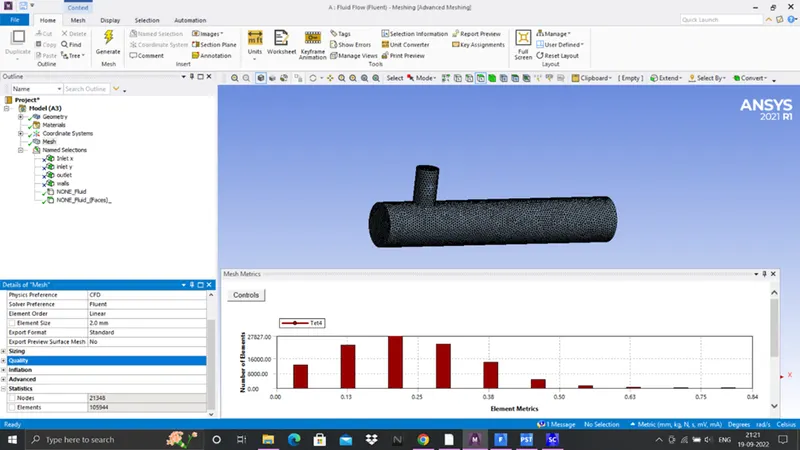
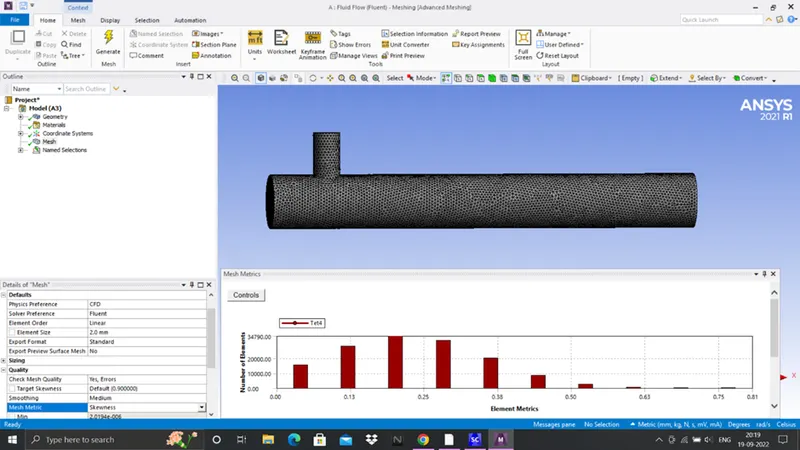
- In Ansys meshing, with element size 2mm meshing is done on both versions of Mixing Tee.
Short Mixing Tee Mesh with sknewness quality criteria :-
Long Mixing Tee Mesh with sknewness quality criteria :-
Solving
- Export the mesh in Ansys Fluent solver to simulate the mixing effectiveness
- Select k-e turbulence model for solving both cases
- k-e turbulence model is selected because the flow here have low Reynolds number which is lying in laminar region and main objective of this simulation to show the mixing effectiveness and it is not a near wall problem so to simulate away from the wall k-e turbulence model is most suitable.
- Material selection is done next, here fluid is air as material.
- Now boundary condition is given
|
Name |
Temperature |
Velocity |
|
Inlet x |
36 |
Case 1 & 2:- 3 m/s |
|
Inlet y |
19 |
Case 1:- 6 m/s Case 2:- 12 m/s |
- Velocity at cold inlet i.e., Inlet y is found out by
Momentum ratio = velocity at cold inlet / velocity at hot inlet
- In both cases Momentum ratio is 2 and 4 , so using above momentum ratio formula we get velocity at cold inlet.
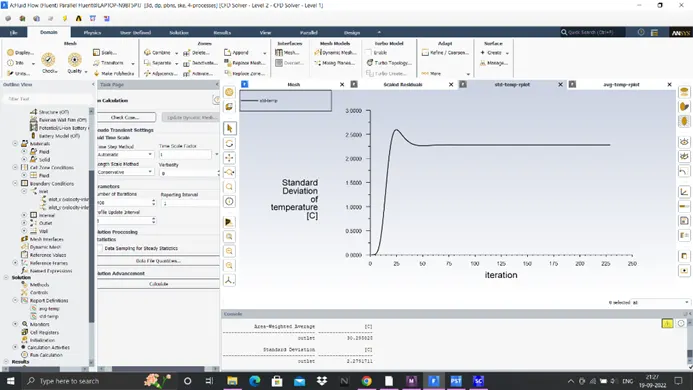
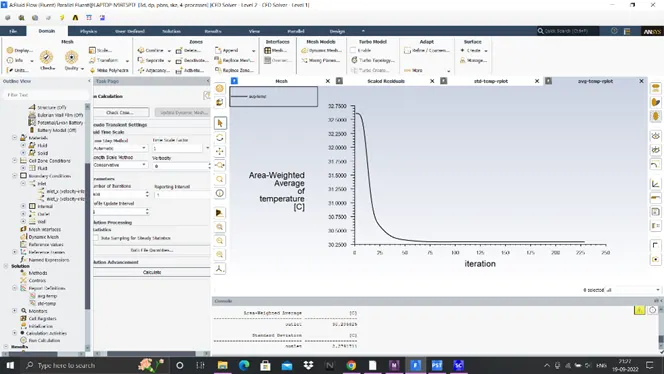
- Report definition is selected next, which is Average Temperature and Standard deviation at outlet.
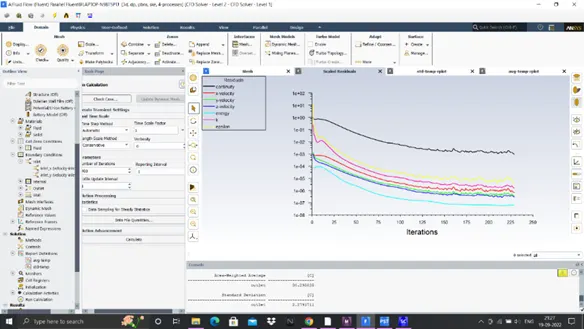
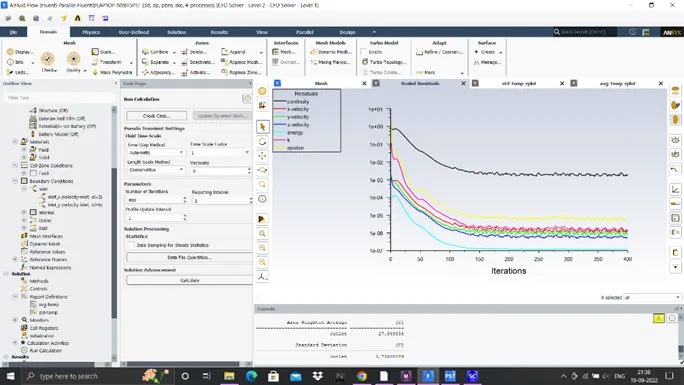
- Now initialization is done then calculation started where 400 iteration was done.
CASE 1 :-
A) Short Mixing Tee
Momentum ratio :- 2
Hot inlet velocity :- 3 m/s
Cold inlet velocity :- 6 m/s
B) Short Mixing Tee
Momentum ratio :- 4
Hot inlet velocity :- 3 m/s
Cold inlet velocity :- 12 m/s
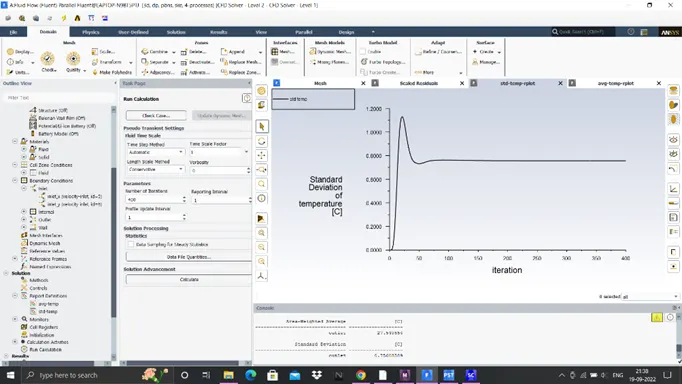
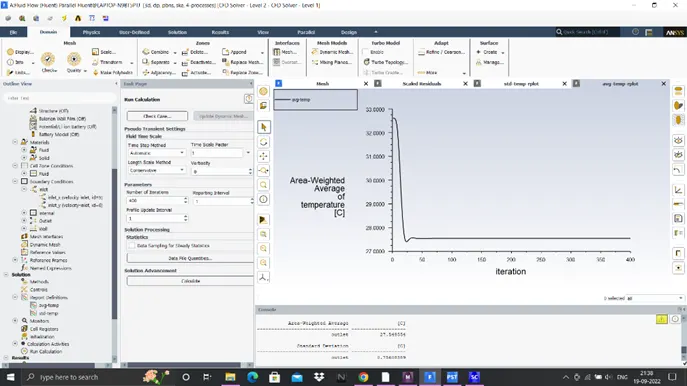
CASE 2:-
A) Long Mixing Tee
Momentum ratio :- 2
Hot inlet velocity :- 3 m/s
Cold inlet velocity :- 6 m/s
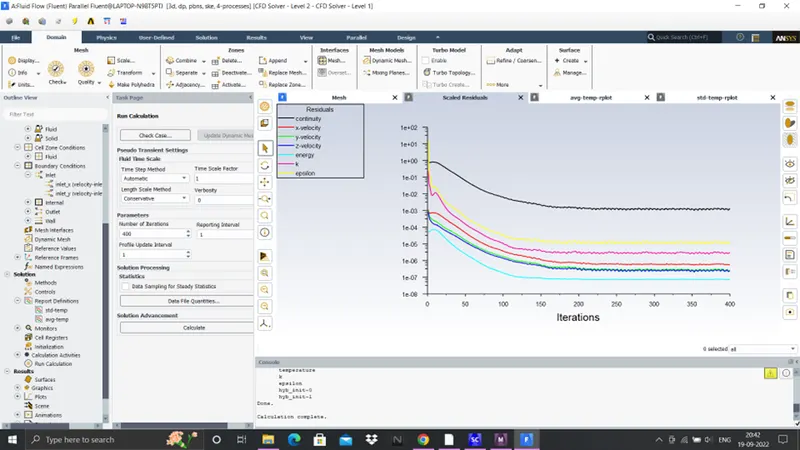
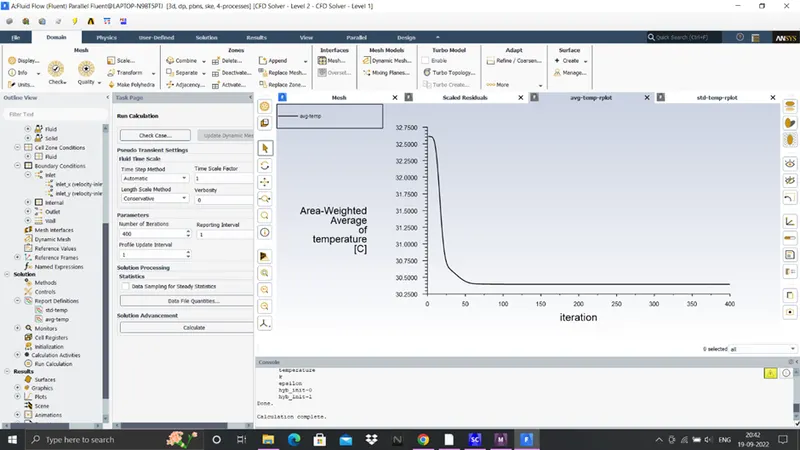
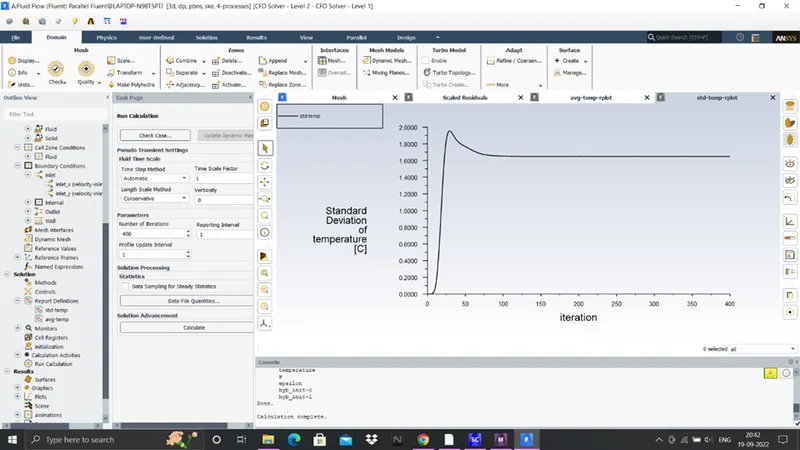
B) Long Mixing Tee
Momentum ratio :- 4
Hot inlet velocity :- 3 m/s
Cold inlet velocity :- 12 m/s
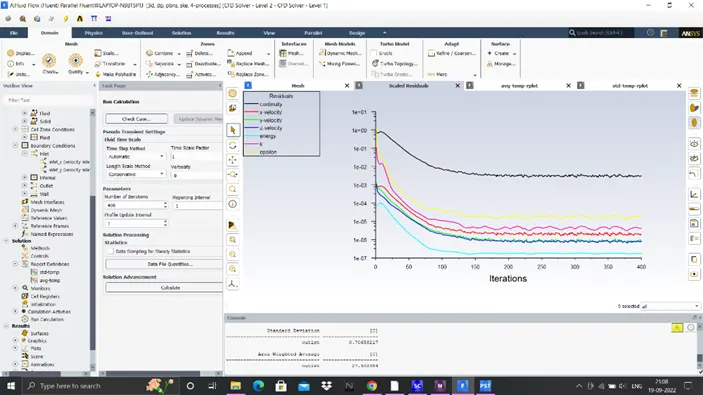
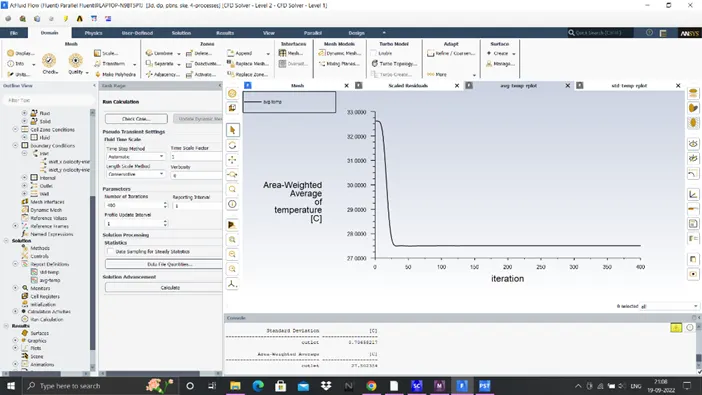
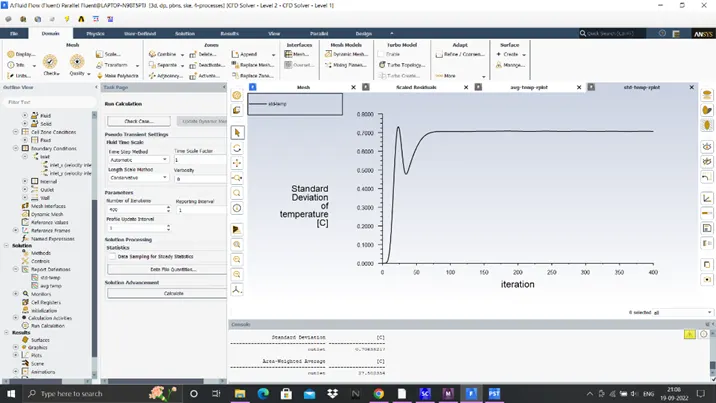
Post processing
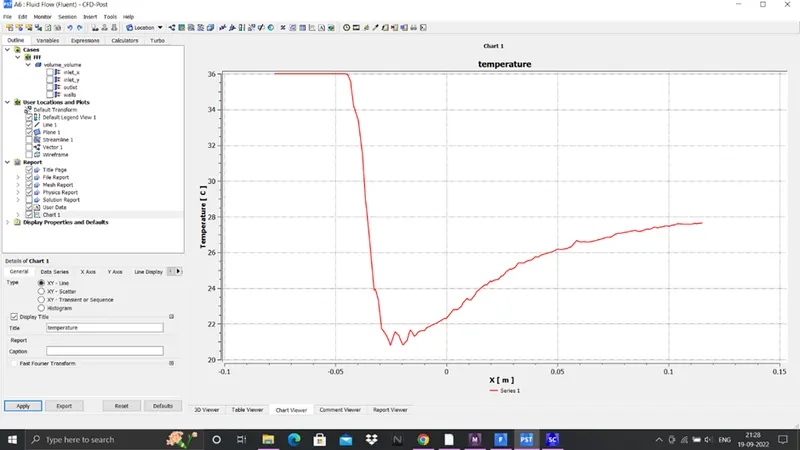
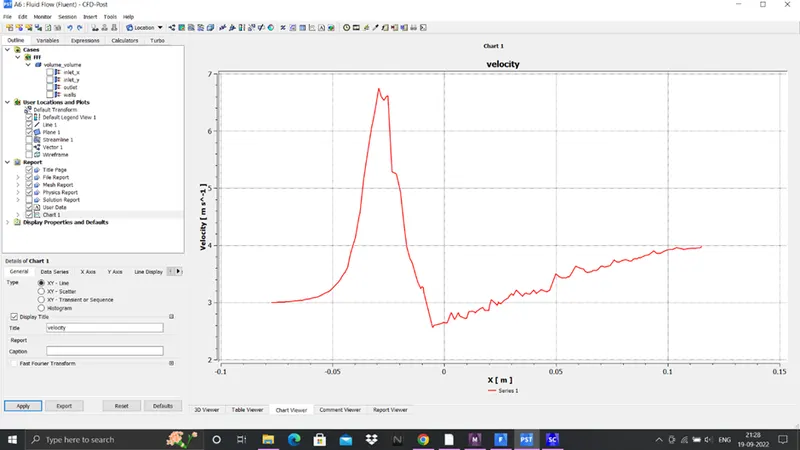
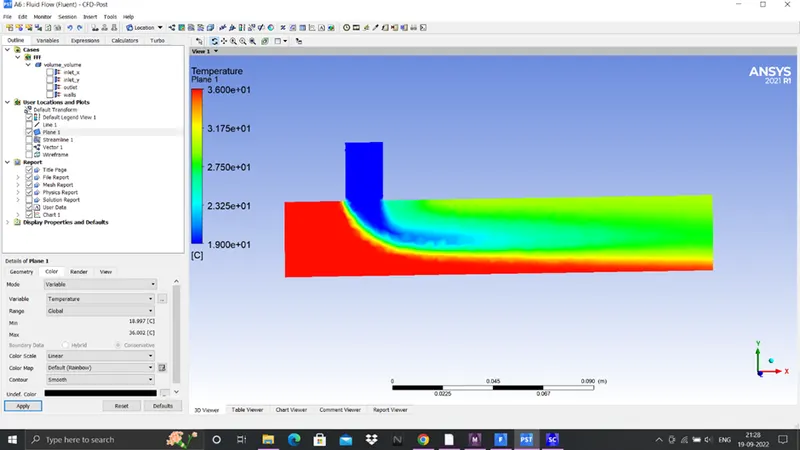
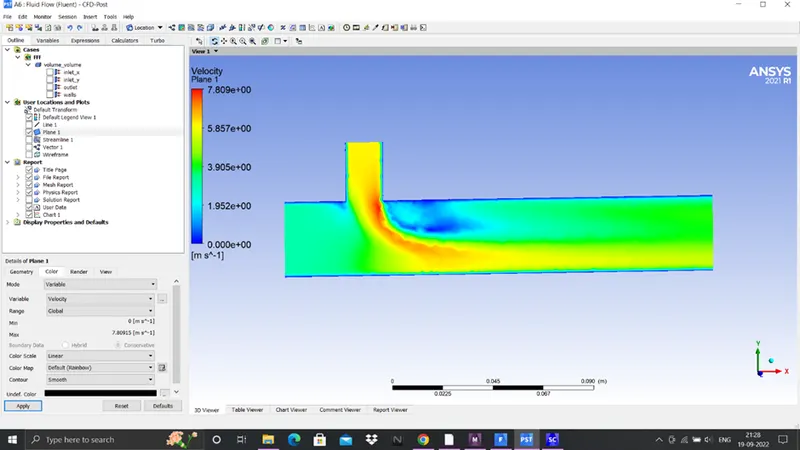
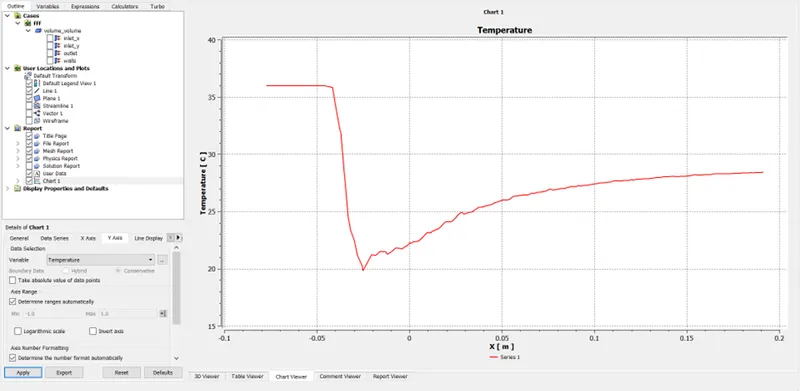
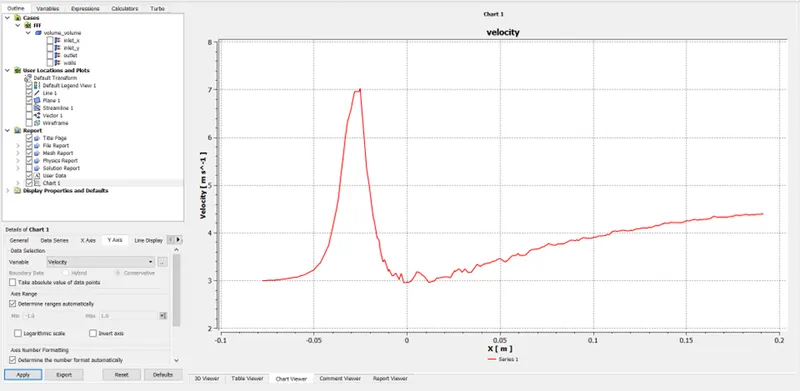
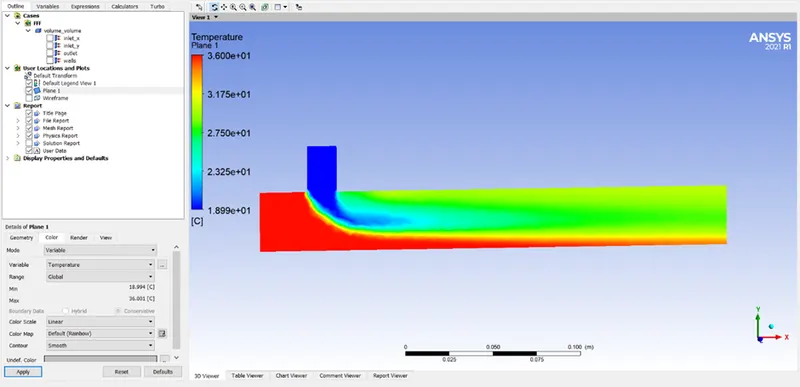
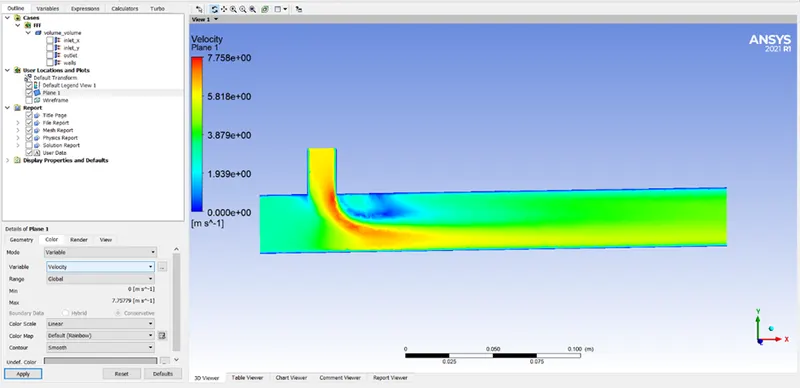
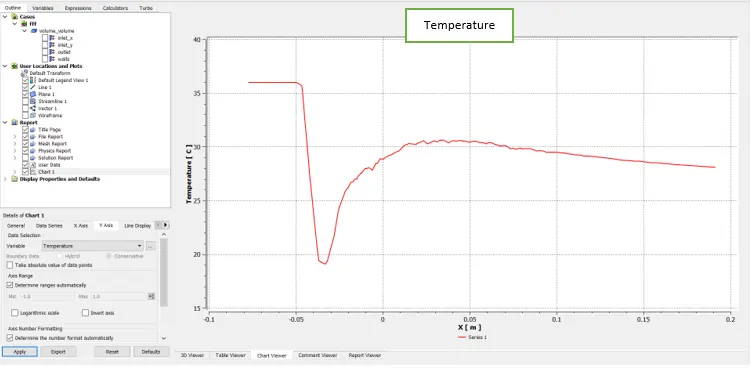
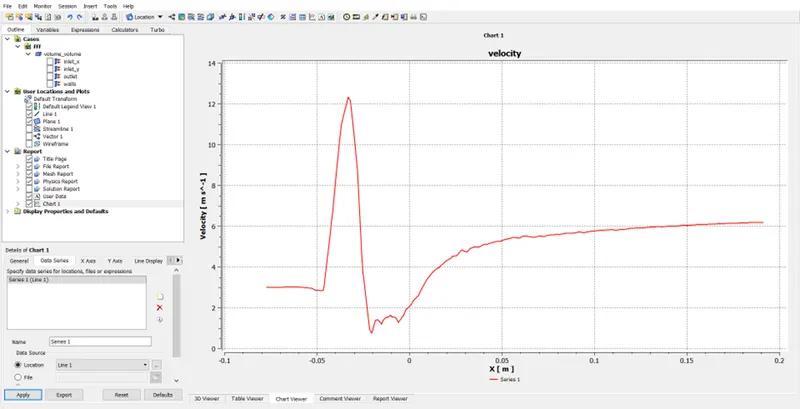
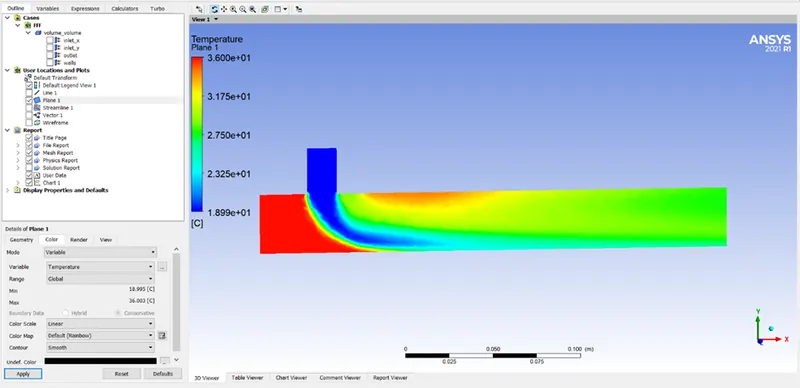
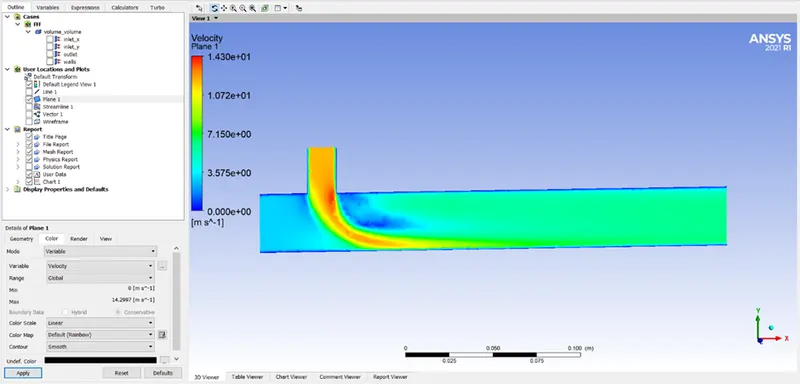
- After solving the problem in Ansys fluent, Post processing is done where temperature, velocity contour plot, line plot ,vector is created in CFD-Post.
CASE 1:-
A) Short mixing tee
Momenturm ratio :- 2
Temperature vs X(m) plot :-
* X(m) denotes Length of Mixing Tee in meters
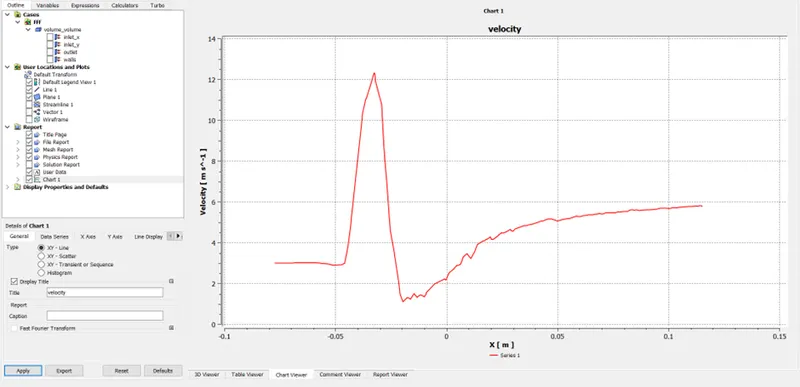
Velocity vs X(m) :-
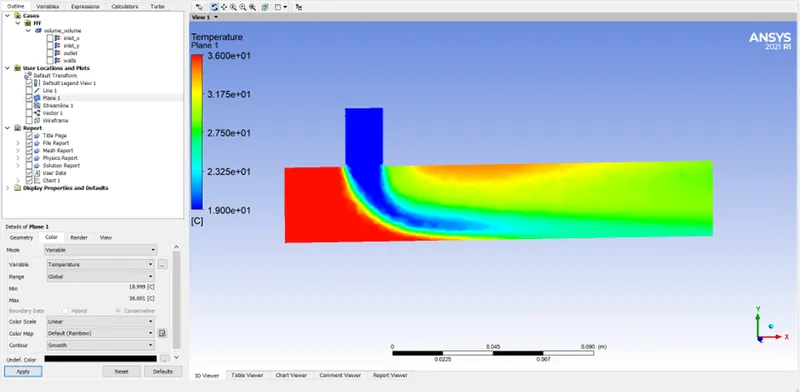
Temperature Contour :-
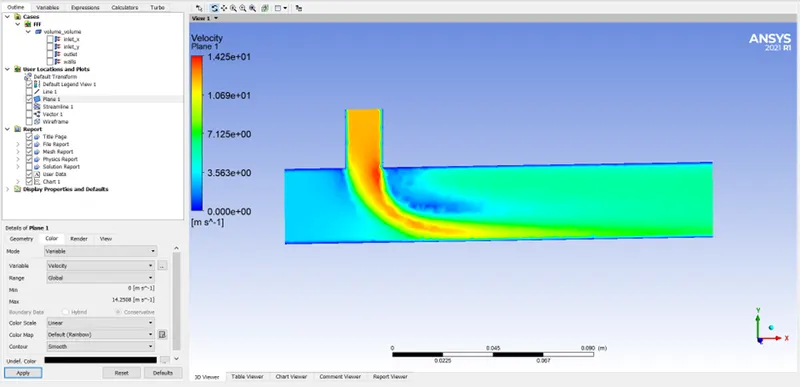
Velocity Contour :-
B) Short mixing tee
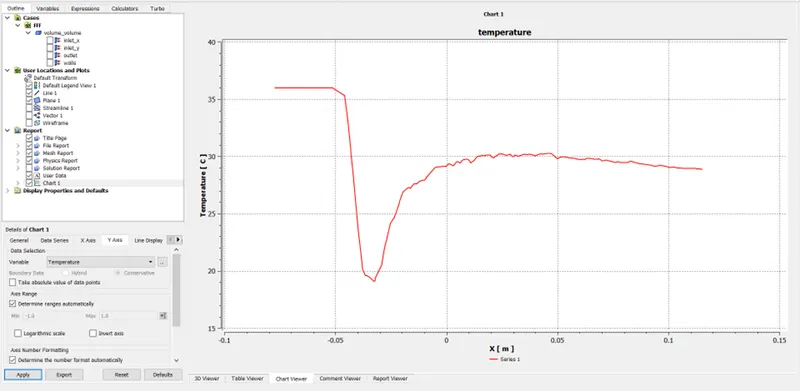
Momentum Ratio :- 4
Temperature vs X(m) plot :-
Velocity vs X(m) plot :-
Temperature Contour :-
Velocity Contour :-
CASE 2:-
A) Long mixing tee
Momentum ratio :- 2
Temperature vs X(m) plot :-
Velocity vs X(m) plot:-
Temperature Contour :-
Velocity Contour :-
B) Long mixing tee
Momentum ratio :- 4
Temperature vs X(m) plot :-
Velocity vs X(m) plot:-
Temperature Contour :-
Velocity Contour :-
Result :-
1) Table showing analytical and numerical solution in both versions of mixing tee at different momentum ratios.
| CASES | Cell Count | Analytical Solution (Temperature) in celcius | Momentum Ratio (MR) | Numerical Solution (Area weighted average of temperature) in celcius | Standard Deviation | No. of iteration for convergence |
| CASE 1 :- Short Mixing Tee |
105944 |
30.34 27.50 |
A) MR :- 2 B) MR :- 4 |
30.29 27.54 |
2.27 0.75 |
230 300 |
| CASE 2 :- Long Mixing Tee |
140272 |
30.34 27.50 |
A) MR :- 2 B) MR:- 4 |
30.39 27.50 |
1.64 0.70 |
275 275 |
2) From given result table, it is observed that in CASE 1 :- short mixing tee and CASE 2:- long mixing tee , the average outlet temperature after mixing is decreasing by increasing momentum ratio in both analytical and numerical solution.
Also, if we compare both cases for numerical solution at momentum ratio 2 then there is 0.33% increment in average outlet temperature and at momentum ratio 4 there is 0.14% decrement. So, with the increase in length of mixing tee, outlet temperature is increasing at low momentum ratio and at high momentum ratio outlet temperature is decreasing with increase in mixing tee length.
whereas, for momentum ratio 2, outlet temperature in analytical solution for CASE 1 is greater than numerical solution by 0.16% and for CASE 2, anaytical solution is less than numerical solution by 0.16%. Also, for momentum ratio 4,in CASE 1 there is 0.14% change in analytical and numerical solution and in CASE 2 there is no any change observed.
3) Temperature and velocity contour and line graph is given abouve in post processing.