Week 1:- Introduction to BiW and Fixtures Challenge
What is BIW & its parts?
Body in White (BIW) refers to the welded sheet metal components which form the structure of the vehicle to which the other components
like engine, chassis, exterior & interior trims, etc will be married or assembled. Its structure supports the overall subsystems of the vehicle.
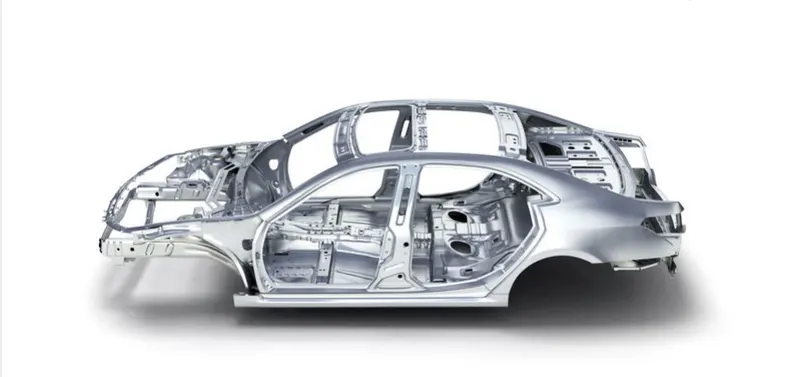
The structure is made from Steel or Aluminium panels (0.7 - 2.0 mm thickness). The design needs to be stiff to support the mass & securely keep them all
integrated. Further, it needs to resist & absorb energy during the event of a vehicle crash.
Parts of BIW
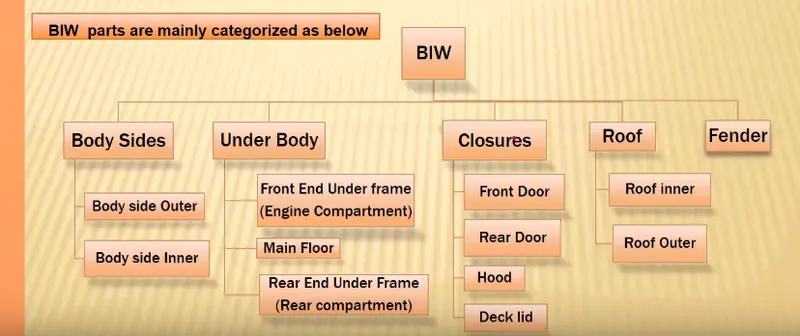
BIW is sub-divided into five categories
1. Body sides
2. Underbody
3. Closures
4. Roof
5. Fender
BODY SIDE: The bodyside includes an inner and outer panel which consists of A-pillar, B-pillar and C-pillar. The side doors are mounted and function according to the pillar attached.
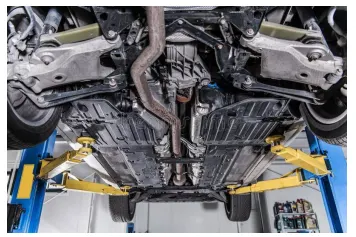
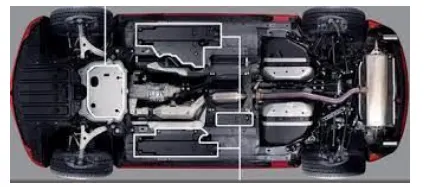
UNDERBODY: The underbody of the car consists of the front end underframe(engine component), main floor and rear end under the frame. The underbody coating is usually done to overcome the corrosion problems.
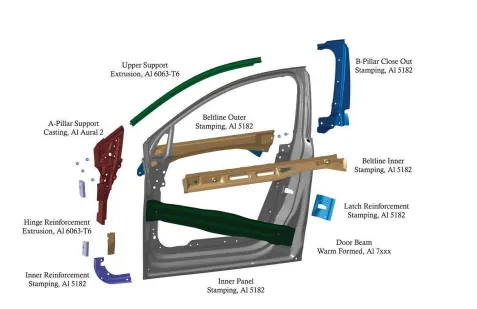
CLOSURES: The hood, deck lid, front door and back door comes under this category because these frames have to be opened and closed eventually. Hinge and latch are used in the case of hood and tailgate.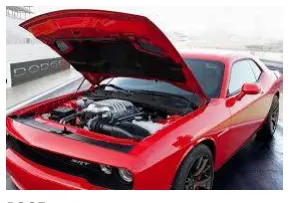
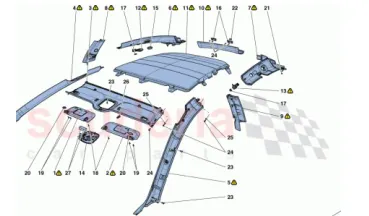
ROOF: The roof consists of different parts as front roof rail, bow roofs, center bow roof and rear roof rail. Depending on the curvature the bow roofs are designed.
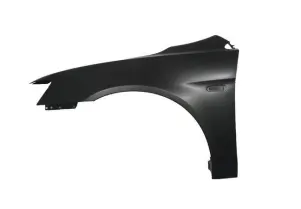
FENDER:
The fender of the car is used to protect the side walkers from the stones not to fall on them.
2. What do you understand by BIW nomenclature?
There are several parts involved in BIW structure. These parts are identified or referred using BIW nomenclature.The terms used in nomenclature for referring parts are given as,
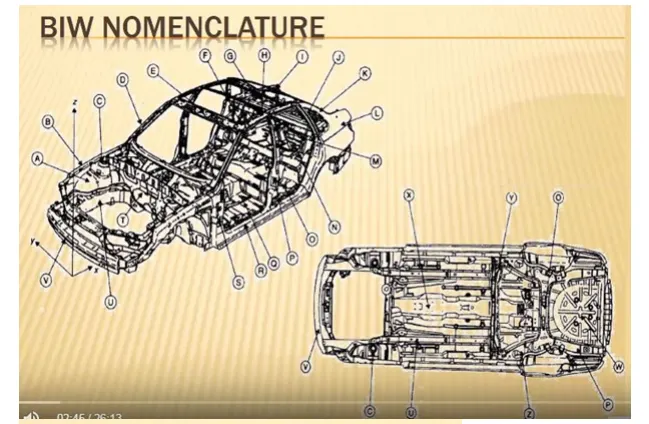
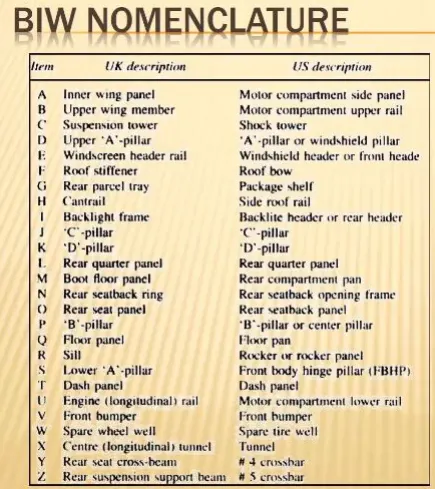
- The terms are standard but they differ in some countries.
- As automotive industries spread worldwide, the terms and standards will be different for similar components.
- For example, One component of BIW is known as inner wing pannel in the UK description another side the same component of BIW is known as the Motor compartment side panel in the US description.
3. What are fixture & its types?
A fixture is a device that uses the 3-2-1 principle to hold the work piece to be processed in the appropriate place.
Because we'll be welding the components together, the fixture will need to be made up of several different sections to hold the automobile together. The fittings must be built in such a way that the work piece is held in the correct position to avoid distortion and achieve the intended geometry.
For the reasons stated above, the fixture must be constructed with the following considerations:
- It must securely grasp the work piece to prevent distortion during welding.
- Attention should be paid to the placement of items.
- Clamping elements must not obstruct the welding region.
- To endure vibrations caused by welding strains, the fixture must be robust and rigid.
Types of fixtures:
Pre-production fixture: It is generally designed as a prototype fixture for the initial batch production to study the feasibility and make any changes and improvements for the production fixtures. Thus this is a base fixture that helps us rectify any shortcomings which we might face at the pre-production level.
But as this has a longer cycle time, we don’t usually practice this and jump to production fixture keeping all the standards and parameters in mind to save time and money.
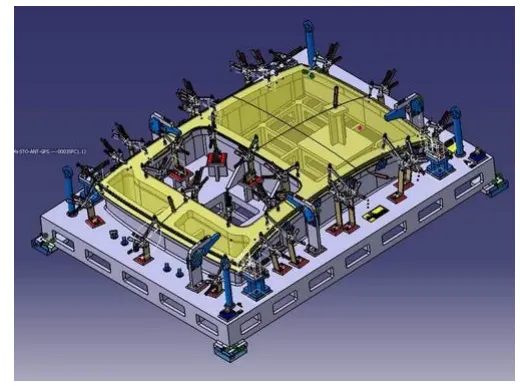
Production fixture: These fixtures are used for mass production purposes. These are where the car body will be assembled and will be made market-ready thus it has a critical role. The materials used for this fixture should be tested along with the hardness and aesthetics. The production fixtures will require maintenance very often thus it must be easily accessible.
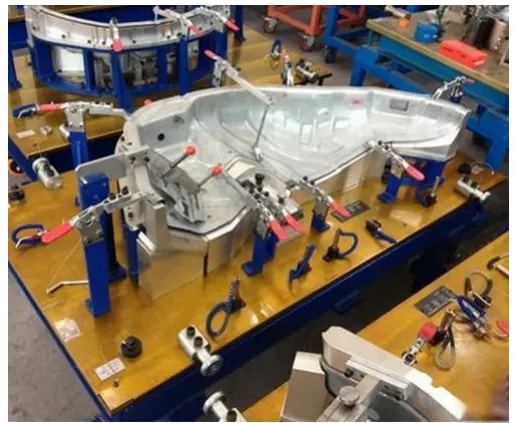
Checking fixture: It is used for checking or inspecting an assembly coming out of a geo fixture. The only difference between geo fixtures and checking fixtures is that it is not used to perform any operation but is mounted with various inner and external gauges for inspecting dimensions and tolerance along with gaps and flushness on the assembly. This is also used to check the welding points if they are at the proper location.
4. What is the basic principle of fixture design?
The design intent of the fixture is considered on locating the workpiece in a proper orientation and fixing it on the fixture to perform the desired operation on the workpiece.
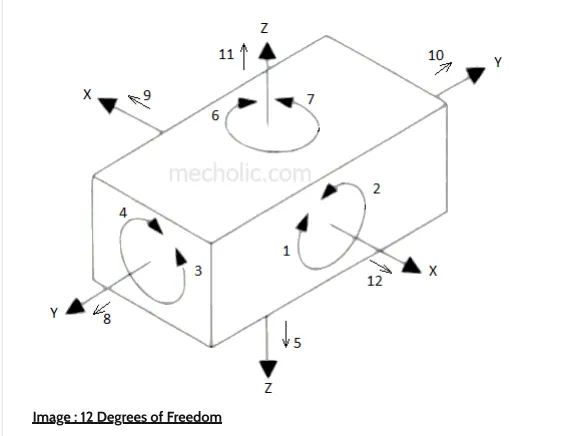
A free-body possess 12 Degrees of freedom.
Six transational which are +X, -X, +Y, -Y, +Z,-Z
Six rotational which are Clockwise (CW) X, Anticlockwise (ACW) X, CW Y, ACW Y, CW Z, ACW Z.
So the 12 DOF should be restricted for the workpiece in a fixture.
5. Elaborate types of BIW stations?
The BIW assembly line is divided into several zones where different types of panels are joined together in each zone. Each zone has several stations which are
1.Tool station: A tool is a fixture that consists of no. of units together to hold a car part in general.
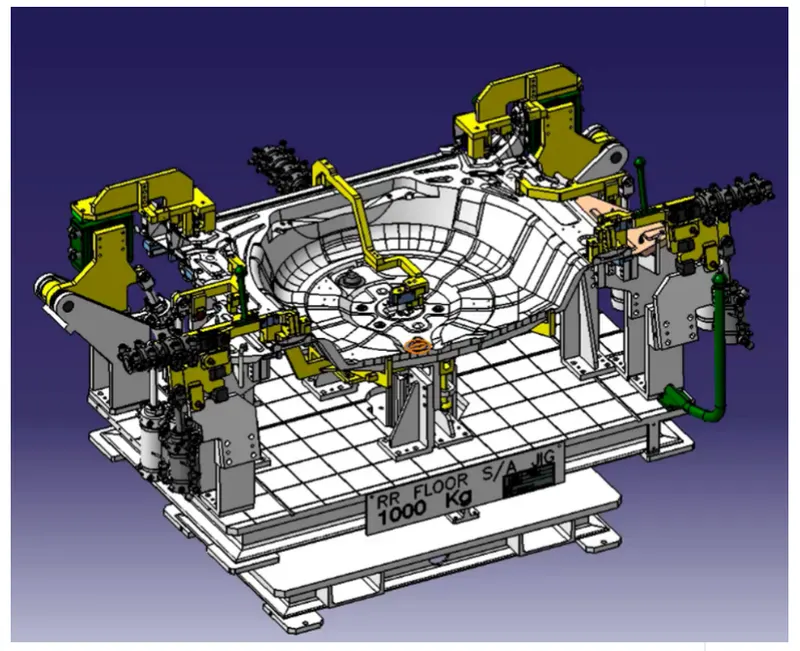
These are further categorized as below:
- Geo tool fixture: A geo tool is a fixture in which the geometry of the panels which are welded together is defined accurately. Teh pin tolerance for a geo pin will be of closer tolerance i.e. 0.15 in general.
For example:- Consider panel hole size 20mm, the pin diameter should be 19.85mm.
- Respot tool fixture: A respot tool is a fixture in which the remaining weld spots which are not achieved in the geo tool are welded for the pre-welded panel from the geo tool. The pin tolerance for a respot pin will be of tolerance with -0.28 in general.
For example:- Consider panel hole size 20mm, the pin diameter should be of 19.72 mm.
- Marriage tool: A marriage or hemming tool is a fixture in which the inner panel assembly and outer panel assembly are joined together fixture. These are done by welding or hemming in case of closure panels. In a marriage tool fixture the side bodies, under body, front body and rear body are joined together.
- Framer tool fixture: A framer tool fixture is a fixture in which a roof is joined with output achieved from the marriage tool fixture.
- Checking station Tool: A checking station tool is a fixture that is used to check the automotive parts or assemblies, ensuring all the coordinates, relative dimensions and positions as per the tolerances. A checking station can be a gauge type, fixed type and automated checking type.
2. Gripper stations: A gripper is a device or a fixture that holds the car panel and is fixed to the manipulating end of a robot or an end effector. Also known as EOAT - End of arm tooling.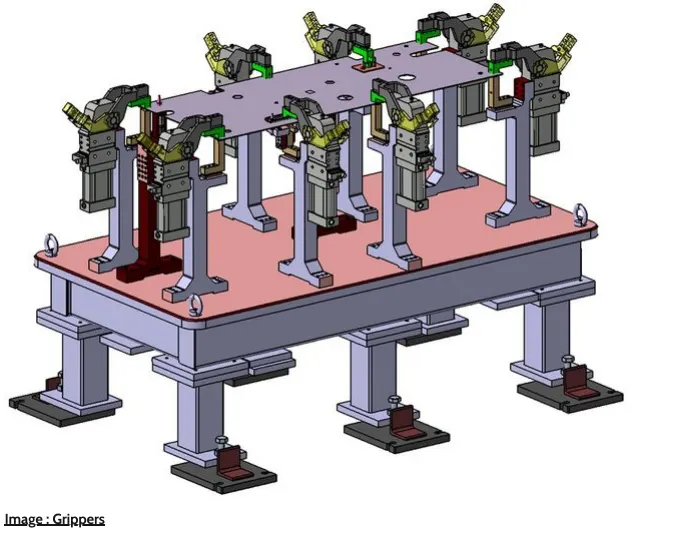
Types of grippers:
- Material handling grippers: Material handling grippers are designed for handling the car panel from one tool (station) to other tools (station)
- Process grippers: Process grippers are designed for handling the car panel from one tool (station) to other tools (station) and in addition to that it undergoes
- Combo gripper: Combo grippers are designed for handling the car panel from one tool (station) to other tools (station), Also with a combination of weld guns at another side of the gripper for welding.
- Dual gripper: Dual grippers are designed for handling the car panel from one tool (station) to other tools (station), with a two-sided gripper.
3). Stands stations :
1. Gluing and sealer stand: Gluing gun or sealer gun is fixed to a welded or standard stand that is grouted to the floor.
2. Docking stand: When robots are selected for multitasking like material handling and welding, which cannot carry both due to some limitations (payload capacity of the robot or space constraint) the robot will drop and pick the gripper or gun after completing the respective operation with the help of docking stand.
3. Date stamping stand: The panel will get the date embossed on it, with the help of a date stamping device mounted on the date stamp stand.
4. Pedestal stand: Weld gun is mounted to a fixed stand which is grouted to the floor permanently, where the process gripper carries the car panel to weld the spot with this fixed weld gun.
4. Miscellaneous stations :
1. Curing: Curing stations hold the workpiece for curing after gluing or welding is done on the workpieces so that the glue or weld undergoes curing.
2. Buffer stand: A buffer stand is used to store the workpieces so that the flow of the assembly line is maintained during the process with no short of the workpiece.
3. Conveyors: Conveyors are the rotating belts that carry the workpiece from one tool (station) to other tools (station).
4. Take out trolleys: Take out trolley is used to take the car panel out from the robotic working cell between the cycle for inspection purposes.
6. What are the basic terminologies used in BIW fixtures?
The basic terminologies used in BIW fixtures are:
1. NC/Mylars/fingers: Mylars are the parts that hold the workpiece in a fixture. There are 2 types of mylars: clamping mylar and resting mylars
2. PLP (Principle locating pins): These are the pins that are used to locate the workpiece in an accurate position so that we obtain the repeatability of results in a process.
3. Risers: Risers are L-type or square frame types. These are the structures that give heights to the assembly.
4. Blades: These are the plates mounted on the risers, upon which the cylinders, pins, etc. can be mounted
5. Shims: Shims are used between the clamping elements so that the clamping force is sufficient enough to hold the workpiece properly to avoid distortion and also do not cause any dents or damage on the workpiece by high force. Hence shims are used to rectify the stack-up tolerance of the clamping elements to avoid distortion and dents on the workpiece.
6. Rough locators: Rough locators are the guides that help the operator to locate the workpiece in a proper orientation.
7. Hardware: Hardware is elements like bolts, fasteners, nuts, etc.
8. CMM: Coordinate measuring machine is used to measure the coordinates of the features in a fixture as per the drawing.
9. Units: A fixture is an assembly of various units which can be a base unit, pin unit, clamp unit, etc.
10. Number plate: A number plate is an aluminum plate on which a number is embossed. These plates are placed on the fixture units for their recognition.
11. Nameplate: A nameplate provides the details of the fixture embossed on it.
12. Clamp arm: In a clamping unit, the arm which moves and is responsible for clamping is called the clamping arm.
13. Pivot: A pivot is an element about which axis the clamp arm swivels.
14. Class A surfaces: Class A surfaces are the outermost surfaces that are visible to the end customers and are responsible for the aesthetics of a car. Hence the fixture units must be of soft material upon those surfaces to avoid any dents on them.
15. Reed switches and sensors: In an automatically driven fixture, reed switches and sensors are used for clamping the part, where the sensor senses the workpiece upon which the reed switches activate to clamp the workpiece.