Week 1:- Introduction to BiW and Fixtures Challenge
1. What is BIW & define its parts?
BIW stands for Body In White which refers to the joined car's body components usually sheet metal which form the vehicles frame structure. These joined components has either using one or more joining techniques as example, welding, riveting, laser brazing, bonding etc. BIW is also termed before other components such as painting, motor, chassis sub-assemblies, trim (glass, seats, electronics, etc.) been assembled in the vehicles frame structure.
Figure 1.1 shows the welded BIW components which forms vehicle structure
There are 5 (five) BIW parts as per below:
- Front end Structure
- Plenum Panel, fender, wing panel, cowl, upper & lower tie bar.
- Body Sides
- A-pillar
- B-pillar
- C/D pillar
- Ring panel, quarter panel, drip rails/ gutters
- Underbody Structure
- FRT floor, raiser, rear floor, rear wheelhouse
- Closure
- All doors, hoods /bonnets (a hinged panel)
- Roof
- Headers
- Bows
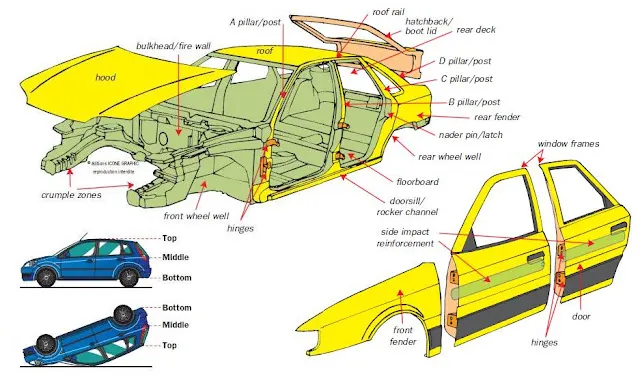
Figure 1.2 shows the BIW parts
2. What do you understand by BIW nomenclature?
Nomenclature is basically choosing of names for things. BIW nomenclature listed the name of common parts in the structure. BIW nomenclature may have different names according to the region it was used in. For example, the parts description in UK and US are a bit different but still considering the same parts.
Figure 2.1 shows the UK & US BIW nomenclature
3. What is fixture & its types?
A Fixture is a device which holds the work piece to be processed (welded) by using the 3-2-1 principle. Fixtures are designed considering the parameters, units, and geometry of the workpiece. Fixture needs to be very rigid/stable and able to withstand any sorts of vibration due to welding stresses. It also required to prvent any distortion in work piece during the welding operation. There are 3 types of fixtures as following:
- Production fixtures- used in mass production purpose. Materials used for this fixture type are tested for its material, hardness, and aesthetics. The quality in maintaining the tolerances and dimensions is also checked. The production fixture must design for easy maintenance as it will be needing some maintenance after running number of operations. The design also needs to optimise the assembling & disassembling operation time in order to save cost and time
- Preproduction Operation Fixtures (PPO)- these fixtures are designed as prototypes to run the initial batch of products purposely to study the feasibility and to check which parts need to be improved or amended before starting the production. These fixtures can be taken as the base fixtures which sets benchmark and criteria that help us to rectify any errors from PPO. However, PPO requires a lot of time and cost. In order to maintain the low cost of car's production, we just directly go to production fixtures by considering standards and checklist to maintain error free production.
- Checking Fixtures- used for checking purposes. The geometry, dimensions and tolerances are checked, and data were taken to be compared with the initial designs either the part is good or else.
4. What is the basic principle of fixture design?
In designing fixture, designers need to decide on how to locate the work piece in the fixture then they will need to achieve the zero degree of freedom for the work piece.
We have a total of twelve degrees of freedom as below:
- 6 translational: +X, -X, +Y, -Y, +Z, -Z
- 6 rotational: clockwise & anticlockwise X, clockwise & anticlockwise Y, clockwise & anticlockwise Z
Figure 4.1 shows the degree of freedom is 12 states
5. Elaborate types of BIW Stations?
BIW stations is a part of BIW assembly line where the assembly lines are divided into zones and these zones are occupied with number of stations. BIW stations are divided to four as per example below:
- Tool stations
- Geo tools
- fixture in which geometry panels which are welded together is defined accurately.
- parts are located with two locating pins
- geo pin tolerance is -0.15mm
- Re-spot tools
- complete the remaining weld spots that were left by geo tools.
- to avoid extra time in line geo tools only weld spots that define the geometry of the work piece and also the assembly will not deform upon um-clamping. Until then the re-spot tools with cover the remaining weld spots to be welded
- re-spot pin tolerance is -0.28mm
- Marriage/hemming tools
- fixture in which the inner panel assembly and outer panel assembly are joined together.
- Checking tools
- tools that are used to check the assembly of parts, tolerances, dimensions, and coordinates.
- using CMM (coordinates measuring machines)
- Geo tools
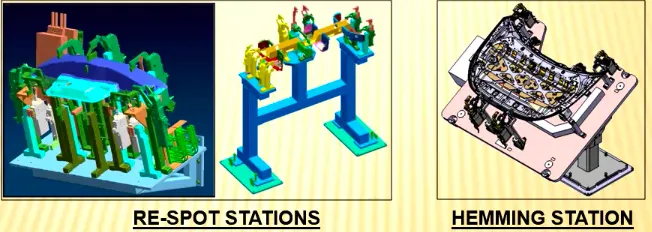
Figure 5.1 shows the re-spot and hemming stations
- Gripper- device that holds an object to be manipulated
- Material handling gripper (MH)
- for material/parts handling
- use to pick one assembly part from a station to another station
- Process gripper
- hold the parts to carry out specific process such as gluing, riveting or welding
- Combo gripper
- does material handling and joining process such as gluing, riveting or welding as well
- Dual gripper
- able to hold two panels simultaneously
- Gripper + Gripper
- Material handling gripper (MH)
- Stands
- Gluing and sealer stand
- for gluing and sealing process. Stands are permanently welded to the floor
- Docking stand
- helps the robots to do multitasking
- Date stamp
- embossed date, serial number or batch number on the panel
- Pedestal gun
- weld gun stands that permanently grunted to floor
- Gluing and sealer stand
- Miscellaneous
- Curing
- for gluing process, curing is to cool down the glued parts
- Buffer stand
- can act as inventory and used to transport parts to another stations.
- Take out trolleys
- use to taking out some panels for inspection and to rectify either the process is running well or not
- Conveyor
- use to transport parts from a station to another station
- Curing
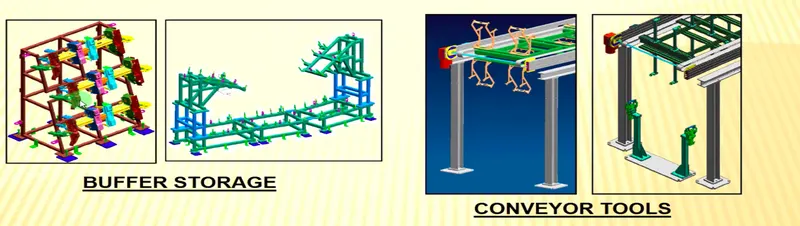
Figure 5.2 shows the buffer stand/storage and conveyor
6. What are the basic terminologies used in the BIW fixture?
Below are the basic terminologies in BIW fixture:
- NC/ MYLARS/ FINGERS
- the part that holds the panel while operation. Mylars are placed on top side and bottom side which know as clamping mylars and resting mylars. These parts don't allow any deformation of the working piece due to welding stresses.
- PLP
- principle locating point are used for the accurate of the working piece to maintain the geometry of the assembly.
- Blade
- Blades are metal plates that are mounted on the riser and other parts like clamp arms are mounted on the blade.
- Risers
- Parts that raised the work piece in height.
- Shims
- a thin and often tapered or wedged piece of material, used to fill small gaps or spaces between objects. In fixtures, shims often used on Mylars to deal with tolerances.
- Rough Locators
- work as a guide to position the part in the fixture.
- Hardwares
- example: bolts, nuts, washer, fasteners etc.
- CMM
- Coordinate measuring machine is a device that measures the geometry of physical objects.
- Units
- Example: based unit, pin unit, clamp unit
- Number Plate
- aluminium embossed plate placed on each unit for recognition purposes.
- Co-ordinate plate
- To cover the tooling hole/master hole that used to set up the coordinate when using CMM from any impurities and distortion.
- Name Plate
- embossed plate stating such as manufacturer name, fixture type, fixture weight etc.
- Clamp Arm
- a part/extended part of the clamp unit which moves according to its axis.
- Pivot
- usually inserted between the clamp body and clamps arms which allow the arms to rotate.
- Class 'A' surface/ skin surface
- is the thinner material of work piece or visible outer panel of a car such as hood and door. In handling this type of work piece, the clamping material should be soft such as nylon or pu to avoid any damage on the surface of the work piece.
- Reed switches
- Electrical components used in automated fixtures.
- Sensors
- Electrical components used in automated fixtures. To detect when the work piece being loaded.