Week 1:- Introduction to BiW and Fixtures Challenge
1)What is BIW and Define its parts?
BIW
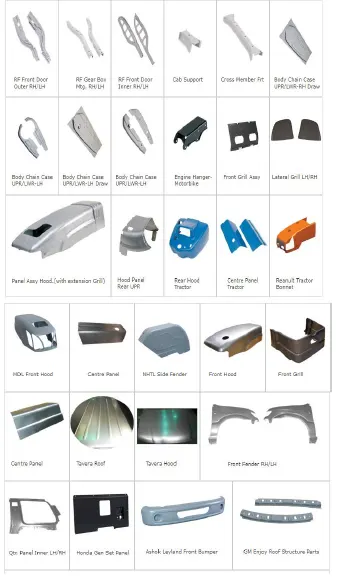
- Body In White (BIW) is name given to car body sheet when all its components (Example Hoods, fenders etc.) have been welded together in order to form a single structure to which other parts like engine chassis, exterior and interior trims are added.
- The name BIW is given is because the entire car body sheet metal after being assembled is dipped into primer for 1st level coating which looks like White in color and hence the name BIW.
- BIW are of two types
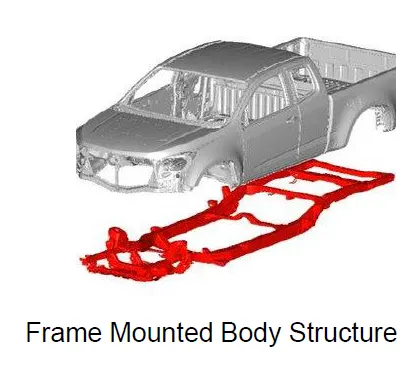
1)Frame Mounted Body Structure / Frame on Body Construction
-
In this structure body is mounted on chassis or frame
-
Engine components and suspensions are mounted on chassis.
-
Ex: Truck, Buses(Mostly Heavy Duty vehicles)
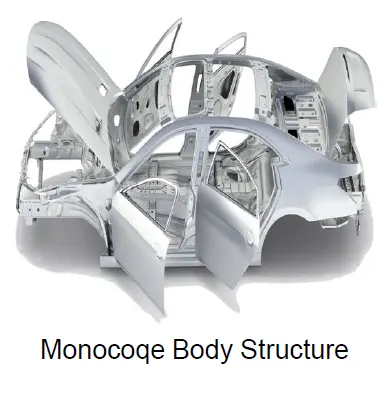
2)Monocoqe Body Structure
- Body and Chassis are in-built with each other and hence chassis is not considered as a separate part.
- Engine components and suspensions are directly mounted on BIW.
2) What do you understand by BIW nomenclature?
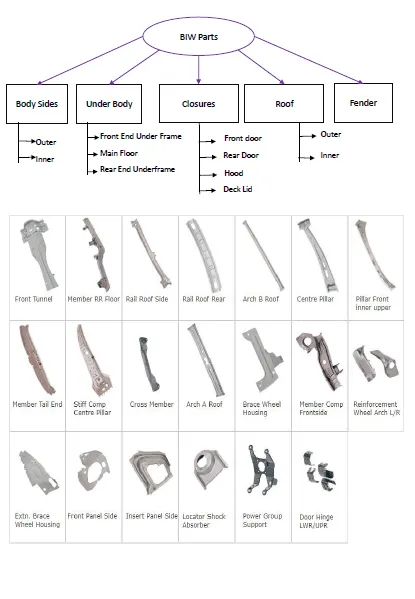
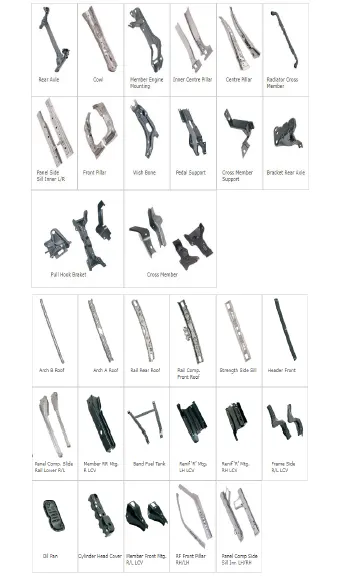
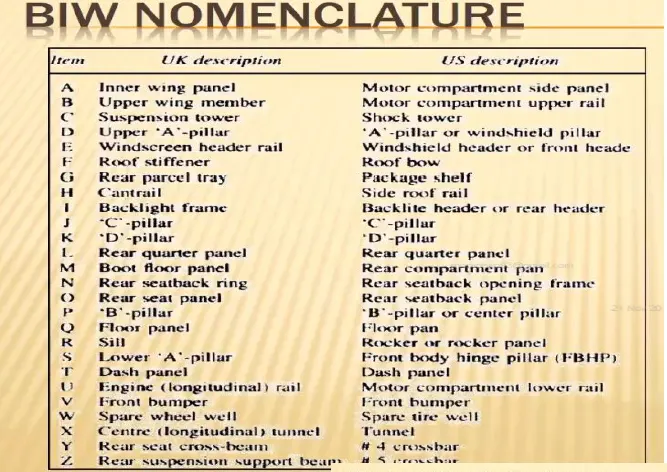
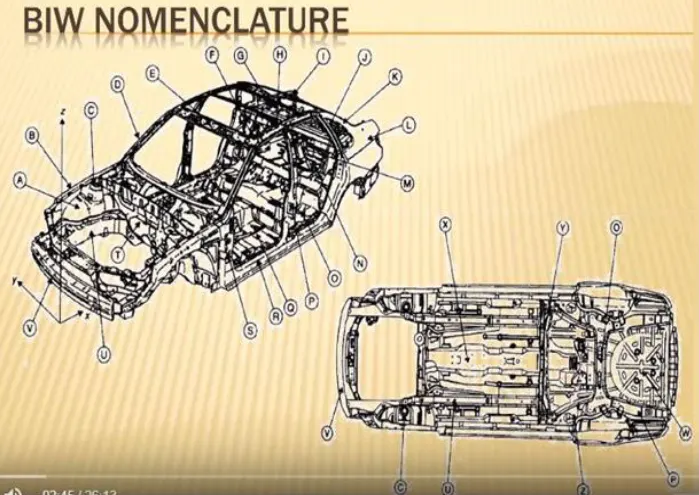
- In General “Nomenclature” Refers to Choosing names for things used in particular specialist field.
- BIW is not a single part, it is comprised of many parts or assemblies that finally contribute a single structure. All these parts will be similar or functionally will have same action in all automotive parts. Hence, for universal understanding nomenclatures are given to such parts so that it is easily understandable to everyone working in such field of expertise.
3) What is a Fixture and its types?
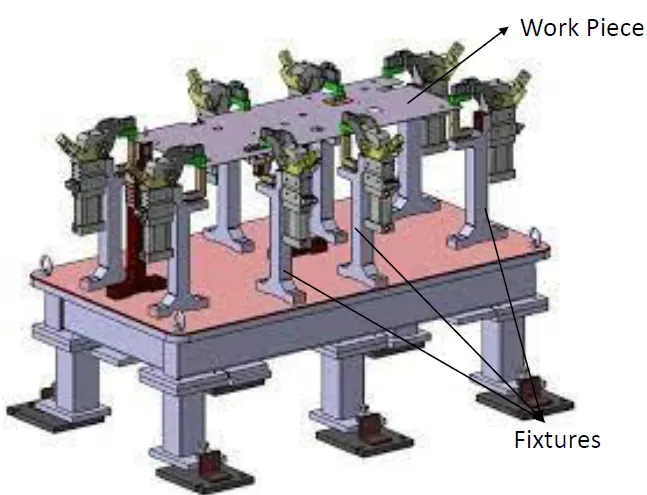
- Generally a fixture is a device that holds the main part on which certain kind of operation has to be performed (Ex a Vibration fixture is a fixture used to hold the product for performing vibration analysis on the product)
- BIW Fixture holds the Work piece so that it can be used to join it with other parts either by welding or riveting or bolt-nut assembly.
- Fixture should ensure the stability of the part when any process is being performed on the part.
Types of Fixtures:
1.Pre-Production Fixture:
- This is the first fixture that will be used for 1st set assembling (1st denotes R&D units)
- If this fixture is validated it forms the base for production fixtures
2.Production Fixture:
- This is used for mass production and this will be fabricated only when Pre-Production Fixture have met all the requirements
3.Checking Fixture:
- Used for geometric inspection purposes
- Only after finishing a process in assembly station this fixture can be used for dimension inspection.
- Also, this fixture can be used after completing process at all the station or any one station( this depends on the manufacturer and designer requirements)
4) What is the basic principle of fixture design?
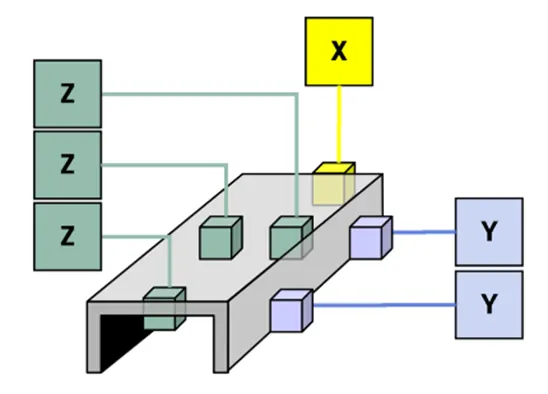
- BIW Fixture works on the 3-2-1 Principle. 3-2-1 Principle used to arrest all 6 Degree of Freedom.
- The 3-2-1 principle is a Component holding principle where three pins are located on the 1st principle plane, i.e. either XY, YZ, ZX. And two pins are located on the 2nd plane which is perpendicular to the 1st plane, and at last one pin on the plane which is mutually perpendicular to the 1st and 2nd planes. By using this method Component can be arrested in all six degrees of freedom.
-
Welding Fixture mostly supports to hold the parts in order to avoid distortion. While designing the fixture for BIW it has to hold the parts to make the part stable and also has to withstand the stresses created while performing joining operation on the part.
5)Elaborate Types of BIW Stations?
TOOL:
Is a fixture which consists of no of units together to hold the part
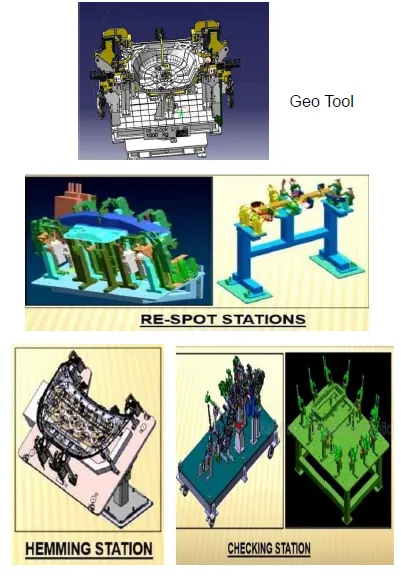
- Geo Tool: This is used to weld the parts in order to achieve the required finished geometry accurately.
- Re-Spot Tool: this is used to weld spots which are not achieved in geo tool.
- Marriage or Hemming tool: is a fixture in which inner panel and outer panel assembly are welded together.
- Checking tool
- Is used to check coordinates, relative dimensions and positions (as per tolerances) of the automotive parts or assemblies that was already welded together.
- Types: Checking gauge, fixed and automated
- Checking gauge is used to hold the part and measuring gauges are introduced to ensure geometric dimensions.
- Fixed type is used when part is fixed with clamps and CMM machine is used to measure the dimensions
- Automated type is where the part is fixed and a sensor captures the part and gives report regarding the dimensions.
GRIPPER:
- It is a fixture which holds the car panel and is fixed to manipulating end of robot or an end effector.
- Types:
- Material Handling Gripper(MH): For transporting car panel from one station to another.
- Process Gripper: used for transporting car panel from one station to another, in addition to that it helps in performing process like gluing, sealing on the parts.
- Combo Gripper: : used for transporting car panel from one station to another, with combination of weld gun at another side of gripper for welding.
- Dual Gripper: : used for transporting car panel from one station to another, with gripper on both sides. This is helpful when assembling left and right panel with top panel.
STAND:
- Gluing or Sealer Stand: this is to avoid position of gluing not to vary for each assembly.(This stand will be permanently grouted to floor)
- Docking Stand: When multiple tasks has to be done by robot, but since it cannot carry due to weight of the part or space constraints in assembly line, a docker stand will be provided
- Date Stand: used for embossing or engraving date on panel.
- Pedestal Gun Stand
- Take Out Trolley: used to take car panel out of robotic working cell between the cycle for inspection purposes.
6)What are basic terminologies used in BIW fixtures?
- NC/ Mylar /Fingers: these are parts that holds the panel. Mylar are of 2 types: Clamping and Resting Mylar. Every Clamping Mylar will have resting Mylar.
- Principle Locating Points(PLP’s): Used for accurate location of part for maintaining the geometry of assembly.
- Blade: These are attached to risers to which we can attach other parts.
- Risers: It gives raise(increase in height) for the assembled part.
- Shims: Used for Controlling Mechanical Stack-up Tolerances
- Guides or Rough Locators: For proper assembling the part on to the fixture with ease.
- Hardware: All fasteners
- CMM: To check relative coordinates, positions of part with fixture.
- Units: The parts which combine to form welding fixture assembly (Clamp unit, pin units)
- Number Plate: Used for identifying the part (used for identifying the parts)
- Coordinate Plate: Used for identifying the different units on fixture.
- Clamp Arm
- Pivot
- Sensors
- Reed Switches
- Class A Surface/ Skin Surface