Week 1:- Introduction to BiW and Fixtures Challenge
1. BIW (Body In-White):
It is that phase of the car manufacturing process where the various Sheetmetal components of the vehicle, like Hood, roof, Backdoor, Side doors, engine compartment frame,Body side, fender,etc. are welded and assembled and Immersed into an electrolytic bath just before the body painting Stage.
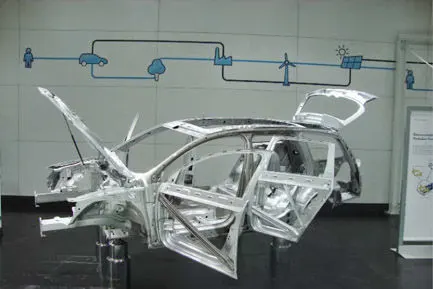
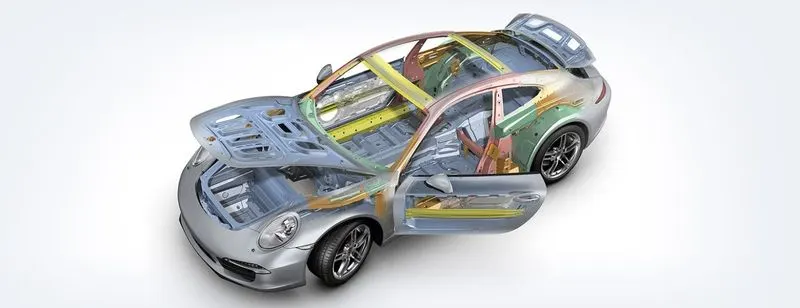
BiW Consists of various components which weigh around 1/3rd the car's curb weight.
BiW can be made into two structures:
a) Monocoque structure where all body members are carrying load with chassis in-built with BiW and are integrated with each other.
b) Body-on-frame structure where the frame is the main load-carrying member.
- BiW is generally made up of either Steel(↑ Strength, ↓ Cost ), Aluminium (↓ Desity, ↓ Weight ), or carbon-fibre-reinforced plastics (↑ Ultimate Tensile strength). Lighter the material, Higher is the car performance.
- It must have high Tensile Strength as well as high stiffness.
- It must provide good quality safety both to the passengers and the car body against all sorts of crashes.
- It should be able to protect person inside the cabin from NVH by absorbing or reducing these factors.
- It should be easy to weld and form, as well as be highly paintable and easy to design.
- It should provide a good surface finish that is smooth, and should be able to resist corrosion.
BIW Parts:
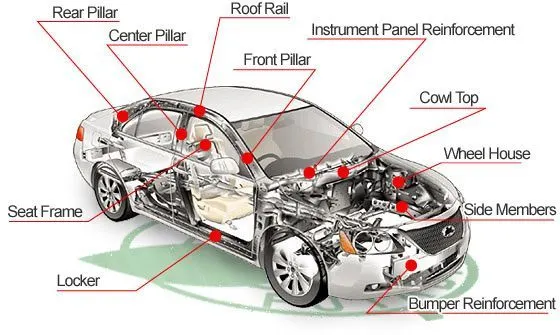
The BIW construction consists of several skin panels (such as Hood, roof, quarter panels, and floor pan) and bulkheads (such as floor cross members, roof rails, A-pillars, and B-pillars).
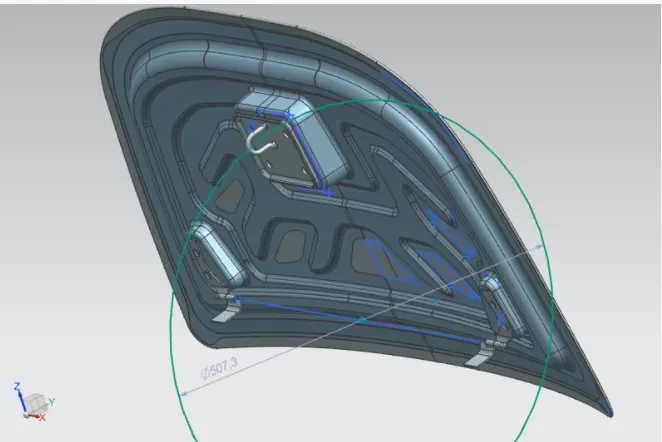
#Hood: It is the part which covers the engine compartment of vehicle. Also it is commonly known as Bonnet.
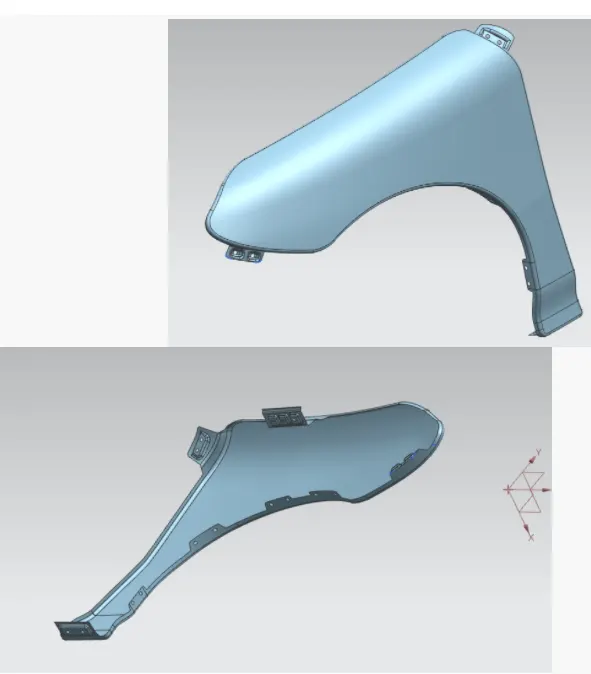
#Fender:A fender is the curved portion of the car’s body that sits over and houses the wheels.Its purpose is to keep mud, rocks, and other road debris from being thrown around by the tires. In other words, the fender is a housing for the wheels that keeps road debris contained.
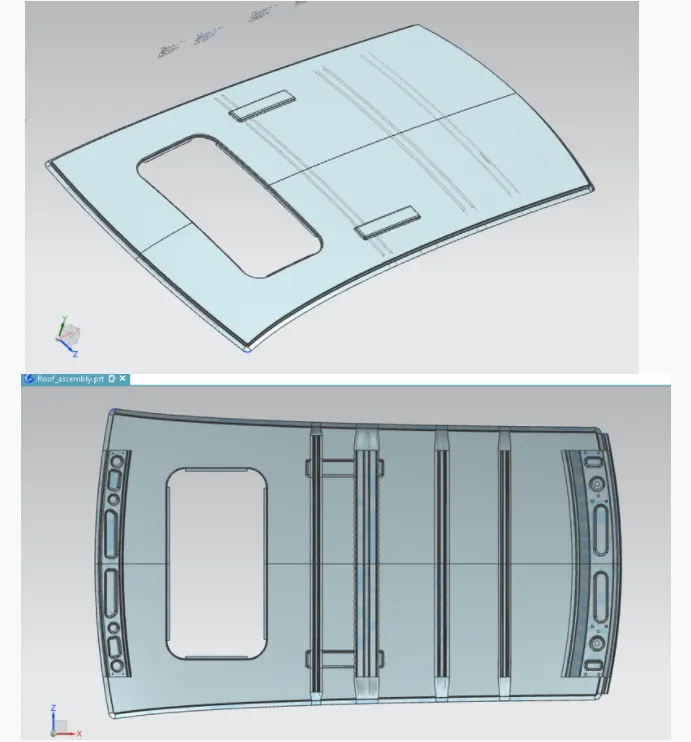
# Roof and Roof Rails: A roof or car top is the portion of an automobile that sits above the passenger compartment, protecting the vehicle occupants from sun, wind, rain, and other external elements.
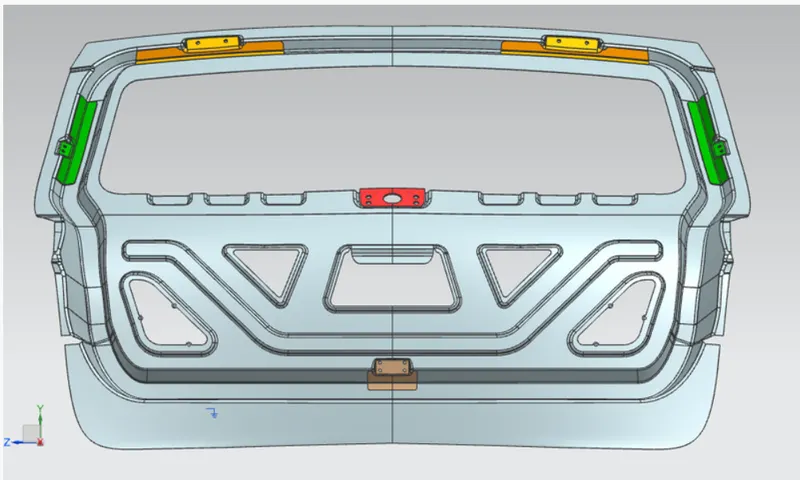
# Backdoor and reinforcements: The Backdoor, trunk, or boot of a car is the vehicle's main storage or cargo compartment, often a hatch at the rear of the vehicle. It is also called a tailgate.
#Body side and Side doors: It consists of A-Pillar(Front), B-Pillar(Centre), C-Pillar(Rear), Cowl, Sill, etc. when viewed through one of the sides of the car.
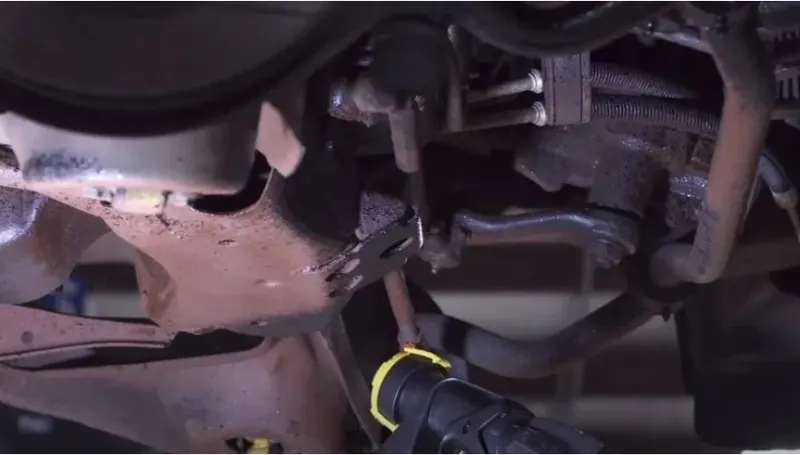
#Underbody Coating: Underbody coating is a dense cladding (rubber) applied uniformly to the undercarriage of the automobile. It prevents any form of further damage to the undercarriage.
2. BiW Nomenclature
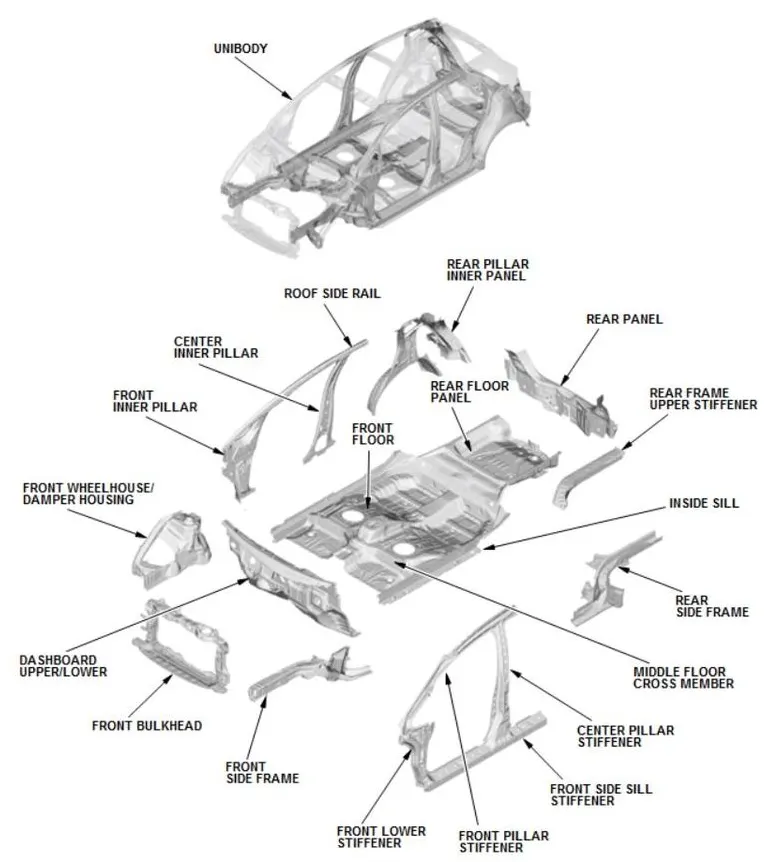
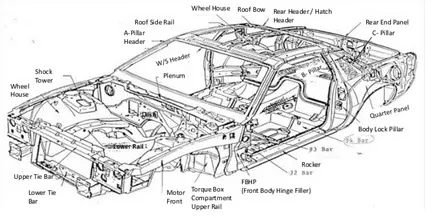
BiW Nomenclature is nothing but a set of names of parts or terms used while addressing a particular part/component. In different regions of the world one particular part or component has got a specific name for it. Example, Hood is also known as Bonnet, In few regions, Backdoor is also called as Tailgate,etc.
#European BiW Nomenclature
#US BiW Nomenclature
3. Fixtures:
It is a device which holds teh workpiece to be processed by using 3-2-1 principle. Fixtures are designed to hold and provide proper support to components and also these devices ensure that the distortion doesn't take place in the workpiece while processing it.
Types of Fixtures:
- Production Fixture: These kind of fixtures are usualy used in mass production
- Pre-Production Operation Fixture: These kind of fixtures are used in the operations which come under planning process and execution of every task that must take place before production begins.
- Checking Fixture: A piece of equipment used to hold a part in a fixed position for CMM (Coordinate Measuring Machine) Checks or other. It is sometimes referred to as CMM Fixture.
4. The Basic Principle of Fixture design
The 3-2-1 principle states, ''the six locators are sufficient to restrict the required degree of freedom of any workpiece. In this, motion is restricted using clamps and locators. A three-pin base can restrict five motions and six pins restrict nine motions''.
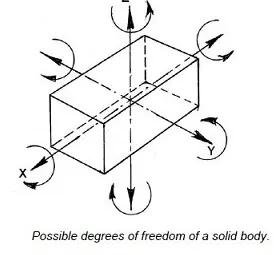
- Consider XY plane as our 1st datum plane, Rotation along x-axis and y-axis is restricted i.e. 2 rotations and translation along z direction i.e. 1 Traslation, which adds up to 3 restricted motions.
- Now consider YZ plane as our 2nd datum plane, Rotation along the z-axis and translation along x axis gets restricted, which adds upto 2 restricted motions.
- Finally, XZ plane is considered as the 3rd datum plane, Translation along y-axis is restricted i.e. 1 restricted motion.
- Hence, 6 Locators have completely restricted the degrees of freedom of workpiece.
5. Types of BiW Stations:
- Geo Station:
In this station geometry of two parts are fixed. it can be either using welding or riveting . In this station precision and geomatry of the finished product is defined Locating pins have closer tolerence of 0/-0.15.
Suppose the hole dia of panel is 16mm then the pin dia minimum can be 15.85.
Diameter of locating pins should be lesser than the panel hole dia. So Tolrence in locating pin is given in negative value.
- Respot Station:
Once product comes out of the Geo Station and there are left out spots where spot welding or riveting is to be done. then it is moved to another station , that station is called Re-spot station.
These left out spots may be the due to clamp plan, cycle time,robot reach ability or any other various reasons.
In this station pins have tolerence upto 0/-0.28.
- Pedestal Weld/Rivet: In this station , Pedestal gun is mounted on a tool and panel is manipulated manually or by robot to weld the panels.
Pedestal station is generally a Re spot station.
Re spot station and Pedestal station, both perform same kind of operation . but to decide whether to go for pedestal or a re-spot station some parameters needs to consider like cycle time, floor space, no. of welds, clamp plan, or size of the panel.
- Loading Station: This station is used for loading of panel and same station is used to change the orientation of the if it is required in the upcomin station.
Sometime this station is used when Robots are unable to transfer panel from one station to another.
- Buffer Station: This station is used to make the balance between the process.
Some stations carry out procees in lesser time as compared to their respective stations.In that case panels can be stored in one sation so that assembly line process remains smooth.
- Marriage or hemming station: In this Station inner and outer panels are joined. In this station to avoid the imprssion on the outer panel(A class surface), copper strips are used in betweenn the weld tip and A-class surface.
- Sealing station: In this station Sealant application is carried out.This process can be carried out manually or by using robots. Sealer is used in between two panels so that panels do not flatter due to friction.
- Curing station: In this Station product recieved after sealing application, is kept idle at ambient temperature, which allows sealent to get dry with better bonding between the panel.
6. Following are the basic terminologies we use in BiW Fixtures:
- NC/MYLARS/FINGERS: MYLAR is one kind of block that touches the panel and holds or clamps the panel. Mylars are always designed in CAR LINE. Mylar is also called NC(Numerically Controlled)Block.
- PIN: Pins are used to locking the rotational movement of the panel. Generally there two types of Pins, one is Round Pin and another one is a Diamond pin. We use two and three-directional shimming for pins as per the angle of the pin w.r.t. the carline.
- BLADE: The plate which connects Riser to the Clamp cylinder is named Blade. This plate plays an important role in building the unit.
- L BLOCK: A plate shaped as L is called an L block. This part is used as a connection between mylar and Blade. Generally, L blocks are used to provide shimming.
- PIN BOCK: Pin Block is also called Pin Retainer. This block holds the pin and restricts the rotational motion of the pin. Pin Block can be either manufactured one or Standard.
- RISER: The part which is mounted on the base plate and holds a clamp or pin cylinder on it, is called Riser. Riser can be Standard Part or manufactured part, it varies from project to project.
- WELDMENT: Weldment is the assembly of two or more parts that are joined by welding. To make a weldment it is the thumb rule to have a 5 mm overlay on each other plates so that space can be provided for welding.
- Principal Locating Points (PLP): PLP are the points at which the car panels are to be located onto the fixture. The welding fixture is designed with locator units to aid the operator to load the car panels onto the fixture at the right location and orientation.
- SHIMS: A shim is a thin and often tapered or wedged piece of material, used to fill small gaps or spaces between objects. Shims are typically used in order to support, adjust for better fit, or provide a level surface. Shims may also be used as spacers to fill gaps between parts subject to wear.
- ROUGH LOCATORS: Rough locators are used to help locate workpieces in the automation process. Locating refers to the desired location where you want the workpiece to be when it is getting worked on either by a person, team, or robot.It is a device to establish and maintain position of a part in a jig or fixture.
- PIVOT: The central point, pin, or shaft on which a mechanism turns or oscillates.
- CLAMP ARM: It is a part of clamp unit which moves over a particular axis.
- NAME PLATE: Name Plate is a plate on whichh data like Company name, Fixture weight and type,material,etc are embossedover it.
- NUMBER PLATE: It is a plate attached to each unit with a unique number on it to recognise the unit.
- REED SWITCHES & SENSORS: A reed switch is an electromagnetic switch used to control the flow of electricity in a circuit. They are made from two or more ferrous reeds encased within a small glass tube-like envelope, which become magnetised and move together or separate when a magnetic field is moved towards the switch. And the Device used to check whether the panel is loaded or not is done by sensors.
- CLASS-A SURFACE: Class-A ('Strak') is a term used in specifically in automotive design.It describes the final production surface data for the aesthetic parts of the car.