Understanding the concepts on Degrees of Freedom
Understanding the concepts on Degrees of Freedom
Question 1:
A five storey structure with 5 translational DOF is shown here. Each storey has mass ‘m’. The eigenvalue problem has been solved and the 5 periods of vibration Tn and their corresponding mode shapes, φn has been derived.
Given:
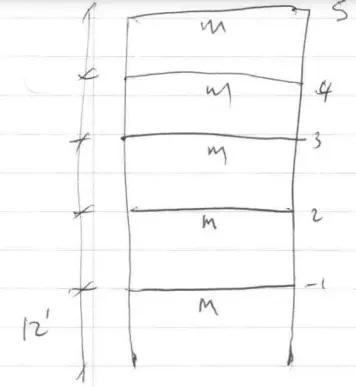
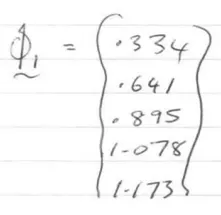
The fundamental period of vibration (T1 = 2 seconds) and its associated mode shape:
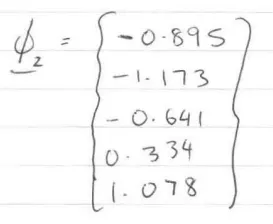
The second mode of vibration (T2 = 0.6852 seconds) and its associated mode shape:
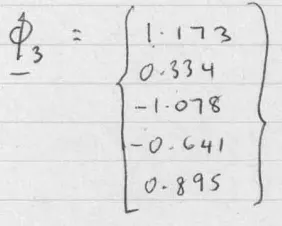
The third mode of vibration (T3 = 0.4346 seconds) and its associated mode shape:
The fourth mode of vibration (T4 = 0.3383 seconds) and its associated mode shape:
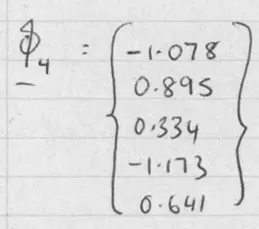
The fifth mode of vibration (T4 = 0.2966 seconds) and its associated mode shape:
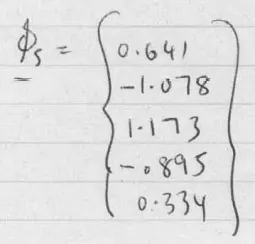
- Ln , Mn and Γn for each of the five modes are to be computed from Equations below.
- Also, calculate the effective modal mass Mn* and the modal mass participating ratio for the 5 modes. The mass matrix will be required to evaluate these parameters.

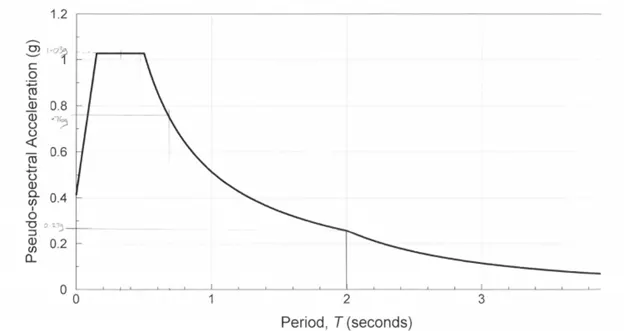
- Finally, obtain the base shear for each of the 5 modes of vibration and the combined base shear as per SRSS rule. The pseudo acceleration design spectrum to obtain the base shear for each mode is provided below.
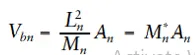
- How many modes are to be considered such that a modal mass participating ratio of 90% is obtained?
ANSWER:
First we calculating the mass matrix(m).
Mass matrix,(m)=⎡⎢ ⎢ ⎢ ⎢ ⎢ ⎢⎣m00000m00000m00000m00000m⎤⎥ ⎥ ⎥ ⎥ ⎥ ⎥⎦[�00000�00000�00000�00000�]
Now we calculate the transformed mass matrix for all modes-M=ΦT⋅m⋅Φ�=Φ�⋅�⋅Φ
1)Modified mass matrixs:(M)
For mode-1
M_1=Phi_1^T*m*Phi_1
i.e, M1=[0.3340.6410.8951.0781.173]⋅⎡⎢ ⎢ ⎢ ⎢ ⎢ ⎢⎣m00000m00000m00000m00000m⎤⎥ ⎥ ⎥ ⎥ ⎥ ⎥⎦⋅⎡⎢ ⎢ ⎢ ⎢ ⎢ ⎢⎣0.3340.6410.8951.0781.173⎤⎥ ⎥ ⎥ ⎥ ⎥ ⎥⎦�1=[0.3340.6410.8951.0781.173]⋅[�00000�00000�00000�00000�]⋅[0.3340.6410.8951.0781.173]
M1=[0.334m0.641m0.895m1.078m1.173m]⋅⎡⎢ ⎢ ⎢ ⎢ ⎢ ⎢⎣0.3340.6410.8951.0781.173⎤⎥ ⎥ ⎥ ⎥ ⎥ ⎥⎦�1=[0.334�0.641�0.895�1.078�1.173�]⋅[0.3340.6410.8951.0781.173]
M1=3.86m�1=3.86�
For mode-2
M2=ΦT2⋅m⋅Φ2�2=Φ2�⋅�⋅Φ2
i.e, M2=[−0.895−1.173−0.6410.3341.078]⋅⎡⎢ ⎢ ⎢ ⎢ ⎢ ⎢⎣m00000m00000m00000m00000m⎤⎥ ⎥ ⎥ ⎥ ⎥ ⎥⎦⋅⎡⎢ ⎢ ⎢ ⎢ ⎢ ⎢⎣−0.895−1.173−0.6410.3341.078⎤⎥ ⎥ ⎥ ⎥ ⎥ ⎥⎦�2=[-0.895-1.173-0.6410.3341.078]⋅[�00000�00000�00000�00000�]⋅[-0.895-1.173-0.6410.3341.078]
M2=[−0.895m−1.173m−0.641m0.334m1.078m]⋅⎡⎢ ⎢ ⎢ ⎢ ⎢ ⎢⎣−0.895−1.173−0.6410.3341.078⎤⎥ ⎥ ⎥ ⎥ ⎥ ⎥⎦�2=[�-0.895�-1.173�-0.6410.334�1.078�]⋅[-0.895-1.173-0.6410.3341.078]
M2=3.86m�2=3.86�
For mode-3
M3=ΦT3⋅m⋅Φ3�3=Φ3�⋅�⋅Φ3
i.e,M3=[1.1730.334−1.078−0.6410.895]⋅⎡⎢ ⎢ ⎢ ⎢ ⎢ ⎢⎣m00000m00000m00000m00000m⎤⎥ ⎥ ⎥ ⎥ ⎥ ⎥⎦⋅⎡⎢ ⎢ ⎢ ⎢ ⎢ ⎢⎣1.1730.334−1.078−0.6410.895⎤⎥ ⎥ ⎥ ⎥ ⎥ ⎥⎦�3=[1.1730.334-1.078-0.6410.895]⋅[�00000�00000�00000�00000�]⋅[1.1730.334-1.078-0.6410.895]
M3=[1.173m0.334m−1.078m−0.641m0.895m]⋅⎡⎢ ⎢ ⎢ ⎢ ⎢ ⎢⎣1.1730.334−1.078−0.6410.895⎤⎥ ⎥ ⎥ ⎥ ⎥ ⎥⎦�3=[1.173�0.334��-1.078�-0.6410.895�]⋅[1.1730.334-1.078-0.6410.895]
M3=3.86m�3=3.86�
For mode-4
M4=ΦT4⋅m⋅Φ4�4=Φ4�⋅�⋅Φ4
i.e,M4=[−1.0780.8950.334−1.1730.641]⋅⎡⎢ ⎢ ⎢ ⎢ ⎢ ⎢⎣m00000m00000m00000m00000m⎤⎥ ⎥ ⎥ ⎥ ⎥ ⎥⎦⋅⎡⎢ ⎢ ⎢ ⎢ ⎢ ⎢⎣−1.0780.8950.334−1.1730.641⎤⎥ ⎥ ⎥ ⎥ ⎥ ⎥⎦�4=[-1.0780.8950.334-1.1730.641]⋅[�00000�00000�00000�00000�]⋅[-1.0780.8950.334-1.1730.641]
M4=[−1.078m0.895m0.334m−1.173m0.641m]⋅⎡⎢ ⎢ ⎢ ⎢ ⎢ ⎢⎣−1.0780.8950.334−1.1730.641⎤⎥ ⎥ ⎥ ⎥ ⎥ ⎥⎦�4=[�-1.0780.895�0.334��-1.1730.641�]⋅[-1.0780.8950.334-1.1730.641]
M4=3.86m�4=3.86�
For mode-5
M5=ΦT5⋅m⋅Φ5�5=Φ5�⋅�⋅Φ5
M5=[0.641−1.0781.173−0.8950.334]⋅⎡⎢ ⎢ ⎢ ⎢ ⎢ ⎢⎣m00000m00000m00000m00000m⎤⎥ ⎥ ⎥ ⎥ ⎥ ⎥⎦⋅⎡⎢ ⎢ ⎢ ⎢ ⎢ ⎢⎣0.641−1.0781.173−0.8950.334⎤⎥ ⎥ ⎥ ⎥ ⎥ ⎥⎦�5=[0.641-1.0781.173-0.8950.334]⋅[�00000�00000�00000�00000�]⋅[0.641-1.0781.173-0.8950.334]
M5=[0.641m−1.078m1.173m−0.895m0.334m]⋅⎡⎢ ⎢ ⎢ ⎢ ⎢ ⎢⎣0.641−1.0781.173−0.8950.334⎤⎥ ⎥ ⎥ ⎥ ⎥ ⎥⎦�5=[0.641��-1.0781.173��-0.8950.334�]⋅[0.641-1.0781.173-0.8950.334]
M5=3.86m�5=3.86�
Now we have to determine modal proprety.(L)
2)Modal property(Ln��):ϕTn⋅m⋅l���⋅�⋅�
Where,l=�= infulence matrix is aunit matrix,⎡⎢ ⎢ ⎢ ⎢ ⎢ ⎢⎣11111⎤⎥ ⎥ ⎥ ⎥ ⎥ ⎥⎦[11111]
For mode-1:
(L1�1):ϕT1⋅m⋅l�1�⋅�⋅�
L1=[0.3340.6410.8951.0781.173]⋅⎡⎢ ⎢ ⎢ ⎢ ⎢ ⎢⎣m00000m00000m00000m00000m⎤⎥ ⎥ ⎥ ⎥ ⎥ ⎥⎦⋅⎡⎢ ⎢ ⎢ ⎢ ⎢ ⎢⎣11111⎤⎥ ⎥ ⎥ ⎥ ⎥ ⎥⎦�1=[0.3340.6410.8951.0781.173]⋅[�00000�00000�00000�00000�]⋅[11111]
L1=[0.334m0.641m0.895m1.078m1.173m]⋅⎡⎢ ⎢ ⎢ ⎢ ⎢ ⎢⎣11111⎤⎥ ⎥ ⎥ ⎥ ⎥ ⎥⎦�1=[0.334�0.641�0.895�1.078�1.173�]⋅[11111]
L1=4.12m�1=4.12�
For mode-2:
(L2�2):ϕT2⋅m⋅l�2�⋅�⋅�
L2=[−0.895−1.173−0.6410.3341.078]⋅⎡⎢ ⎢ ⎢ ⎢ ⎢ ⎢⎣m00000m00000m00000m00000m⎤⎥ ⎥ ⎥ ⎥ ⎥ ⎥⎦⋅⎡⎢ ⎢ ⎢ ⎢ ⎢ ⎢⎣11111⎤⎥ ⎥ ⎥ ⎥ ⎥ ⎥⎦�2=[-0.895-1.173-0.6410.3341.078]⋅[�00000�00000�00000�00000�]⋅[11111]
L2=[−0.895m−1.173m−0.641m0.334m1.078m]⋅⎡⎢ ⎢ ⎢ ⎢ ⎢ ⎢⎣11111⎤⎥ ⎥ ⎥ ⎥ ⎥ ⎥⎦�2=[�-0.895�-1.173�-0.6410.334�1.078�]⋅[11111]
L2=−1.297m�2=-1.297�
For mode-3:
(L3�3):ϕT3⋅m⋅l�3�⋅�⋅�
L3=[1.1730.334−1.078−0.6410.895]⋅⎡⎢ ⎢ ⎢ ⎢ ⎢ ⎢⎣m00000m00000m00000m00000m⎤⎥ ⎥ ⎥ ⎥ ⎥ ⎥⎦⋅⎡⎢ ⎢ ⎢ ⎢ ⎢ ⎢⎣11111⎤⎥ ⎥ ⎥ ⎥ ⎥ ⎥⎦�3=[1.1730.334-1.078-0.6410.895]⋅[�00000�00000�00000�00000�]⋅[11111]
L3=[1.173m0.334m−1.078m−0.641m0.895m]⋅⎡⎢ ⎢ ⎢ ⎢ ⎢ ⎢⎣11111⎤⎥ ⎥ ⎥ ⎥ ⎥ ⎥⎦�3=[1.173�0.334��-1.078�-0.6410.895�]⋅[11111]
L3=0.683m�3=0.683�
For mode-4
(L4�4):ϕT4⋅m⋅l�4�⋅�⋅�
L4=[−1.0780.8950.334−1.1730.641]⋅⎡⎢ ⎢ ⎢ ⎢ ⎢ ⎢⎣m00000m00000m00000m00000m⎤⎥ ⎥ ⎥ ⎥ ⎥ ⎥⎦⋅⎡⎢ ⎢ ⎢ ⎢ ⎢ ⎢⎣11111⎤⎥ ⎥ ⎥ ⎥ ⎥ ⎥⎦�4=[-1.0780.8950.334-1.1730.641]⋅[�00000�00000�00000�00000�]⋅[11111]
L4=[−1.078m0.895m0.334m−1.173m0.641m]⋅⎡⎢ ⎢ ⎢ ⎢ ⎢ ⎢⎣11111⎤⎥ ⎥ ⎥ ⎥ ⎥ ⎥⎦�4=[�-1.0780.895�0.334��-1.1730.641�]⋅[11111]
L4=−0.381m�4=-0.381�
For mode-5
(L5�5):ϕT5⋅m⋅l�5�⋅�⋅�
L5=[0.641−1.0781.173−0.8950.334]⋅⎡⎢ ⎢ ⎢ ⎢ ⎢ ⎢⎣m00000m00000m00000m00000m⎤⎥ ⎥ ⎥ ⎥ ⎥ ⎥⎦⋅⎡⎢ ⎢ ⎢ ⎢ ⎢ ⎢⎣11111⎤⎥ ⎥ ⎥ ⎥ ⎥ ⎥⎦�5=[0.641-1.0781.173-0.8950.334]⋅[�00000�00000�00000�00000�]⋅[11111]
L5=[0.641m−1.078m1.173m−0.895m0.334m]⋅⎡⎢ ⎢ ⎢ ⎢ ⎢ ⎢⎣11111⎤⎥ ⎥ ⎥ ⎥ ⎥ ⎥⎦�5=[0.641��-1.0781.173��-0.8950.334�]⋅[11111]
L5=0.175m�5=0.175�
Now, we have to calculate the 3)Modal participation factor;ΓnΓ�
It is defined as the ratio of modal property (Ln��) to modified mass matrix(M).
Γn=LnMnΓ�=����
For mode-1:
Γ1=L1M1Γ1=�1�1
Γ1=4.121m3.861m=1.067Γ1=4.121�3.861�=1.067
Γ1=1.067Γ1=1.067
For mode-2:
Γ2=L2M2Γ2=�2�2
Γ2=−1.297m3.861m=−0.335Γ2=-1.297�3.861�=-0.335
Γ2=−0.335Γ2=-0.335
For mode-3:
Γ3=L3M3Γ3=�3�3
Γ3=0.683m3.861m=0.177Γ3=0.683�3.861�=0.177
Γ3=0.177Γ3=0.177
For mode-4
Γ4=L4M4Γ4=�4�4
Γ4=−0.381m3.861m=−0.099Γ4=-0.381�3.861�=-0.099
Γ4=−0.099Γ4=-0.099
For mode-5
Γ5=L5M5Γ5=�5�5
Γ5=0.175m3.861m=0.045Γ5=0.175�3.861�=0.045
Γ5=−0.045Γ5=-0.045
After finding the modal participation factor now we have to calculate the effective modal mass(M∗=L2nMn�∗=��2��)
4)effective modal mass(M∗=L2nMn�∗=��2��):
For mode-1:
M∗1=L21M1�1∗=�12�1
M∗1=(4.121m)23.861m=4.398m�1∗=(4.121�)23.861�=4.398�
M∗1=4.398m�1∗=4.398�
For mode-2:
M∗2=L22M2�2∗=�22�2
M∗2=(−1.297m)23.861m=−0.335m�2∗=(-1.297�)23.861�=-0.335�
M∗2=0.436m�2∗=0.436�
For mode-3:
M∗3=L23M3�3∗=�32�3
M∗3=(0.683m)23.861m=0.121m�3∗=(0.683�)23.861�=0.121�
M∗3=0.121m�3∗=0.121�
For mode-4
M∗4=L24M4�4∗=�42�4
M∗4=(−0.381m)23.861m=0.038m�4∗=(-0.381�)23.861�=0.038�
M∗4=0.038m�4∗=0.038�
For mode-5
M∗5=L25M5�5∗=�52�5
M∗5=(0.175m)23.861m=0.008m�5∗=(0.175�)23.861�=0.008�
M∗5=0.008m�5∗=0.008�
Now we have to calculate the modal mass participation ratio.
5)Modal mass particiopation ratio=M∗nmj��∗��
Where mj��is total mass of the buuilding=m+m+m+m+m= 5m.
For mode-1:
M∗1mj=4.938m5m=0.88�1∗��=4.938�5�=0.88
For mode-2:
M∗2mj=0.436m5m=0.09�2∗��=0.436�5�=0.09
For mode-3:
M∗3mj=0.121m5m=0.02�3∗��=0.121�5�=0.02
For mode-4:
M∗4mj=0.038m5m=0.01�4∗��=0.038�5�=0.01
For mode-5:
M∗5mj=0.008m5m=0.002�5∗��=0.008�5�=0.002
As per the question, there are sum of first two modes are enough to considered such as to obtain the MODAL MASS PARTICIPATING RATIO as 90%. i.e, 0.88+0.09=0.97.
Now we have to caluclate the base shear for each mode(VB��)
Base shear(VB=M∗n.An��=��∗.��)
For mode-1:
VB1=4.398m⋅0.27g=1.187mg��1=4.398�⋅0.27�=1.187��
For mode-2:
VB2=0.436m⋅0.76g=0.327mg��2=0.436�⋅0.76�=0.327��
For mode-3:
VB3=0.121m⋅1.03g=0.126mg��3=0.121�⋅1.03�=0.126��
For mode-4:
VB4=0.038m⋅1.03g=0.039mg��4=0.038�⋅1.03�=0.039��
For mode-5:
VB5=0.008m⋅1.03g=0.008mg��5=0.008�⋅1.03�=0.008��
Now we have to caluculate the average base shear by the method of Square root of sum of square:
i.e,VB=√((VB1)2+(VB2)2+(VB3)2+(VB4)2+(VB5)2)��=((��1)2+(��2)2+(��3)2+(��4)2+(��5)2)
VB=√((1.187)2+(0.327)2+(0.126)2+(0.039)2+(0.008)2)��=((1.187)2+(0.327)2+(0.126)2+(0.039)2+(0.008)2)
VB=1.15mg��=1.15��