Underbody Coating
Underbody Coating
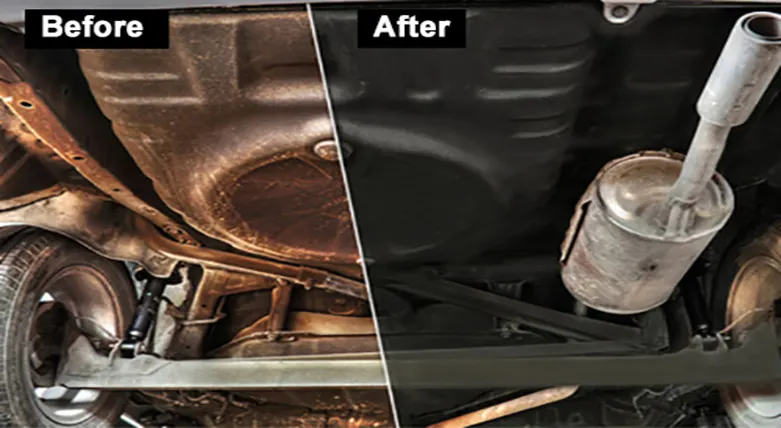
Underbody coating provides long term protection from corrosion to car's underbody. It also protects parts like internal body panels, frame rails and other inner cavities that are not physically accessible but are prone to corrosion.
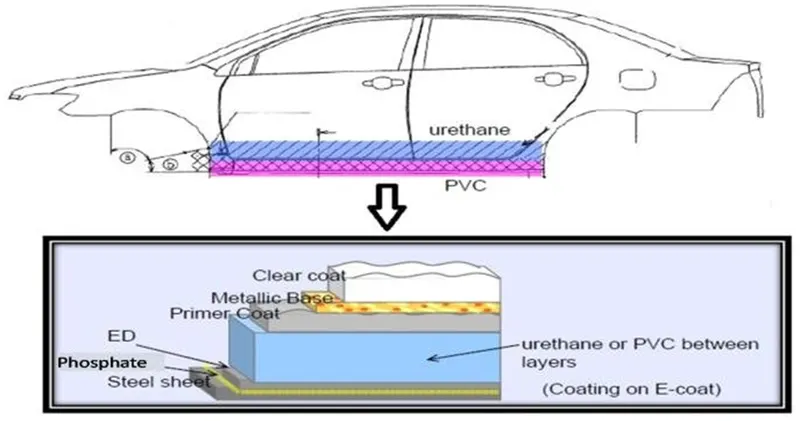
A bitumen-based compound was used, but after approximately a decade, this becomes brittle and water can become trapped between the underseal and body metal, counterproductively creating a more favourable environment for rust than if no underseal was applied at all. Wax-based underseals do not have this disadvantage, but can be eroded and eventually washed off by enthusiastic use of a hot pressure washer. Rubber-based underseals are also sometimes used.
Vehicles for sale in some territories are not undersealed, because the climate is not sufficiently aggressive to warrant it. If such a vehicle is subsequently imported into a country with high rainfall, cold winters, and where salting of the roads is common, application of underseal is strongly recommended to ensure the vehicle has a long life.
When concrete on streets, parking lots, or warehouse floors begins to degrade, there are a few methods of repair available. Concrete undersealing is a process by which hot asphalt is pumped underneath the concrete slab so it flows into patches that were hollow and eroded. After concrete undersealing, the concrete is more stable and can be overlaid with a thin layer of asphalt to repair cracks, saving the expense and time of replacing the entire surface.
Advantages of Undercoating
Help to reduce interior noise.
When you’re driving, the sounds of the road can be loud. For lightweight vehicles, noise pollution can be overwhelming to the driver in some situations. Applying a layer of undercoating creates a barrier against the sound, which creates an interior that is noticeably quieter. After the service is performed, many drivers notice that audio levels are noticeably lower inside their vehicles.
Can be self-applied.
Rustproofing works best when you have this service professionally applied to your vehicle. If money is tight, however, and you have some basic car maintenance skills, then you can do the work yourself.
Extend the Life & Value of your Vehicle.
Good undercoating extends the life of your vehicle. Corrosion does more than affect the integrity of the metals in your vehicle. It can get into your metal wires and cables, affecting any component which is comprised of steel or aluminium. Even your transmission and engine have exposure to rust when there isn’t a vehicle undercoating applied.
Disadvantages of Undercoating
Oil-based Rustproofing must be reapplied every year for the best results.
The only way for an undercoating to provide ongoing protection for your vehicle is to have the service repeated frequently. Most owners can have a new layer applied each year without worrying about their underbelly being compromised. In salty or destructive environments this is a must! Don’t wait until you have a structural failure or fail a safety inspection. Deal with rust as you would any other maintenance item on the vehicle.
The length of time undercoating remains effective is dependent on the environment it is exposed to and the use of the RV. Undercoating on a parked trailer for example may last years. A motorhome or trailer seeing a lot of road travel may require reapplication sooner due to impacts against the frame potentially chipping away at the coating.
Undercoating should still be visually inspected annually to ensure integrity.