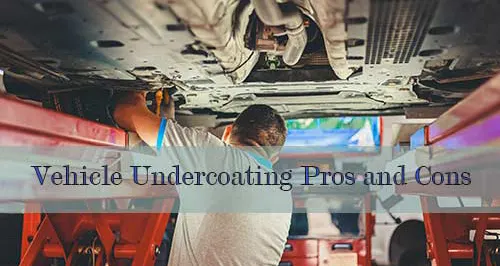
Underbody Coating
What is an Undercoating ?
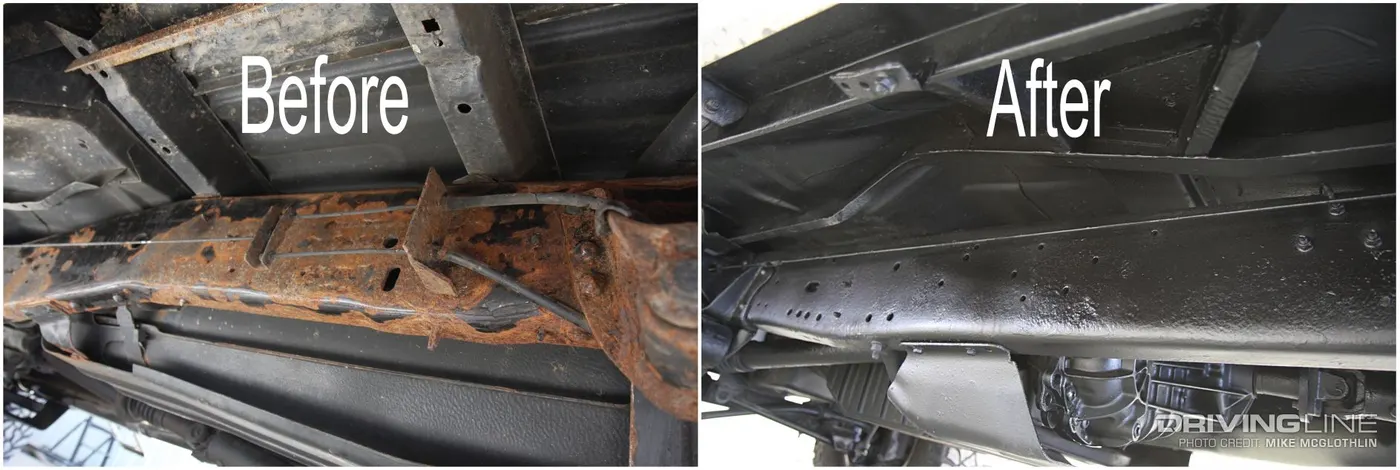
* An undercoating is the first line of defense between an automobile's metallic underside and the elements, and all vehicles receive a coating of this stuff before rolling off the assembly line. But these OEM coatings will eventually wear-out over time, leaving oil pans, transfer cases, suspension arms, and other metal components vulnerable to corrosion and rust.
* Most dealerships offer an additional undercoating as part of a "winter package" option, which typically consists of a "rubberized" media being sprayed across the vehicle's undercarriage. Once cured, this undercoating has the ability to repel rust and oxidation, rock chips, scratches, and even lower road noise levels.
* But even if you purchase for this package option, or opt to tackle an undercoating application on your own, there's a still a good chance that your vehicle's underbelly is going to rust. There's a reason why automotive undercoatings have earned a reputation for being a bit of an unreliable, double-sided sword, and it's not because they don't work well.
The Difference Between Rust Protection and Undercoating:
Undercoating and rust protection often go hand-in-hand, but they are actually two different things. Rust protection generally goes inside your vehicle, while undercoating is used for protection outside of the vehicle, and there are a variety of coatings available. Depending on the level of damage and how much protection you want for your vehicle will determine which type of automotive undercoating you choose.
Types of Vehicle Undercoating
Rubberized Undercoating:
Rubberized undercoating is easy to apply, and generally offers the best protective coating for your car’s undercarriage. It cushions surfaces against moisture, rust, dings, and dents. Rubberized undercoating is safe to use on quarter panels and wheel wells and dries with a soft rubbery finish.
Asphalt-Based Undercoating:
Asphalt-based undercoating offers a higher level of protection suitable for large trucks, recreational vehicles, and heavy machinery. It’s formulated with some bits of rubberized material to aid in noise reduction. It offers extra protection against chips and moisture but is not paintable and, therefore, only suitable for undercarriages.
Polyurethane Undercoating:
Polyurethane coating is easy to apply and works by sealing up cracks and seams. The compound displaces salt and moisture and protects the unoxidized metal from rust. It’s often sold in canisters that are ready to preload into an application gun. It, however, requires some surface prep work before application, like degreasing, and applying an etching primer to the bare metal.
Wax or Paraffin-Based Undercoating:
Wax or paraffin-based undercoating sprays are the cheapest and quickest options available. However, their results don’t last long, and you may have to apply a fresh coat after only a few months. In addition, the wax isn’t very adhesive on a metal surface. Its main advantage is that it seeps quickly into cracks and seams, and offers moderate protective properties against moisture
Significance
*Undercoating helps to provide an additional layer of insulation and protection to the undercarriage of your vehicle.
* Manufacturers may apply car undercoating at the factory.
* The undercoating covers most of the car’s underside, including floorboards, frames, gas tanks, pans, wheel wells and mufflers, suspension parts, and exhaust pipes. This effect can be likened to black coating a parking lot or a road.
* Undercoating materials adhere to metal, even if it is painted. Most of them come in pressurized cans for easy spray-on application, while an even spread may be tough to achieve without professional applicators.
* Ingredients used in the manufacturing of undercoating include fiberglass, ceramics, rubber, asphalt, and silicone. Each has different properties in terms of heat resistance and retention, but all give protection against the elements and damage.
* Auto undercoating protects the undercarriage, a vehicle’s most vulnerable area. Unlike the visible portions of your vehicle, the undercarriage doesn’t get washed frequently but it absorbs most of the moisture, grime, salt, and other substances when you come in contact with them, as you drive.
* In addition to protecting your vehicle from elemental damage, good undercoating can also reduce engine noise, leaving you quieter than ever before.
* Even if you buy a new car with undercoating from the dealer, remember that undercoating wears off typically within a short period of 1 year. Worn, patchy car undercoating can get damaged when water and other elements then get trapped under the coat, further eroding metal.
Pros of Vehicle Undercoating:
It’s hard to make someone understand what benefits undercoating brings to vehicles. These are the most common advantages that you will get after undercoating your vehicle.
1. Provides an Extra Layer of Protection:
In most cases, new cars, SUV’s and trucks come with good protection underneath. But, if you are living in cold climates or coastal areas, having a coated underpart is a great advantage.
It provides your car with an extra layer of protection from rust and corrosion. While driving your car, road debris will come into contact with the undercoating instead of underneath metal components.
Before the coating wears out, you can enjoy years of protection against early corrosion. Not only underneath but also the trailer of your car can be coated the same way using trailer paint.
2. Extends the Lifetime of Your Vehicle:
If the undercoating is applied properly, it can extend the lifetime of your vehicle for a significant amount of time.
Vehicle undercoating gives your car rust prevention power and makes your ride safe and functional. When you don’t apply it to your vehicle, then quick rust is the outcome, which will lead to corrosion eventually.
Meanwhile, corrosion affects the integrity of the metal parts of your vehicle, causing mechanical breakdown sooner than expected. Most probably, you wouldn’t like to see your car having such an end this early. So, undercoating would be a smart investment here.
3. Reduces Internal Noise:
No one likes to have a noisy ride on their vehicles. Sometimes roads with heavy traffic cause unbearable noise pollution outside. I’m sure that you wouldn’t like to have a noisy interior as well.
Once your car is undercoated, it can reduce the interior noise inside of your vehicle and comparatively provide you with a more peaceful ride.
Many car owners reported that once they have done the undercoating, the interior noise was much less than as it was before.
4. Self-Applied Facility:
It is always preferable to go for professional touch for any kind of technical maintenance. But if your budget is tight, you need not worry about it much. With your basic car maintenance skills, you can do the job for yourself.
When you go for professional help to undercoat your vehicle, it might cost you around 1500$. On the contrary, you can cover up the whole within 100$-150$ if you do the job for yourself.
This self-applied facility doesn’t come with smooth finishing like a professional one, but it surely worth the money.
5. Comes with Several Undercoating Methods:
When you go for undercoating your vehicle you might come across several methods that are applied for this job. Among them, the electronic method, dripless oil spray and drip oil methods are well known. If you consider the cost then the last one is mostly applied by professionals.
You can also check out the coating paint options whether you want to go for single stage paint or double stage paint. If you are not too much concerned with the look and single stage paint is for you, though it’s old-fashioned but classic. Meanwhile, 2 stage paint gives you the proper color along with a more durable coating.
Cons of Vehicle Undercoating:
Despite having some great advantages, undercoating comes with some drawbacks that don’t help that many vehicles of certain conditions.
1. Less Effective If Corrosion Already Exists:
Once there is rust underneath, vehicle undercoating won’t give you many effective results. Though the coating will be covering the damage that already took place, the rust inside will continue its job to lead to corrosion.
Undercoating slows down the process, but you must remove the rust first before coating.
2. Works Well on New Vehicles :
If your car is already old enough or you bought a used one, then undercoating wouldn’t be a good choice. As coating the underneath of a used or old car requires the removal of all the residue, it will cost you more which is definitely not the best idea.
So, it’s better to apply coating on new cars as they offer premium protection.
For someone who changes his vehicle every 3 to 5 years, then vehicle undercoating is not a good use of your bucks. Because most new cars offer almost 5 years of default underneath protection that you can rely on.
3. Not Impervious to Damage:
An undercoating doesn’t always mean protection for a fixed amount of time. Based on your road trips and the things you have to drive against, the lifespan of your coating can be minimal.
If you are bound to drive on dirty areas, gravel roads, it can reduce the quality of this protective layer earlier than expected.
4. Need to Reapply Every 3 to 5 Years :
For ongoing protection, you need to make sure you are ready to invest in undercoating your vehicle every 3 to 5 years. Most users can ride their vehicles for 5 years without worrying much once the underpart is coated.
But if you happen to live in coastal areas then you might need to do it every 3 years for best results.